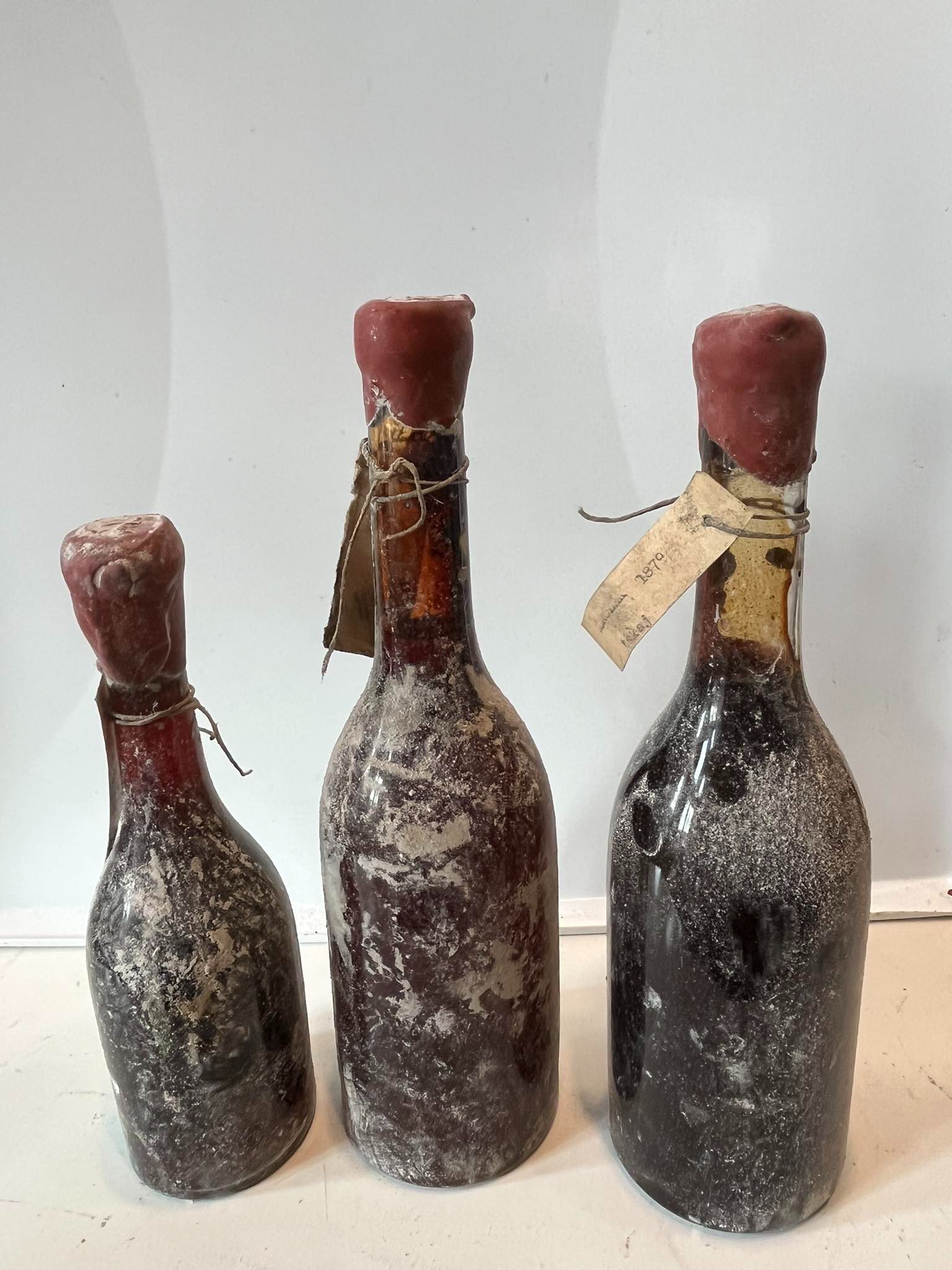
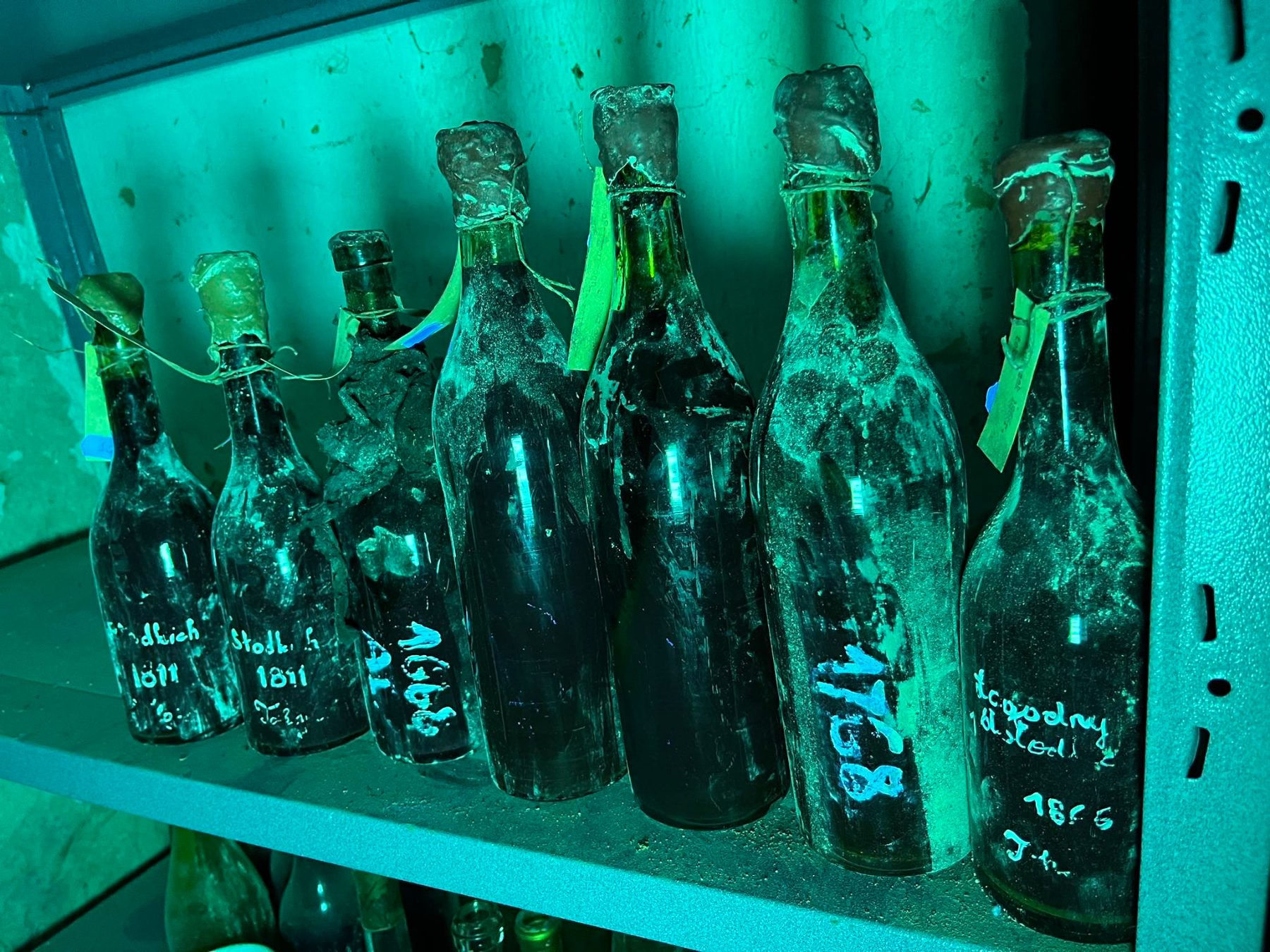
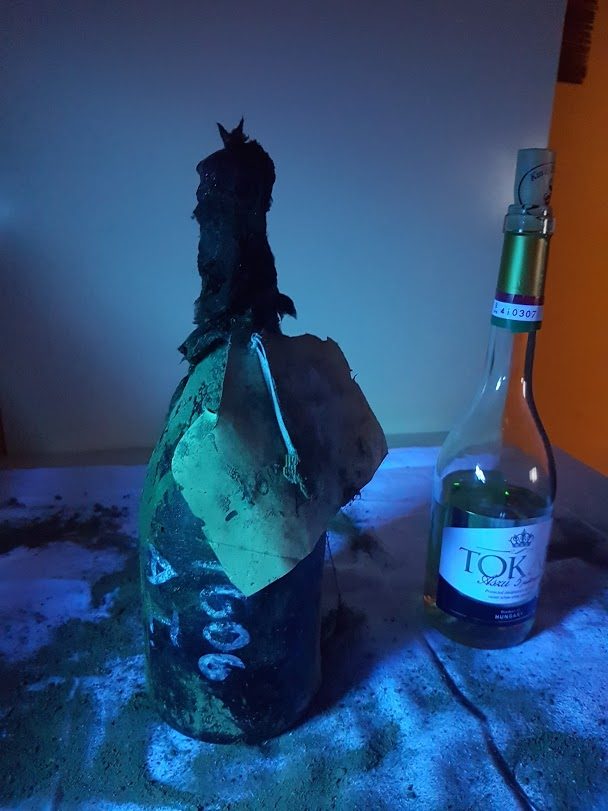
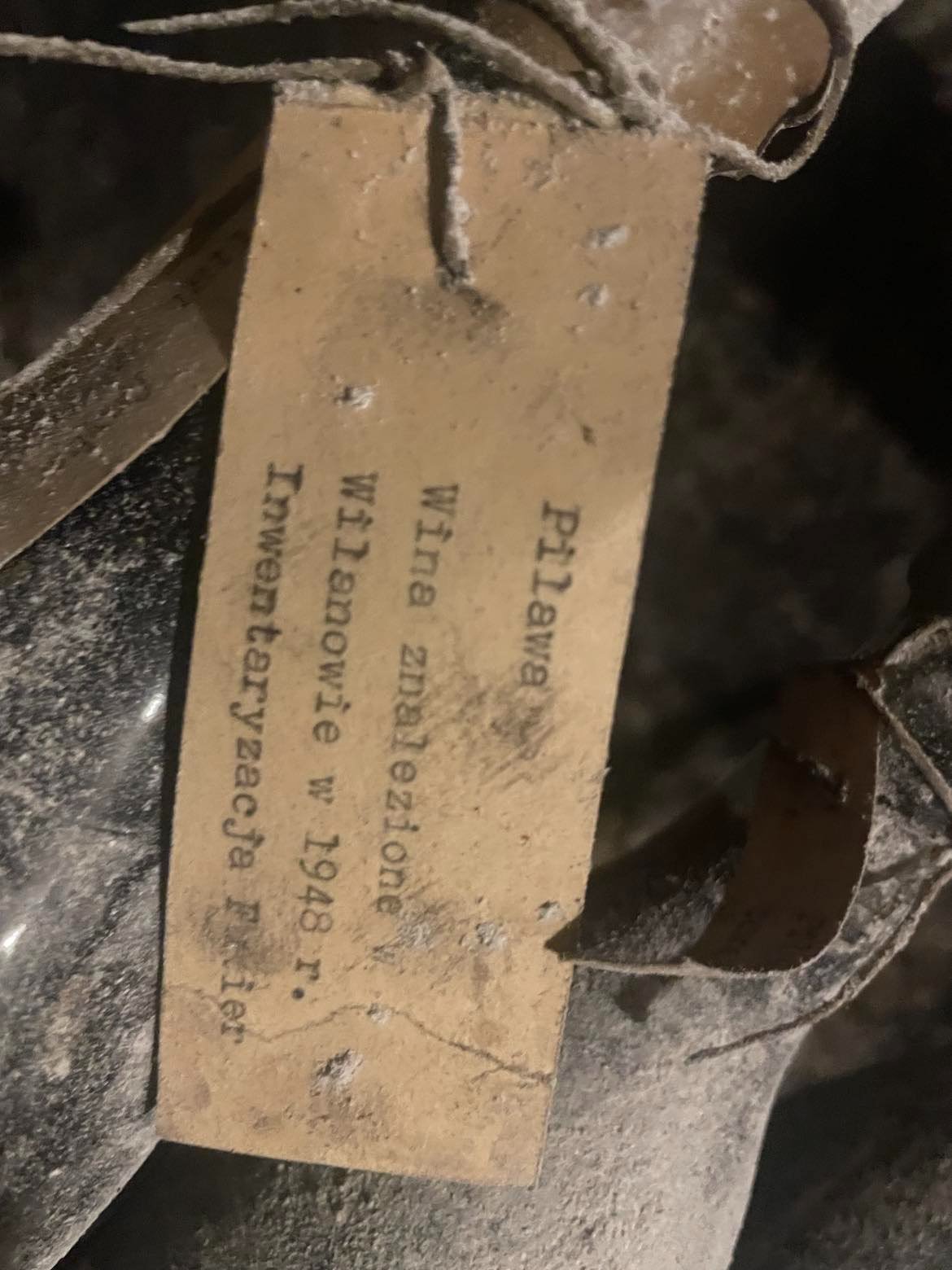
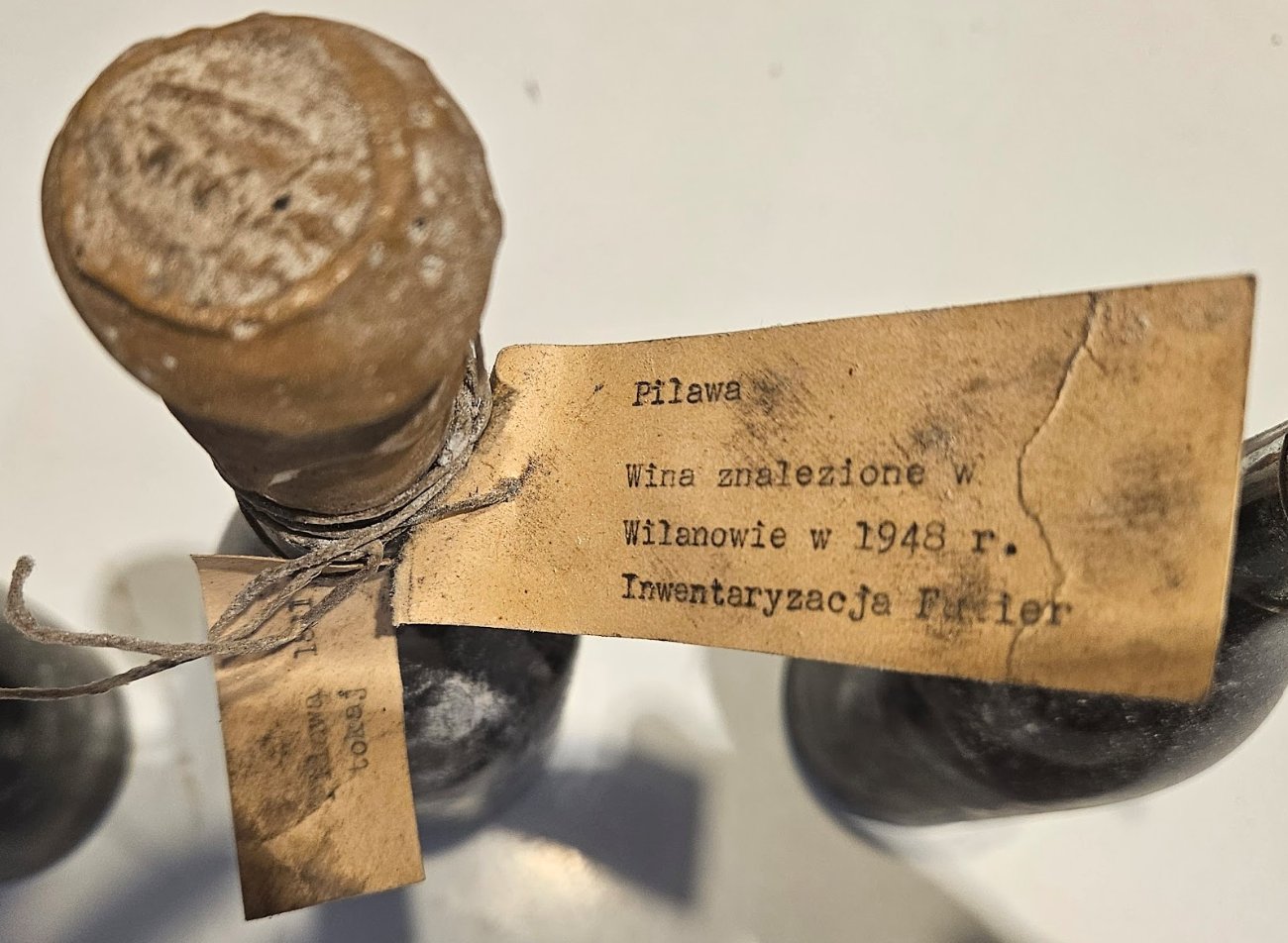
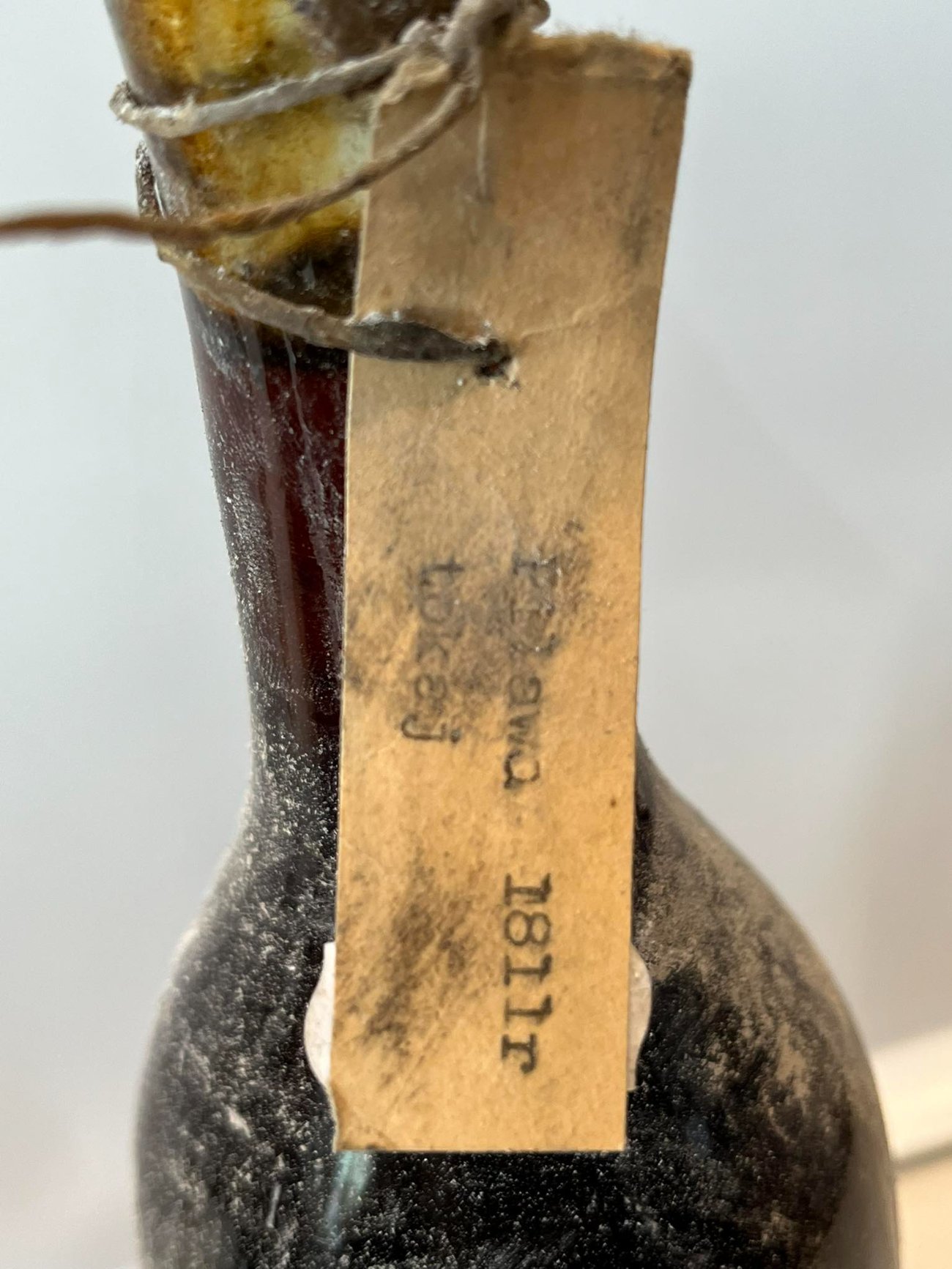
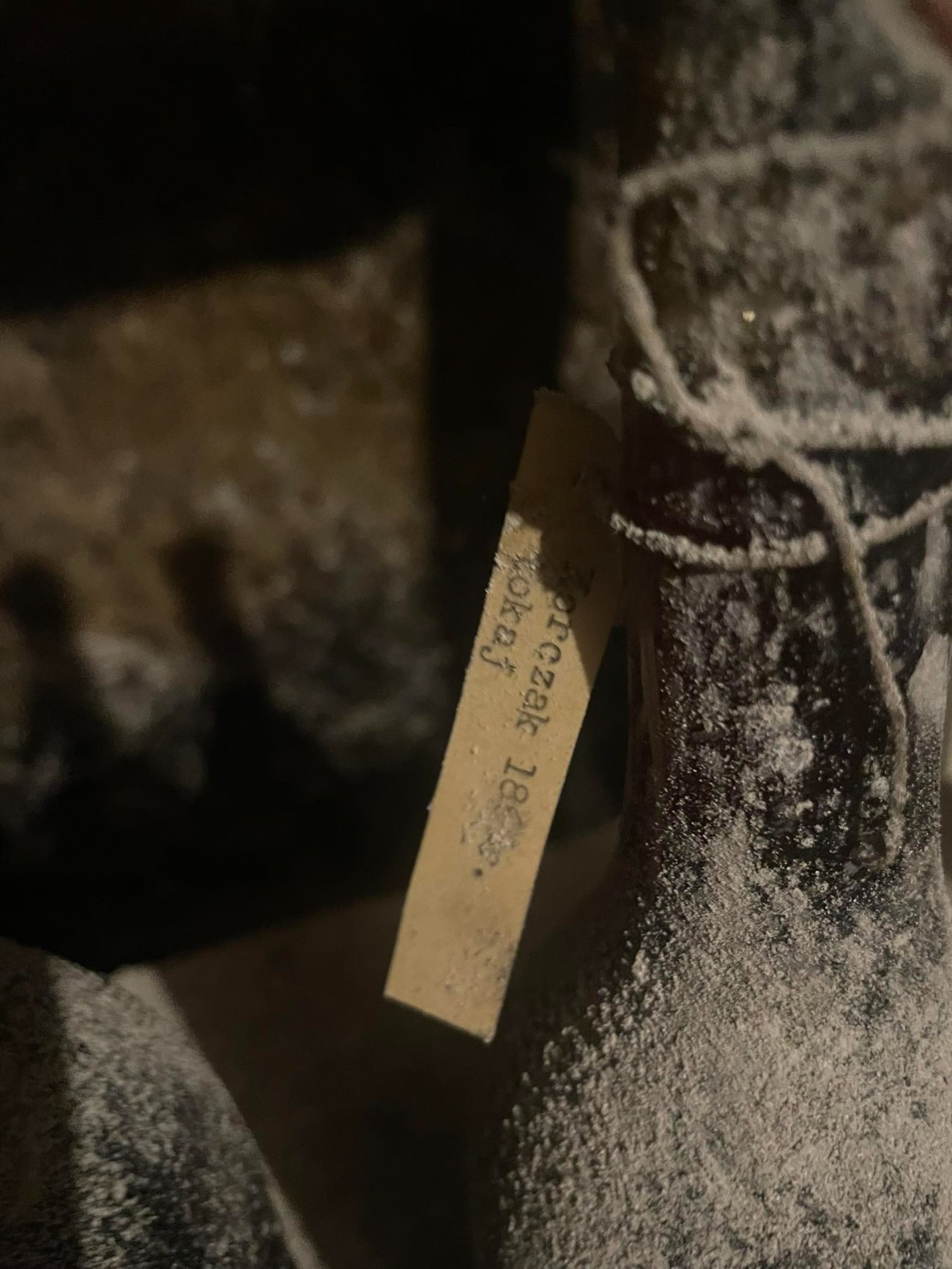
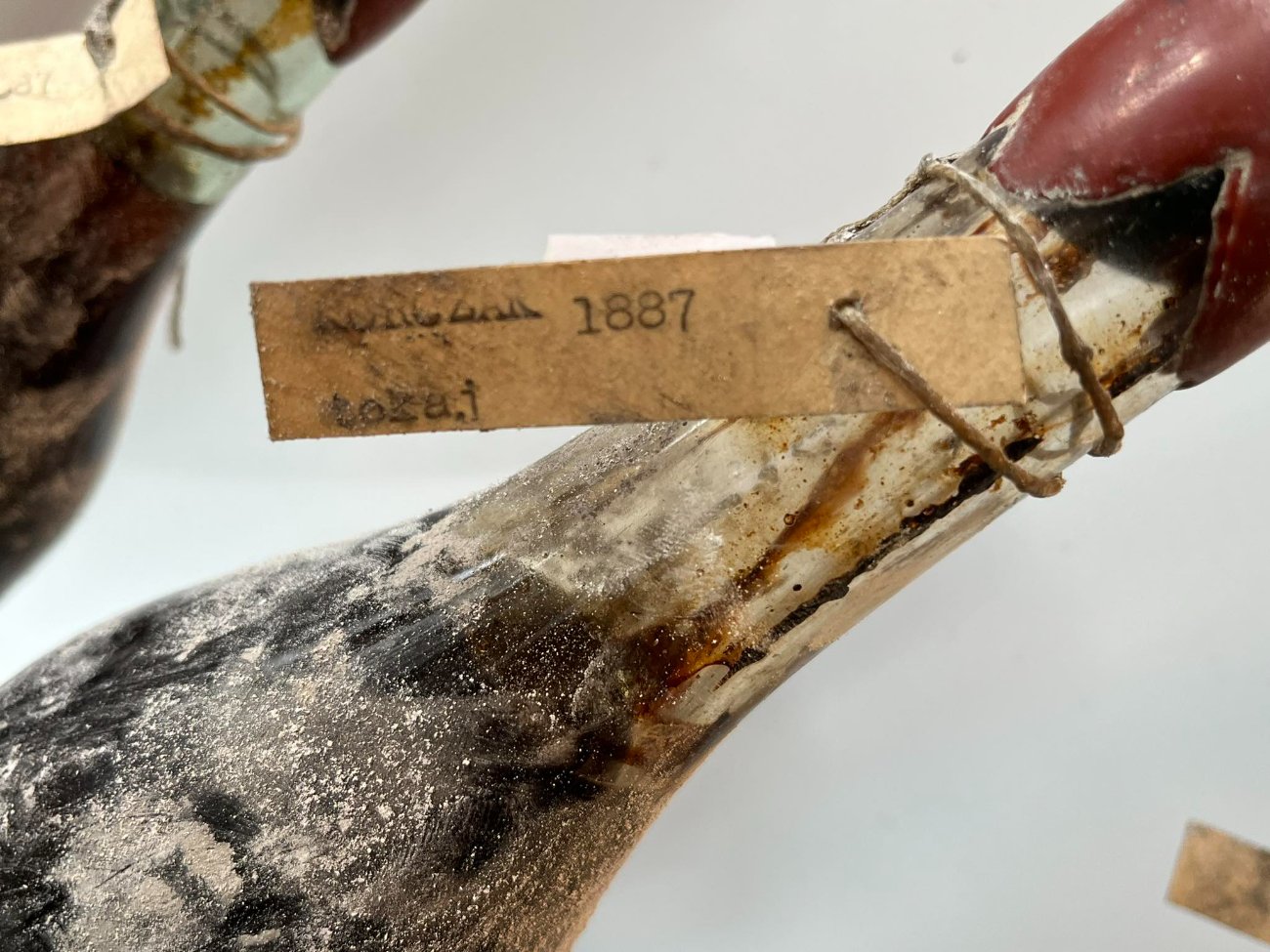
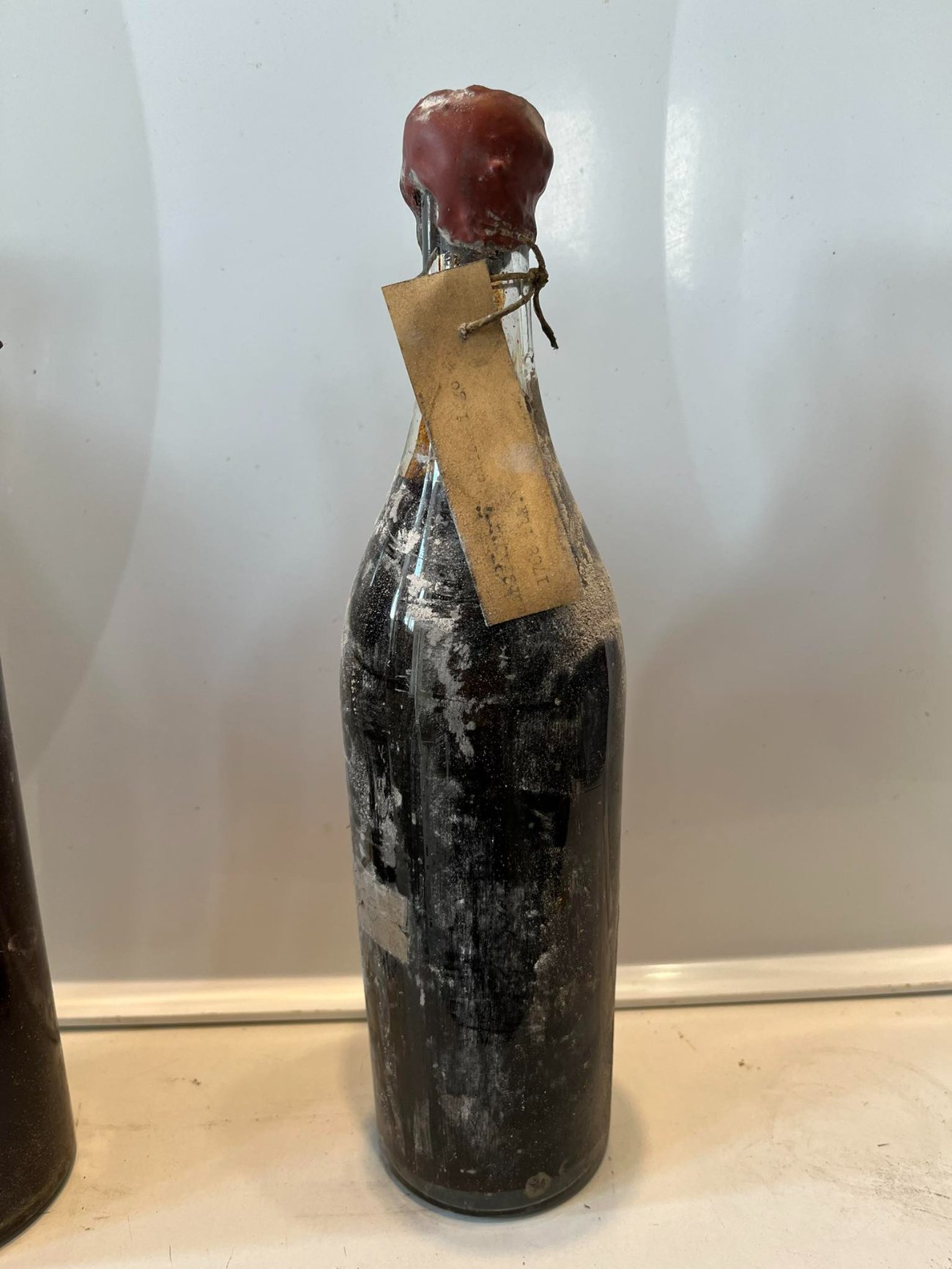
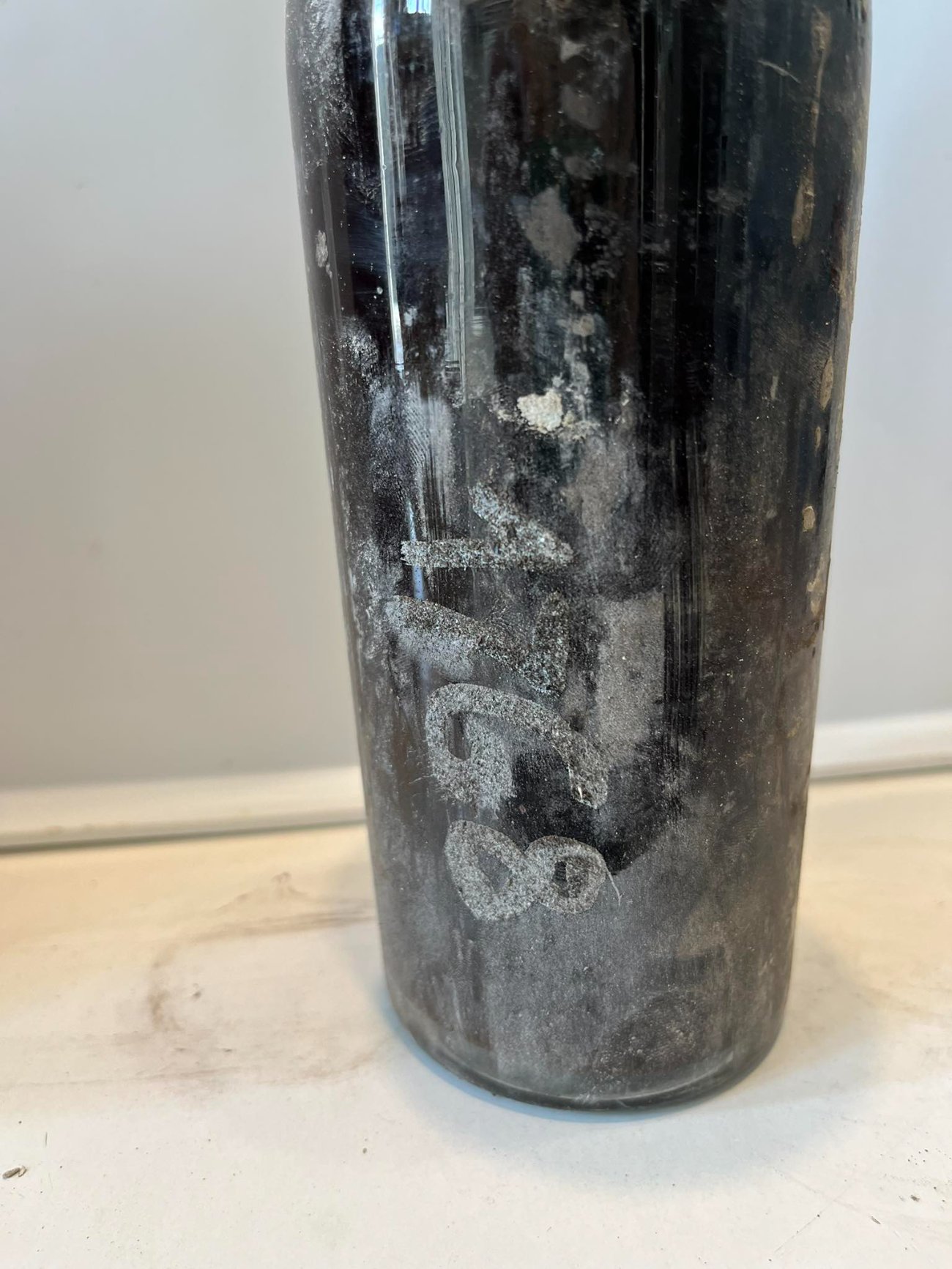
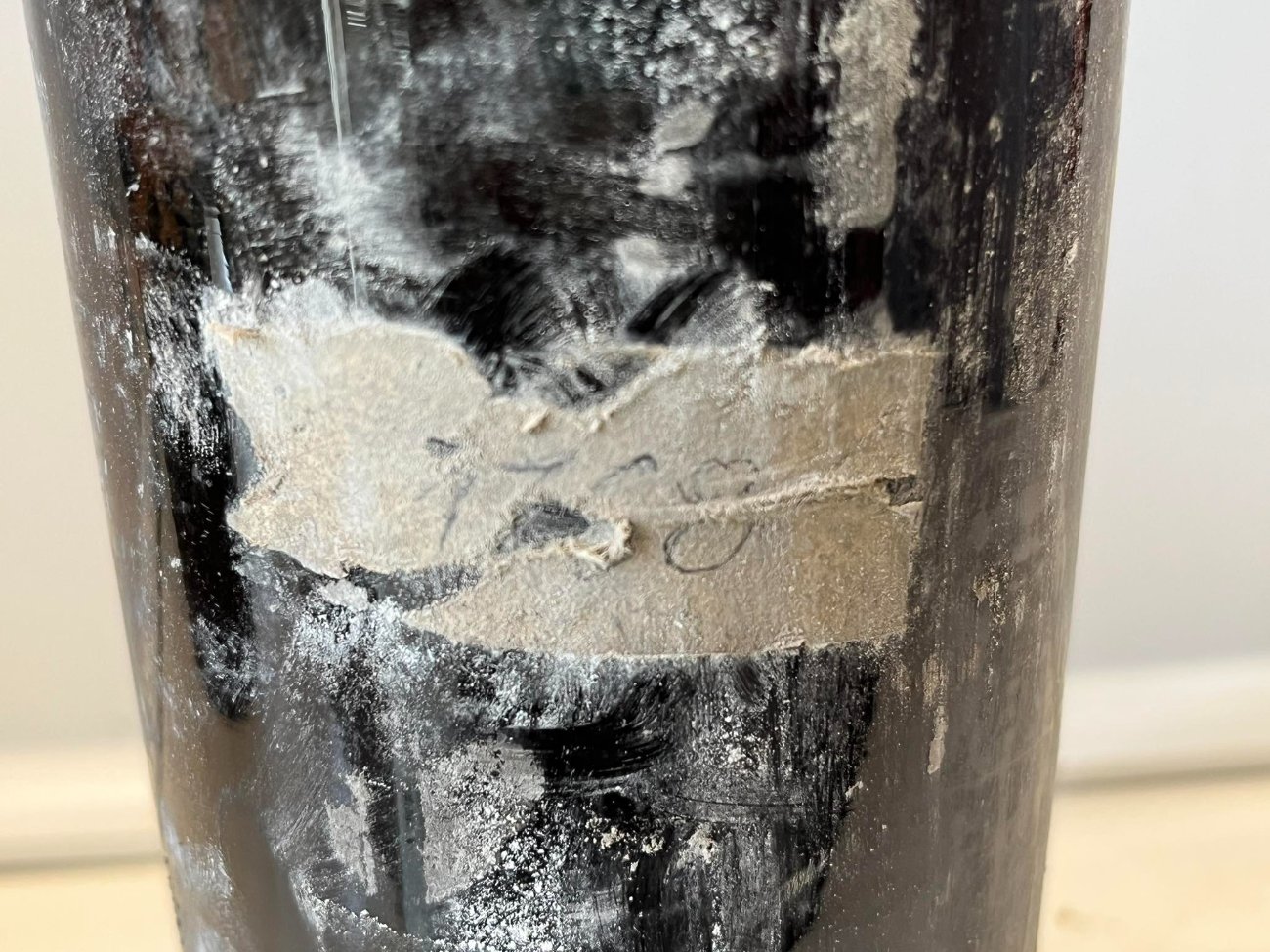
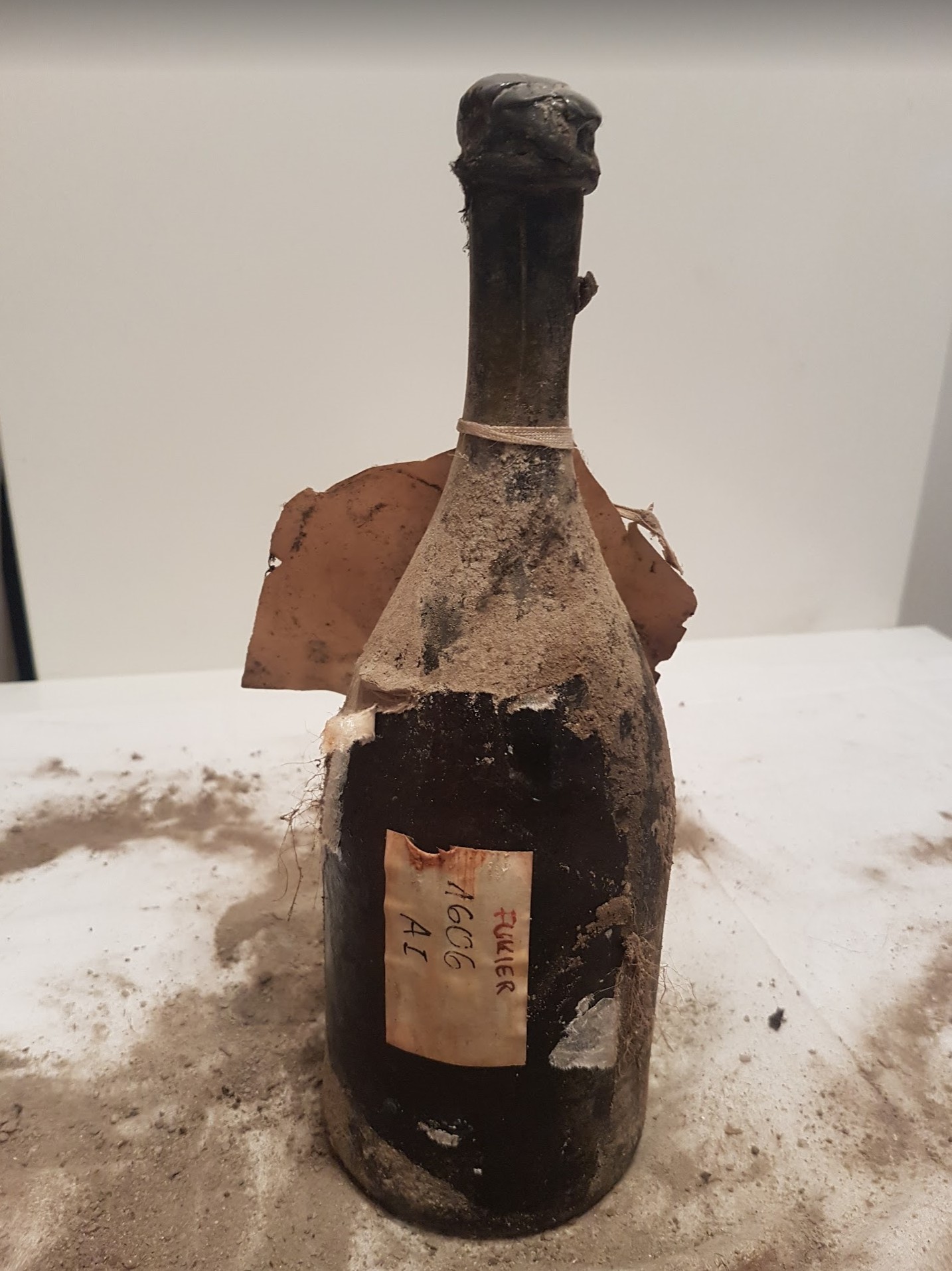
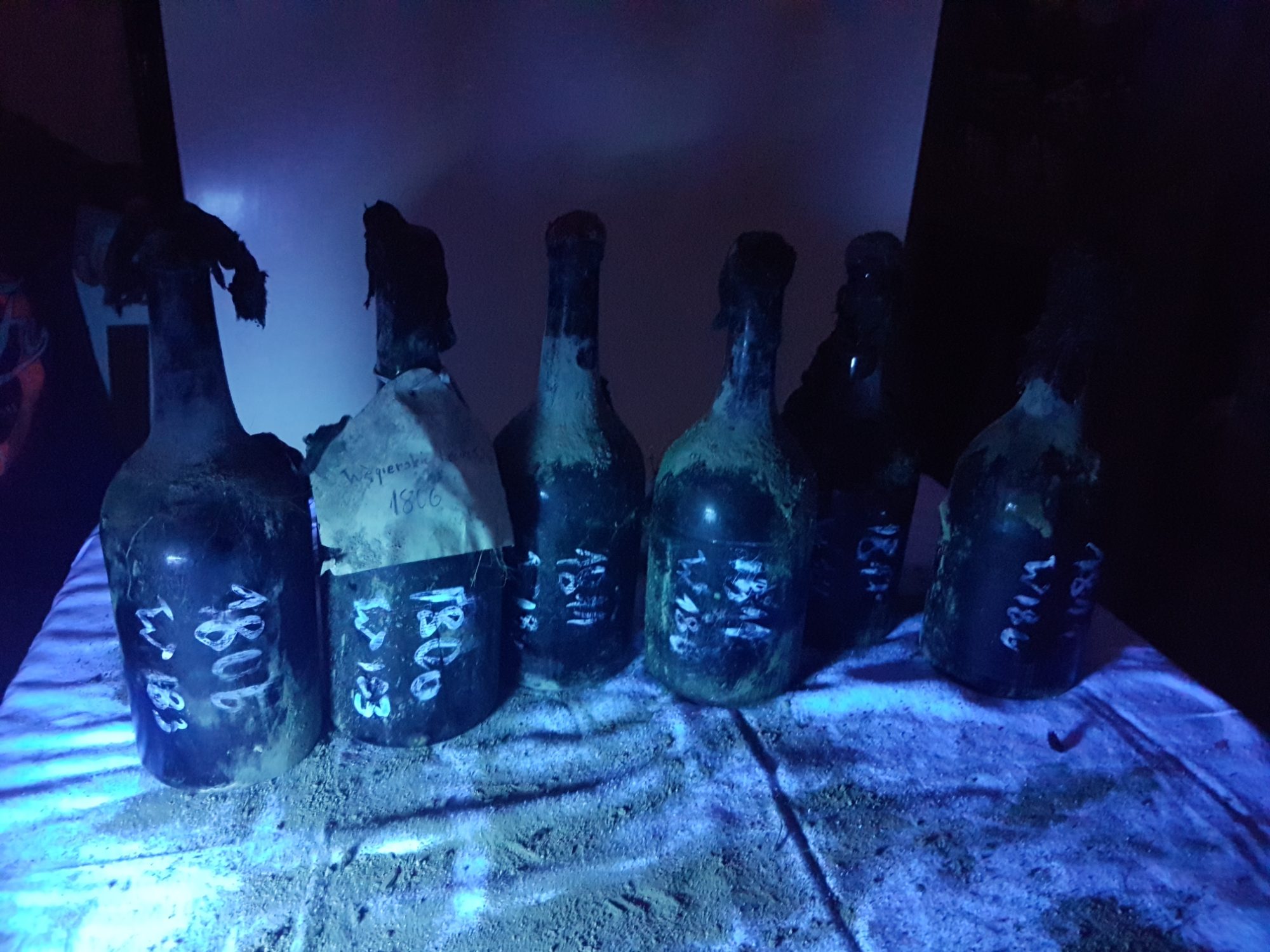
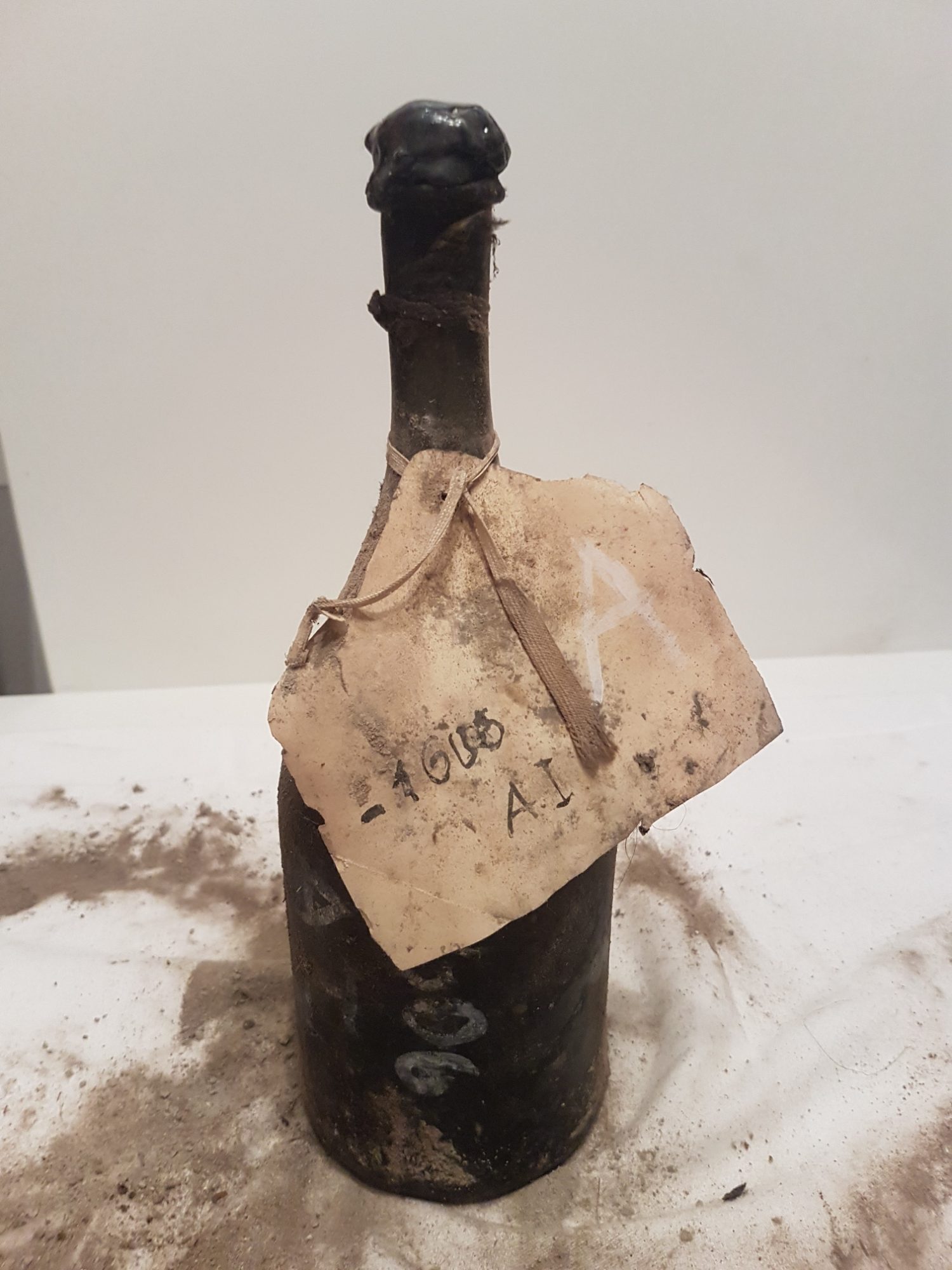
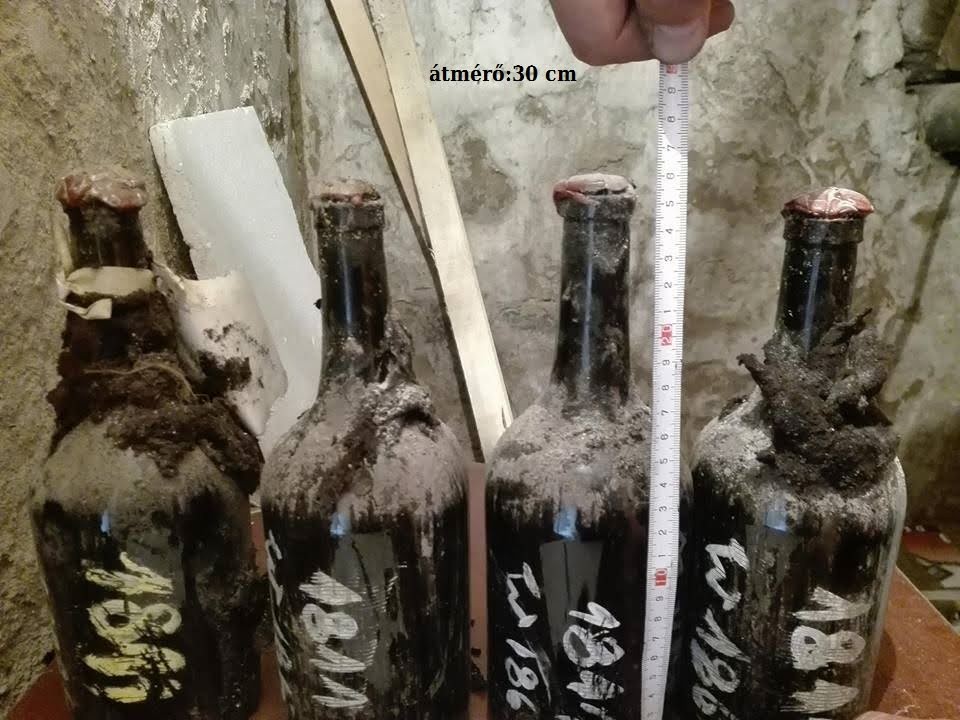
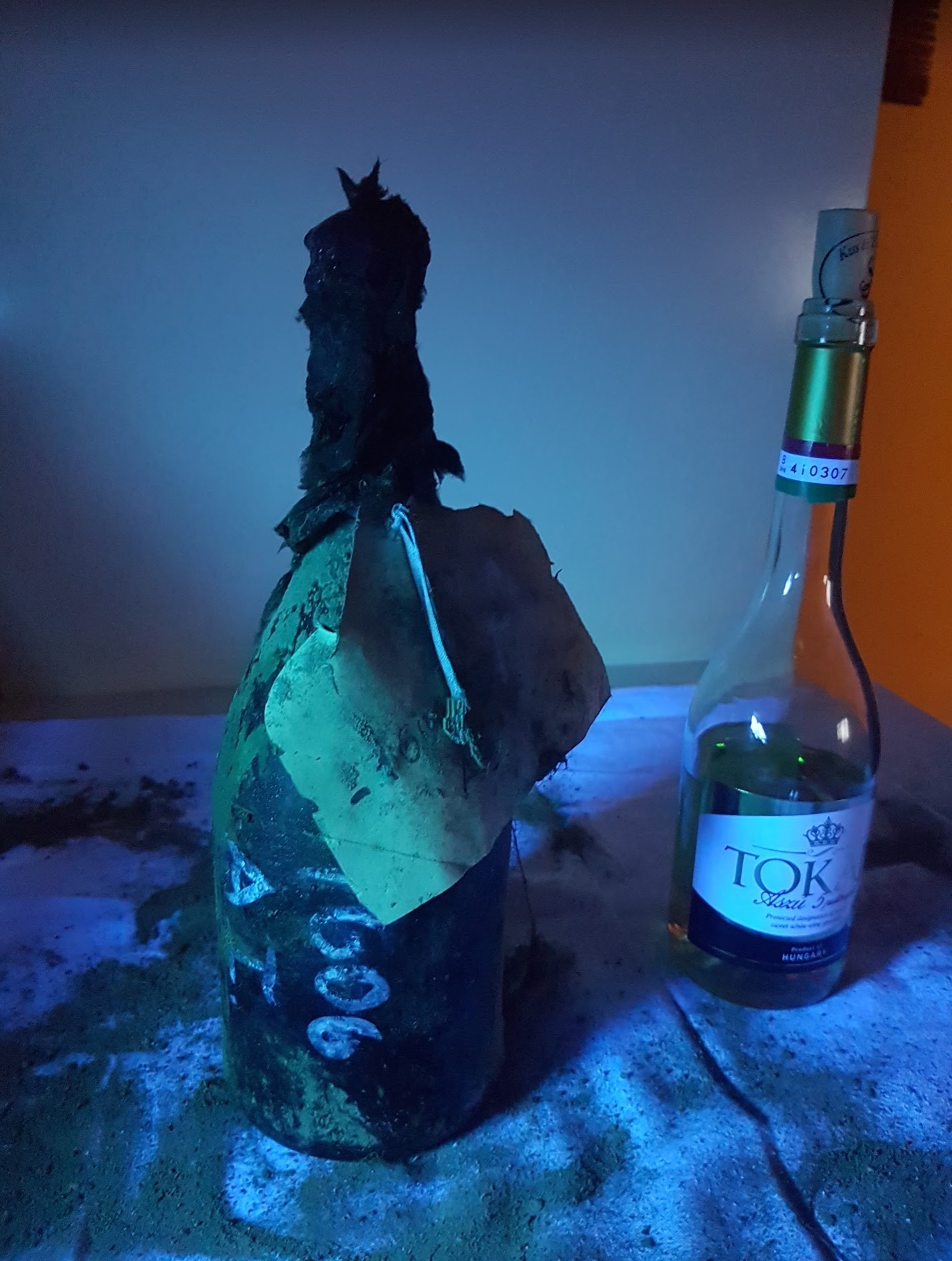
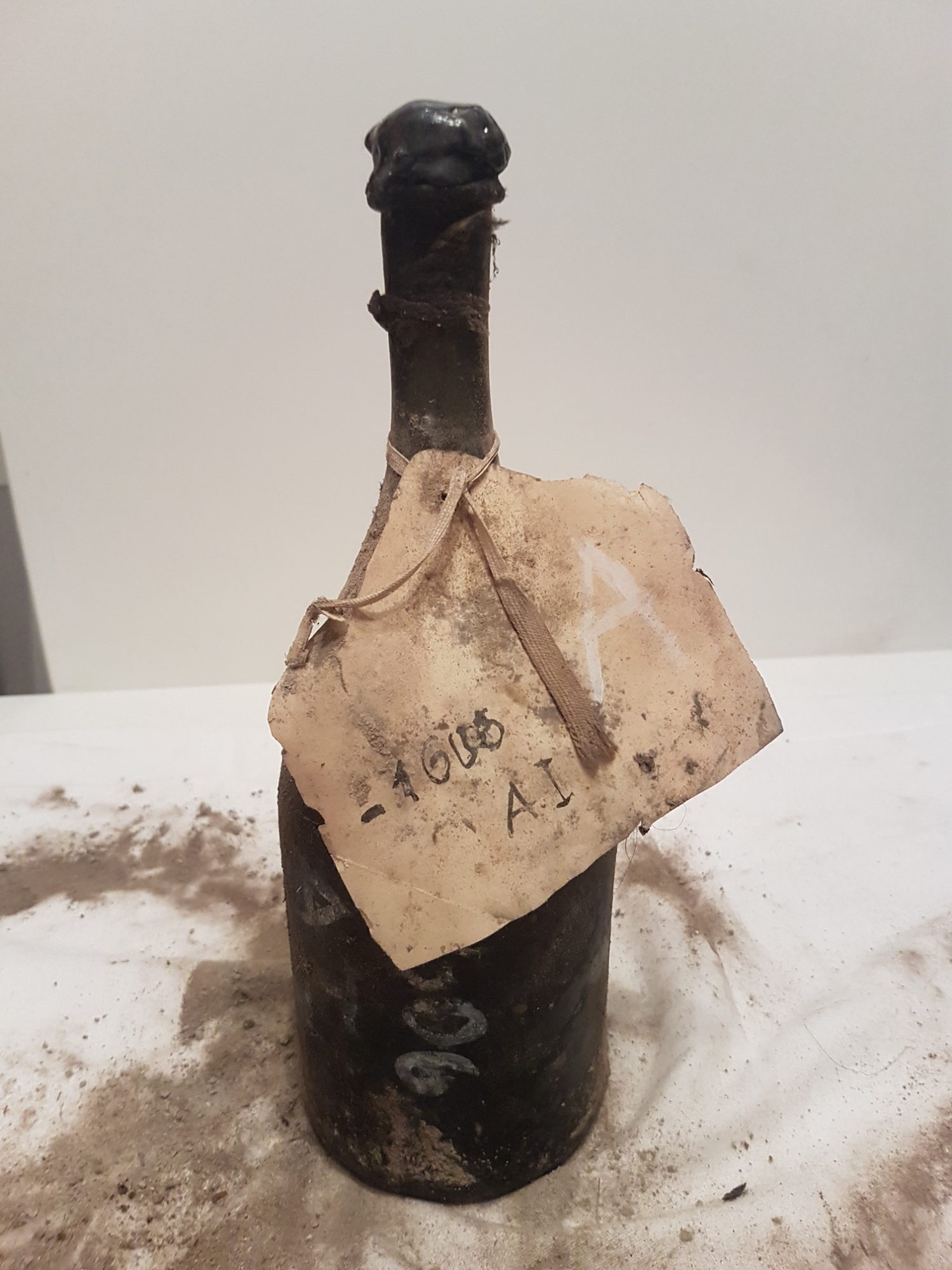
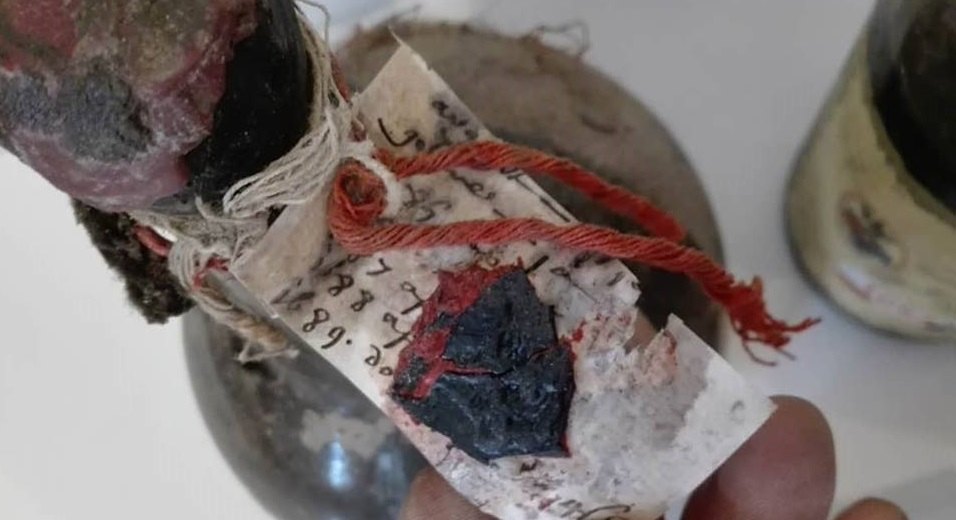
The legendary Tokaji collection ofThe Fukier Cellar
For four centuries a merchant house on the Old Town Market Square held the largest commercially available collection of very old Tokaji in the world. In October 1939 it vanished. In 2017 I found the first bottle.
1515 — 1959
Origin and short history of the trading house
The Polish Fukier family is believed to be a side branch of the Fugger dynasty of Augsburg —
in the sixteenth century among the wealthiest houses in Europe, and, through the
Fugger–Thurzó partnership, already deeply entangled with Hungary. Two of the family settled in
Poland — Jerzy in Warsaw in 1515, Bartłomiej in Kraków in 1564 — though how they were related
to the Augsburg house is unestablished. The wine store dates from 1610; the family does not. The family began writing itself
Fukier towards the end of the eighteenth century.
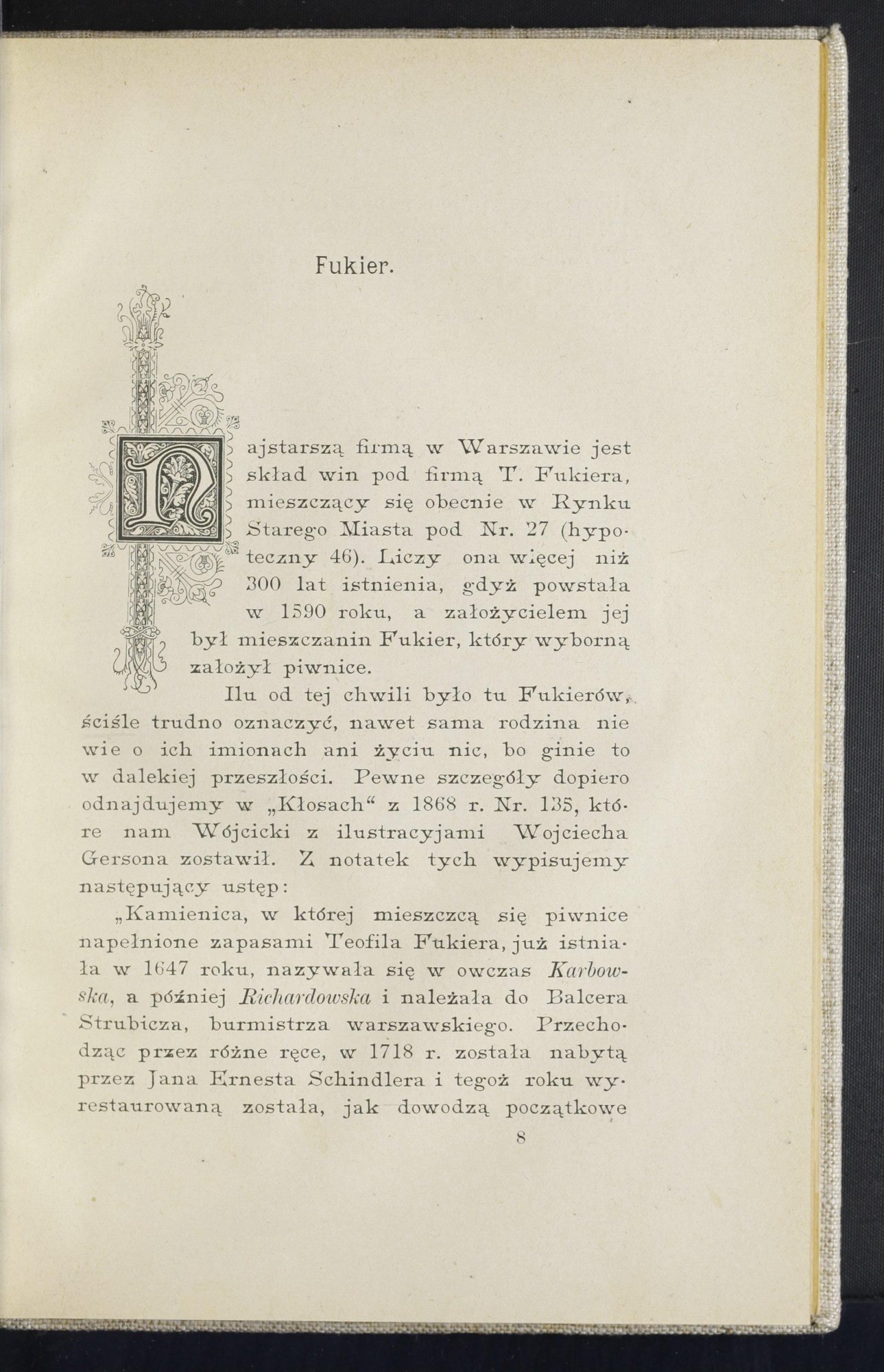
The house, and the 1610 date in print
Owners before the family: recorded by 1647 as Karbowska, later Richardowska, then Balcer Strubicz, burgomaster of Warsaw; bought and restored in 1718 by Jan Ernest Schindler, whose initials and date are on the stair gallery and the weather-vane.
Floryan Fukier owner from 1805, Teofil from 1837. The taryfa of 1817 is the first to name Floryan; those of 1784 and 1797 still name Rabbe.
The 1610 date was disputed in print, by name: Kurjer Warszawski, 26 May 1917, printed Prof. Tadeusz Korzon's letter — the owners “were mistaken in painting the founding date 1610 on the shutter”.
Maksymilian Baruch's research, reviewed in the same paper on 13 June 1917, gives the settlement still worth keeping: family in Warsaw from 1515, the wine store from 1610.
Proverbial by the sixteenth century: “Bogaty jak Fukier” — rich as a Fukier — with Klonowic's verse behind it.
Source: APW, Zbiór Korotyńskich I/122 — Wincenty Korotyński's working file on the Old Town Market Square.
Real fame as a wine trading house and wine bar begins with Florian Fukier
(1772–1837), who in 1805 bought the wine bar on the Old Town Market Square that
became known as the Winiarnia Fukierowska. He and his successors Teofil, Henryk and
Henryk Maria built and maintained a collection of old Tokaji that had no commercial
equivalent anywhere, and a house that played a considerable part in the social and political
life of Warsaw.
In 1927 the company went bankrupt under Henryk Maria Fukier and was sold to
Edward Krzemiński, who in turn ran into financial difficulty. The building was almost
completely destroyed in the Second World War, rebuilt, and reopened on 22 July 1953
as the state-owned Winiarnia Fukierowska; today, privately owned, it trades as U Fukiera.
The state house took up the prewar interior, kept Hungarian wines on the list, continued the
guest book, and hung the walls with wine ex-libris from the collection of Norbert Lipóczy,
a Tokaj vintner whose family had traded with the Fukiers since the first half of the nineteenth
century. Henryk Maria Fukier worked closely with the state owner of the winiarnia and of the
cellars under his old house, and marked the fiftieth anniversary of his working life there. Henryk
Maria Fukier, the last of the line, died childless in Warsaw on 27 April 1959. His memoir
Wspomnienia staromiejskie remains one of the most valuable single sources on the
cellar — and, for the events of 1939, very nearly the only one.
The history and legacy of the family itself has been researched in depth by
Gabriel Kurczewski, whose publications I recommend without reservation. That
leaves me free to concentrate here on what this site is about: the Tokaji.
1754 — 1938
The reputation of the cellar
The Fukier cellar was not famous for being large. It was famous because it was the one place
in the world where a private buyer could walk in and purchase a bottle of Tokaji older than
most of the buildings around him. The house traded on that, and the record of who came to
drink there reads like a register of Central European power.
In 1754 Antoni Fukier sent Tokaji then already 150 years old to the
coronation festivities of Stanisław Poniatowski.
Legend has Napoleon in the cellar in 1812, on the march to Moscow. It is a
good story and I have never been able to document it.
In 1867 Teofil Fukier sent wine of the same vintage to the Hungarian
coronation of Franz Joseph — a gift made on Fukier’s own initiative, as both Henryk
Maria Fukier and Maksymilian Baruch state, not a purchase by Hungarians short of old wine;
Kurczewski reads it the other way round, as an attempt to draw Hungarian attention to the
Warsaw cellars.
In 1877Don Carlos, Duke of Madrid, the Carlist claimant to the
Spanish throne, was shown the cellar and stopped at the hetman wines of 1606 and 1652.
In 1915, days after the German entry into Warsaw, Prince Leopold of
Bavaria — brother of King Ludwig III and commander of the 9th Army — visited the house with his
entourage and signed the guest book.
In 1916three bottles of the 1606 went to
the coronation of Karl I at Budapest, as “the oldest Hungarian wine in
the world”. The memoir gives the logistics: the case was packed by Baron Adrian and carried by Rotmistrz
Count Beniowski, and the wine was served at the end of the reception, in tiny glasses, at the principal table
only. To find three bottles still sound, seven had to be opened.
In 1916King Ludwig III of Bavaria himself came. His signature
stood at the head of a page of the guest book, where Willem van de Poll photographed it
in 1934.
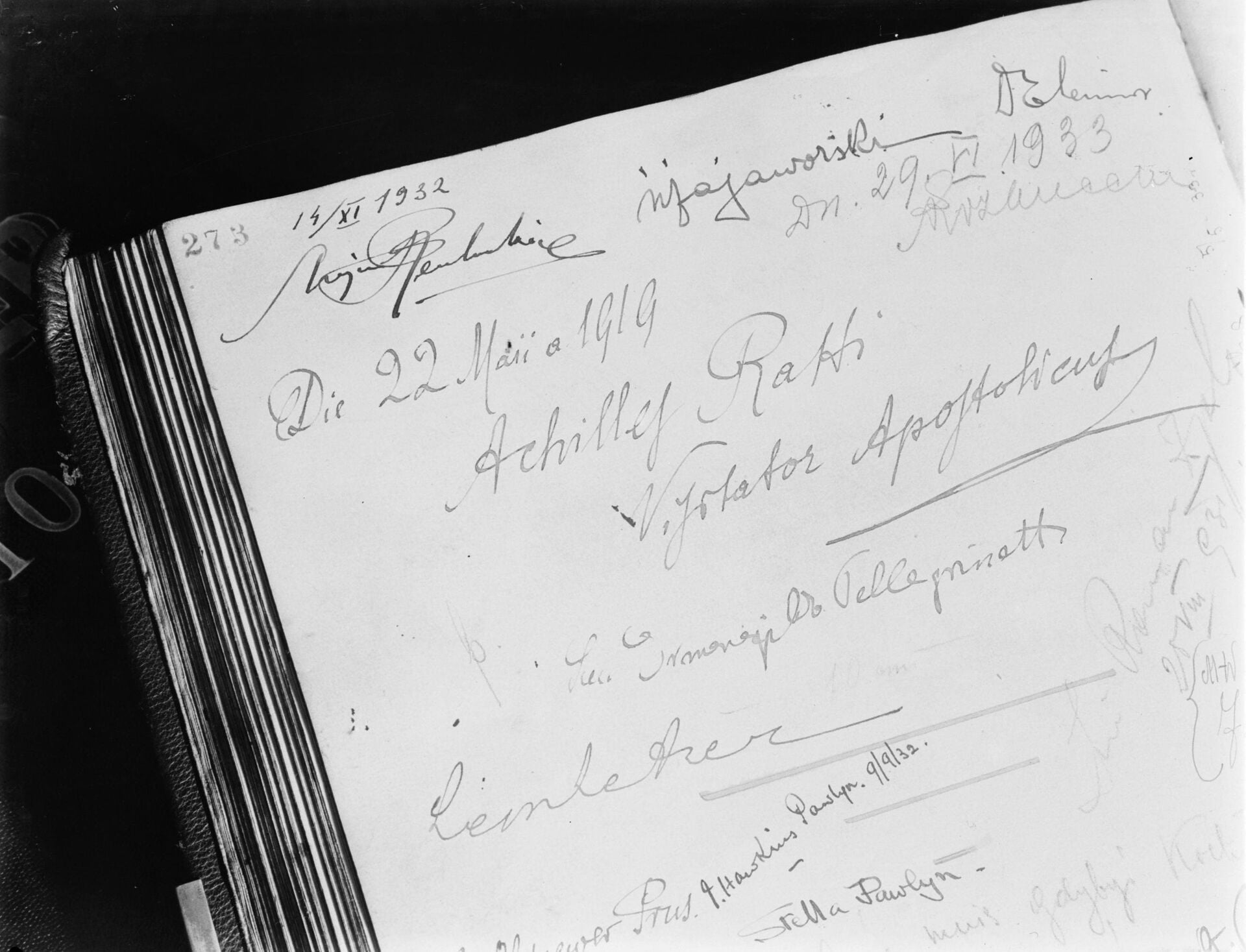
On 22 May 1919Achille Ratti, Apostolic Visitor to Poland,
signed the guest book with his secretary Ermenegildo Pellegrinetti. Three years later he was elected pope as
Pius XI.
Thomas Mann was photographed in the cellar in 1927.
Prime Minister Gyula Gömbös bought two bottles as a gift for Regent
Horthy.
A glass of wine that nearly cost a minister his post
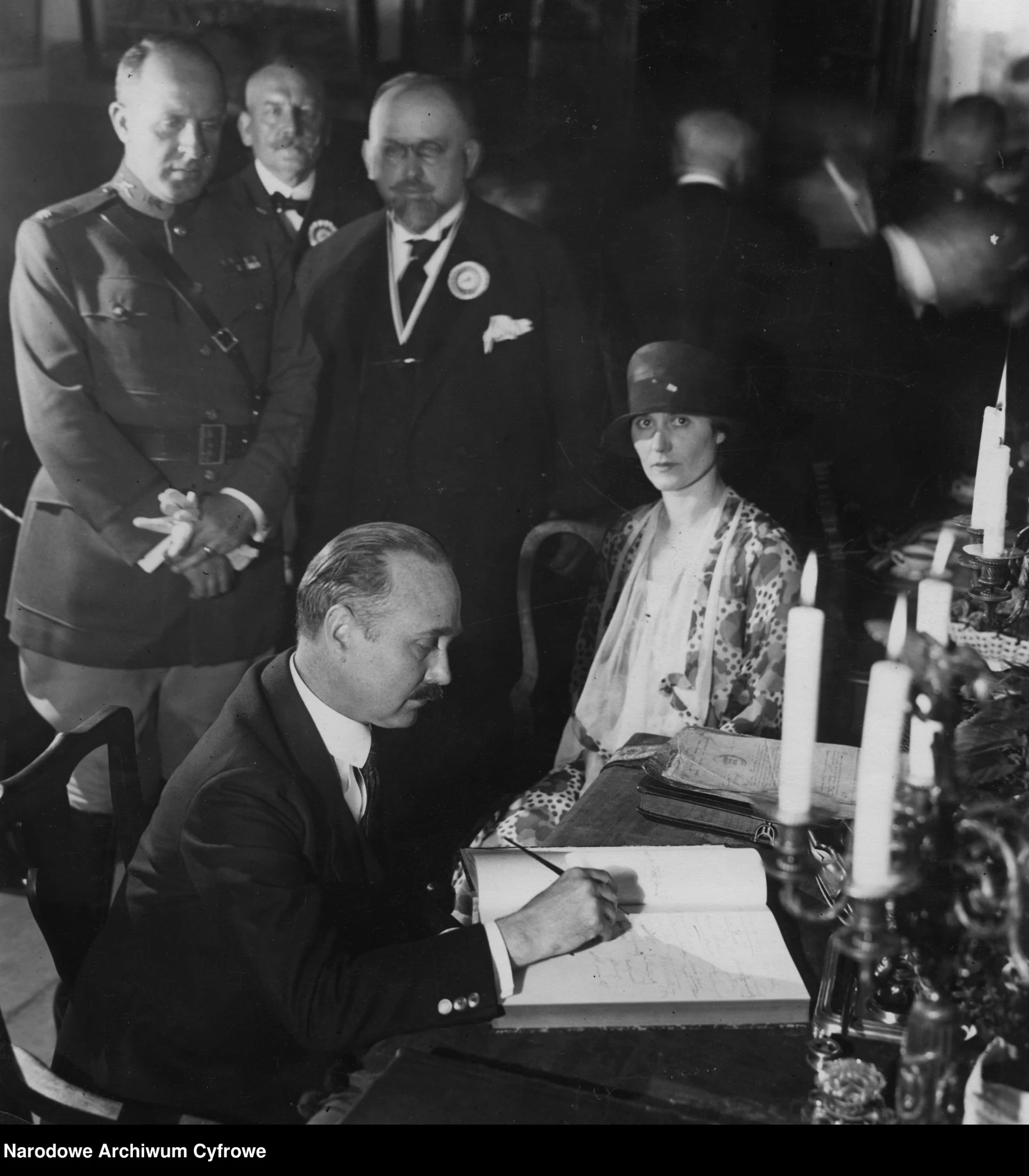
John B. Stetson Jr. (1884–1952), son of the Philadelphia hat manufacturer, was the American
Minister to Poland from 1925 to 1929. On the American national holiday of 1926 his Warsaw programme ran from a
church service through the parade of the Sokols, the military and the fire brigades to a session of the city
council and a banquet — and somewhere in it he was taken to Fukier's and offered a glass of hundred-year-old
wine. He drank it. The United States was under Prohibition, and an American press
campaign demanded his resignation over the glass.
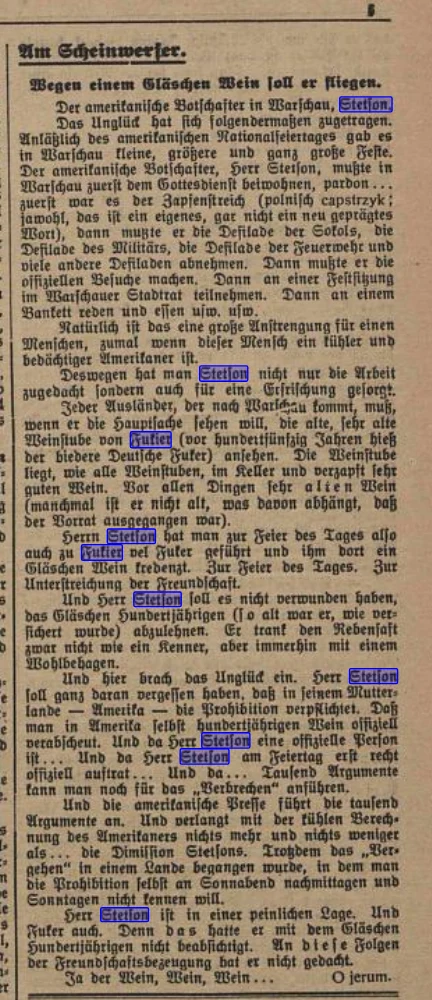
The Lodzer Volkszeitung reported the affair on 14 July 1926 under the headline
“Wegen einem Gläschen Wein soll er fliegen” — over one small glass of wine he is to be thrown out — and
set out the cellar as every foreigner in Warsaw encountered it: the old wine house of Fukier on the market
square, which a hundred and fifty years earlier had been called “the honest German Fuker”, lying deep in the
cellar and pouring very good wine. The paper's verdict on the minister was that he had not intended those
consequences of an act of friendship.
The signature, and the scandal. Left: “Fragment of the celebration at Fukier's wine house. The
envoy extraordinary and minister plenipotentiary of the United States in Poland, John Stetson, signs the guest
book. His wife is visible beside him.” 1926, Narodowe Archiwum Cyfrowe. Right: Lodzer Volkszeitung,
14 July 1926, Jg. 4 Nr. 170. Click either image to enlarge.
“The archive of old wines”, 1915
Vlas Doroshevich, in Russkoje Słowo 1915 nr 61, calls the cellar an “archive of old wines”, very nearly the first in the world. Three things in that passage are not in any other source here:
Where the wine came from. The Fukier Hungarians, he writes, passed to the house out of the old cellars of Catholic monasteries — a provenance channel distinct from court procurement, and consistent with the overflow stock kept until 1849 in the church-owned cellars at ul. Jezuicka 72.
Who it was poured for. Wines issued to the gravely ill on doctors' prescriptions, credited with giving a dying man a few more minutes.
A price and a vintage. A bottle “po getmanu Potockomu”, vintage 1612, at 75 roubles — against 15–20 for a genuine Crimean liqueur wine.
He also repeats the claim of a room where Napoleon drank — the earliest form of that legend in this file, and no more than a legend.
Four dated points from the Korotyński file
1877. Don Carlos, Duke of Madrid, stops at the hetman wines of 1606 and 1652, astonished that Hungarian wine keeps so long. A bottle of Fukier węgrzyn — “equal to the Bourbons in antiquity of line” — is priced at 25 roubles, which the reporter thinks low.
1878. Matejko and Siemiradzki visit.
1931. The opening of the Gospoda Towarzyska on the first floor, reported with photographs in a hunting weekly: the crowd at the door, the halberdier, diplomatic cars with foreign pennants, and the toast Si Fortuna juvat, quis contra nos?
1932. The tourism pivot continues: a Tatra bagpiper, Stanisław Mróz, playing nightly in the lower Gothic chambers, free entry, 2 zł a glass.
1938. The interiors as a feuilleton describes them: Gospoda Towarzyska, the armorial room in Gdańsk style, the fresco room with Lampi frescoes of 1789, the tapestry room. A mossy bottle of 1606 Tokaji with a gąsior of 1764 mead sold that April for 750 zł the pair.
The motto, in three versions
Wójcicki, 1868: Non est potus, nisi vinum / Non est vinum, nisi hungarium / Non est bonum, nisi Varsaviae educatum.
Doroshevich, 1915: Nihil vinum nisi ungaricum, in Ungaria natum, in Polonia educatum.
Henryk Fukier himself, 1925: Nullum vinum nisi hungaricum … Hungariae natum – Poloniae educatum.
One qualification belongs with that list. For most of the house's history the very oldest bottles were not
really for sale: they were shown, poured to guests of consequence, and sent out as gifts on occasions of state.
The oldest Tokaji probably became freely purchasable only after the insolvency of the Fukier company in
1927, when Krzemiński took over the running of the business and the
reserves that had been treated as heirlooms started to be traded as stock. Most of the old bottles that survive
in private hands today left the cellar in those last eleven years, not in the two centuries before them.
A second measure of the reputation is the guest book, and a third is the price list — of
which more below. For scale: the Kempinski list of 1912 in Berlin offered twenty-five
different Tokaji, and an 1876 report on another Warsaw cellar mentions vintages of 1590 and
1634. Old Tokaji was not unknown in the trade. Fukier simply had more of it, and older.
Henryk Maria Fukier, 1926. Source: Narodowe Archiwum Cyfrowe / szukajwarchiwach.gov.pl
Henryk Maria Fukier with Count Josef Sermage. [caption — confirm date]
Thomas Mann in the Fukier cellar, 1927. Source: szukajwarchiwach.gov.pl
[caption] Fukier cellar, visitors.
[caption] Fukier cellar, visitors.
[caption] Fukier cellar, visitors.
[caption] Fukier cellar, visitors.
Proprietors and guests, 1926–1938. Henryk Maria Fukier in 1926; with Count Josef
Sermage; Thomas Mann in the cellar in 1927. Sources for the first and third frames:
szukajwarchiwach.gov.pl.
A note on the guest book, and what the surviving leaves show
There were five large volumes, and all five burned. „Dziś żal mi tych spalonych
pięciu ogromnych tomów” — today I grieve for those five huge burned volumes — with a single small
autograph leaf surviving in the hands of his nephew Schuch (p. 153). The idea had been Teofil’s, modelled on visitors’
books he had signed on his travels in Germany: Schiller’s house, Goethe’s and Dürer’s, and in Gdańsk the
Artus Court and the Uphagen house. Signatures were entered with the visitor’s city and country, “as if a register of
visitors, material for statistics”; the aphorisms, impressions and drawings came later (p. 152). The books were consulted as a
historical source in their own right — a commission came from Paris hunting for Balzac’s signature, from his journey to
Mme Hańska (p. 110). One further trace is worth chasing: before the 1963 book, Zrębowicz had worked the volumes up as a
series in a Warsaw daily “long ago, in the years 1923–27” (p. 153). That series would be the fullest surviving
description of their contents. What survives are photographs, and Gabriel Kurczewski has
identified what is on three of them, all held in the photographic collection of the Dutch
Nationaal Archief: the autograph of a King Ludwig of
Bavaria; the signature of Achille Ratti, apostolic visitor and
nuncio in Warsaw 1918–1920 and from 1922 Pope Pius XI, signing on 22 May 1919 with his
secretary on the Polish mission, Ermenegildo Pellegrinetti, later nuncio to Yugoslavia and
created cardinal by Ratti himself in 1937; and the autograph
of Marshal Foch. Henryk Maria Fukier preserved the Bavarian's remark:
“I have heard that your wines are the older the better. I will gladly try — but what
will my personal physician say?”
The archival description of the first reads “Guestbook of winery Fukier, with a contribution from King Ludwig of
Bavaria”, and the word Ludwig is legible at the top of the page. The Bavarian in question is
Ludwig III, the last king of Bavaria — not Ludwig I, who died in
1868 and for whom no journey to Poland has ever been documented. The occupation years put the Bavarian court
within reach of Warsaw for the first time, and the leaf belongs to that period rather than to the 1918–1920
window suggested by the neighbouring Ratti and Foch autographs.
A second Bavarian, and a documented one. German troops entered Warsaw at dawn on
5 August 1915, immediately after the Russians blew the Vistula bridges. The 9th Army was
commanded by Prince Leopold of Bavaria, brother of King Ludwig III. In his memoirs
Wspomnienia staromiejskie Henryk Maria Fukier records that a few days after the entry the prince came to
the house with his entourage, toured the old cellar, asked about the firm's history and about the family's own
Bavarian descent from the Augsburg Fuggers, and that at the end he and his whole suite signed the guest book.
Beseler, appointed Governor-General on 26 August 1915, followed soon after with his entire staff, and then
nearly the whole civil administration. Everything checkable in that passage — the dawn entry, the prince as the
king's brother, Beseler's arrival — matches the independent record; the visits themselves rest on Fukier's
testimony alone.
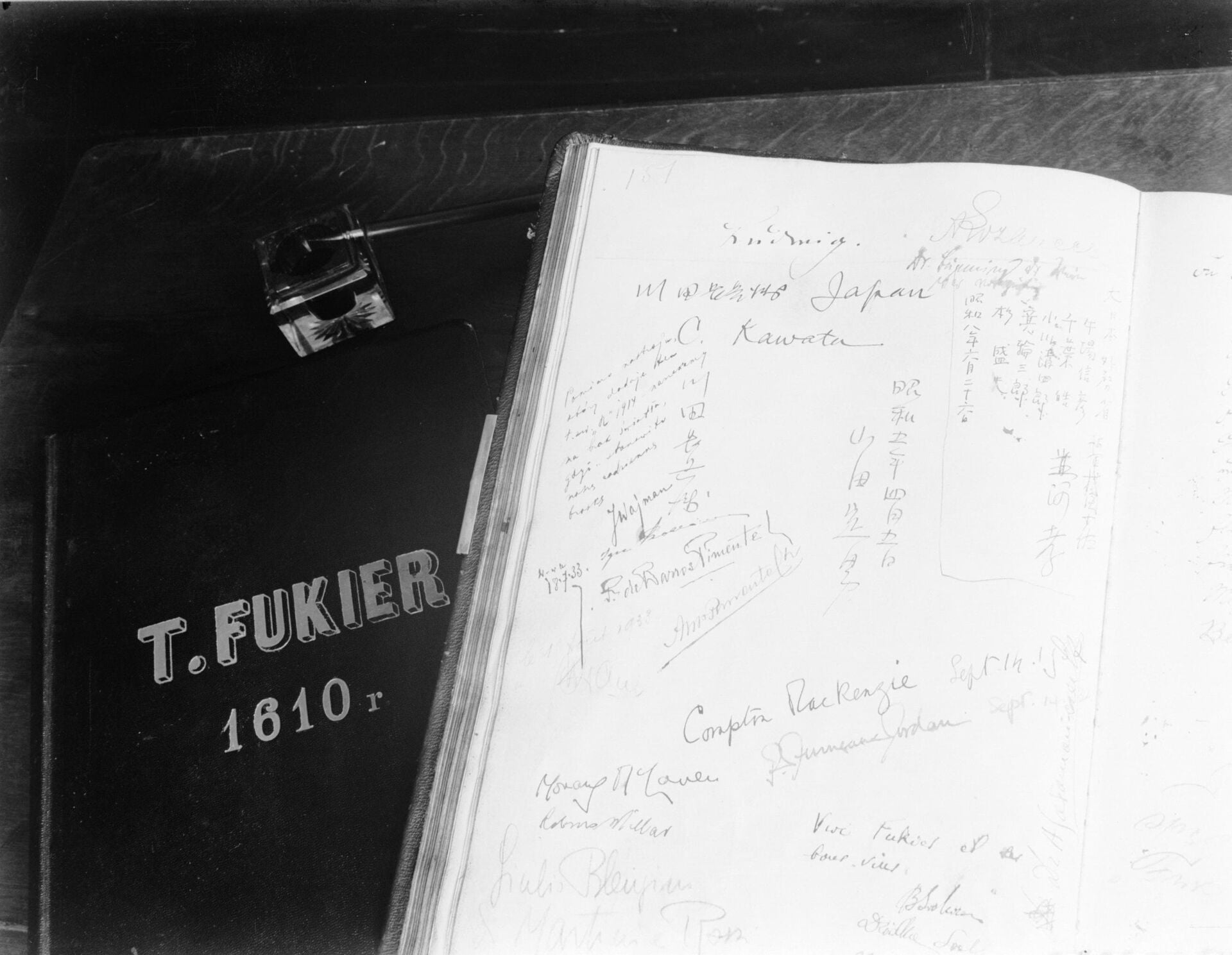
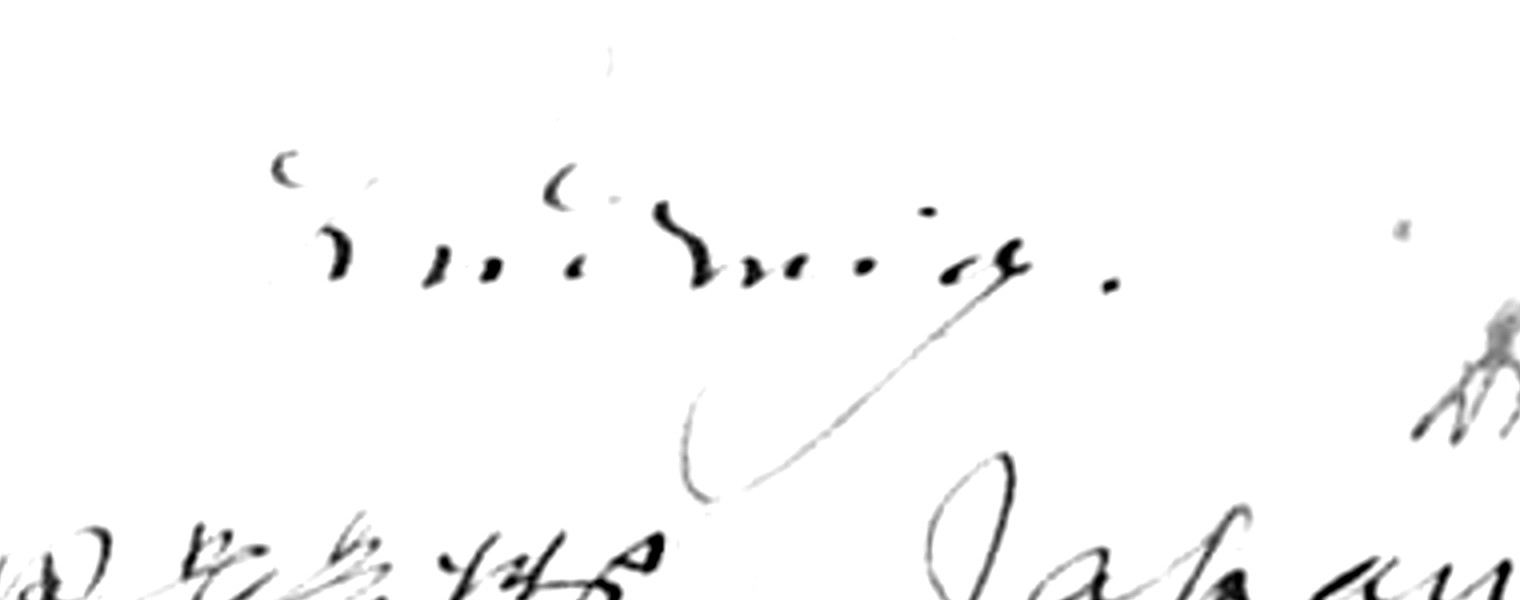
The prince's visit was followed the next year by the king's own. Willem van de Poll photographed the album in
1934 with the signature Ludwig at the head of the page, which is the
archival caption's Bavarian contribution.
Page 273: a future pope. The Latin dating line reads Die 22 Maii a. 1919, and beneath it
Achille Ratti, Visitator Apostolicus — the title fixes the date, since he was appointed Nuncio a
fortnight later. Under him signs his secretary Ermenegildo Pellegrinetti, made cardinal in 1937 by
Ratti himself, by then Pius XI. The dates crowded around the entry — 14/XI 1932, 29 VI 1933, 9/9/32 — show
that later guests signed into the blank space around it: the book was not filled chronologically.
Photographed by Willem van de Poll in 1934, Nationaal Archief. Click to enlarge.
The guest book, photographed in 1934. One of Willem van de Poll's photographs of the house shows the
album open beside the inkwell and a bottle case lettered T. FUKIER 1610 r., with the Bavarian
signature at the head of the page, above the Japanese entries and the autographs of Compton Mackenzie and
others. Right: the same signature enlarged. Nationaal Archief, Willem van de Poll collection. Click to enlarge.
Roy's own sentence corroborates it. Writing of what he was handed to sign in
April 1919, he records that the album already contained the autographs of
“all the most important soldiers, politicians and rulers of the Central Powers”. Bavaria was a Central
Power, and its king from 1913 until his abdication in November 1918 was Ludwig III. That is also the route by
which a Bavarian king's signature could reach a Warsaw cellar at all: the
German occupation of Warsaw, 1915–18, when the rulers and commanders of the Central
Powers passed through the city, and when an elderly king joking about what his personal physician would say
fits exactly.
A fuller account of the book, made from the volume itself before its loss, was published by
Roman Zrębowicz, “U Fukiera”, in Spotkania z czasem (Wydawnictwo
Łódzkie, 1963). For 1919 he lists drawings by Wojciech Kossak, Tadeusz Pruszkowski, Szczepan
Felsztyński and Józef Ryszkiewicz, and singles out a pencil sketch by Zofia
Stryjeńska of a nobleman with a karabela holding a candle over a barrel in a hand
unsteady with wine, captioned in verse: “Świetna była wina kapka…” — “Splendid was
the drop of wine, the paintress's paw is trembling…”. The word kapka is the same
one the 1853 Potocki auction catalogue used for Tokaji essence.
April 1919
An outsider in the cellar: James A. Roy
Most of what we know about the cellar comes from the family, from Polish journalists, or from
Bókay's visit of 1934. There is one account by a foreigner with no stake in the story at all,
and Gabriel Kurczewski found it: James A. Roy, sent to Poland in 1919 on the
inter-Allied commission that was to ease the Polish–Czechoslovak quarrel over Cieszyn,
published his recollections the following year as Pole and Czech in Silesia (London,
1920). He went down into the Fukier cellar in April 1919.
What he reports is worth having almost line by line. He drank, he says, Tokaji seventy
years old — a wine of about 1849, drunk in the spring of 1919. He was shown older
bottles still: “strange, cobweb-wrapped bottles resembling crinolines in
shape, filled with wine still in the times of James I”. He was told he could
not buy any of it at any price. And he was walked from chamber to chamber through passages cut
in solid rock, by the light of a single candle carried by Monsieur Fukier himself.
He also describes the guest book, and his sentence about it turns out to be the most useful
thing he wrote. The album Fukier handed the commission to sign, he says, held not only pencil
and ink sketches by the foremost living Polish artists but the signatures of all the
most important soldiers, politicians and rulers of the Central Powers. See the note in
article 02 for what that does to the “Ludwig” leaf.
What the James I remark tells us about “1606”
James I reigned from 1603 to 1625, and 1606 falls inside that reign. Roy is therefore
recording the house's own account of its oldest wine as given to an English visitor in 1919 —
not as a vintage year but as a reign, which is exactly how a guide would localise 1606 for an
Englishman. This does not corroborate the vintage. What it does is fix the claim at a
datable moment, in a foreign language, from a witness with nothing invested in the Polish
tradition. For the historiography of the 1606 date that is a useful, independent data point.
The word crinoline is worth as much again. It is a bottle-form description —
a wide, low-shouldered, spreading body — and it gives us something to measure surviving
candidates against.
Not for sale at any price
The most valuable single sentence Roy wrote is about the market, and it complicates the
picture the price lists give: “It is impossible for an outsider to obtain any of these
wines, since all the bottles are divided among the Polish aristocracy and released from the
cellar only on the occasion of especially important family events.”
In other words the oldest bottles were allocated, not sold. Access ran by
birth plus occasion rather than by price, and the recorded sales — Don Carlos in 1877, James
Allison between the wars — are exceptions rather than a market. Henryk Maria Fukier says
much the same in Wspomnienia staromiejskie, though writing in the 1950s he no longer
advertised the aristocracy's privileges. What he stressed instead is that the old Fukier wines
were famous for their medicinal power and were never refused to anyone who came asking for
medicine for the gravely ill.
A translation caveat, and an easy fix
Kurczewski quotes Roy in Polish translation, so everything above has come into English
through Polish. Before any of it is quoted in print, Roy's own words should be taken
from the 1920 edition, which is digitised on archive.org. It is half an hour's work
and it removes the only weakness in an otherwise first-rate witness.
And a note on the decline
The same article carries a detail that belongs in any assessment of an interwar Fukier bottle.
After Henryk Maria Fukier's bankruptcy in 1927 the house passed to Edward Krzemiński, and
Wiesław Wiernicki — working from the manuscript of Władysław Płachciński — records that
“under Krzemiński's management the fame of good wines at Fukier's came to an end, because
he bought cheap French wines from importers and sold them at a high price.” The
photographs of the guest-book leaves point the same way: by the 1930s the historic autographs
had been crowded round with the signatures of ordinary visitors wanting to sign beside the
famous — and Kurczewski reads that permissiveness itself as a symptom of the house's fall after
1927. A Fukier provenance resting on the 1930s is not the same claim as one resting on
the nineteenth century.
Płachciński's manuscript preserves one scene from those years, and it is worth keeping because
it fixes the register of the place better than any assessment could. Around midnight General
Bolesław Wieniawa-Długoszowski came in with his party, in uniform. The room
was already rowdy; drunken women began shouting at him to sing them Sambre et Meuse,
the French march of the Great War. He did not care for it, and left at once, taking his whole
company with him.
1610 — 1939
The Tokaji: quantity, quality and cellar management
Tokaji arrived in Warsaw mostly in barrel, and was bottled by the house into whatever
bottles were to hand. This is the single most important fact for anyone authenticating a
Fukier bottle today: very old Fukier Tokaji is routinely found in bottles produced
far later than the vintage. Glass age and wine age do not have to agree. The house
also bought finished bottles when the opportunity arose, so the reverse occurs too.
The mechanics are documented. Everything but champagne came in okseft casks of
about 225 litres and was bottled on the premises, sometimes only after several years
of pielęgnacja — nurturing in wood; the cheapest wines went straight into demijohns or
bottles immediately before sale. Gerson's plates of 1868 show the working side of that: the
cellarman's tools, the contents of each cask written on its head, and small bowls of milk set
out on the floor for the cellar cat. They also settle one point of practice at a stroke — in
the piwnica butelkowa the bottles stand upright, on narrow shelves, in
single rows, in 1868. Upright storage at Fukier's is not an inference from the 1930s
photographs; it is drawn from life seventy years earlier.
When the claims appear, and what they were before
The two dates this house is known by — 1610 for the firm and
1606 for the wine — are not of equal age, and neither is as old as the
collection. The evidence for that is the earliest substantial publication about the place:
“Kamienica Teofila Fukiera, z piwnicami win węgierskich”, in
Kłosy VI, no. 135, 1868, signed (W.) and identifiable from the
volume's contents list as Kazimierz Władysław Wóycicki (1807–1879), historian
of Warsaw and the man on whose initiative Kłosy was founded. It is illustrated after
drawings by Wojciech Gerson, which are probably the oldest images of the
interiors. Gabriel Kurczewski found it, and reads it as an early document — and instrument —
of the making of the legend, well before the house entered Prus, Sienkiewicz, Gomulicki,
Oppman and Kozłowski.
What Wóycicki writes is this: “Fukier's cellars preserve to this day Hungarian wines
pressed from the berries more than three centuries ago.” More than three centuries before
1868 is before about 1568. The oldest wine in the house is being dated to the
later sixteenth century — not to 1606, which in 1868 would have been two hundred and sixty-two
years, and which nobody yet mentions. The Kurier Warszawski notice of 1866 says the
same. And 1610 does not appear in Wóycicki at all, which suggests the firm was
not yet using it to advertise itself; Kurczewski has separately shown, in
Almanach Muszyny 2012, that the tradition tying the beginning of Fukier wine trading
to 1610 has no support in the sources.
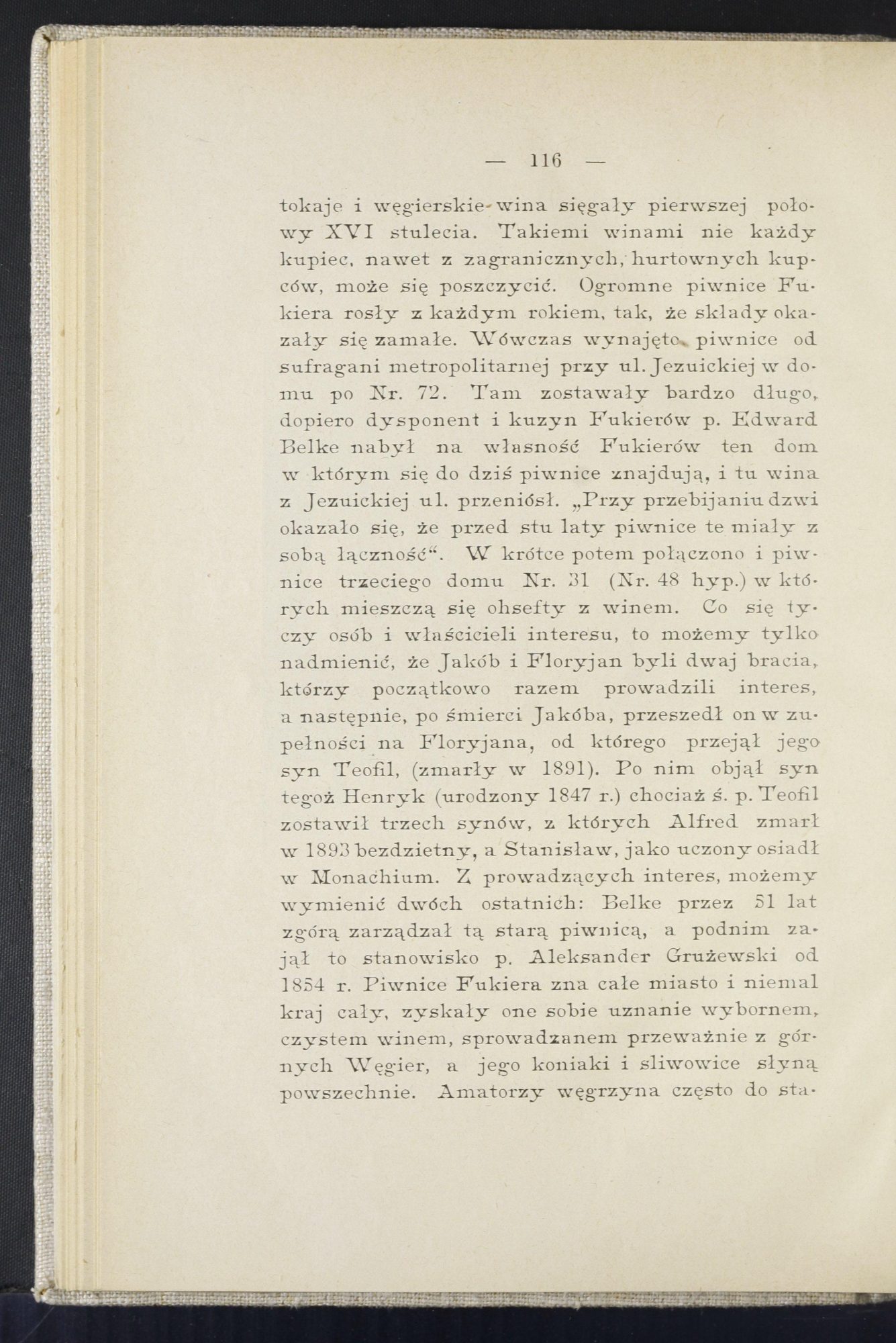
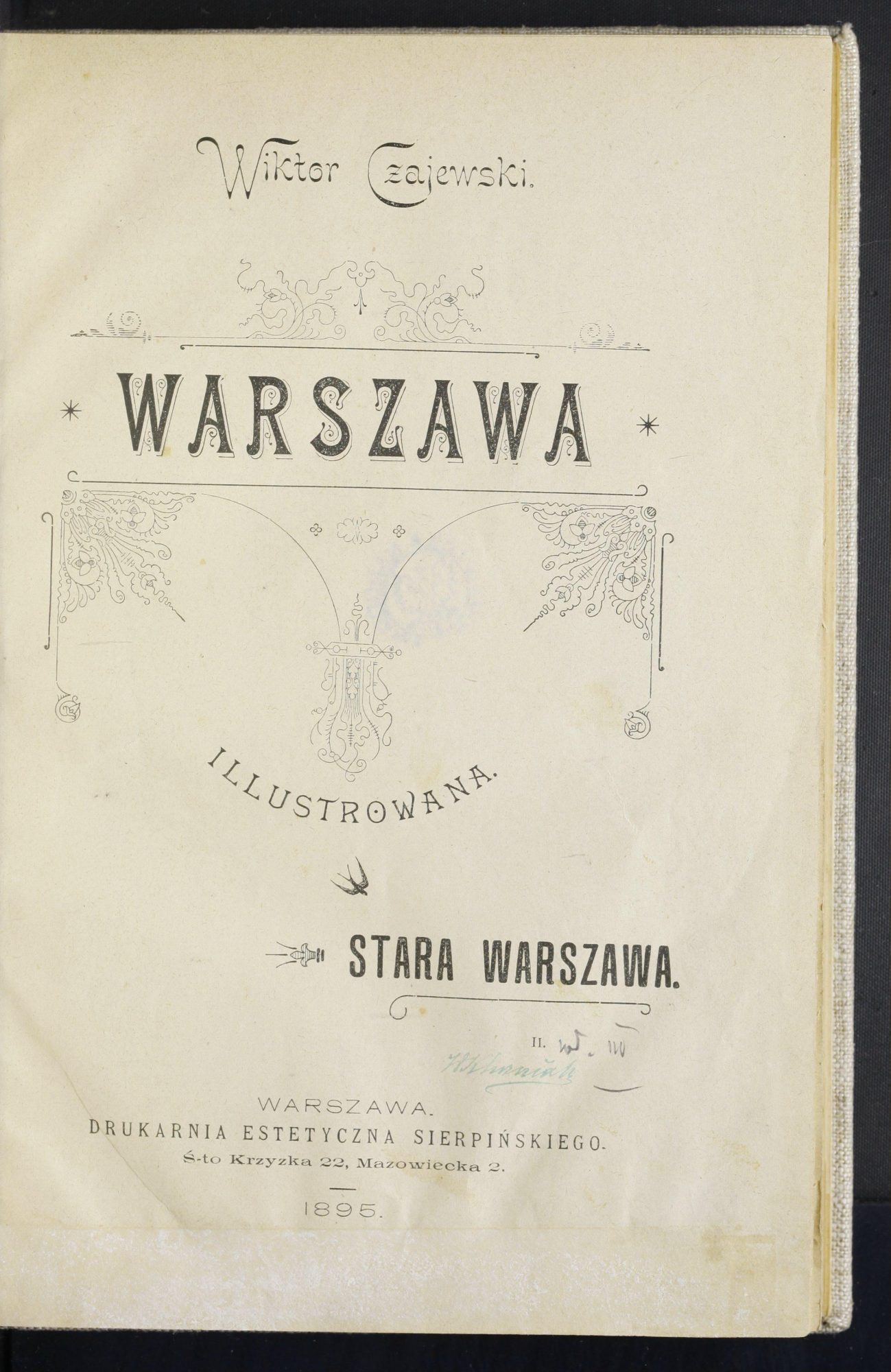
The furthest any source goes is Wiktor Czajewski, Warszawa illustrowana:
stara Warszawa, vol. 3 (Warsaw, 1895), pp. 113–117, who reprints Wóycicki and then adds that
the late Teofil had bought the Potocki cellar of 1606, and that from it “the Tokajis and
Hungarian wines reached the first half of the sixteenth century”. That is the maximum claim
ever made for this cellar — pre-1550 Tokaji — and Czajewski gives no document, no vintage and
no bottle for it.
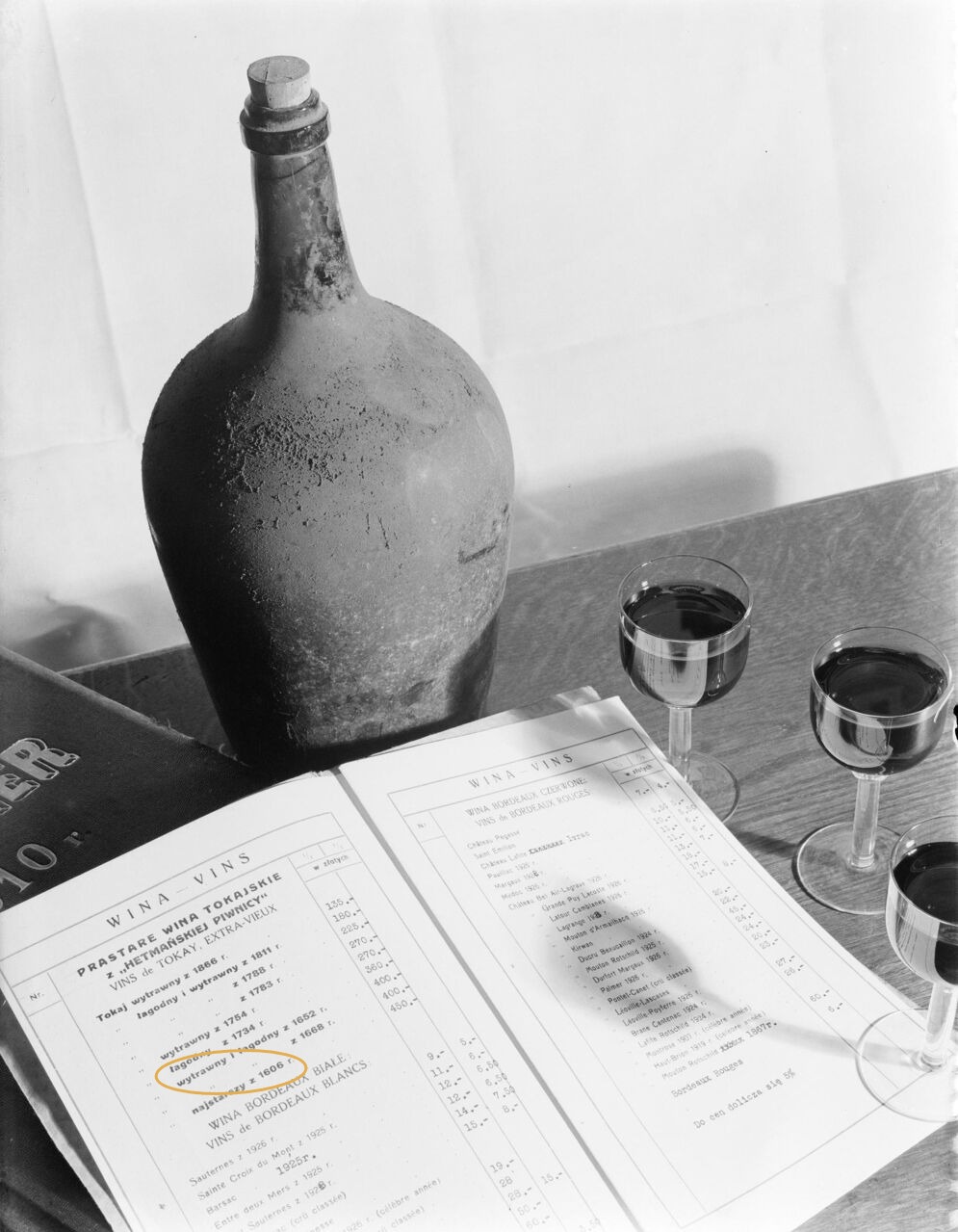
Where the maximum claim is printed. Czajewski's Fukier chapter of 1895 and, on p. 116, the sentence putting the Tokajis in the first half of the sixteenth century. Beside them the interwar price list, which had by then settled on a single vintage, 1606.
The oldest wine, as the house dated it
Source
The claim
1854
Teofil Fukier named, with two other merchants, as an “archeolog piwniczny” — a cellar archaeologist, an expert in old wines — buying from the estate of Count Franciszek Potocki
Kurier Warszawski, 1866
the oldest wines of the later sixteenth century
Kłosy, 1868
“pressed from the berries more than three centuries ago” — before about 1568. No 1606. No 1610.
Czajewski, 1895
the Tokajis and Hungarian wines “reached the first half of the sixteenth century” — the maximum claim, pre-1550, and unsupported
Price lists, c. 1929–1935
1606
at 450 zł the bottle; 1652 and 1668 described as “from the cellars of
Count Zamoyski and Prince Radziwiłł” — neither vintage named in Kłosy
Associated Press, 11 June 1927
“The wine, which dates back to 1610, when the firm was founded” — the earliest traceable conflation of the foundation year with a vintage, printed in the New York Times the next day and recycled in American papers into the 1930s
Cała Warszawa, 1930
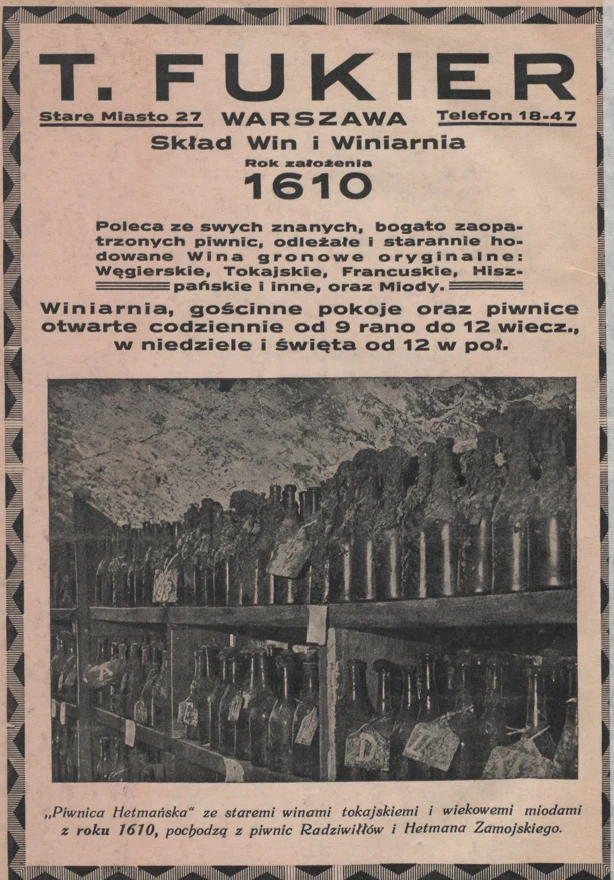
an advertisement captioning the Hetman cellar “with old Tokaji wines and aged meads of the year 1610” — giving as a vintage a year that had only ever been a foundation date
Shop board, 1930s
“Skład win T. Fukier — egzystuje od 1610 r.”, painted on the shutters and legible from the Market Square
The 1930 advertisement matters because of who was not there to check it.
Henryk Maria Fukier had lost the firm in 1927, the descriptions of visits in
his memoir stop with the 1920s, and he is not on the winery's list of employees drawn
up in 1935. Kurczewski does not believe that text passed through his hands, and the
internal evidence supports him: a house that had been saying “founded 1610” for decades does
not suddenly also mean 1610 as a vintage unless somebody outside the tradition is writing the
copy — and that somebody can now be identified. The conflation is already in the
Associated Press dispatch from Warsaw of 11 June 1927, printed in the
New York Times the following day under the headline “Wine Firm of 1610 Fails”:
“The wine, which dates back to 1610, when the firm was founded.” That is a wire
reporter compressing two facts into one sentence at the moment of the bankruptcy, three years
before the Polish advertisement — and the same copy was still circulating in American papers in
1931 and 1934. The dating of the oldest wine therefore moved twice — from an
unspecified sixteenth century in the 1860s, to a precise 1606 by the interwar years, to an
impossible 1610 that entered through a news agency in 1927 and came home into Polish
advertising by 1930 — and only the middle one has ever been treated as a fact.
The vintages the cellar itself named
Kłosy, 1868 — printed for a working commercial cellar, above an unspecified stratum “from the end of the sixteenth century”: 1734, 1754, 1768, 1781, 1783, 1788, 1806, 1811 (“wyborny zbiór” — an excellent harvest), 1818, 1827, 1834 and later.
Russkoje Słowo, 1915 — a bottle “po getmanu Potockomu”, vintage 1612, at 75 roubles: the one hetman vintage named in print that the house's own price lists never carried.
Seven of the 1868 years fall inside the 1783–2024 vintage-quality series, and 1811 is singled out by the trade itself. Source: Kłosy VI, no. 135 (1868), text by K. W. Wójcicki; Doroshevich, Russkoje Słowo 1915 nr 61 — both in APW, Zbiór Korotyńskich I/122.
Where the ordinary Hungarian wine came from
Kurczewski worked through the firm's purchase books in the Warsaw state archive. The everyday trade — as distinct from the hetman bottles — ran on two suppliers and a grading system:
1837–1864: Jan Lacko at Gniazda on the Spisz, the family's own region of origin. Florian Fukier had come to Warsaw from the Spisz starosty towns, and the family's wine trade began when Jan Fukier married Anna Grzegorzewska, owner of Spisz estates “in the neighbourhood of the Hungarian vineyards”.
1864 to after 1891: Emanuel Teitelbaum, a Jewish merchant with a large firm at Abaújszántó in the Tokaj region.
Grades 1 to 5. The cheaper no. 2 casks were marked bez lagru — without lees; the dearer, older casks travelled z lagrem, on the lees, Polish merchants holding that the lees favoured the ageing of Hungarian wine. Florian’s own book, a generation earlier, records wines marked naprawne — “probably improved by racking onto the deposit, the so-called lagier, left by a better wine” (Kurczewski, Winiarnia Floriana Fukiera, n. 30, p. 18). The Tokaj side used the same principle: maszlasz was made by re-soaking pressed aszú pomace with wine, and the name was also applied to wine improved by ageing on the deposit left by aszú wine (n. 27).
Szamorodni. The term samorodne appears in Teofil's own registers.
As for where the old wine came from, one documented purchase accounts for most of the named
vintages, and it is the earliest acquisition of old Tokaji by this firm for which there is any
evidence at all.
Florian’s purchase books, 1786–1837
Kurczewski’s study of the earlier winery — Winiarnia Floriana Fukiera — works from the purchase and debtor books, and it settles the question of where the old wine was aged. Florian bought young wine, overwhelmingly of one or two years, and twice — in the autumn of 1812 and again in 1816 — wine from the harvest just finished. Purchases of wine more than ten years old were rare; the oldest cask he ever bought was 21 years old, an 1788 described merely as “old”. He also noted that in the trade “old” could mean a wine of two, three or four years. So the old wines that made the house famous were, with few exceptions, raised in the Warsaw cellars from young stock — which is the documentary substance behind Hungariae natum, Poloniae educatum, and worth more than anything the later Fukiers said about it.
What the ledger calls the wine
Puttonyos, in a Warsaw book. Wines are entered as 1-, 2-, 3-, 4-, 5- and 6-putowe, most often 2- and 3-, which Kurczewski reads as aszú puttonyos — the number of hods of botrytised berries added to a cask.
Prices per cask. 2-put about 10 ducats; 3-put usually 8–15; 4-put 8–28; 5-put 15–27; maszlasz 13–30; samorodne 5–8.
Tokaj vocabulary, no Tokaj places.maszlasz, samorodne and fortitasz (fordítás) all appear, but no geographical Hegyalja name ever does — the region is identified only by product type. Eger does appear (Erlauer, jigerskie), and once meniszer, Miniș near Arad.
Essence, priced. In 1816 Florian paid 49 ducats for a half-cask (antałek) and 83 ducats for a full cask of essence of the comet vintage 1811; in 1811 he paid 90 ducats for a small cask of essence “od Grafa Berzewiczego” — from Count Berzeviczy, a named aristocratic Hegyalja supplier, and by far the most expensive thing in the cellar.
The cask. A cask of Hungarian wine yielded about 150 bottles of roughly modern size, that is about 136 litres — the Gönc cask. The conversion applies to every quantity in the Fukier and Landesarchiv material.
The scale is documented too. The Killiani stock Florian took over in 1805 was worth 1,687 talars — 10,068 zł — including furniture and cellar requisites; the wine his heirs found in 1837 was valued at 134,268 zł 20 gr. Supply ran through relatives and acquaintances at Lubowla and Gniazda on the Spisz, above all Florian’s younger brother Sylwester (1780–1830), succeeded as chief supplier by his son-in-law Jan Lacko — the same Lacko who supplied Teofil until 1864, so the chain runs unbroken from about 1820 into the 1860s. The wine came down the Poprad to the Dunajec and the Vistula, or overland; Kurczewski’s study of the Muszyna customs registers records some 2,000 casks of Hungarian wine a year in the 1760s.
Retail, for scale at the counter: the cheapest Hungarian at 4 zł a bottle, the popular węgrzyn at 6, the dearer Hungarians from 18 zł up “bought rarely, for instance as medicine in illness”. Anastazy Walewski bought four bottles of old Hungarian at 2½ ducats — 45 zł — each while his wife awaited Napoleon’s child at Walewice; Bishop Gutkowski’s bottle at 72 zł in 1827 is the dearest single item in the debtor books. In 1837 the shop averaged 251 zł of wine a day, peaked at 2,181 zł on Holy Saturday, and did not close even on the day Florian died.
Four corrections from the same paper
The firm does not begin in 1610. The shop sign read “Skład win T. Fukier egzystuje od 1610 r.”; H. M. Fukier claimed in his memoir that Michał founded a trading house that year, and told Polish Radio in 1958 that documents he had seen showed Michał running a winiarnia in a room of the town hall opposite the wójt’s house. Baruch did not confirm it — he printed instead the city records of Michał’s financial and health troubles. Kurczewski’s verdict: no grounds today for saying the Fukiers traded wine in Warsaw in 1610. The documented start is 1786, the date of the earliest wine-sale entries in the debtor book, under Florian Killiani, in the house Jakub Rabe had bought by 1782 and had rebuilt by Szymon Bogumił Zug.
The united cellar complex is later than Baruch implies. The joined undergrounds of Rynek 27, 29 and 31 were created only in 1849, under Teofil. Florian stored wine under his own house and in rented cellars on Jezuicka street belonging to the Metropolitan Suffragan (house no. 72, later 6); in 1837 Teofil also held cellars under Rynek 22, the House Under Fortune.
The first coronation gift is already unverifiable. The oldest family tradition is a gift of old Hungarian wines for the coronation of Stanisław August in 1764, presented by Antoni Fukier, who supposedly received a ring with the king’s monogram. Kurczewski checks it and finds Antoni was not a member of the Old Warsaw merchants’ confraternity that took part — though Jakub Rabe was, from 1763. The “bottles for a coronation” motif therefore runs 1764 → 1867 → 1916, and its first instance fails at the first check.
A lead that is probably dead. Florian’s manuscripts — the 1812–1836 diary with the weather observations, and the Wiadomości rodzinne — were, Kurczewski says, most probably destroyed in the war (n. 5).
Source: Gabriel Kurczewski, Winiarnia Floriana Fukiera, with the purchase and debtor books in APW, Zbiór Fukierów.
The Raabe purchase, 1808
In 1808Florian Fukier bought from Jakub
Raabe — the owner of the tenement in which the Killiani & Fukier business was
then trading, that is, from his own landlord — a parcel of old wine:
What was bought
Item
Quantity
Wine
118 bottles
Tokaji essence
40 bottles, and a further 7 garnce — roughly 26 litres on the pre-1819 Warsaw measure of about 3.8 l, or 28 on the New Polish garniec of 4 l fixed in 1819
Vintages
1754 · 1768 · 1783 · 1788 · 1794
Price
not recorded in the published account
Split by vintage
not recorded — we do not know how the 118 bottles divide among the five years
Note that the essence is measured two ways, in bottles and in garnce. Essence
was traded as a liquid commodity by volume, not only as a finished bottle, which is exactly
what one would expect of a wine used for topping up and for blending — and it is a small
corroboration of the recorking practice the house was still following a century later.
The transaction sits inside a sequence worth having whole. 1791: Florian
Fukier enters partnership with Florian Killiani. 1805: Killiani dies and
Fukier becomes sole owner of the firm. 1808: he buys Raabe's wine.
1810: he buys Raabe's house, jointly with his wife Wiktoria née
Killiani. 1828: after her death he buys out their daughter Elżbieta Schuch and
becomes sole owner of the building. He died in 1837. The tenant bought the landlord's cellar
two years before he bought the landlord's roof.
What it explains, and what it does not
It explains the eighteenth-century backbone. Of the old vintages named in
Kłosy in 1868, only 1734 and 1781 are not covered by this purchase.
Three of the five Raabe years — 1754, 1783 and 1788 — were still being sold from the Hetman
cellar on the printed price list of the 1930s, a hundred and twenty-odd years later.
It does not explain the head of the collection. There is no 1606 in it, and
no 1652 or 1668. The seventeenth-century wines on which the whole legend rests are not
accounted for by Raabe, and the obvious candidate for them is the Potocki sale of
1853, whose catalogue ran 1624–1794. The Potocki hetmans were Franciszek's
great-grandfather Józef (1673–1751), his great-great-grandfather Andrzej (d. 1692) and his
great-great-great-grandfather Stanisław Rewera (1579–1667) — which points at
1734 for one of the two vintages Raabe cannot supply.
And it competes with the family's own account. Henryk Maria Fukier wrote
that the oldest wines came in as Florian's contribution to the 1791 partnership and supposed
they had been in the family since the early seventeenth century. Kurczewski doubts it, and
the Raabe purchase is the documentary alternative: not an inheritance but a trade, made in
1808, from the landlord.
Open. Where the record of the purchase actually sits — the Fukier purchase
books in the Archiwum Państwowe w Warszawie are the first place to look, a notarial act the
second. Who Jakub Raabe was, and how a Warsaw householder came to be holding Tokaji of five
eighteenth-century vintages in 1808. And whether any surviving bottle of 1754, 1783 or 1788
can be tied to this parcel rather than to the 1853 auction.
What was actually in there
Surprisingly little is confirmed. Cellar books and inventories have not survived. What we
have are historic price lists and journalists describing the rooms in general terms. A German
list said to name the cellar has been set aside pending examination — see article 09.
The most useful quantification comes from János Bókay's 1934 article
in Borászati Lapok:
700 very old bottles, of which 328 of the 1606 vintage.
Between 1914 and 1934, twelve bottles of that vintage were sold or given away as gifts, and
five were drunk.
About 4,000 bottles in the 100–200-year age band — which, counted from
1934, means 1734 or younger.
Alongside these, a large general stock of Hungarian wine and a considerable collection of
mead (met).
Roughly 5,500 bottles of Tokaji in total. Bókay also writes of 27 cellar
rooms, which seems a great many; Gabriel Kurczewski has attempted a reconstruction
of the cellar's size, location and topology from all available evidence, since no plan
survives.
Vintages and their 1934 prices
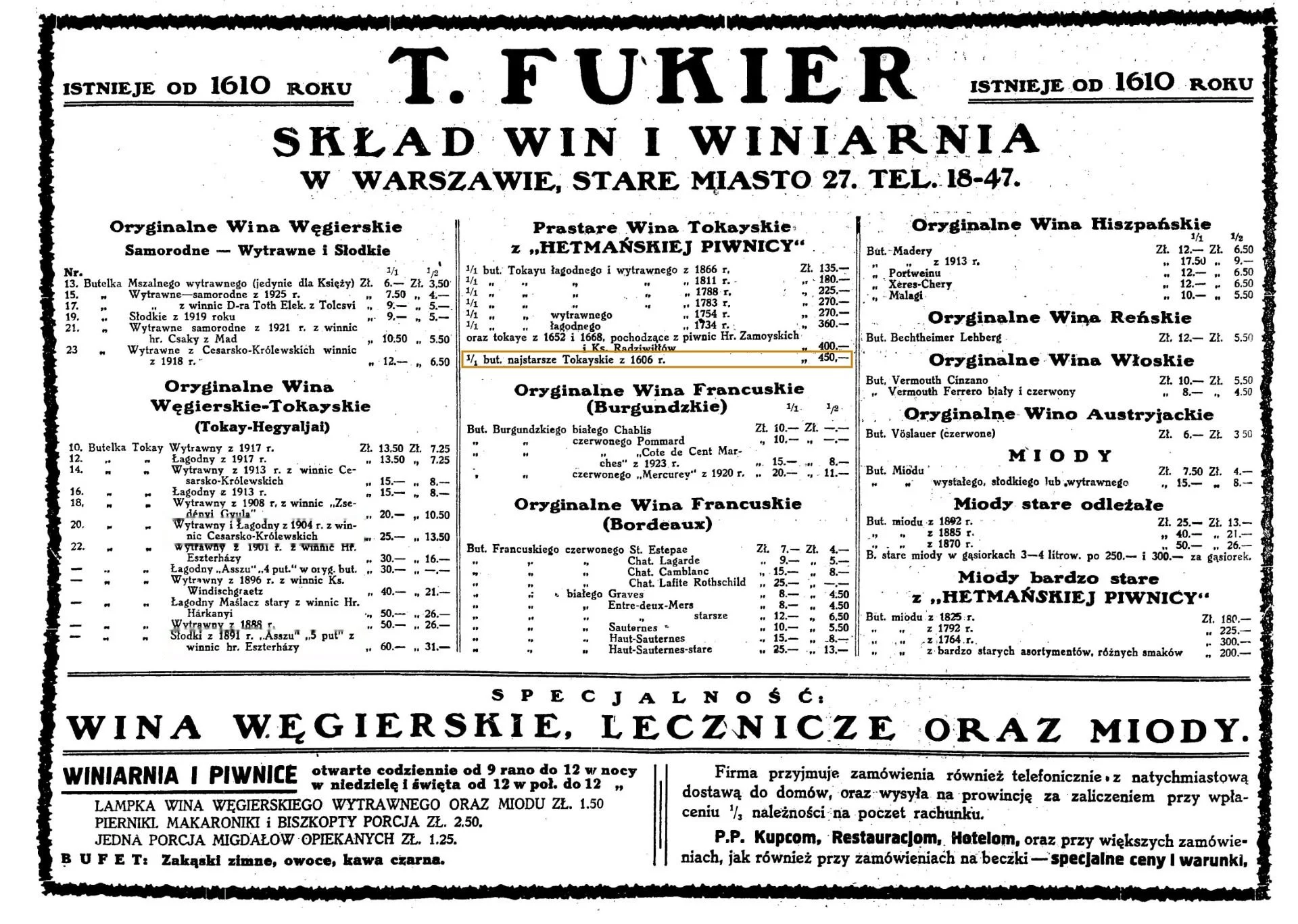
The price list is the clearest surviving statement of how the house itself ranked its stock.
Figures in Złoty per bottle, 1934:
1606450 zł
1652400 zł
1668400 zł
1682400 zł
1734360 zł
1754270 zł
1783270 zł
1788225 zł
1811180 zł
1866135 zł
On the facing page of the same list sit the Bordeaux. The dearest is an 1867
Mouton-Rothschild at 60 zł; a 1924 Brane-Cantenac fetches 27 zł and a 1924 Lafite-Rothschild
26 zł. The 1606 Tokaji was priced at roughly seventeen times a ten-year-old Premier
Grand Cru. Whatever else the twentieth century did to the reputation of Hungarian
wine, in 1934 the market had not yet forgotten what old Tokaji was.
Fukier price list. [caption — specify year and page]
Fukier price list. [caption — specify year and page]
Fukier price list. [caption — specify year and page]
Fukier price list. [caption — specify year and page]
Fukier price list. [caption — specify year and page]
Fukier price list. [caption — specify year and page]
Fukier price list. [caption — specify year and page]
Fukier price lists. The Tokaji column runs down the left, the Bordeaux down the
right — which is what makes the seventeen-fold ratio readable at a glance. Add the year of
each list in the captions.
Cellar management
Fukier cellar practice was unusual, consistent, and well enough documented that it now serves
as an examination test.
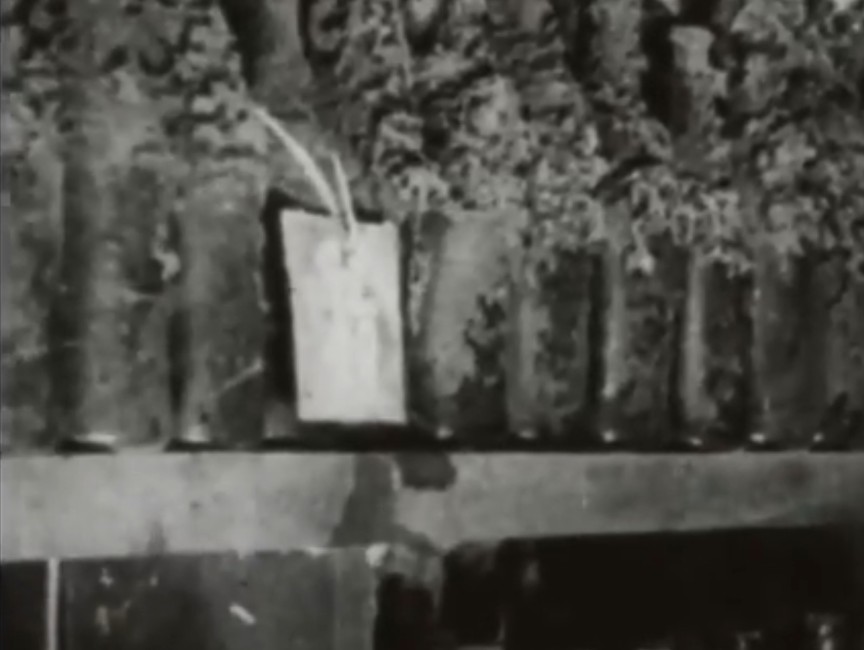
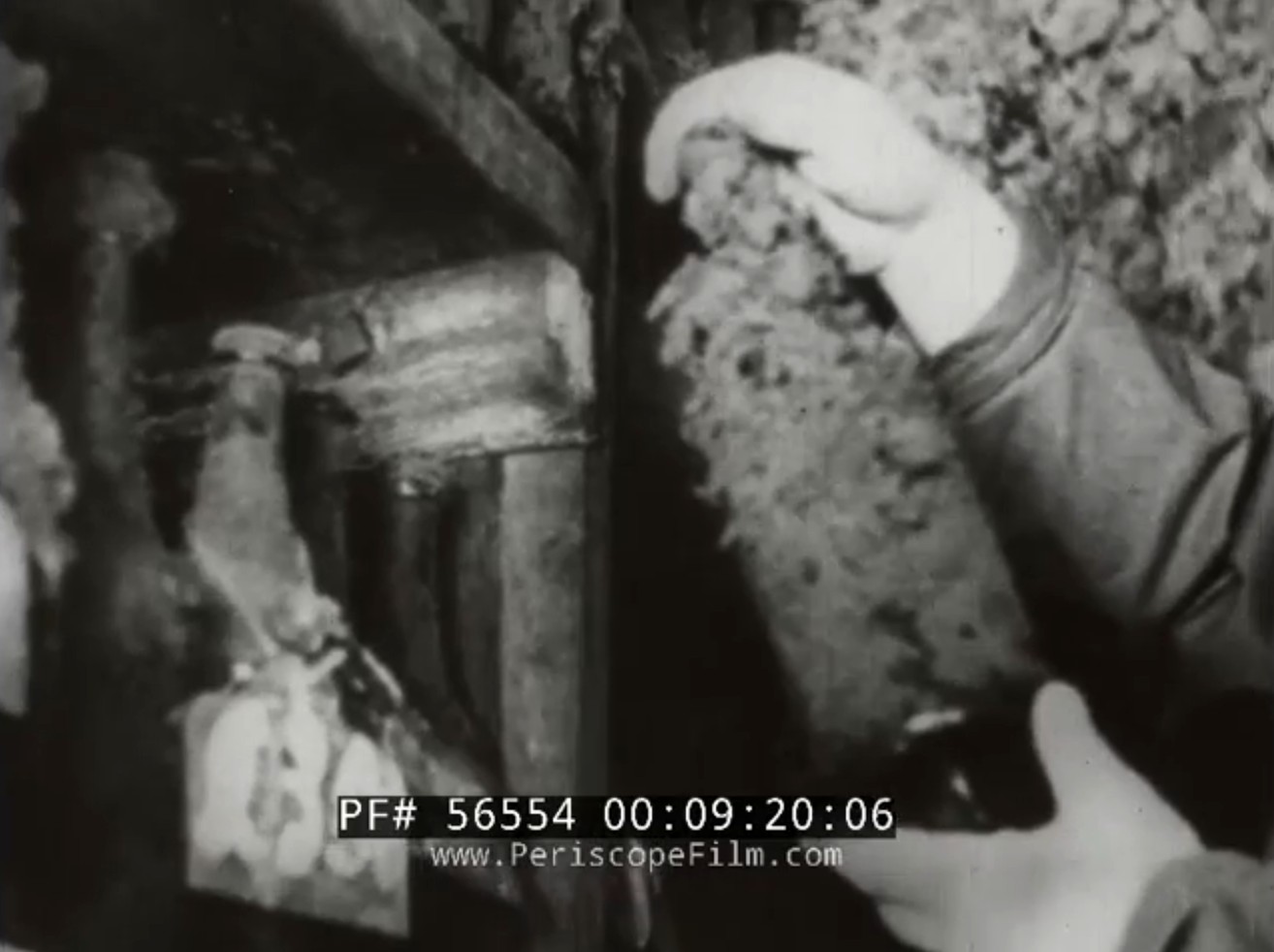
Bottles stood upright, as one does with Tokaji, in a dedicated cellar
section. This is visible in the surviving photographs and in the film footage.
Recorking ran on a six-year cycle. According to Henryk Fukier's memoir the
secret of preserving the wine lay in soaking each new cork for a full day in a special
liquid before use — the composition of which was a house secret and, as far as I know,
never written down.
Where a bottle was topped up during recorking, wine of a near-matching
vintage was used.
Cellar records were kept in detail: the wine, the vintage, the date of acquisition, the
seller, and — a very Fukier touch — with whom the proprietor had drunk each bottle.
Where the old bottles came from
The house bought steadily and, in all probability, sold on as well. Polish aristocratic
cellars were the prime source: we know of Zamoyski, Radziwiłł, Lubomirski and
Poletyłło. The memoir is more specific than the firm’s later advertising and adds two names to that list. Fukier
itemises the treasury wines as “of our own rearing, or else bought from the Zamoyskis, Lubomirskis and
Potockis, and from the cellars of Franciszek Poletyło, then from
Dubno, from Równe and other places — wherever we heard of
old wines or meads coming from private magnate cellars” (p. 88). He also explains why such wine could be
bought at all: in the houses that held it, it had been inherited as a rarity of secondary value. That is
the mechanism behind the whole collection. The Fukiers were buying, cheaply, what families with older claims to
grandeur regarded as lumber.
One named supplier, and one buyer who took the lot
For all the Hungarian material in the book, the memoir names exactly one Hungarian estate:
Count Hunyady, whose private cellars supplied a mild Tokaji “of original taste” in half-bottles (p. 106).
Otherwise his Hungarian buying ran through two Poznań-born Poles employed by large exporter firms at Abaújszántó,
taken on precisely because they knew the Polish market and its tastes (p. 78), and through his own buying trips on a merchant’s
passport, paid for in dollars (p. 106).
The Hunyady stock then left in a single transaction. In the 1920s a Brazilian diamond-mine owner
bought out almost all of it, several dozen of each type, for ocean shipment, settling by Swiss bank cheque without waiting for an invoice
(pp. 105–106). It is the largest single outbound consignment named anywhere in the sources, and it points at South America — a
destination that appears nowhere else in the search for surviving bottles.
Fukier almost certainly also bought at the 1927 Dresden
auction of the Royal Saxon cellar — a surprisingly high proportion of all Fukier
bottles known today can be traced back to Dresden, which is hard to explain any other way.
A caveat on Dresden, since this page has treated the 1927 sale of the Royal Saxon cellar as a likely Fukier source.
The memoir gives it no support. Dresden appears twice in the book and neither time as wine: once as
one of the cities — with Paris, London and Stockholm — where Fukier bought engravings for the winiarnia’s Varsaviana
collection, and once because his grandfather Teofil was schooled at Leschnitzgrund near Dresden. That is not a refutation; the memoir is
silent on a great deal. But the Dresden connection rests on the profile of the surviving bottles, not on the family’s own record.
Tasting comments
Very few people have left a note on a Fukier bottle. Bókay's 1934 description of the 1606 is
the most important, and the most extravagant: he writes of an unforgettable, never-before-met
aroma, of a taste he cannot put into words, of a mystical thousandfoldness — ambrosia, the
drink of the gods, the noblest of the noble. It is not analysis. It is a man describing
something he did not expect to survive.
[Insert the full Bókay passage in Hungarian, followed by your translation.]
János Bókay, “300 éves tokaji bor Varsóban”, Borászati Lapok, 1934
For calibration, three notes on comparable bottles from outside the Fukier cellar. Len Evans
on a 1646: “no hint of oxidation … incredible intensity and complexity”. Mario
Scheuermann on a 1649: “remarkably rich”. Michael Broadbent on an 1811 found the
fragrance and flavour beyond anything in his experience, and recorded it as the only wine he
had ever tasted that had no finish at all — it simply continued. A 1746 Tokaji was served at
the Royal Saxon table as late as 1910.
Willem van de Poll, Fukier cellar, 1934. [caption]
Willem van de Poll, Fukier cellar, 1934. [caption]
Willem van de Poll, Fukier cellar, 1934. [caption]
Willem van de Poll, Fukier cellar, 1934. [caption]
Willem van de Poll, Fukier cellar, 1934. [caption]
Willem van de Poll, Fukier cellar, 1934. [caption]
Willem van de Poll, Fukier cellar, 1934. [caption]
Willem van de Poll, Fukier cellar, 1934. [caption]
Willem van de Poll, Fukier cellar, 1934. [caption]
Willem van de Poll, Fukier cellar, 1934. [caption]
Willem van de Poll, Fukier cellar, 1934. [caption]
Willem van de Poll, Fukier cellar, 1934. [caption]
Willem van de Poll, Fukier cellar, 1934. [caption]
Willem van de Poll, Fukier cellar, 1934. [caption]
The cellar in 1934, photographed by Willem van de Poll. The Dutch photographer's
series is the best visual record we have of the collection five years before it
disappeared: the upright bottles, the guest book, the price list. Identify the individual
frames in the captions.
[caption] Historic Fukier cellar.
[caption] Historic Fukier cellar.
[caption] Reconstruction of the cellar topology, after Gabriel Kurczewski.
[caption] Historic Fukier cellar.
[caption] Historic Fukier cellar.
[caption] Historic Fukier cellar.
[caption] Historic Fukier cellar.
[caption] Historic Fukier cellar.
[caption] Historic Fukier cellar.
[caption] Historic Fukier cellar.
[caption] Historic Fukier cellar.
The historic cellar, and a reconstruction of it. Gabriel Kurczewski's reconstruction
of the cellar's size, location and topology is built from photographs, prewar descriptions,
and two sets of measured drawings held by the Narodowy Instytut Dziedzictwa — the Sosnowski
survey of 1936–37 and the conservation inventory of 1973. See “Where it actually was” in
article 05.
1596 — 1853
The Hetman cellar and the Potocki auction
The oldest and most prestigious part of the Fukier collection was not originally Fukier's at
all. It was the Hetman cellar — Piwnica Hetmańska — and it came into
the house at a single stroke, at auction, in 1853.
Hetman was the title of the highest-ranking commanders of the Polish–Lithuanian
Commonwealth, and those men kept serious Tokaji.
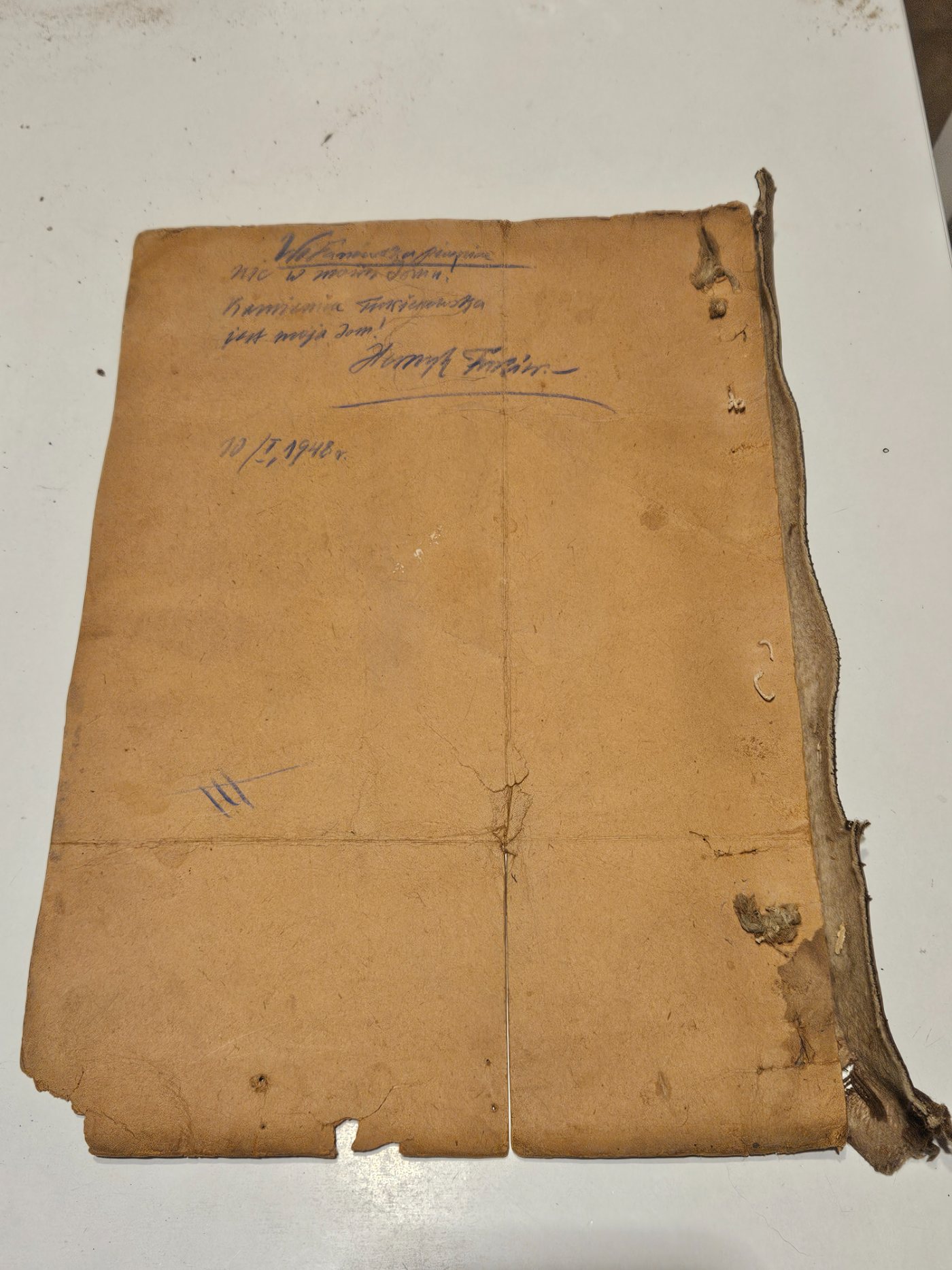
A correction, and the document behind it: Olaszliszka, 1596
This page used to say that “a document of 1596 already suggests that Tokaji from Olaszliszka
was stored in the Hetman cellar”, and left the reader to guess where that came from. The
document has now been produced. It is in the collection assembled from the walled-up Fukier
hoard, and it is not what the old sentence implied.
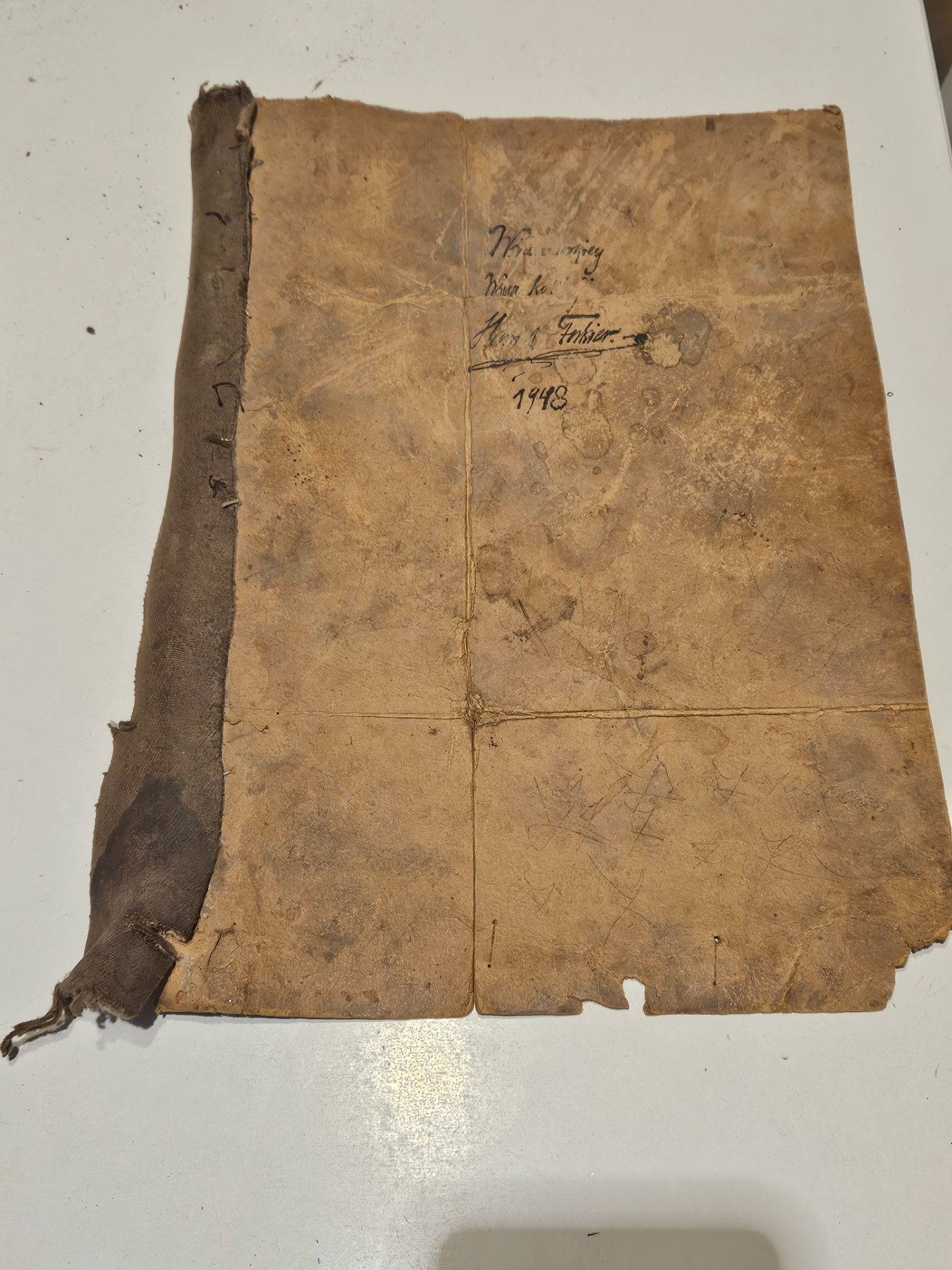
What it is: a paper booklet containing a littera confirmationalis of
Rudolf II — the full imperial and royal intitulation, Emperor of the Romans,
King of Hungary and Bohemia, Archduke of Austria and the rest — given
at Prague Castle on 2 April 1601, in the twenty-sixth year of his Roman
reign, the twenty-ninth of his Hungarian and the twenty-sixth of his Bohemian. It recites
de verbo ad verbum an earlier charter of Martin Pethe de Hetes,
by apostolic grace Bishop of Várad and Provost of the Church of St Martin de Scepes
(Szepes, Spiš) and of the See of St John the Baptist of Jászó, Councillor to the Sacred
Caesarean and Royal Majesty — issued in the Curia of the Szepes Provostry on the day
sacred to St Martin, 11 November 1596, at the petition of the nobles Mathaeus
Hegedüs and Valentinus Litteratus, in their own names and in the names of the judge, jurors
and whole community of the oppidum of Lyszka Olaszy — Olaszliszka —
in Zemplén county, whose burghers were hospites et jobbagiones of the Provost and
Chapter of Szepes.
The wine clauses are the substance, and they are excellent. The tenth goes
to the Bishopric of Eger on one side of the named watercourse and the ninth to the landlord;
once those are paid, the citizens are free to sell their wine
“quandocunque et cuicunque voluerint” — whenever and to whomever they wish. The
landlord may pre-empt no more than seventy-five tinas at the due
price at vintage time. No one, noble or non-noble, may bring foreign wine
(peregrina vina) into the town against the citizens' will. The townsmen owe
all kinds of vineyard labour in season, and one Hungarian florin of St Martin's census on a
whole holding, fifty on a half. This is a working portrait of a Hegyalja wine town under an
ecclesiastical landlord four years before the vintage this house claimed as its oldest.
What the charter does not contain is any mention of a hetman, or of a cellar in
Warsaw. The link is written in the margins. Twice — beside the free-sale clause and
beside the labour clause — and again next to the dating clause, someone has pencilled in
blue ink «vina ex Liszka in Cellario Hetmani», wines from Liszka in the Hetman
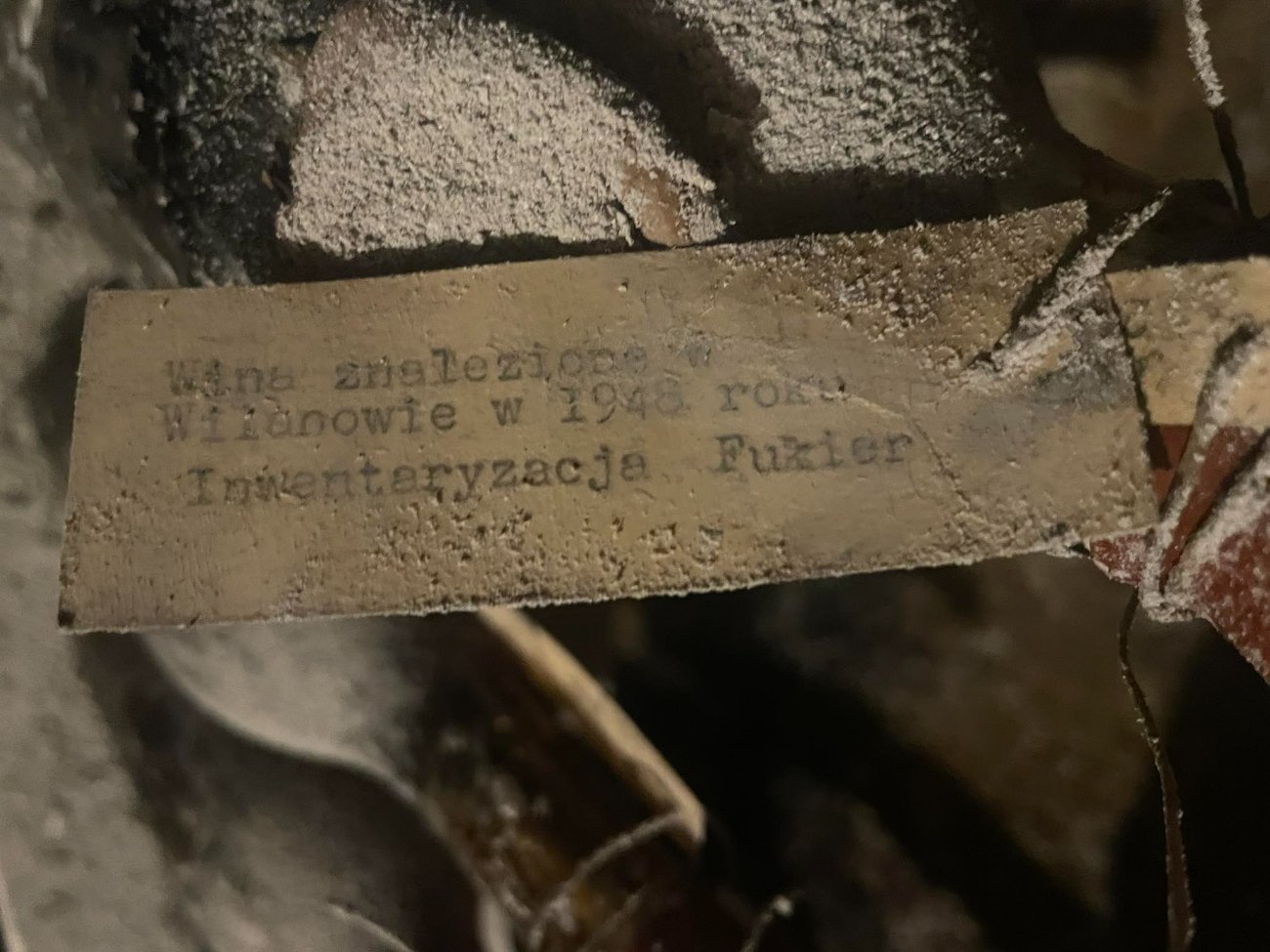
cellar, and «1596». The ink and the hand match the inscription on the wrapper the
booklet was kept in, which is signed Henryk Fukier and dated
10/I 1948.
So the claim is not a sixteenth-century attestation. It is the last Fukier's reading
of a sixteenth-century charter, made three hundred and fifty-two years later — and
made, as it happens, on the very day he was at Wilanów watching the Branicki cellar come out
from behind its wall. That is worth more than a footnote and less than a fact: it is direct
evidence of what the house believed about the origin of its own oldest wine, in the hand of
the man best placed to know, at the end of his life. It is not evidence that the wine was
there in 1596. Both things are now on the record, and this page will keep them apart.
One point in the charter's favour, and against any suspicion of it. The titles fit both dates
exactly. Pethe held the Szepes provostry and the see of Várad
together, from 1587 to 1598, which is why he can style himself both in 1596;
and by 1601 Rudolf calls him “then Bishop of Várad, now Archbishop of Kalocsa and
Administrator of the Bishopric of Győr” — Kalocsa from 1600, Győr from 1598. The witness
list of the 1601 confirmation is equally in order: Kutassy at Esztergom, Szuhay at Eger,
Micatius elect of Várad, Stephen Báthory as Judge of the Court, Drašković as Ban, Zrínyi as
Master of the Treasury, Nádasdy as Master of the Horse. A forger would have had to know all
of it.
Gabriel Kurczewski has shown convincingly how the Hetman holding entered the Fukier cellar.
In 1853, on the death of Franciszek Potocki (1788–1853) —
several of whose ancestors had been hetmans — 700 old Tokaji bottles of the vintages
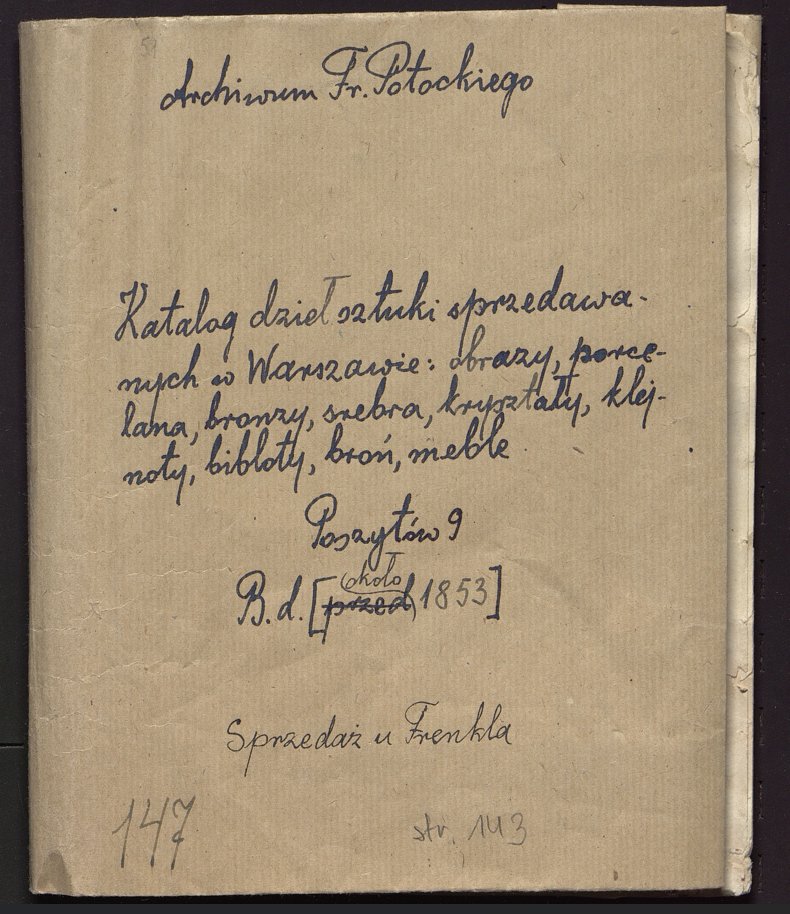
1624 to 1794 were put up for auction. The catalogue, preserved in AGAD, titles them
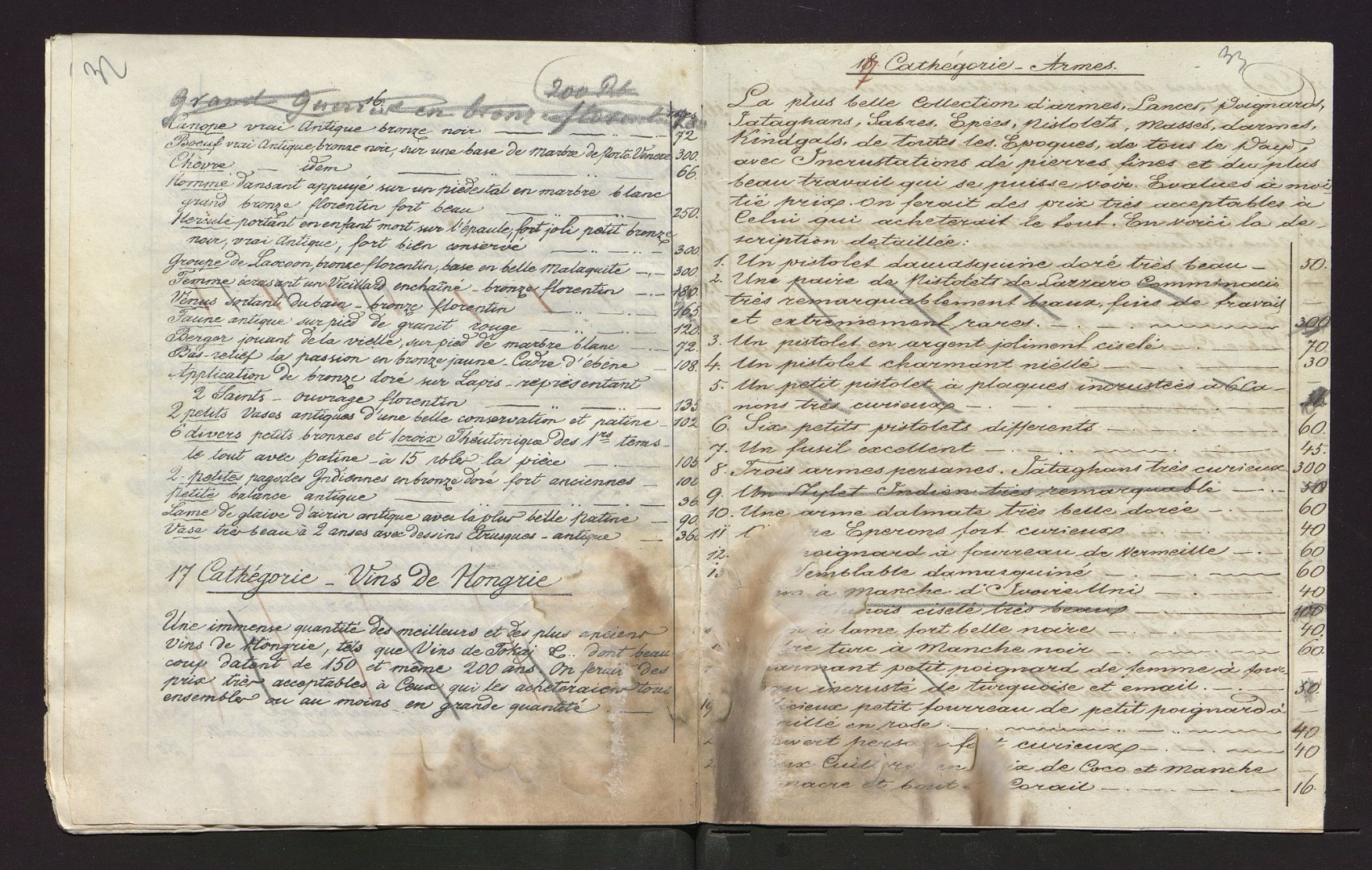
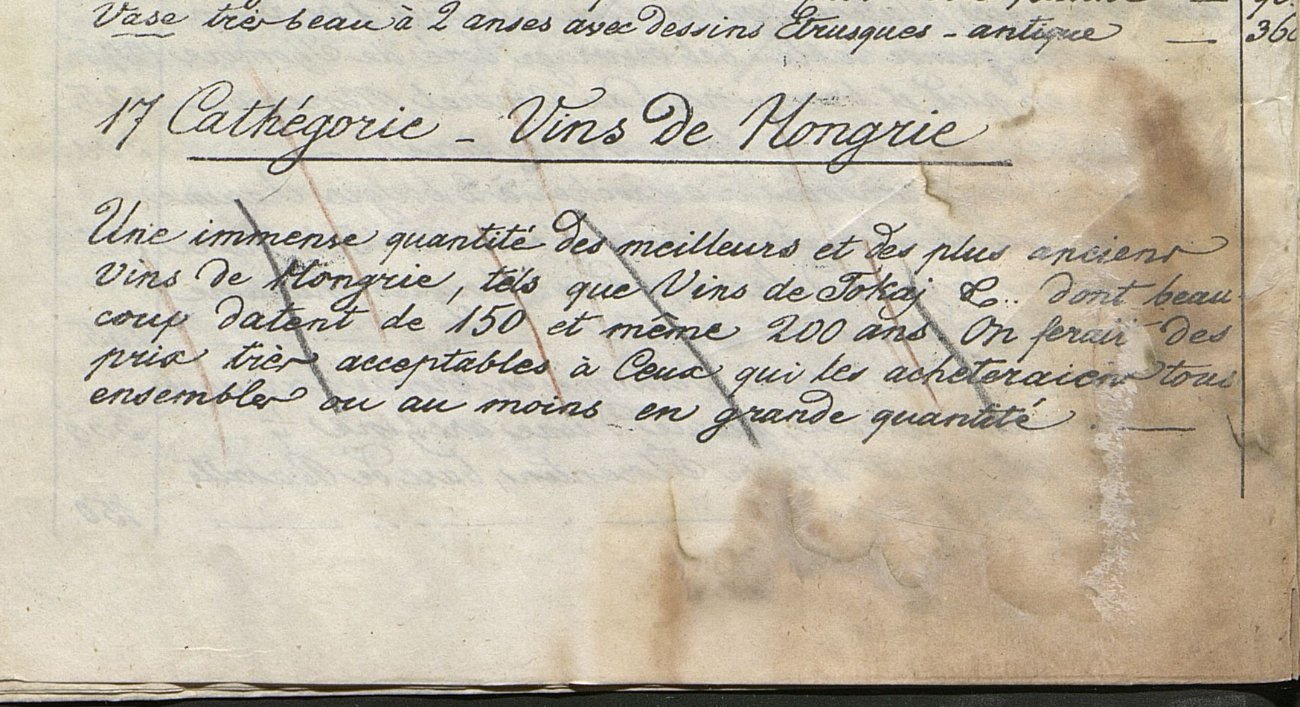
“kapka hetmańska” and advertises them in French, under the heading 17 Cathégorie — Vins de Hongrie, as “vins de Tokaj … dont beaucoup datent de 150 et même 200 ans” — kapka being the Polish word for Tokaji essence. Three Warsaw wine merchants divided the lot
between them: Dobrycz, Fukier and Kamelski. From that point the house had a block of seventeenth-century Tokaji that
nobody else in the trade could match, and it kept it as a distinct, marked section of the
cellar for the next eighty-six years.
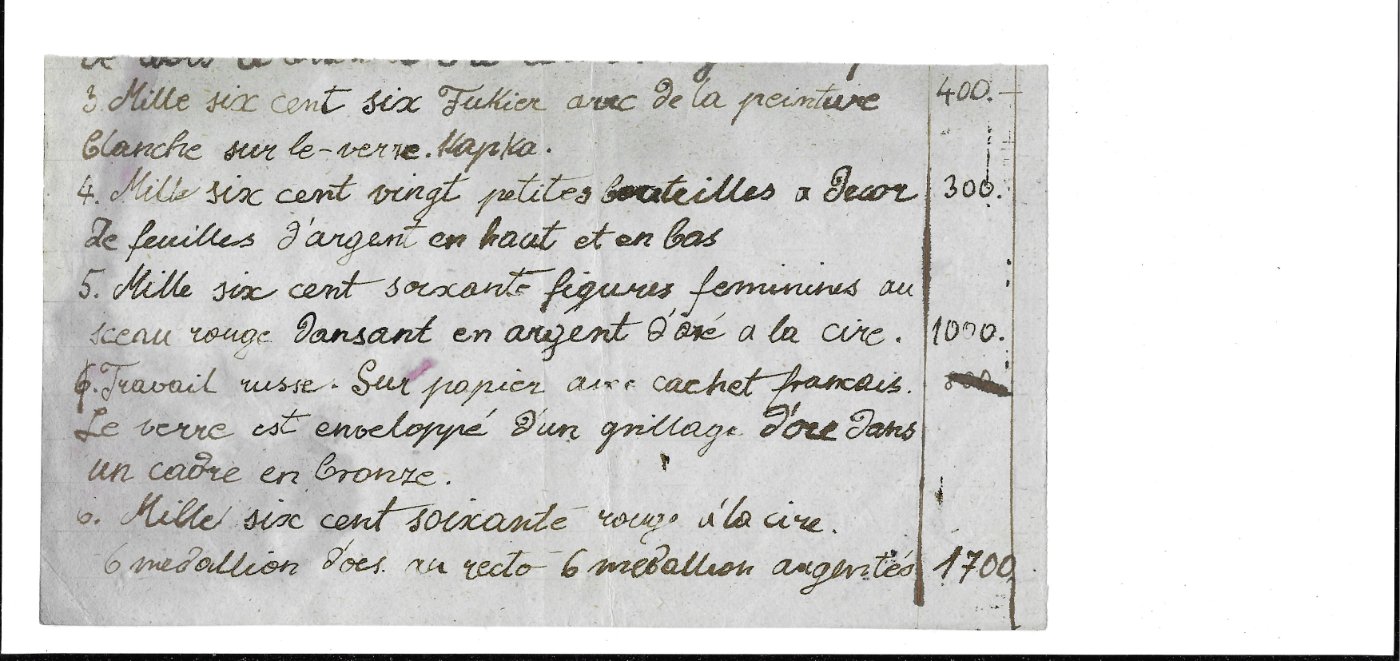
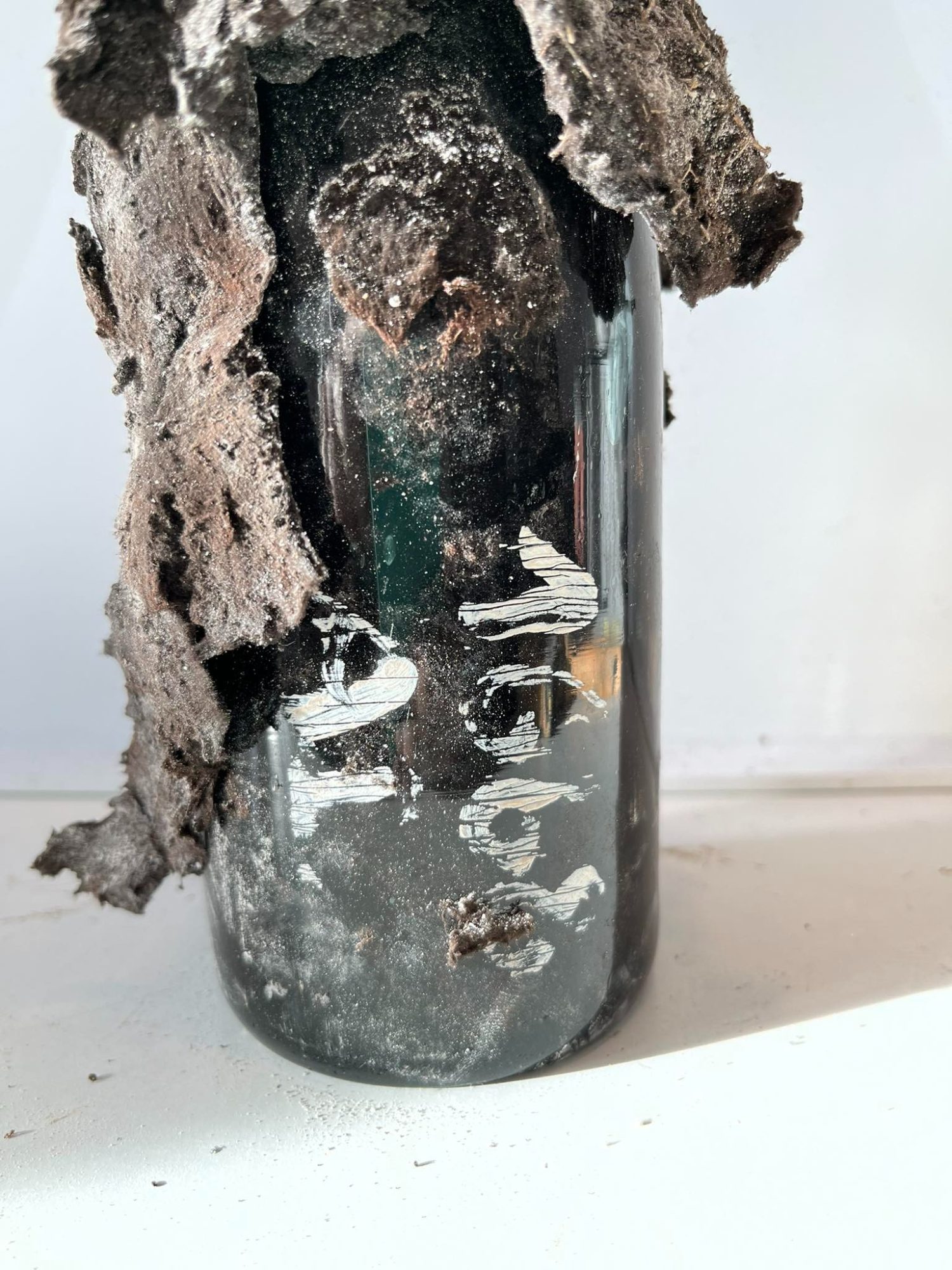
The catalogue itself (AGAD, Archiwum Fr. Potockiego). The wine is the 17th category, set after the bronzes and before the arms; the third image is that entry enlarged — «Une immense quantité des meilleurs et des plus anciens Vins de Hongrie, tels que Vins de Tokaj etc., dont beaucoup datent de 150 et même 200 ans. On ferait des prix très acceptables à ceux qui les achèteraient tous ensemble ou au moins en grande quantité» — struck through, as the sold lots are. The fourth is an itemised page, where single bottles are described by date, seal and decoration: «Mille six cent six Fukier avec de la peinture blanche sur le verre. Kapka — 400»; 1620 small bottles with silver foil above and below; 1660 with dancing female figures in gilt silver on the red wax. Click any image to enlarge.
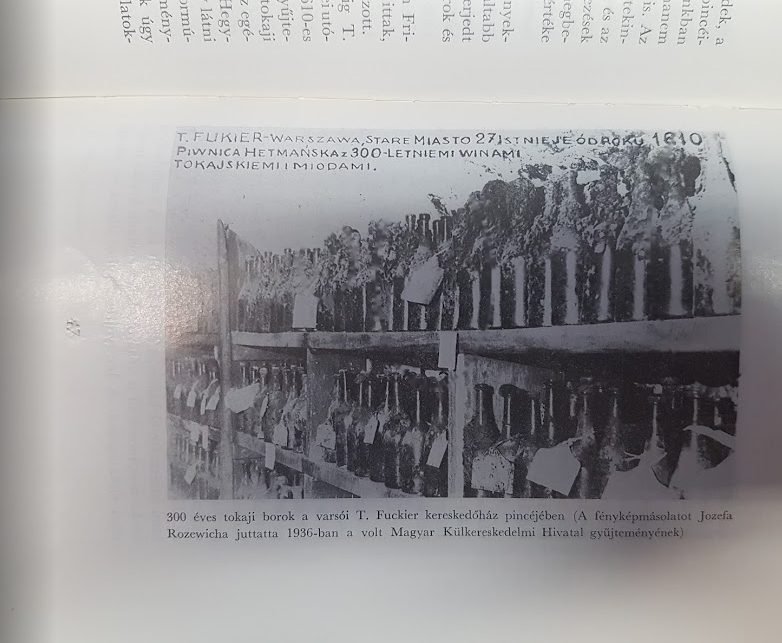
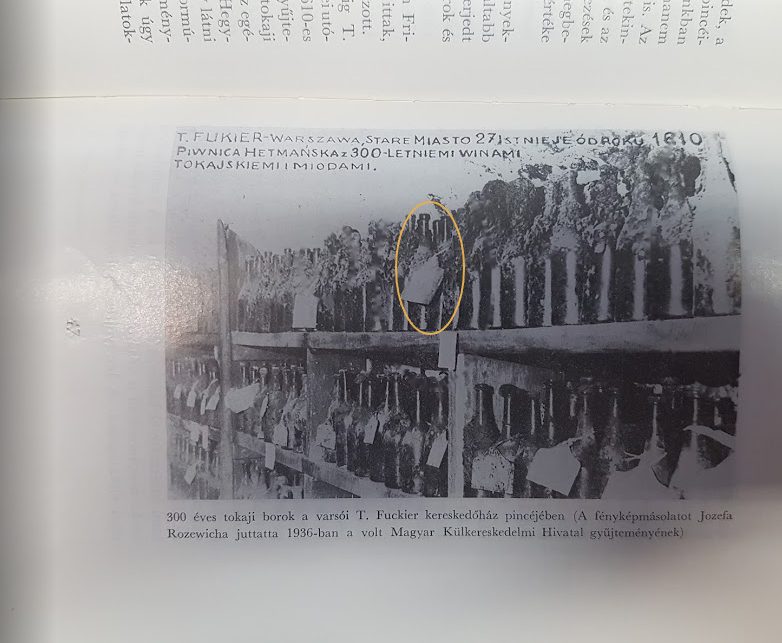
The photograph reproduced on many Fukier documents carries the house's own claim in Polish
across the top: the Hetman cellar, with its three-hundred-year-old Tokaji wines. That is the
section this article is about, and it is the section that matters most for identifying
surviving bottles.
The oldest picture of it, and where the name comes from
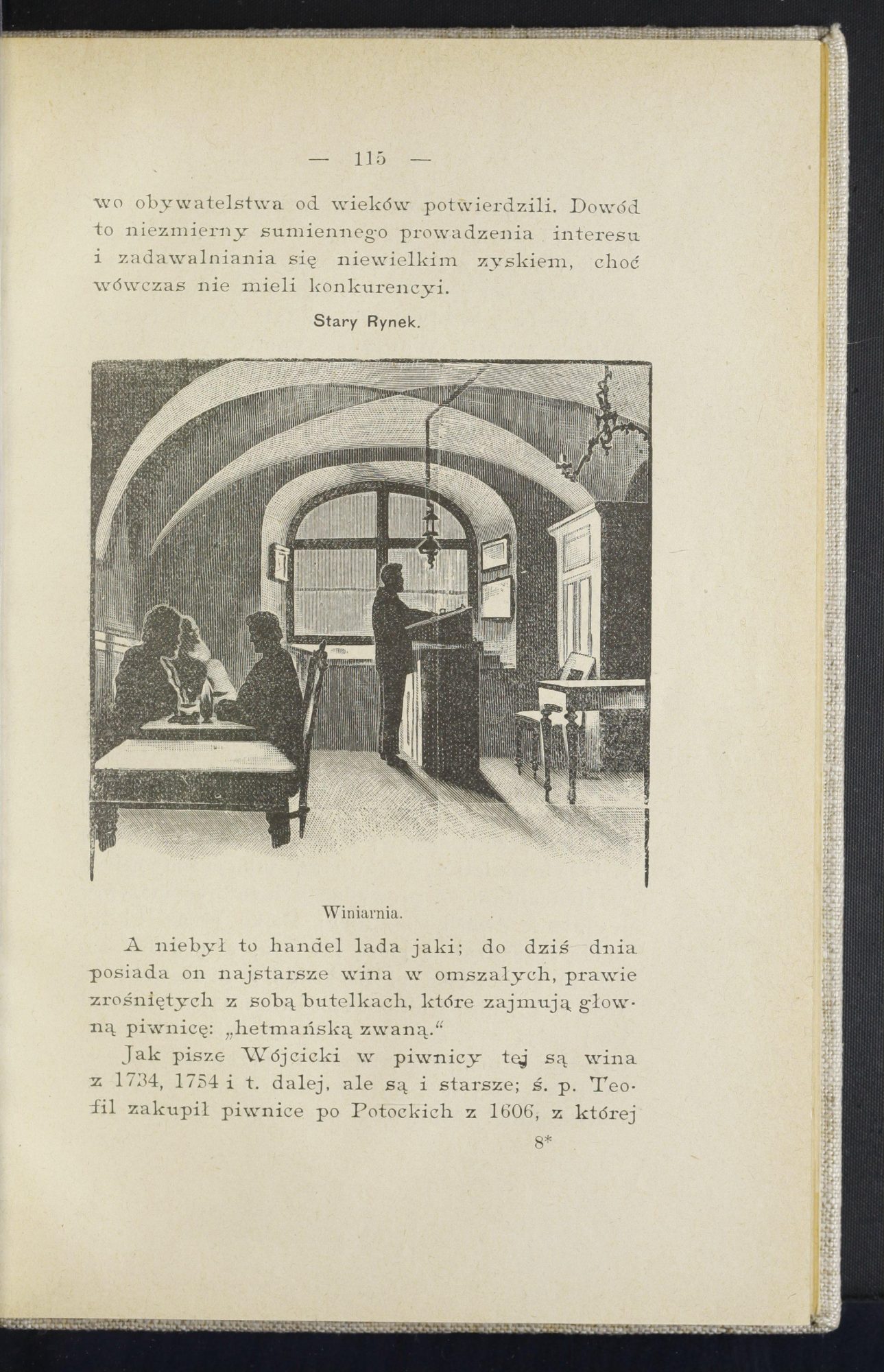
Gerson's plate for Kłosy in 1868 is captioned “piwnica win hetmańskich” — the
cellar of the hetman wines — and shows Teofil Fukier among them. It is, so far as is known,
the oldest image of the Hetman cellar, and it settles the etymology: the room
is named after the wines that were already in it in the 1860s, not the other way round. It also
explains why the room is so thinly photographed. Cask cellars were photographed often; access
to this one was restricted, and its pictures are correspondingly few. On the top shelf of the
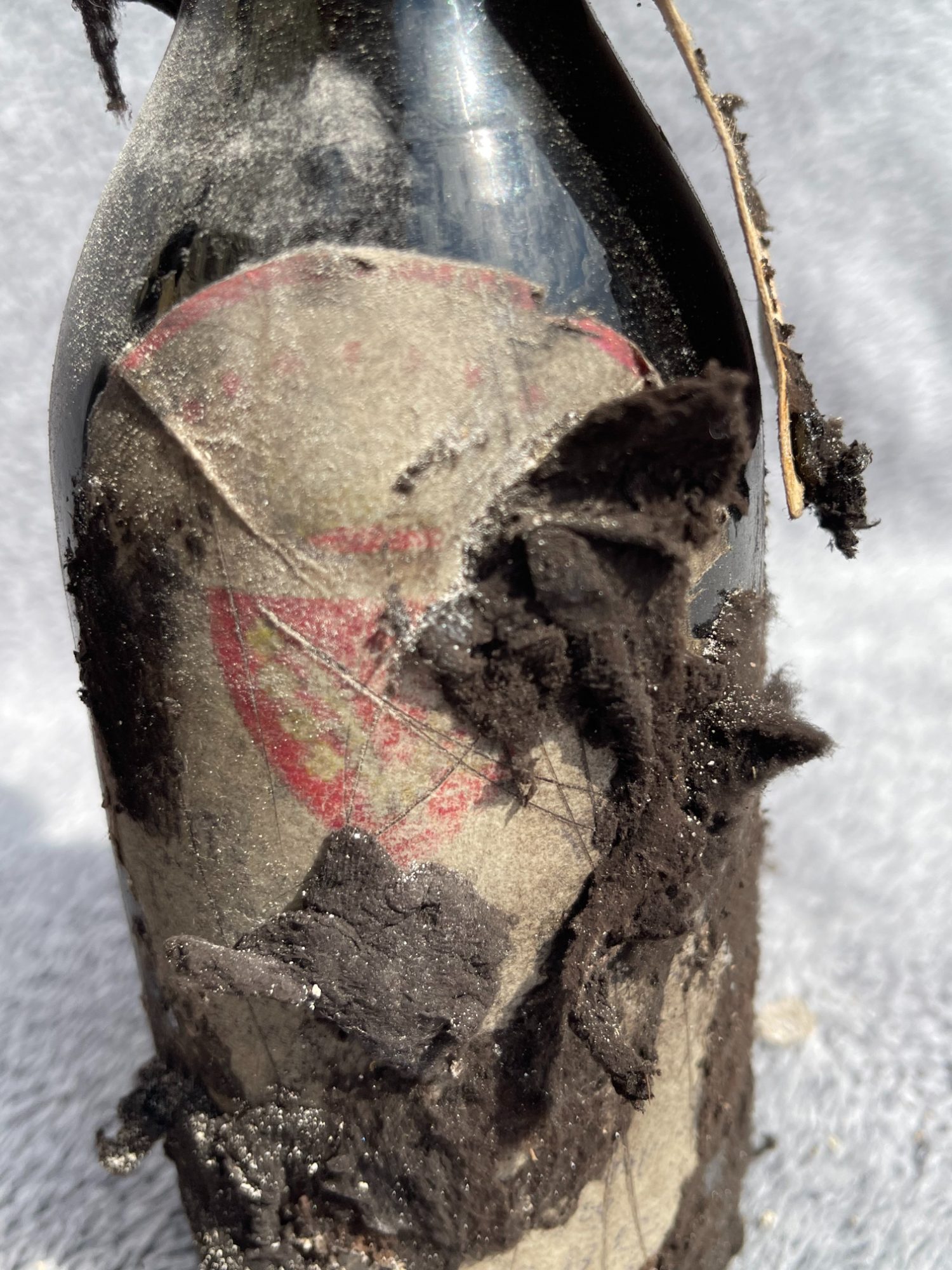
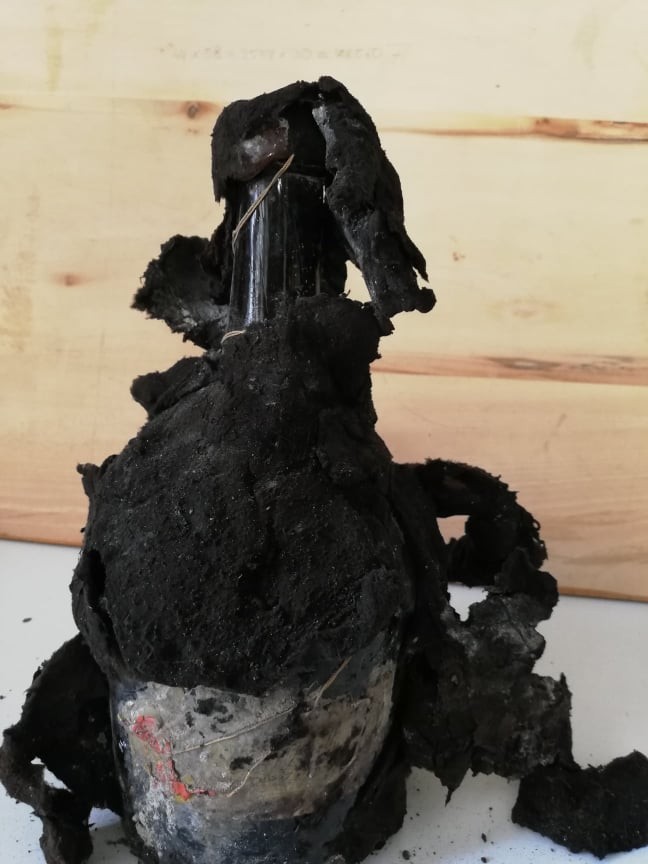
plate the bottles look, as Kurczewski puts it, as though dressed in ball gowns made of cobweb,
dust and mould — which is the same observation Henryk Maria Fukier made in naming the house's
own bottle form krynolinki fukierowskie, and the same one James A. Roy made
independently in 1919 when he compared the bottles to crinolines.
How “1606” was born
1860s–70s. The oldest bottles are described as sixteenth-century and called by regnal or family names — Batorówka, and Rewerówka after Hetman Stanisław Rewera Potocki — not by a vintage.
1870. An article ties them to 1606 for the first time, and in the weaker form: wines that were already old in 1606.
Later. 1606 hardens into the vintage of the oldest bottles, and by the interwar price lists it is printed as one.
What follows for examination. The date is a tradition consolidated around 1870, not a documented vintage — which is the first thing to say about any surviving bottle marked 1606.
The same article names the vintages standing in the house in 1868: 1734, 1754, 1768, 1781, 1783, 1788, 1806, 1811 (“an excellent harvest”), 1818, 1827, 1834 — the hetman wines themselves being described only as “from the end of the sixteenth century”.
To that list Russkoje Słowo adds, in 1915, a hetman bottle of 1612, “po hetmanie Potockim”, at 75 roubles.
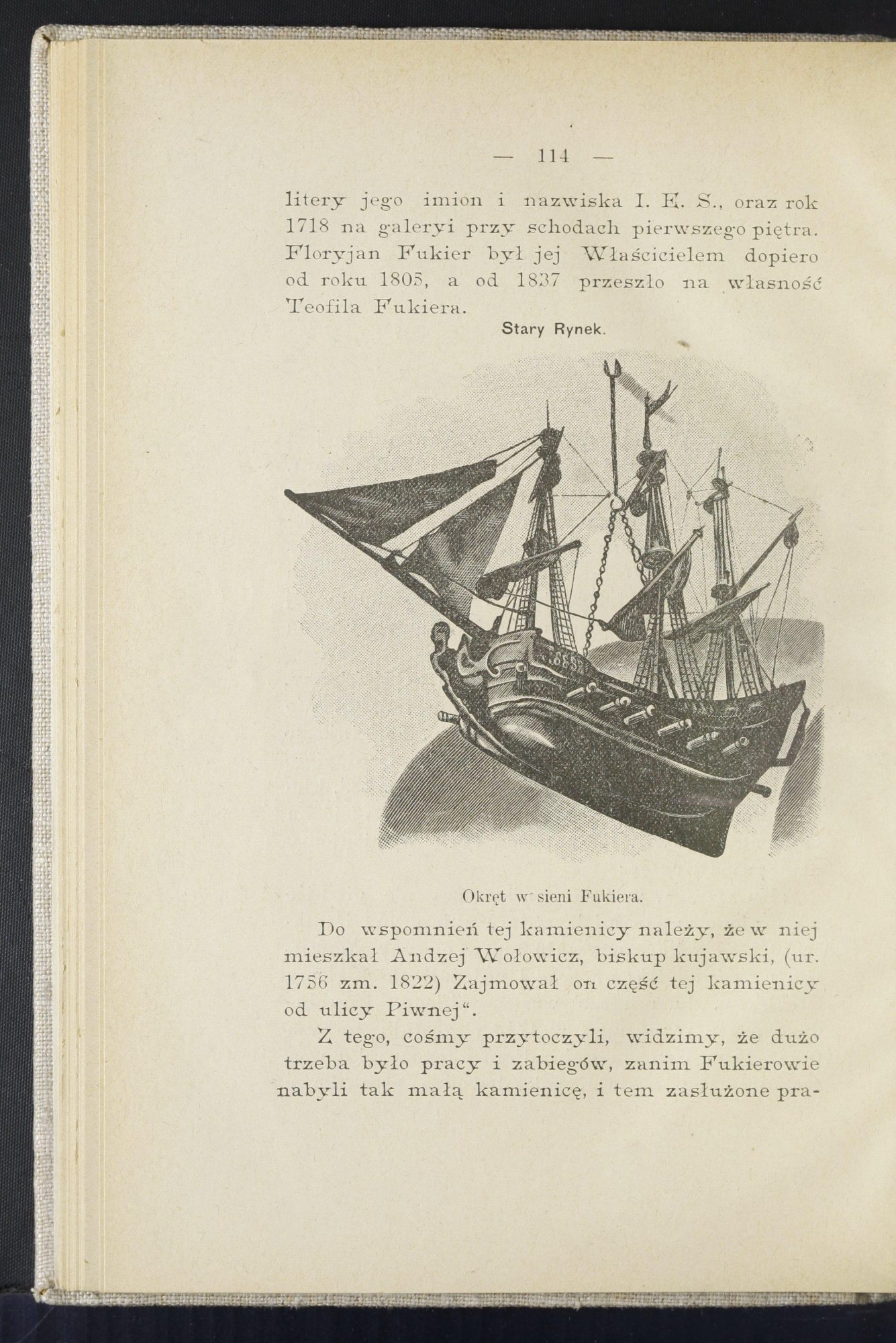
The Hetman cellar in print. Czajewski, Warszawa illustrowana: stara Warszawa, vol. 3 (1895): the Winiarnia engraving with the passage naming the piwnica hetmańska, the model ship that hung in the hall, and a later house advertisement still trading on the name.
Where it actually was
Until 2014 the Hetman cellar was a legend without an address. People said “in the Fukier
cellars”; nobody could point to the room. Gabriel Kurczewski located it,
and the method is worth setting out because anyone can repeat it. His own summary of what the
chamber held — several thousand bottles, among them over three hundred of the 1606
and about a thousand of seventeenth-century wine altogether — sits close to
Bókay's count of 1934 without being derived from it.
He began from two surviving general views taken from opposite ends of the chamber, which
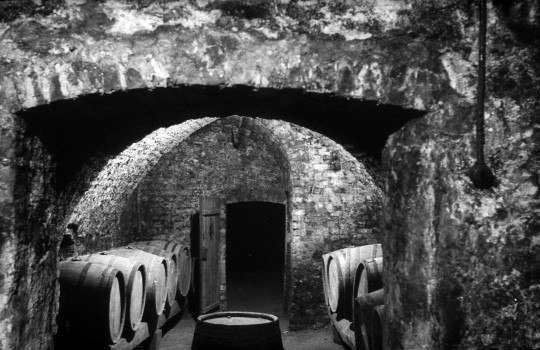
together fix its form: a rectangular, elongated room under a barrel vault,
with a single doorway set centrally in one of the short walls, both long walls
filled with six-shelf racks. From the racks, the door, the human figures, and Wojciech Gerson's
engraving of Teofil Fukier in the cellar published in Kłosy, he puts the crown of the
vault at about three metres. A rack held twenty bottles side by side; four
racks of about two metres would make the room some eight metres long.
He then set that against two sets of measured drawings, both consulted in the archive of the
Narodowy Instytut Dziedzictwa: the survey made in 1936–37 at
the Institute of Polish Architecture of Warsaw Polytechnic under Professor Oskar
Sosnowski, and the conservation inventory of 1973 by the architects
Władysław Łukawski and Jerzy Ostrowski. The plans show that today's cellars
consist of the same rooms as the prewar ones, the differences amounting to a few connections
and details. Exactly one room answers to the photographs — and the
identification is clinched by a detail: the vertical brick pier standing proud
of the wall facing the entrance, visible in the photograph and drawn on the prewar plan.
The Hetman cellar, from the conservation survey of 1973
Dimension
Measurement
Length
7.78 m
Width at the entrance
3.11 m
Width at the far wall
2.90 m
Height at the crown of the vault
about 3 m — estimated from the photographs, not measured
Door opening
120 cm, centred in the short wall
Shelf edges set back from the door
about 30 cm each side
Implied depth of the lowest shelves
about 65 cm each side
The address is Rynek Starego Miasta 27 — the Fukier house itself — on the
courtyard side, against the party wall with no. 25. That agrees with the prewar written walks
through the cellars, one of which begins and another of which ends at the Hetman cellar,
implying a position close to the stairs from the ground floor: the account in the weekly
Świat of 18 April 1908, and Henryk Maria Fukier's own chapter
“Winiarnia i jej dzieje” in Wspomnienia staromiejskie. The cellars had grown to meet
it: originally under no. 27 alone, they were joined from 1849 to those under
no. 29, the Giza house, and no. 31, the House of the Dukes of Mazovia, so that the underground
estate reached the corner of the Market Square and ulica Wąski Dunaj and comprised more than a
dozen chambers with different functions.
Until 1849 the overflow stock lay in the larger cellars at ul. Jezuicka 72, the property of the Metropolitan Suffragan See.
In 1849 Edward Belke, Teofil Fukier's partner, bought the neighbouring house and the two cellars were joined; breaking the party wall exposed a door-frame proving they had been connected a century earlier, with traces that a third house's cellars had belonged to the same Hungarian-wine store. A hundred gold ducats were found walled up.
What is in the room today
The cellars are the only part of the building the war did not destroy, which
makes them one of the few authentic fabrics of historic architecture surviving in the Old
Town. When the house was rebuilt — completed in 1953, while Henryk Maria
Fukier was still alive — the Hetman cellar did not become a dining room but a service space,
and the memory of which room it had been simply lapsed; under the People's Republic the
collection was not treated as national heritage. Kurczewski showed the plan to the head chef
of the restaurant now on the site and was told: “we've got a cold store in there.”
He was not allowed in. The large chamber beside the ramp from the Market Square — the only
connection between the cellars and the street, down which barrels and crates were lowered,
and which Willem van de Poll photographed in 1934 — now holds the public lavatories.
The historic cellars are today split between two occupants. Gabriel Kurczewski describes the
division: the restaurant U Fukiera uses part of them — one room is
accessible to customers, the rest being kitchen, back-of-house and storage. Another
part is under the administration of the Institute of History of the Polish
Academy of Sciences, which renovated it a few years ago; earlier there was an Irish
pub there, and for some time a nightclub. It is now probably in the Institute’s own use.
The capacity problem
There is an arithmetic difficulty inside the room, and it constrains every quantity claim made
about the collection. Two walls, four six-shelf racks on each, twenty bottles to a rack: about
960 bottles visible to somebody standing in the doorway. But the accounts put
5,500 to 7,000 bottles in the cellar. More than four-fifths of the wine
therefore stood behind what the camera saw — and the photographs show the topmost shelves are
shallow, too shallow to take bottles in rows. The lower shelves must have been very deep, which
is what Henryk Maria Fukier says twice of the racks in rooms of the same construction. The 1973
section shows the vault springing low, so the chamber widens almost to the floor. Kurczewski's
conclusion, which the measurements support, is that the true capacity was several times the
visible 960.
1940 — 1944
The Tarasiewicz purchase
One of the most interesting threads Gabriel Kurczewski has published concerns
Kordian Tarasiewicz, who in 1940 bought
400 bottles from the Hetman cellar for 28,000 Złoty. The seller was not
Edward Krzemiński — he had already gone under — but the tax office. The
background is not clear, but this much is: these bottles were not confiscated. They were
sold, legally, in occupied Warsaw, months after the cellar was supposed to have been emptied.
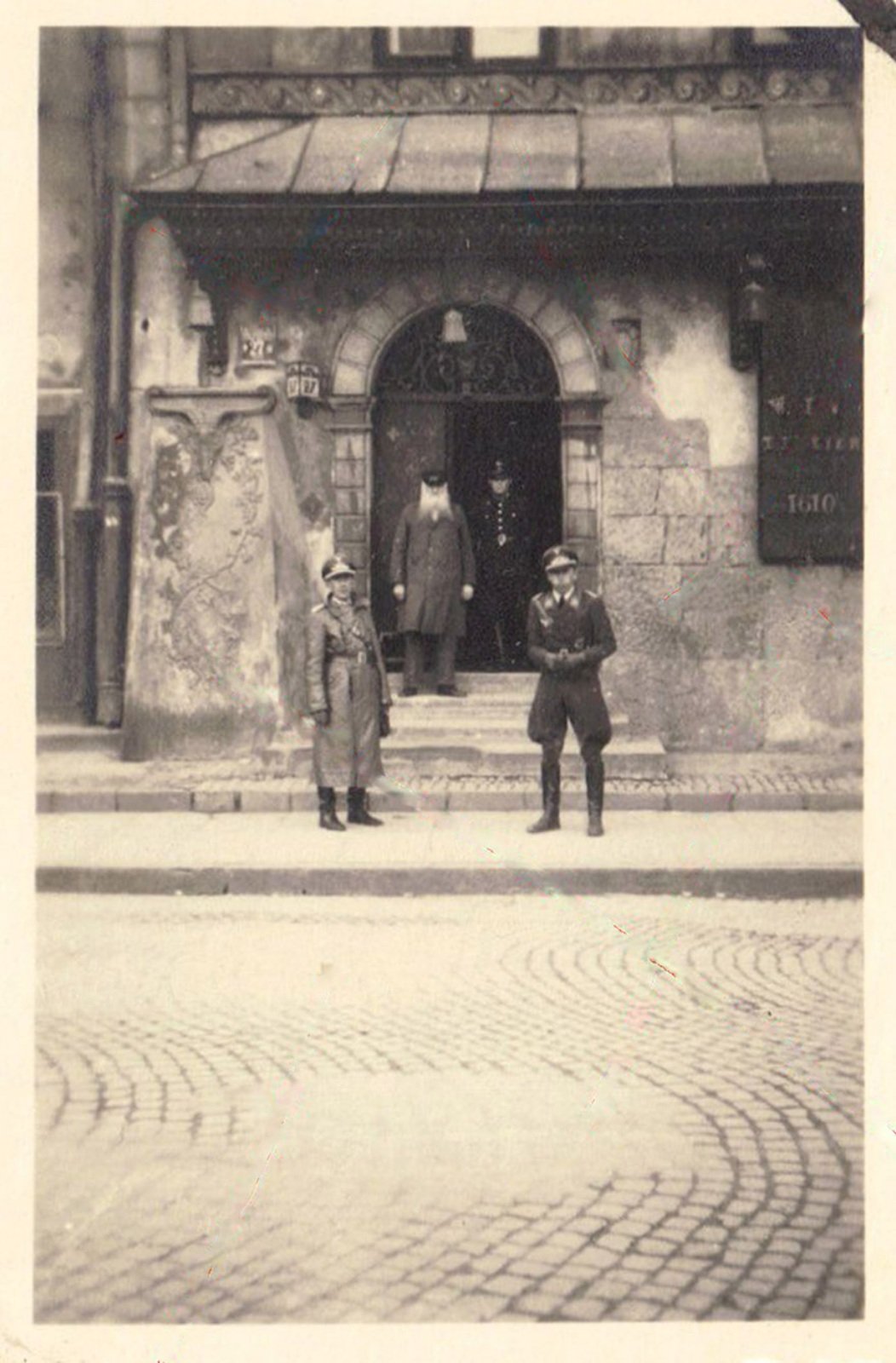
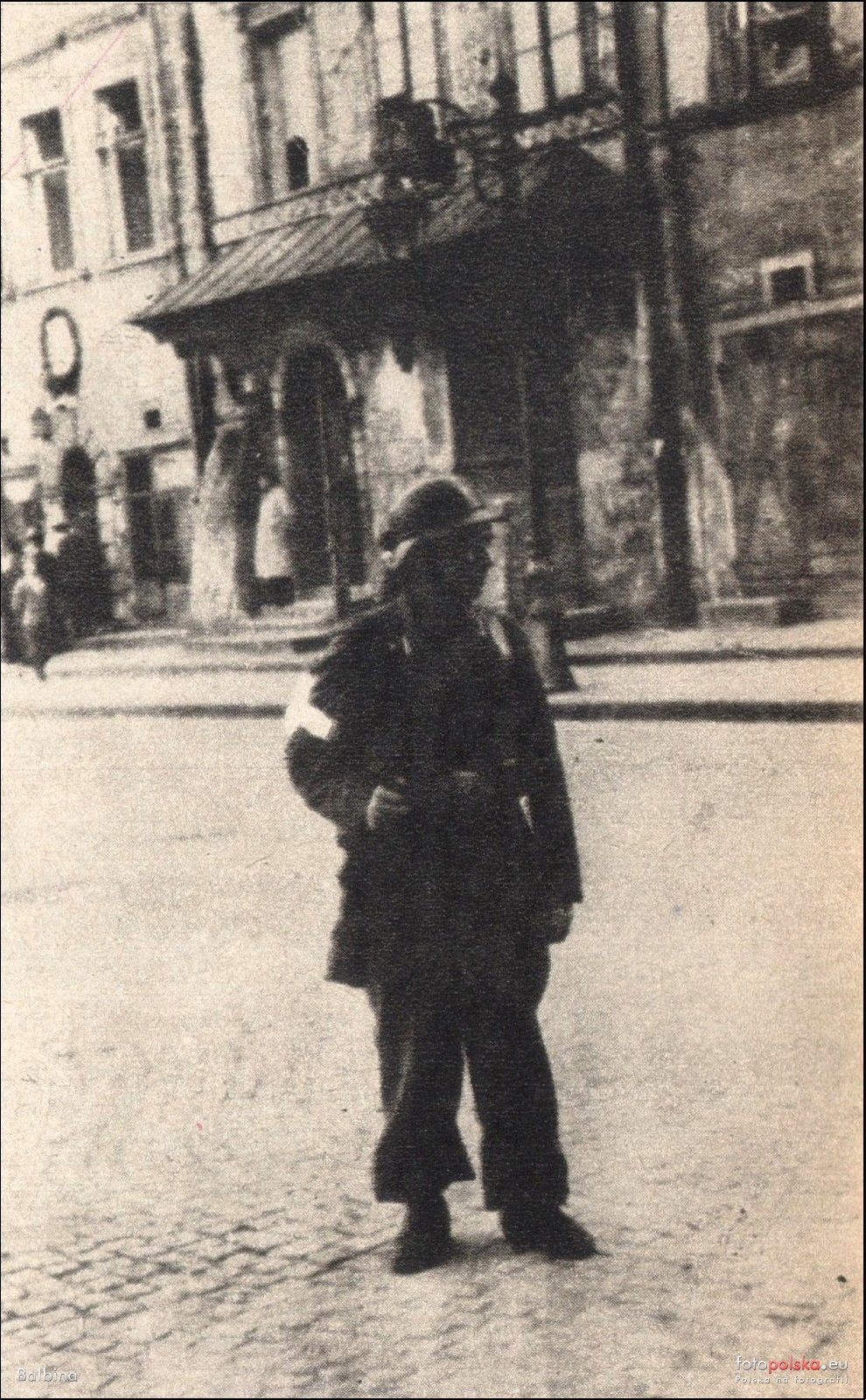
The house under occupation, 1940. Left: the entrance on the Old Town Market Square, two German officers on the pavement, an elderly bearded man and a Polish policeman in the doorway, the house number 27 on its bracket and the board lettered T. Fukier … 1610 on the wall at the right. Right: a sentry posted on the square, the same porch behind him. Click either image to enlarge.
Tarasiewicz records that Fukier himself sorted and reviewed the whole batch, recorking where
necessary, working through it with visible excitement and recalling the individual vintages as
he went, and labelling and describing each type correctly. Several bottles, he writes, went
back to the time of Jan Sobieski — the king who relieved Vienna in 1683.
“In 1940 one could buy about 400 bottles of wines and meads originating from the ‘hetman
cellar’, placed under sequestration by the tax office.”
“After consultation with Henryk Fukier, who confirmed the authenticity of the wines and
meads, the whole lot was bought for the sum of 28,000 złoty. At Grzybowska, where these
precious bottles went, Mr Fukier sorted and went through the entire lot; in certain cases the
corks had to be replaced. He set about the operation greatly moved, recalling the individual
vintages as he went. Each type received its proper certificate and description. Several
bottles came from the times of Jan Sobieski!”
Kordian Tarasiewicz, Cały wiek w Warszawie (2005; 2nd ed. 2010), pp. 161–162,
published by Gabriel Kurczewski
How the tax office came to be selling it
Four hundred bottles is roughly eight per cent of the collection, and the
question of how so much of it came to be in the hands of the revenue is the crux of this
article. Kurczewski offers a reconstruction, and labels it as one. Henryk Maria Fukier went
bankrupt in 1927; the new proprietor of the firm — which kept the name
Skład Win i Winiarnia T. Fukier — was the engineer Edward Krzemiński.
On the evidence of Władysław Płachciński's notes, used in Wiesław Wiernicki's writing on
Warsaw catering, Krzemiński soon fell into financial trouble himself, ran up debts and had to
close the premises before the war. If that is right, the tax office may have taken the valuable
wines as security against arrears. The dates fit: Krzemiński's firm was struck off the
commercial register in 1940, which is precisely when the office put the Hetman-cellar
wines up for sale.
The purchase was not a speculation. Tarasiewicz ran Pluton, the family coffee-roasting
business, and had been looking before the war for a way to broaden it; during the occupation he
decided the firm should trade in wine afterwards. He commissioned Polish translations of the
French technical literature on tasting, bought a quantity of French wine from the Germans, and
had on his staff Professor Tadeusz Chrząszcz, a distinguished food-technology
specialist and a serious taster. In the meantime the firm roasted grain coffee, distributed
ration food and ran the café Fregata.
Walled up, and what survived
Before the Uprising of 1944 the Fukier wines were divided and walled into two
cellars. After the capitulation Tarasiewicz obtained German permission to return to
the city in October 1944, ostensibly to remove fruit pulp from his works for a
marmalade factory being set up near Grodzisk Mazowiecki, and checked the hiding places.
“Under the stairs, where we had walled up the Fukier wines, the wall broken open and full of
smashed bottles — but beside it the second walled-up part of the wines, untouched.”
“In the lorry was coal, the official purpose of the trip to Warsaw. On the way back we take
from Grzybowska about two hundred bottles of wine and the Wyspiański paintings.
Unfortunately the unavoidable ransom, and breakages, reduced our stock to a little over a
hundred bottles.”
Kordian Tarasiewicz, Cały wiek w Warszawie, pp. 209 and 212
So of four hundred bottles bought in 1940, one wall was broken open and looted, the other was
not; about two hundred left Warsaw by lorry under a load of coal, and bribes and breakage on
the road reduced them to a little over a hundred. Tarasiewicz later told
Kurczewski that all of the survivors were drunk. Kurczewski, reading the memoir closely,
found nothing after that and allowed himself to hope that part of the Fukier collection became
the Tarasiewicz collection. He died on 16 December 2013.
Ongoing research
I know of a small number of bottles labelled “Tarasiewicz” and I am working
on establishing whether they are original Fukier bottles. If they are, the account that all
one hundred were consumed needs revising. This is live work — please check back.
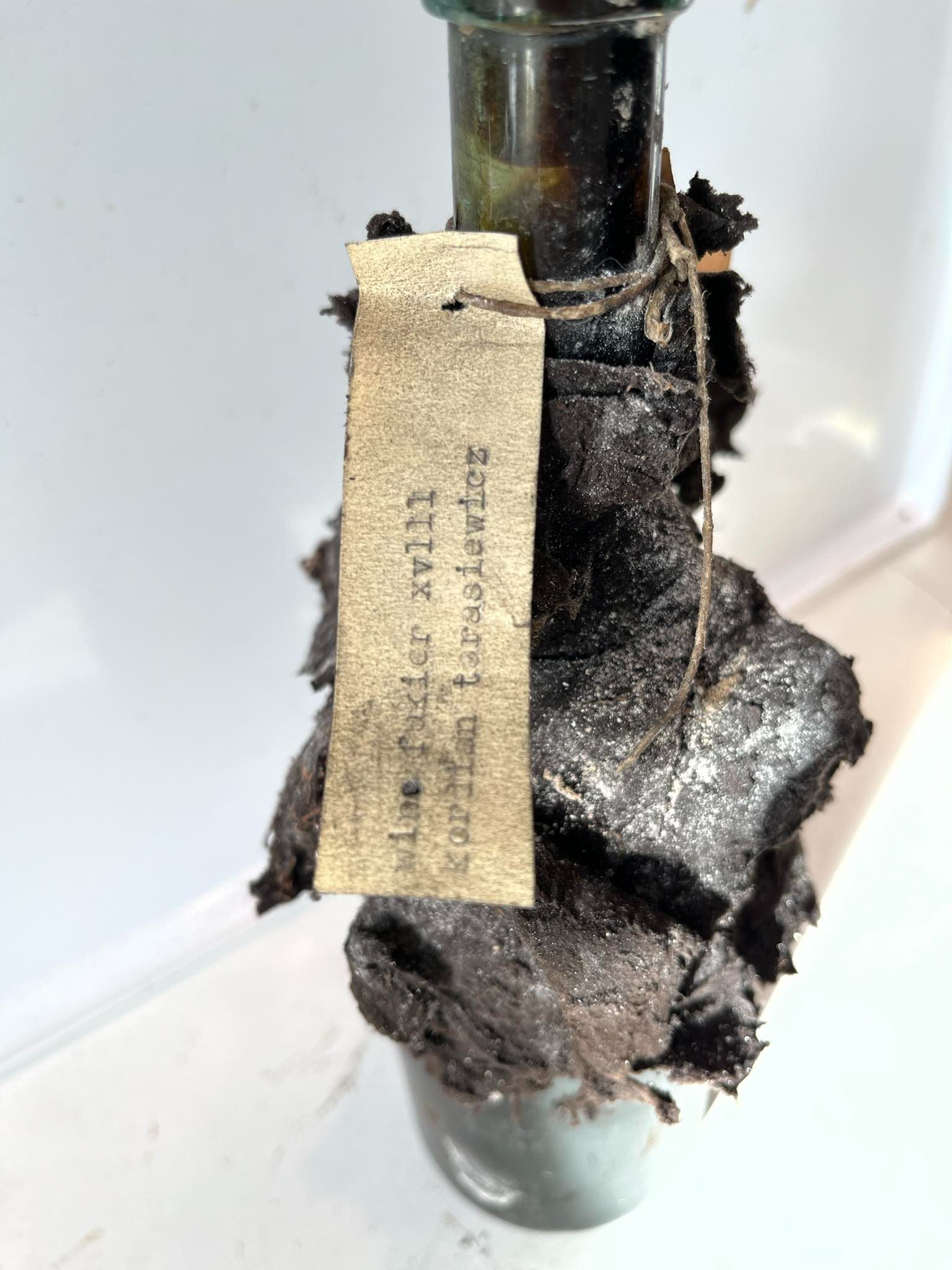
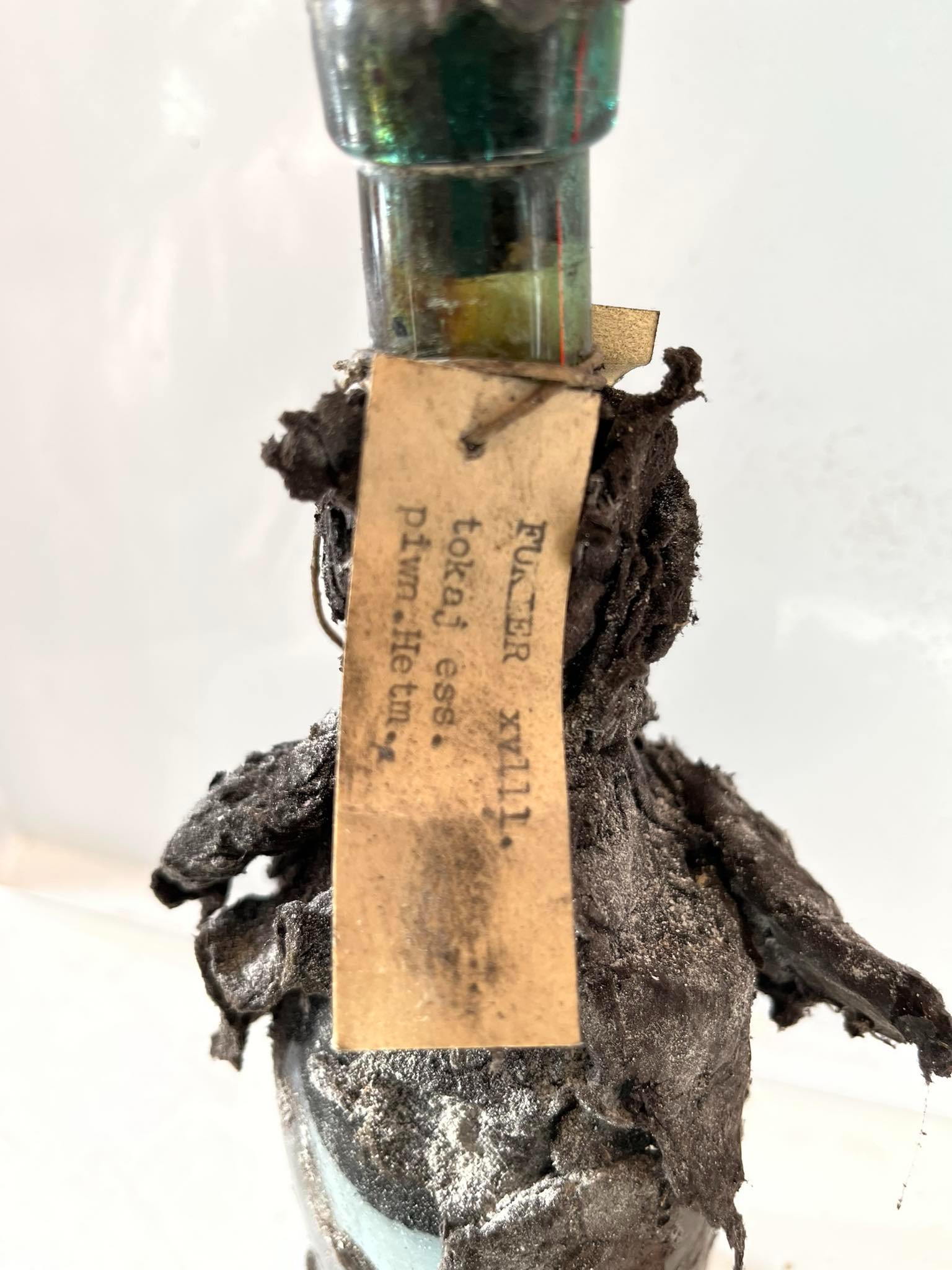
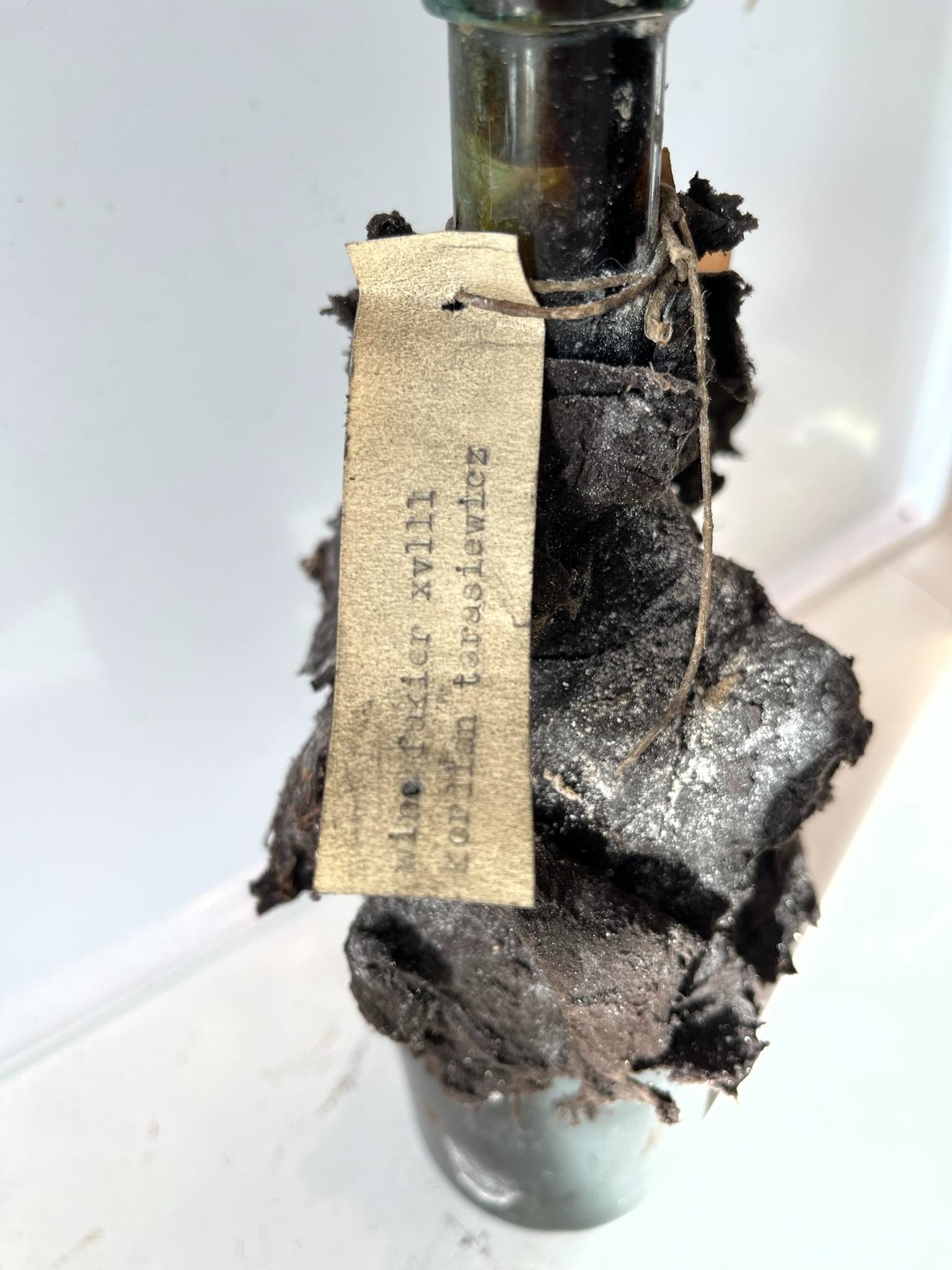
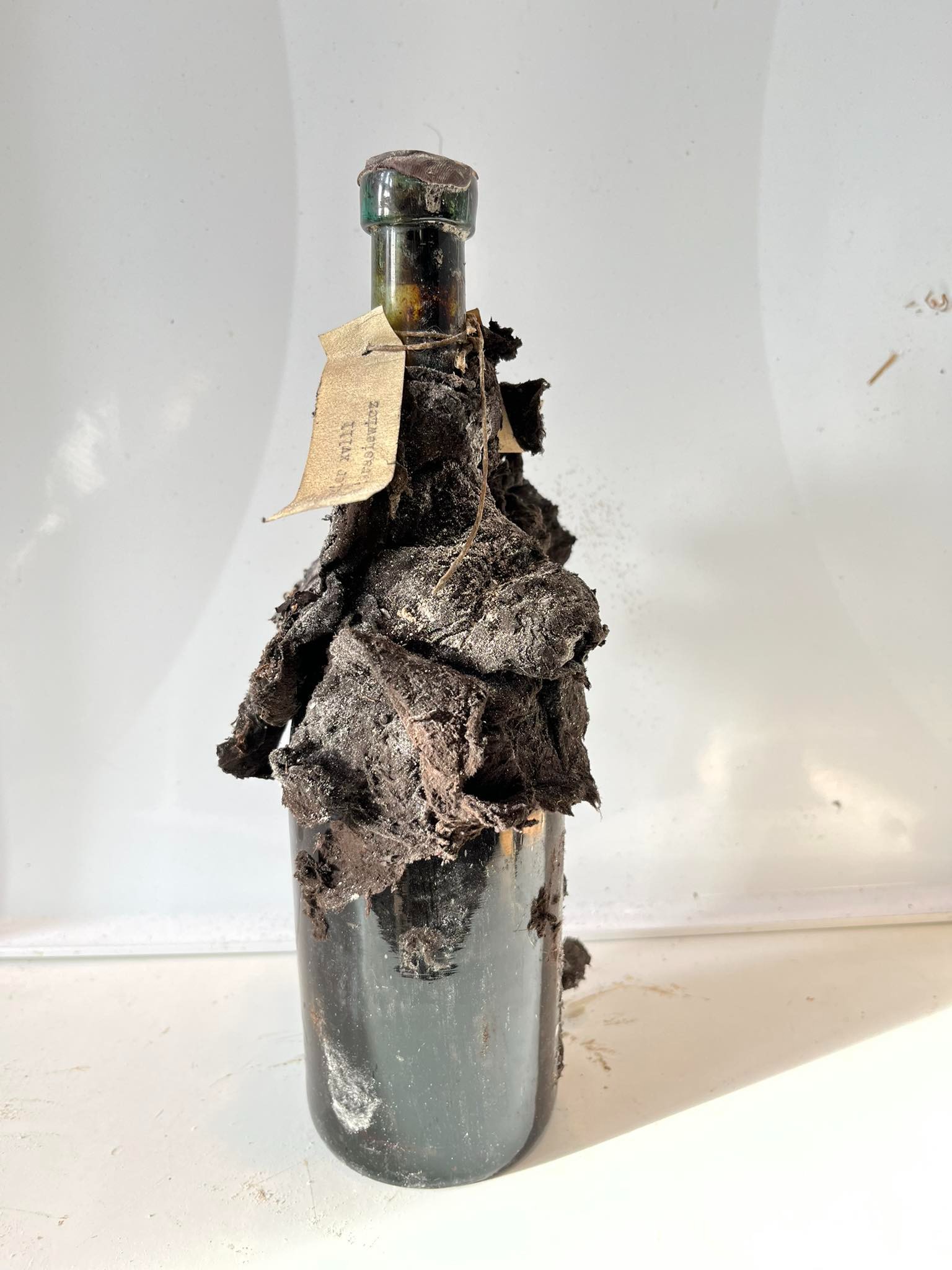
One bottle, two owners. A 1668 in the collection carries a Fukier strip and, over it, a Tarasiewicz strip — the physical form the 1940 purchase takes when it survives. Bottles marked in this way are the ones under examination in the note above.
1927 — 1939
The Krzemiński years, and where a thousand bottles went
This is the least romantic chapter in the history of the cellar and, for anyone hoping a
bottle survives, the most encouraging. Gabriel Kurczewski assembled it from the interwar press,
and titled his account Nieszczęście, które daje nadzieję — the misfortune that gives
hope.
The bankruptcy
On 2 June 1927 the District Court in Warsaw declared the bankruptcy of the
firm Skład win T. Fukier of Stare Miasto 27, appointing advocate T. Michalski curator
of the estate. The debts came to about one and a half million złoty. How they
were incurred is not established. One trade paper set the collapse against a general crisis
and noted how much the manufacture wholesalers had lost on Fukier's bills of exchange; another
expressed frank disbelief that an ordinary wine business, even in hard times, could run up
such a sum. Władysław Płachciński's manuscript suggests currency speculation, though a
quality-wine importer needing dollars was doing nothing unusual — the memoir itself records
buying Hungarian wine for dollars.
The firm was rescued, and the rescuer was the engineer Edward Krzemiński,
himself a wine merchant. Płachciński's verdict on him is savage — a man who lent dollars at
three or four per cent a month and “simply stripped Fukier of his property”. The
trade press of December 1928 took precisely the opposite view: Krzemiński had covered every
debt and lifted the bankruptcy from civic and national motives, being already provided for and
childless, on the principle that “there is no Warsaw without the Old Town, and no Old Town
without Fukier.” The same notice repeats the house's claim to have existed since 1610 and
adds a new one — that it was, by seniority, the third-oldest firm in Europe and the oldest
winery. Łowiec Polski, reporting the opening of the Gospoda in 1931, is a third voice on the same side: Warsaw owes him its gratitude, the writer says, for founding the place at considerable expense in difficult times, and the idea was a noble one. Kurczewski does not adjudicate between the devil and the angel, and neither will this
page.
What is certain is that the two men fell out badly. Krzemiński had obtained a loan from the
Bank Gospodarstwa Krajowego against his own property to buy out the debts,
undertaking in exchange to hand the historic tenement to the Society for the Care of Monuments
of the Past. Fukier then declined to sell the house and demanded a transfer fee of 95,000
złoty that had not been declared in the bankruptcy. Krzemiński went to the prosecutor.
Henryk Maria Fukier stood trial for fraud, and in February 1931 the court acquitted
him. After that, on Kurczewski's reading and mine, he had nothing further to do with
the running of the winery.
A later notice in the Korotyński file retells the affair with different dates — bankruptcy
declared in 1933 against “the oldest firm in Poland”, the oldest hereditary
establishment in the country and third-oldest in Europe, settled by Krzemiński, who
bought the winery outright and left Henryk Fukier as manager. The press dates and
the court dates do not agree; on either version the Fukiers no longer owned the stock, which is
the point any provenance claim on a bottle “ex-Fukier” has to carry.
How it looked from New York
The failure was reported abroad. An Associated Press dispatch from Warsaw of 11 June
1927 ran in the New York Times the next day as “Wine Firm of 1610 Fails —
Warsaw Concern Has Vintages 300 Years Old in Its Vaults”, and it carries three things no
Polish source in this file supplies.
The first is a cause. “Henry Fukier joined the Royalist Party and is reported to have
become so interested in politics that his business suffered.” Set that beside the Polish
trade press blaming a branch crisis and Płachciński blaming currency speculation, and there are
now three explanations and no adjudication between them — but the monarchist involvement is
checkable, and nobody has checked it.
The second is a shipment. Fukier had been supplying the Polish government with wine for state
occasions, and when the Polish Legation in Stockholm gave a dinner in honour of King
Gustav, he sent wines of the eighteenth century. That is a named destination, a named
occasion and a datable consignment of very old Fukier Tokaji leaving Poland in the mid-1920s —
the earliest documented export in this file, and one that should have left a trace in the
records of the Polish foreign ministry.
And the third: they had hidden it once before
“The wine … was so carefully hidden in the cellars of the old house … that it could not
be discovered by a group of German officers which hunted for it during the war.”
That is the First World War and the German occupation of Warsaw of 1915–18. The house
concealed its oldest wine inside its own cellar system, German officers searched for it, and
they did not find it — reported in 1927, a decade after the event and twelve
years before the next occupation, by a wire service with no stake in the story.
The implications run two ways. It establishes that the Fukiers knew how to hide wine in that
cellar and had already done it successfully under precisely these conditions, which is the
strongest reason yet to take seriously Kurczewski's warning against assuming the collection
left Warsaw in October 1939 in its entirety — and it puts the walled-up chambers of article
10 into a house tradition rather than an emergency. It also sits oddly beside the guest book,
whose leaves carry the autographs of the rulers and commanders of the Central Powers from
those same years: the house was signing the officers in upstairs while hiding the wine from
them below.
The change that matters
Krzemiński took the first floor for a restaurant — the Gospoda Towarzyska, later
advertised as the Komnaty Fukiera, said to have been set up with the Foreign Ministry
for diplomatic use but open to everyone, serving breakfasts, lunches and dinners, with a
Hungarian Gypsy orchestra under the primás Bánda Márczi and its own telephone number.
It opened in 1931, and the account of the opening in Łowiec Polski sets out how the house was then divided: the ground floor kept the old winiarnia and the cellars beneath it kept what the writer calls the oldest wines in the world, while the first floor became the reception rooms, the Lampi frescoes already on their walls seven years before the 1938 feuilleton described them. Old Tokaji was poured to the guests that evening, and the piece is printed in Polish and French in parallel columns, which is itself evidence of who the house was now addressing. That is atmosphere. The substantive change was in the cellar.
Under the Fukiers the oldest wines had not been on sale. James A. Roy was told in 1919 that no
outsider could obtain them at any price, and the memoir describes them as rationed out for
grave occasions. Krzemiński put the Hetman cellar on the open market.
Advertisements began to stress price reductions, and a complete price list including
the oldest wines was printed — which is the only reason we can now read the house's
own valuation of its own treasure, vintage by vintage.
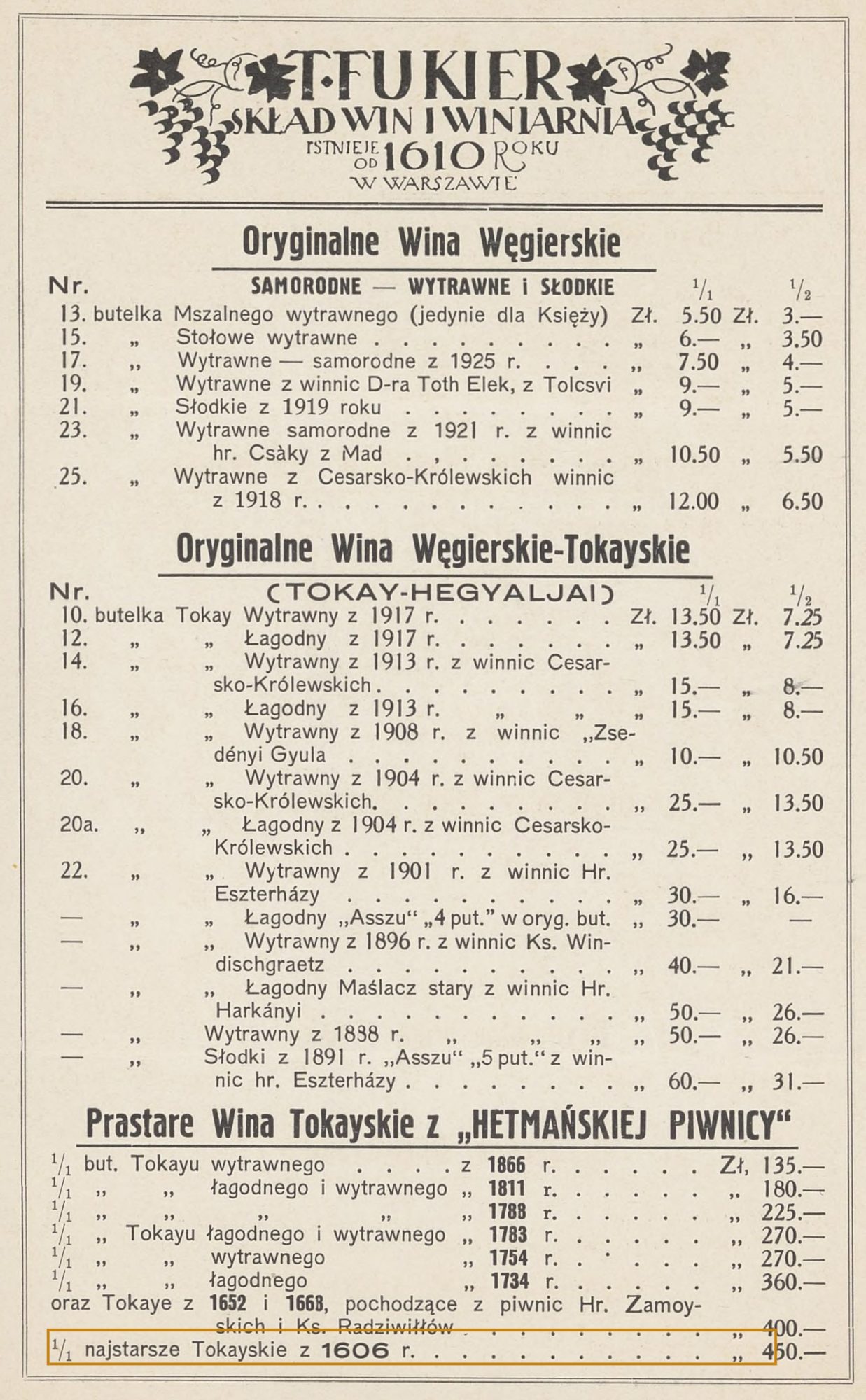
“Prastare wina tokayskie z Hetmańskiej Piwnicy” — the printed list, per bottle
Wine
Złoty
Tokaji, mild and dry, 1866
135
1811
180
1788
225
1783
270
1754, dry
270
1734, mild
360
1652 and 1668, “from the cellars of Count Zamoyski and Prince Radziwiłł”
400
1606, the oldest Tokaji
450
Mead, 1825 · 1792 · 1764 (Hetman cellar)
180 · 225 · 300
For comparison, on the same sheet: Château Lafite Rothschild
25
A glass of dry Hungarian wine or mead at the bar
1.50
Two things fall out of that sheet. The 1606 stood at eighteen times the house price of
Lafite and three hundred times a glass at the counter. And the vintages the house
itself advertised were 1606, 1652, 1668, 1734, 1754, 1783, 1788, 1811 and 1866
— which is the series any later document about this cellar should be measured against.
The bailiff, and America
Krzemiński was in trouble almost at once. In September 1932 the bailiff
advertised an auction, in the house itself, of wine belonging to the firm valued at 13,900
złoty; Kurczewski found comparable notices for 1935 and 1939.
Then came 1934, and the reports turn explicit.
4 January 1934. The firm has contracted with the New York house
Brass Rail for a large delivery of very old Hungarian wines and Polish
meads, all over two hundred years old and the oldest reaching 326 years; it has in effect
sold its entire Hetman cellar, about 7,000 bottles, for 1,100,000 złoty, to
be retailed in New York at 75 dollars a bottle.
22 May 1934. The bailiff has seized about 2,000 bottles of
seventeenth-century wine against debts of some ten-odd thousand złoty, with an auction set
for the 26th; efforts are being made to save the oldest wines in Warsaw from the hammer.
The arithmetic does not work — either cheaper wine was actually secured or the debt was far
larger — and Kurczewski doubts the sale took place.
2 June 1934. With prohibition repealed, negotiations are under way to sell
part of the Hetman cellar to the United States; George Butcher, president of
an American drinks trust, has come to Warsaw to close it: 2,000 bottles for
nearly 600,000 złoty. Another paper put the stock offered at over a million
złoty and reported that an English aristocratic club was interested too.
30 October 1934. An American paper, the Jefferson City Post-Tribune,
tells its readers that Tokaji “made in 1610” can be had at Fukier's in Warsaw for
55 dollars a quart — the same copy having circulated since 1931.
The thousand-bottle gap
The press of 1934 put the Hetman cellar at 7,000 bottles. Henryk Maria
Fukier wrote that at the outbreak of war there were about 5,500. Neither
figure is an audit, and the first is journalism. But if both are even roughly right, then
something like a thousand bottles left the Hetman cellar during the 1930s —
by auction, by sale, or by export — and were therefore not in the building when the German
lorries came in October 1939. Kordian Tarasiewicz's 400 bottles under tax-office
sequestration in 1940 are one documented tranche. The rest are unaccounted for.
Which is why Kurczewski calls this the misfortune that gives hope, and why he is right to.
A cellar emptied in three days by an army leaves no trail. A cellar sold off in lots by a
bailiff, contracted to a named New York restaurant and negotiated over by a named American
buyer leaves paper, and addresses. Of every thread on this page, this is the
one most likely to end at a surviving bottle.
Krzemiński's own end was of a piece with the rest. According to Płachciński he lost everything
to the bank before the war — the winery, the Fukier house, and his landed estate as well.
Selling the cellar, 1927–1939. The printed apparatus of the Krzemiński years: the price list that carries the 1606 at 450 zł, its detail, and a house advertisement built around the Hetman cellar. This is the paper the article says a bailiff's sale leaves behind.
2 — 8 October 1939
Plunder and Confiscation
Germany and the Soviet Union attacked Poland on 1 September 1939. Warsaw capitulated on
27 September, the Wehrmacht occupied the city centre on 1 October, and the German victory
parade, with Hitler present, was held on 5 October. This page long dated the
clearing of the Fukier cellar to 6–8 October, on the authority of
Henryk Maria Fukier's own memoir, which places the removal on the day after the parade and
gives it three days.
Here is the sentence the dating rests on, in Fukier's own words.
“After the taking of Warsaw in 1939 German troops surround the house and for three days —
the sixth, seventh and eighth of October — carry away by lorry all the wines: casks and
bottles, young and old, and those oldest in the world.”
Henryk Maria Fukier, Wspomnienia staromiejskie, quoted by Gabriel Kurczewski
It is a single sentence, written twenty years after the event, and it is the whole of the
evidence for the traditional chronology. It is also the sentence Kurczewski warns against
over-reading: all the wines were taken from the premises, but the memoir never
mentions a second storage place, and its silence has been read as though it were a statement.
That dating no longer stands first. A contemporaneous German diary, published in a critical
edition in 2025, puts an armed sack of the Fukier premises three days before the
parade — and describes something quite unlike an organised confiscation.
Manstein on the Old Town Market Square, 2 October 1939
Erich von Manstein was Chief of the General Staff of Heeresgruppe Süd
during the Polish campaign. On 2 October 1939 he stood beside Gerd von
Rundstedt as the 18th Infantry Division marched past the Teatr Wielki, one of five assault
divisions entering the city that day, and afterwards drove through the ruins. His diary entry
for that day ends on the Rynek Starego Miasta.
“Auf dem Altmarkt wurde grade Weinhandlung Fukier (Fugger) von Polen geplündert.
Wir retteten die Restbestände. Geben 50 Fl[aschen] der 18. Div., nehmen uns etwas,
[geben] den Rest von etwa noch 800 Fl. der Armee für Lazarette.”
On the Old Market the Fukier (Fugger) wine business was just being plundered by Poles. We
rescued what was left of the stock. Give 50 bottles to the 18th Division, take something for
ourselves, give the remainder of about 800 bottles still there to the Army for the field
hospitals.
Erich von Manstein, war diary, 2 October 1939 — Roman Töppel (ed.),
Manstein. Kriegstagebücher und Briefe 1939–1941, Paderborn 2025,
pp. 90–91 and n. 397
The date is fixed twice over inside the source. The entry heads the day the five assault
divisions entered Warsaw — the 10th, 18th, 19th, 31st and 46th Infantry Divisions,
per the editor's note — and the letter Manstein wrote to his wife on 3 October opens its
Warsaw passage with “Gestern waren wir zum Einmarsch in Warschau”.
The editor's footnote identifies the object precisely: the wine cellar of the Polish merchant
Henryk Maria Fukier (1886–1959) in the Warsaw Fugger house.
What the entry changes
Four things, and none of them small. The sack of the Fukier premises had begun by
2 October, not 6 October. It began, on Manstein's account, with civilians
rather than with a German operation, in a city that had capitulated five days earlier and was
queuing in thousands for water and food. The German response he records is conspicuously
improvised — fifty bottles to a division, an unspecified quantity taken by the
army-group staff for itself, the balance passed to the Army for field hospitals. And it gives
a contemporaneous number: about 800 bottles remaining at that moment, plus
the fifty and whatever the staff kept.
That number is the key to reconciling the two accounts, because it is far too small to be the
cellar. Bókay counted some 5,500 bottles five years earlier. What Manstein saw being
emptied was the Weinhandlung — the shop at street level, reached from the
square — not the Piwnica Hetmańska beneath it. On that reading the two
dates are not in conflict at all: the shop was looted on 2 October and its remnant dispersed
by the Germans the same afternoon; the historic cellar was cleared later, in the days Fukier
remembered.
Three ways to read the two dates
One. Two separate episodes: a spontaneous sack of the shop on 2 October,
interrupted by an army-group staff; and a systematic German clearance of the cellar between
6 and 8 October. Two. One event described from two vantage points —
Manstein from the square, seeing the Weinhandlung; Fukier from below, describing the
piwnica — which are physically different rooms holding different stock.
Three. Fukier misremembered, anchoring the removal to the parade of
5 October because that was the week's public landmark, twenty years on.
The second is the most economical, and the eight hundred bottles argue for it. But the
evidence does not yet decide between them, and the page should not pretend otherwise. What
can be said without hedging is that the plunder was not a single operation on a
single day, and that it had begun before the parade rather than in answer to it.
The Cochenhausen order, and the week it belongs to
On 6 October 1939 Generalleutnant Conrad von Cochenhausen
— commander of the 10th Infantry Division, part of 8th Army, and commanding officer of
Warsaw — issued a daily order to the commanders of the 18th and 19th Infantry Divisions
complaining bitterly about looting and pillaging by German troops. He mentions, among other
things, a case in which German soldiers had shot at one another in the city's wine cellars.
Read beside Manstein, that order stops being background and becomes the middle term of a
sequence. The 18th Division appears in both documents: it takes fifty bottles from Manstein's
hand on 2 October and is formally reprimanded for looting four days later. Set out in order,
the first week of October reads as one continuous and worsening disorder rather than as a
requisition.
Warsaw, the first week of October 1939
Date
Event
Source
27 Sept.
Warsaw capitulates
—
1 Oct.
Wehrmacht occupies the city centre
—
2 Oct.
Fukier wine business plundered on the Rynek; ~800 bottles secured
by Heeresgruppe Süd staff, 50 to the 18th Inf. Div., some kept, the rest to army
field hospitals
Manstein, war diary (contemporaneous)
3 Oct.
Manstein to his wife: “yesterday we were at the entry into Warsaw”
Manstein, letter (contemporaneous)
5 Oct.
German victory parade, Hitler present
—
6 Oct.
Stadtkommandant's daily order to the 18th and 19th Inf. Divs.
against looting; German soldiers shooting at one another in wine cellars
Cochenhausen, Nr. 153/39 geh. (contemporaneous)
6–8 Oct.
Removal of the Fukier wines over three days
H. M. Fukier, Wspomnienia staromiejskie (1959, recollection)
The room as it stood three years before the plunder. 1936 and 1935 photographs of the cellar, and the same 1936 frame with individual bottles marked. The daily order of Stadtkommandant Warschau of 6 October 1939 (Nr. 153/39 geh., signed von Cochenhausen) is not reproduced here.
A caution on who was looting
Manstein writes that the shop was being plundered von Polen, by Poles. It is a
first-hand, same-day observation and it should be reported as such — but it is also the
private diary of a German general with an evident interest in how German troops appear, and
the Cochenhausen order four days later shows German soldiers looting on a scale that required
a formal rebuke from the city commandant. Both things were happening in Warsaw that week.
The entry is good evidence that civilians were breaking into the premises on 2 October; it is
not evidence that Germans were not. And it is worth naming what Manstein is calling a rescue:
the distribution of a third party's property to a division, to his own staff, and to army
hospitals.
The chain of command, still unestablished
No order, no requisition and no destination have been found for the removal of the historic
cellar. What can now be said is that this was not part of Sonderauftrag Linz —
Dr Hans Posse of the projected Führermuseum did not arrive to select paintings until
November, and the National Museum was not touched until December — and that the earliest
documented handling of Fukier wine by Germans, on 2 October, was carried out by a passing
army-group staff with no reference to any authority at all. The German origin of the family
name counted for nothing.
From those days in early October 1939 onward, the Fukier wines were assumed to be lost or
destroyed. Most writers took the simplest view: drunk by soldiers. Manstein's fifty bottles to
the 18th Division and eight hundred to the field hospitals are the first documentary support
that view has ever had. Not a single bottle was known to survive until 2017.
Withdrawn pending examination: the “7 October
1939” list
Earlier versions of this article cited a Wehrmacht document dated 7 October
1939 naming the cellar and listing approximately 1,000 Tokaji bottles across the
vintages 1606, 1624, 1648, 1652, 1668, 1734, 1754, 1783 and 1788, together with some 650
bottles of other wines. That claim is withdrawn pending examination of the
original.
The grounds are internal to the document. Its signature block is captioned
Der Oberbefehlshaber der Heeresgruppe Mitte over the rank
Generalfeldmarschall — a combination impossible in October 1939, since no
army Field Marshal was appointed before 19 July 1940 and Heeresgruppe Mitte was not formed
until June 1941. The signature reads as Günther von Kluge, who in October 1939 was a
Generaloberst commanding 4. Armee and whose army was by then moving to the Western Front.
The typed sheet welds the opening formula of an award certificate to a cellar heading. The
German of both sheets contains calques and agreement errors no German clerk would write, and
a Polish or Russian slash-for-bracket convention runs through the printed form, the ink
annotation and the typing alike. An accompanying railway consignment note is a genuine
Reichsbahn Frachtbrief, but its dispatch stamp reads Regensburg, 30 May 1939, with a
transshipment stamp of 1 June — three months before the war, five hundred kilometres
off any Warsaw–Vienna route — and it carries no consignor, no weight, no charges
and no arrival stamp.
The tests outstanding are a typewriter comparison across the sheets, a print-method
examination of the forms, and an enquiry to the Bundesarchiv-Militärarchiv. Until those
are done, nothing on this page rests on that document. Note that the vintage series and the
bottle counts previously quoted here came from it, and should not be cited from this page in
the meantime.
Why I thought they might survive
Wine was not incidental to the Nazi looting apparatus. Göring, Seyß-Inquart and
Hans Frank were all involved in questions of cultural property, an enormous wine collection
was held at the Adlerhorst, and the Göring collection at the Cricova cellars in
Moldova is documented. And whatever happened between 2 and 8 October, a cellar of that size
does not evaporate: Manstein's eight hundred bottles went somewhere traceable, to army field
hospitals, and the rest of the stock left the building by routes nobody has yet reconstructed.
Lines followed and closed so far: Cricova, where Nicolas Godebski and Samuel Tinon found no
trace of Tokaji; and Obersalzberg, where local historians examined the remains of a cellar
beneath the so-called Modellhaus in 2001 and found that the roughly 10,000 bottles
there were all of French origin.
1939 · 1948
The Wilanów cellar: 1768 Tokaji behind a wall
In 1939 the private cellars at Wilanów were secured behind a wall. They came through the occupation, the Uprising and the destruction of Warsaw untouched, and were opened in the winter of 1947–48. Neither the Germans nor, after them, the Russians found the wine — the wall held through both occupations. What came out is the best-documented hoard of very old Tokaji in postwar Poland: over a thousand bottles, the oldest of them 1768.
Three state documents from the records of the Presidium of the Council of Ministers, held at the Archiwum Akt Nowych and published by Kłusek, carry the whole story. They are first-rank sources for old Tokaji, because the expert who wrote them was describing bottles he had in his hands.
The timing matters. After the Uprising the Branickis were evacuated from Wilanów to Nieborów; in January 1945, days after the liberation of Nieborów, the whole family was deported to Krasnogorsk near Moscow, and they did not return to Poland until the autumn of 1947. Adam Branicki, the owner of Wilanów, died on 2 December 1947 — nine days before the expertise — leaving his widow Beata Branicka and three daughters. The estate itself had passed to the state under the land-reform decree of 1944; personal effects had not, and it was as personal property that the wine was dealt with.
Document 1 — the expertise of 11 December 1947
Ekspertyza win i miodów z prywatnych piwnic z Wilanowa. The cellar had survived intact. The bottles stood upright in a dry room — which the expert judged advantageous for the Hungarian wines and meads that made up most of the stock — but the labels and the shelf notes had rotted away. Identification therefore rested on the wax seals, and by them he sorted more than a thousand bottles into three epochs: the oldest of the epoch of Marshal Lubomirski, 1768, sealed Szreniawa; a middle group of some eighty to ninety years, sealed Pilawa; and a younger group of fifty to seventy years, sealed Korczak.
The tags tied to the bottles. Typed on card and strung to the necks: Wina znalezione w Wilanowie w 1948 roku. Inwentaryzacja Fukier — wines found at Wilanów in 1948, inventory by Fukier. The others carry the seal name and the wine: Pilawa over the same inventory line; Pilawa · tokaj · 1811; Korczak · tokaj; and 1887 · tokaj, its crest line rubbed away. This is the expert’s sixth rule in physical form — every bottle marked, without opening it. Click any image to enlarge.
“The most interesting and most precious are without doubt the old Tokajis of the epoch of 1768.” He counted a dozen or so types among them: dry ones — dębiaki, “with a nut” — mild semi-sweet ones, several of which had dried out from originally sweet wines, and sweet maślacze of the natural sweetness of old Tokaji, which he called very precious for the sick and the old as a medicinal tonic.
A bottle of the 1768 epoch. Red wax over the cork, a card tag tied at the neck, the date written straight onto the glass in white, and the paper label reduced to a patch of fibre with a few pencil strokes left on it — which is exactly why the identification had to be made from seals and tags. Click any image to enlarge.
Beside them he found a sweetish wine of 1811, the comet year, which he described as the greatest refinement of old wine from the best vintage; he looked for 1834, 1848 — the year of the Hungarian revolution — and the famous 1866, and found none. The rest: a fine old Malaga, tired French Bordeaux and Burgundy, uninteresting Rhine wines, and two parties of old mead, the oldest about eighty years, dry, and close to Tokaji in taste. He stressed what the find meant. This was perhaps the only larger stock of genuinely old wines and meads from a private cellar to survive the war at all — the great Warsaw merchant cellars, the firms and the other walled-up private hoards having been destroyed. He valued single bottles of the old Tokaji at some ten to twenty thousand złoty, the old meads at 5,000–6,000 and the Wilanów meads at 3,000–4,000, with the warning that these were amateur prices, not market ones — there was no longer a market to quote.
Document 2 — the protocol of 10 January 1948
On the order of Director Ruszowski of 5 January the state bought from Beata Branicka one hundred bottles: 50 of the 1768 Marshal Lubomirski Tokaji, 30 small bottles of dry mead of about eighty years, and 20 bottles of Wilanów mead of 1898, the Maliniak. The protocol names who was present when the wall came down on 10 January 1948: the seals were checked first, then the expert went in with Stanisław Gepner, curator of the Wilanów palace and museum, Stanisław Lesiak of the Presidium, Beata Branicka and two of the family’s former servants. He sorted by three things — a sample bottle of each assortment which he had tasted, the Branickis’ own private notes, and then bottle by bottle. That last part is the most practical piece of examination writing in this whole archive.
The wax seal establishes the epoch.
Then the clarity of the liquid, and the deposit on the inner wall of the glass — the so-called kamień, the stone, which forms in Tokaji very late and proves the age of the contents.
The bottom sediment must be sand or dust. Fungus or caked lumps mean spoilage.
A ring on the neck, formed by mould, condemns the bottle: such wine is worthless.
Store standing, in a cool but dry cellar — and inspect from time to time.
Mark every bottle, so far as possible without opening it, with a note of sort, taste and age.
Stand a chosen bottle twelve hours at room temperature before serving.
Serve as a dessert wine, in small glasses with black coffee, in place of liqueur or cognac; for the weakened and convalescent, a glass of old sweet Tokaji twice a day — experience, he notes, is that the sick reject dry Tokaji as too harsh.
The hundred bottles went in three crates to the Presidium of the Council of Ministers and were put temporarily in the store by the state kitchen; on 15 January 1948 they were carried up to the Prime Minister’s apartment, for the personal decision of Citizen Premier. A proper cellar for them, the protocol adds, was being prepared in the Presidium building.
Document 3 — the note of 15 January 1948
Prices: the 1768 Tokaji at 8,000 złoty a bottle, the old meads and the Wilanów meads at 2,000 — 500,000 złoty for the hundred. The fifty Tokajis were the mild semi-sweet and the sweet, some of them numbered, packed in two crates of twenty-four to twenty-six and still needing detailed sorting against the notes of what he calls his two-day expertise. Tasting the small mead bottles he found that several in fact held old sweet Tokaji, very good; defining sealed bottles exactly, he wrote, is exceedingly difficult. (The meads are given as 1898 Maliniak in the purchase order and as 1899 and 1902 in this note — the documents do not agree.) The remaining nine hundred or so bottles went back to Beata Branicka, whose petition of 1955 puts it in her own words: of the wines found she received half in kind, and the rest was bought by the Presidium of the Government.
Kłusek measures what the state paid. In 1948, 500,000 złoty bought about fourteen tonnes of rye bread, or 119 tonnes of coal, or some 120 pairs of women’s leather shoes; a farmer would have had to sell six working horses or ten dairy cows to raise it, and a woman working the fields as a seasonal labourer would have needed more than 1,400 days. The state credit for rebuilding a war-damaged rural building that summer was capped at 125,000 złoty. Fifty bottles of 1768 Tokaji were priced at four times that.
Who wrote the documents
All three signatures are illegible in the archive — nieczytelny podpis. The folder nevertheless points hard at one man. Document 1 opens with the writer delegated on behalf of the Presidium of the Council of Ministers to determine the quality and value of the wines and meads kept at Wilanów; and Henryk Maria Fukier’s obituaries describe him as exactly that — former counsellor and inspector of the Presidium of the Council of Ministers, and a sworn wine expert. The voice fits too: the Tokaji connoisseurship, the vintage canon of 1811, 1834, 1848 and 1866, the merchant’s reflex of pricing bottles for amateurs.
And there is the object below. The wrapper of the Liszka privilege booklet of 1595, described above, carries a pencil note signed Henryk Fukier and dated 10/I 1948 — the day of the protocol. And the tags above settle the question in his favour from the other direction: the bottles themselves were labelled Inwentaryzacja Fukier — inventory by Fukier. What is still formally open is only the signature on the documents; reading it on the AAN originals would make the identification complete, and publishable.
The wrapper, both faces. Left, the note signed Henryk Fukier and dated 10/I 1948 r. Right, the other face, inscribed in ink, Wina … / Wina ko… / Henryk Fukier — 1948. Limp vellum, folded in four, the spine cloth torn away. Click either image to enlarge.
The note reads, as best it can be made out: «[W?] Fukierowska piwnica — nie w moim domu! Kamienica Fukierowska jest moja dom [sic]!» — the Fukier cellar, not in my house; the Fukier house is my home. It was written on the day he handled another family’s surviving old Tokaji, his own cellar in ruins and the rebuilt house passing out of his hands.
Why there was Tokaji at Wilanów
Wilanów came to the Branickis late. The palace was Potocki property through the nineteenth century, and in 1892 the last of that line, Aleksandra Potocka, left it to her cousin Ksawery Branicki; it stayed in the family until 1945, the last owner being Adam Branicki. The cellar walled up in 1939 therefore belonged to a house that had been drinking Tokaji on a scale few families in Europe could match, and had been doing so long before it held Wilanów.
The best-known illustration comes from a letter of 1760, written from Białystok to Warsaw and published by the Wilanów museum in its Pasaż Wiedzy. Jan Klemens Branicki, castellan of Kraków and hetman, gave a name-day feast for his wife Elżbieta Poniatowska — sister of Stanisław, the future king. The table was laid in a gallery for two hundred, and along its length ran a channel filled with Tokaji, made to look like a sea. On the wine floated twenty-four little ships, finely made, loaded with pistachios, sugars, preserves and sweetmeats, which drew up in front of the ladies so that they could take what they liked from the cargo. After the dessert an enormous cup was carried in — said to have belonged once to Czarniecki — and the guests dipped it into the wine. The whole sea, the letter says, was destroyed in half an hour.
Two points of accuracy. That feast was held at the Branicki palace in Białystok, not at Wilanów; the account is published by the Wilanów museum, which is how it is usually met with online. And Tokaji at this scale is a statement about rank rather than about taste: the wine was the most expensive thing on the table, and pouring a canal of it in front of two hundred guests was the point.
The family’s reach is worth noting for anyone tracing bottles. Xavier (Ksawery) Branicki (1816–1879) was adjutant to Tsar Nicholas I until 1843; after years in Italy and France he settled in 1849 at the Château de Montrésor in Touraine, bought with his mother’s help, which he filled with Polish collections and which remains in Branicki hands today. Branicki property moved between Warsaw, Ukraine, the Russian court and France across the nineteenth century, and wine moved with it — so a Branicki bottle need not have stayed in Poland.
Sources: Muzeum Pałacu Króla Jana III w Wilanowie, Imieninowe upominki w XVIII wieku (Pasaż Wiedzy), for the 1760 letter; Château de Montrésor and the Touraine literature on Xavier Branicki for the Montrésor line.
What remains open. The signatures on the three AAN documents; what became of the fifty bottles of 1768 taken up to the Prime Minister’s apartment; and where the nine hundred returned to Beata Branicka went after 1948. Source: Mirosław Kłusek, Odzyskiwanie ruchomości przez spadkobierców Adama Branickiego w latach 1948–1960 w świetle materiałów źródłowych, Krakowskie Studia Małopolskie 17 (2012), publishing AAN, Urząd Rady Ministrów w Warszawie, sygn. 1/3, pp. 56–61.
1939 — 1944
Barricades and cellars: what the insurgents drank
What the house was doing between 1939 and 1944
There is a tradition behind this, and it is worth having first, because it explains the
testimony that follows. Henryk Maria Fukier wrote that on returning “from the Tombs”
— the Easter Sepulchres visited on Holy Saturday — custom required a call at the Fukier house
to see the sień and the courtyard, and a look into the winery for a small bottle of
wine if there was room to stand. “In my time almost half of Warsaw passed through the
Market Square and the winery during those few days before the feast.”
The winery itself closed in 1939 — on one account before the outbreak of war,
for the financial reasons set out in article 08; on another after the building was damaged in
the September bombing. But the house did not stay shut. In 1941 it was bought by the
Okocim brewery, itself by then confiscated by the Germans from the Goetz family. Aerial
photographs of the summer of 1944 show that the building had been repaired.
And the Easter custom survived the occupation. Maciej Szymański, remembering
Easter 1944:
“At Easter 1944 I was invited to visit the churches of the Warsaw Old Town together with the
Kamler family. After the pilgrimage and the ‘visiting’ of the Tombs, I was invited for the
traditional śledzik — a glass of vodka and something to eat — down in the cellar at
Fukier's.”
Maciej Szymański, Ja, Jo pamięta. Album rodzinny i wspomnienia, vol. 1
(Kraków, 2002), quoted by Gabriel Kurczewski
Wine had become vodka, and it was a different establishment under a different owner. But this
is, so far as Kurczewski knows, the only direct testimony that the house was trading
again in the occupation — and it is corroborated sideways by the insurgents of 1944,
who found drink in those cellars four months later. It also closes the gap this article used to
open with. Between the plunder of October 1939 and the destruction of 1944 the Fukier house was
not a shuttered ruin: it was repaired, it was in German-controlled corporate ownership, and on
Holy Saturday 1944 people were still going down into the cellar for a drink.
One photograph carries the whole of that closure in a single detail. The Narodowe Archiwum
Cyfrowe holds a view of the house under occupation (sygn. 2-8990), and set
beside Koneczny's façade of May 1935 it reads like a before and after. In 1935 two large
boards flank the shop window, each lettered Skład vin T. Fukier … 1610. In the
occupation photograph the boards are gone, the display window is boarded over,
and the windows of the first and second floors are shuttered or nailed shut — one shutter
hanging open on the second floor. The stucco façade and the canopy are untouched. That the
upper glazing is boarded rather than merely closed points to blast damage, which would place
the frame somewhere between the September 1939 bombardment and the repairs the Okocim brewery
had carried out by the summer of 1944 — an inference from the picture, not a caption on it.
What is not an inference is the removal of the sign: the firm's own founding claim, painted at
street level and legible across the Market Square for decades, had been taken down.
The insurgents' testimony
For the year of the Rising itself, the Warsaw Rising Museum's Oral History
Archive is the source, and Gabriel Kurczewski quarried it. Gabriel Kurczewski went through it for mentions of the Fukier wines and
cellars and published nine testimonies. They are recollections, taken down decades later from
people who in 1944 were teenagers — and they need reading with that firmly in mind — but two
things in them matter a great deal.
First, a correction to the chronology
Kurczewski's own warning is more valuable than any of the testimonies, and it revises the
story this page tells. He cautions expressly against two conclusions that Henryk Maria
Fukier's memoir invites by its silences: that the Hetman cellar was, in the summer of 1939,
the only place in Warsaw holding a large stock of old historic wine; and that
the collection plundered in October 1939 left Warsaw immediately and in its
entirety. Neither follows from the memoir. Set beside the Tarasiewicz purchase of
1940 — four hundred bottles of Hetman-cellar wine sold, legally, by the tax office, months
after the cellar was supposed to have been emptied — the plain narrative of a cellar cleared
in three days and gone begins to look like the beginning of the story rather than the end of
it. Manstein's diary of 2 October 1939 (article 09) points the same way from the other end:
the plunder started earlier, in more hands, and more piecemeal than the memoir suggests.
Second, the walled-up cellars
Two of the testimonies describe finds made by accident while insurgents cut passages from
cellar to cellar beneath the Old Town.
Bohdan Hryniewicz, breaking through in the cellars of the town
hall, heard a bottle clink as the crowbar went through a brick. Behind the wall
were fifty bottles walled up in the reign of Stanisław August Poniatowski
(1764–95) — “it was tokaj and mead”. The corks had gone entirely to powder;
only the wax survived, bearing its stamps. What was left of the wine, about
half a bottle, was “practically goo, almost syrup”. He drank some from a coffee cup on his
name-day, 10 August, and afterwards “could move neither hand nor foot”.
Mieczysław Wacław Świrski drank mead he was told was three hundred years
old, from a small cellar walled up at the time of the Swedish invasion and
broken into by chance. “It was a jelly”, afterwards cut into little cups.
Put those beside the Tarasiewicz bottles, walled into two cellars before the Uprising, and
beside the Branicki cellar at Wilanów, walled up in 1939 and opened in January 1948, and a
pattern emerges that is more useful than any single anecdote. Walling up is the reason
anything survived at all — and it is also why the survivals are found by demolition,
war and accident rather than handed down.
Not everything underground was Fukier's
The witnesses discriminate more carefully than a summary of them suggests, and that is worth
recording, because it is the best argument for taking the careful ones seriously.
Dariusz Celiński sets beside the Fukier cellars a wholly separate stock:
“the German army had supplies of Moët & Chandon champagne. Terrible quantities!”
— and with it the paradox that defined those weeks, champagne everywhere and no water
anywhere. Men half-blinded by the dust of collapsing houses had to be nearly blind before the
doctor would spend water on rinsing their eyes; Celiński tried filling a bath with champagne
instead, to no effect at all. Bohdan Hryniewicz places his own find in the
town hall and never claims it for Fukier. Mieczysław Świrski volunteers that
the casks sent round to his company were “not necessarily the original ones”.
Zbigniew Szpakowski names a building and a source rather than a legend. The
uncritical attributions and the careful ones can be told apart, and they should not be
discounted together.
Kurczewski's own image of what the testimonies build is worth keeping as he wrote it: an
almost subterranean Fukier city, opened to the fighting young and yielding up its treasures,
including those hidden from earlier invaders — its heart the multi-storey cellars on the
Market Square, its reach running from the Castle as far as ulica Długa,
where in the insurgent hospital wine was used to wash wounds.
The rest of what they remember
Zbigniew Szpakowski records a second Fukier storage location — the
magazyny fukierowskie below the Fryderyk Chopin Institute, near the Castle — whose
staff handed bottles to the insurgents, among them “a bottle of wine of 1800, that is a
hundred and forty-four years old”. Coming from a catering family he was surprised they gave it
over mossy and cobwebbed, unwiped; “but they wanted to show what the wine was.” It drank, he
says, “like an essence-like apple compote, but unfortunately it had its strength.”
Jerzy Tomasz Świderski and Bernard Słomski describe the
other end of the scale: no water anywhere, whole enormous barrels in the cellars, cracked and
spilling, wine carried out in buckets and brought up hot to the night barricades, wine used
for washing and for cooking kasha. Tadeusz Chojko, facing amputation and
fainting from blood loss, poured a bottle of Fukier wine over his own head to stay conscious.
Two further details fix the scale and the depth. Elżbieta Zofia Stolarczyk
remembers boys sent across a street under fire with two petrol bombs apiece — a kick from
behind for encouragement, and the certainty that a fall on the rubble would set them off. The
boy who ran without needing the kick was rewarded on the far side with two bottles of red
wine, “of course from the Fukier cellars.” And Janusz Leydo, asked
whether he would do it again, said he would not: the rebuilt Old Town is not the original one,
and “those are not Fukier's cellars, where we were given wine three storeys below the
house.” Three storeys down is the only measurement of the cellar's depth any of them
offers.
How much weight this carries
Kurczewski's assessment, which I adopt: the narrators were young, often scouts, living under
occupation, and unlikely to have been judges of wine or of Warsaw's wine trade. The
frequency of the name Fukier in their accounts may testify to the
fame of the house rather than to the provenance of the bottles, and the
stories themselves form a further chapter of the legend — an underground Fukier city opening
before the fighting young and yielding up its treasures. He believes readily in the
discovery of old wine while cutting through Old Town cellars; he doubts whether its origin
was always rightly attributed to Fukier, whether the drinks were correctly identified, and
whether their ages were accurately judged. None of it can carry a provenance claim
on its own.
Three details are worth keeping anyway, because a teenager would have no reason to invent
them. The powdered cork with surviving stamped wax is an exact account of
how an eighteenth-century closure fails, and a physical prediction anyone can test.
The half-empty bottle reduced to syrup, and the mead become a jelly, are
consistent descriptions of extreme concentration under a failed closure. And
the deliberately unwiped bottle records the period conviction that cellar
dirt is itself a credential — the same instinct that put “moss-grown” into the Allison story
and into the press descriptions of the Hetman cellar.
One test can be run on them directly. Where these men reason from numbers, the numbers hold.
Szpakowski gives his bottle of 1800 as a hundred and forty-four years old,
which is exactly right for 1944; Świrski's three hundred years for a cellar
sealed during the Swedish invasion of 1655–60 is right within a decade. It is the brand
names and the vintage attributions that wobble, not the arithmetic — which is close to the
opposite of what invention produces.
What the archive does not do is answer the question. As Kurczewski puts it, the insurgents'
stories explain nothing about the fate of the collection but sharpen the wish to know it — and
may contain leads towards it. The open question is now precisely framed: what became
of the wine plundered in October 1939, and how much of what was drunk on the barricades in
August 1944 was still it.
What the insurgents broke into. Bottles in the state a cellar sealed for decades leaves them: standing upright, the glass under a mould crust that has to be cut away before any marking can be read. The testimonies describe finds of exactly this kind behind cut passages.
1958
The Zhukov tasting
In 1958, somewhere in the Soviet Union, Marshal Georgy Konstantinovich Zhukov
hosted what may be the most serious tasting of old Tokaji ever recorded. Our knowledge of it
rests on the unpublished notes of the Israeli wine writer Daniel Rogov, who
was present as secretary to General Alan Shapley, deputy commander of the US
Marine Corps and a personal friend of Zhukov. A small group of Soviet officers made up the
rest of the table. Two principal dancers of the Bolshoi performed, as did
Serge Jaroff, choirmaster of the Don Cossack Chorus, with six of his best
singers. The artists did not taste.
The service was ceremonial to the point of absurdity: liveried servants carried each bottle
round the table on a sterling silver platter, and the wine was not poured into glasses but
served by the spoonful, from a mother-of-pearl tablespoon. Every wine was of the seventeenth,
eighteenth or early nineteenth century. Rogov took photographs and was not permitted to keep
them.
What he was told about the provenance is this: Red Army soldiers had found the wines at the
end of the war. Three hundred bottles of the 1668 vintage; a thousand more from 1682, 1737,
1783 and 1811. Each bottle numbered in white paint, visible under ultraviolet light. And a
cellar catalogue was produced at the table, itemising the wines, the vintages, the dates of
acquisition, the sellers, entries recording with whom the owner had drunk particular bottles,
and the near-matching vintages used when topping up during recorking — on a six-year cycle.
The bottles had been stored upright.
What this is and is not
There is no hard evidence that the wines at Zhukov's table came from the
Fukier cellar. Nobody at that dinner said the word “Fukier”, so far as we know. What there
is, is a set of coincidences that is difficult to explain any other way — and it was that
set of coincidences, laid out below, that first convinced me the collection might not have
been drunk in 1939 after all.
Zhukov's table, 1958, against what we know of the Fukier cellar
Zhukov tasting, 1958
Fukier cellar, per Bókay 1934
Vintages
1668, 1682, 1737, 1783, 1811
1606, 1668, 1682, 1734, 1754, 1783, 1788, 1811
Quantities
300 bottles of 1668; about a thousand across 1682, 1737, 1783 and 1811; several thousand in total
328 bottles of 1606; 700 of the very old Tokaji; about 4,000 in the 100–200-year band
Recorking
Six-year cycle, topped up with near-matching vintages
Six-year cycle, corks soaked a day in a secret liquid
Storage
Upright
Upright, in a dedicated cellar section
Marking
Numbered in white paint, glowing under UV
White-yellowish paint: barrel ID, vintage, wine type — UV-active
Labels
No paper labels mentioned
No printed paper labels; handwritten neck labels only
Records
Catalogue with vintage, acquisition date, seller, drinking companions, recorking vintages
Cellar management of exactly this kind — the drinking-companion entries in particular
Provenance given
Found by Red Army soldiers at the end of the war
Removed from Warsaw in the plunder of early October 1939
Read the vintage row carefully, because it is the one place the two columns disagree.
Zhukov's table had a 1737; Fukier's list has a 1734. That
could be a mismatch. It could equally be a number read once, at a dinner, sixty years ago,
off a hand-painted bottle. The 1668, 1682, 1783 and 1811 match exactly. So does the six-year
recorking cycle, the upright storage, the UV-active white paint, the absence of paper labels,
and — hardest of all to explain by chance — a cellar catalogue that recorded whom the owner
had drunk each bottle with.
Rogov's notes on the tasting have never been published. Locating them remains one of the more
valuable open items on my research list.
The marks a 1958 guest would have read. Two frames from the 1933 film of the cellar and, for comparison, a surviving bottle whose hand-painted marking in yellow is emerging from the mould crust — the kind of hand-painted figure behind the one disagreement in the table above, Zhukov's 1737 against Fukier's 1734.
2005 — 2017
Rediscovery of Fukier bottles
In 2005 I gave a presentation in Tokaj arguing that the Fukier collection had not necessarily
been destroyed, and that bottles from it might still exist. It raised some interest and nothing
else. No institution took up the question; nobody went looking. So the search stayed a private
one, and it ran for more than fifteen years.
In 2017 I found the first bottle myself — the first Fukier bottle known to
anyone in seventy-eight years. Everything on this page about the marking systems, the paint
chemistry, the inks and the UV response follows from that find and from the bottles that have
come to light since. Until 2017 the cellar was a documentary problem. After 2017 it became a
physical one.
The 2017 find. The bottle as it came out, the painted marking under ultraviolet, and the handwritten Fukier tag. These three frames are the whole method of this page in miniature: glass, paint, paper.
Your text needed
The draft only mentioned 2017 in passing, so this article is still short on the find itself.
What would carry it, as far as you are willing to disclose:
Where the bottle was and how you got to it — the reasoning that took you to that cellar
rather than another one. What the bottle was: vintage, format, markings, fill level.
How you verified it: paint chemistry, ink chemistry, UV response, glass, cork,
cross-reference to the price lists or the confiscation list. How many Fukier bottles are
accounted for today and across which vintages. Where they are now. And what the find does to
the 1939 question.
One date to check: the Tokaj presentation was 2005 and the first bottle 2017, which is
twelve years, so I have written the fifteen-plus years as the length of the whole search
rather than the interval after the presentation. Correct the sentence if you meant it the
other way.
Gallery
Fukier bottles, and how to read one
A Fukier bottle carries its own paperwork on its surface. The house used three overlapping
systems, and knowing them is the difference between an identification and a guess.
White-yellowish paint, applied directly to the glass. Carrying the barrel
ID — the letter W followed by a three-digit number — the vintage year, and
the type of wine with any additional attributes: Imperial, słodki,
kapka. This paint glows under ultraviolet light. Daniel Rogov
mentioned it in 1958; our own work has confirmed it, and the chemical composition of the
paint has now been analysed to the point where we know exactly which components produce the
glow. It is one of our examination methods. The paint can be glimpsed in the 1933 film
footage.
Handwritten paper labels, on the body or the neck, giving the name
Fukier in red ink, the vintage, the type of wine, and a cellar inventory number —
most probably a shelf ID, of the form “A I”. The inks have likewise been
analysed and serve as a second, independent test.
Nothing at all. Bottles distinctive enough to be identified on sight were
left unmarked. Absence of marking is not by itself evidence against a Fukier origin.
The frames below pair ordinary light with ultraviolet: the paint marks that are invisible or
illegible by eye are exactly the ones that carry the barrel ID and the vintage.
The marking systems, side by side. Vintages painted straight onto the glass; the same paint under ultraviolet, where it fluoresces; handwritten paper tags, one giving the vintage and the shelf mark A I, one tied with red thread over a wax seal; and a painted figure surfacing from the mould crust, which is how most of them are first seen. Click any frame to enlarge.
Gallery
Fukier artefacts
Bottles are not the only things that left the cellar. Paper and metal from the house turn up
more often than wine does, and it is frequently a printed price list or an invoice that pins a
bottle to a vintage and a year. Everything here is material I use for cross-referencing.
Paper from the house, and around it. The price-list sheet; an invoice of 1942; the
Rozmanith advertisement offering Hetman wines of 1660, 1674 and 1683; a Fukier advertisement
built on the Piwnica Hetmańska; a Norwegian press notice on the cellar; and the title page of
Czajewski's Warszawa illustrowana: stara Warszawa, vol. 3 (1895). An invoice that
names a vintage and a buyer is worth more to this research than a photograph of a bottle.
In progress
Open questions
Numerous questions about the Fukier cellar remain unanswered. The foundation of the house; the
purchase and sales activity of the firm; the oldest Tokaji vintages actually kept in the
cellar; the cellar management practices; the guest book and what stood in it; the recorking
regime — each of these is still open, and this page will carry them as they are settled rather
than as they are guessed.
Some of them can hopefully be resolved. One is the question of the “secret
liquid” said to have been used before recorking: I keep several corks from broken Fukier
bottles, and they are waiting for scientific analysis.
Placeholder
This article is a stub. The individual questions will be listed and dated here, each with
what would settle it.
Apparatus
Sources and open questions
Henryk Maria Fukier, Wspomnienia staromiejskie — the memoir, and the primary account of the 1939 confiscation.
János Bókay, “300 éves tokaji bor Varsóban”, Borászati Lapok, 1934 — quantities, vintages, prices, and the tasting note on the 1606.
Gabriel Kurczewski — the Potocki auction of 1853, the
Tarasiewicz purchase, and the reconstruction of the cellar topology. His
work on the family is the standard reference.
Gabriel Kurczewski, “Czym był tokaj dla Polaków?”, review article on Roman Marcinek, Rex vinorum. Z dziejów węgrzyna w dawnej Polsce (Wilanów 2015), Przegląd Historyczny CVIII (2017), fasc. 2 — the 1867 coronation gift, and the postwar Winiarnia Fukierowska.
Willem van de Poll — the 1934 photographic series (Nationaal
Archief), including the guest-book leaves, the ramp from the Market
Square, and a photograph of the Fukier wine list; and Witold Edward Koneczny
— 98 photographs in the Fototeka of the Muzeum Powstania Warszawskiego,
catalogued under “Warszawa przedwojenna”. Two are of the house, both
dated May 1935: “Wnętrze piwnicy winiarni Fukiera przy Rynku Starego Miasta” — the interior of the cellar — and “Sień winiarni Fukiera przy Rynku Starego Miasta”, the vaulted entrance passage. Collection index.
Wine lists: one of the late 1920s reproduced on Winne tradycje w kulturze polskiej,
and one of the 1930s photographed by van de Poll (Nationaal Archief
image 34893b61-8330-4402-852d-20ff95811415). Both price the Tokaji of
1606 at 450 zł a bottle.
James A. Roy, Pole and Czech in Silesia (London, 1920) — digitised on archive.org as poleczechinsiles00royj. Photograph of the inter-Allied commission in session at the Kronenberg Palace, Warsaw, 1919: Narodowe Archiwum Cyfrowe.
Daily order of Generalleutnant Conrad von Cochenhausen, Stadtkommandant Warschau, 6 October 1939, Nr. 153/39 geh.
Roman Töppel (ed.), Manstein. Kriegstagebücher und Briefe 1939–1941
(Paderborn: Brill | Schöningh, 2025), pp. 90–91 and n. 397 — the war
diary entry of 2 October 1939 on the plundering of the Fukier wine
business, and the letter of 3 October confirming the date.
Daily order of the Stadtkommandant Warschau, Nr. 153/39 geh., 6 October 1939, signed von Cochenhausen.
A group of purported German documents of 6–7 October 1939,
including a signature block ascribed to Generalfeldmarschall von Kluge
and a Reichsbahn Frachtbrief — set aside pending examination; see the note in article 09.
Daniel Rogov — notes on the Zhukov tasting of 1958, still unpublished. Locating them is an open item.
James A. Roy, Pole and Czech in Silesia (London,
1920) — the April 1919 visit to the cellar; digitised on archive.org,
and the English original should replace the Polish retranslation used
here.
Gabriel Kurczewski, “Lokalizacja Piwnicy Hetmańskiej”
(bliskotokaju.pl, 19 June 2014) — the identification of the room, with
the 1936–37 Sosnowski survey and the 1973 Łukawski–Ostrowski
conservation inventory, both in the archive of the Narodowy Instytut
Dziedzictwa; and “Tokaje Kordiana Tarasiewicza” (19 February 2012) — the
sequestration, the purchase, and the two walled cellars.
Gabriel Kurczewski, “Z «Kłosami» u Teofila Fukiera A.D. 1868”
(bliskotokaju.pl, 3 November 2013) and “Gniazda na Spiszu — kolebka
winiarni fukierowskiej” (Almanach Muszyny, 2012) — the source criticism of the 1610 and 1606 datings.
[Kazimierz Władysław Wóycicki], “Kamienica Teofila Fukiera, z piwnicami win węgierskich, na Starem Mieście w Warszawie”, Kłosy VI, no. 135 (1868), with plates after Wojciech Gerson — Piwnica butelkowa, Druga piwnica okseftowa, the sień, the vaulted hall and the piwnica win hetmańskich. Digitised on Polona. Earlier notices: Kurier Warszawski 1866 no. 38, and 1853 no. 191 on the Potocki purchase (both found by Paweł Polak).
Gabriel Kurczewski, “Nieszczęście, które daje nadzieję”
(bliskotokaju.pl, 11 November 2013) — the bankruptcy, the Krzemiński
years and the 1930s dispersal, assembled from the interwar press. The
cuttings: Głos Polski 9 June 1927 (bankruptcy); Przegląd Handlowy 24 June 1927; Nasz Przegląd 12 June 1927 and 4 February 1931 (the fraud trial and acquittal); Gazeta Handlowa 28 December 1928 (the rescue); Gazeta Polska 4 September 1932 (bailiff's auction); Głos Poranny 4 January 1934 (the Brass Rail contract, found by Paweł Polak); Nowiny Codzienne 22 May 1934 (seizure of 2,000 bottles); ABC 2 June 1934 (George Butcher); Jefferson City Post-Tribune 30 October 1934; Teatr 3 (15), 1935 (the Komnaty Fukiera advertisement). Reproductions from the Federacja Bibliotek Cyfrowych and Polona.
“Wine Firm of 1610 Fails — Warsaw Concern Has Vintages 300
Years Old in Its Vaults”, Associated Press dispatch, Warsaw, 11 June
1927; New York Times, 12 June 1927 — the bankruptcy reported
abroad, with the Royalist Party explanation, the Stockholm shipment, and
the concealment of the wine from German officers in the First World
War.
The printed T. Fukier price list, Skład win i winiarnia, Stare Miasto 27
— the complete sheet, including the “Prastare wina tokayskie z
Hetmańskiej Piwnicy” column. Photograph of the house under German
occupation, windows of the first and second floors boarded: Narodowe
Archiwum Cyfrowe 2-8990.
Gabriel Kurczewski, “Groby i «Fukier» — Wielka Sobota na
Starym Mieście” (bliskotokaju.pl, 4 April 2015) — the Holy Saturday
custom, the closure of the winery in 1939, the purchase of the house by
the Okocim brewery in 1941 after its confiscation from the Goetz family,
the repairs visible on the aerial photographs of summer 1944, and the
Szymański testimony.
Maciej Szymański, Ja, Jo pamięta. Album rodzinny i wspomnienia Macieja Szymańskiego, vol. 1 (Kraków, 2002) — Easter 1944 in the Fukier cellar.
Rudolf II, confirmation of the privileges of the oppidum of Liszka Olaszy (Olaszliszka), Prague Castle, 2 April 1601,
reciting the charter of Martin Pethe de Hetes, Bishop of Várad and
Provost of St Martin de Scepes, given in the Curia of the Szepes
Provostry on 11 November 1596. Paper booklet with a later wrapper
inscribed and signed by Henryk Maria Fukier, 10 January 1948, carrying
his marginal notes «vina ex Liszka in Cellario Hetmani» and «1596». Original in the collection of Frank Strzyzewski, recovered from the walled-up Fukier hoard. Pethe's offices verified against the Magyar Katolikus Lexikon.
Kordian Tarasiewicz, Cały wiek w Warszawie (Veda, 2005; 2nd ed. 2010), pp. 161–162, 209, 212.
Prewar descriptions of the cellars: the weekly Świat, 18 April 1908 (with the interior photograph, also on Polona); Henryk Maria Fukier, “Nullum Vinum”, Naokoło Świata 12 (1925); the T. Fukier advertisement on the endpaper of the directory Cała Warszawa 1930; “Dom pod okrętem”, Tęcza 6, year V, 7 February 1931; Ilustracja Polska 26, 1 July 1934.
Gabriel Kurczewski, “Najstarsze tokaje Fukierów — tylko dla
arystokracji. A.D. 1919” (bliskotokaju.pl, 30 July 2013) and “Barykady i
piwnice” (1 August 2012) — the Roy account, the guest-book leaves in
the Dutch Nationaal Archief, and the 1944 testimonies.
Roman Zrębowicz, “U Fukiera”, in Spotkania z czasem (Wydawnictwo Łódzkie, 1963) — a review of the guest book made before its loss.
Archiwum Historii Mówionej, Muzeum Powstania Warszawskiego
(ahm.1944.pl, now 1944.pl) — insurgent testimonies of 1944;
keyword-searchable, and only nine have so far been quarried.
bliskotokaju.pl appears to be offline: the Kurczewski articles
cited here survive as Internet Archive captures of 17 July 2019, and
the site should be harvested from the Wayback Machine in full before
more of it goes. Two further pieces are cross-referenced there and not
yet read — “Tokaje Fukierów” and “Tokaje Kordiana Tarasiewicza”, which
Kurczewski calls the most important account of the wartime fate of the
wines.
Walenty Garczyński, “Gospoda Fukiera”, Łowiec Polski: organ Polskiego Związku Stowarzyszeń Łowieckich, R. 24 (1931), no. 18, pp. 356–357 — the opening of the Gospoda Towarzyska, in parallel Polish and French, with five interior photographs by St. Brzozowski.
Wiesław Wiernicki, “Wspomnienia o warszawskich knajpach”, Spojrzenia no. 111, after the manuscript of Władysław Płachciński — the Krzemiński years.
Still open: whether Manstein on 2 October 1939 saw the street-level Weinhandlung
or the Hetman cellar itself, and where the roughly 800 bottles he
passed to the Army for field hospitals went; the chain of command behind
the later removal; the destination of the wines; whether the firm held a
second store in the cellars of the Ostrogski Palace — the Fryderyk
Chopin Institute — as Szpakowski's testimony states, and from when,
since staffed Fukier premises still holding wine in August 1944 would
settle Kurczewski's second warning by themselves; the Wilanów thread;
the identity of the “Tarasiewicz” bottles; the composition of the Fukier
recorking liquid; the Bavarian court itinerary for 1915–18, which is
now the only thing standing between the “Ludwig” leaf and a firm
attribution to Ludwig III; the catalogue records of the guest-book
leaves in the Nationaal Archief, and the van de Poll photograph of the
1934 Fukier wine list held in the same collection, which would give the
range and the prices of the house at its last full season; access to the
room identified as the Hetman cellar, now the restaurant's cold store,
and to the Sosnowski and Łukawski–Ostrowski plans in the Narodowy
Instytut Dziedzictwa; the shipment of eighteenth-century Fukier wine to
the Polish Legation in Stockholm for the dinner in honour of King
Gustav, traceable in principle through the foreign ministry records and
the earliest documented export in this file; Henryk Maria Fukier's
reported involvement with the Royalist Party, and whether it really cost
him the business; where in the cellars the wine was hidden from German
officers in 1915–18, since the house evidently knew how; the records of
the Okocim brewery and of its German administration for 1941–44, which
are now the obvious place to look for what was in the Fukier cellars
during the occupation, and for what became of the Goetz family's own
holdings; the aerial photographs of summer 1944 showing the house
repaired; the thousand-bottle gap between the 7,000 reported in the
press of 1934 and the 5,500 Fukier gives for 1939, and where those
bottles went; above all the Brass Rail of New York, the
contract of January 1934 and the buyer George Butcher, which are the
only named foreign destinations on record and the likeliest route to a
surviving bottle; the American press from 1931 onward; the identity of
the English club said in 1934 to be interested; and above all what
became of the wine plundered in October 1939.