Producers, export labels and a walled-up cellar19th century bottles
The century when Tokaji acquired paper labels, named vineyards and export markets — and when a London merchant began selling wine that had been walled up during the revolution of 1848.
Sárospatak College
11Bottles known in total, the oldest 1873
Degenfeld Essencia
1Known full bottle of the producer
Bretzenheim
2Original bottles known — the rest carry BBR labels
1854 register
109Grape varieties listed in the Tokaj region
Uranium glass
1870The only known use of it for Tokaji
Scope
Interesting Bottles and Collections
The intention behind this page is to present interesting individual old Tokaji bottles or bottle collections. Interesting means that I will try to select exciting bottles that provide new insights instrad of bottles you’d easily find elsewhere.
I’l also reduce the context information about the producer to the minimum for three reasons:
the history of the producing or trading company is not a focal point of my interest and research
sometimes the producer is just not known
Producer background information is not easily available. For unknown reasons the topic of which producers and major wine trading companies were active in the Tokaji region and when has never been exhaustively researched. Historian Krisztián Ungváry who tries to explore that field summarizes the state of affairs as “painfully little has been written about the producers of Tokaj Aszú wines prior to 1945. No independent monograph or specialist study has yet been published on any of the companies in the Tokaj region involved in wine production and sales.” This makes it difficult to authenticate and validate old Tokaji bottles but at least it comes with the advantage that hunting very old tokaji bottles is quite exciting as it often leads to bottles unknown before.
Among the hundreds of companies that engaged in making and/or selling Tokaji a few are particularly visible in the field of very old Tokaji. Those names become quickly apparent at auctions or merchants offering older tokaji. The reasons behind the presence of a dozen common names are quite obvious: they include factors like quality and quantity of vineyards and wines, size of the company, brand name, market access, company lifetime and export capabilities. This page includes both, a number of well-known producer names, as well as names of producers that you have most probably never seen or heard.
Aristocracy is prominently represented in the list of producers, a consequence of the fact that owning a winery in a prestiguous wine region has always been a tradition and priority of nobility, not only in Hungary. For reasons that are linked to Hungarian history we do not only find Hungarian nobility in Tokaji, but also Austrian and German names. There is no sharp distinction between producers and trading houses as many producers did engage in some trading and vice versa.
1811
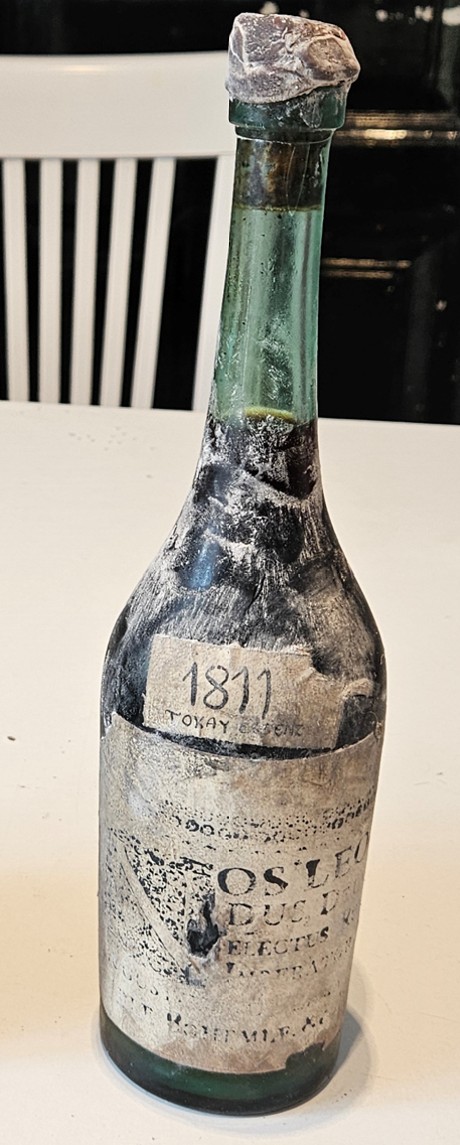
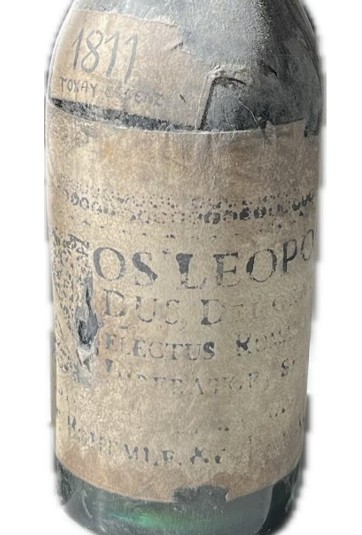
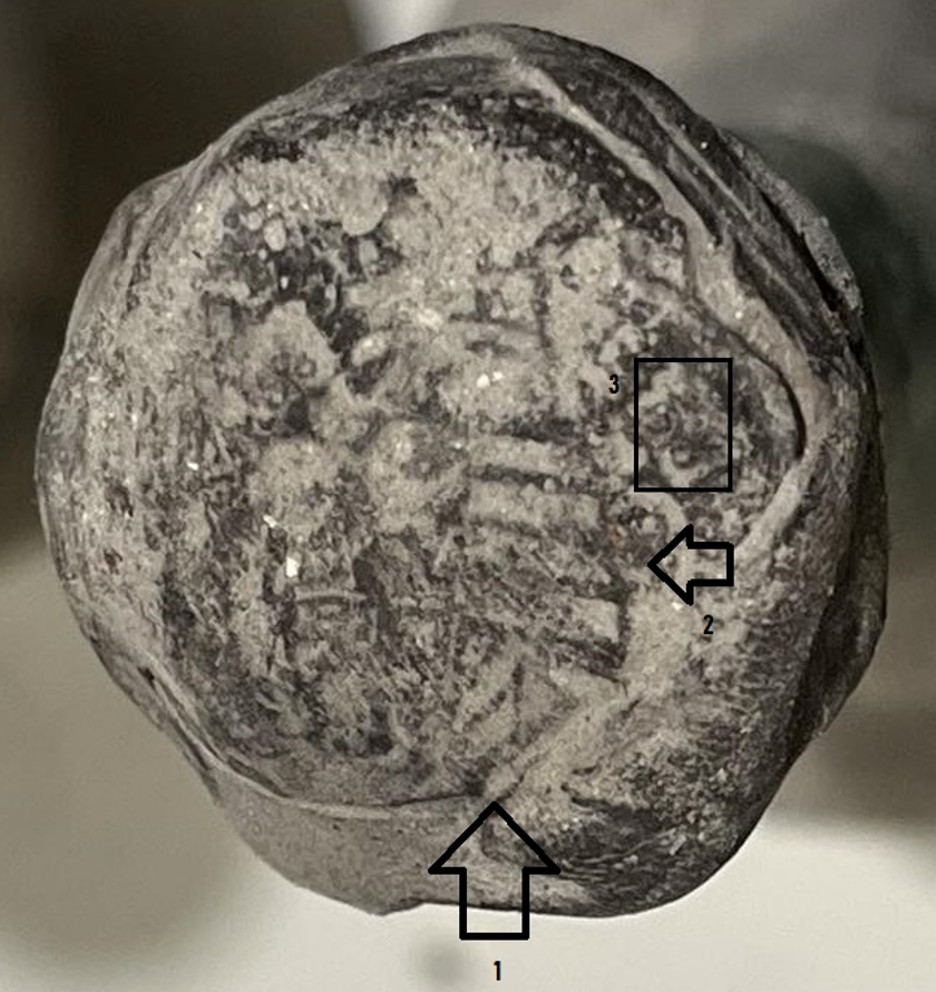
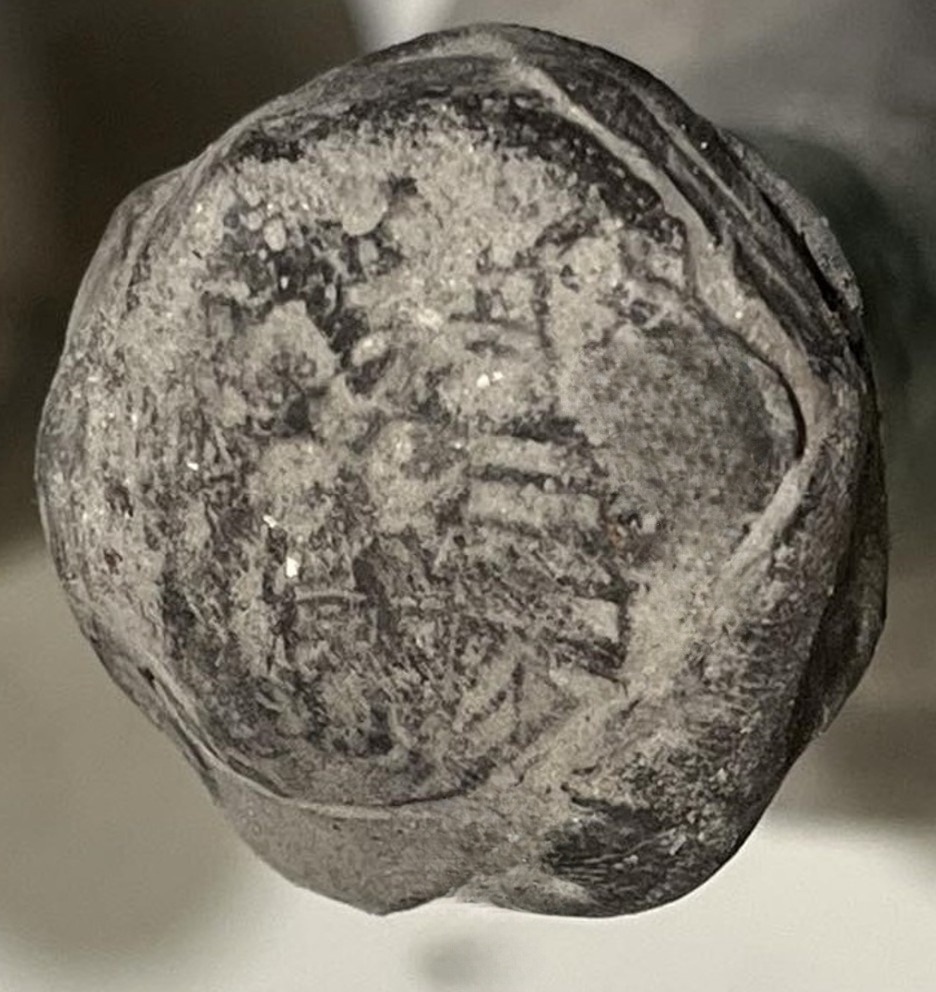
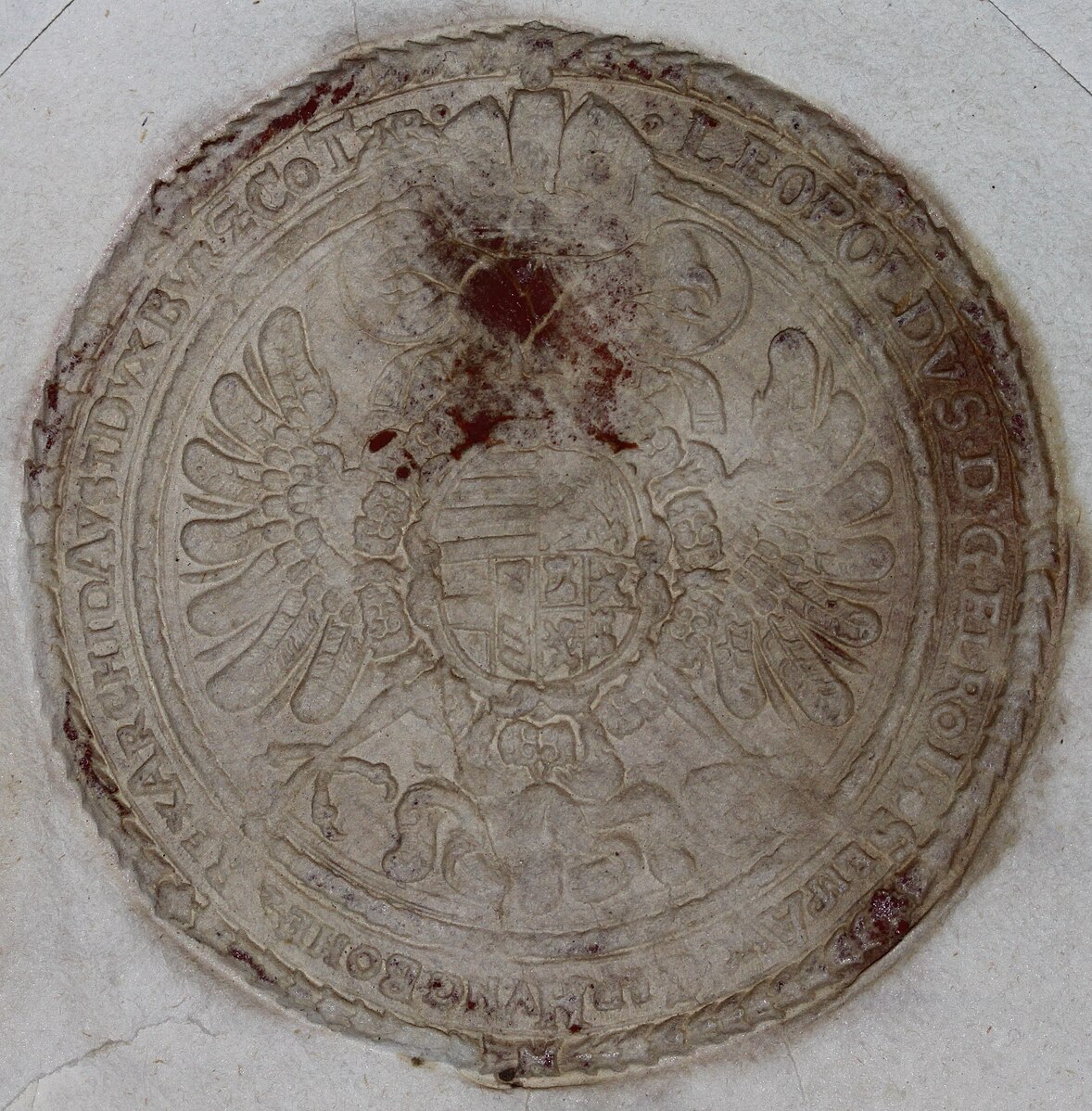
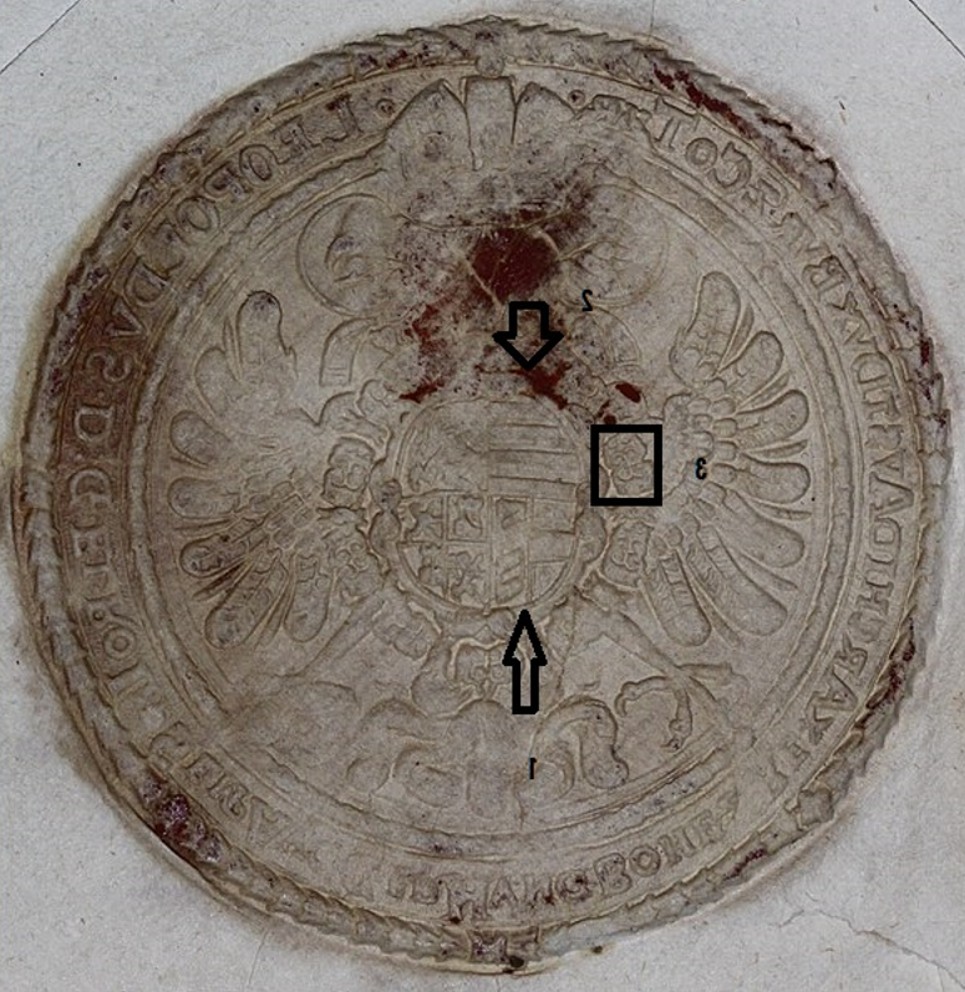
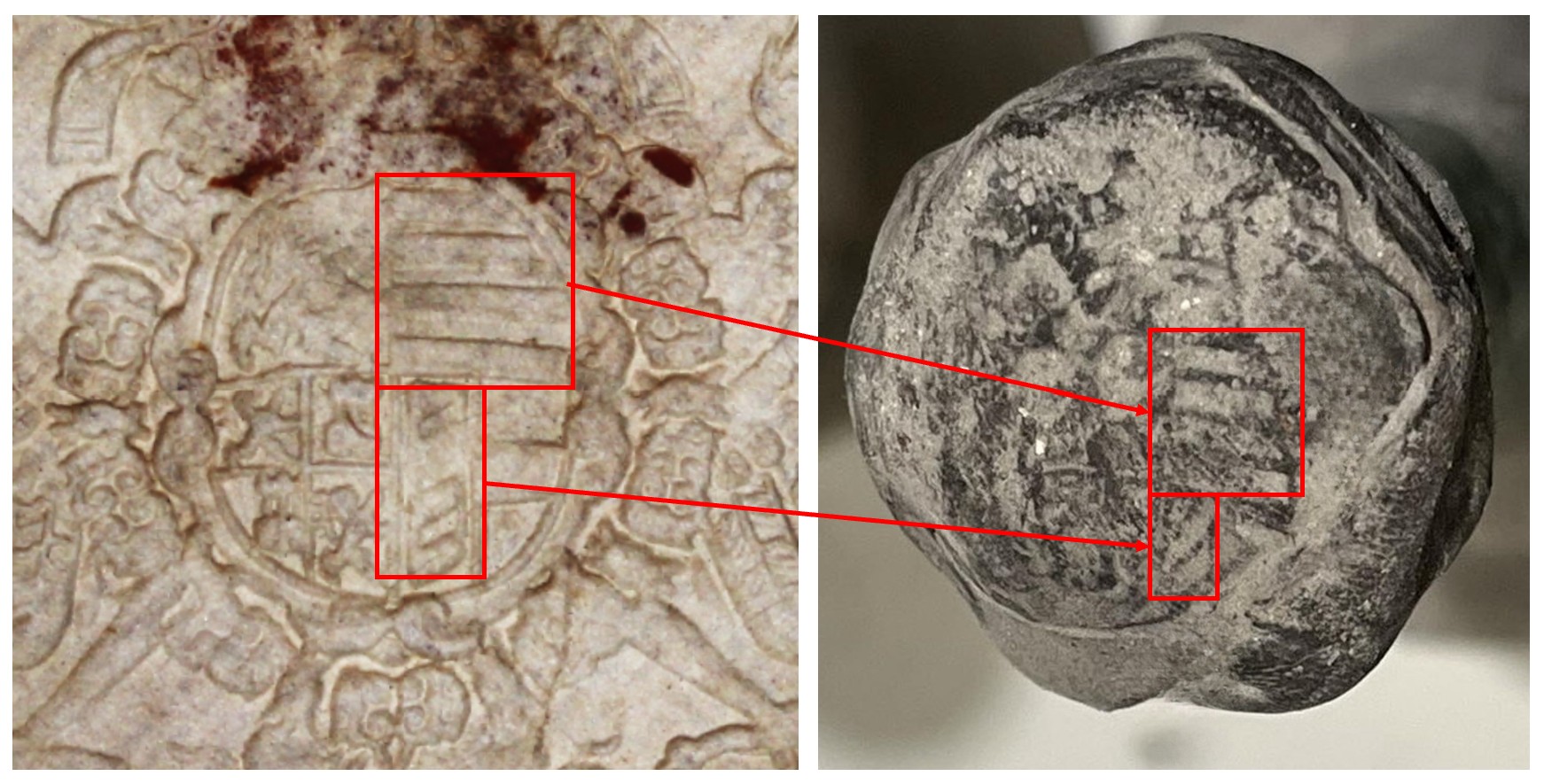
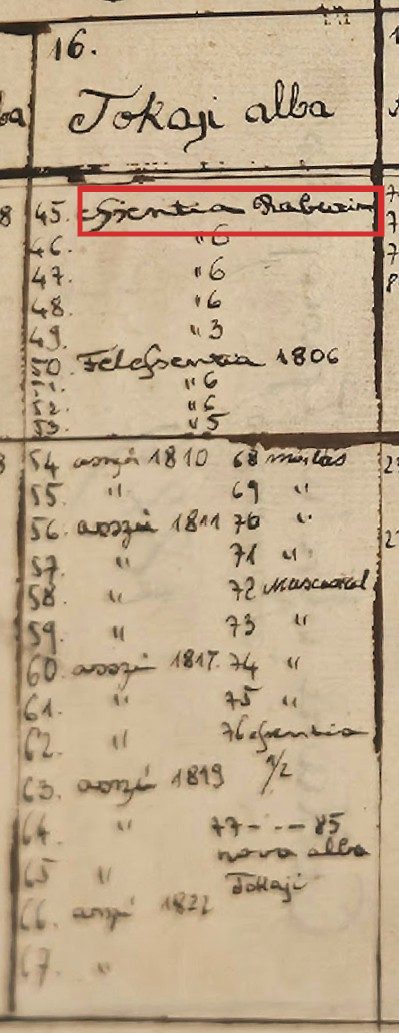
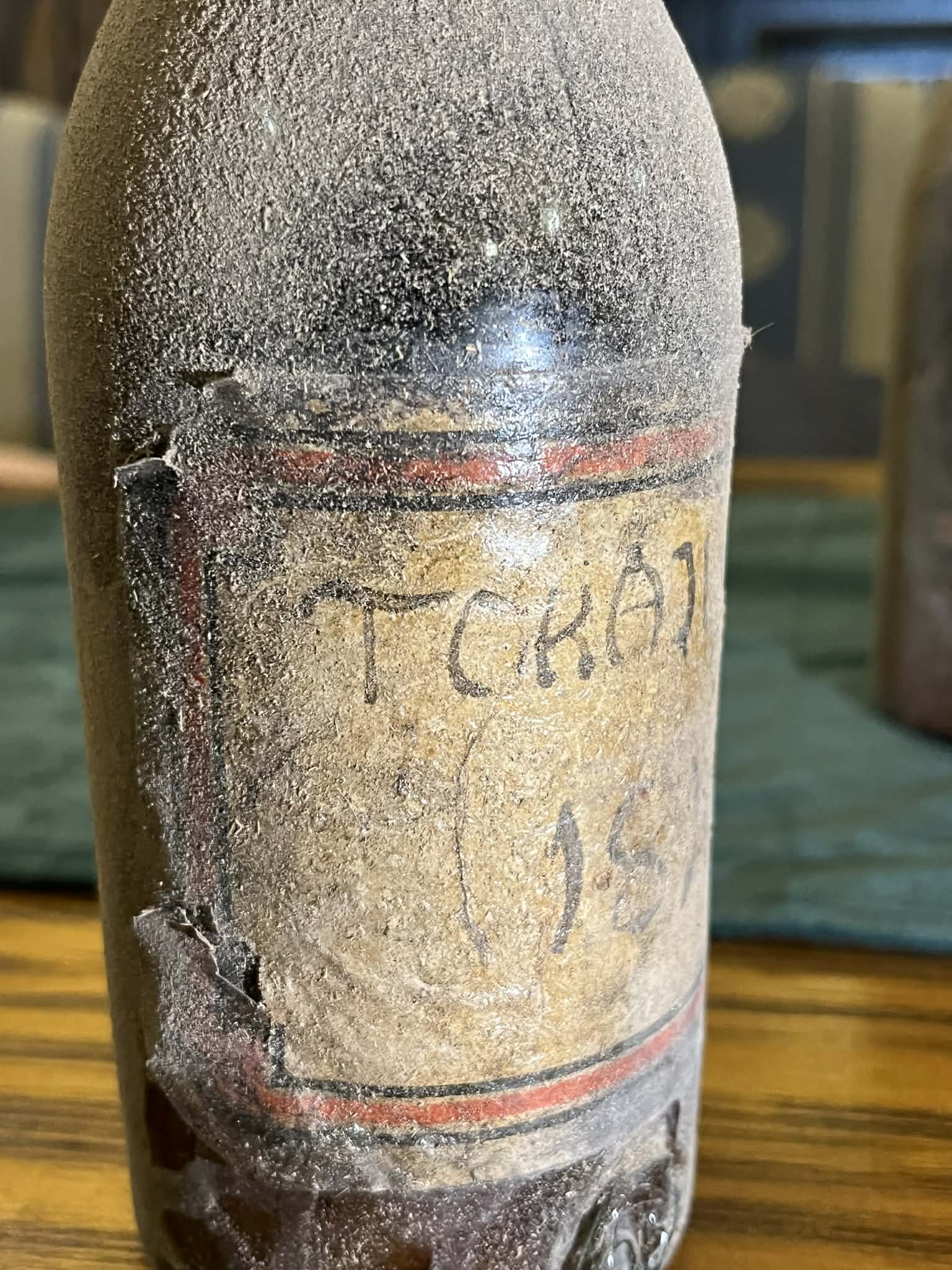
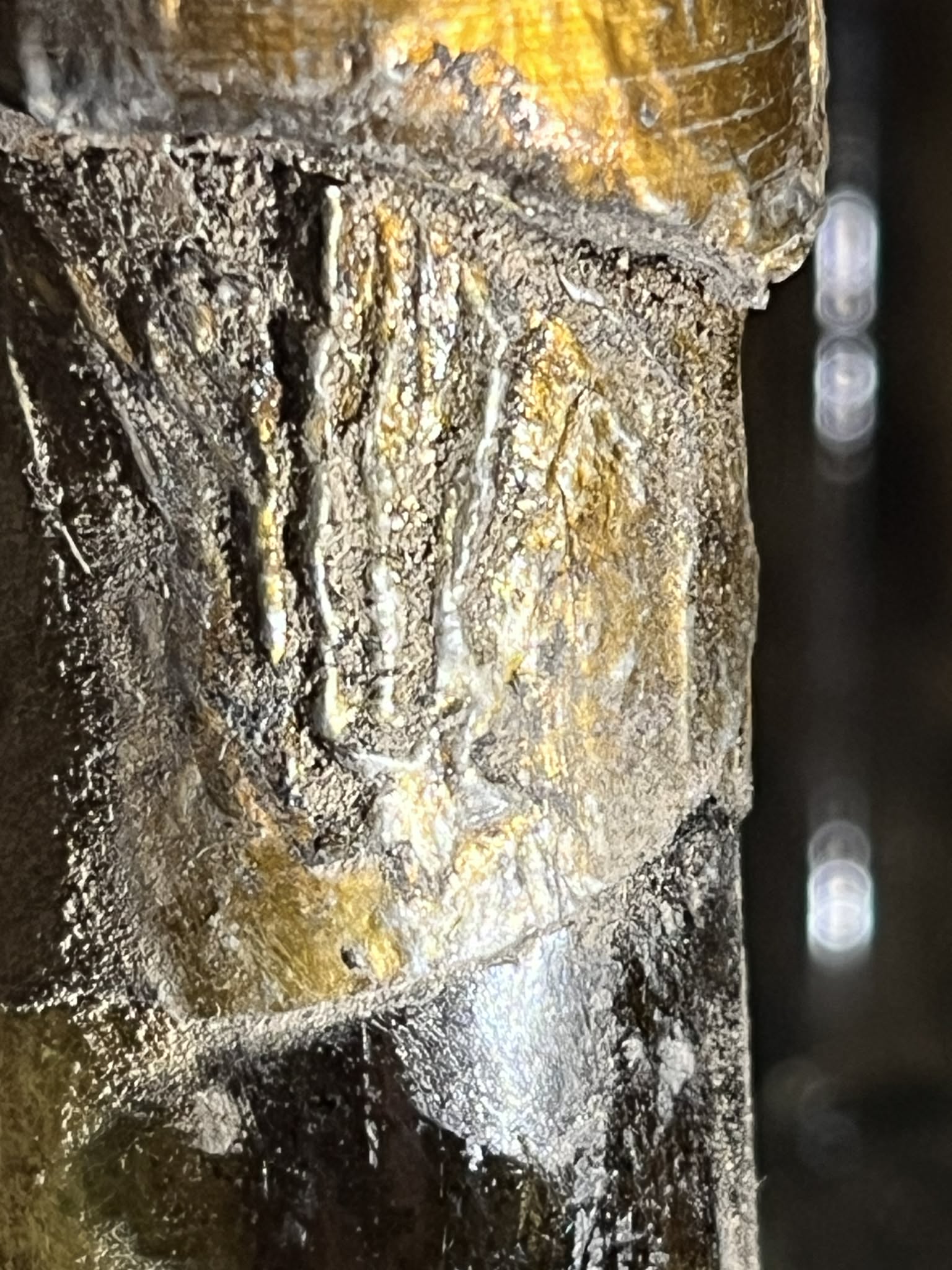
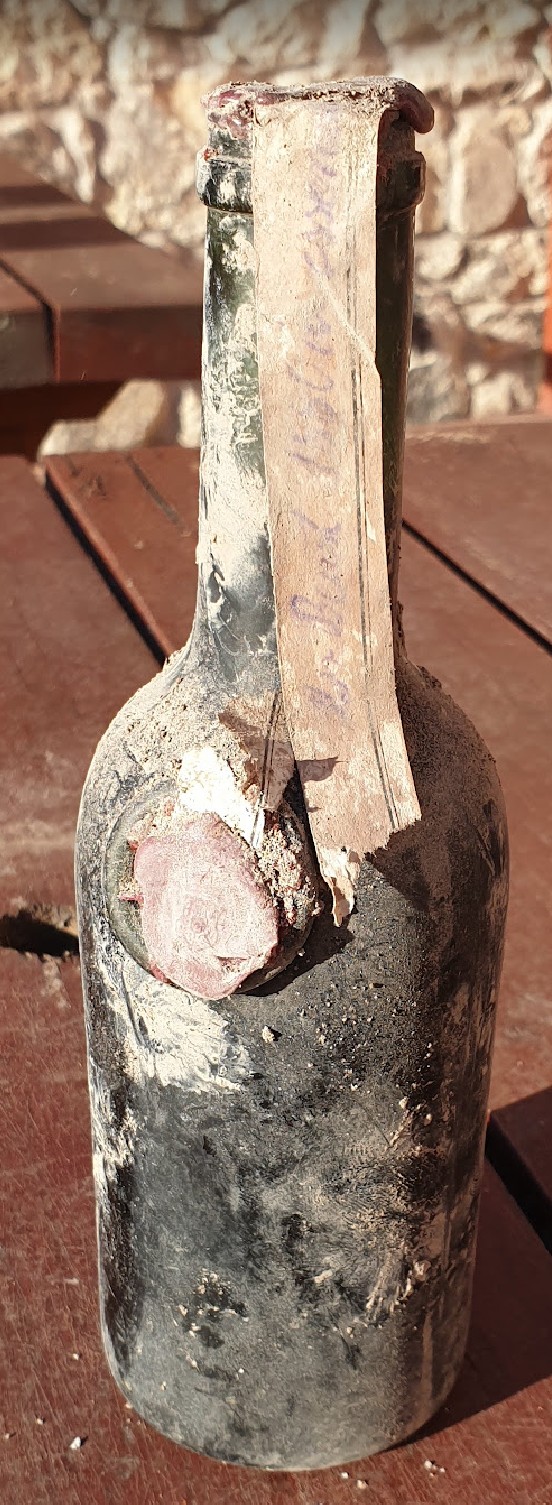
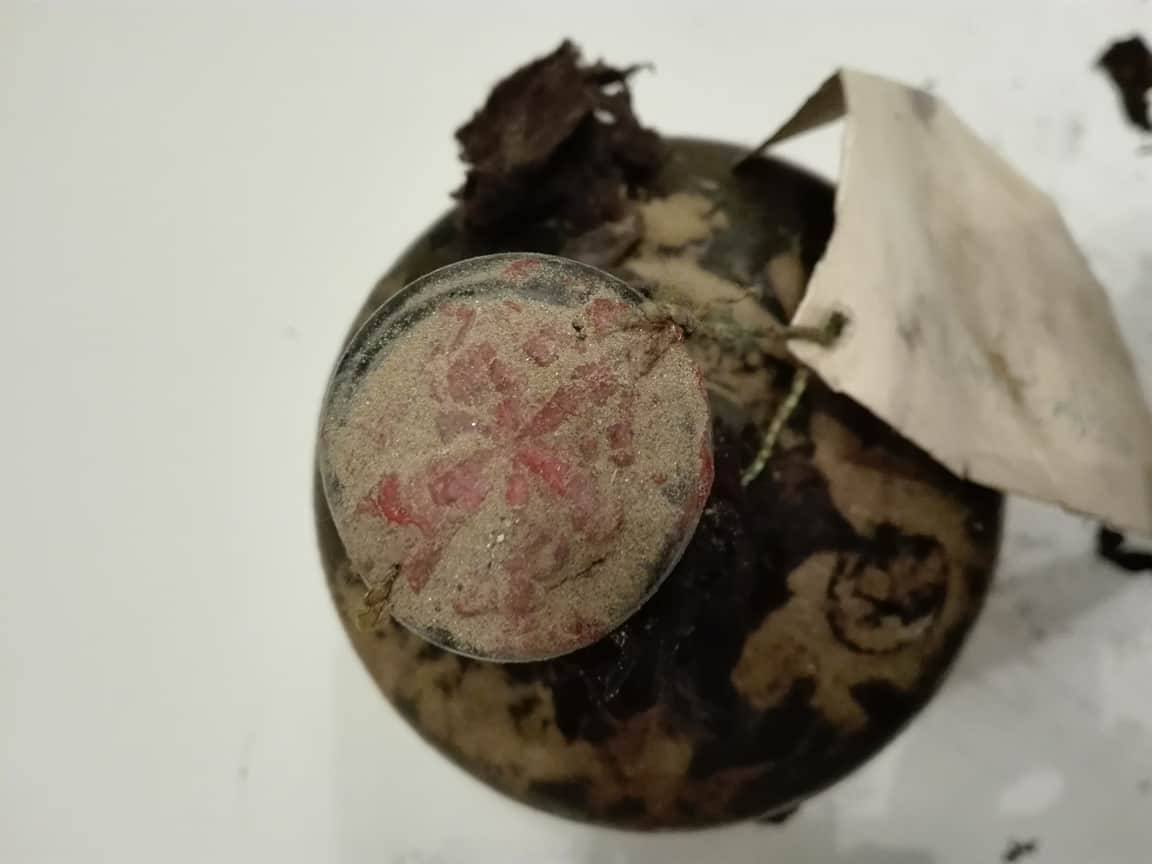
1811 Tokaji Essence with seal of Habsburg Emperor Leopold I
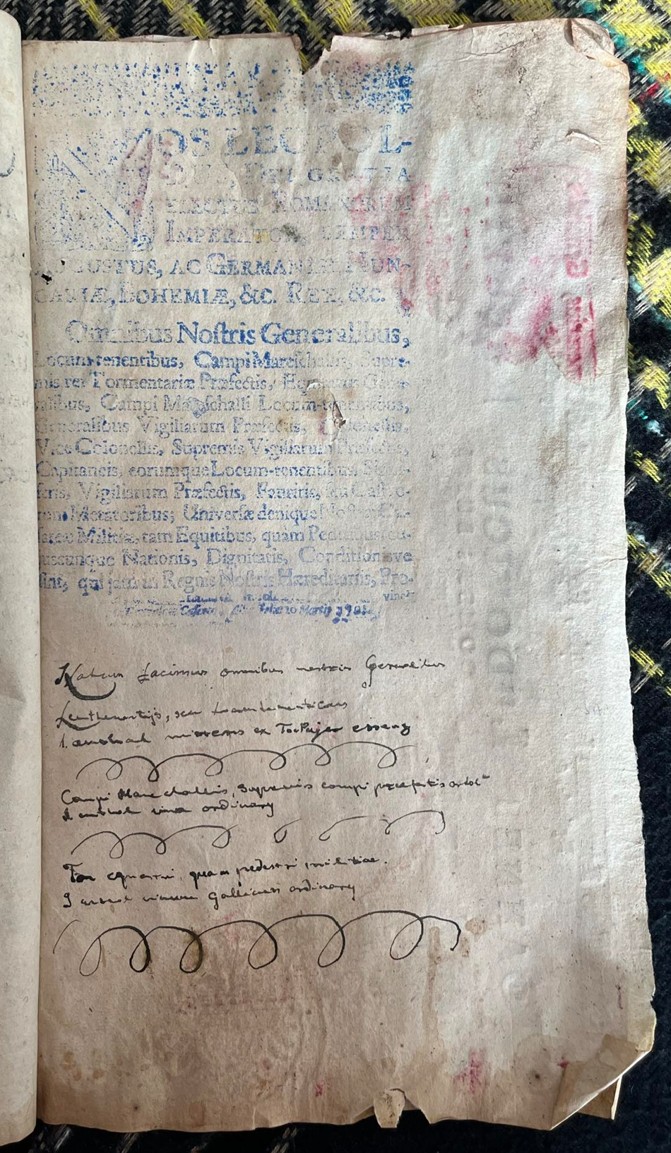
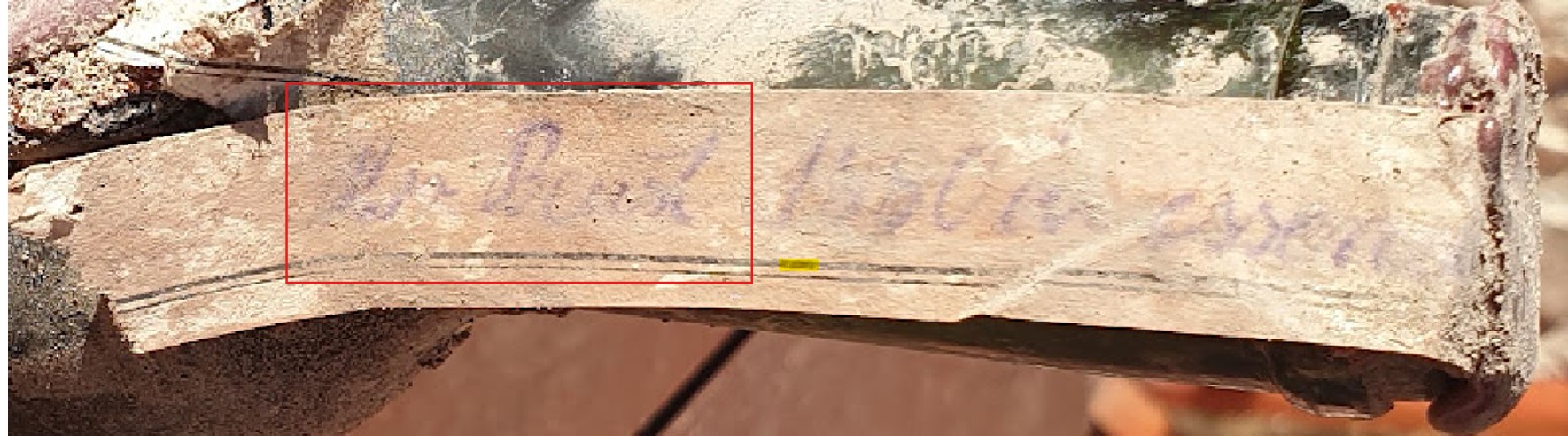
A very unique bottle labeled with a historical document dated 1701. The document is a military order from emperor Leopold I of Habsburg (1640 - 1705) to generals, army commanders, and soldiers. The same document is included in the accompanying paper along with hand-written notes in latin about a wine allocation for the imperial army in Transylvania.
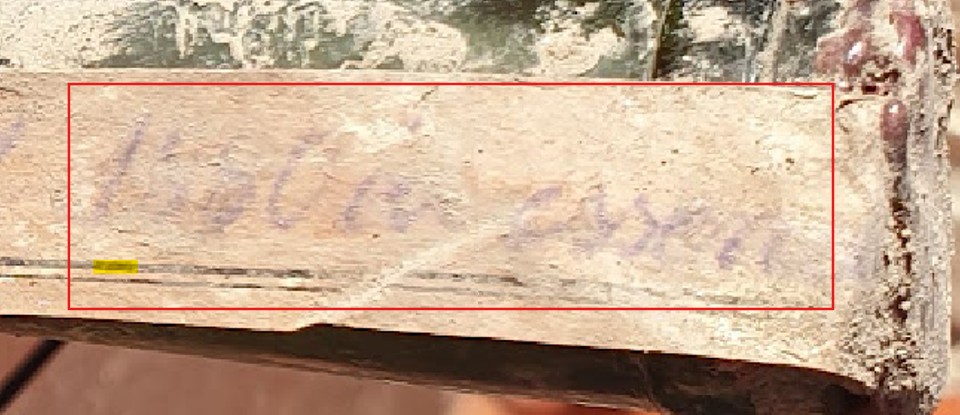
Notum facimus omnibus nostris generalibus Leuthenantijs, seu Locumtenentibus. — 1 anthal mittens ex tokayer essenz.
tam equestri, quam pedestri militiae; — 9 anthal vinum gallicum ordinary
Translation: To each lieutenant general: 1 barrel of Tokay essence. To the field marshals, the highest commanders of the army: 3 barrels of common wine. To the cavalry and foot soldiers: 9 barrels of conventional French wine.
1 anthal is a barrel of app. 75 liters.
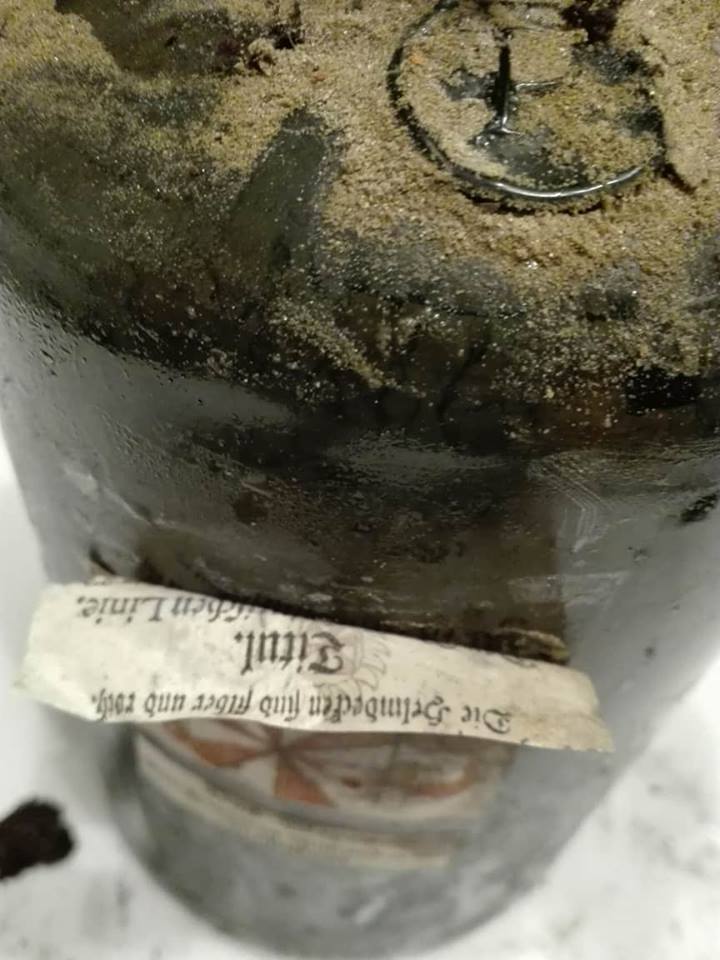
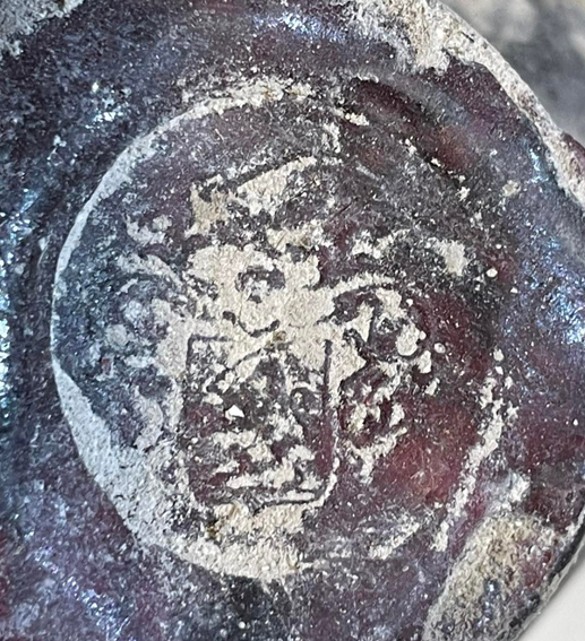
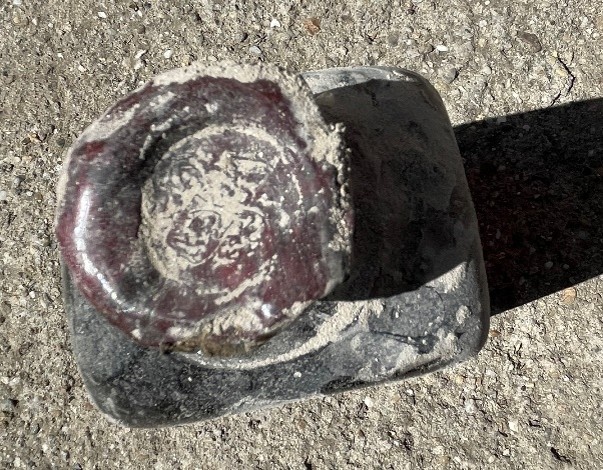
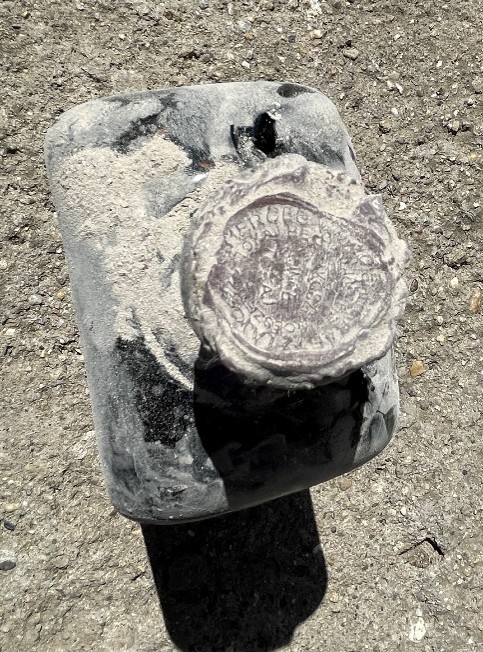
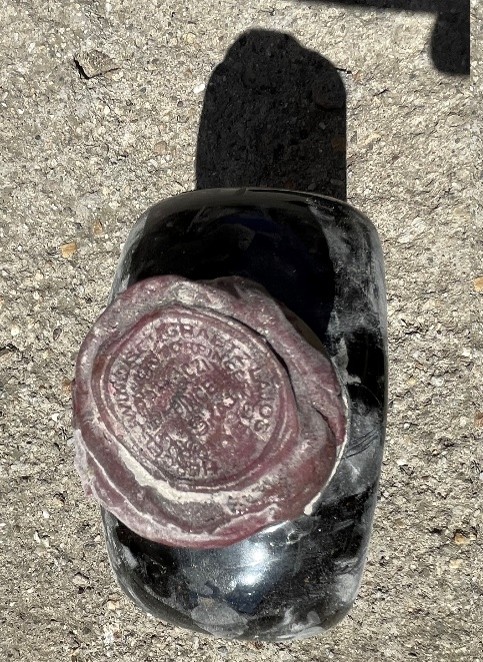
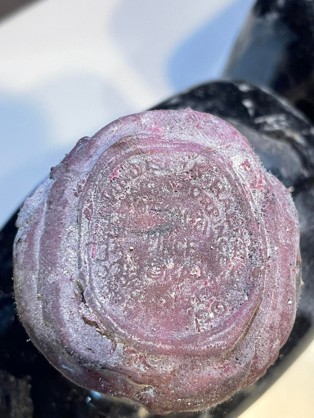
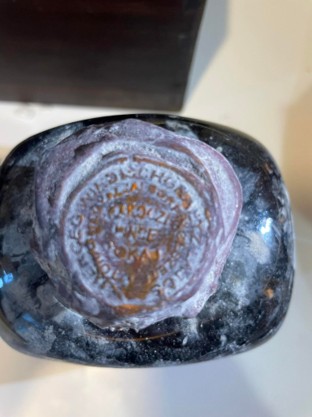
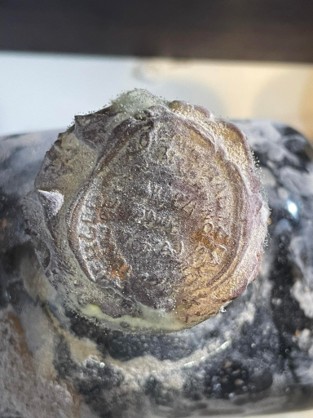
The 1811 Essence: the bottle and its label, the wax seal on the neck compared detail by detail with the seal of Leopold I, the printed military order used as label paper, and the cellar register page naming Essentia Rabutin beside the aszú of 1810, 1811 and 1817 · click any image to enlarge
1811
1811 Comet Year
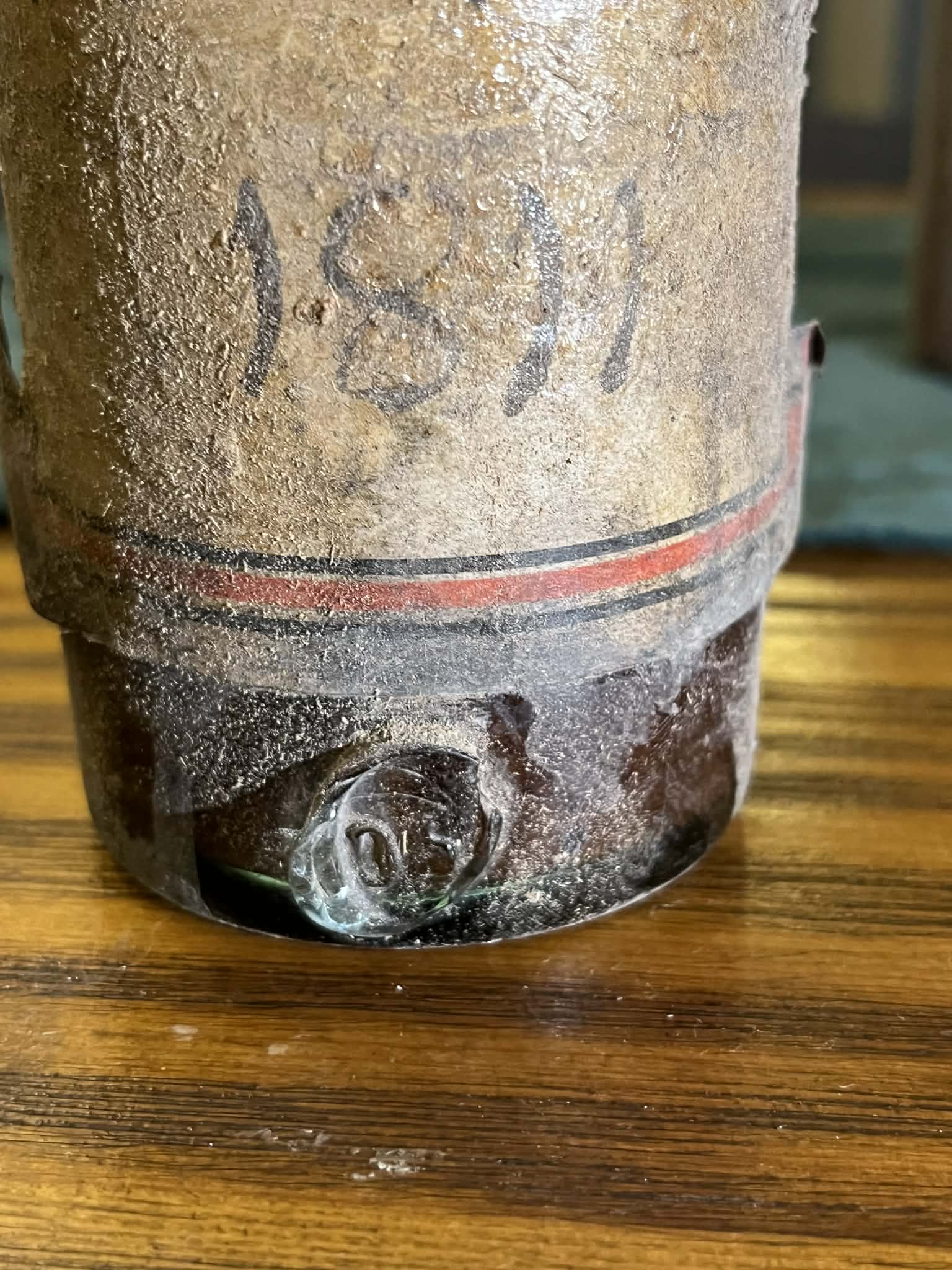
The painted label reads TOKAJI ASZÚ 1811. The vintage of the Great Comet — and on the side of the tin capsule, a falling star with its tails.
The comet is C/1811 F1, the Great Comet of 1811, visible to the naked eye for some nine months. Nobody now living will see it again: its orbital period is about 2,974 years, which puts its return around the year 4785.
The glass. No string ring, and tapering downwards.
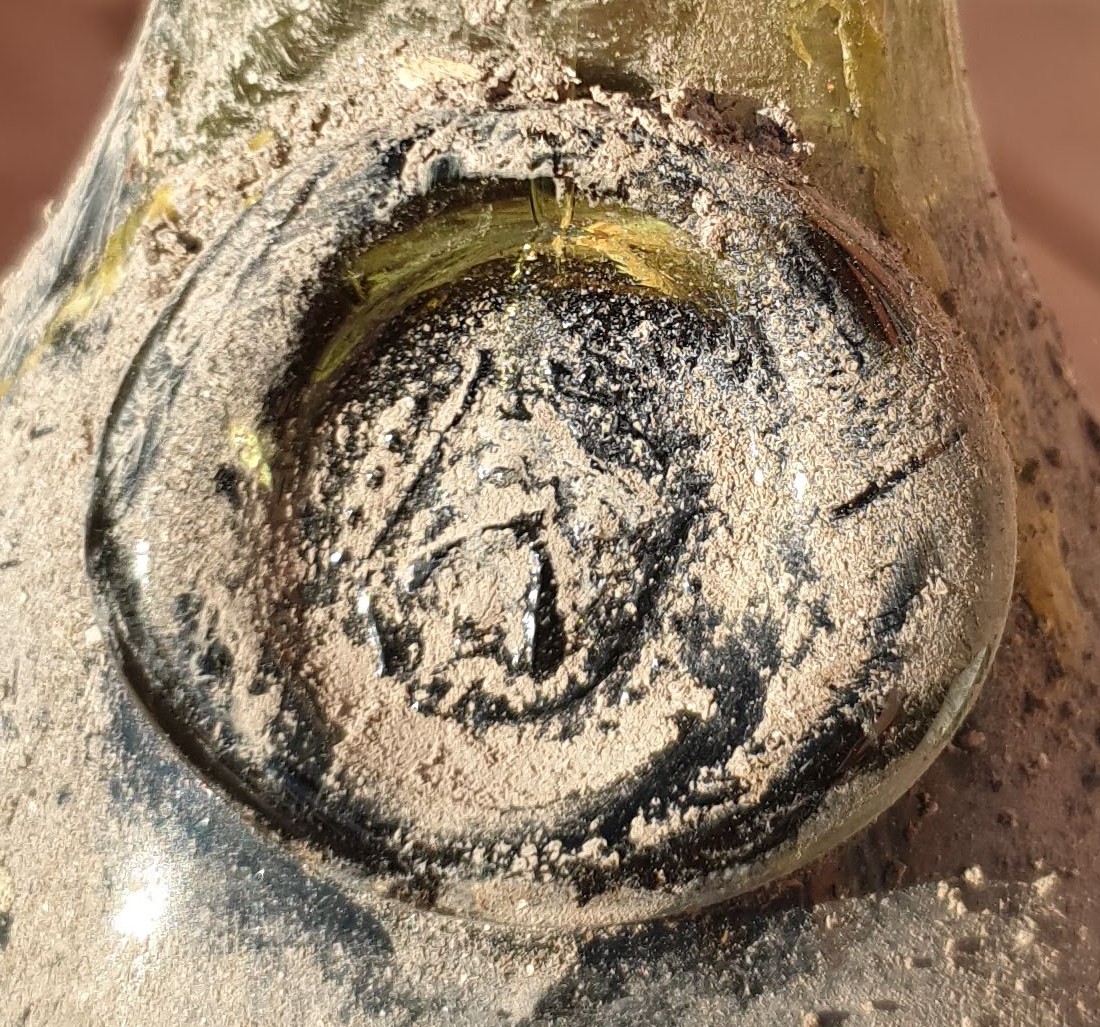
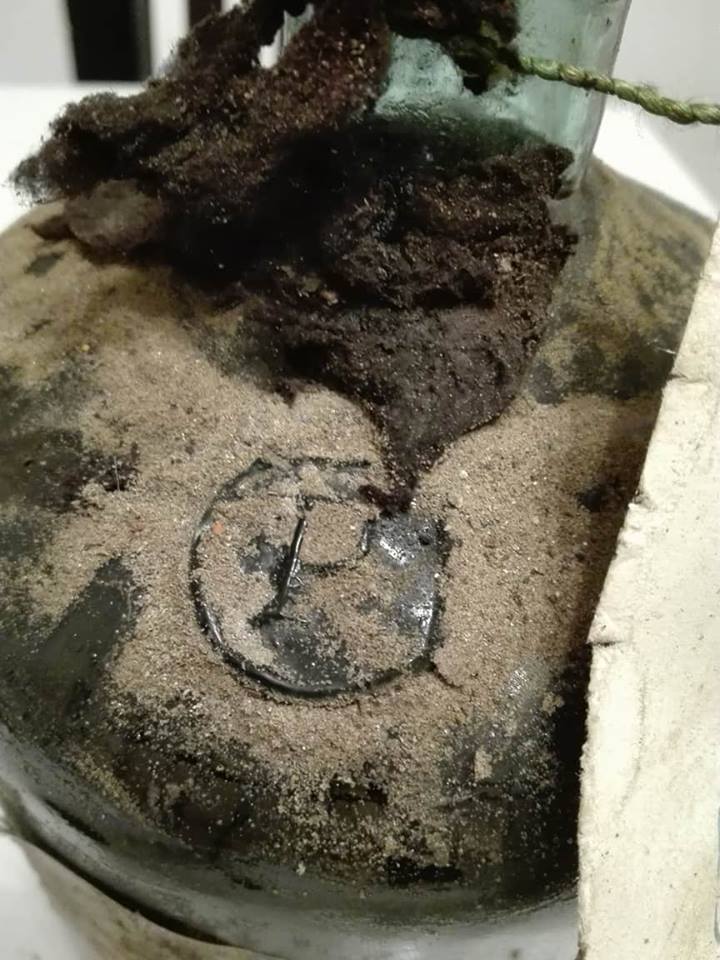
A glass seal on the base. Marked 0,5 L, and one of the very earliest sealed Tokaji bottles, around 1830. Because the aszú bottle is cylindrical the seal stands proud of the wall, so the bottle is no longer a body of revolution: it catches, breaks off, snags in the crate in transit. It was not a good solution, which is why the seal later moved up between shoulder and neck, where it caught on nothing.
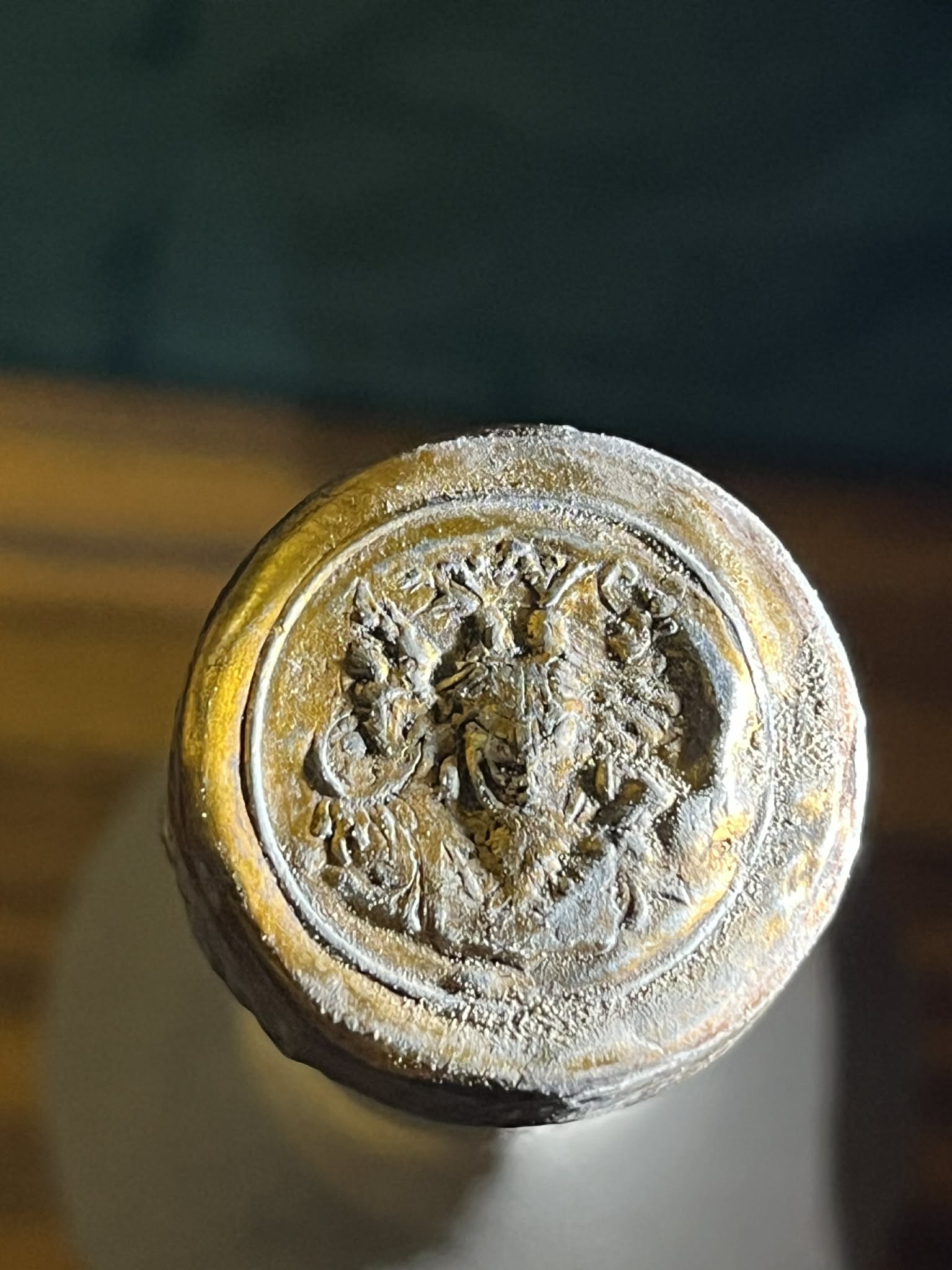
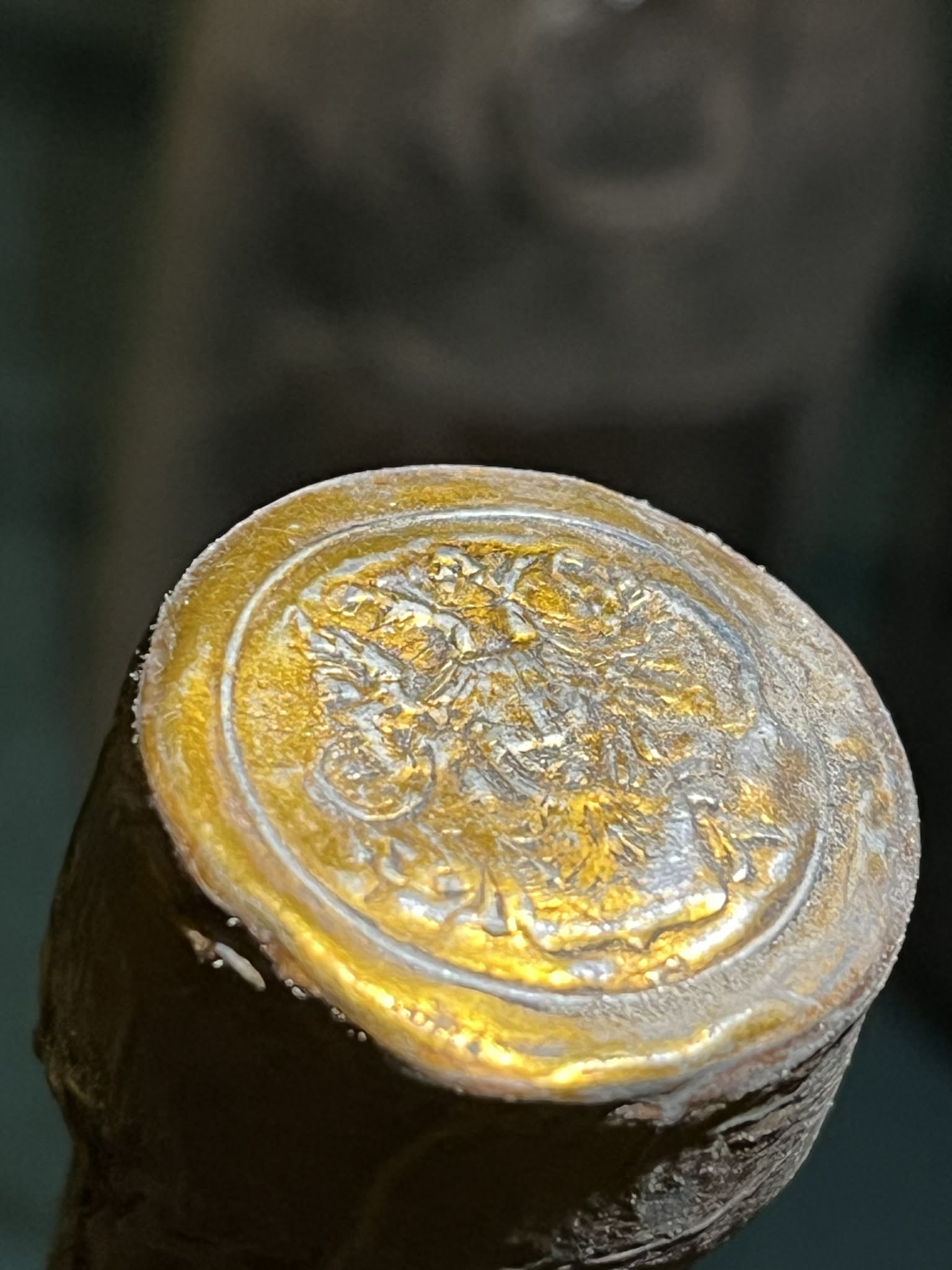
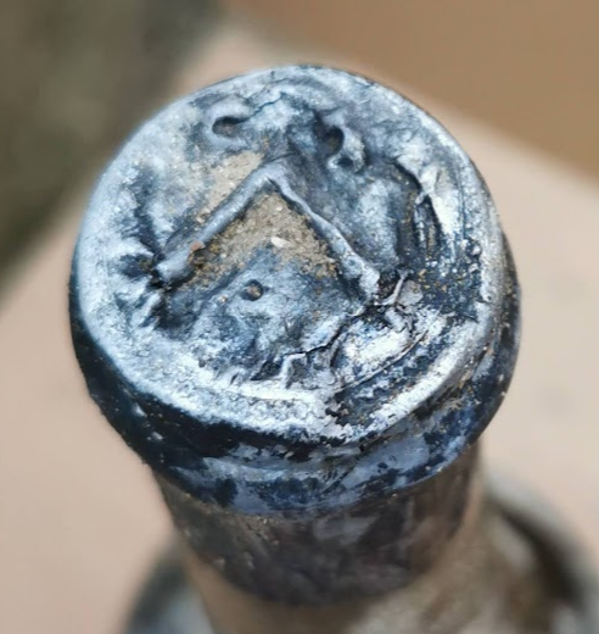
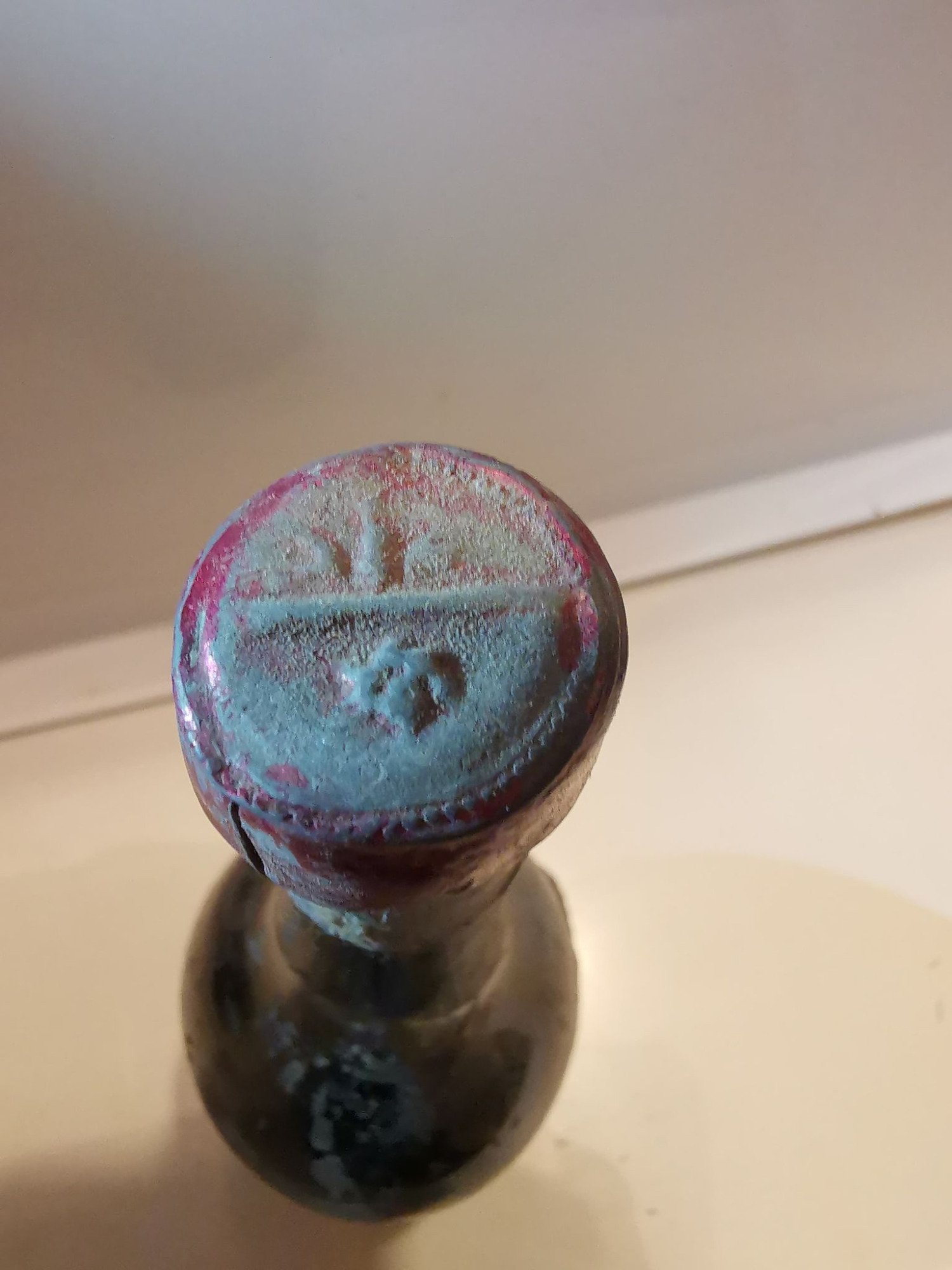
The capsule. The top carries the Lotharingian arms of the House of Habsburg: a double-headed eagle, the three bars of Austria upright in the centre, three eaglets crosswise to the right, a lion to the left, crown and ribbon above the eagle heads.
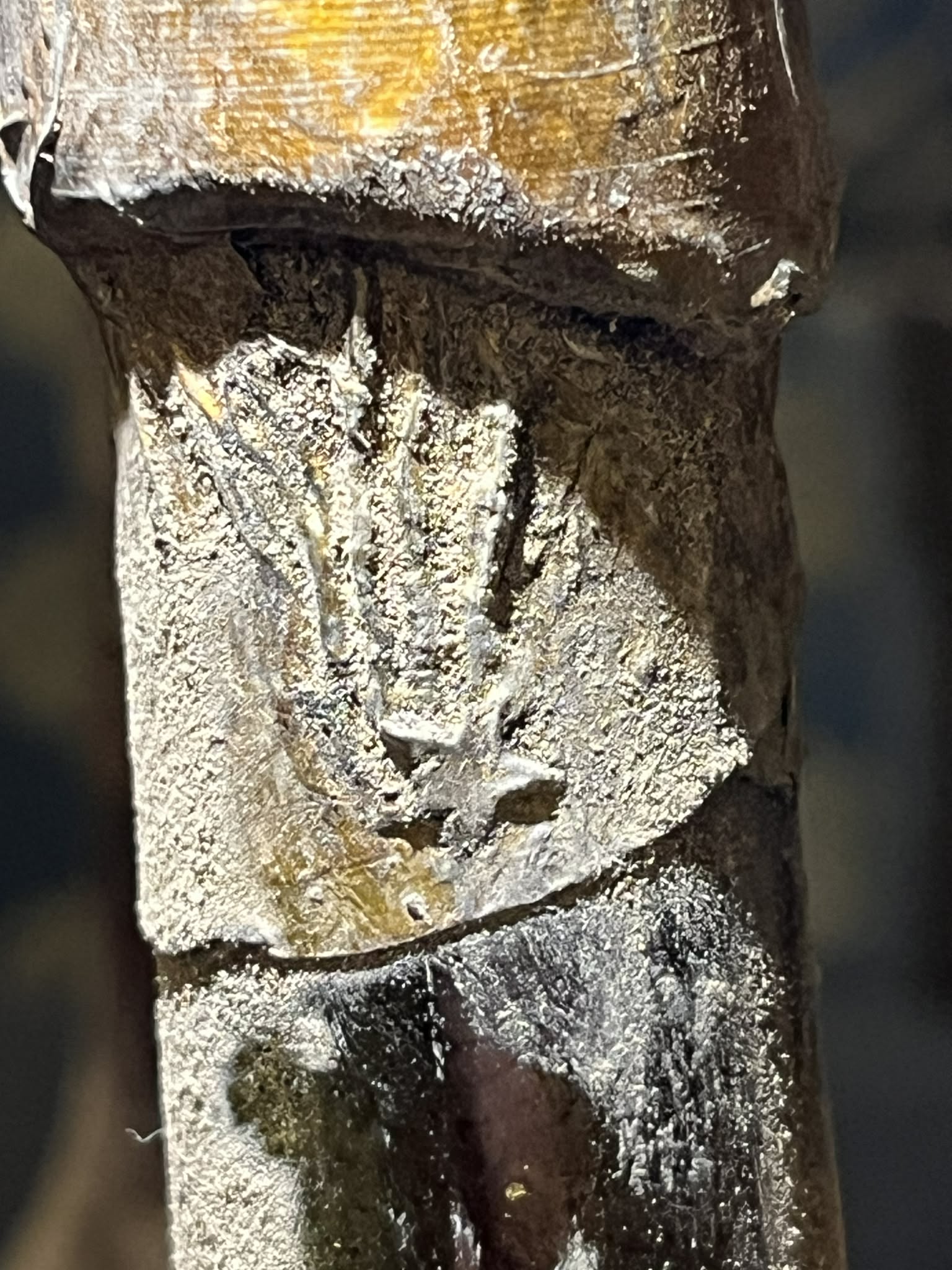
The comet. On the side of that same capsule is the falling star with its tails.
The comet vintage
1811 was an exceptionally good wine year across Europe, and the comet gave the whole vintage its name — Kometenwein, comet wine. The best-known survivor is not a Tokaji but a Sauternes.
Château d’Yquem 1811 is held to be one of the greatest sweet wines in history, and was given the maximum 100 points by critics including Robert Parker — after more than 180 years in bottle, for keeping its freshness, concentration and complexity.
In July 2011 the sommelier Christian Vanneque bought a bottle of that vintage for around €85,000–96,600 (US$117,000), entering the Guinness Book of Records as the most expensive white wine in the world.
The wine is described as opulently caramelised in its sweetness, with a hovering, living acidity and an almost uncanny longevity.
The vintage also has a detective story to itself: “Tokay of the Comet Year”, a short story by H. Warner Allen published in 1930, in which a rare Tokay features prominently in a complex plot involving spies and a missing treaty.
The painted label, the glass seal on the base marked 0,5 L, the double eagle on the top of the tin capsule, and the falling star struck into its side · click any image to enlarge
1698 — today
7 Tokaji producers with Berry Bros. label
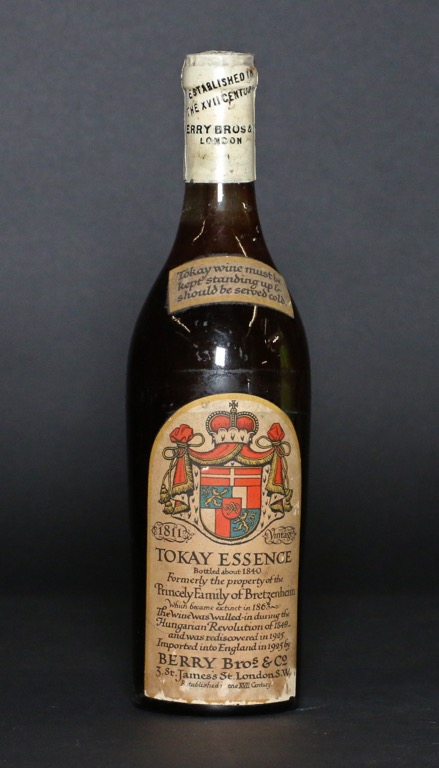
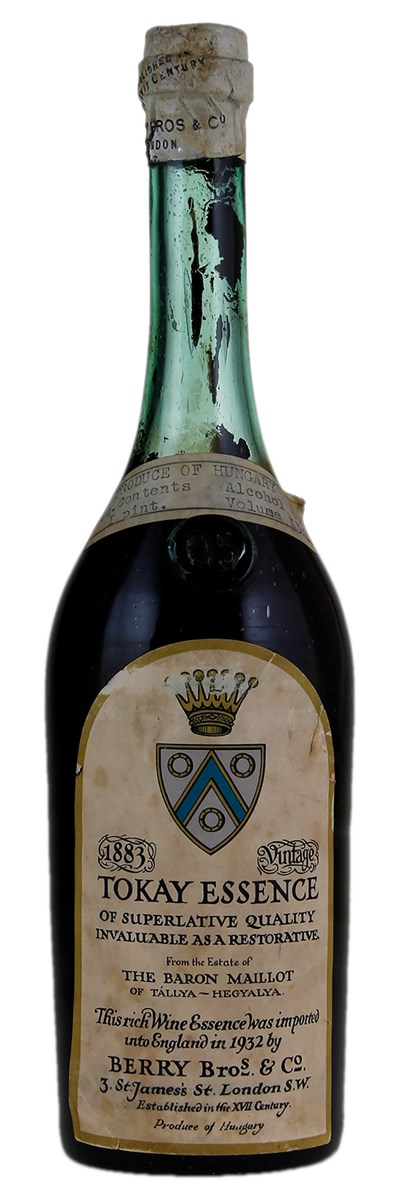
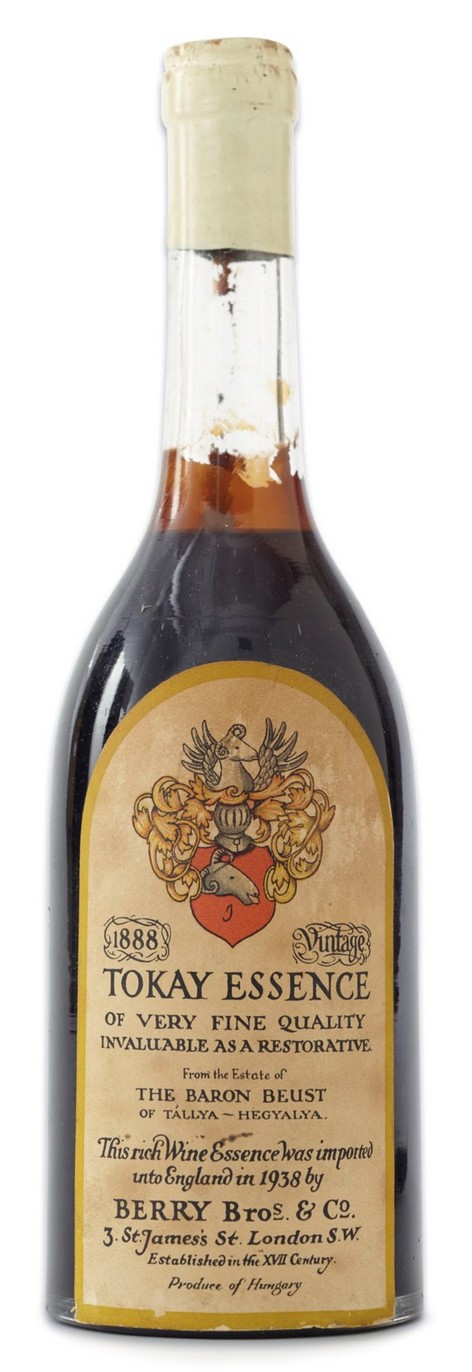
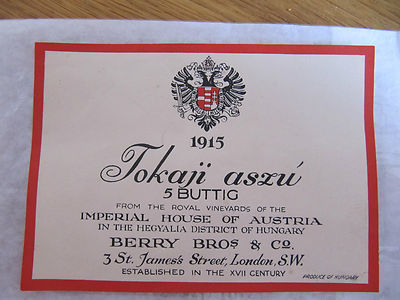
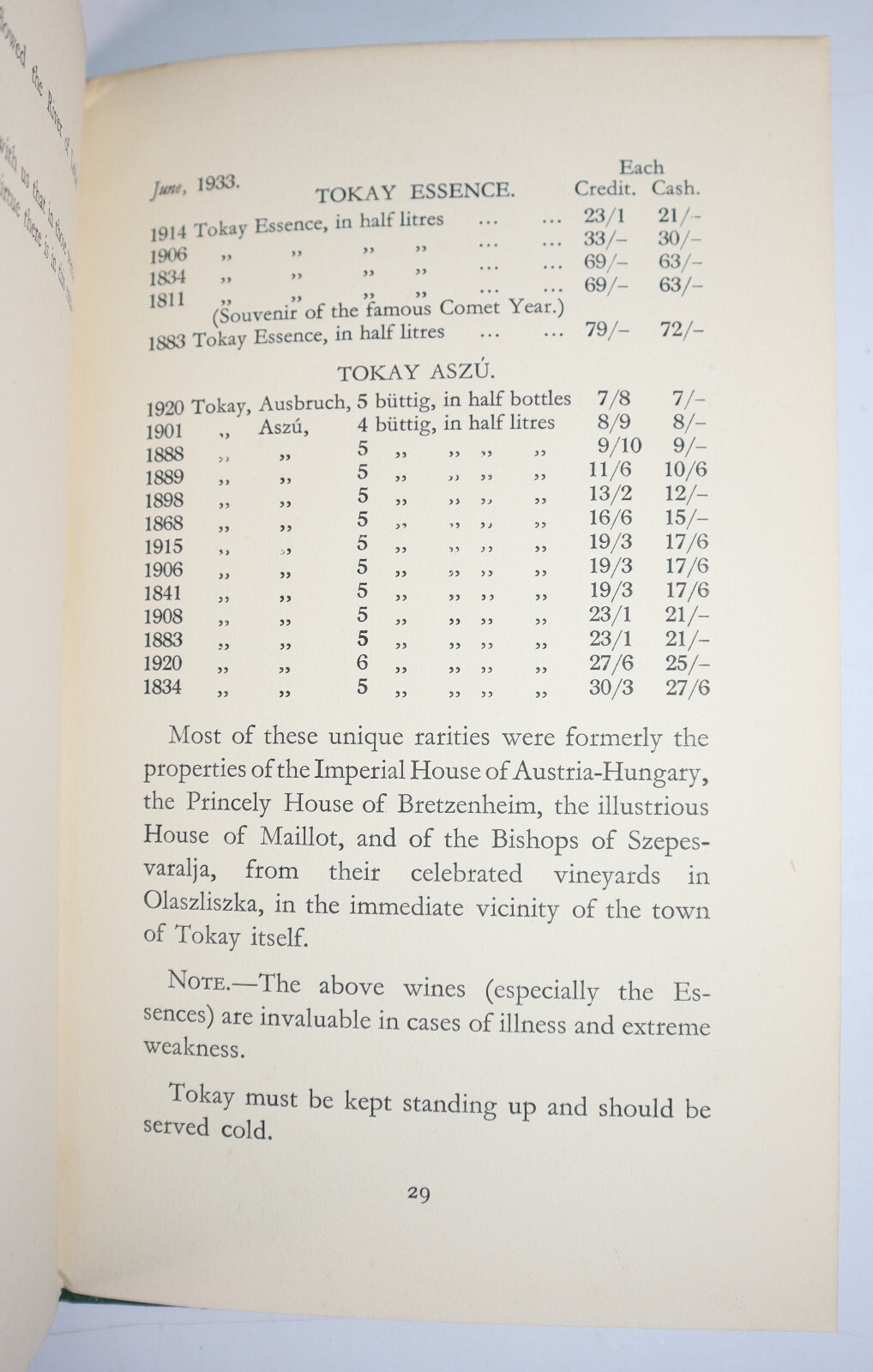
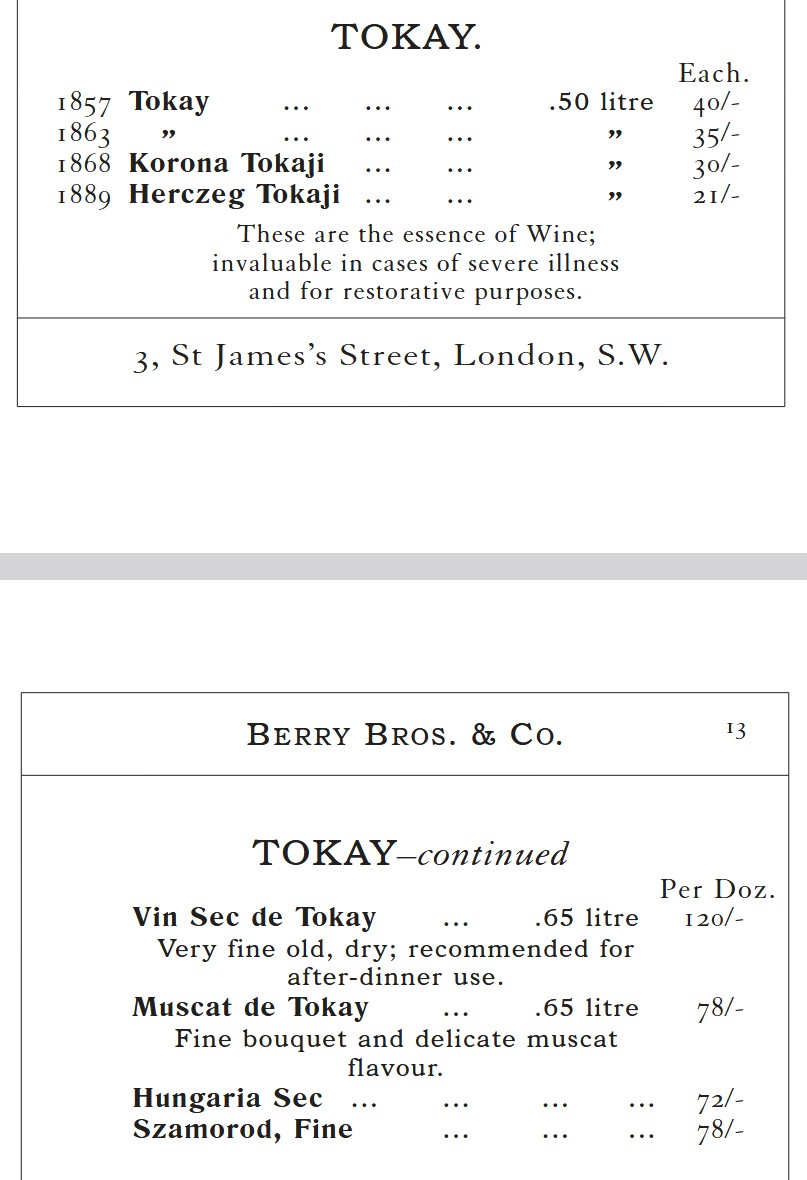
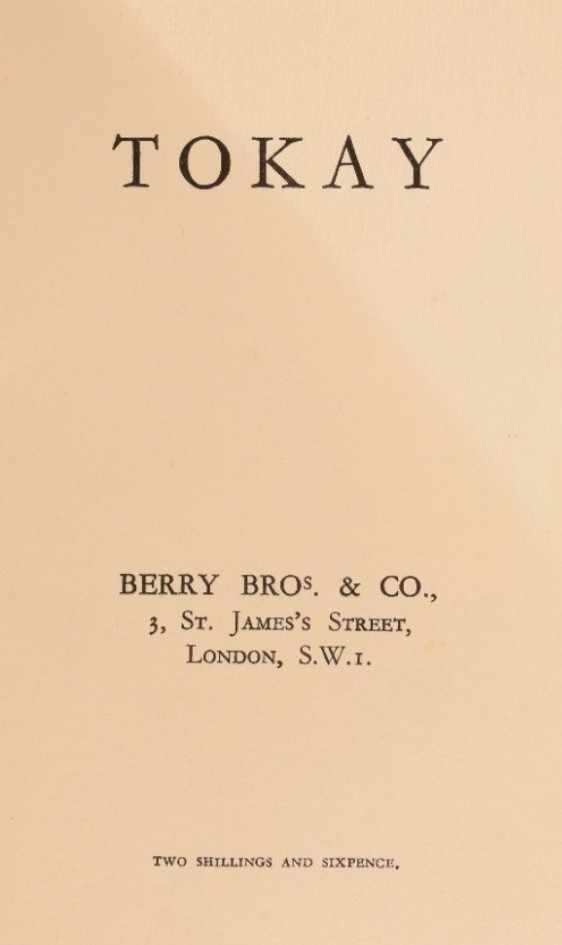
Berry Brothers & Rudd (BBR) is not only Britain’s oldest wine and spirits trading company (founded in 1698) and supplier of the British Royal Family, but also a well-known name in the field of Tokaji. Whoever looks for old Tokaji will soon come across bottles with a Berry Brother label, with vintage 1811 the oldest and most prestigious. In 1937 C.W. Berry published a very interesting book about Tokaji, and even today the shop offers a very good selection of top class tokaji including a private label. Today the oldest wines in the BBR cellar are the Tokaji wines.
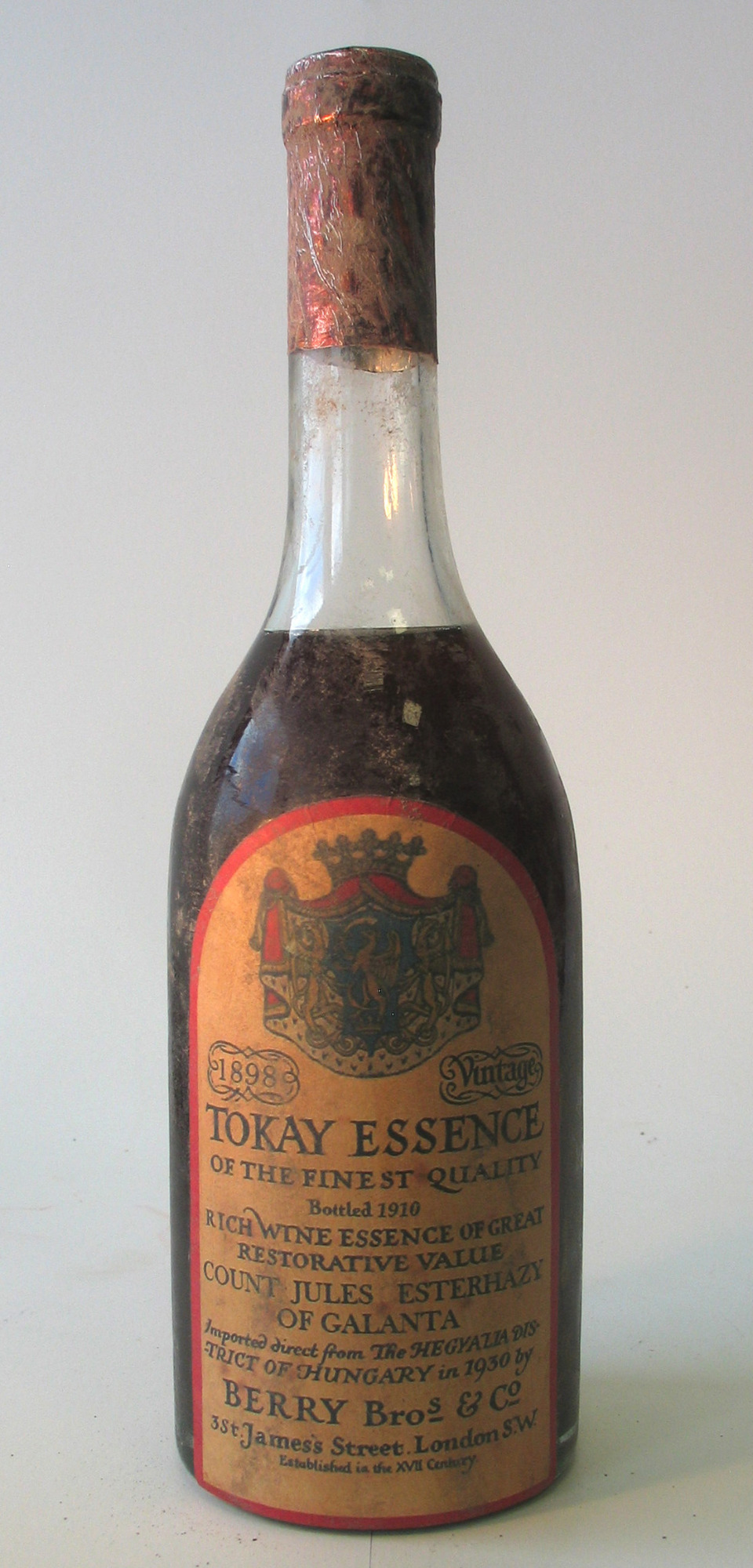
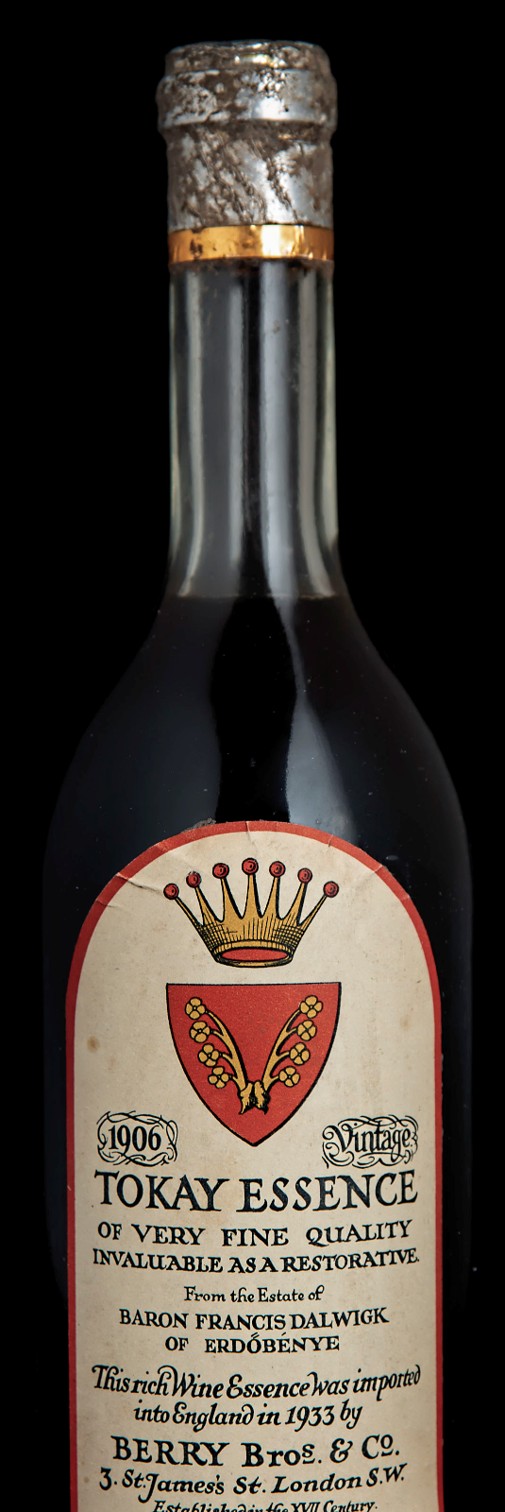
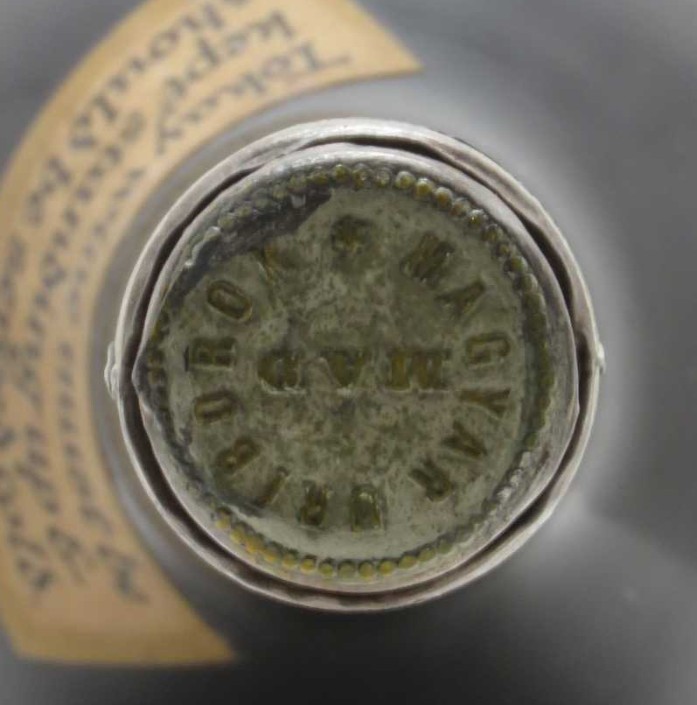
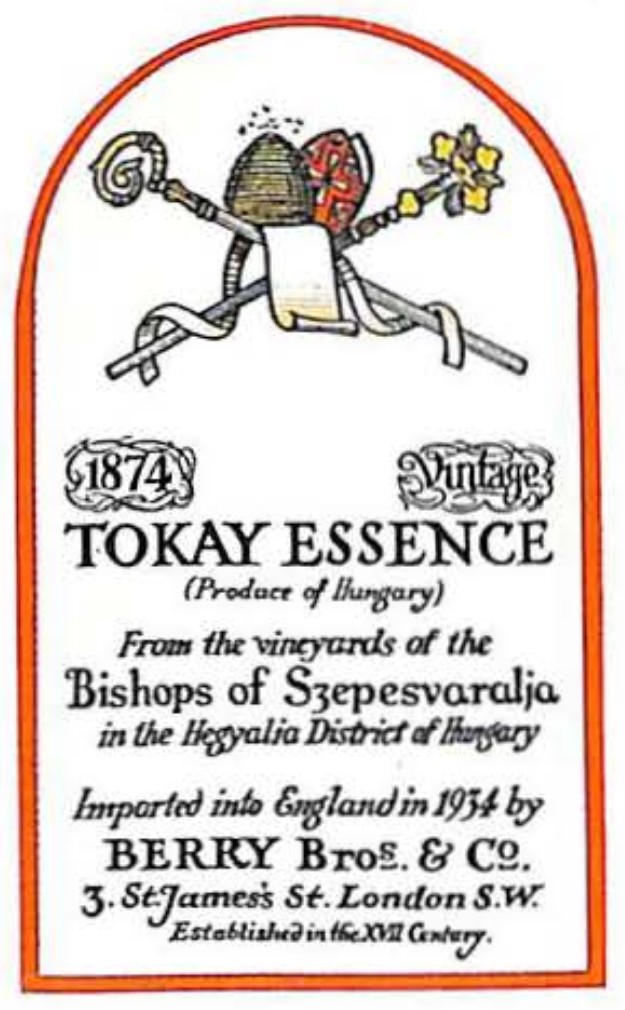
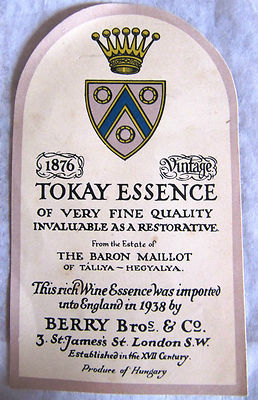
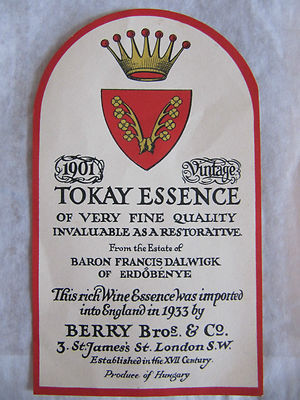
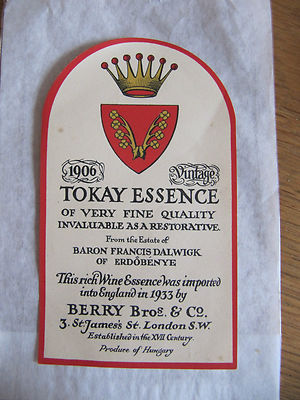
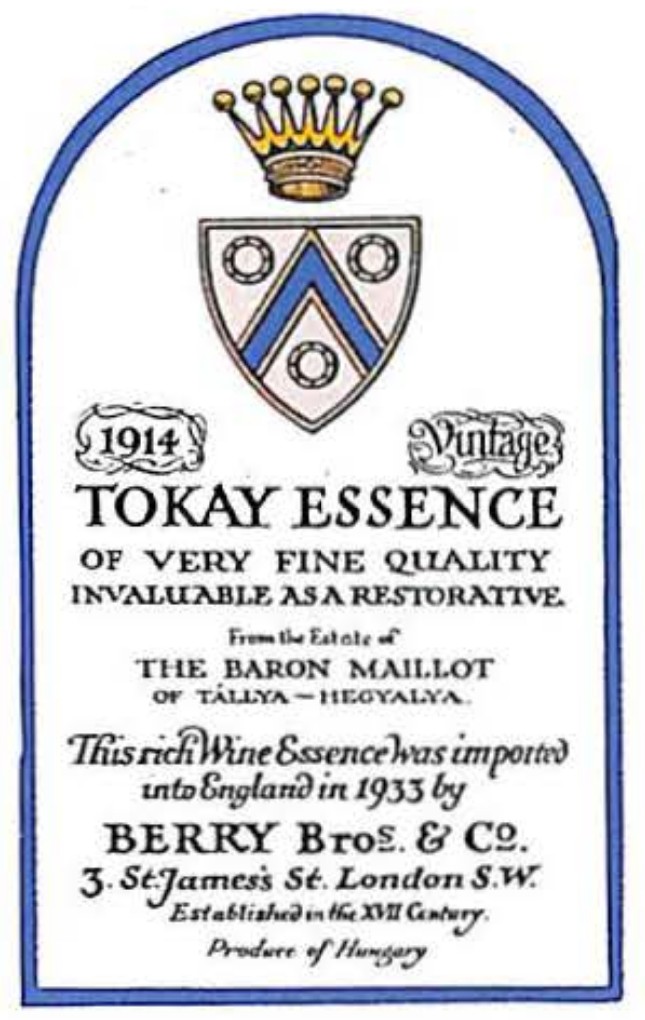
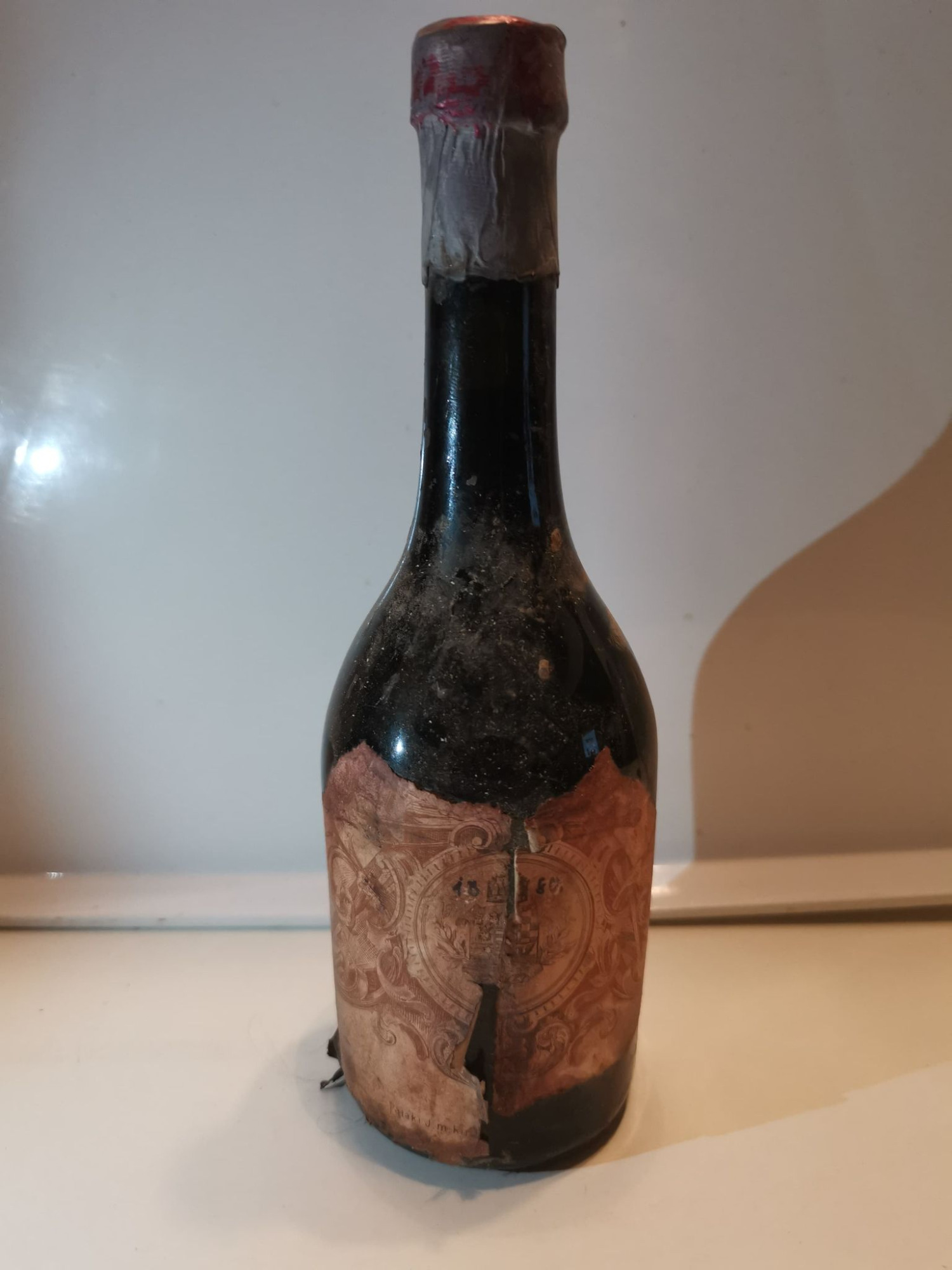
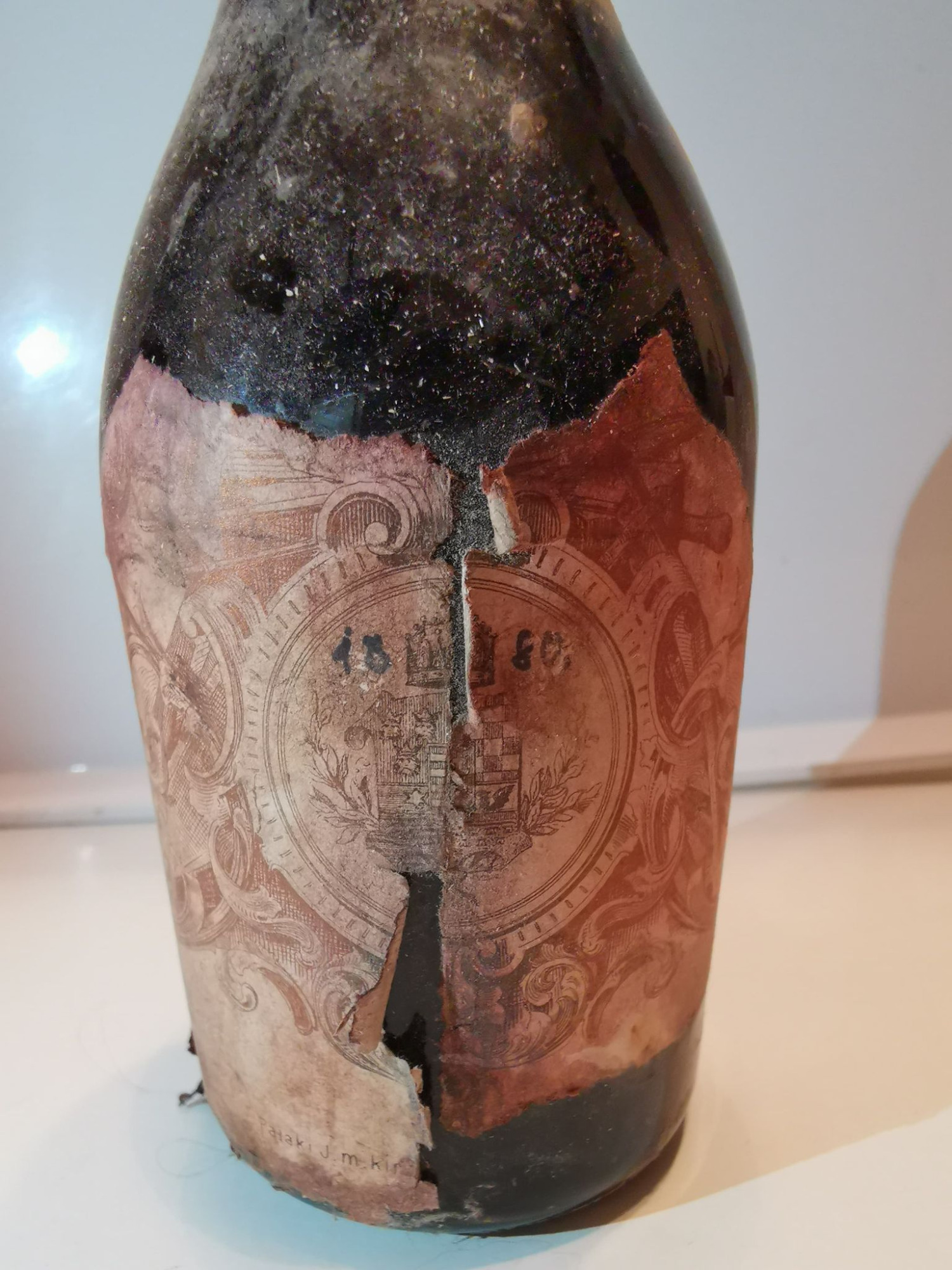
In the late 1920-ies Berry Brothers started selling Tokaji of 19th-century vintages. Some of the wines came from the Princely House of Bretzenheim and had been walled-in during the Hungarian Revolution in 1848. They were discovered only decades later. Berry Brothers imported those wines and sold them with a nicely decorated private label. In one publication Berry Brothers writes “some very splendid labels featuring the coats-of-arms of the Hapsburgs and Hungarian nobles were produced for the 1874, 1888, 1901 and 1914 Tokay Essence that we imported in the 1930s.”
It is quite remarkable that the BBR bottles you’d find on auctions are always Tokaji Essences, the rarest and most expensive of all Tokaji wine categories. The two BBR Tokaji price lists shown in the images below are from 1909 and 1933 and both also mention other Tokaji wines but except for one Aszú I have never seen any bottle or label of those non-essence Tokaji. According to my database the following BBR tokaji labels and vintages are known:
Princely Family of Bretzenheim (vintages 1811, 1834)
Bishops of Szepesvaralja (vintage 1874)
Baron Francis Dalwigk (vintages 1876, 1901, 1906)
Baron Maillot (vintages 1876, 1883, 1914)
Baron Beust (vintage 1888)
Count Jules Esterhazy of Galanta (1898)
Imperial House of Austria (vintages 1906, 1915)
I have been in contact with BBR and also visited their shop in 3, St. James’s Street, London. The company history and archives are impressive and I have permission to research but so far I lacked the time to do so.
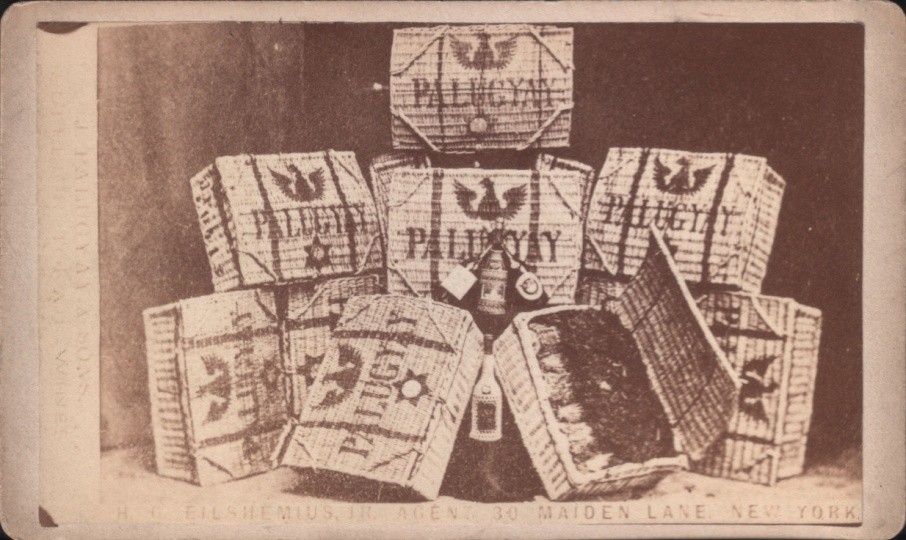
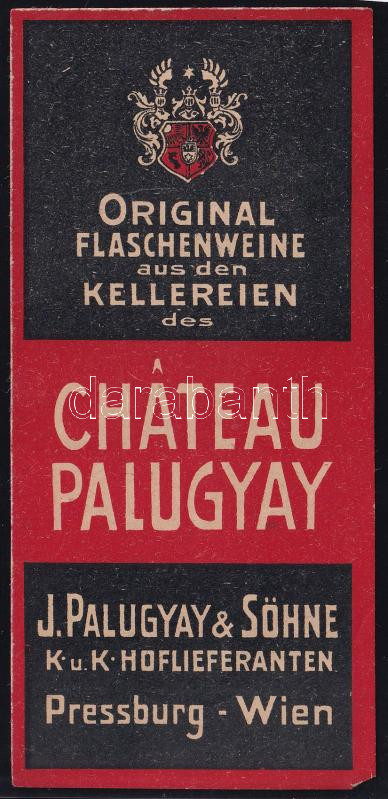
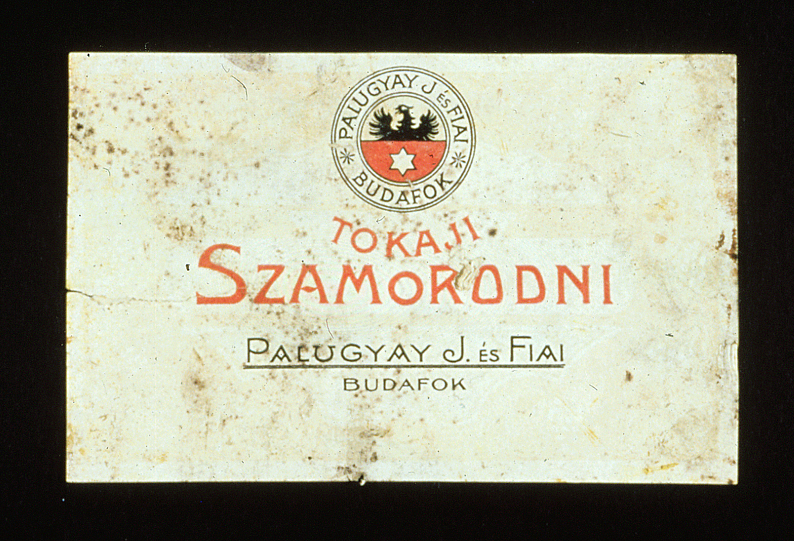
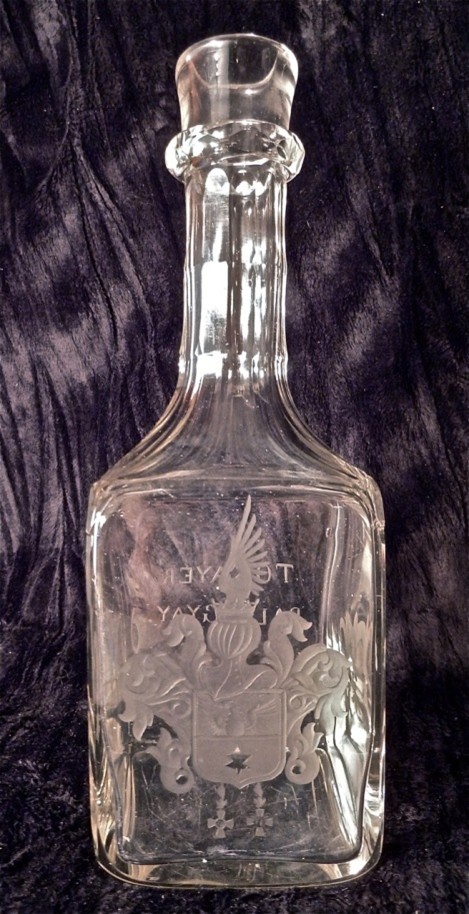
The 1880 Palugyay bottle, and Palugyay bottles and labels · click any image to enlarge
1853
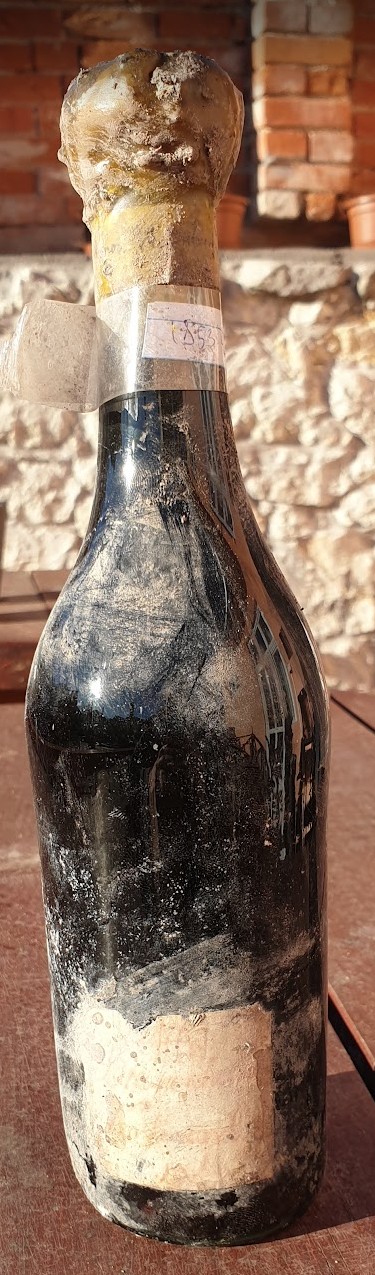
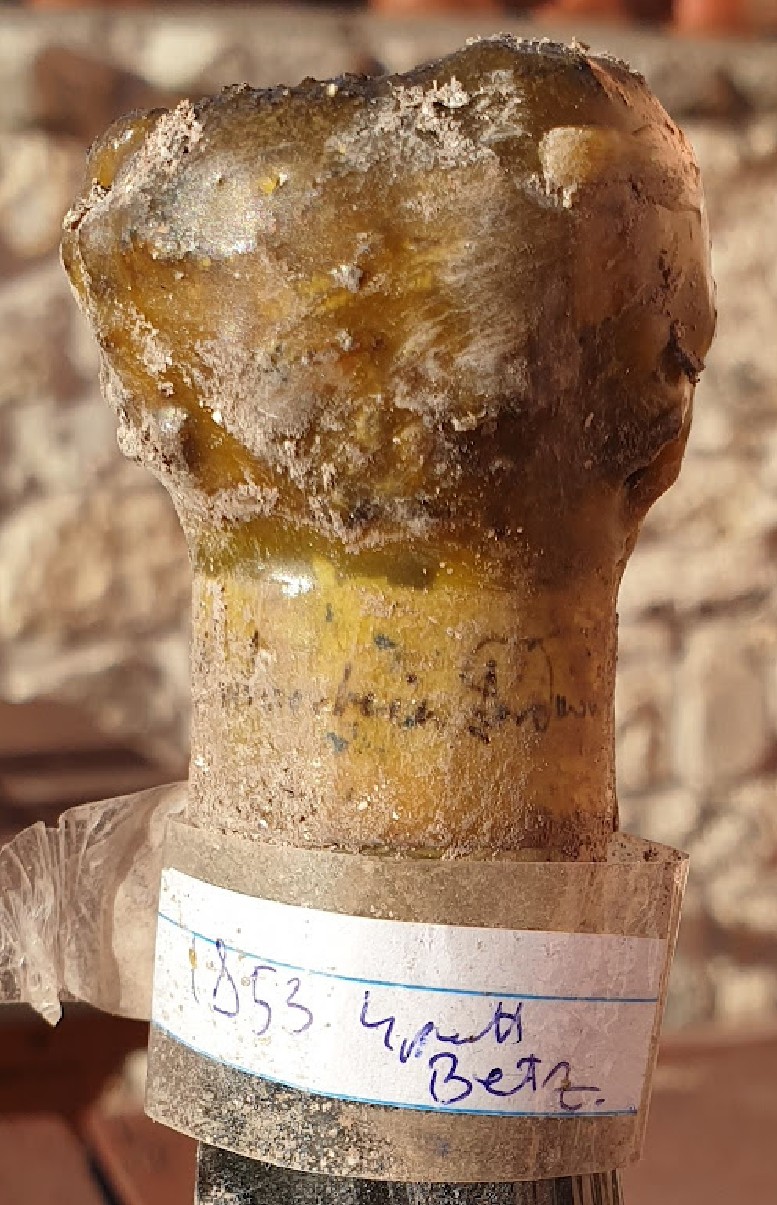
1853 Bretzenheim 4p Aszú
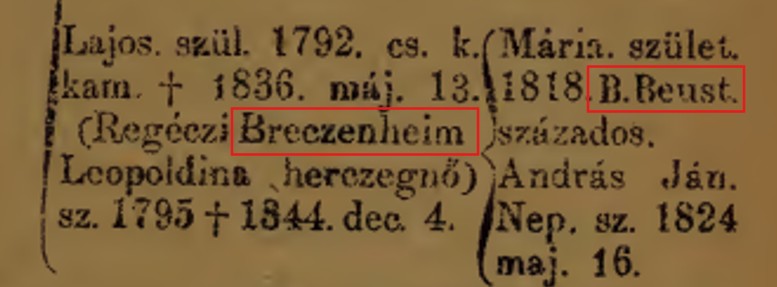
One of only two original Bretzenheim bottles known. Most historic Bretzenheim bottles you will encounter were imported to the UK and carry a Berry Brothers label (see previous article). The identification of this bottle was possible through the paper label on the bottle neck covered with bee wax in combination with the Bretzenheim document found with the bottle (see Highlights). The other bottle has a handwritten label (“regéci herczeg Bretzenheim Ferrdinánd” without any further information about wine type or vintage. The liquid is very dense suggesting it being an Essencia.) According to the family tree, the Almásy noble family was related to both Bretzenheim and Beust.
Berry Bros. labels and the price lists of 1909 and 1933 · click any image to enlarge
1859
1859 Degenfeld Essencia
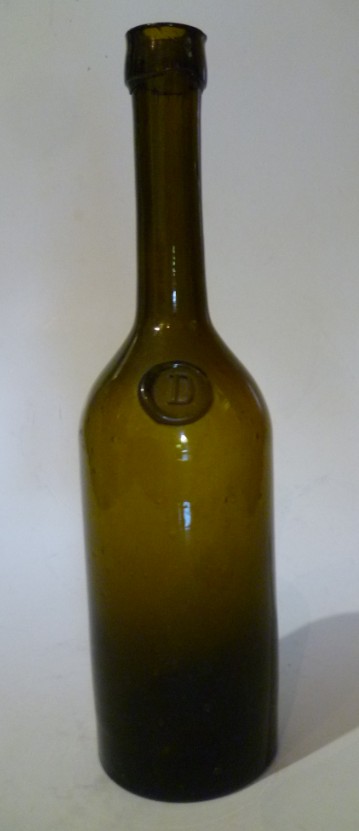
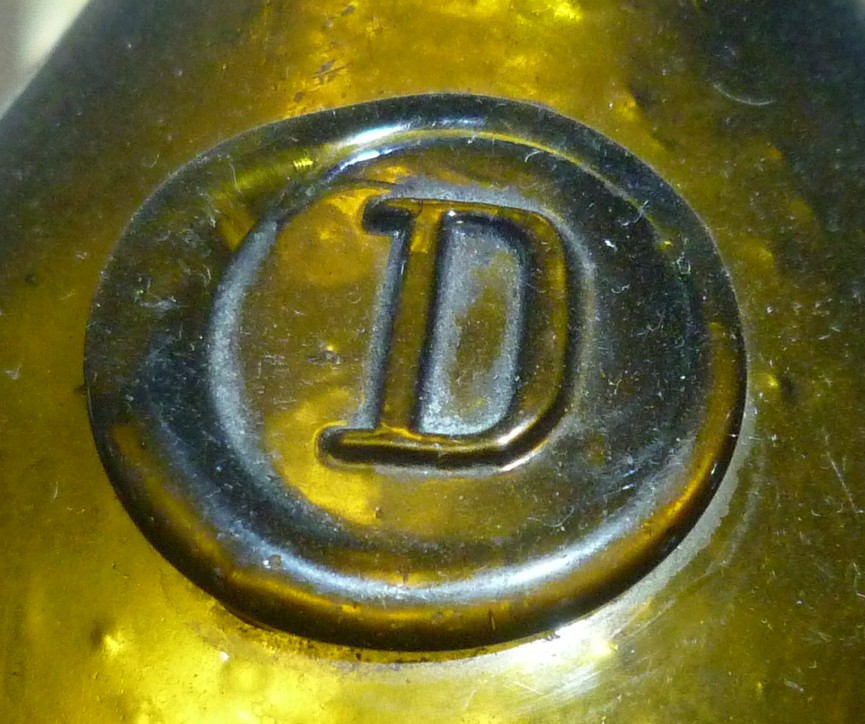
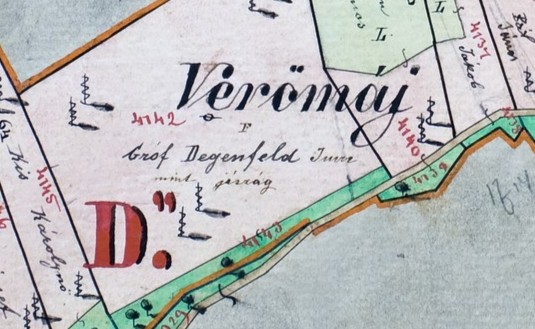
The only known full bottle of this producer that started in the 1850-ies. The big glass seal of the white bottle and the “D” on the green make this producer easily recognizable.
The winery was resarted in Tarcal by the Degenfeld family after the collapse of the Iron Curtain.
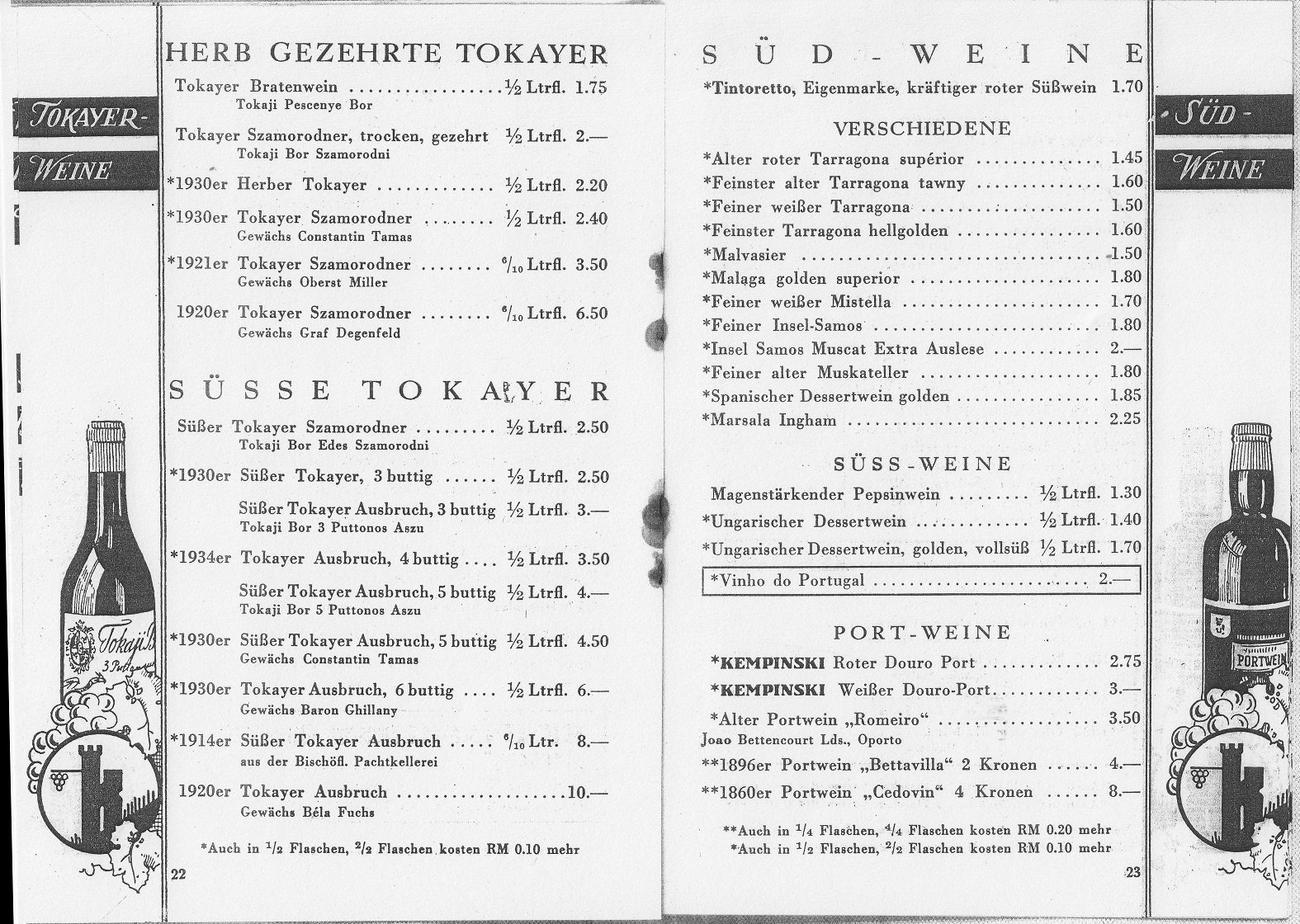
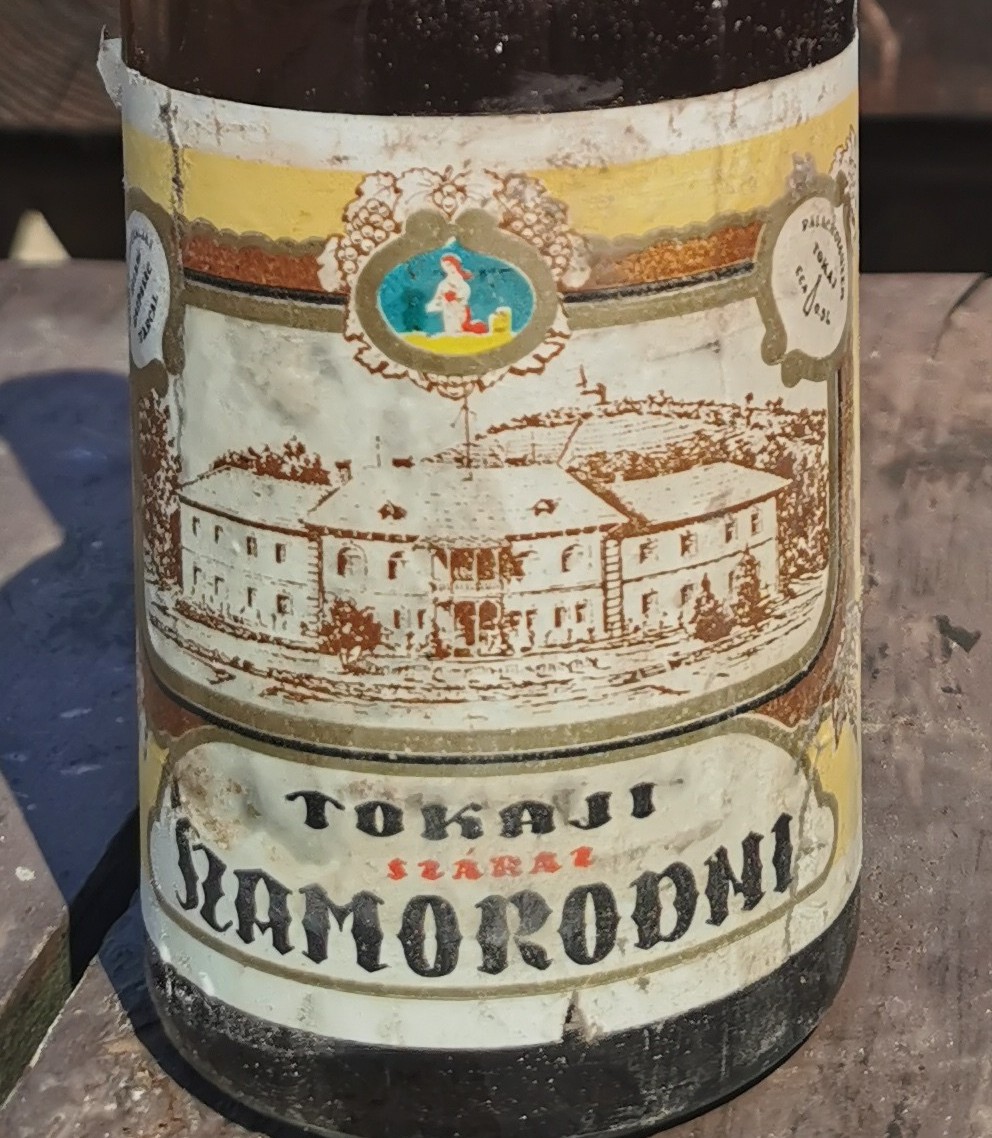
The iconic Teresia chapel is part of this beautiful château style winery and hotel. The hotel building used to be a winemaker school, and is pictured on a szamorodni label of 1956. The Kempinski price list featuring Degenfeld Szamorodni is from 1937.
The 1929 Hétszőlő bottle and related material · click any image to enlarge
1870
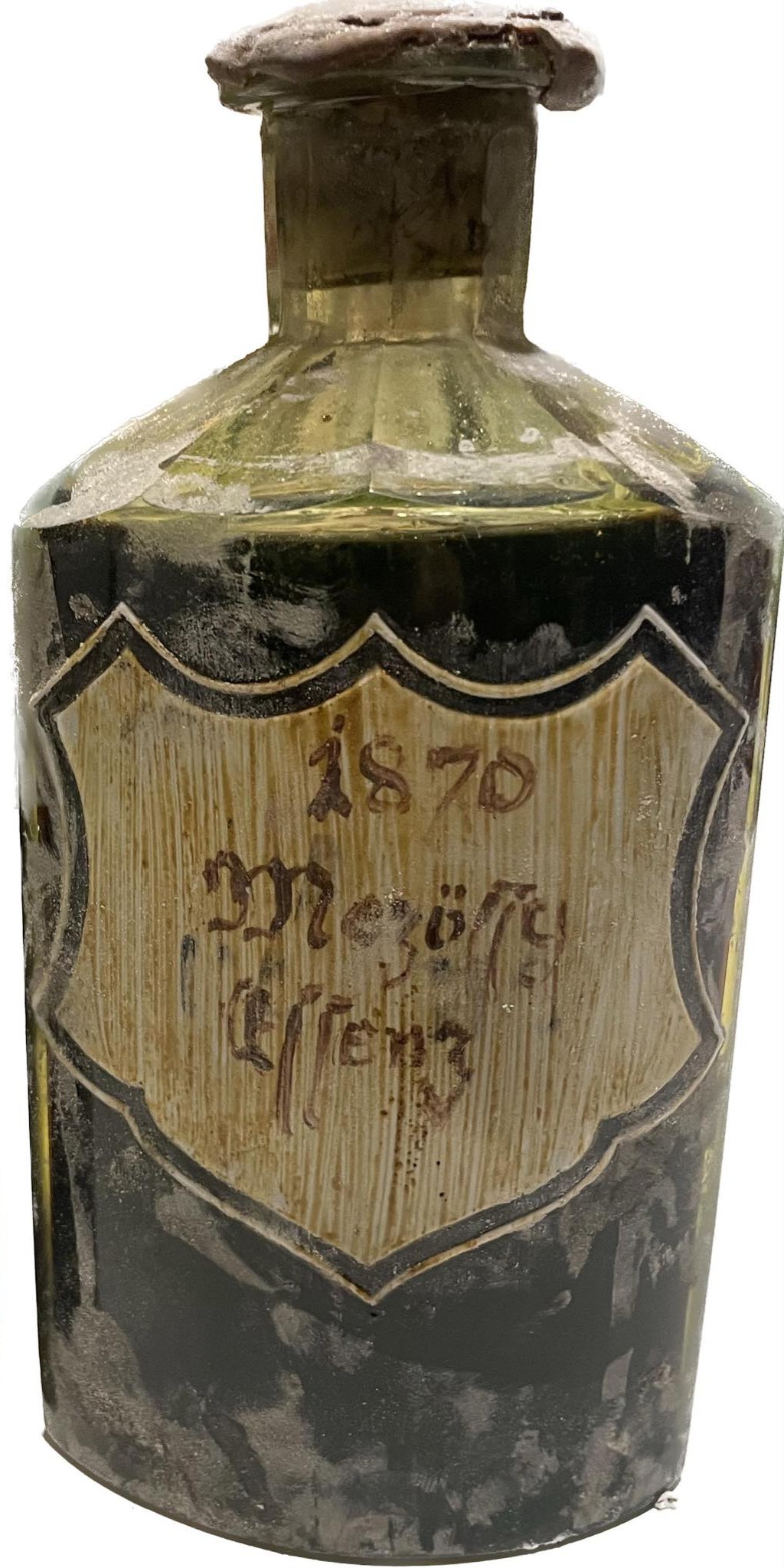
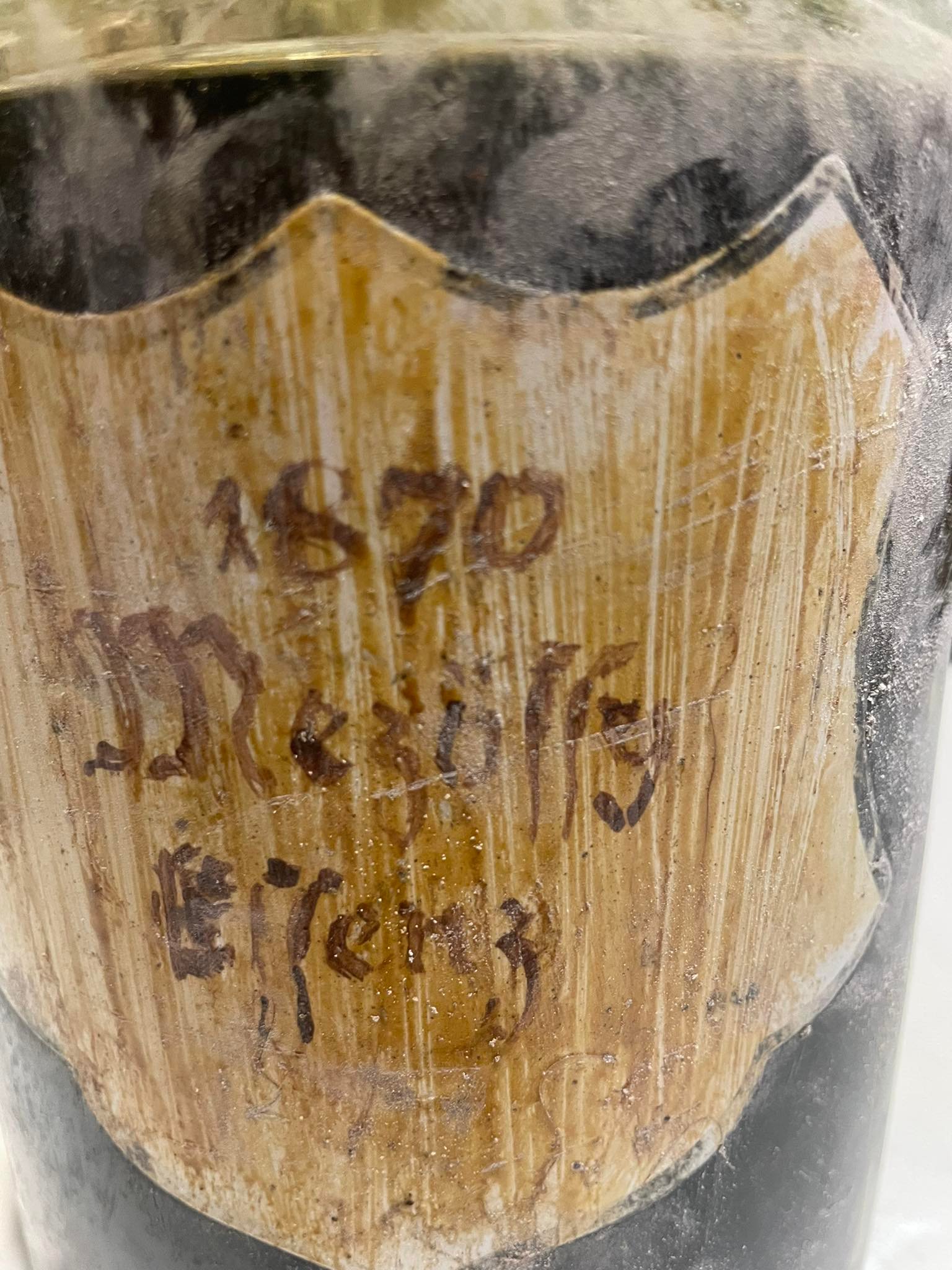
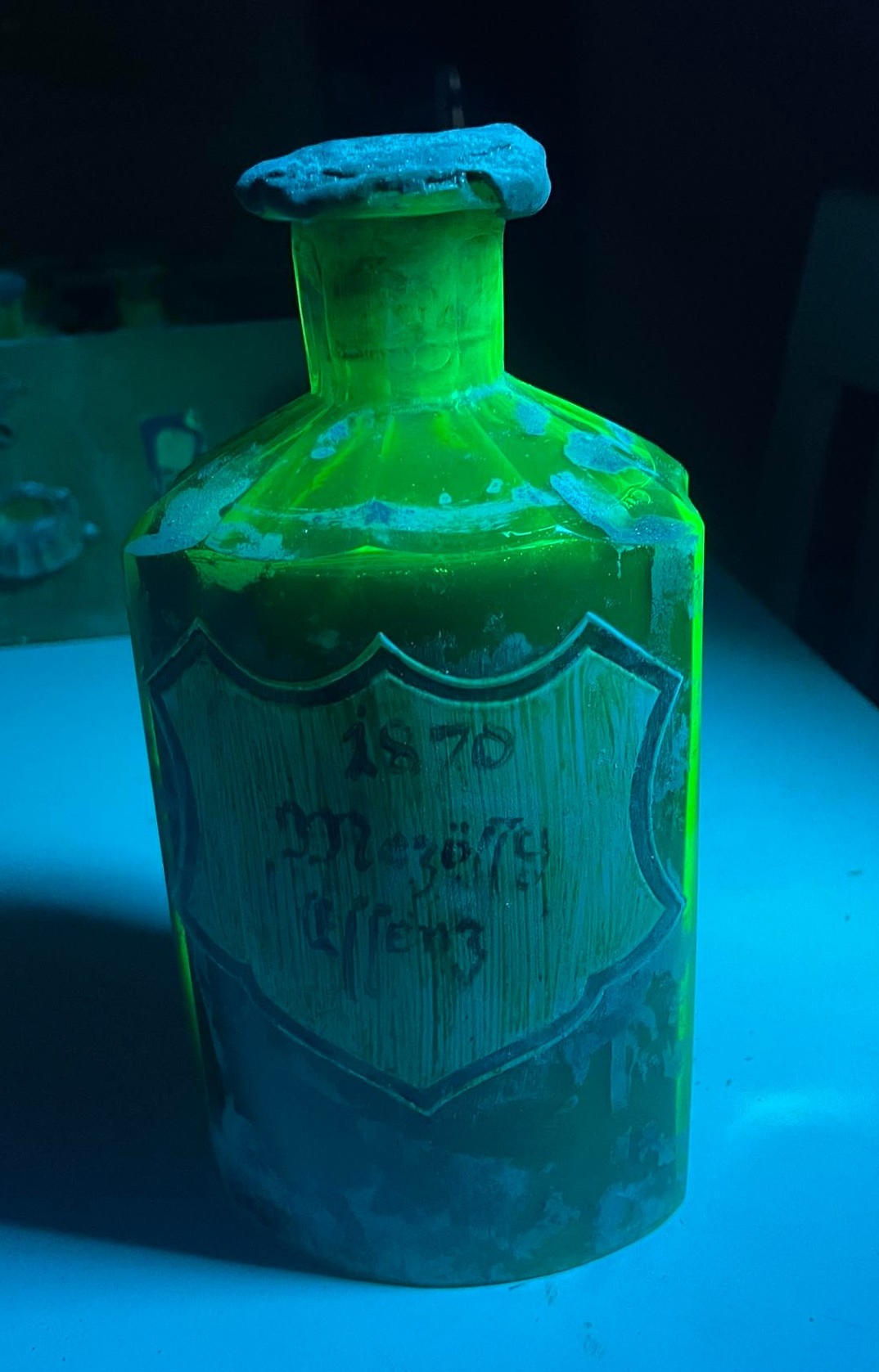
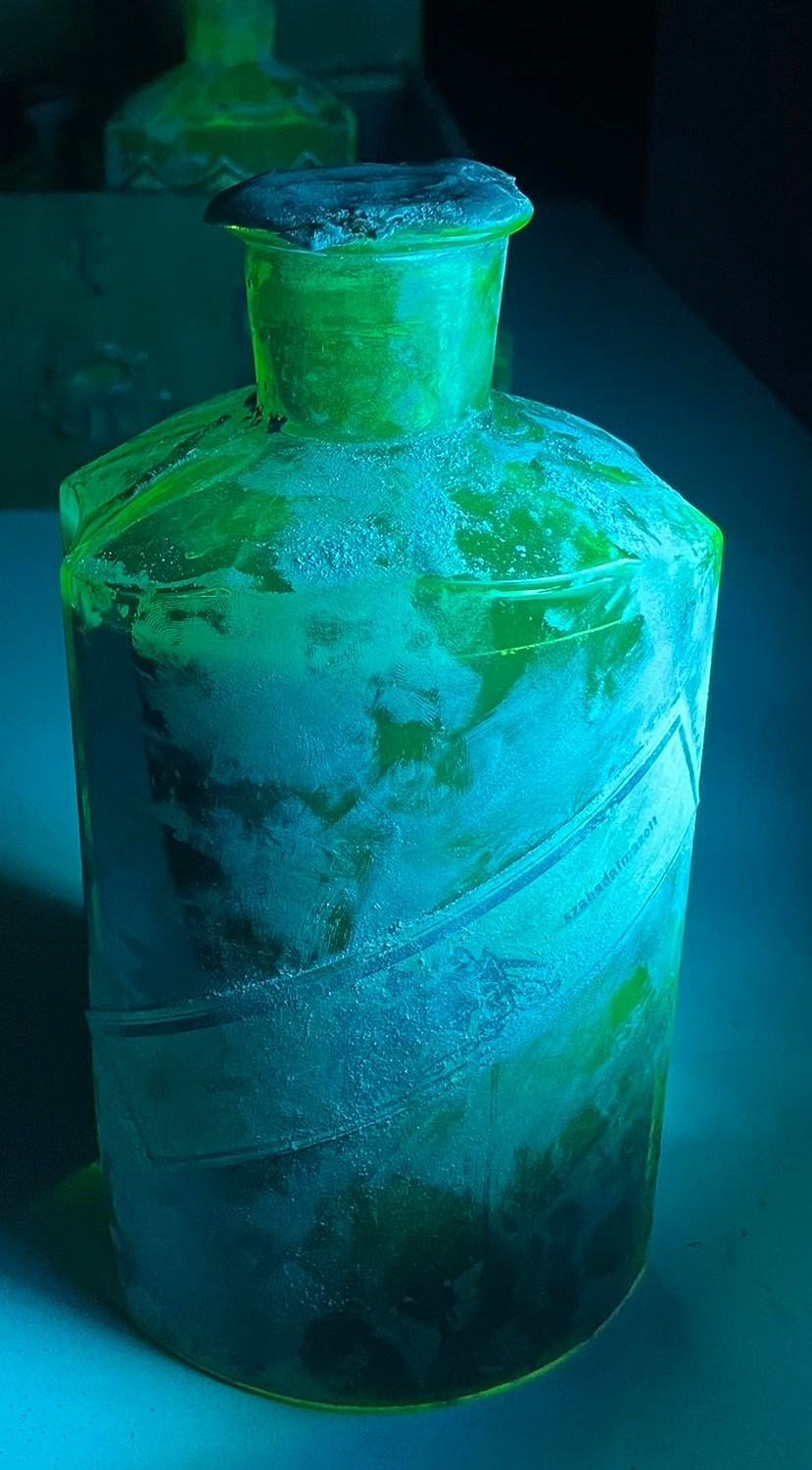
1870 Tokaji Essence in Uranium glass apothecary bottles
The only known usage of uranium glass to bottle Tokaji wine, glowing under sunlight and even more so under UV light. The bottle is part of a collection of several bottles of different sizes and shapes that were found in the cellar of a former drug store. The bottle shown here holds approximately 1.2 litres. This may explain why apothecary bottles were used but it remains a complete mystery why Uranium glass was used. I did not find a single example for Uranium glass being used to bottle wine or medicine. All bottles are closed, hence the wines have not been tested for radioactivity and drinkability remains questionable.
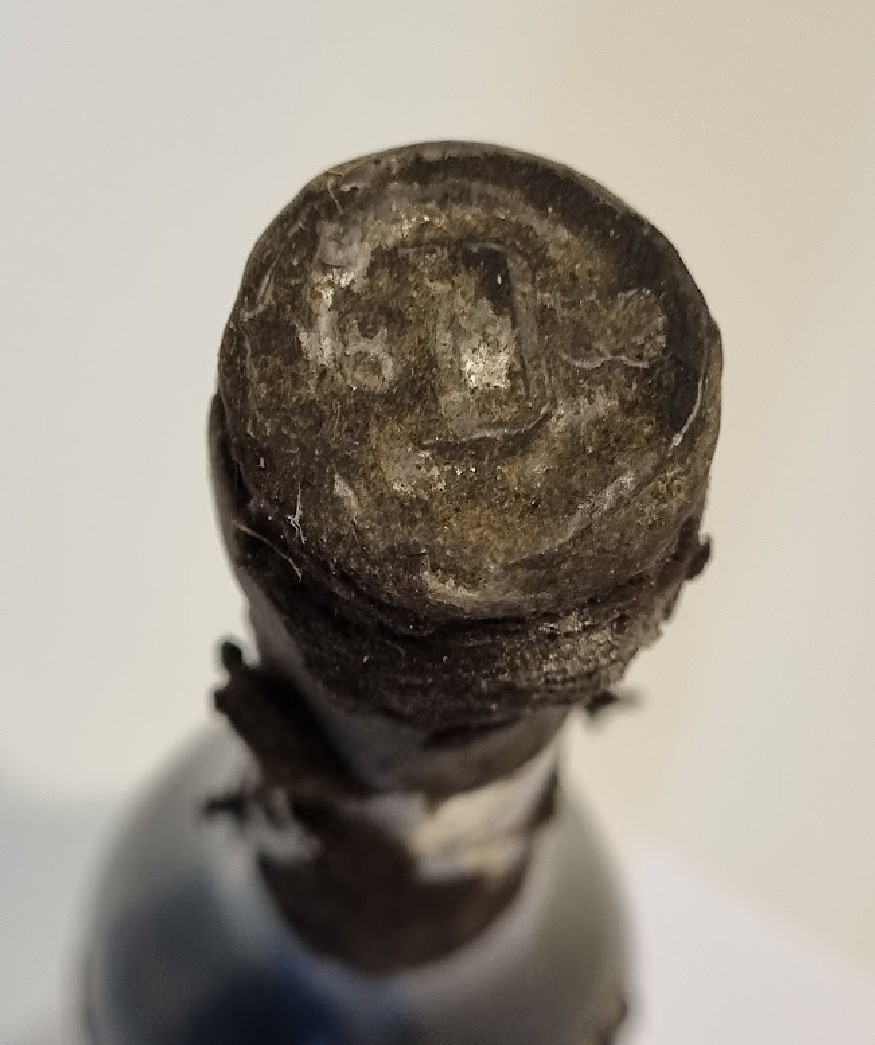
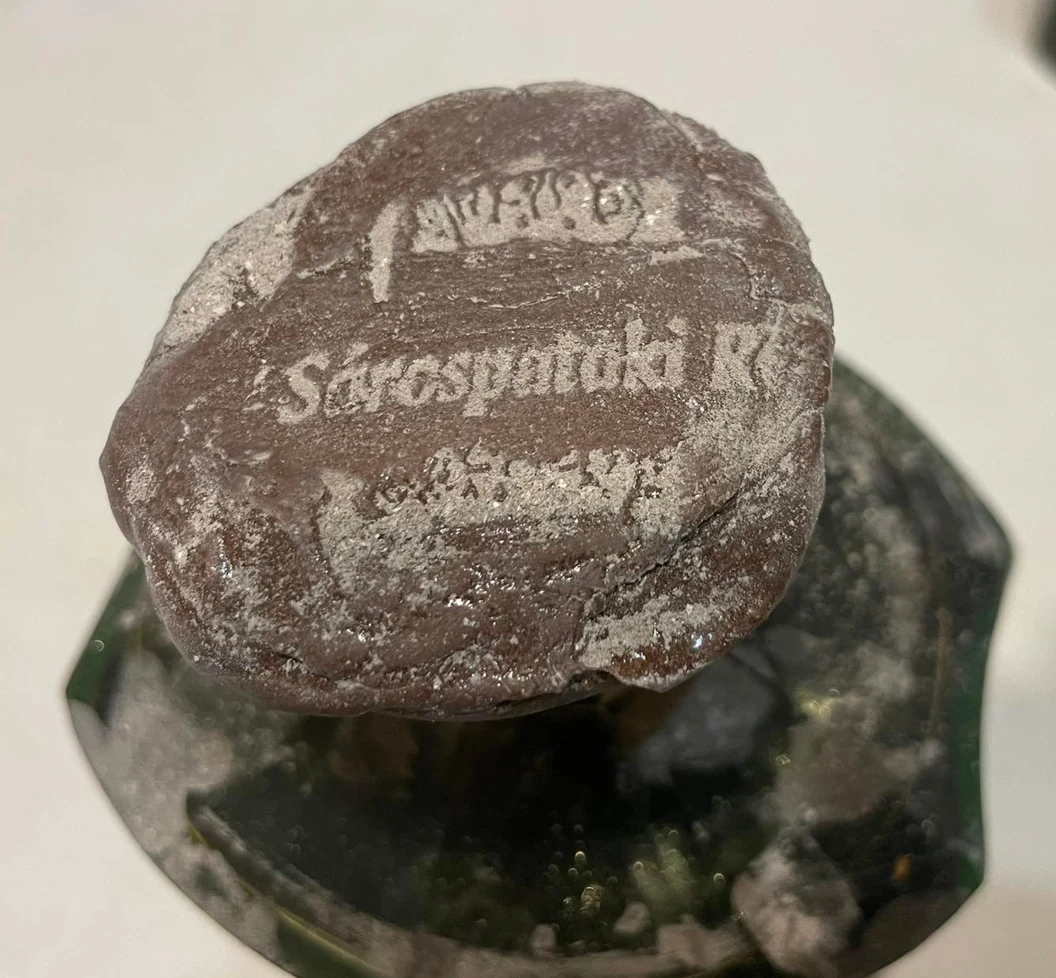
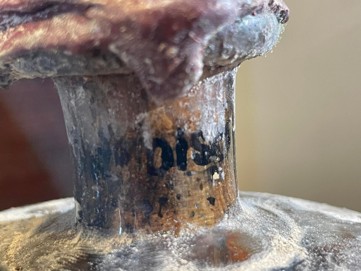
The cork carries a brand reading Sárospataki Ref. Főiskola — the Reformed College of Sárospatak, whose own bottles of 1873 and 1896 are described below. The brand ties this apothecary bottling to the College cellar.
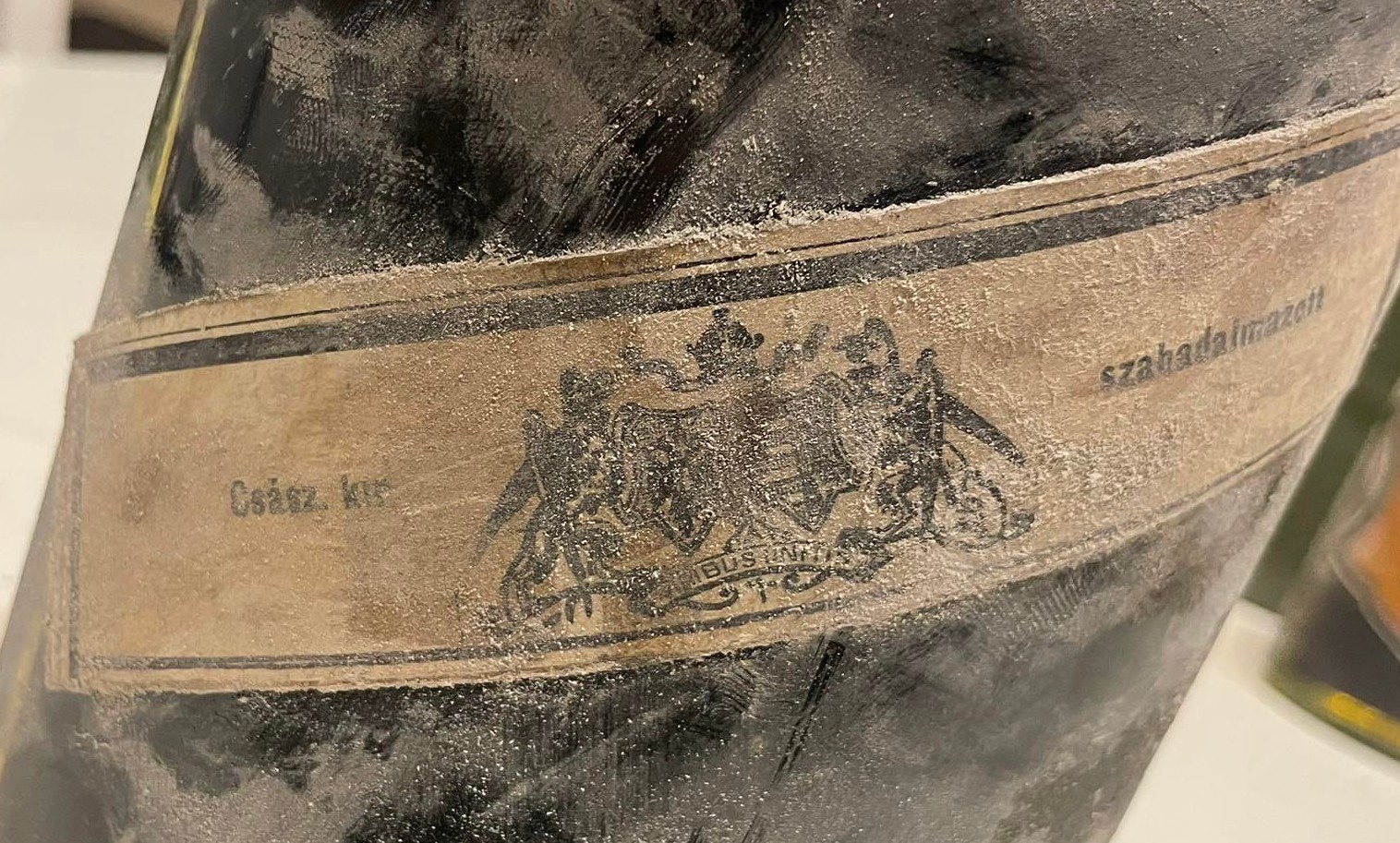
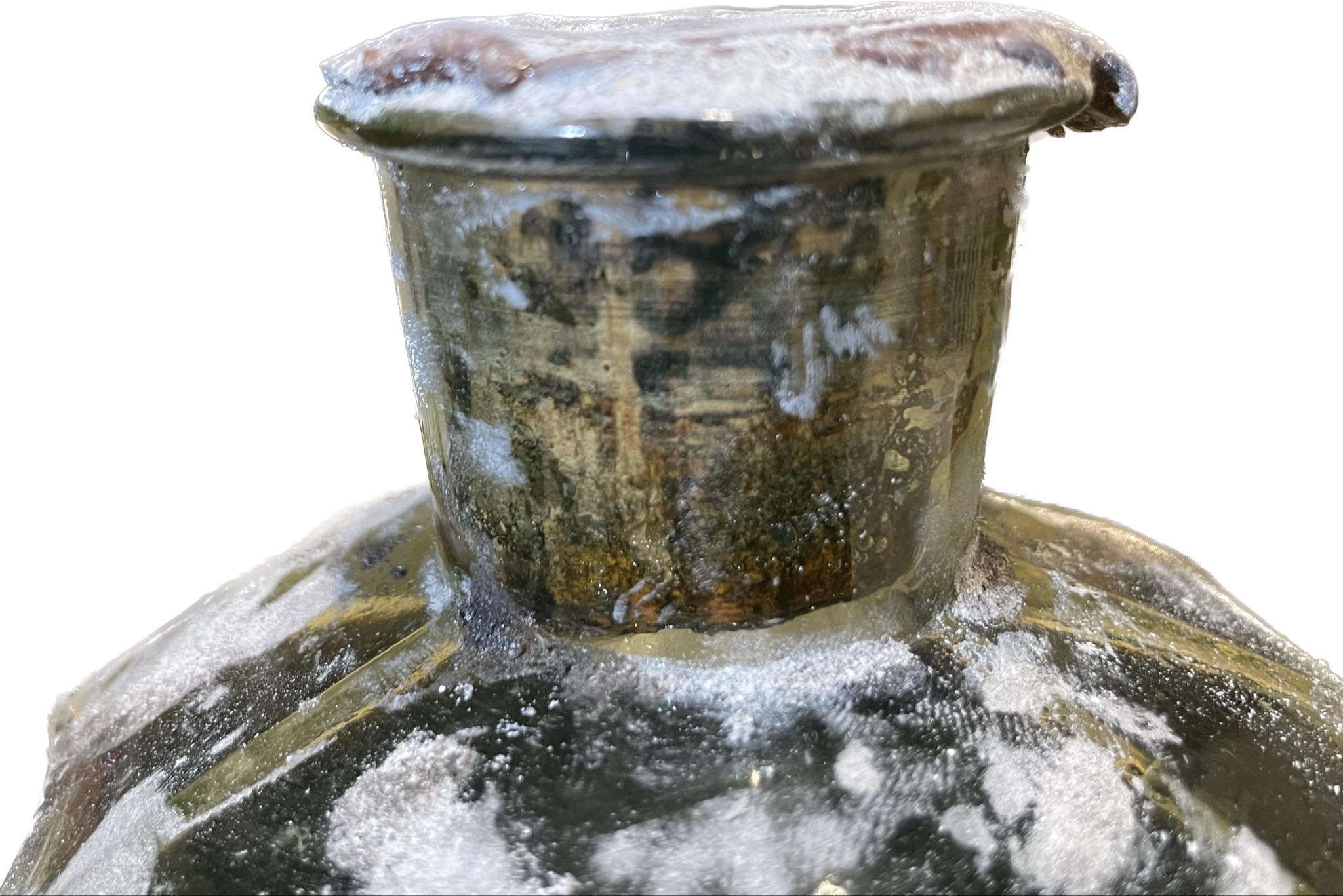
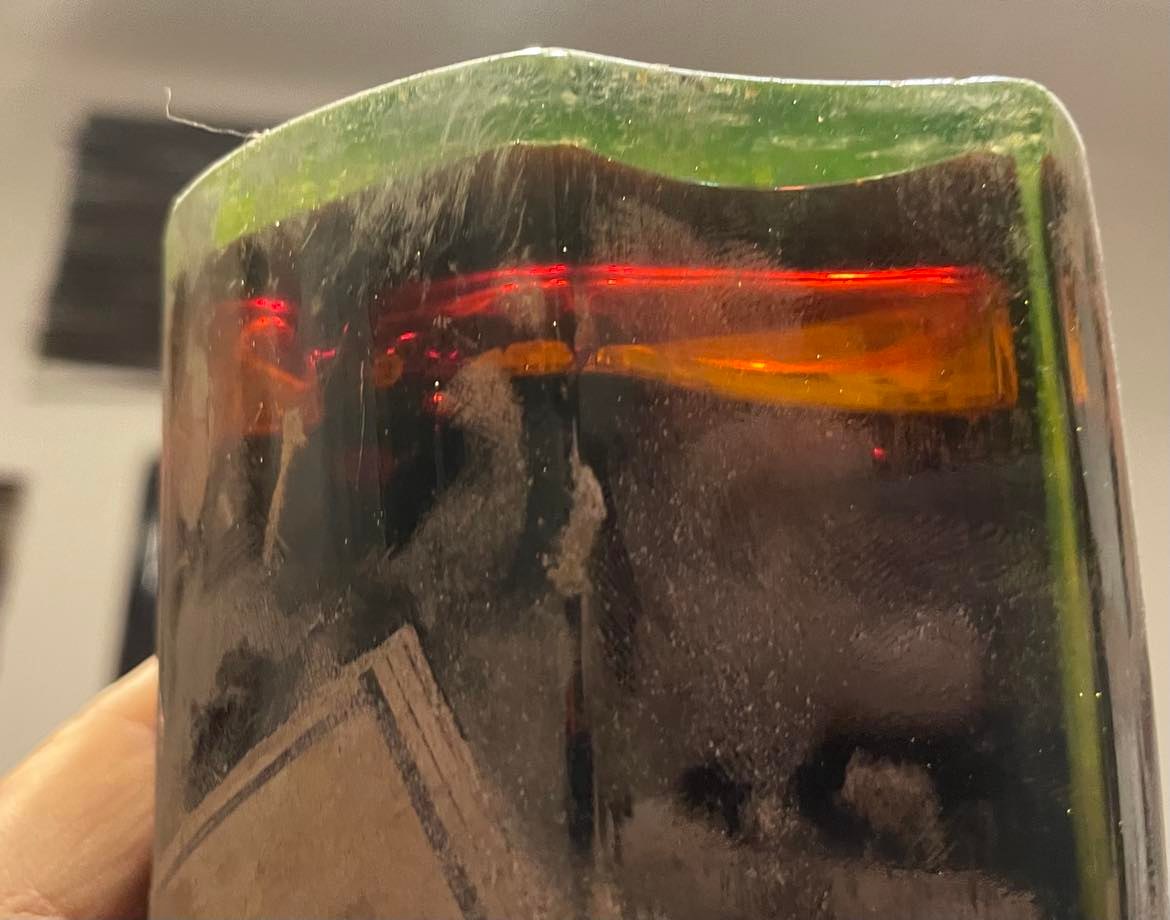
The 1870 Mezőssy Essenz: the bottle and its painted shield label, the Csász. kir. szabadalmazott band with the imperial arms and Viribus Unitis, the neck and its wax-sealed cork branded Sárospataki Ref. Főiskola, the fill level held to the light, and the uranium glass fluorescing under UV · click any image to enlarge
1873 · 1896
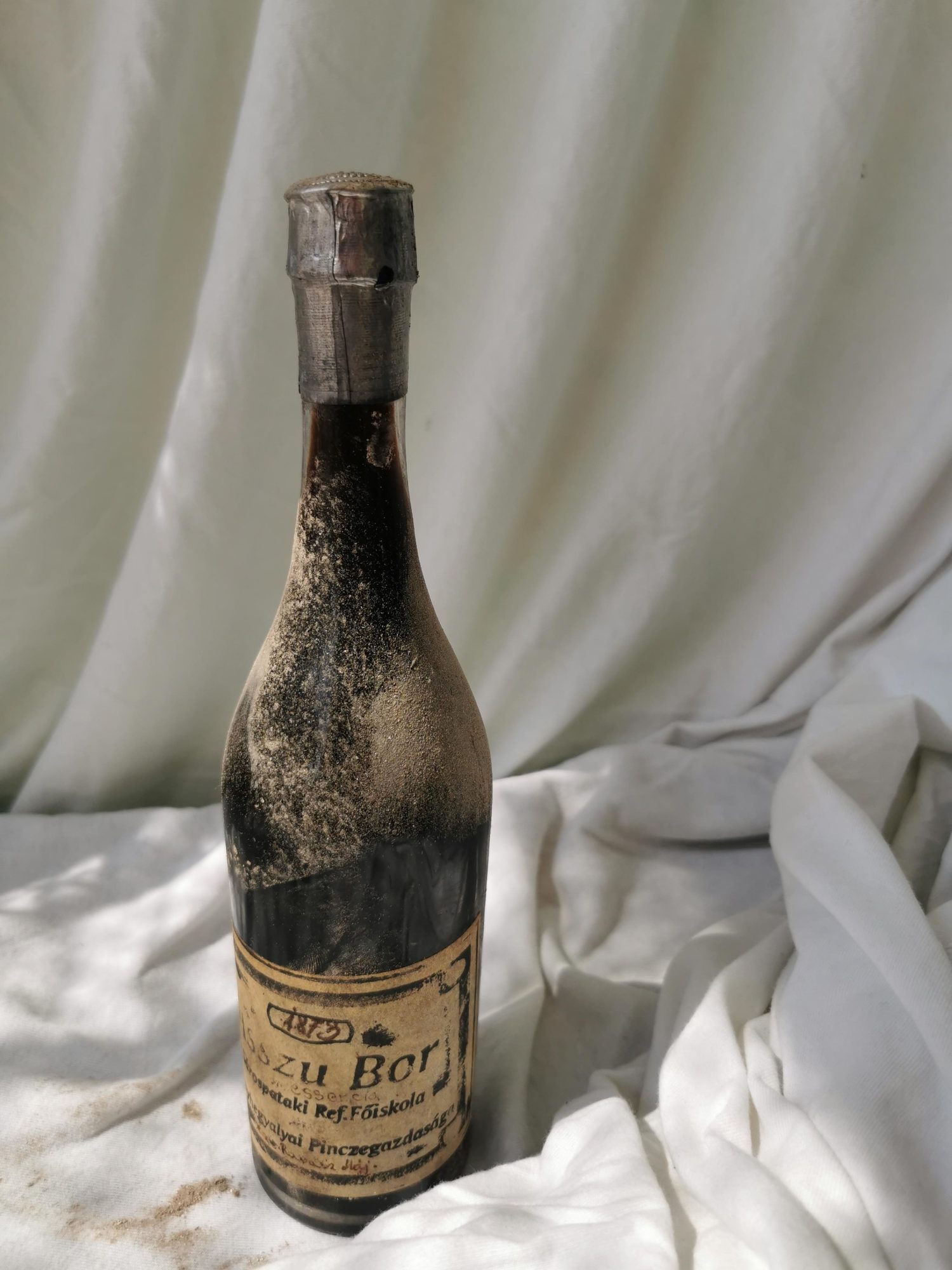
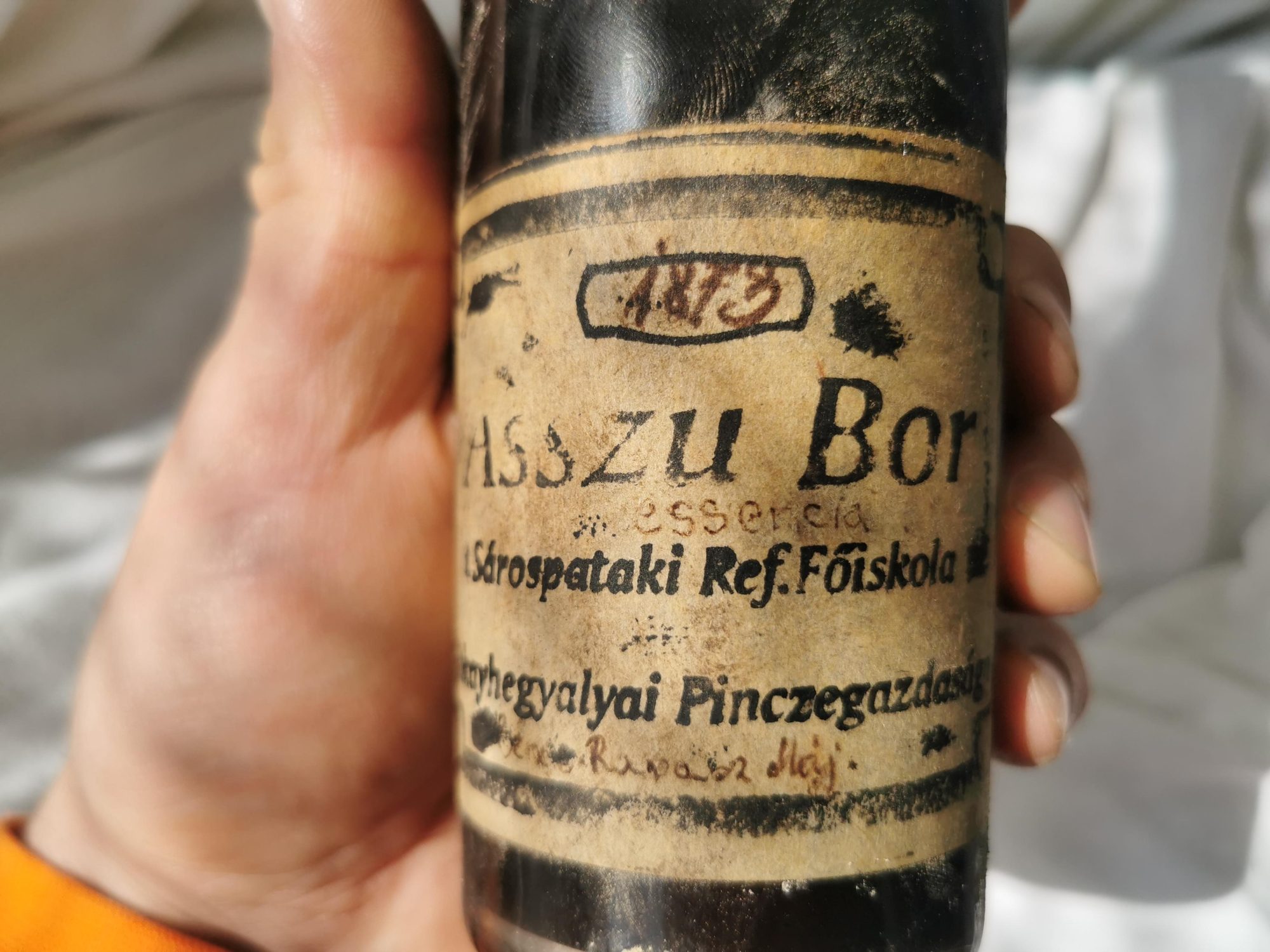
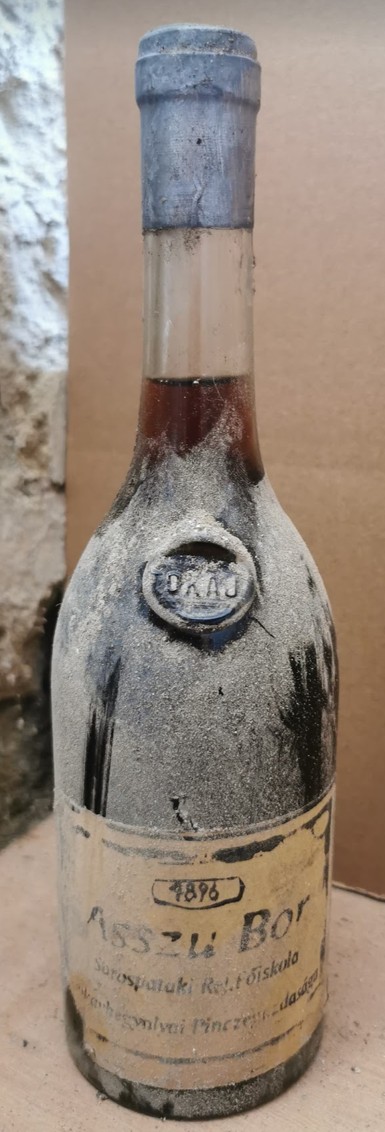
1873 and 1896 Tokaji Bottles from the Sárospatak Reformed College
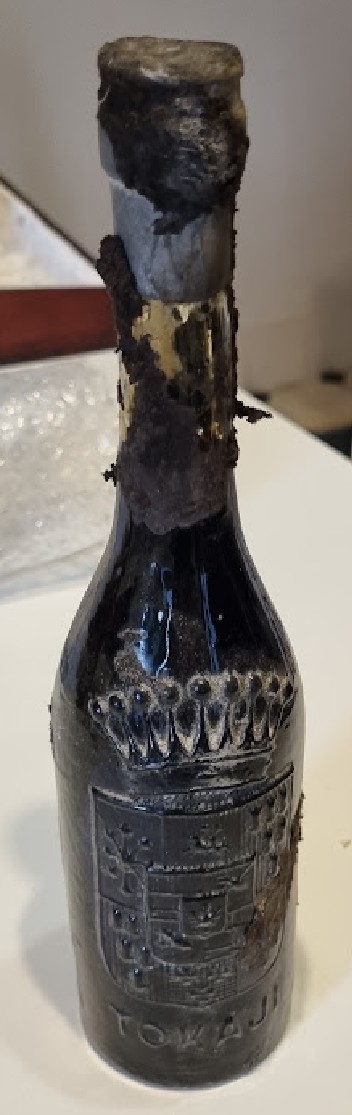
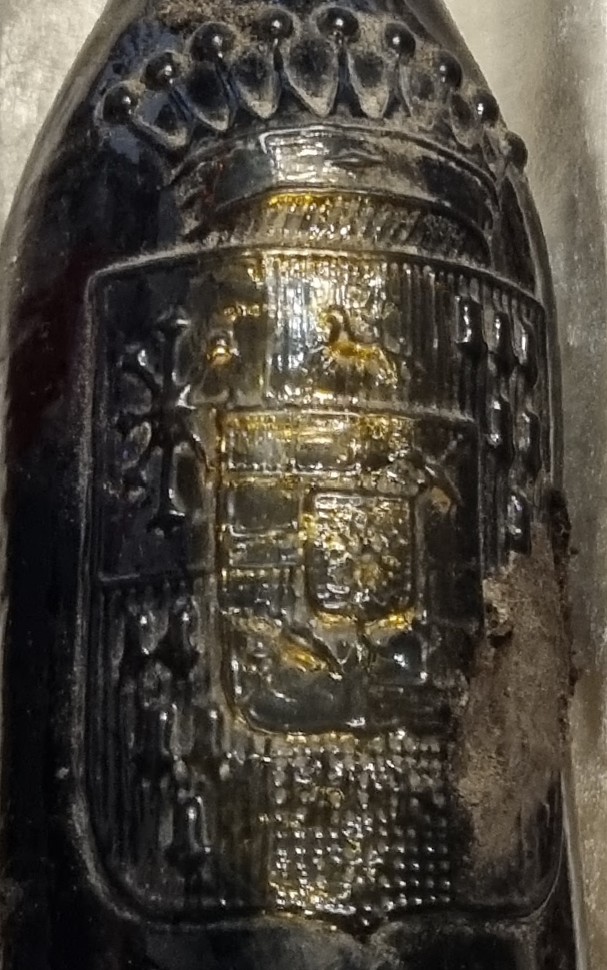
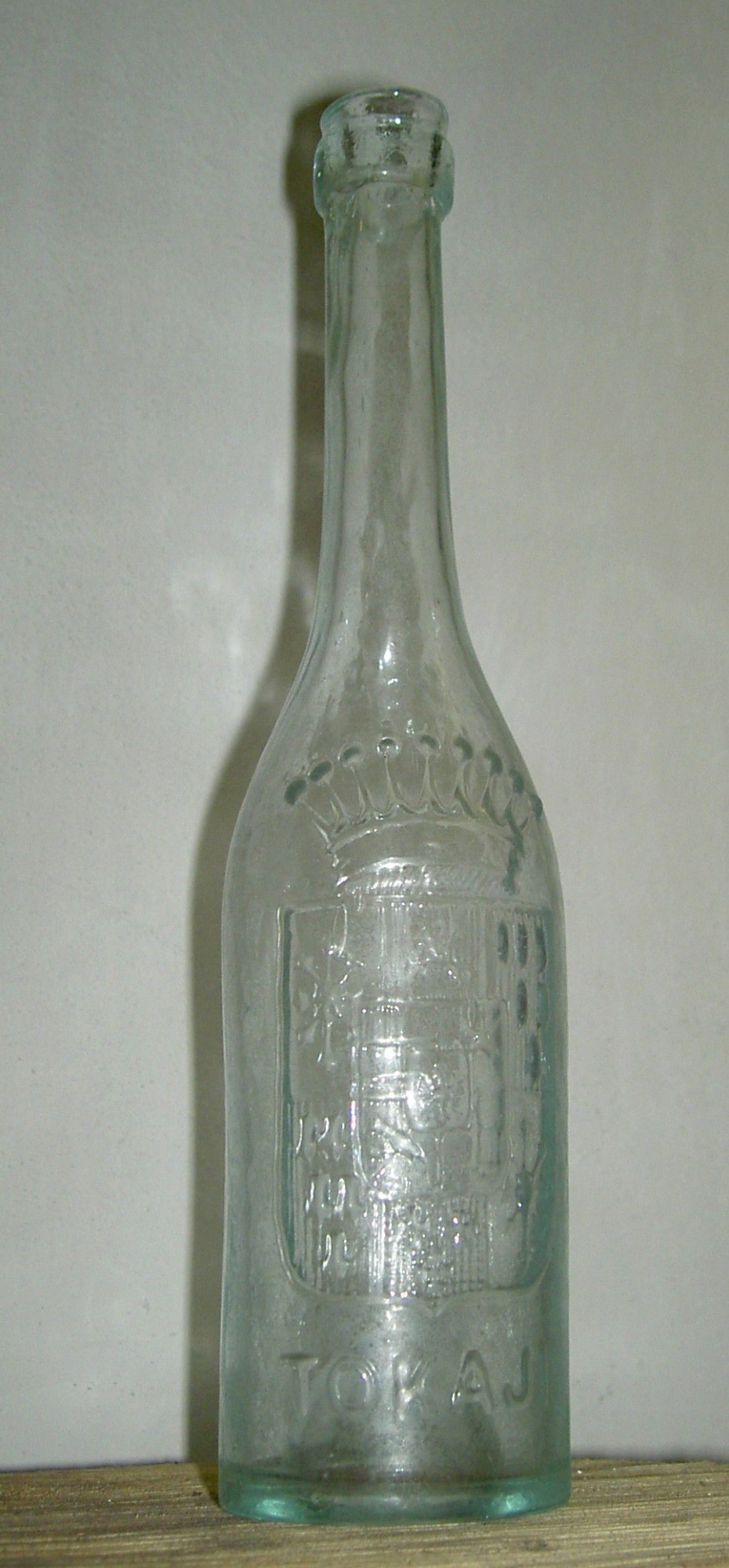
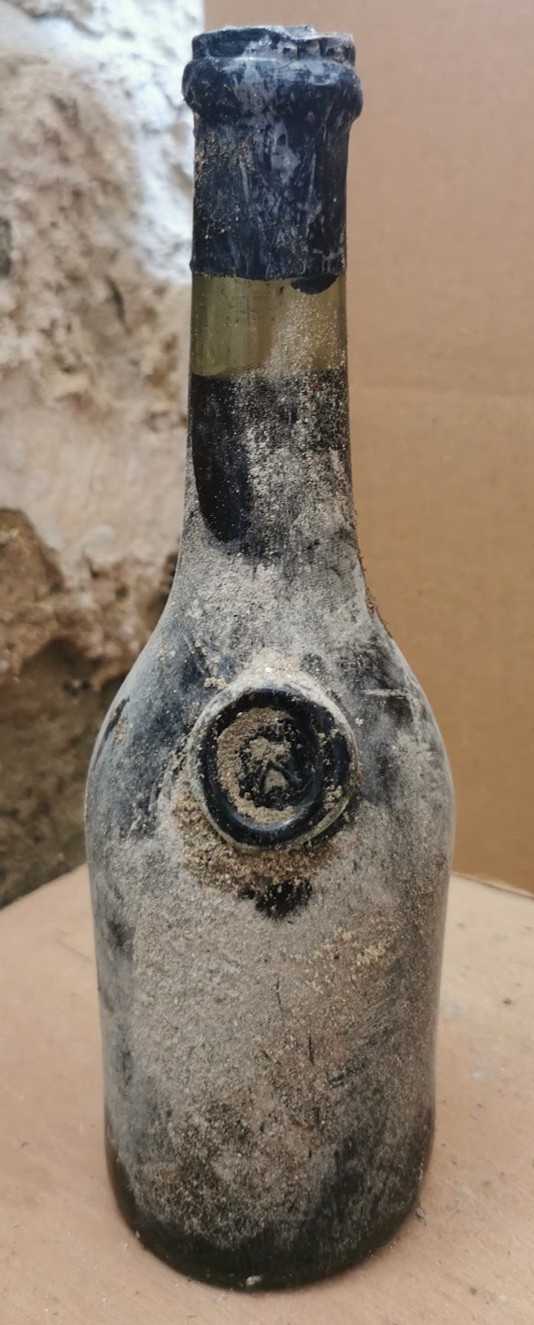
The Reformed College of Sárospatak, founded in 1531 owned vineyards and also produced Tokaji wine. Bottles of the College are extremyl rare, only 11 bottles are known in total, the oldest one from 1873. The images show an 1873 Essencia and an 1896 Aszú. The College cork brand also appears on the 1870 Mezőssy Essenz in uranium glass above.
The 1873 Essencia and its label, and the 1896 Aszú with the TOKAJ glass seal · click any image to enlarge
1876
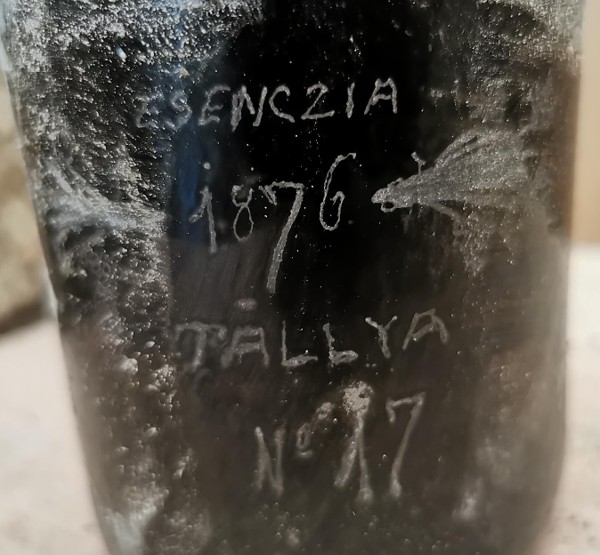
1876 Baron Maillot Eszencia
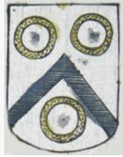
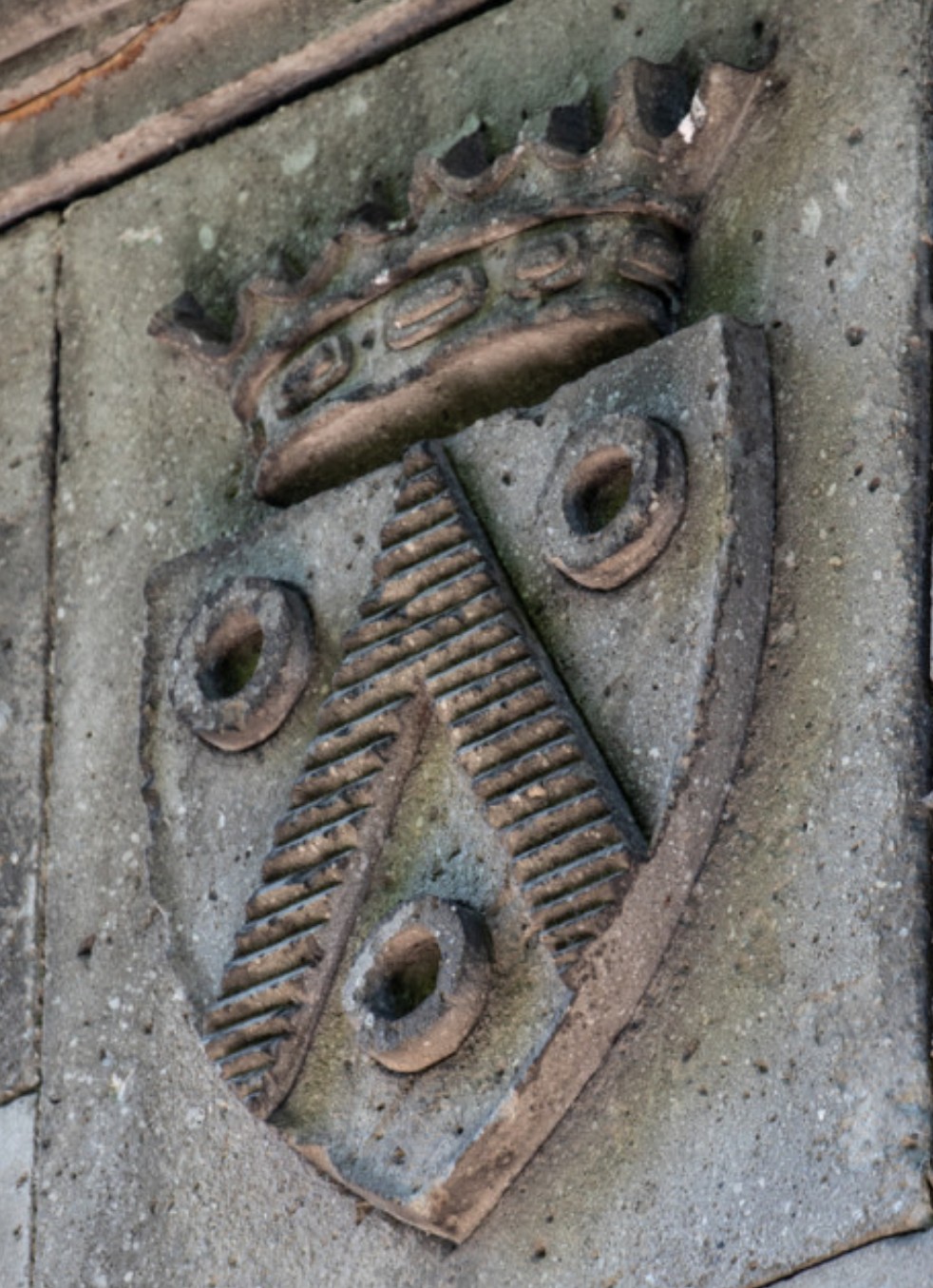
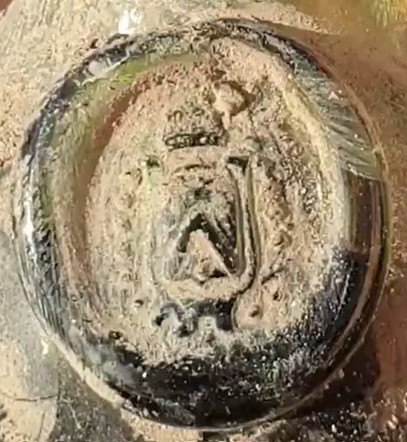
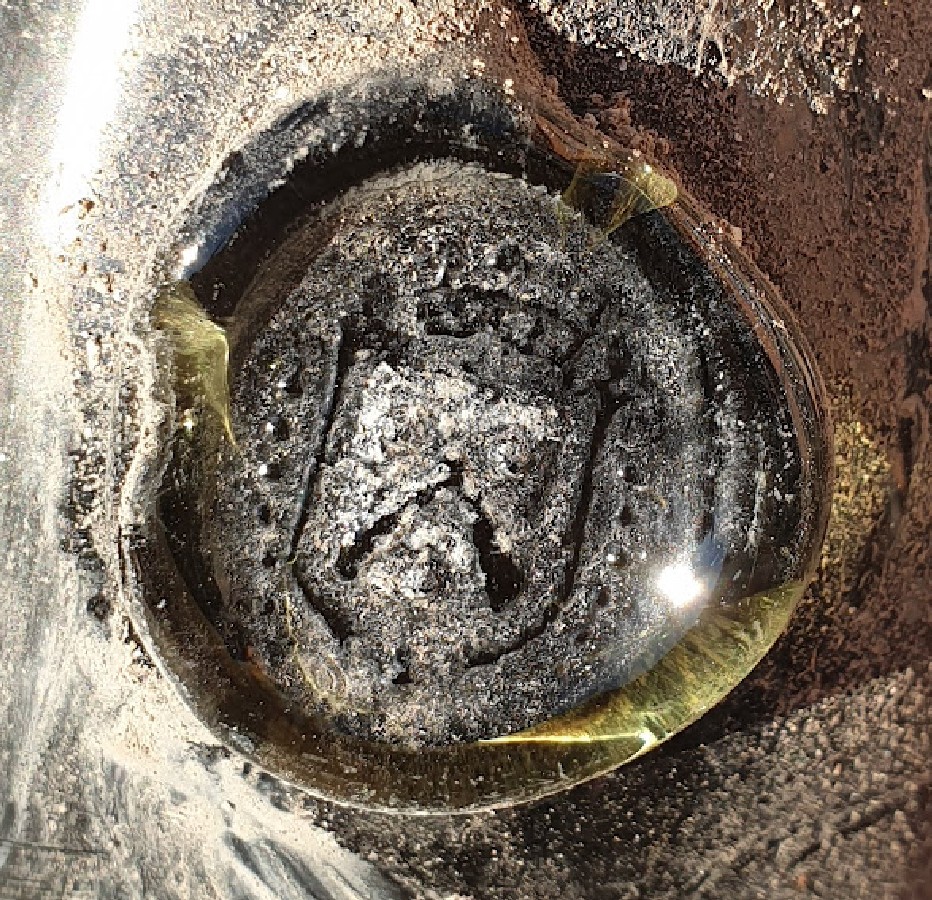
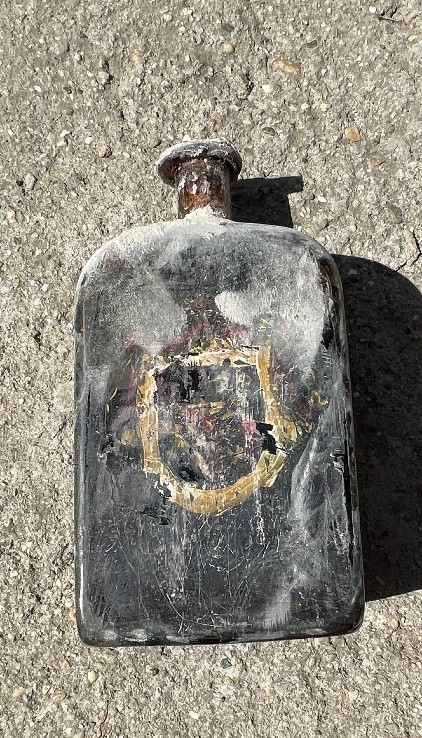
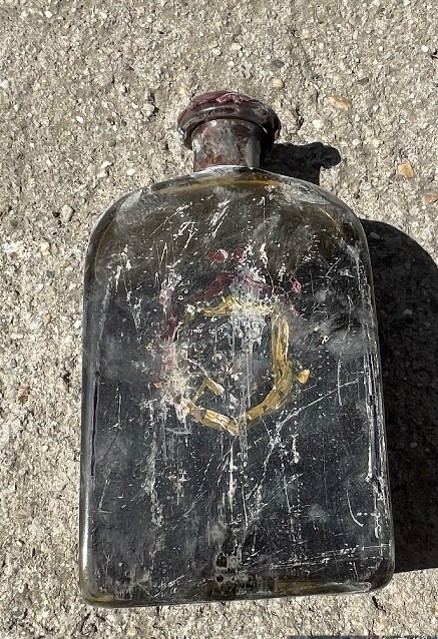
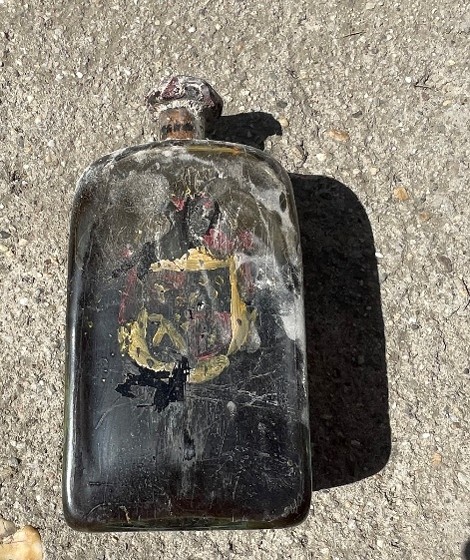
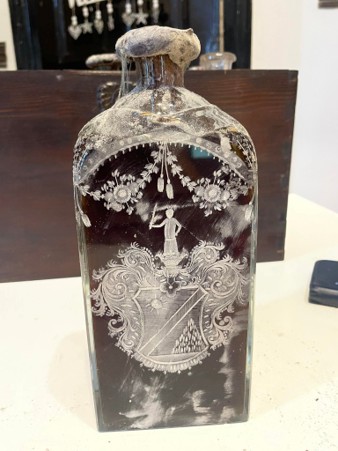
One of the very few original Maillot bottles known. Most historic Maillot bottles you will encounter were imported to the UK and carry a Berry Brothers label (see previous article). The Maillot coat of arms, og which I added two imaghes, is clearly visible on the glass mark and on the blue capsule. I added two images of the coat of arms. Vintage year and type of wine (Eszencia) is engraved on the 1876 bottle. The vintage of the 1844 bottle was written on a small label on the capsule and the covered with a translucent material, probably bee wax. The Maillot de la Treille family is of French origin and they produced in wine in Tállya, where the families palace and burial chapel can be found. The last 3 images shows the glass marks of three other original Maillot bottles of vintages 1840 - 1874.
The 1853 Bretzenheim 4 puttonyos Aszú and its documents · click any image to enlarge
1880
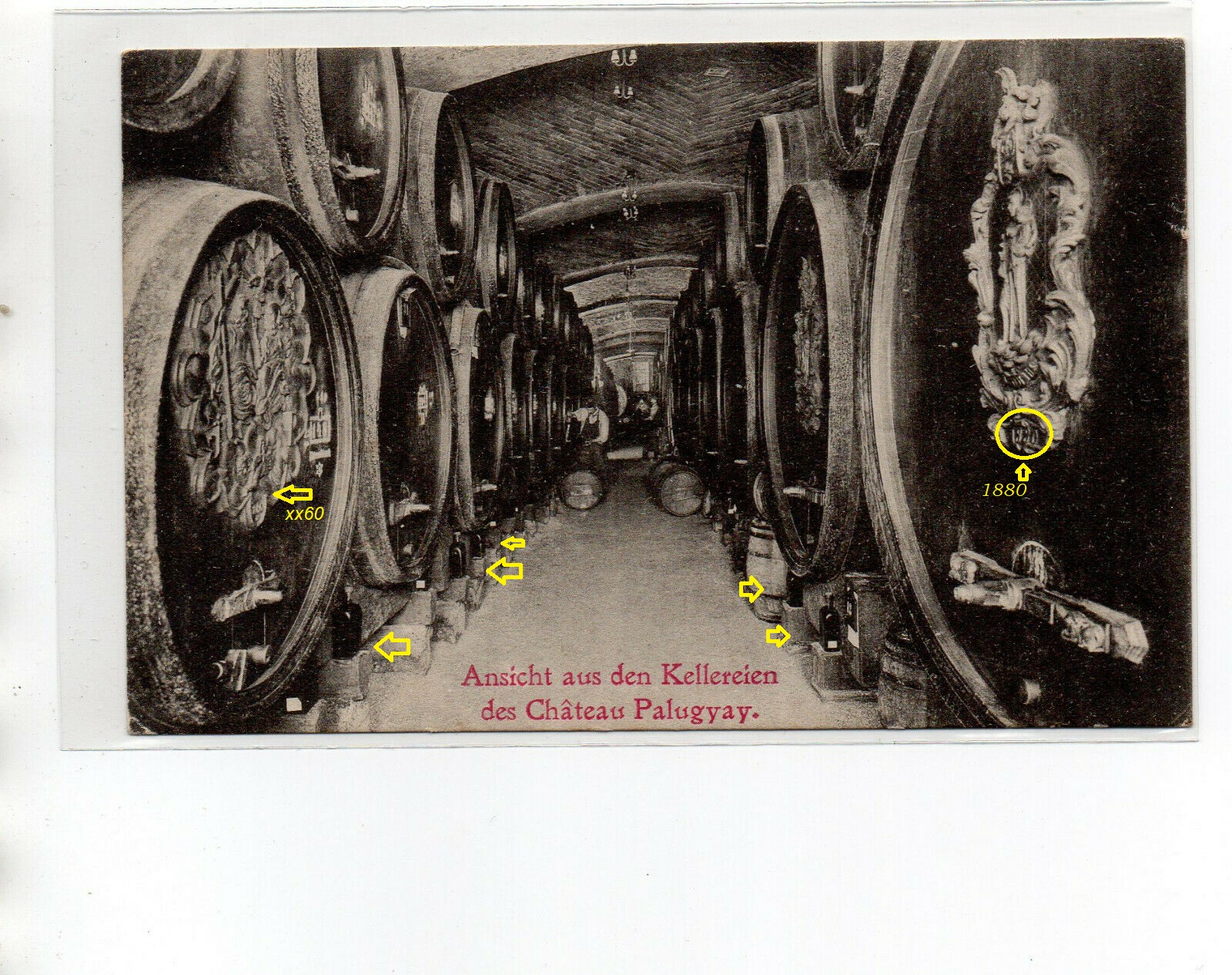
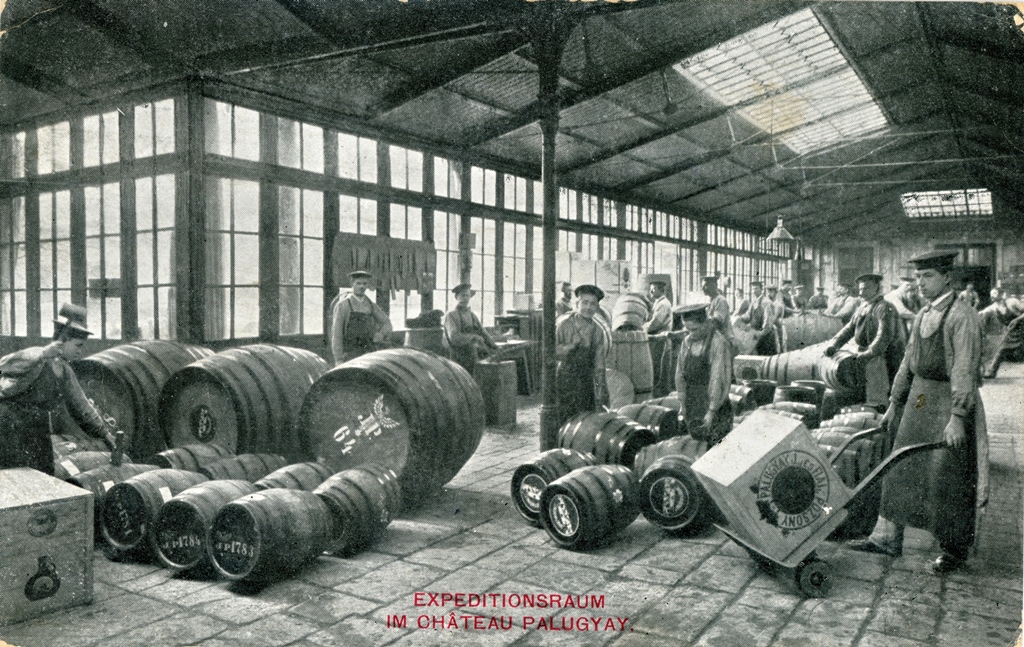
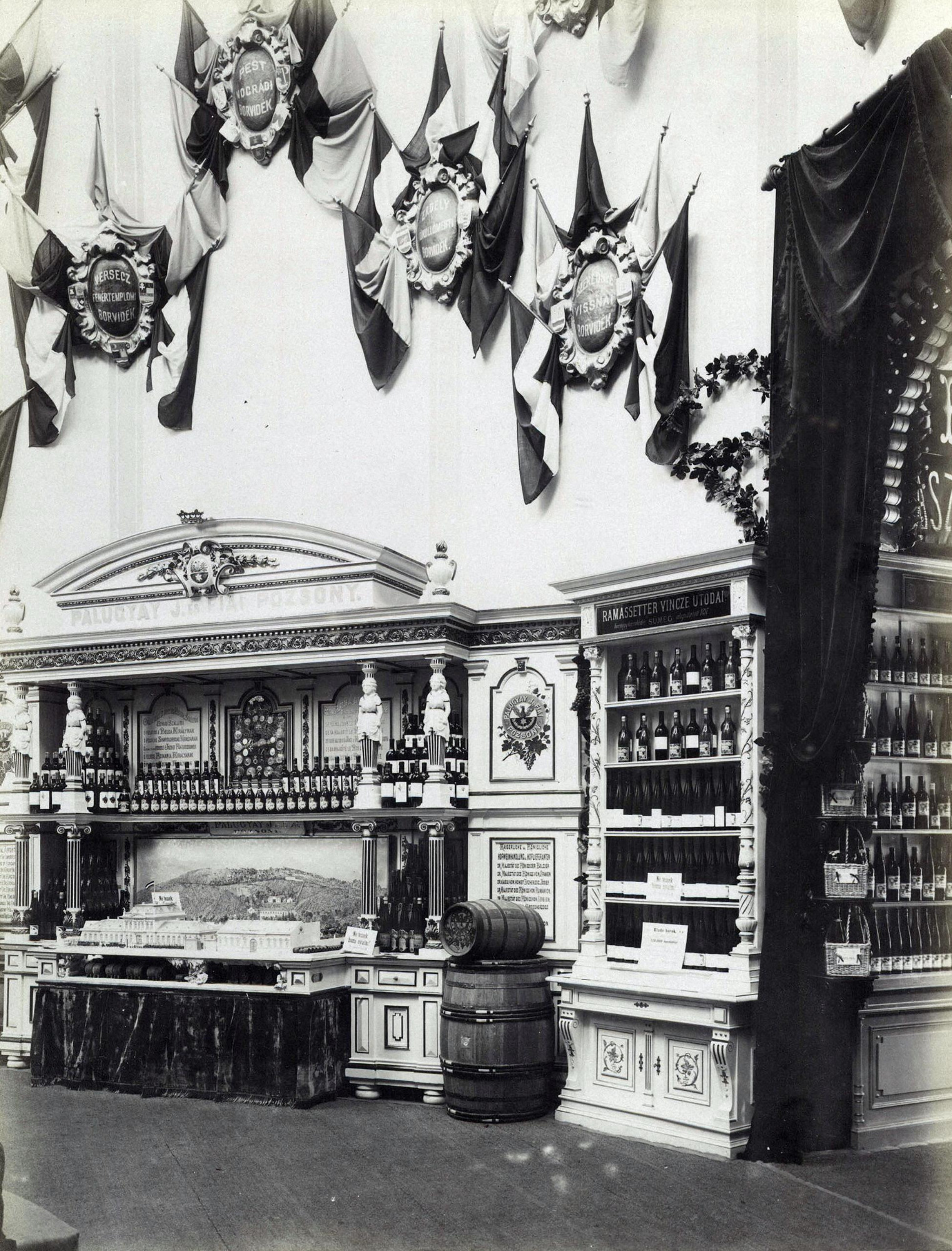
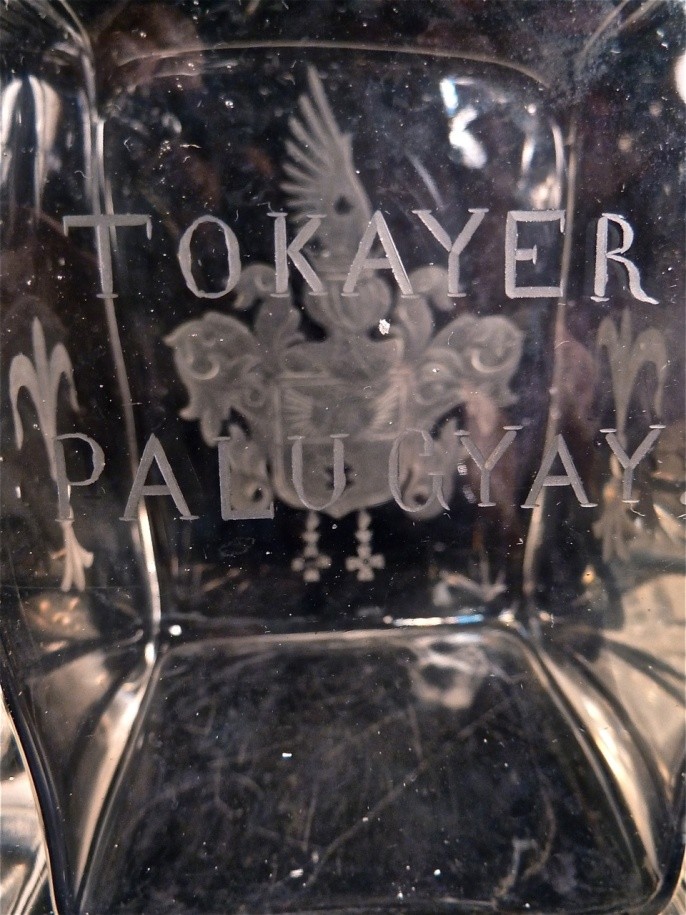
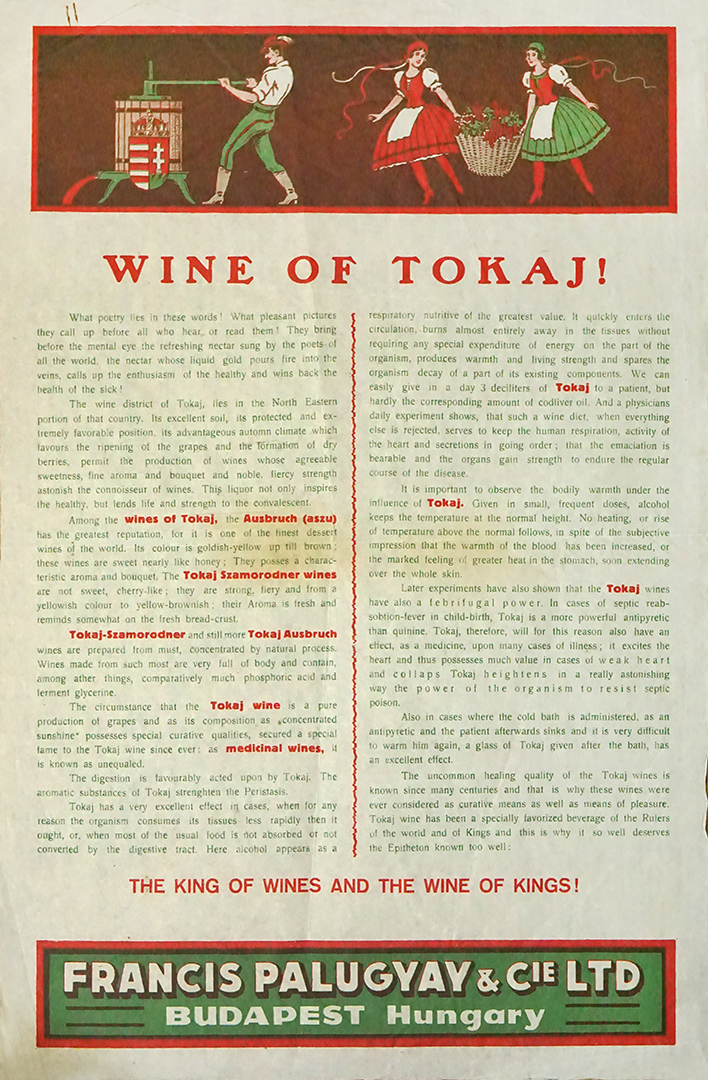
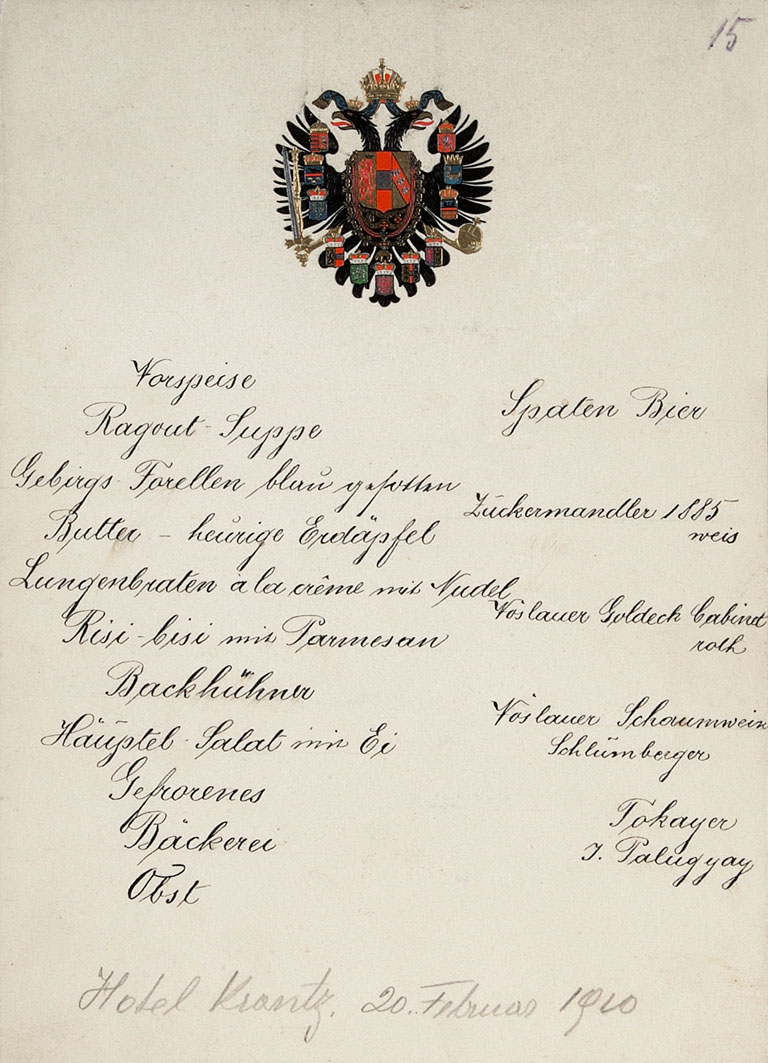
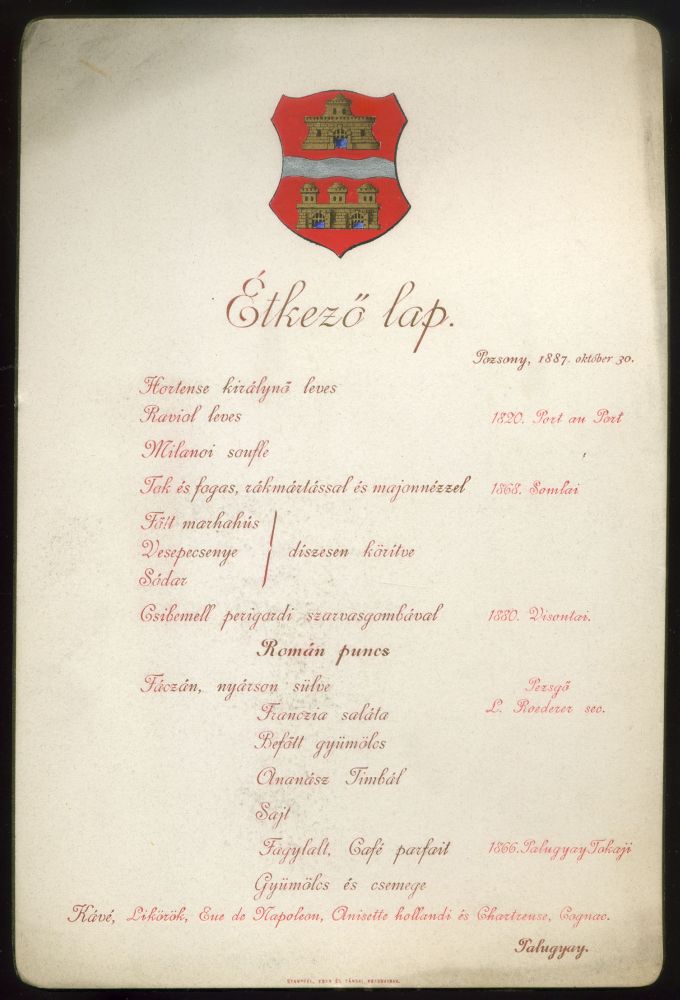
1880 Palugyay bottle
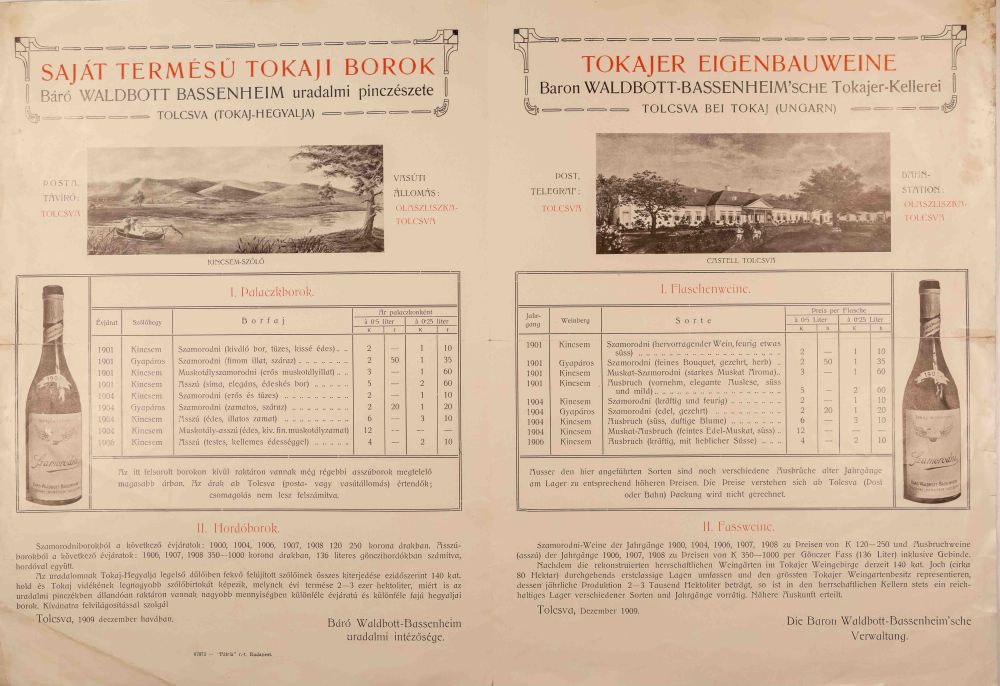
J. Palugyay und Söhne, a well-known wine trading company founded in 1863 was a well-known wine trading company from Bratislava, Slovakia. The company existed until 1939, Palais Palugyay, the company’s headquarter in Bratislava today belongs to the foreign ministry of Slovakia. Many Palugyay bottles exist, and the bottles and labels indicate that the company mostly sold wines under the Palugyay label. In 1899 the company is listed as “Purveyor to the Imperial and Royal Court” in Vienna (k.u.k. Hoflieferant).
The first three images show the oldest Palugyai bottle I know of, vintage 1880.
The Sárospatak Reformed College bottles and documents · click any image to enlarge
1880
1880 Dr. Beust Essencia
Similar to the Maillot bottles mentioned above all historic Dr. Beust bottles you will encounter were most probably imported to the UK and carry a Berry Brothers label (see article). There are only two original Dr. Beust bottles known, both vintage 1880, one of which is presented here. According to the hard-to-read label it is an Escencia vintage 1880. Georg (György) Maillot de la Treille married Margarete (Margit Beust) in 1881. The Beust winery operated in Tállya.
The 1876 Maillot Eszencia, the coat of arms and other Maillot glass marks · click any image to enlarge
1883
1883 Waldbott bottle
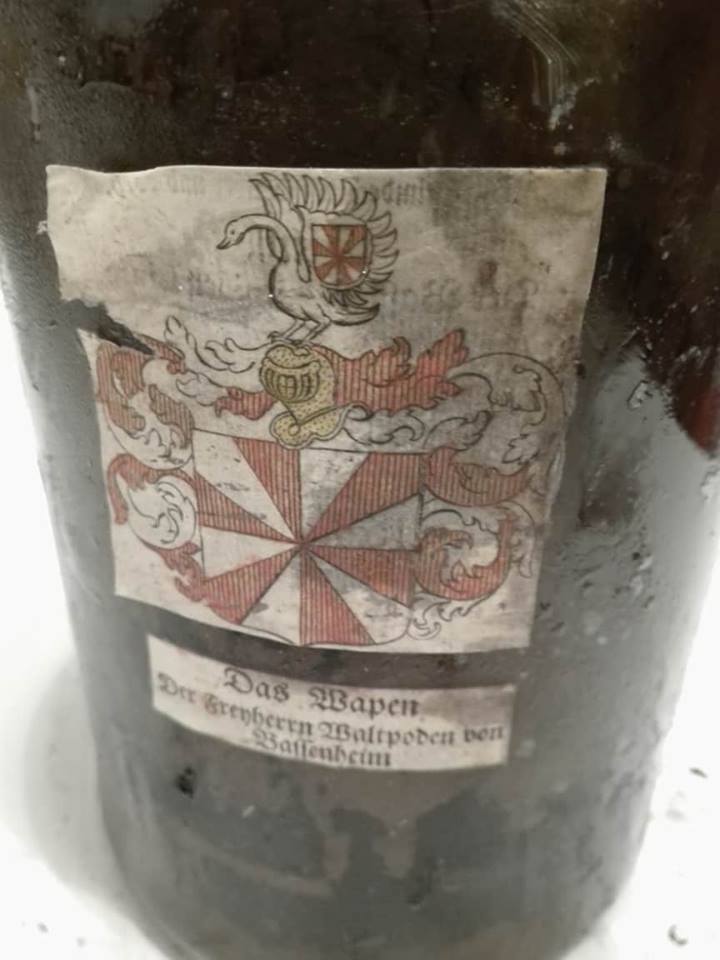
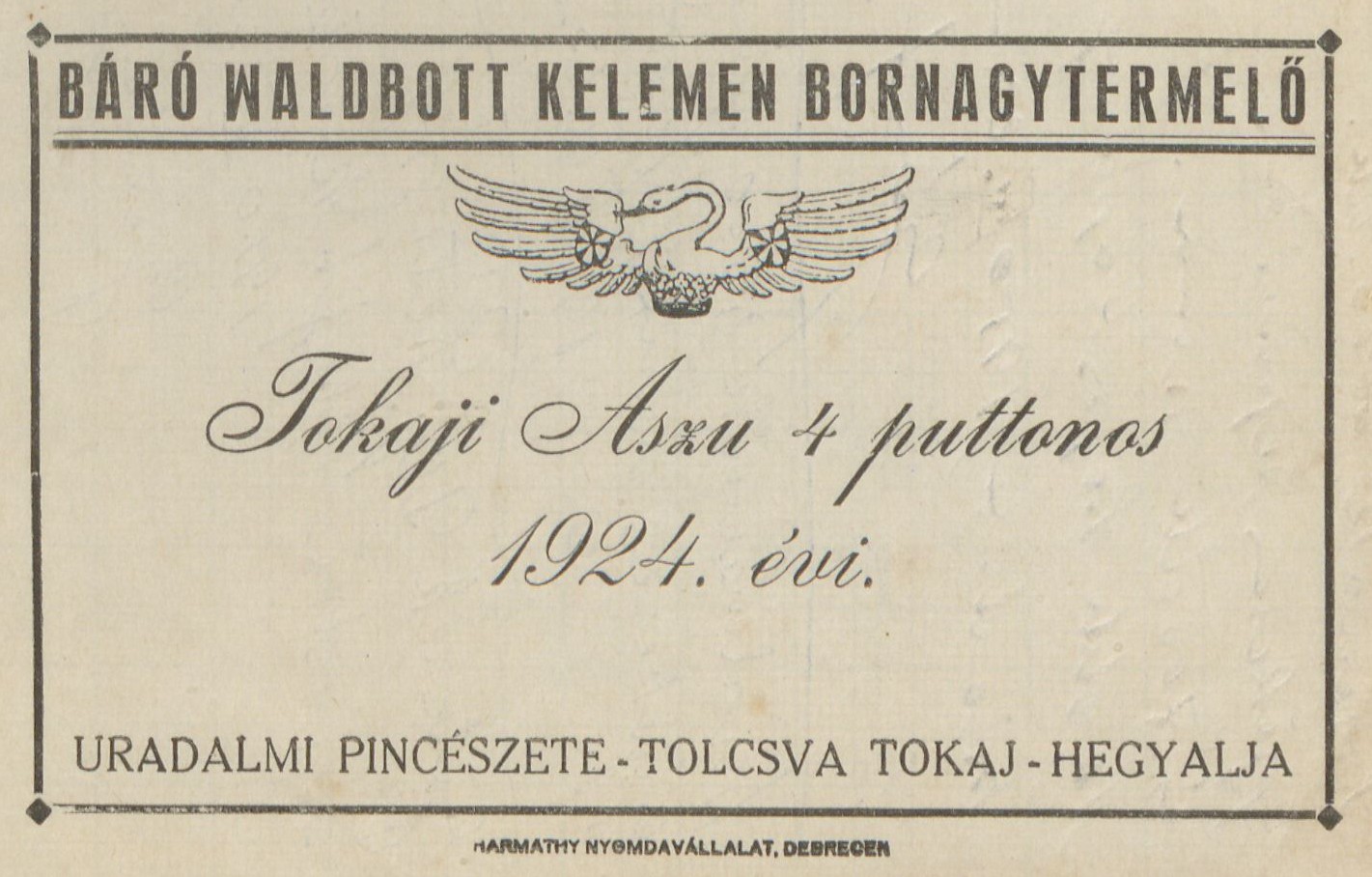
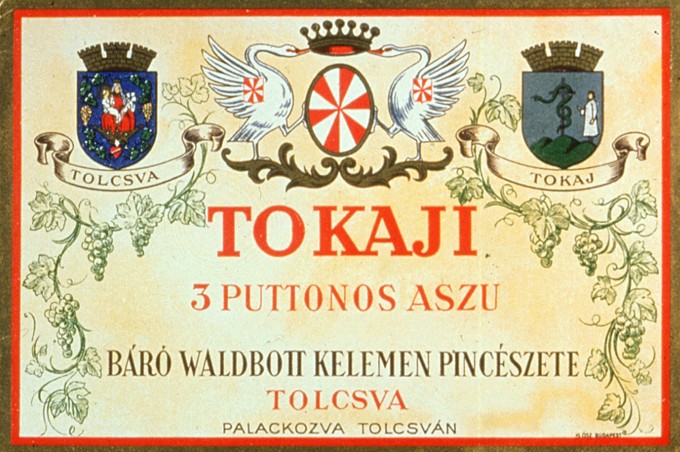
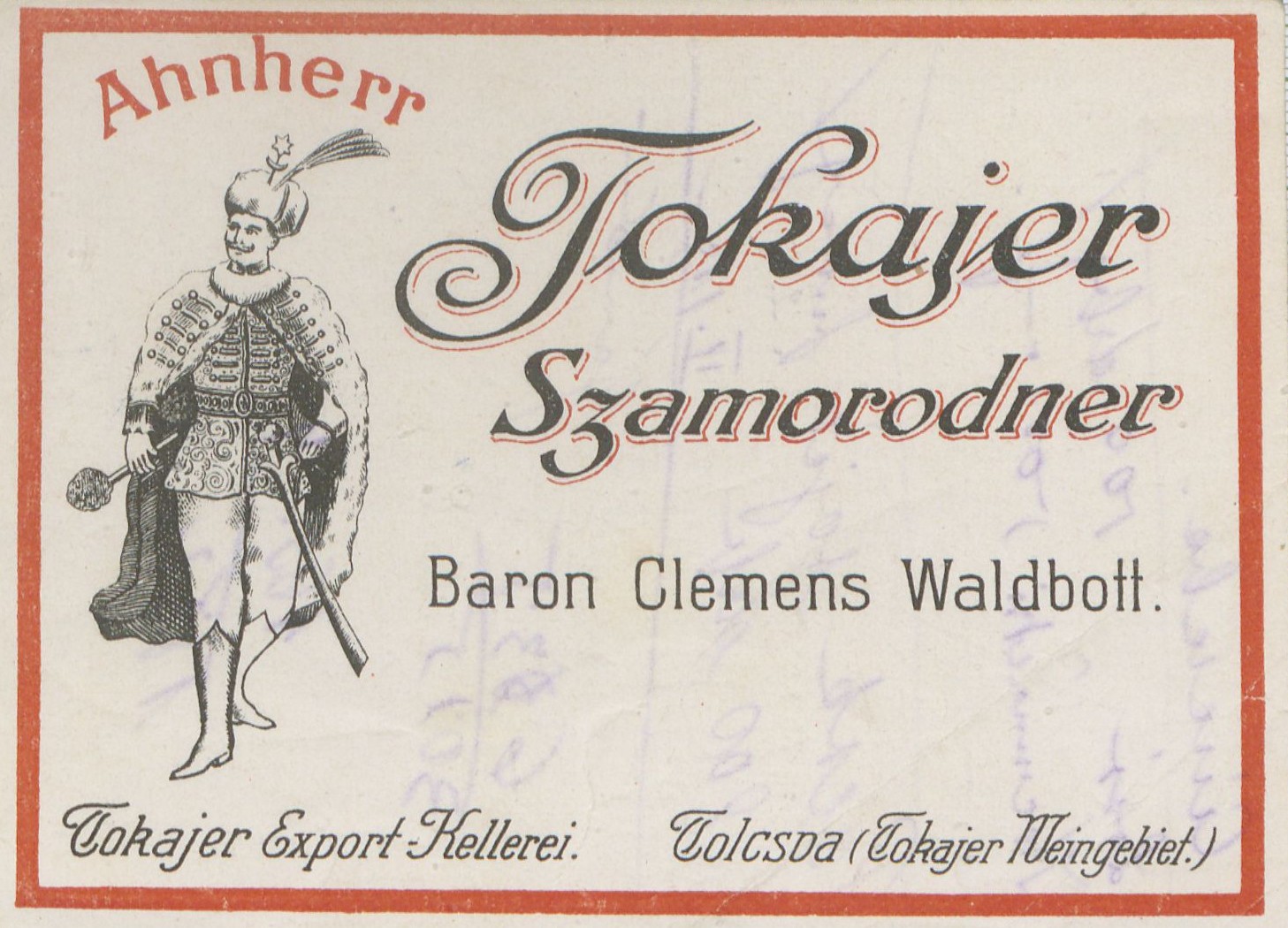
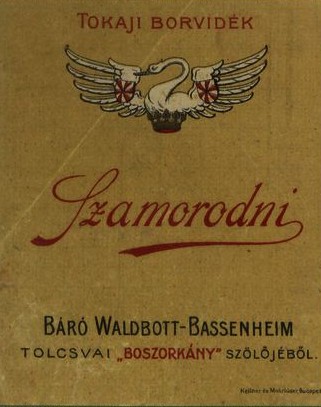
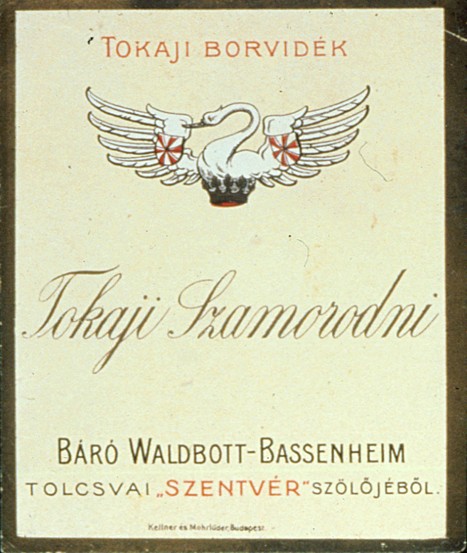
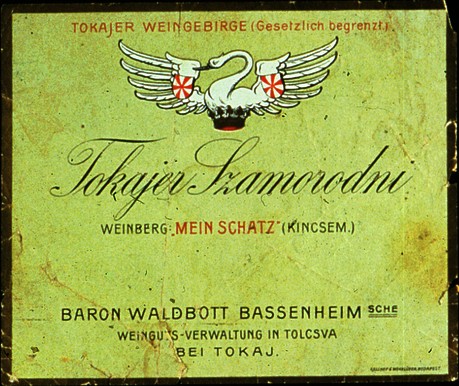
Despite the fact that Waldbott of German origin was one of the largest producers, bottles are so rare that even authenticating them is close to impossible. The images show an 1883 bottle, the oldest of the few existing Waldbott bottles I am aware of.
Interesting the german text below the label referring to “Waldpoden von Bassenheim”.
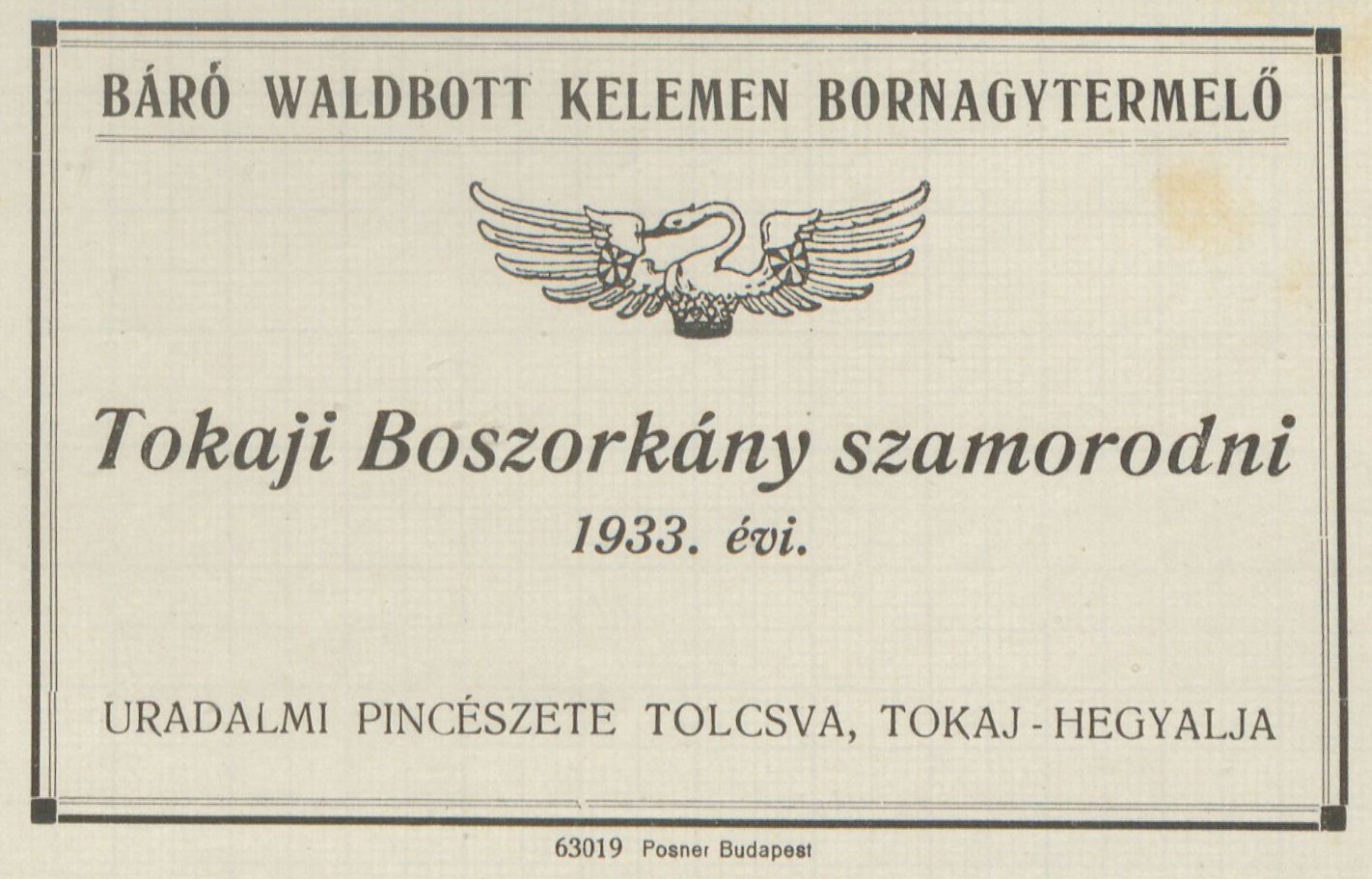
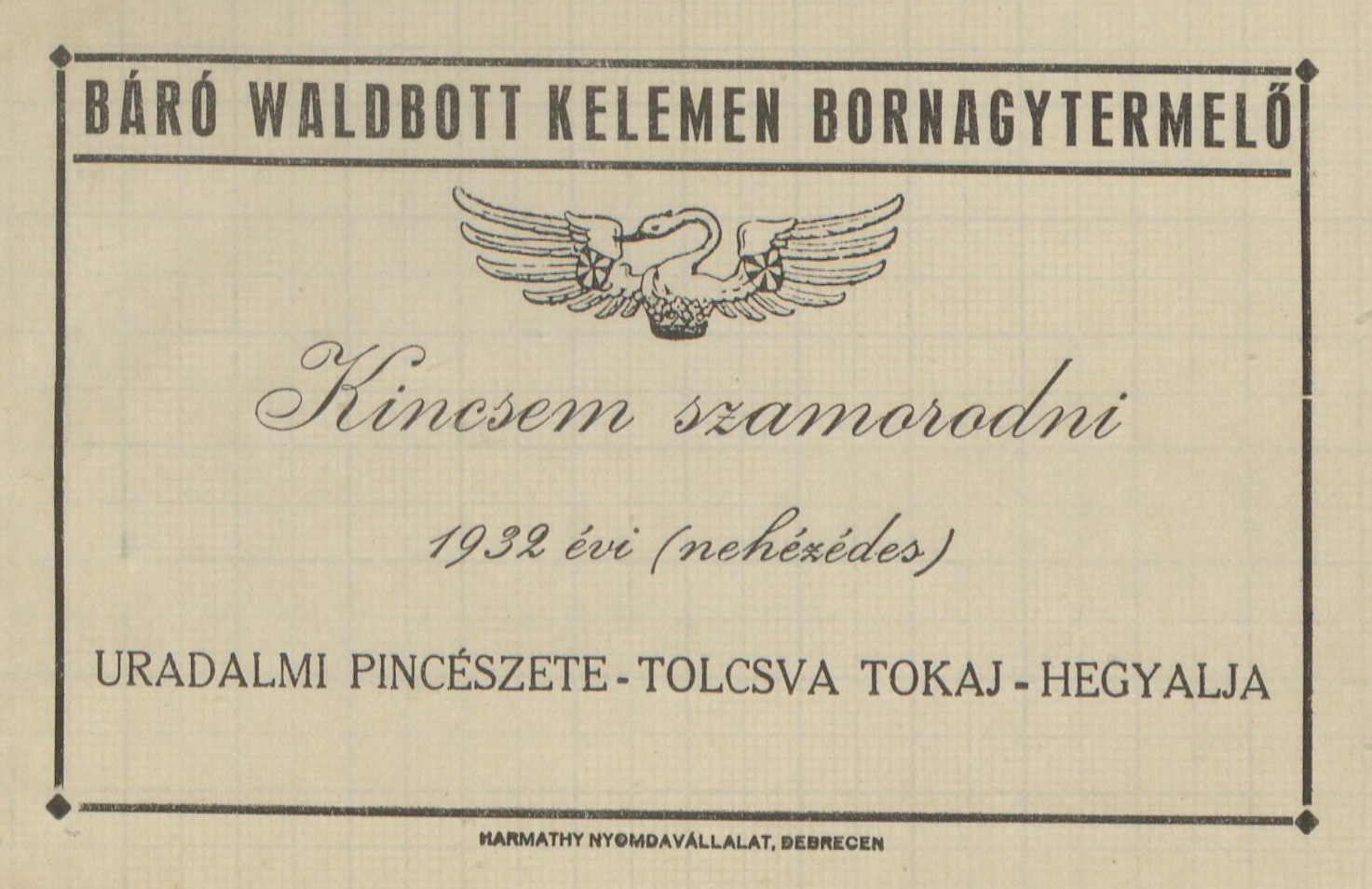
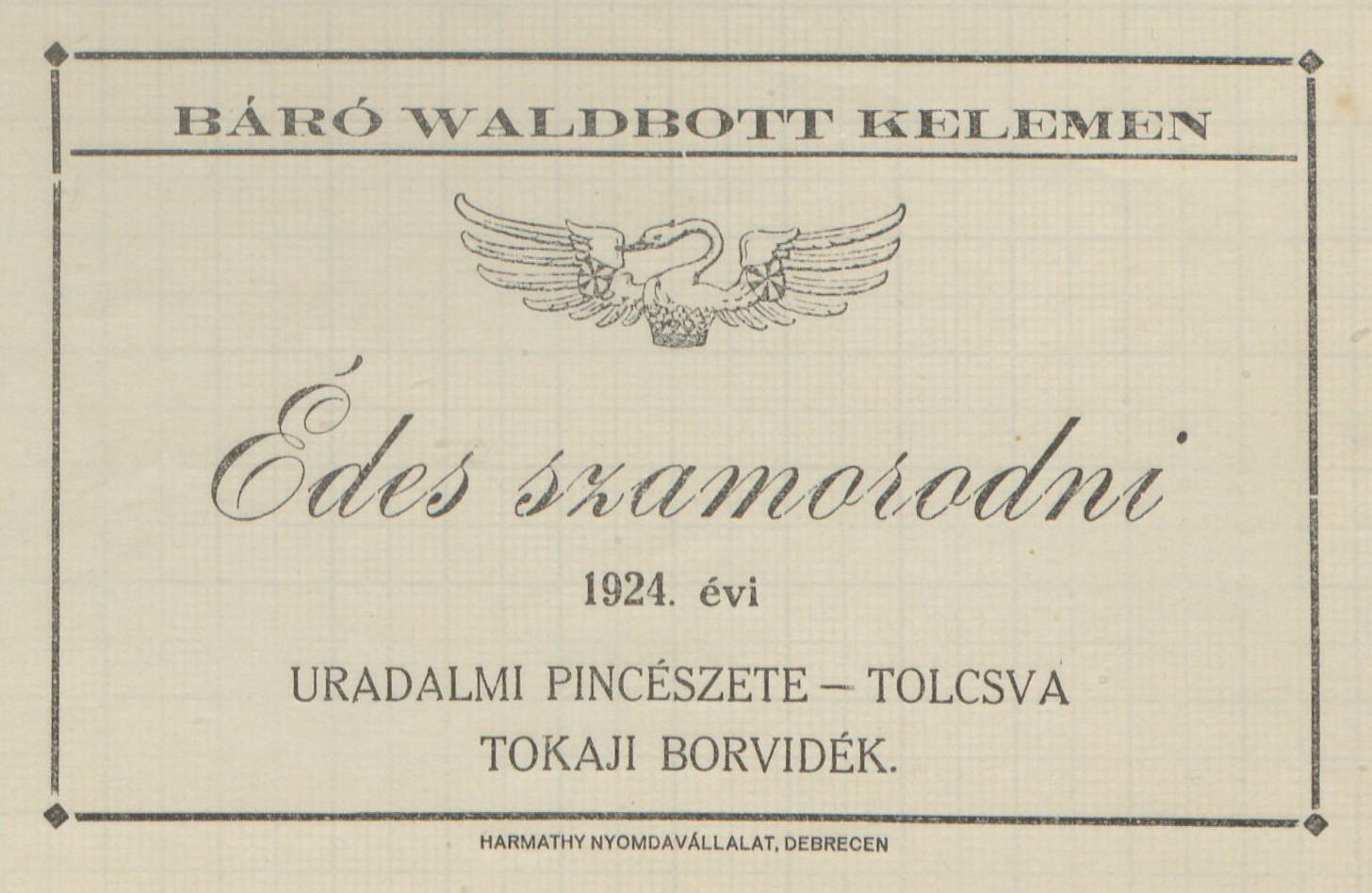
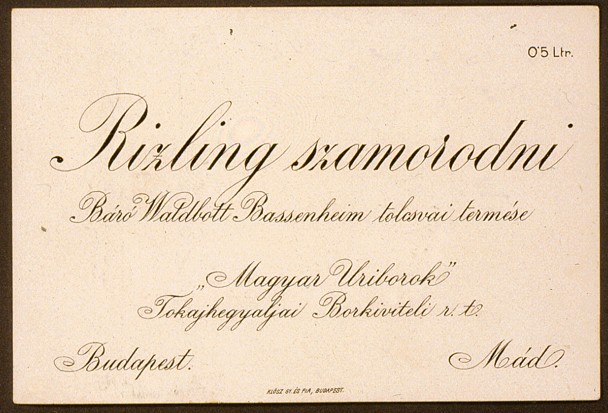
The large number of labels gives an impression on how substantial the production was including labes in German for export markets. As can bee seen Waldbott was a pioneer in producing and marketing vineyard selections (Kincsem, Szentvér, Boszorkány). Waldbott seems to be the only prodiuver to use the “nehézédes” (heavy sweet”) category.
The last label image refers to a real rarity: a szamorodni made from Riesling.
Bottles and labels from the collection · click any image to enlarge
1895
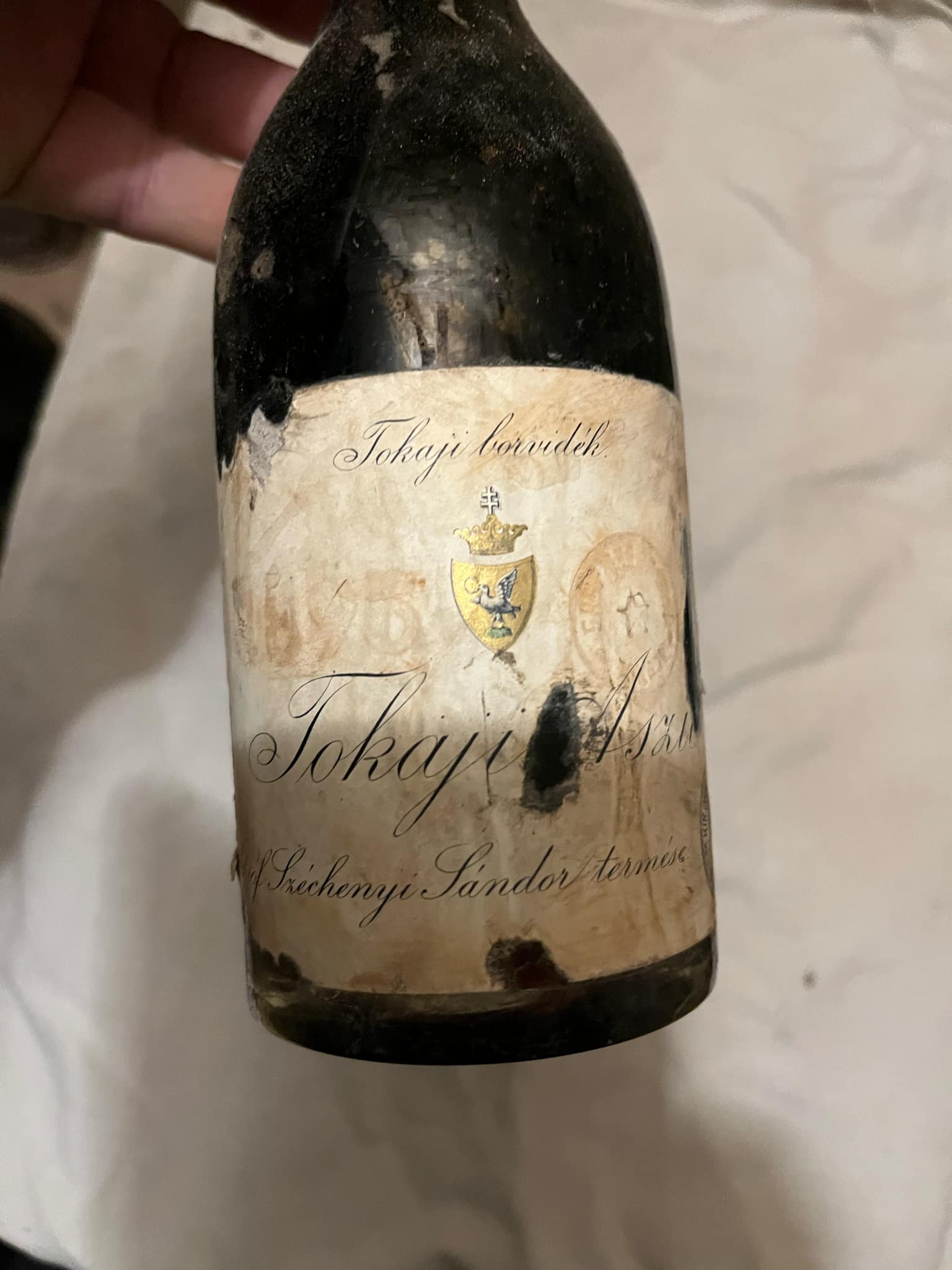
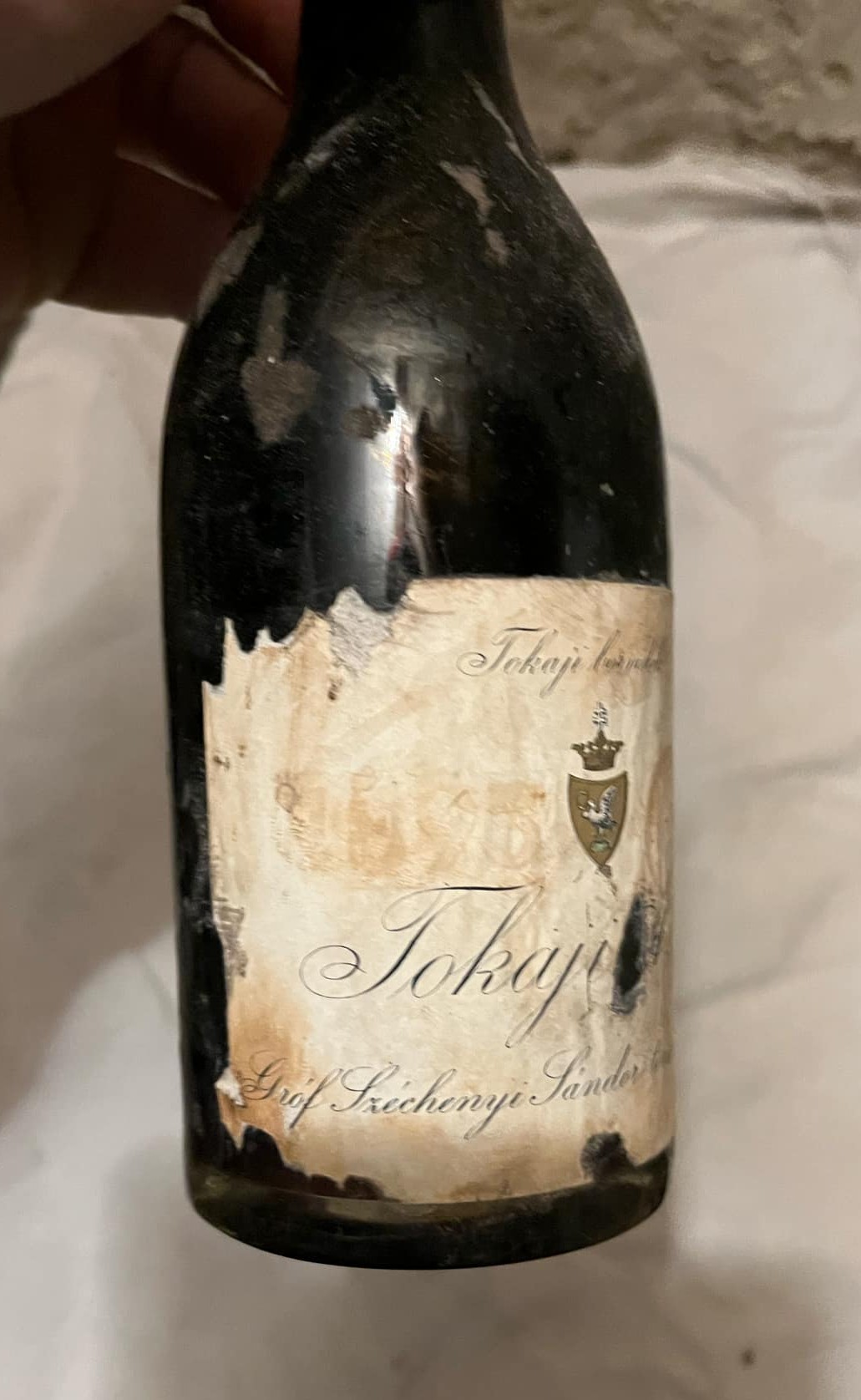
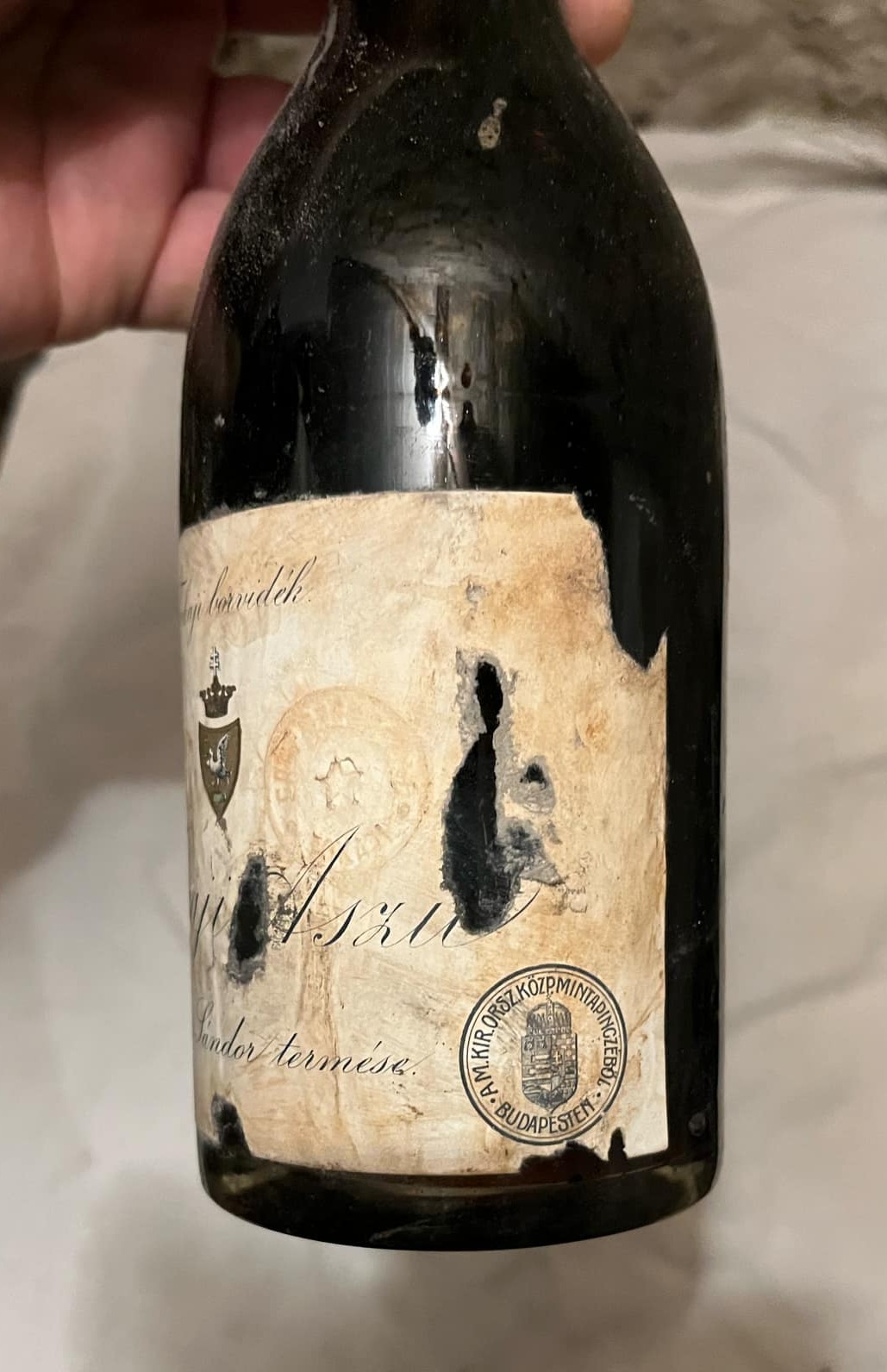
1895 Széchenyi Aszú
Széchenyi bottles are extremely rare. The label reads Tokaji borvidék above the family arms, Tokaji Aszu in engraved script, and Gróf Széchenyi Sándor termése — the growth of Count Sándor Széchenyi — with the round stamp of the Royal Hungarian State Model Cellar at Budapest at its foot.
The label.Aranyozott dombor nyomott címke — gilded and embossed, the arms raised and gold-leafed rather than printed flat.
The embossing.1895 / Gróf Széchenyi Tokaj, blind-stamped into the paper and still legible where the ink has gone.
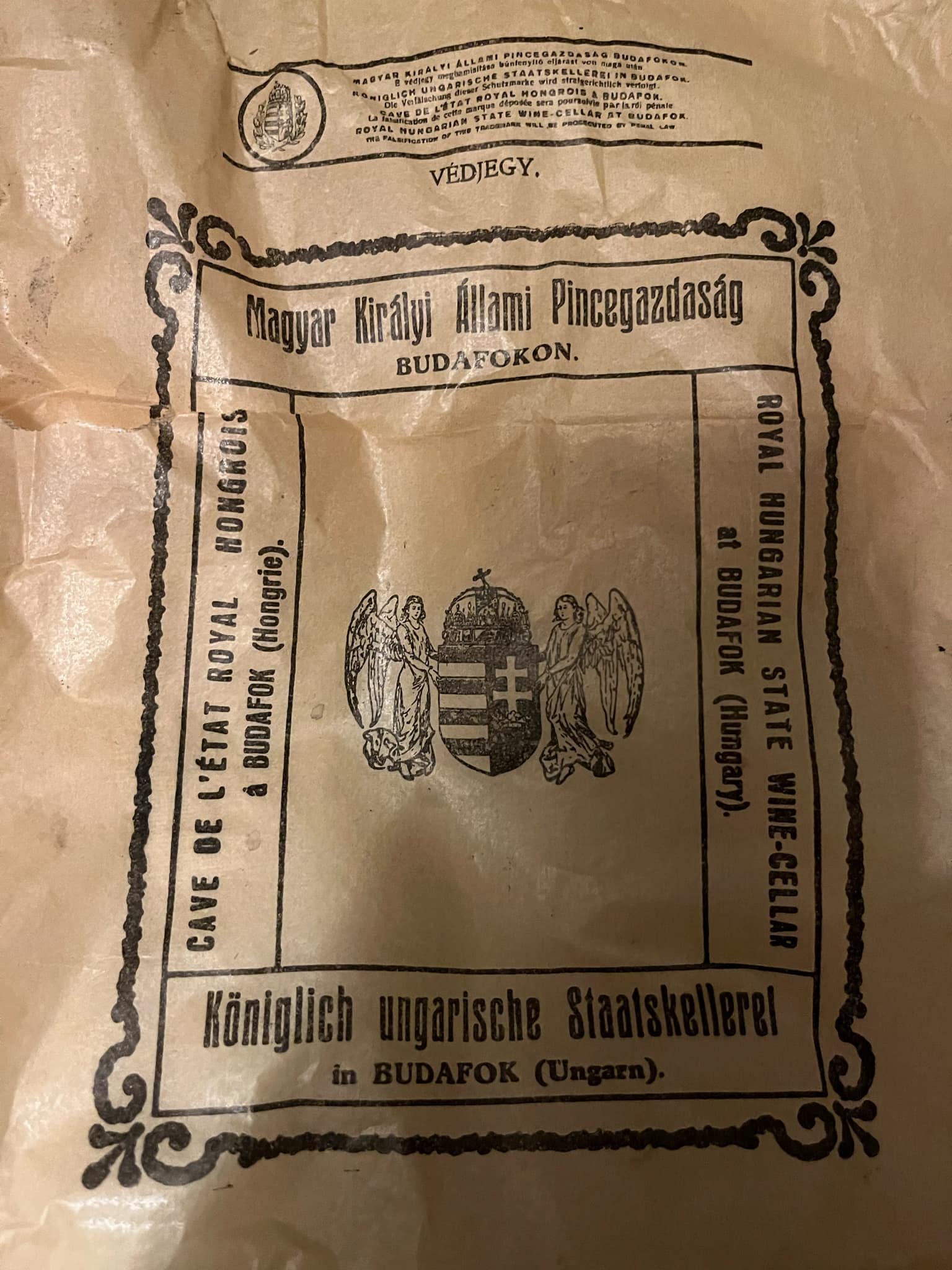
As issued. The bottles left the cellar wrapped in tissue — selyempapírba csomagolva, védőjegyes budafoki papírok, the trademarked Budafok papers of the state cellar — with the top of the original tin capsule on the neck carrying the cellar master’s inscription.
The glass. Mouth-blown hutaüveg, and all of them identical: one glasshouse order, one bottling.
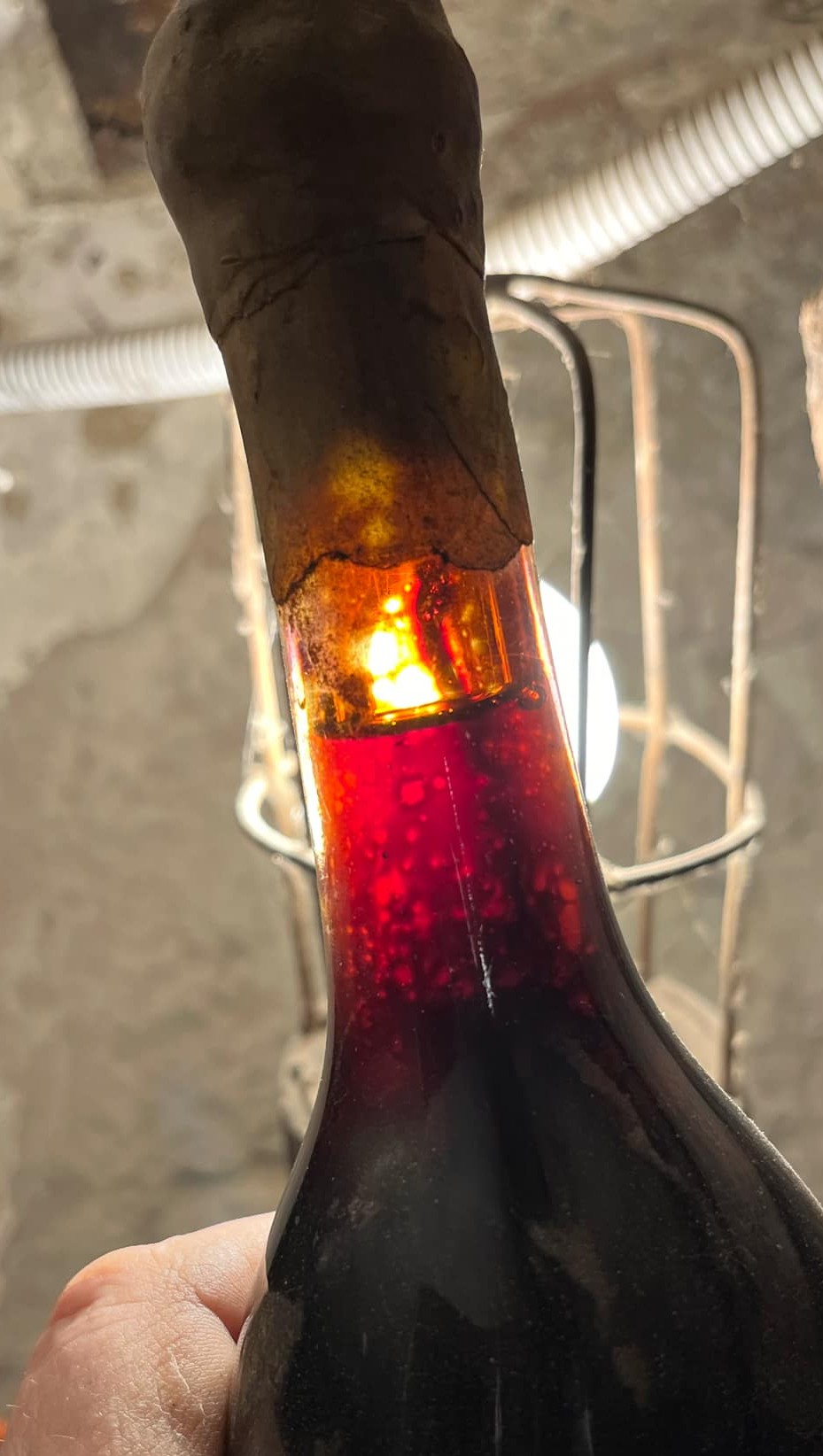
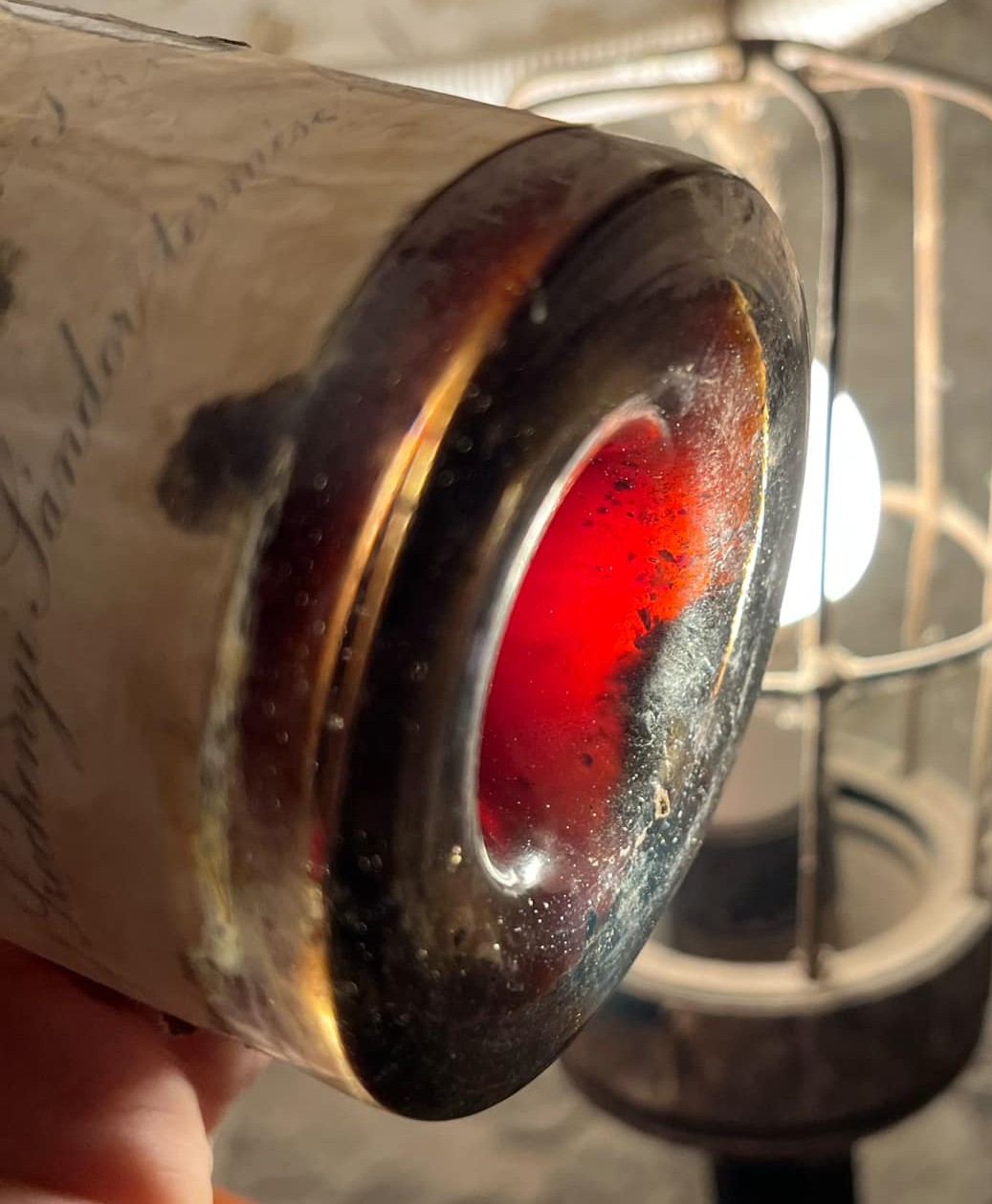
The gilded embossed label and its Budapest model-cellar stamp, the blind-stamped 1895, the trademarked Budafok tissue in which the bottles were wrapped, and the wine held to the light at neck and base · click any image to enlarge
1896
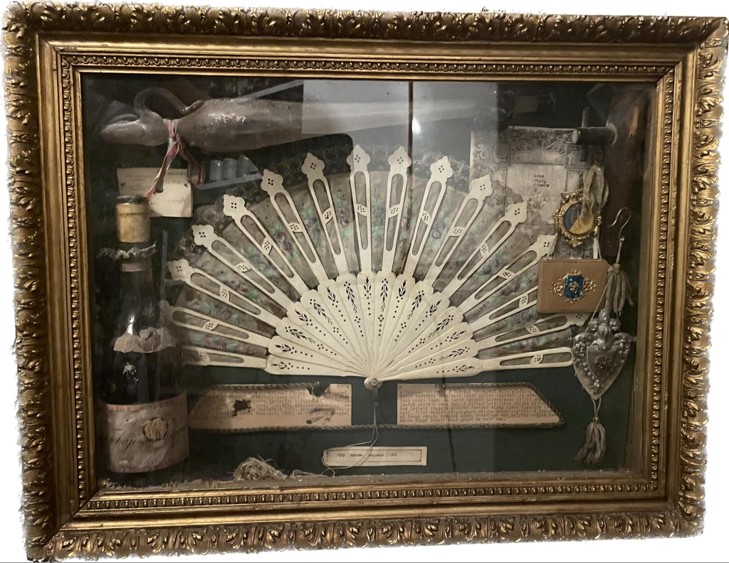
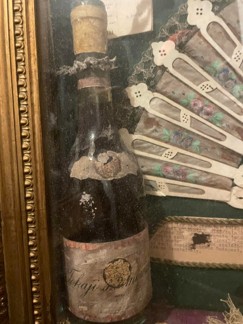
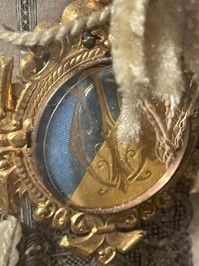
1896 Tokaji bottle as part of a collage
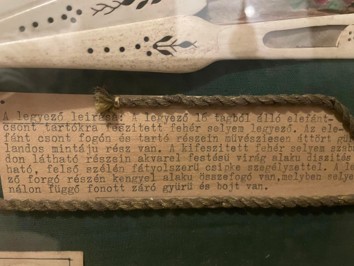
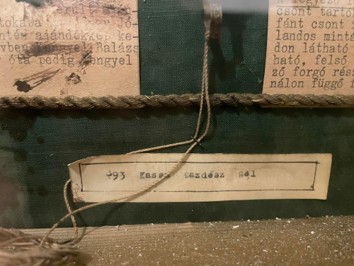
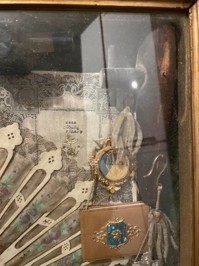
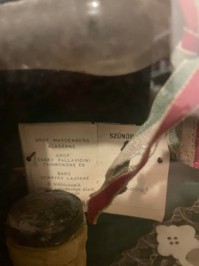
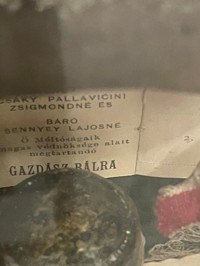
This collage is a souvenir of a social event, a ball (Gazdász Bál) organized in 1983 in in Košice by and for Hungarian nobility. Košice is a city that belonged to Hungary (Kassa) at the time, and today is part of Slovakia. Patroness was countess Hardenberg Aladárné and among the guests were countess Pallavicini Zsigmondné, baroness Sennyei Lajosné and princess Clotilde of Saxe-Coburg and Gotha (Koháry branch). The collage was presumably created by or for Clotilde as it contains references to Koháry. She married Archduke Joseph Karl, Palatine of Hungary and was buried in the crypt of the Royal Palais in Budapest.
The Tokaji bottle:
a blown bottle of Tokaji Szamorodni of vintage 1896 with white tin cap, bearing a poorly recognizable coat of arms (lion?)
below the tin cap a paper banderole with the vintage year 1896
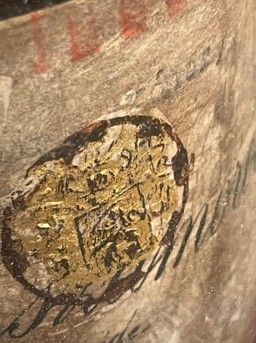
On the neck of the bottle a red relief seal with a golden lion and sword (Kohary coat of arms)
On the large label, the inscription TOKAJI SZAMORODNI, above it the gilded Koháry coat of arms in a brown circle
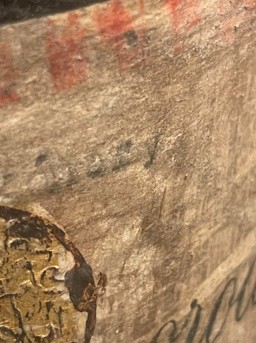
Also on the label, the inscriptions Cóburg and Kóháry, to the left of “Coburg” possibly ‘SZ’ for “Szász.”
Other elements of the collage:
In the center a hand painted silk fan, below it a description of the fan
on the top of thr frame a wine lifter and a barrel tap
A card with two dance formations, one marked with a large golden “C”
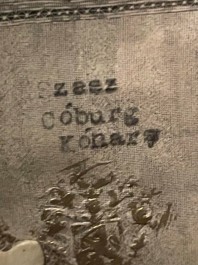
A lace doily with the inscription “Szász Cóburg Kóháry” and the Koháry coat of arms in relief print
A paper strip with “...893 Kassa Gazdász Bál”
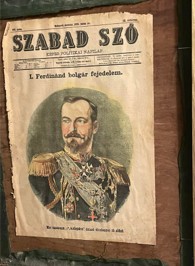
On the back side of the wooden frame is the front page of a newspaper with a picture of Tsar Ferdinand I. of Bulgaria, Clotildes younger brother.
Uranium glass apothecary bottles of 1870 Essence · click any image to enlarge
1897
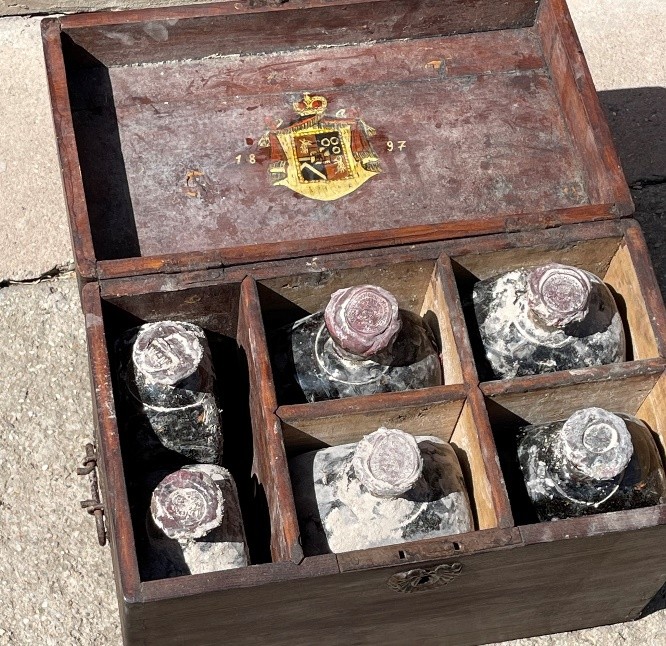
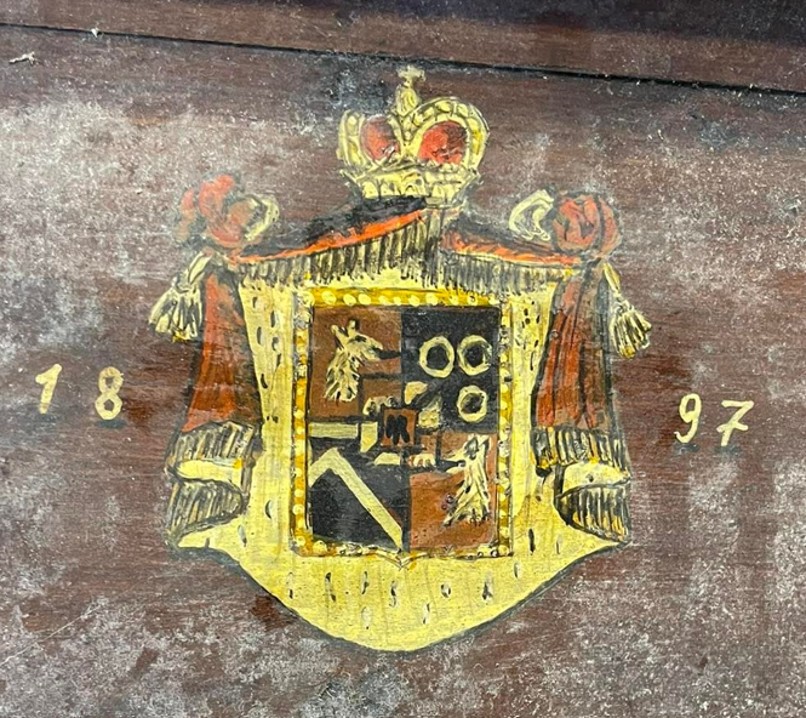
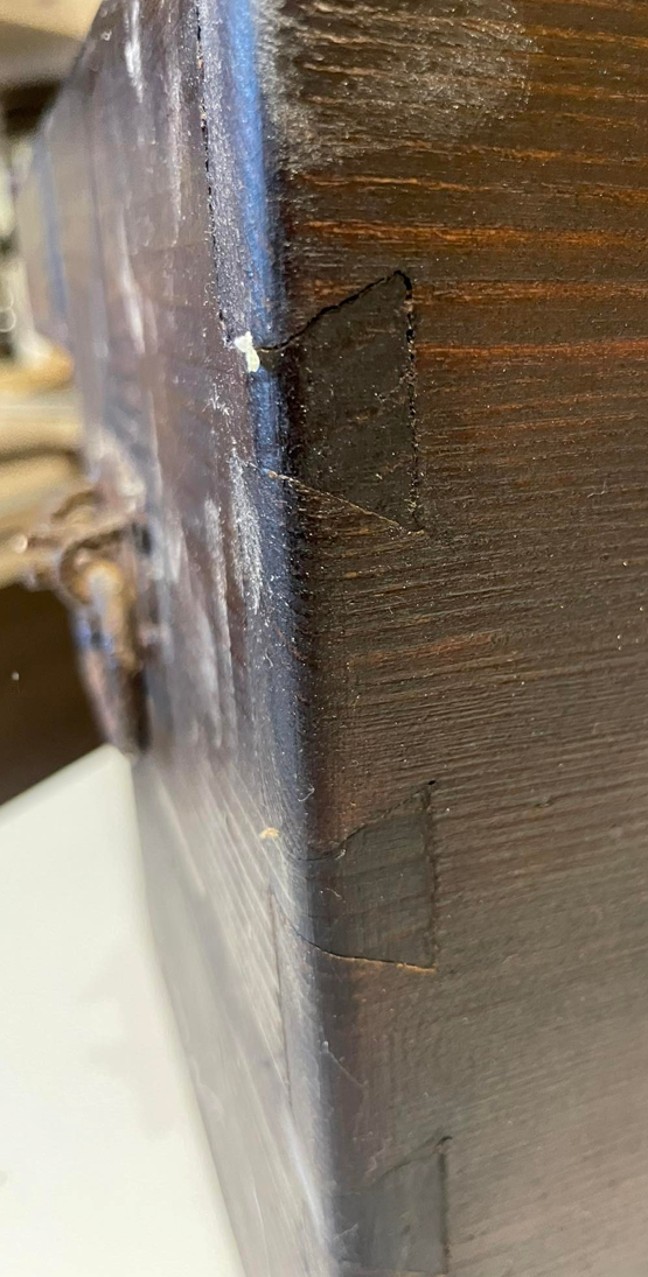
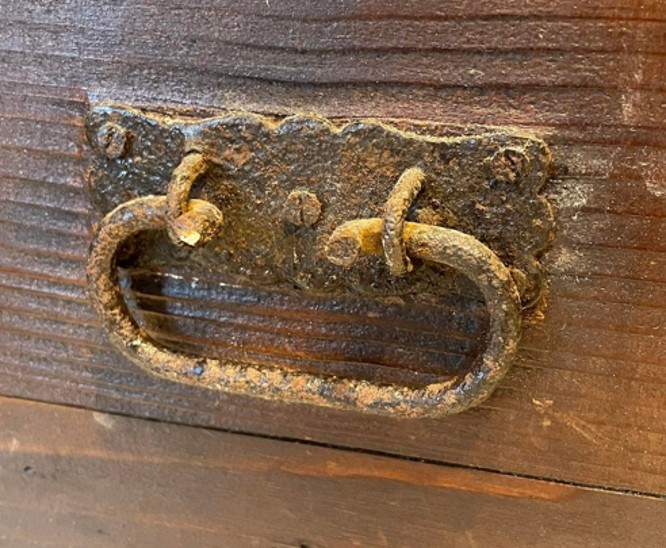
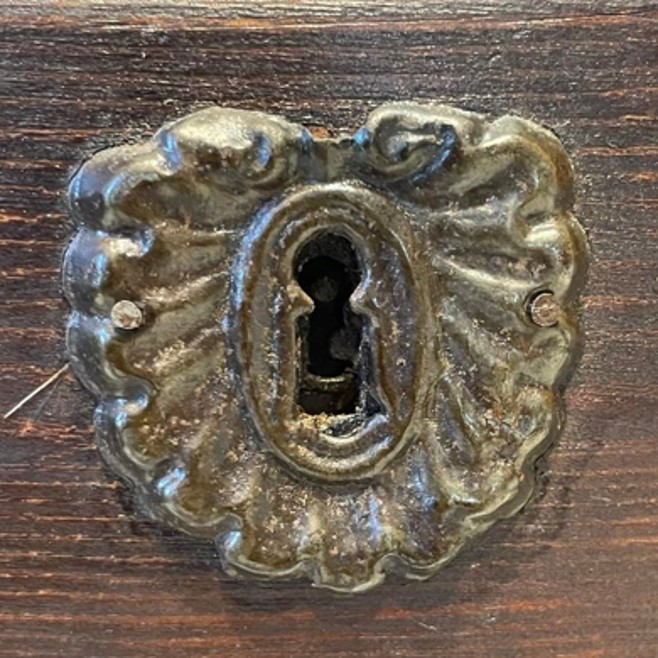
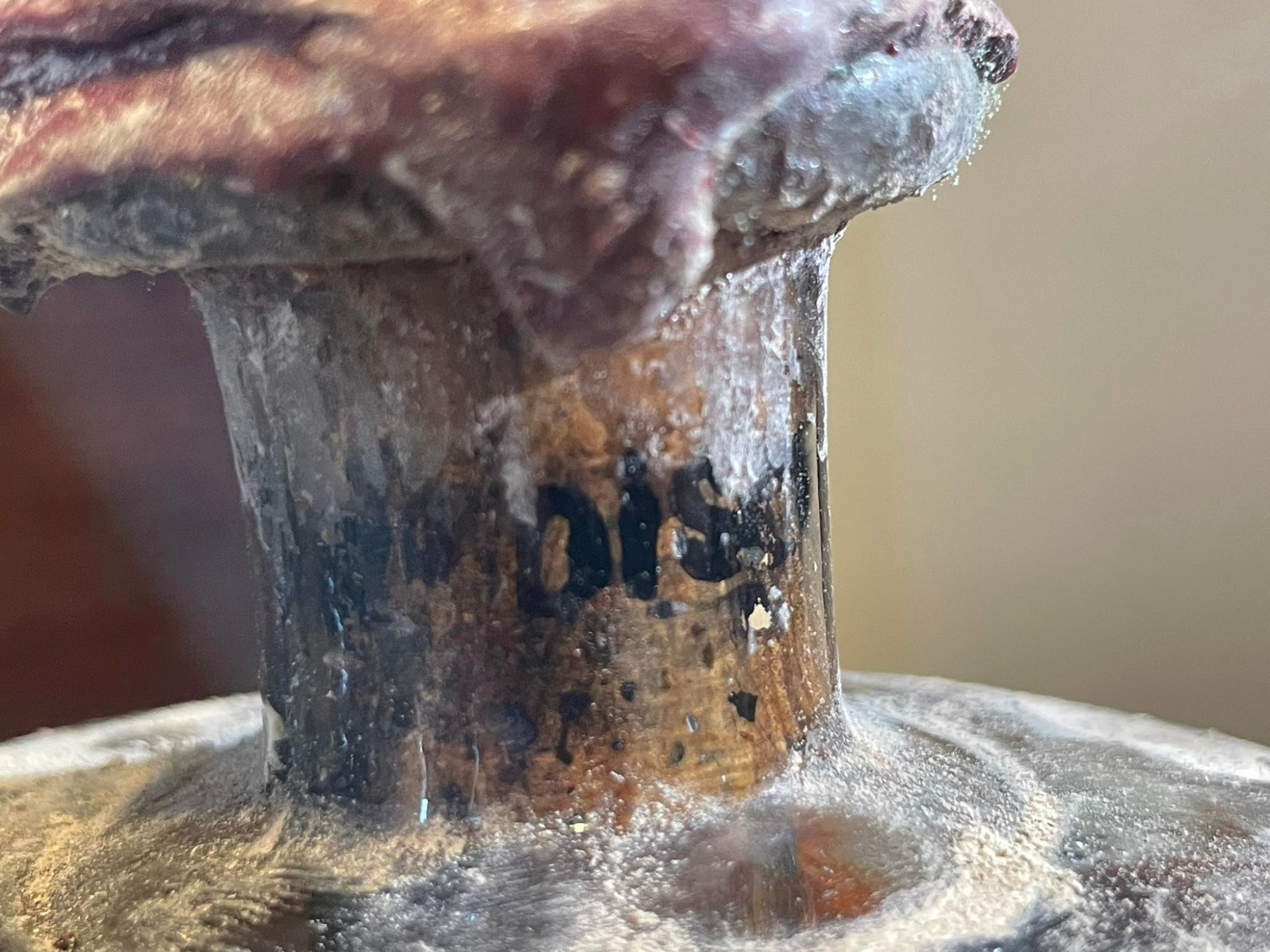
1897 wooden Windischgraetz box with compartments for bottles (pincetok)
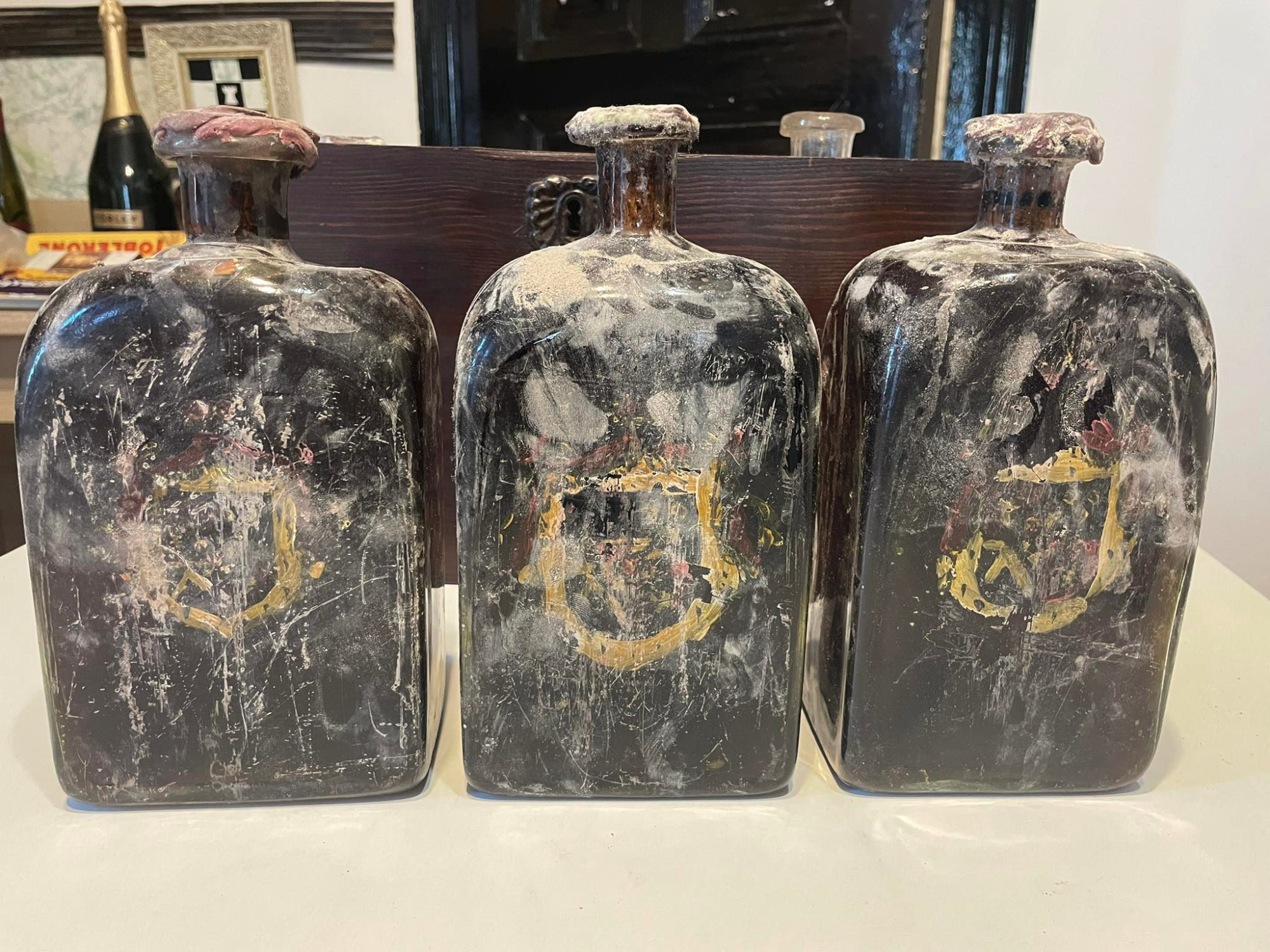
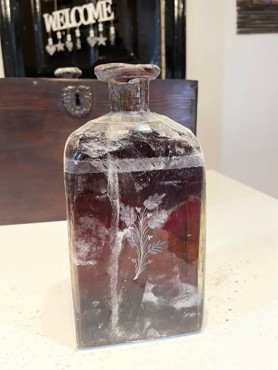
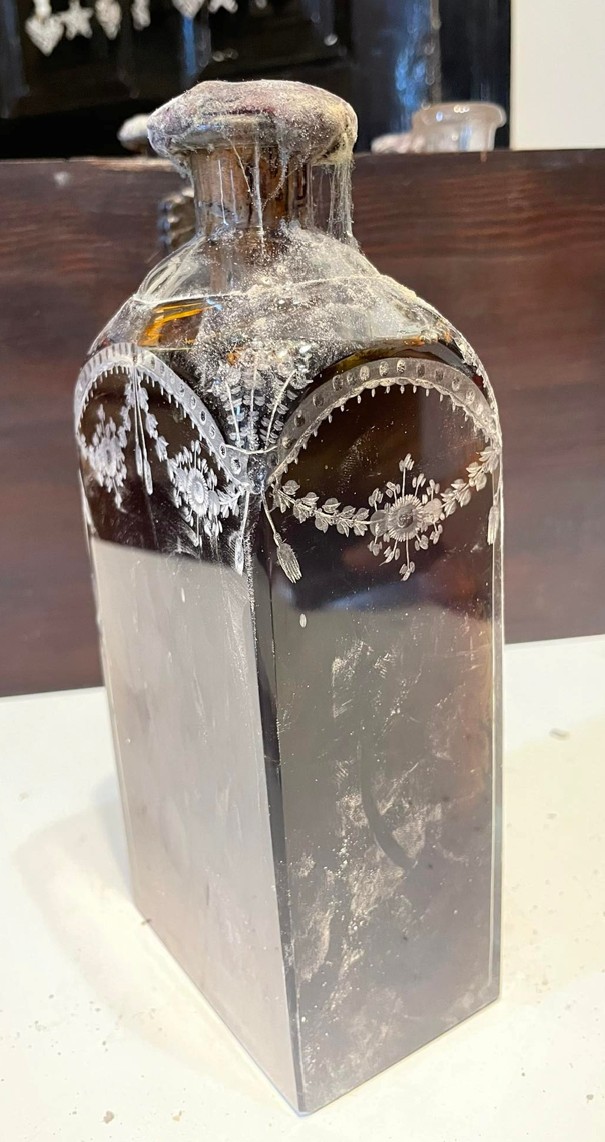
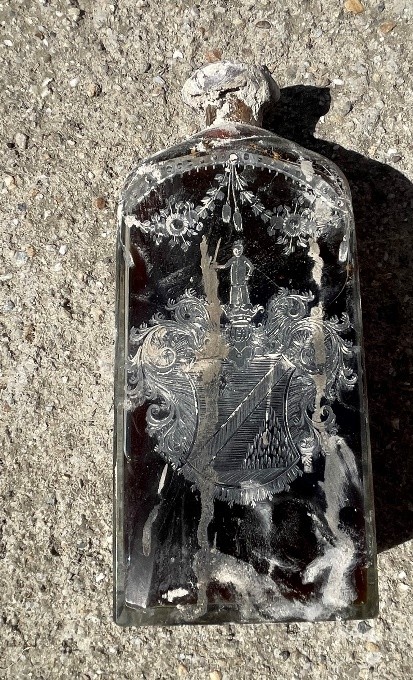
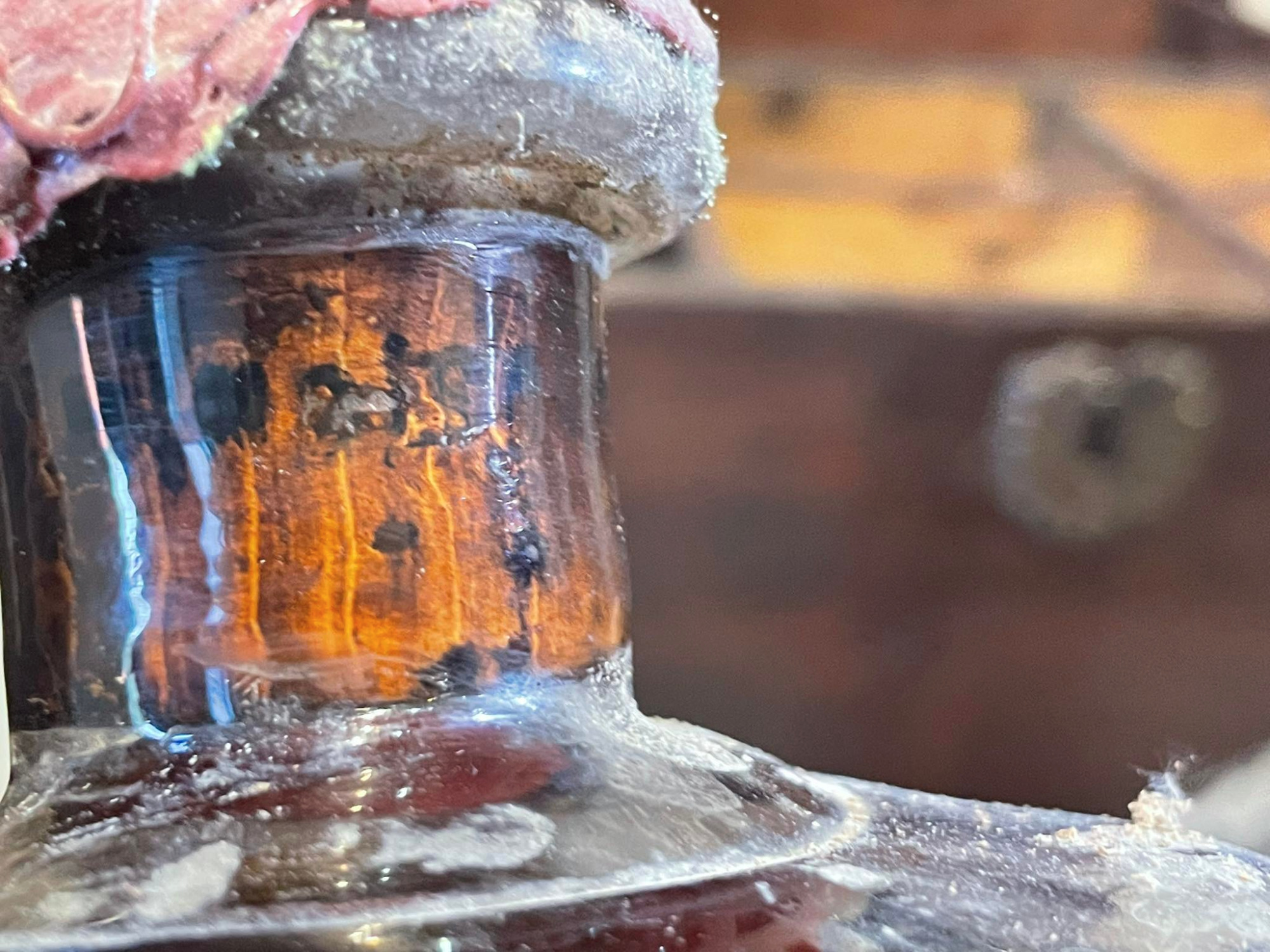
Those wooden boxes are extremely rare objects, especially with full bottles. Vintage of the wines is unknown, no documents. The bottles are painted and/or engraved. Through the glass the letters “WIN” and “DIS” are visible on the cork, suggesting the cork ewas also branded by Windischgraetz.
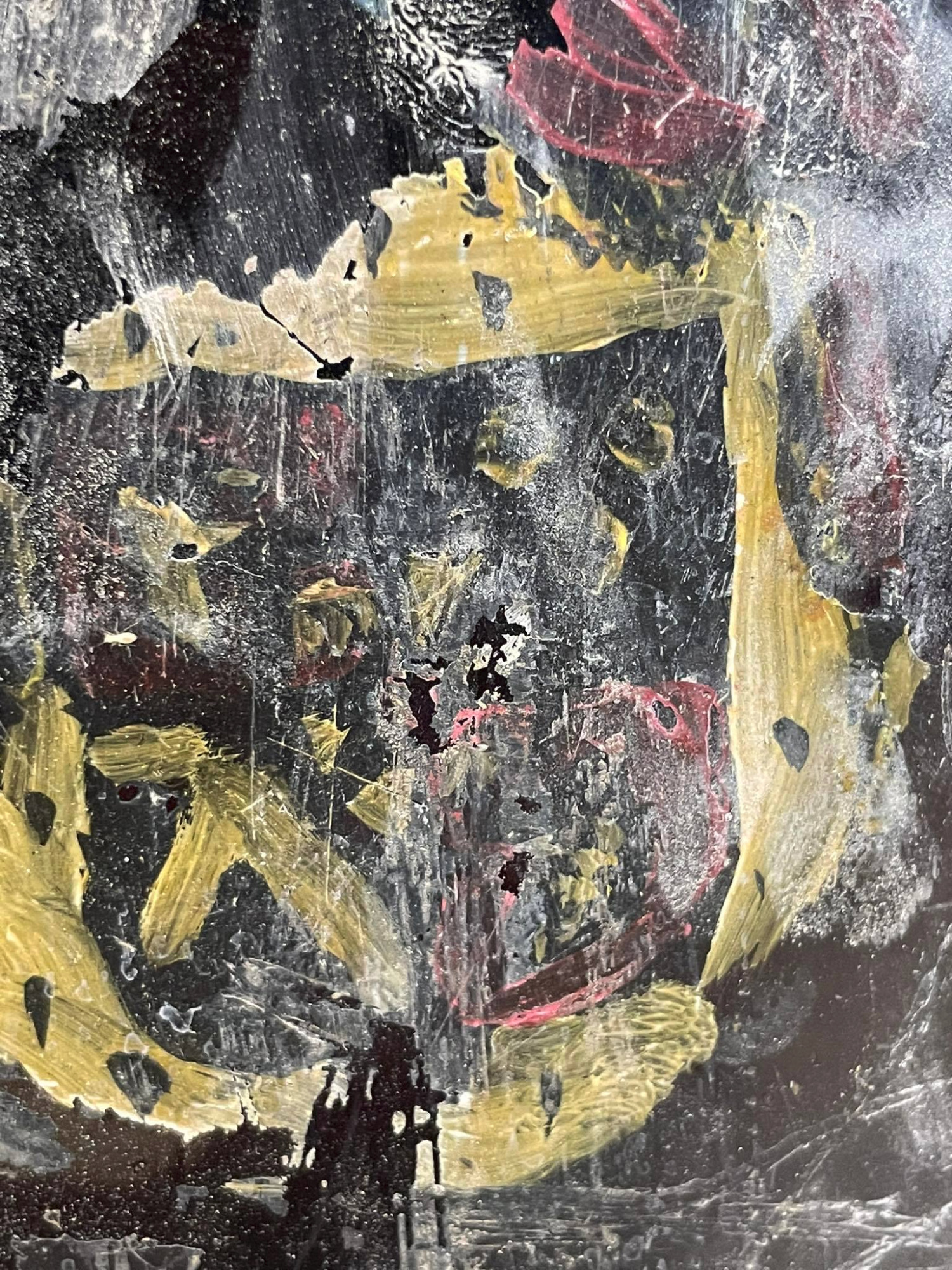
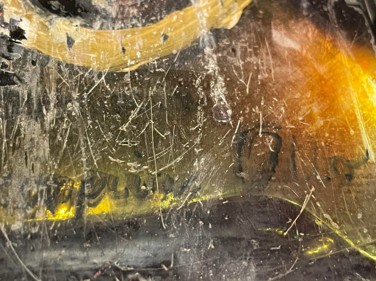
When turned upside down three of the bottles show engravings that are only legible when the bottle is empty. See the last 4 images in the gallery below. The engravings read:
empress Zita
empress Zita essencia
crown prince Otto essencia
More information about those wooden (pincetok) boxes can be found in Hungarian here.
The 1896 collage and its elements · click any image to enlarge
1899 · 1910
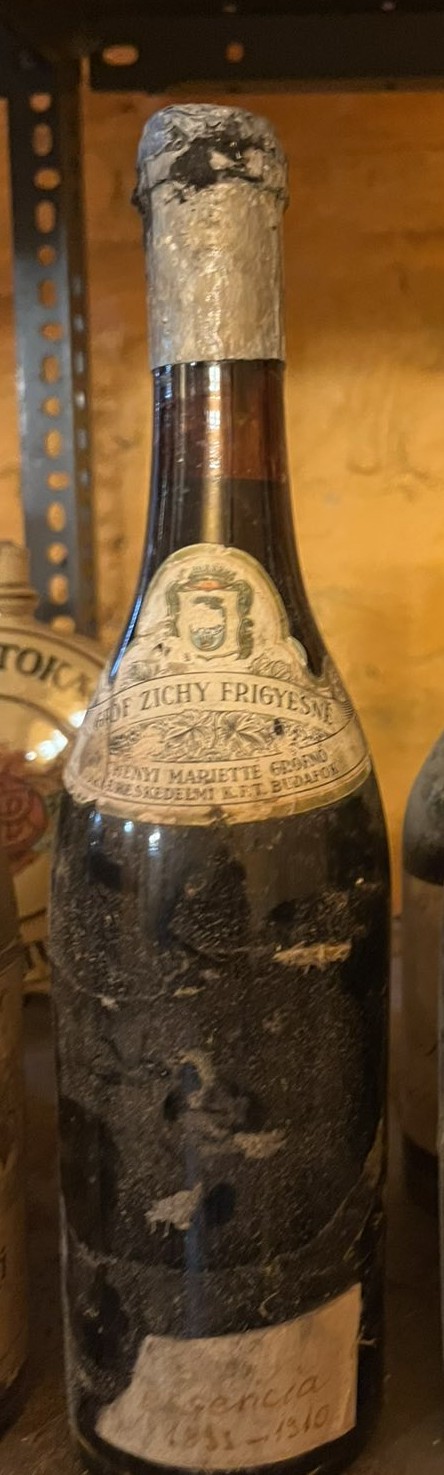
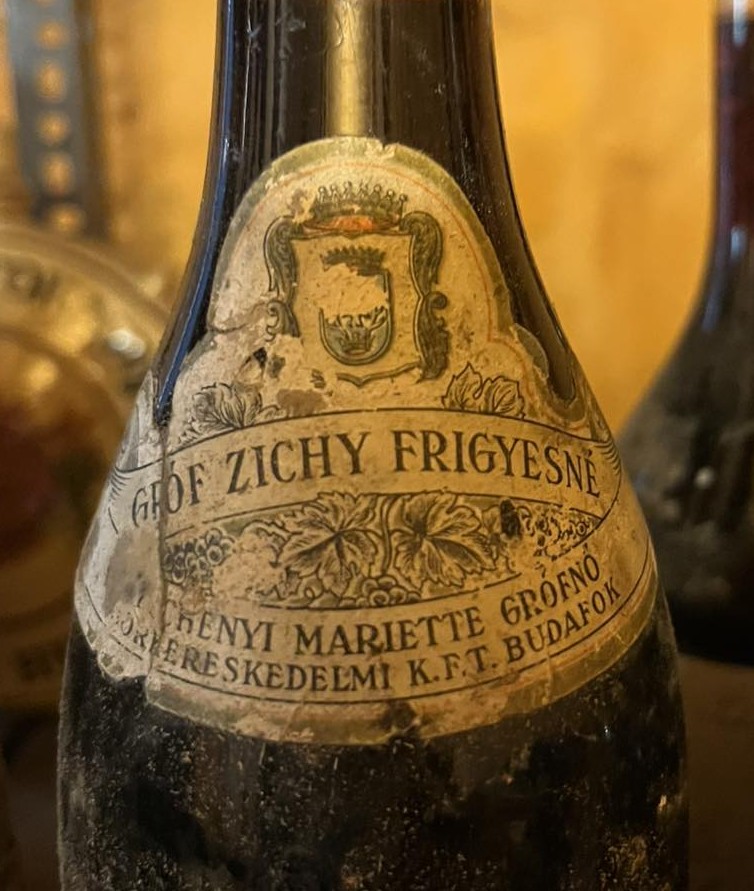
1899–1910 Zichy Essencia
The only historical Zichy bottle known. The Zichy counts were substantial Tokaj proprietors whose wines were sold across Europe and in the United States, but no other bottle from the family cellar has surfaced.
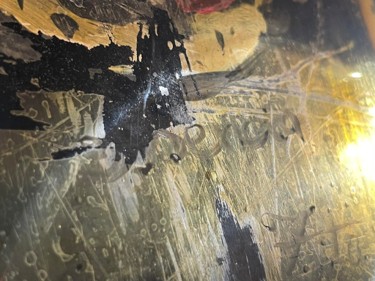
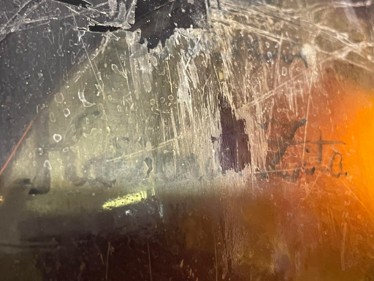
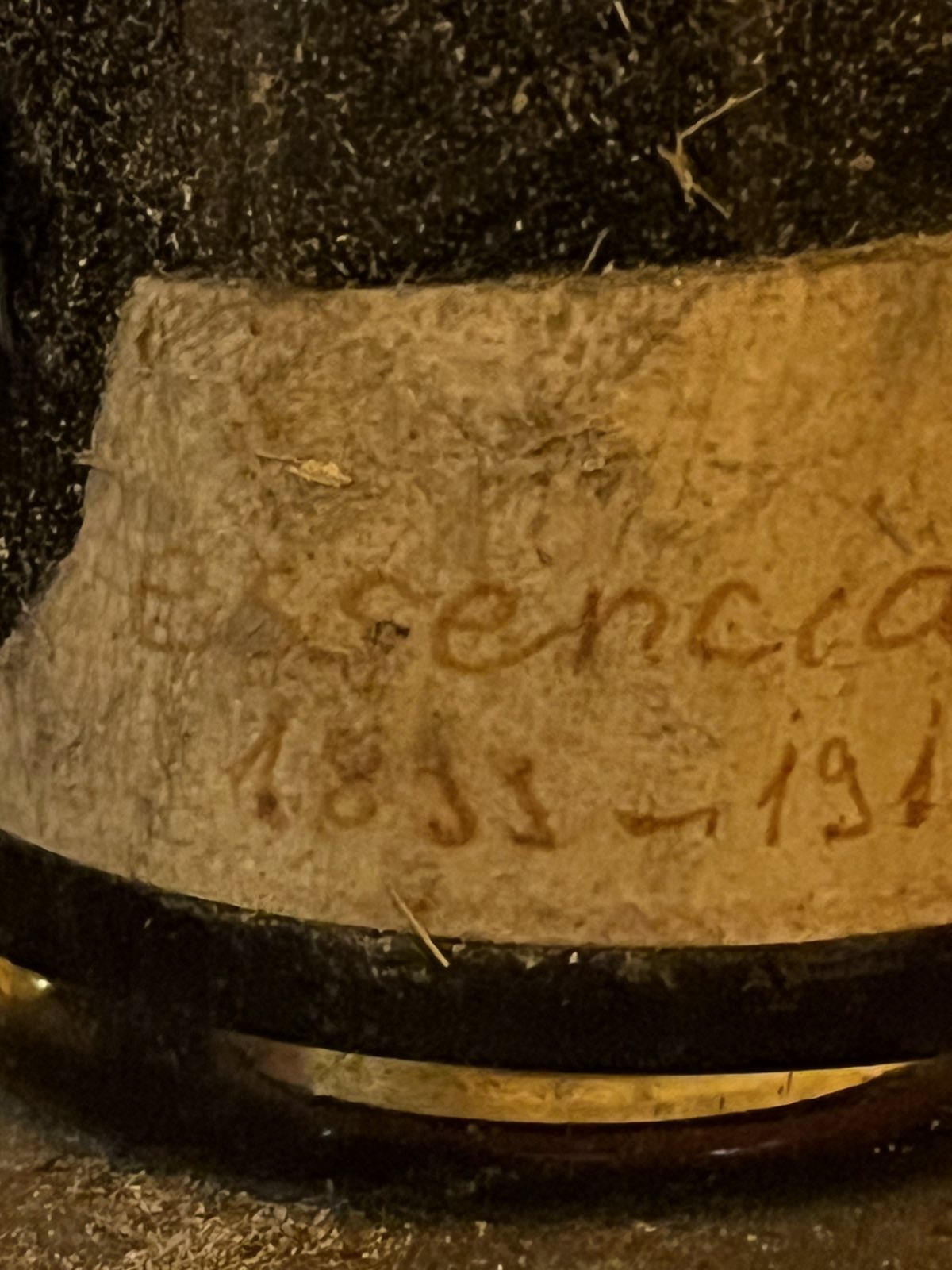
Two labels, two hands. The printed shoulder label reads Gróf Zichy Frigyesné, Széchenyi Mariette grófnő — the countess Mariette Széchenyi, wife of Count Frigyes Zichy — with Borkereskedelmi K.F.T. Budafok beneath it. The paper band at the base is handwritten: Essencia, and a span of years.
Several years in one bottle. The handwritten band gives a range rather than a vintage, so the bottle apparently holds essence drawn from more than one year — the normal practice with essence, which was accumulated slowly and topped up rather than bottled by harvest.
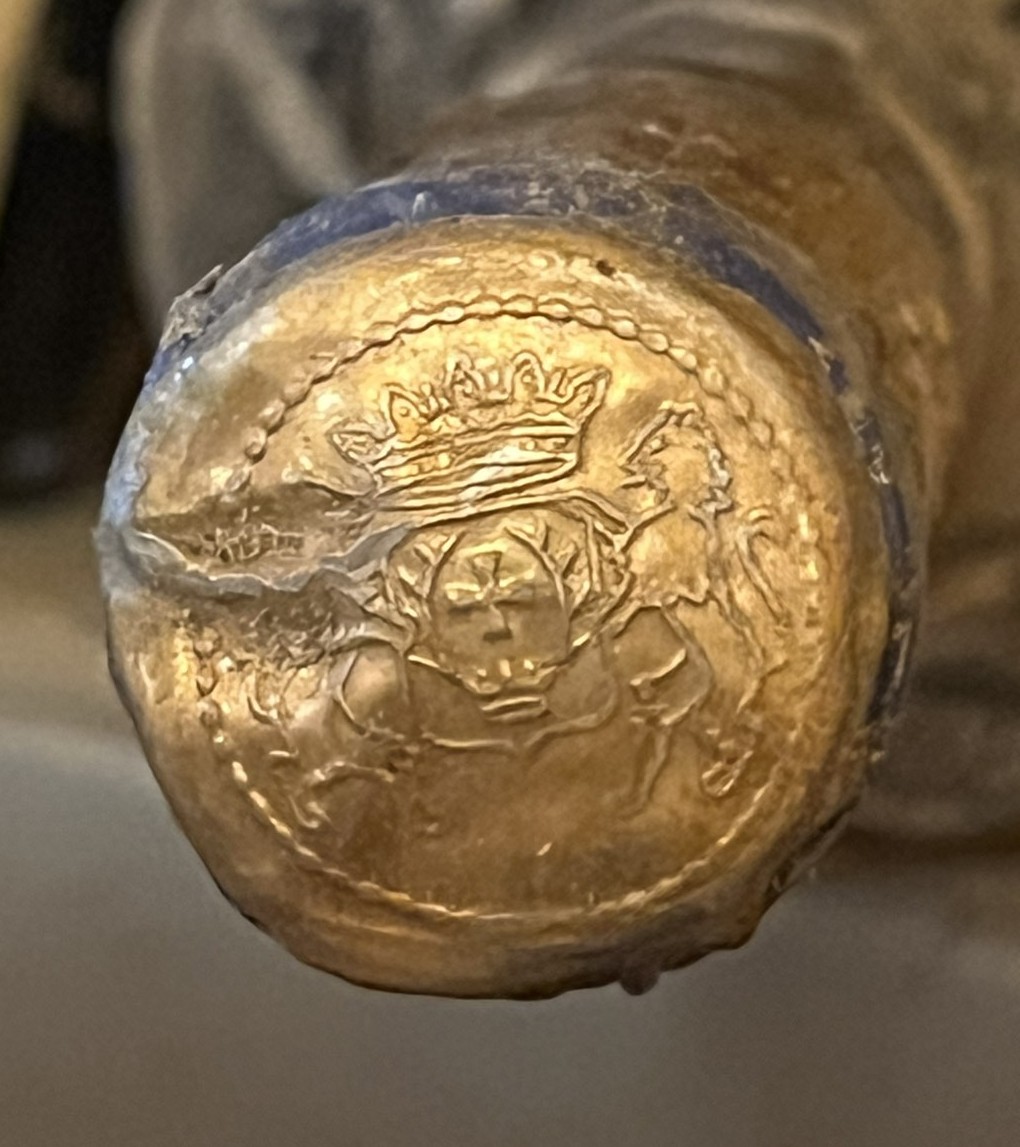
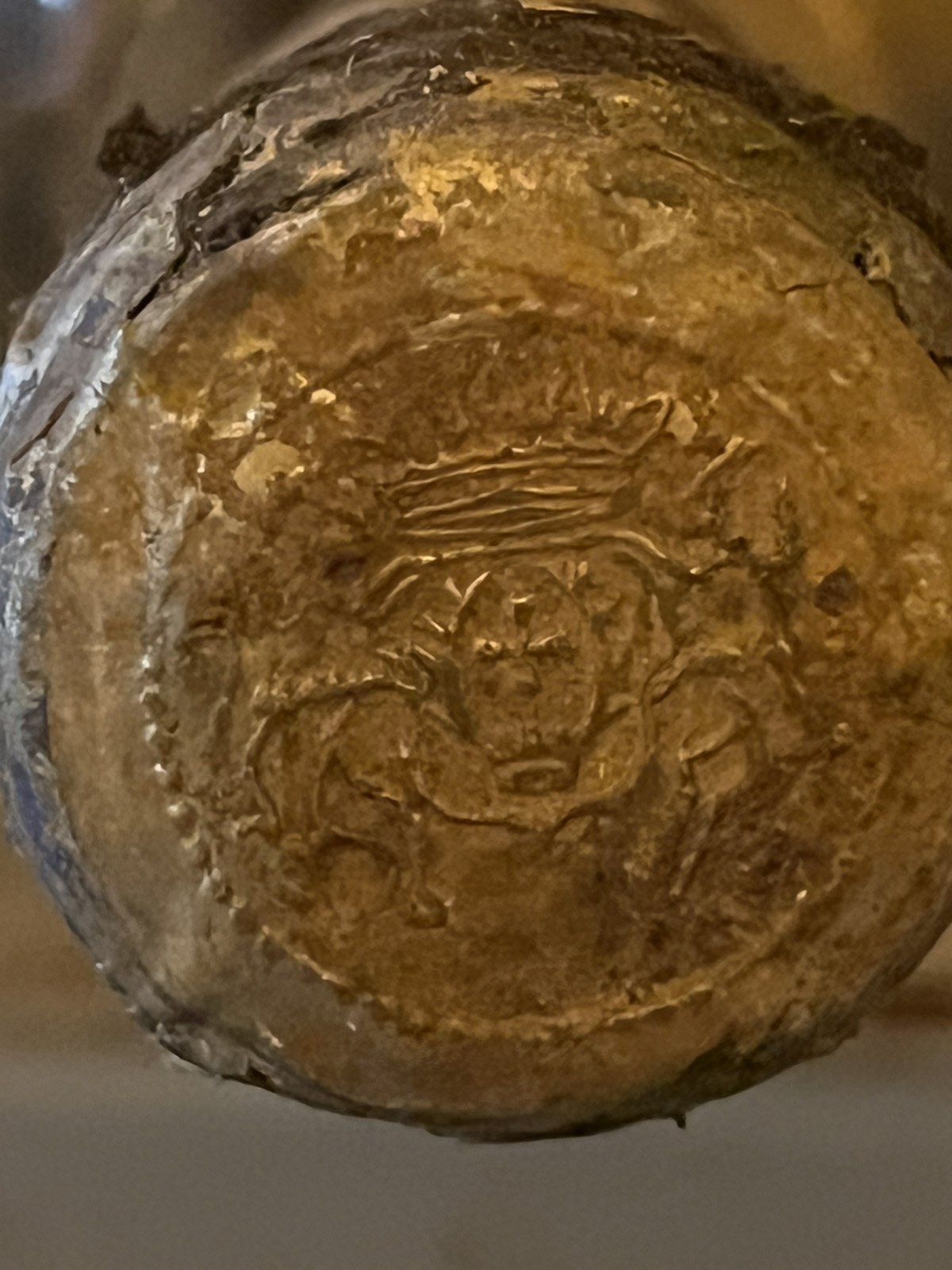
The capsule. The lead capsule carries the Zichy arms in relief: two supporters flanking a crowned shield with the antlers and cross of the family.
The bottle, its printed shoulder label, the handwritten Essencia band, and the armorial capsule from two angles · click any image to enlarge
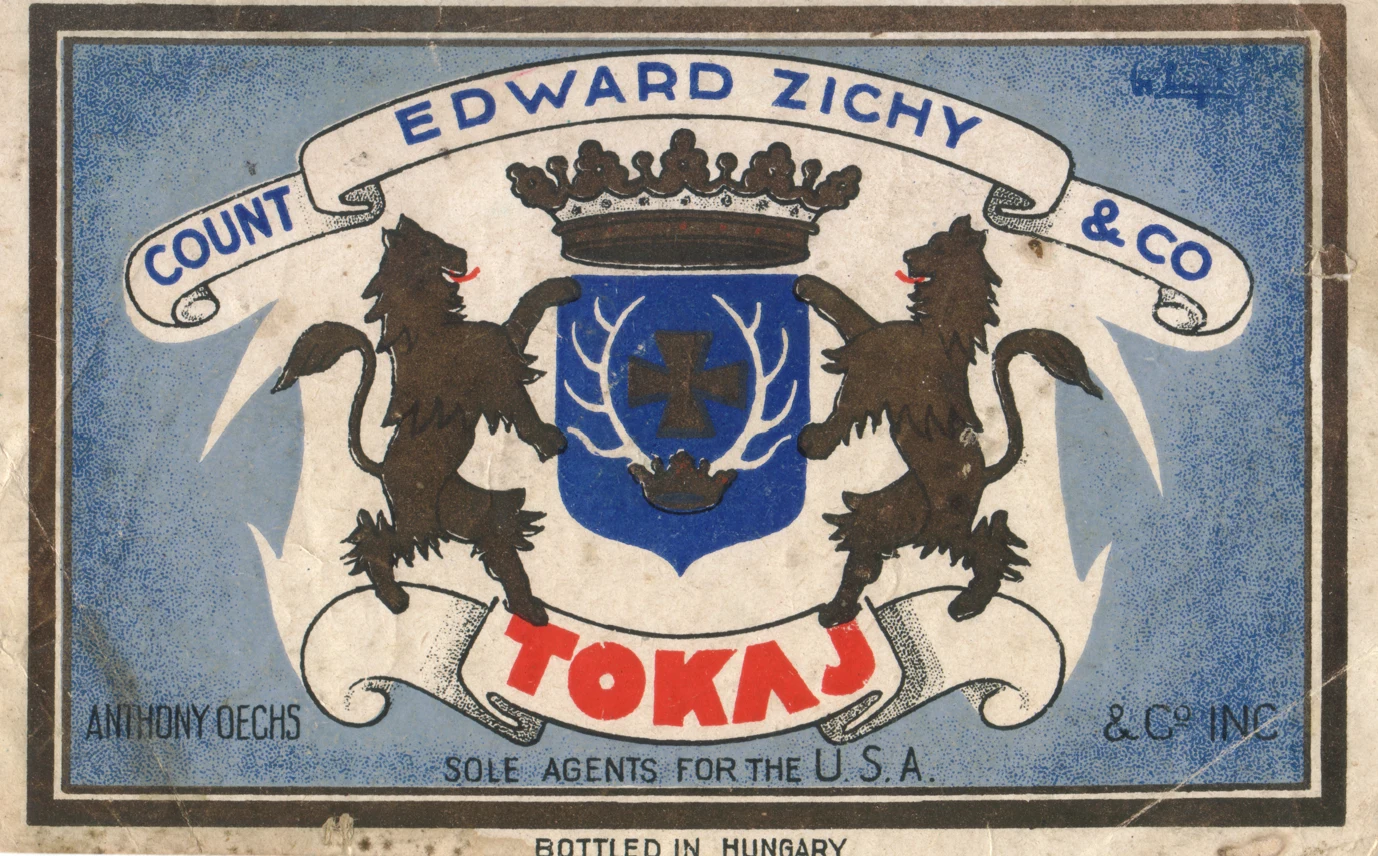
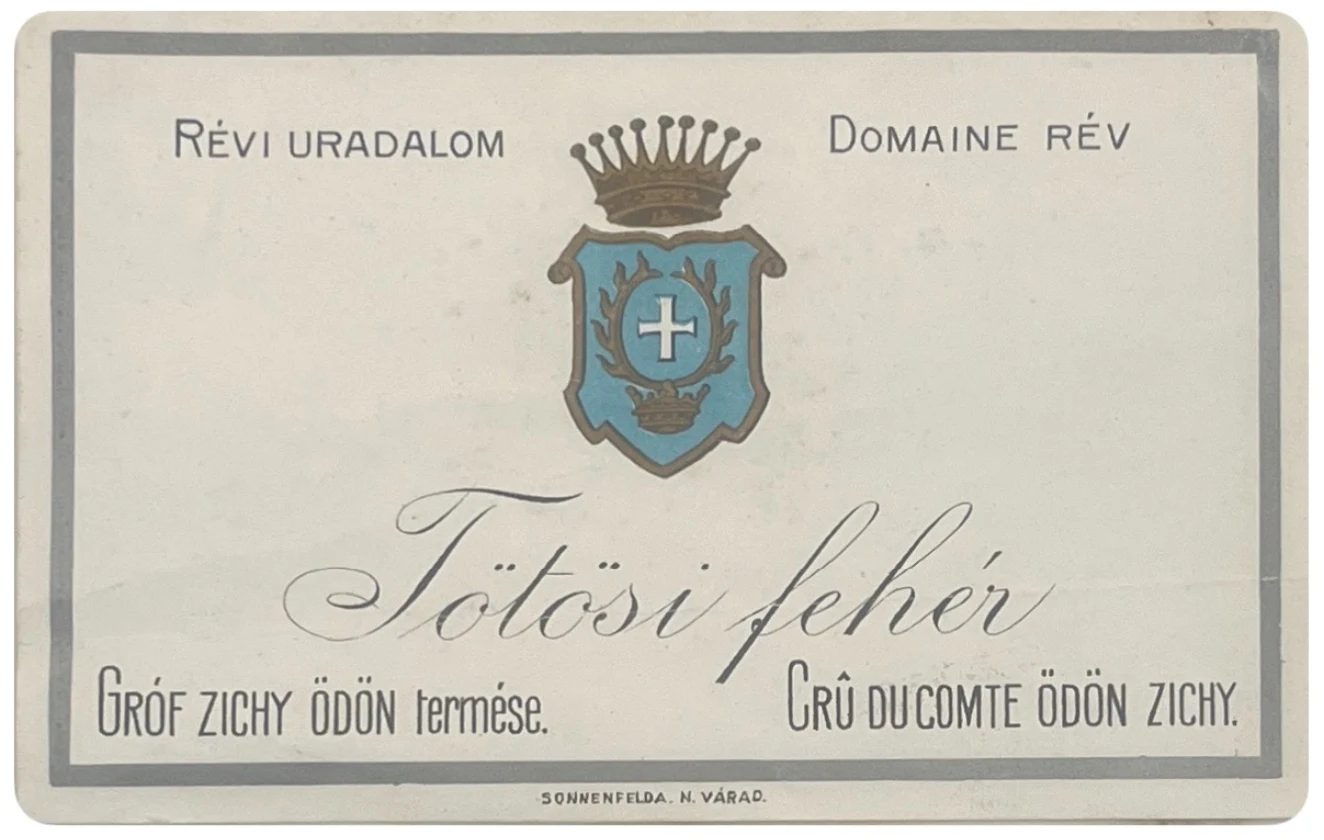
Around the bottle sit the paper traces of the family’s wine business: an American label of Count Edward Zichy & Co, with Anthony Oechs & Co Inc of New York named as sole agents for the U.S.A. and bottled in Hungary at the foot; and a bilingual estate label of the Révi uradalom / Domaine Rév for a Tötösi fehér, the growth of Count Ödön Zichy, printed by Sonnenfeld in Nagyvárad.
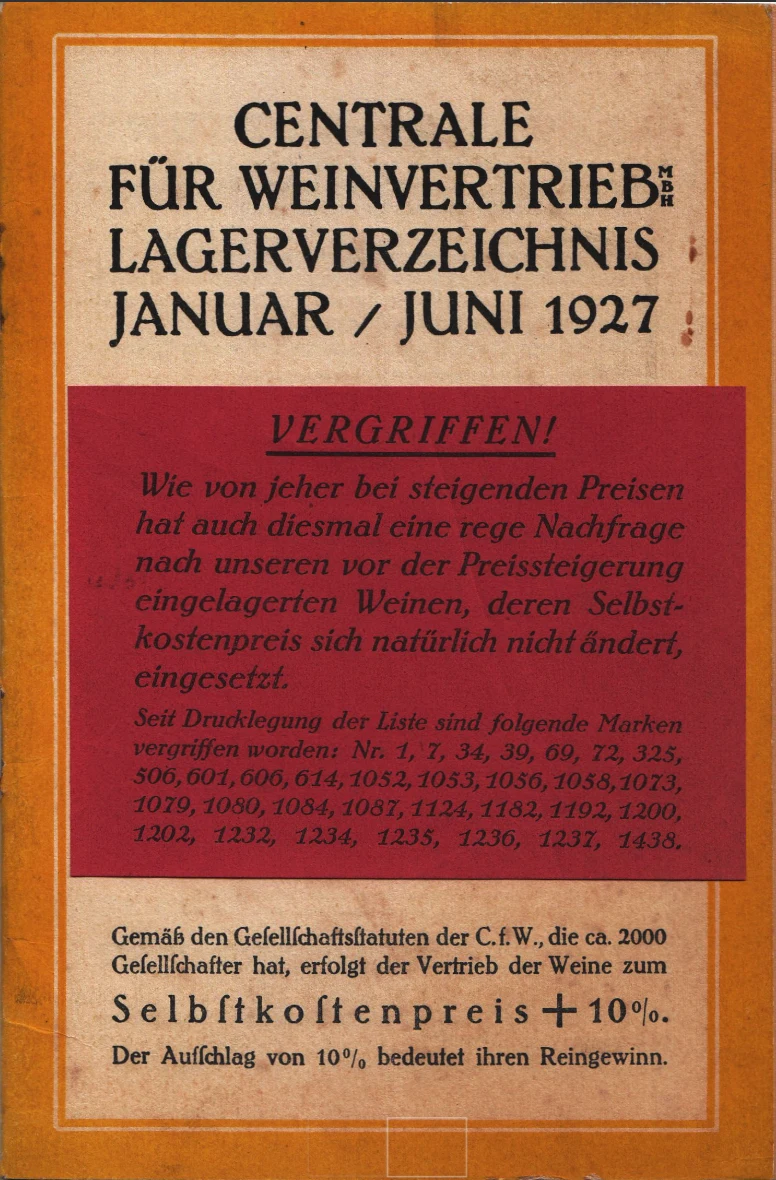
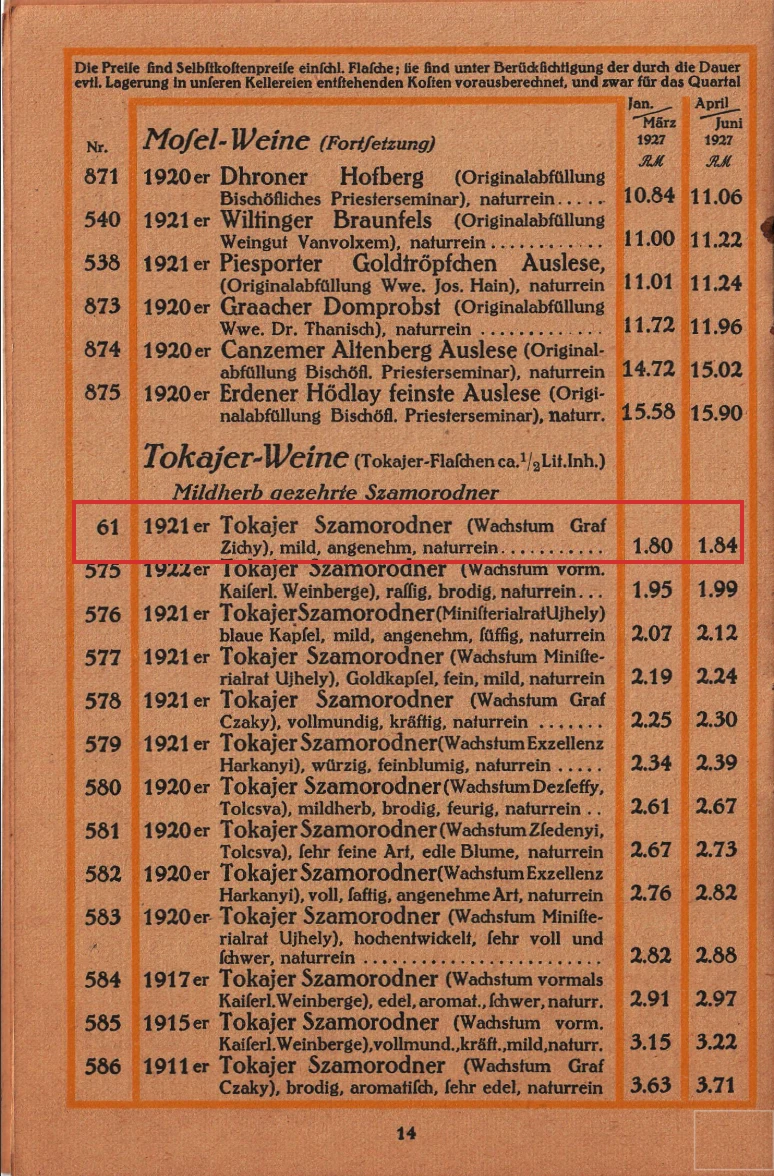
The wines also appear in the trade. The Lagerverzeichnis of the Centrale für Weinvertrieb GmbH for January–June 1927 lists, at the head of its Tokaji section, Nr. 61, 1921er Tokajer Szamorodner (Wachstum Graf Zichy) at 1.80 Reichsmark the half-litre bottle, rising to 1.84 in the April quarter — the cheapest of the fourteen Szamorodners on the page, where a 1911 of Count Czáky stood at 3.63.
The two historical Zichy labels, and the 1927 German price list with the Zichy wine marked in red at Nr. 61 · click any image to enlarge