Seals, coin dies and stamped paper18th century bottles
The century that verified itself: a prince’s coin die pressed into wax, an empress’s arms, a French tax stamp used as a label, and the first cellar inventory to name every category of Tokaji.
Rákóczi dukat die
2Bottles sealed with it — the coin itself is lost
Maria Theresia seal
1Known Tokaji bottle bearing her arms
Kosher Tokaji
1766Oldest known bottle, with the contract of sale
1792 inventory
119Barrels of Aszú on two pages — some 18,000 bottles
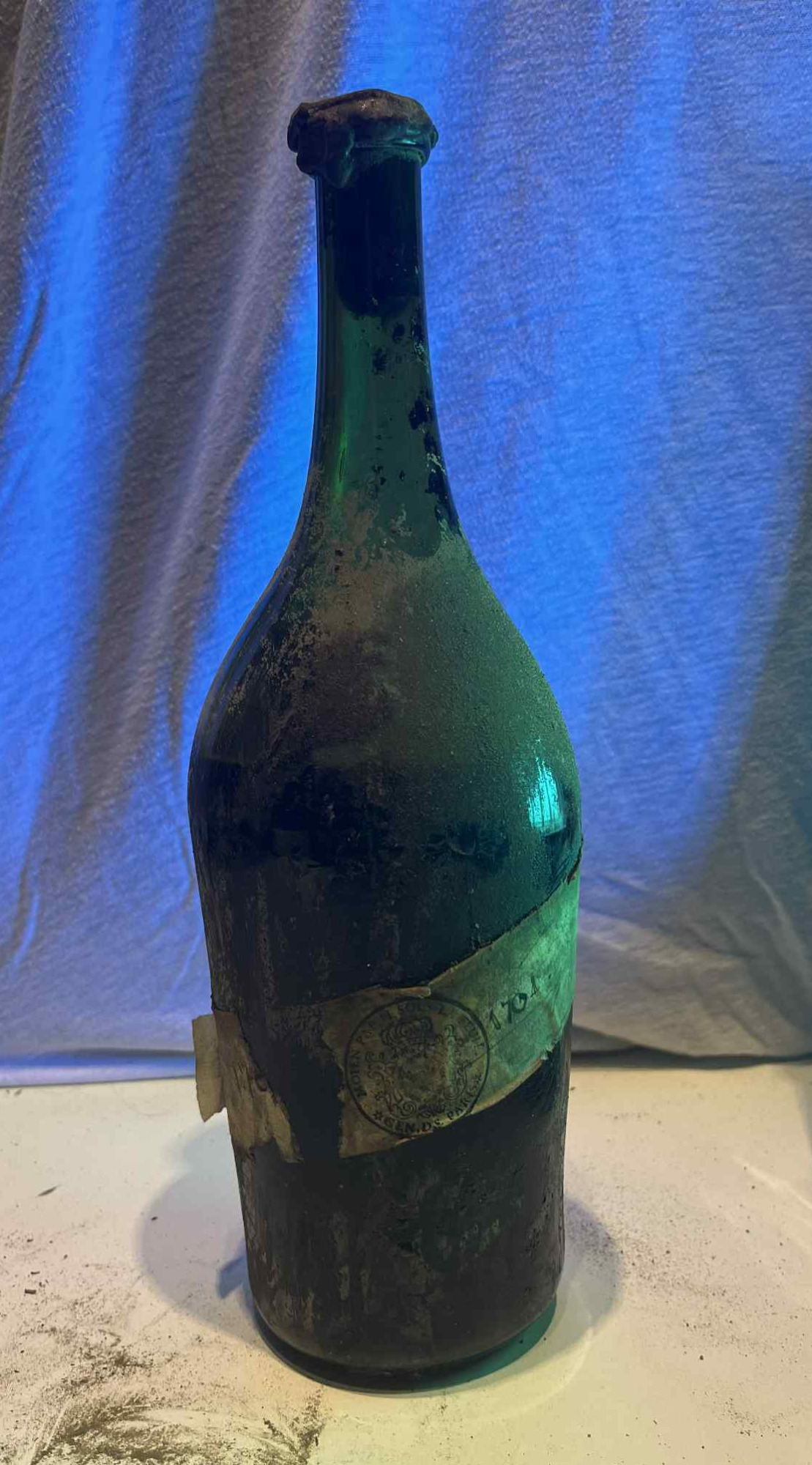
1704
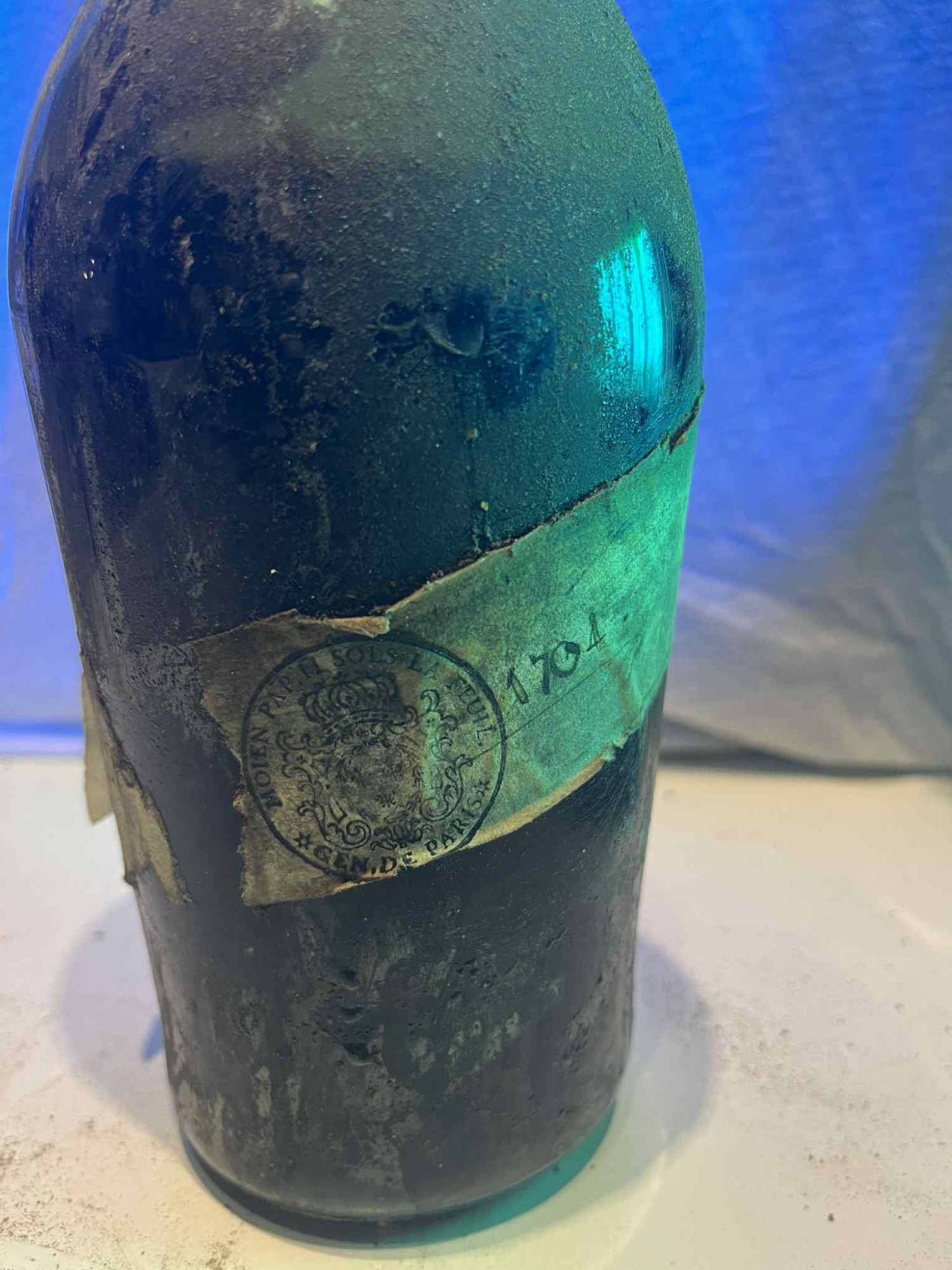
1704 Rákóczi Bottle
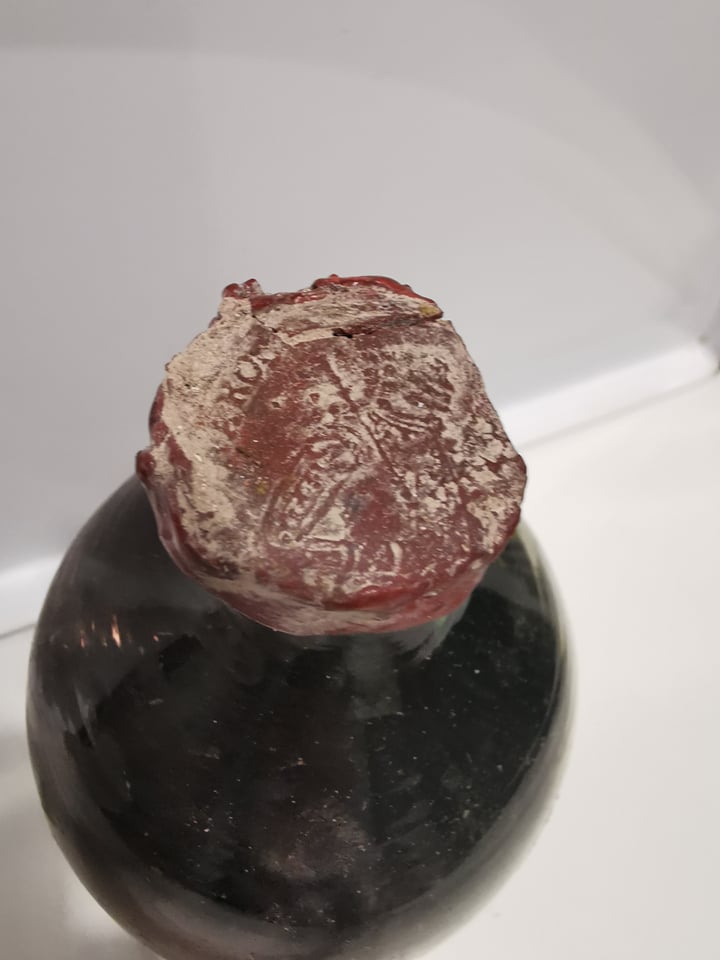
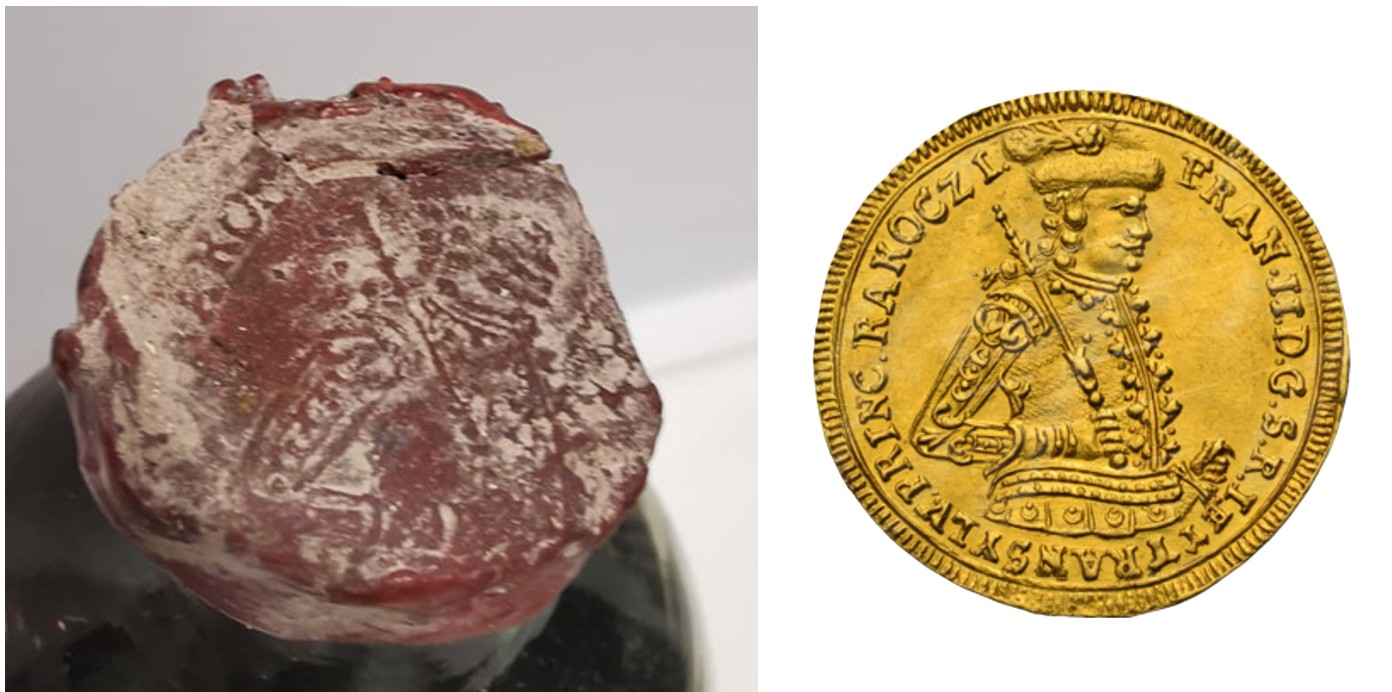
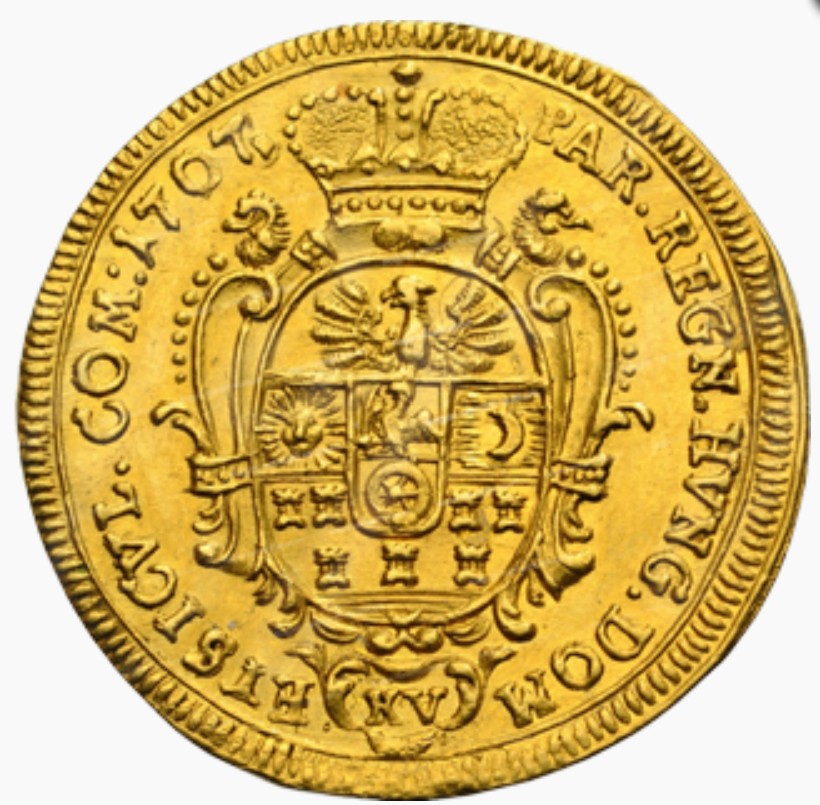
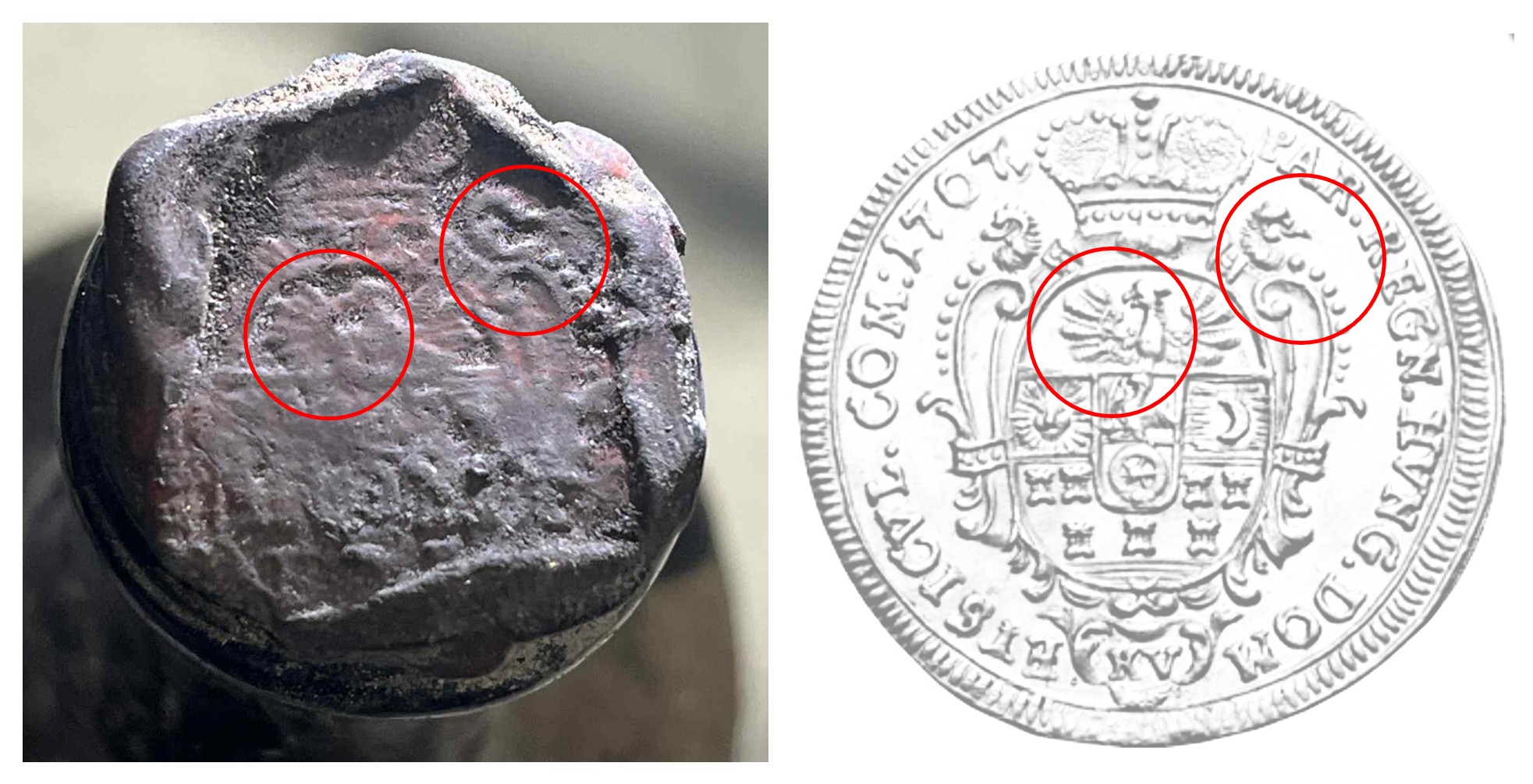
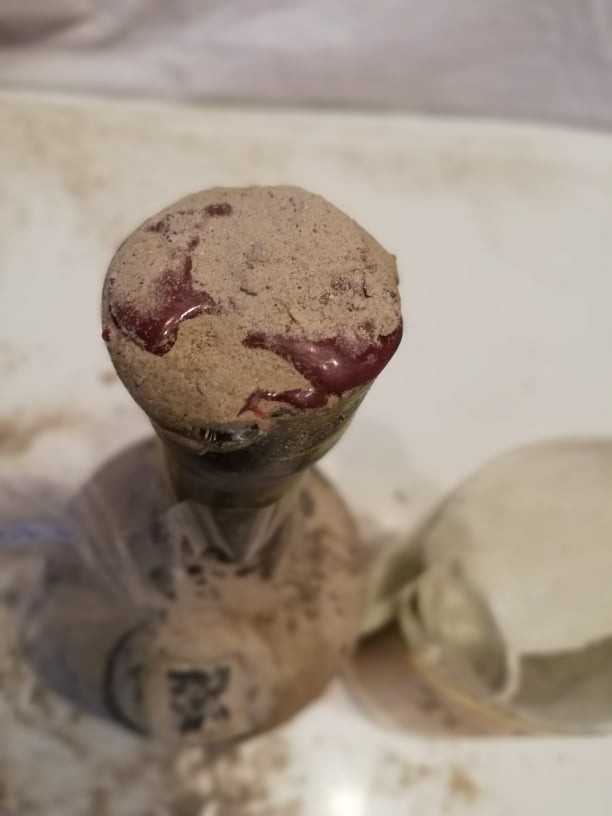
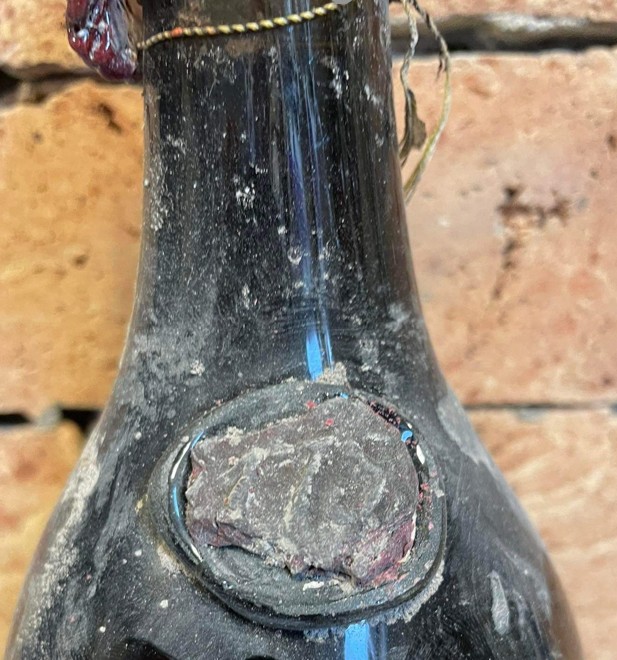
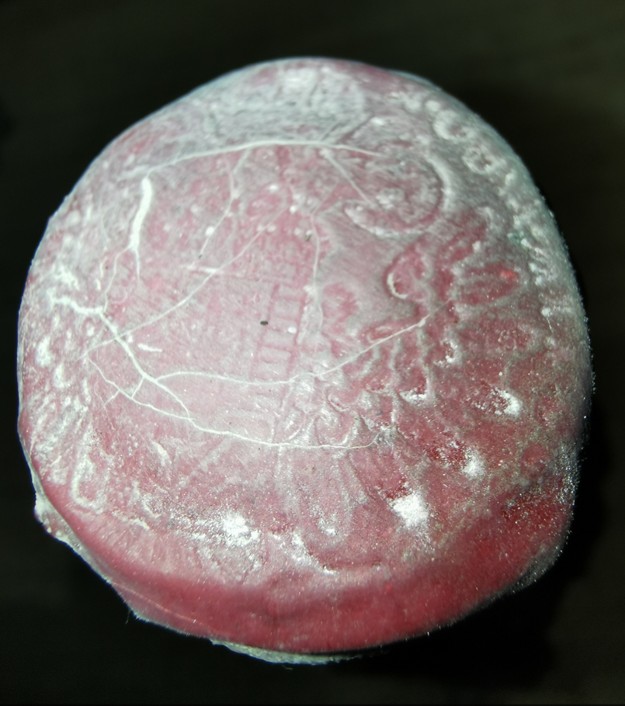
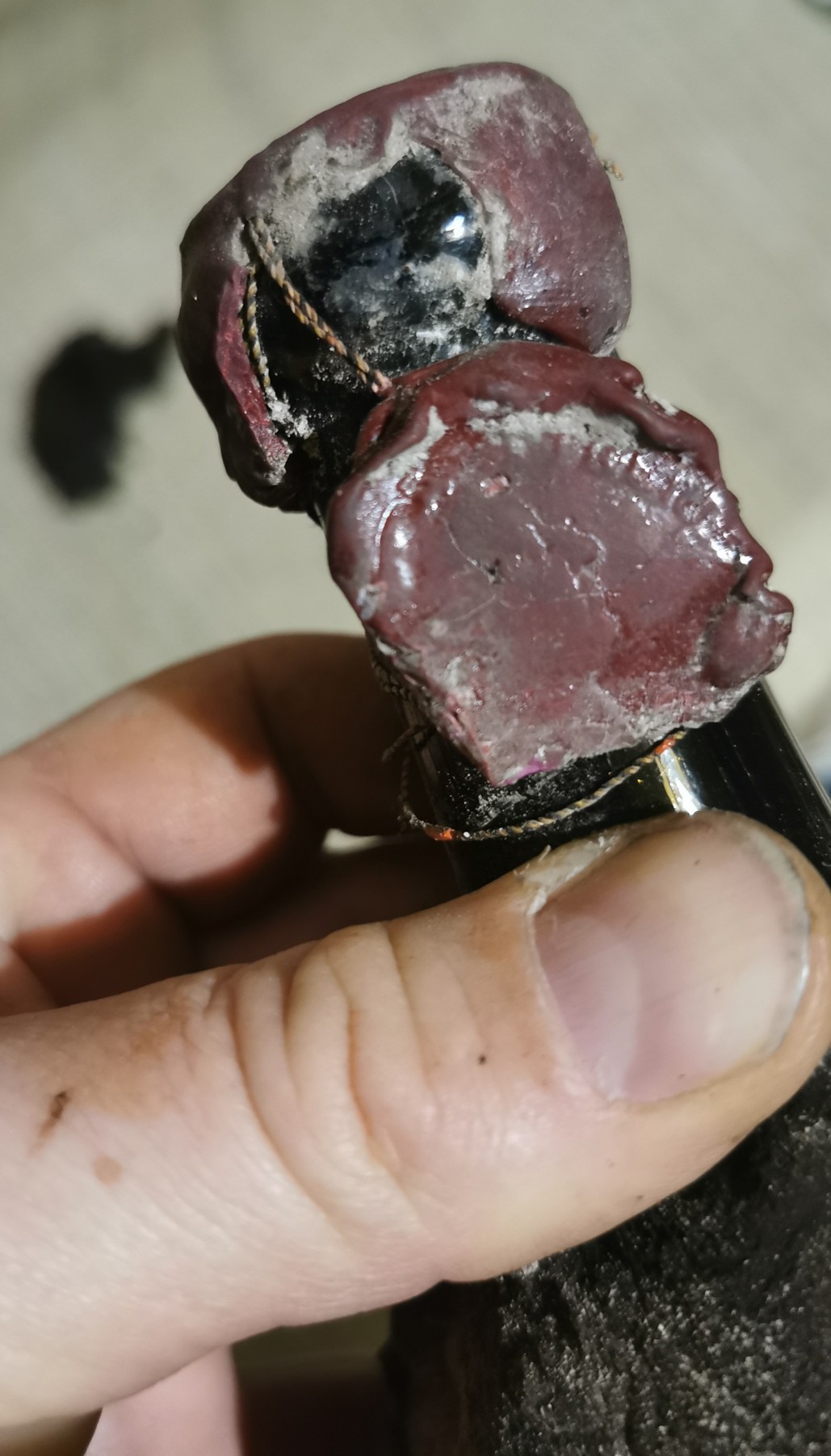
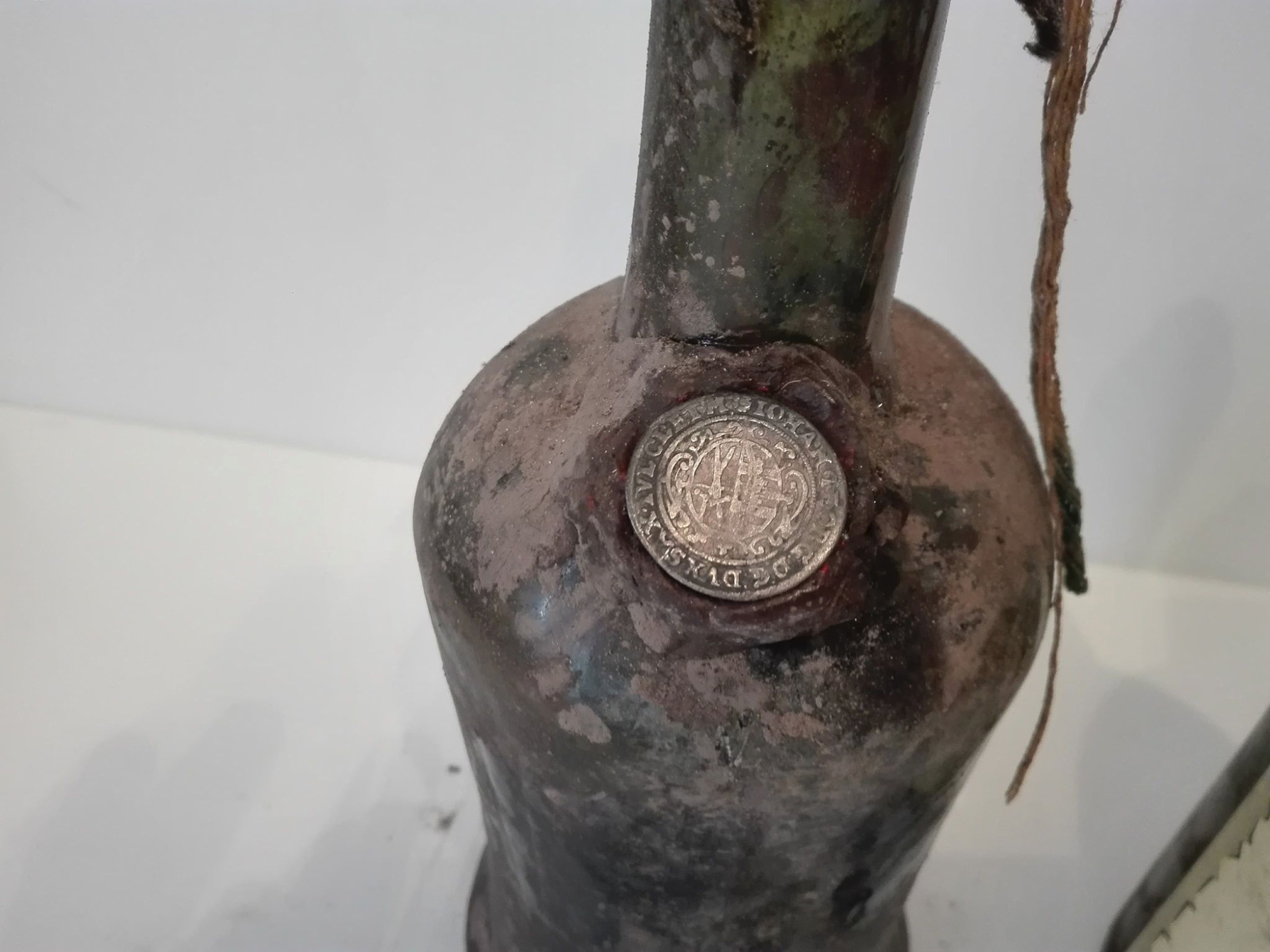
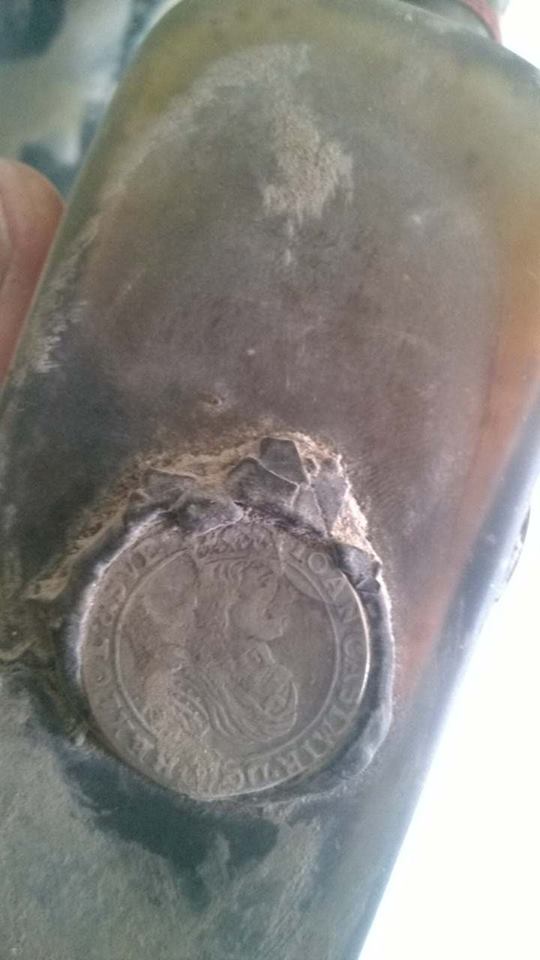
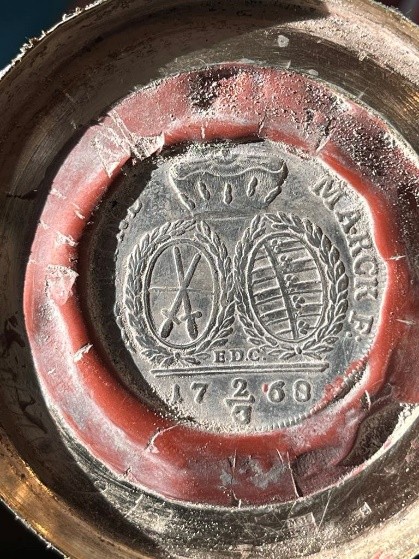
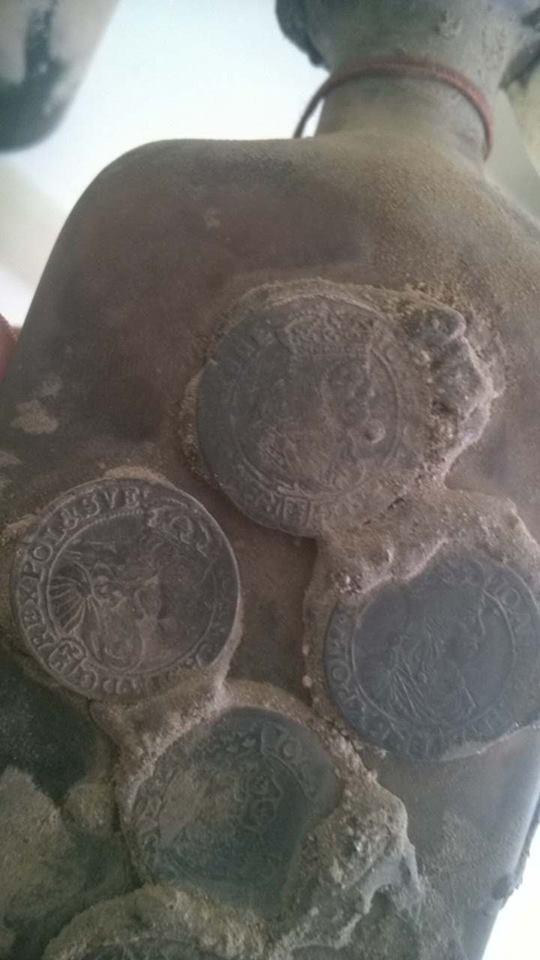
A bottle sealed with the coin die used to mint the last Rákoczi gold dukates in 1707. For this bottle the back side of the coin (reverse) was used. This method most probably helped proving the authenticity and origin of the bottle. This particular coin is extremely rare, in total only 3 coins were minted, two of which can be found in museums, the third one is lost. Rákóczi himself ordered in 1707 that no other coins should be minted and that the coin die should be destroyed. As far as we know this makes it the one of only two Tokaji bottles in the world that can be traced to Rákoczi ownership.
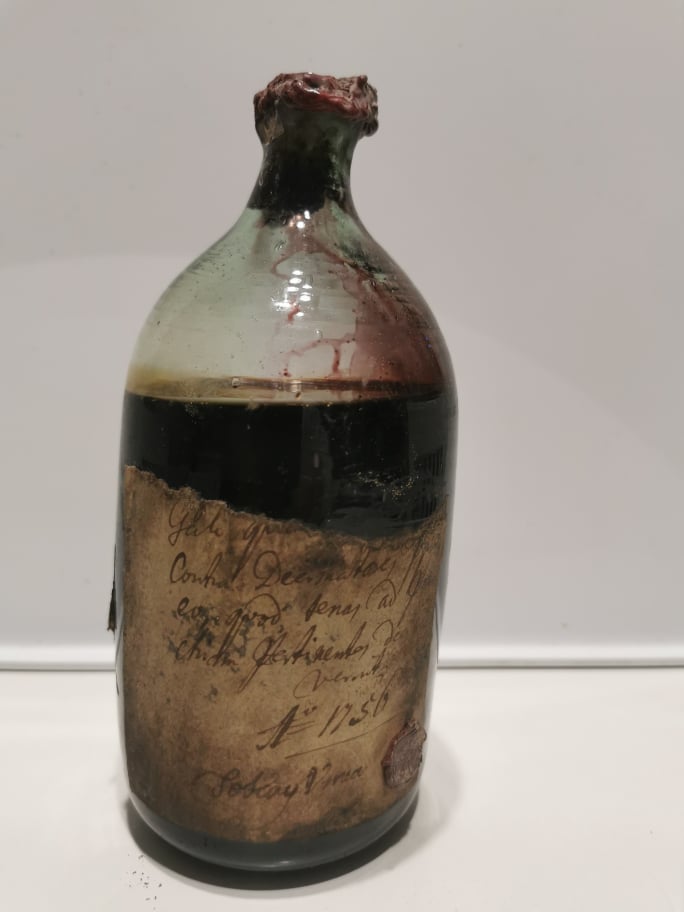
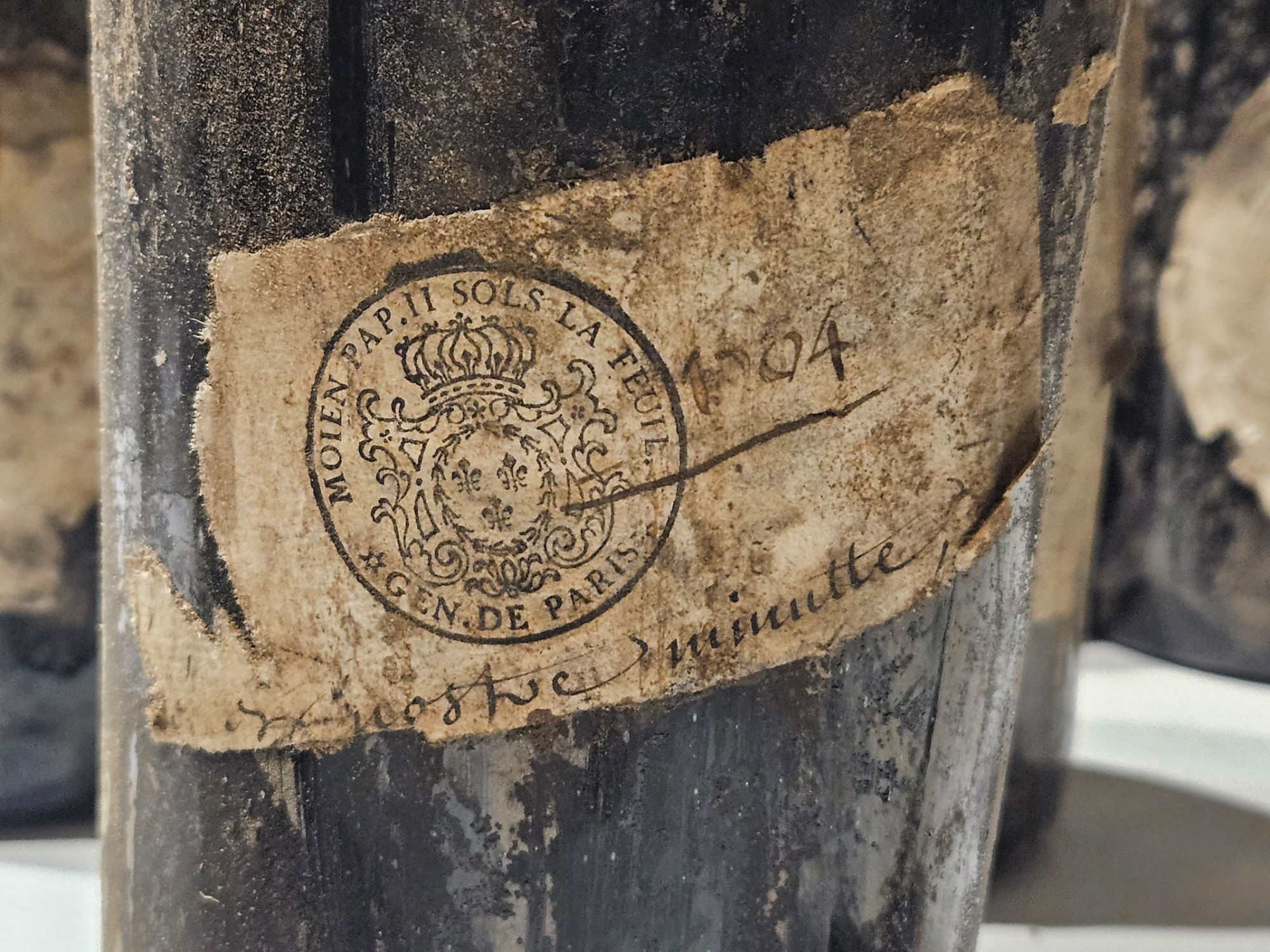
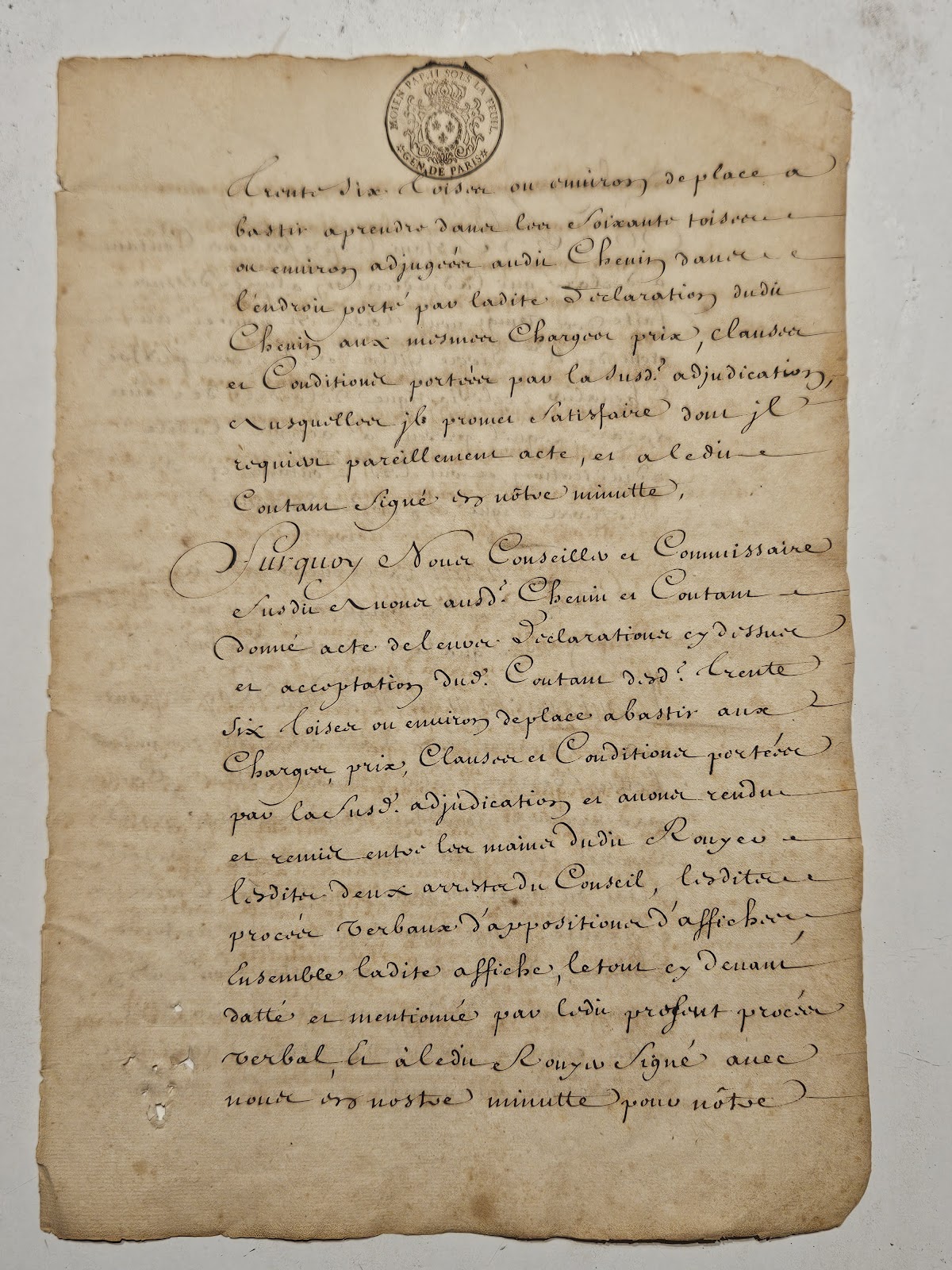
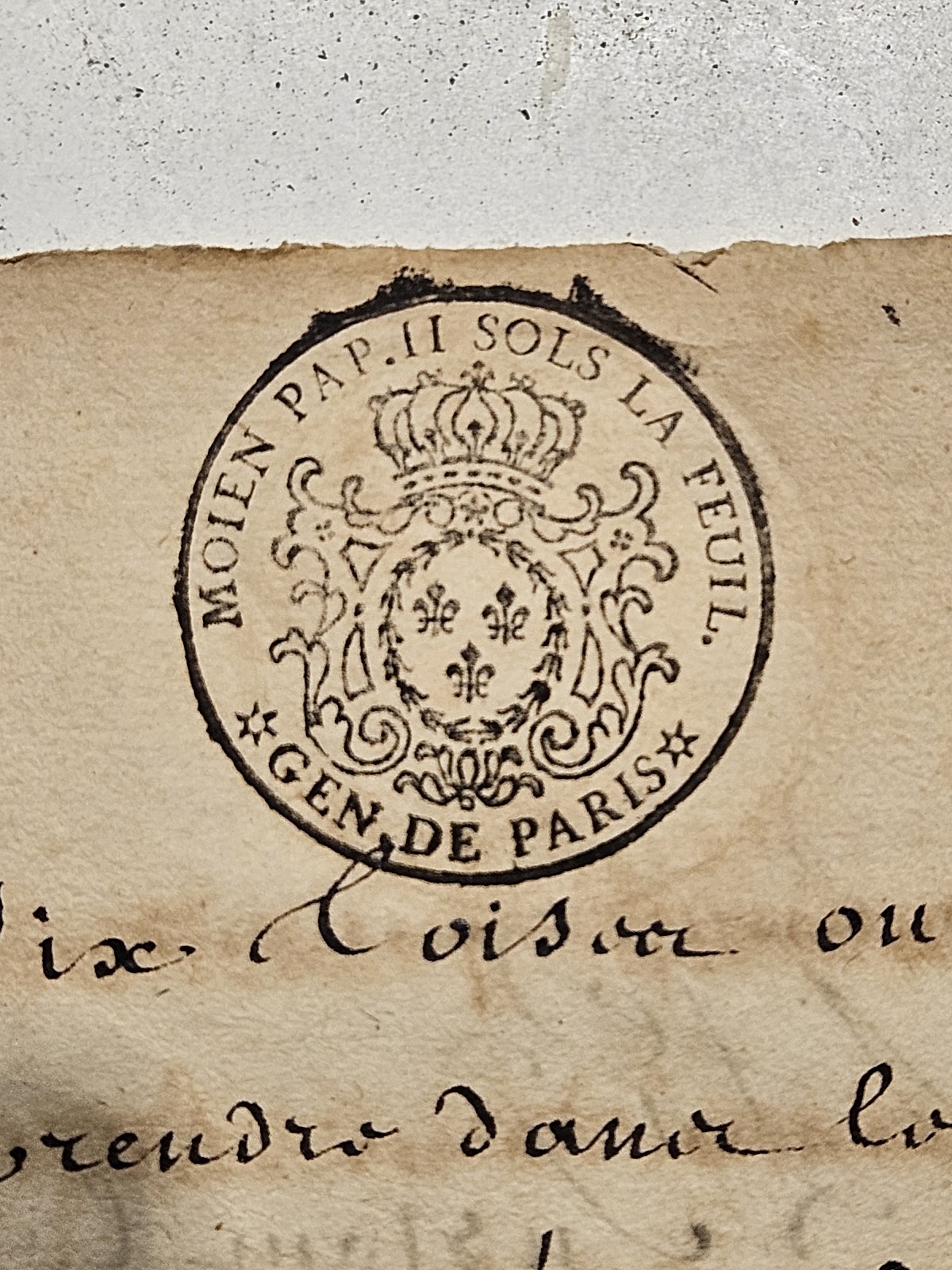
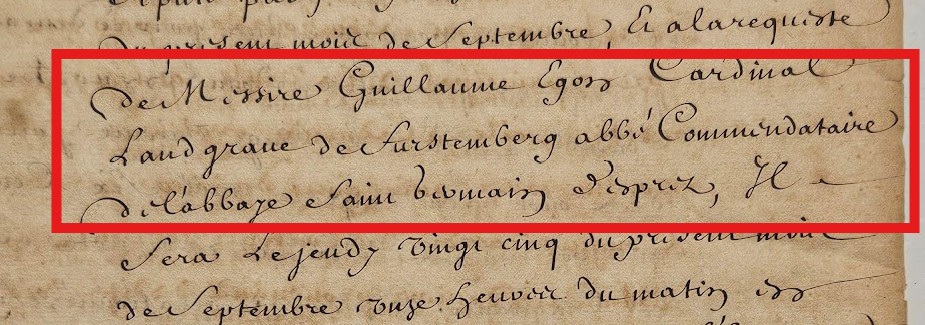
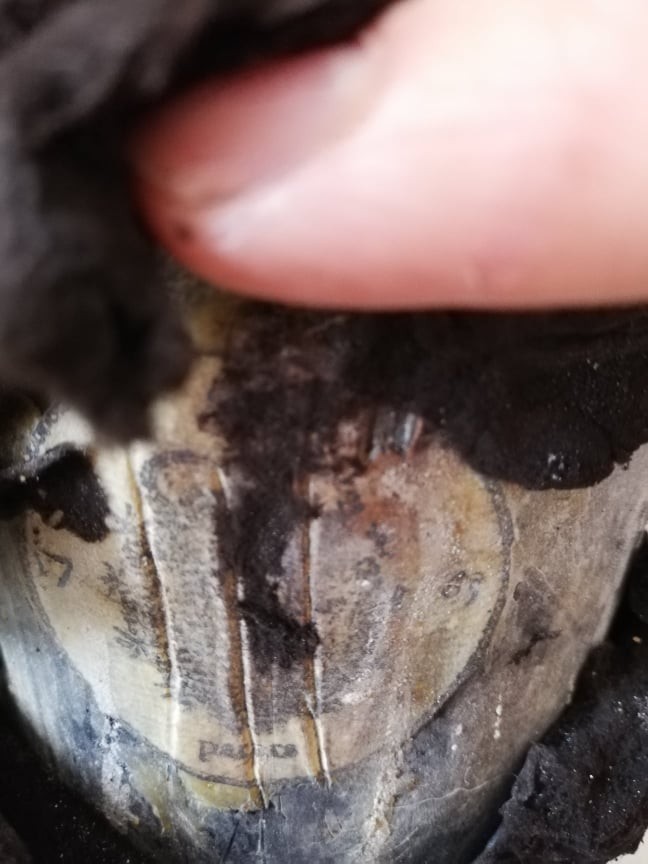
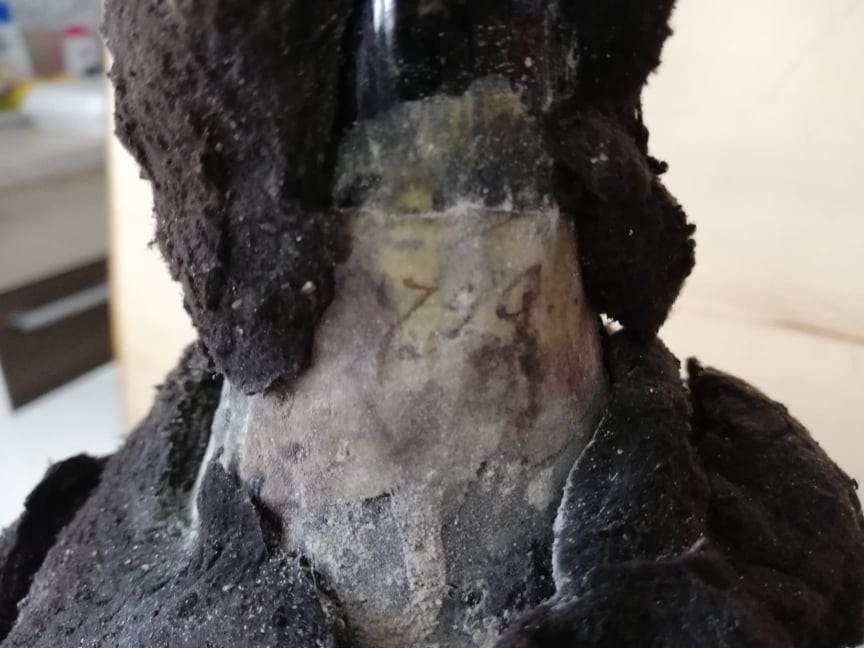
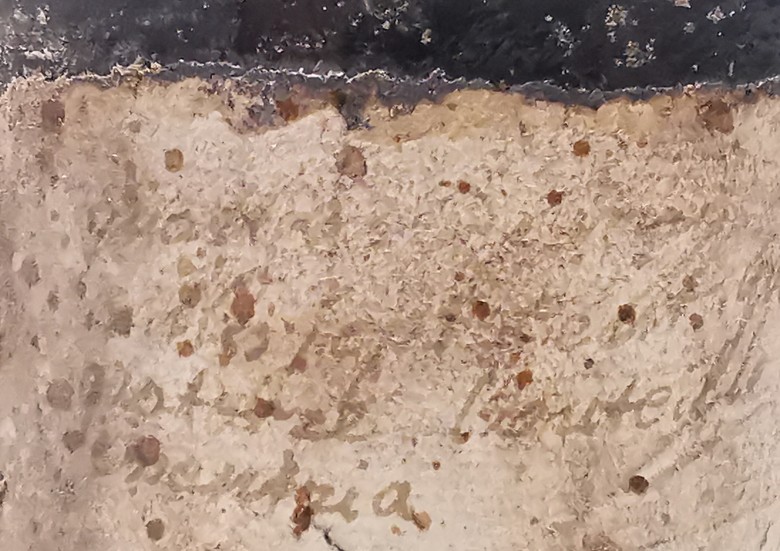
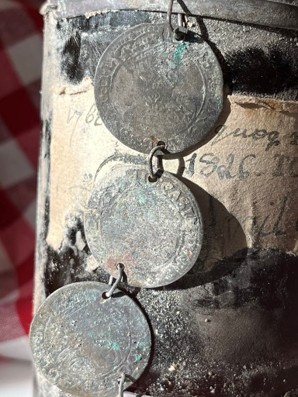
The bottle label showing the vintage is made from french stamped paper, probably another examination method. The stamp was used around 1714. The related 14 page french document bears the same paper stamp. It does not contain any reference to Rákóczi or Tokaji wine, but mentions Wilhelm Egon von Fürstenberg, bishop of Strasbourg. The bishop was in contact with Petar Zrinski, the grandfather of Francis II Rákóczi, with the goal to form an alliance in fighting the Habsburg empire. It is known that Rákóczi had sent barrels or bottles of the best Tokaji as present to the French court of Louis XIV and other Courts to support his requests for political alliances in his uprising against the Habsburg rule of Hungary. Later Rákóczi lived a couple of years in France.
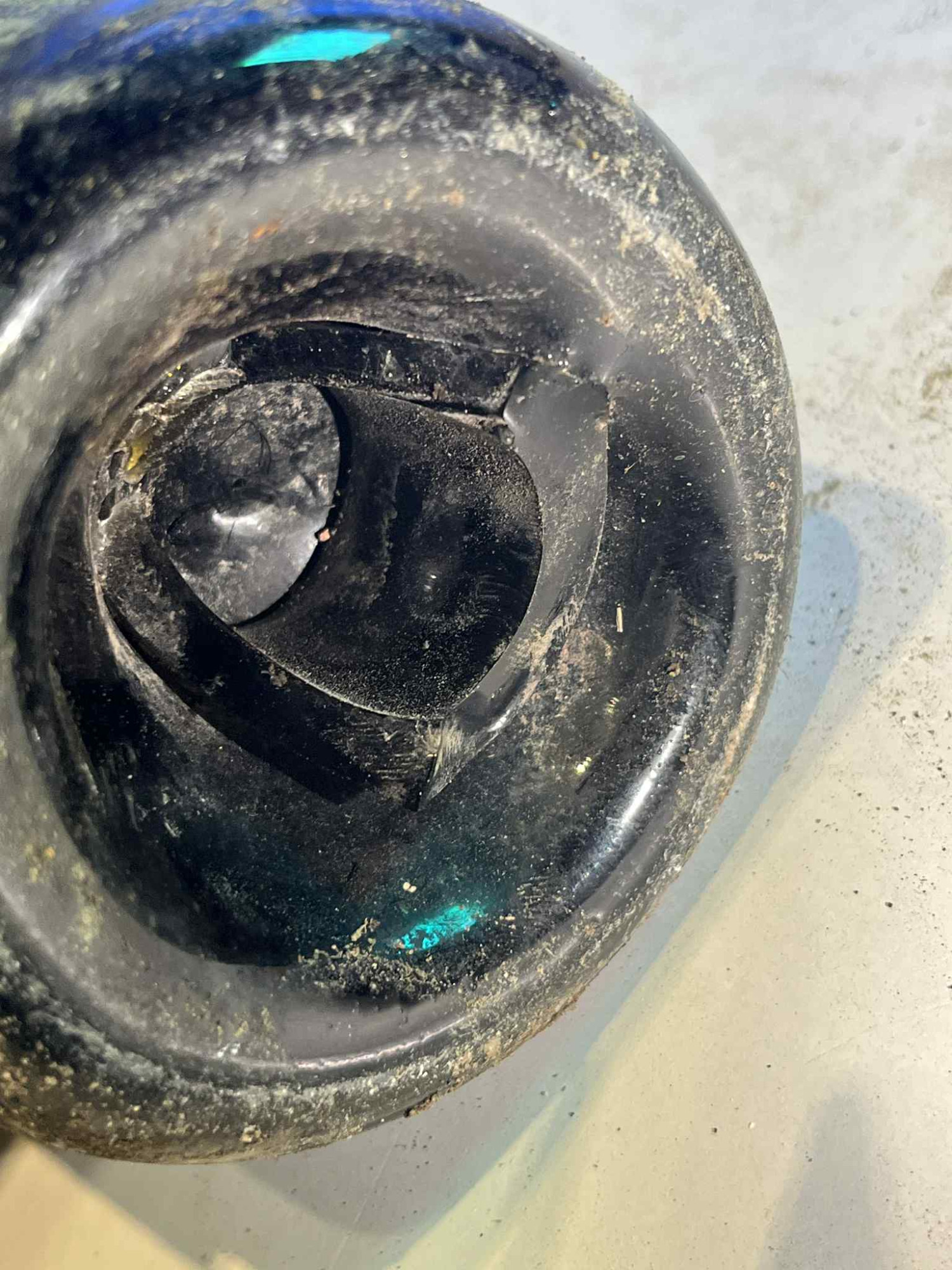
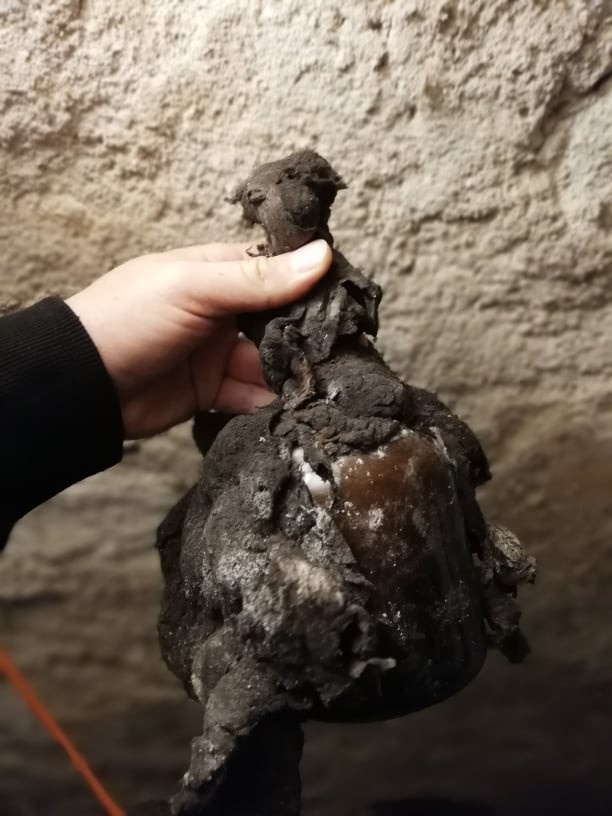
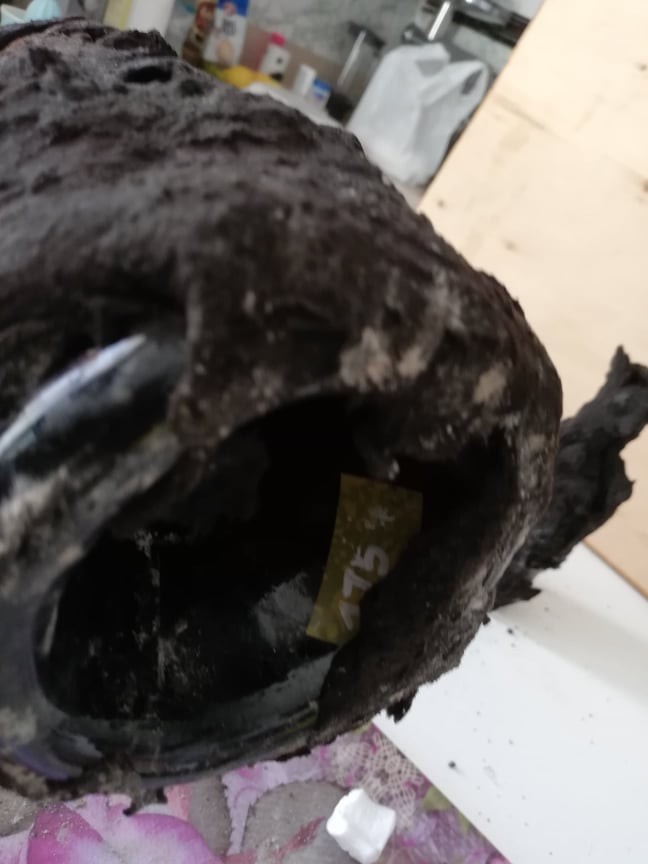
Thr bottom of the barrel exhibits a rare feature, the remnants of broken glass, according to glass manufacturing experts the sign of an old method of producing handblown glass bottles.
The 1704 Rákóczi bottle, its seal and the French stamped paper · click any image to enlarge
1704
1704 Tokaji
A bottle of the 1704 vintage. The photographs are below; the description of the glass, the markings and the provenance is still to be written.
Placeholder
To come: format and glass, the coin and seal, the label and its reading, and where the bottle came from.
The 1704 Tokaji bottle. Click any image to enlarge.
1718
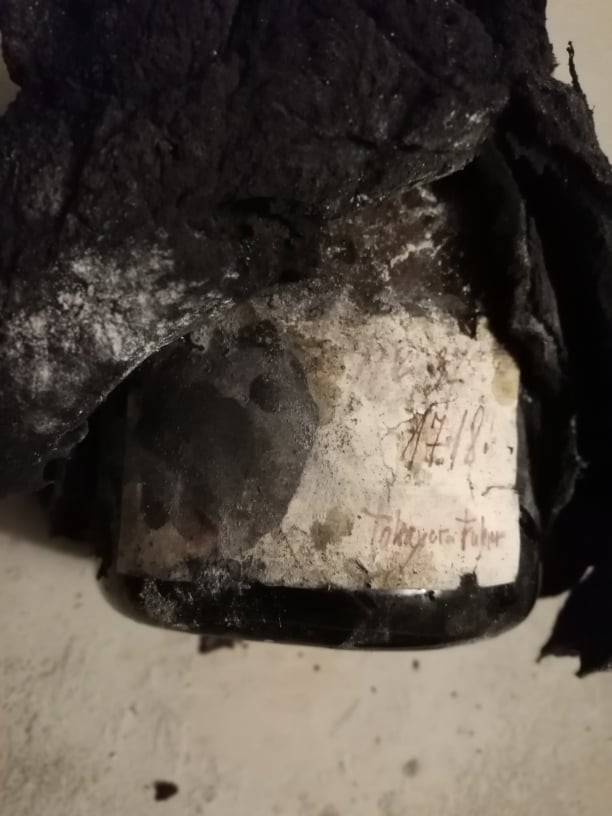
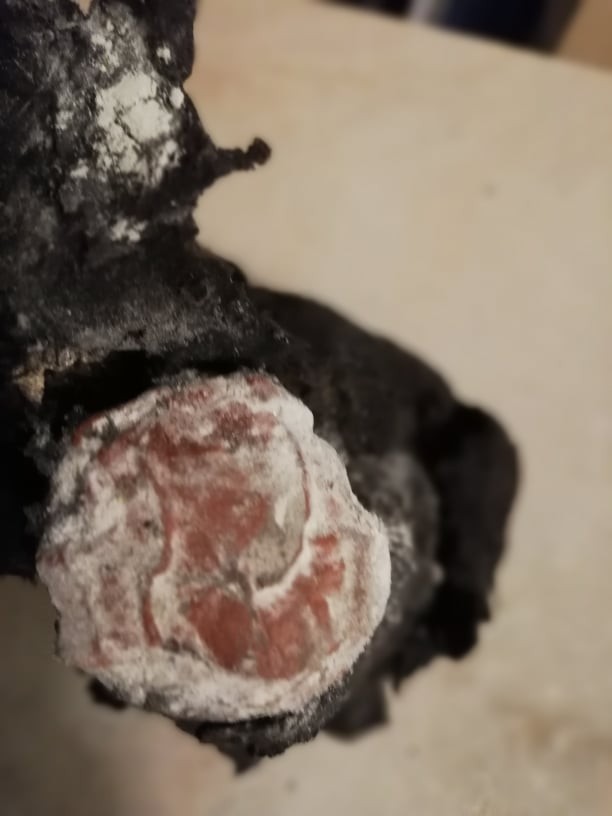
Fukier bottle, wrapped and sealed
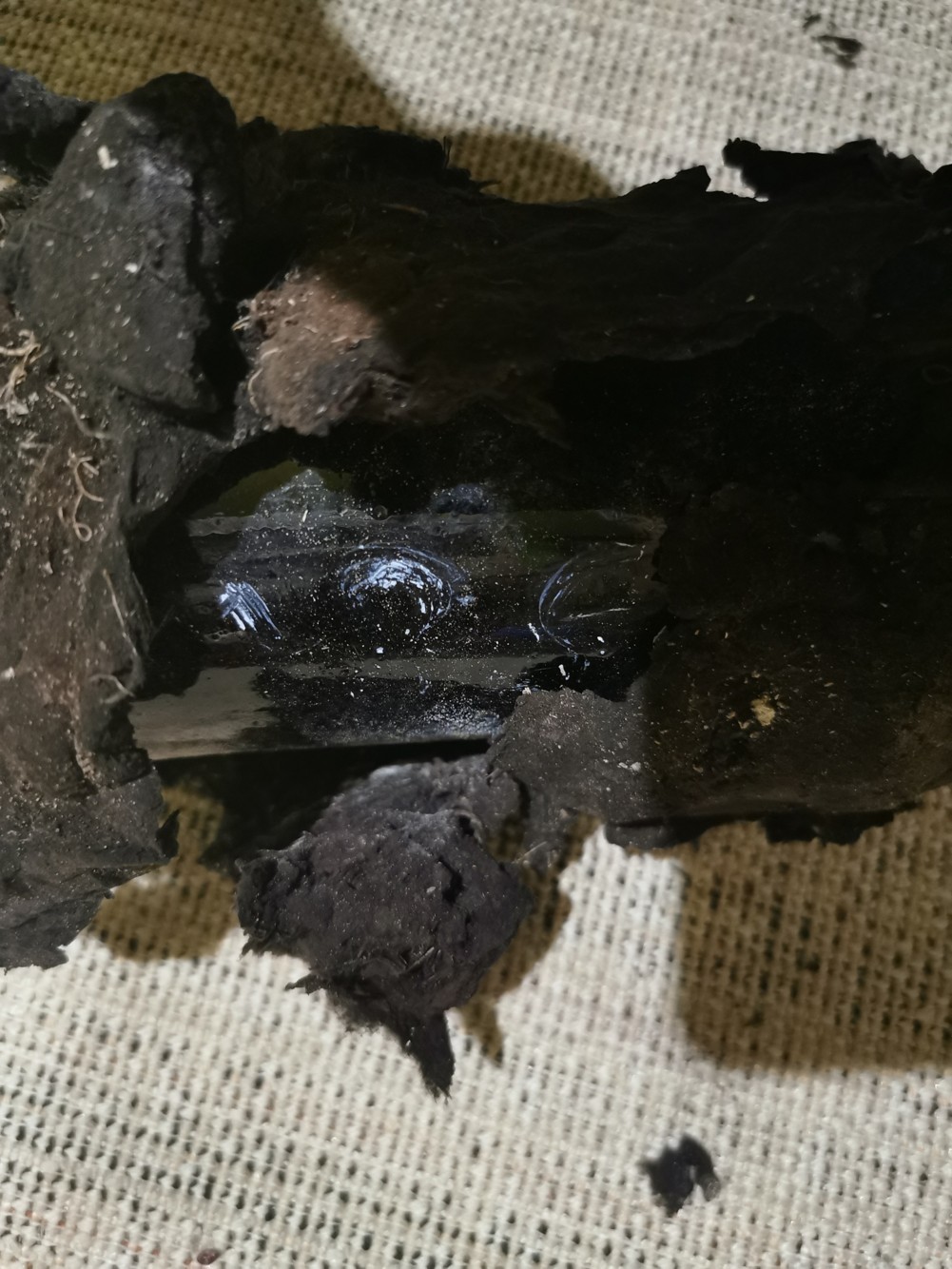
A bottle as it comes out of the cellar rather than as it looks cleaned: swaddled in blackened paper, the whole surface furred with mould, with a red wax seal and a handwritten label emerging where the wrapping has torn.
Held up, the shape reads as a squat, wide-shouldered form with a short neck, the glass showing warm brown where a patch has been rubbed clear. Everything else — neck, shoulder, body — is under a crust of Cladosporium cellare and paper laid over paper, bound at the neck and left undisturbed for as long as it stood in the cellar.
The bottle as found, the label, and the wax seal · click any image to enlarge
The label
Under a flap of the wrapping a paper label carries two lines in brown ink: the year 1718, and beneath it Tokayer Fukier. It names the wine and the house in one hand, and matches the labelling practice recorded elsewhere in the Fukier Cellar.
The seal
A red wax seal sits on the shoulder, its impression flattened and salted white with cellar bloom. No legend can be read from it in this state. Its position — on the body rather than over the cork — makes it a mark of ownership rather than a guarantee that the bottle is unopened, and it is applied over the wrapping, so the paper and the seal belong to the same operation.
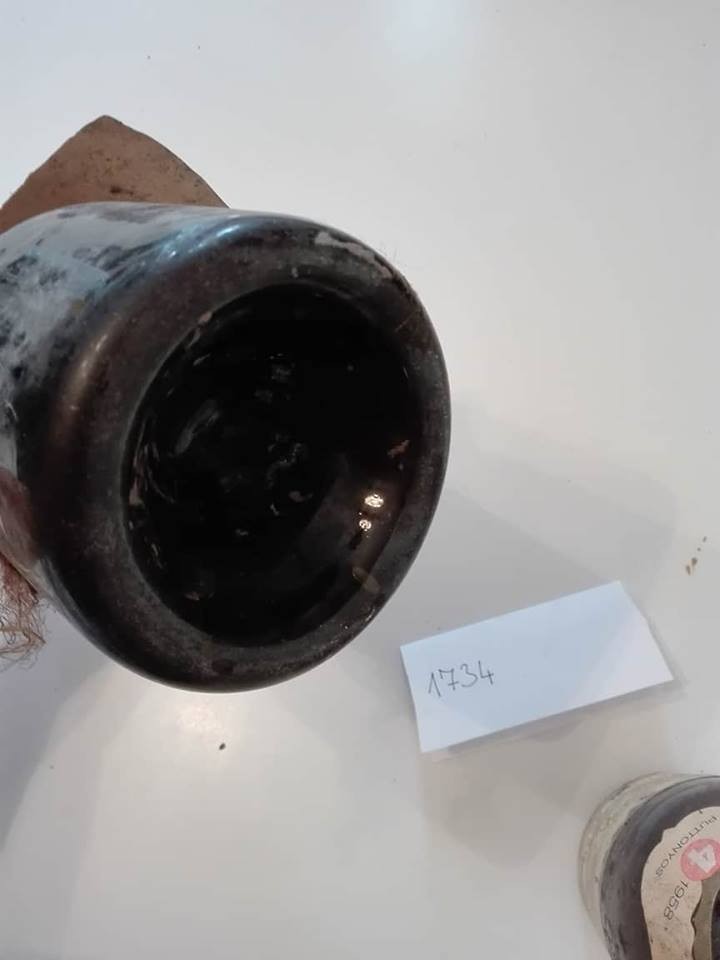
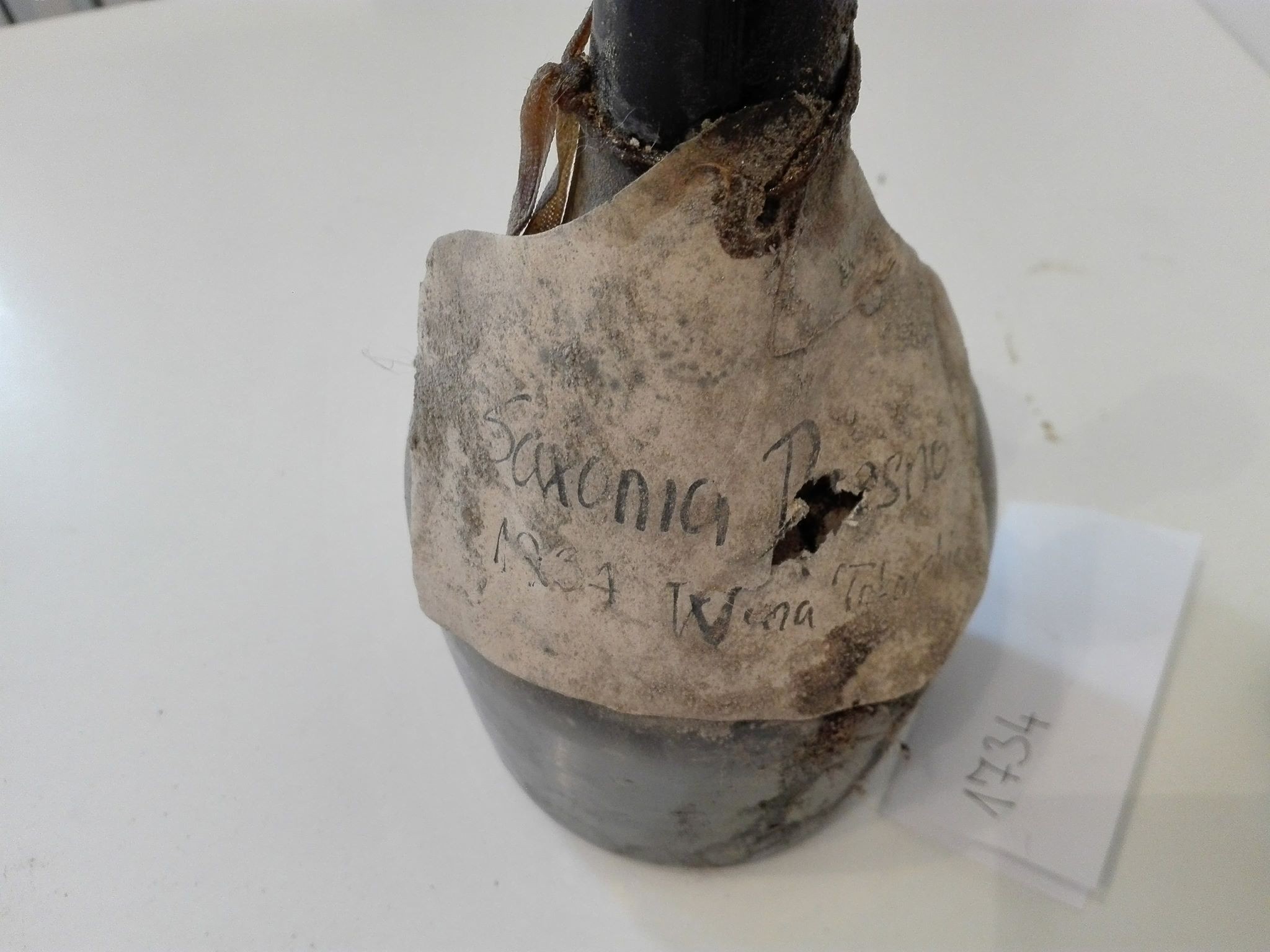
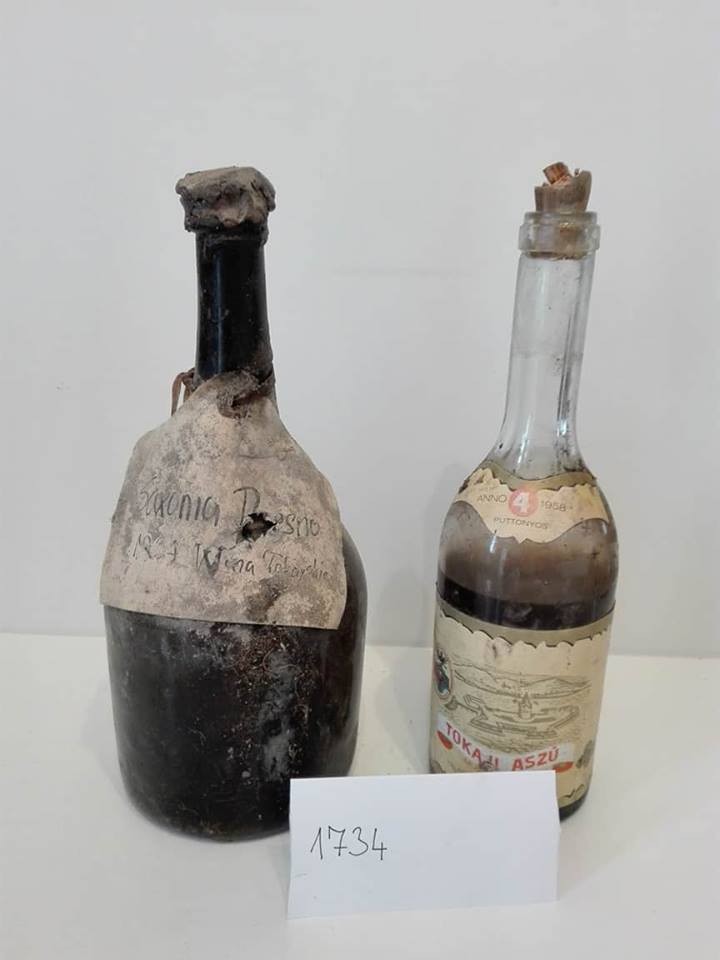
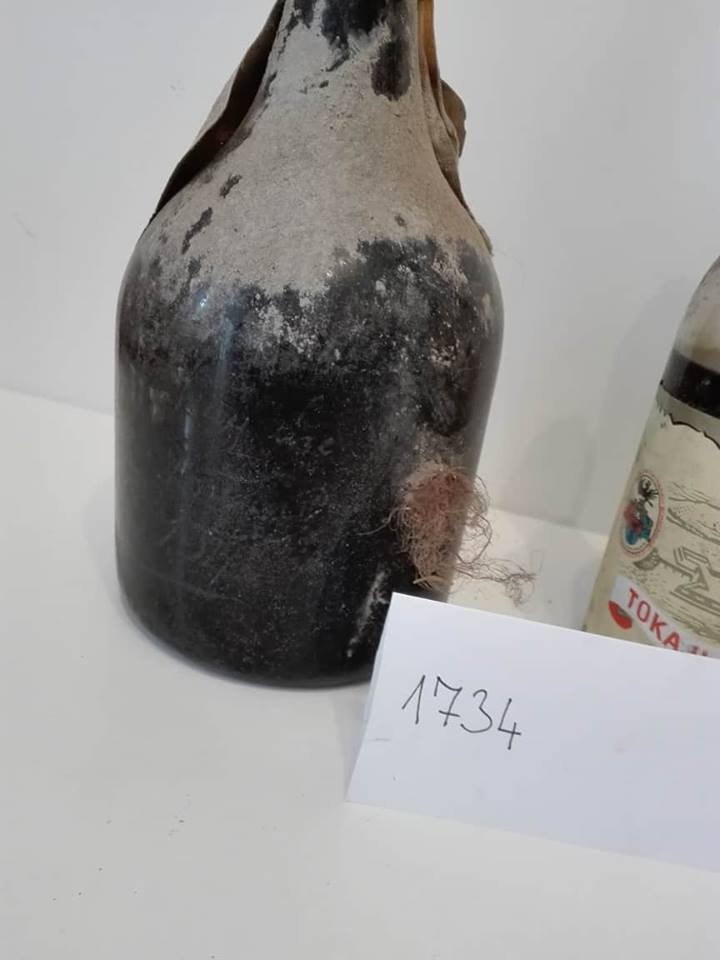
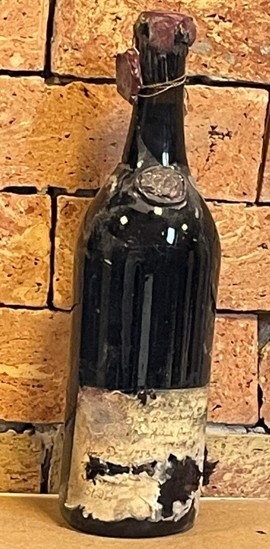
A squat, heavy bottle in near-black glass with a broad sloping shoulder and a short neck, the cork capped in dark sealing compound and a cord still tied beneath it. A large parchment label is wrapped around the lower body.
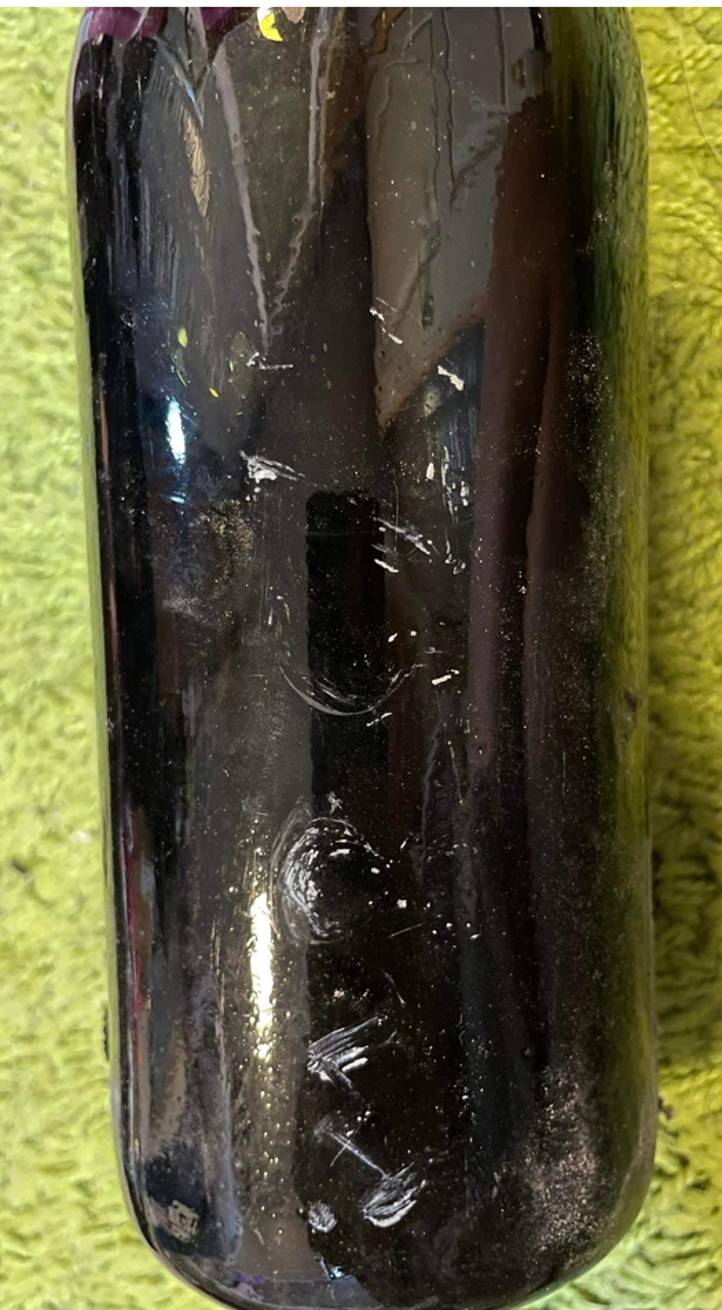
The glass is thick and free-blown, with a deep basal kick visible from below and a base ring worn smooth. Beside a modern 1958 Tokaji Aszú bottle it stands shorter but much wider, holding roughly the same volume in a very different shape. Cellar deposit and pale bloom cover the shoulder where the parchment has lifted.
The bottle at scale, its parchment label, the body and the base · click any image to enlarge
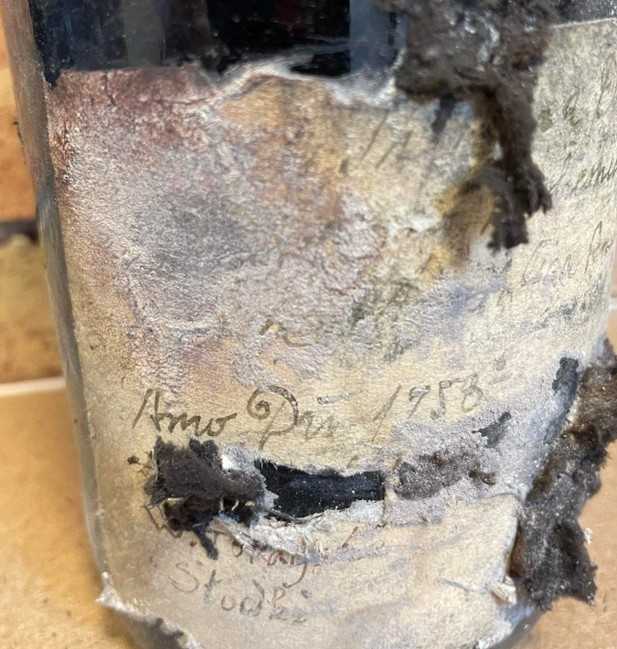
The label
The parchment carries three lines in a dark hand: Saxonia Presno, then 1734 followed by Wina Tokardie. The first line names Saxony, the last the Tokaji wine; the writing is Polish in form, consistent with a bottle that passed between the Saxon court and its Polish holdings.
The year
The date is worth placing. Am 17. Januar 1734 wurde der sächsische Kurfürst Friedrich August II. in der Wawel-Kathedrale zu Krakau als August III. zum König von Polen gekrönt. Dies geschah während des Polnischen Thronfolgekrieges, nachdem sein Vater August der Starke im Vorjahr verstorben war.
The bottle therefore carries the year of the coronation that joined Saxony and Poland under one ruler for a second generation — the arrangement through which Tokaji reached Dresden in quantity. For the cellar itself see Royal Saxon Cellar.
1736
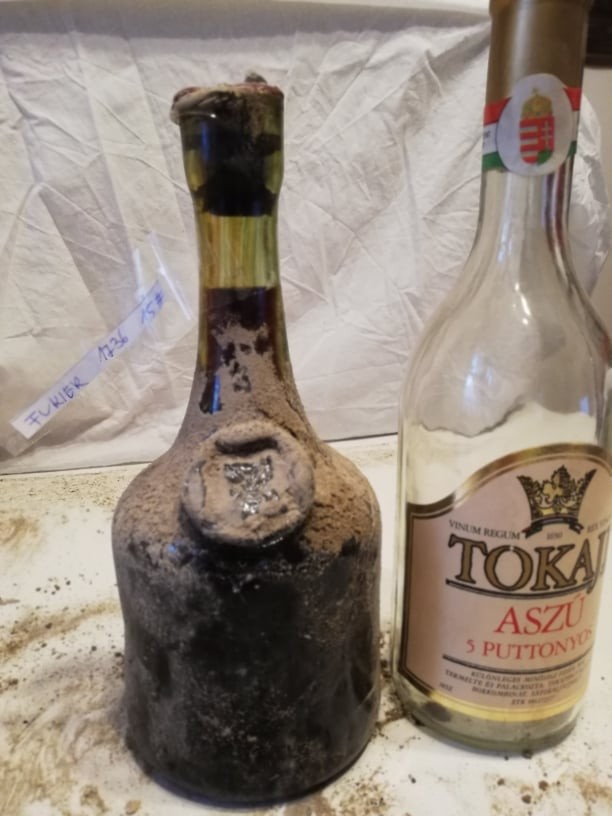
Fukier cellar mark and Saxon glass seal
A bottle carrying two independent marks from two different houses: the painted cellar number of the Fukier house in Warsaw, and an applied glass seal with the crossed swords of the Saxon Hofkellerei.
The form is a tall-shouldered cylinder in dark olive glass, standing about level with a modern Tokaji Aszú bottle but noticeably heavier in the wall. The lower body and base are caked in cellar deposit; higher up the glass shows green where a patch has been cleared. The cork is capped in dark red sealing compound, cracked but complete, with a cord still visible under the rim.
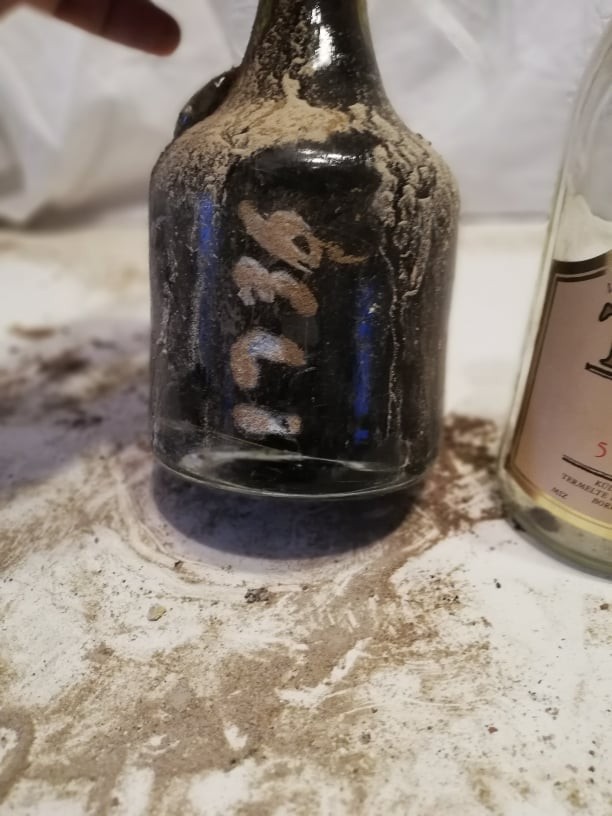
The bottle at scale with its shoulder seal, the painted cellar mark, and the sealed cork · click any image to enlarge
The Fukier cellar mark
A number is painted directly onto the lower body in the pale paint the Fukier house used on its own bottles, applied to the glass rather than to a label so that it could not be transferred. The practice, and the codes that went with it, are described under cellar marks; the cellar itself on the Fukier Cellar page.
The Saxon glass seal
On the shoulder sits an applied glass seal bearing the crossed swords of the Saxon Hofkellerei, the electoral mark familiar from Meissen porcelain. Being part of the vessel, it cannot be moved to another bottle. See Royal Saxon Cellar.
Two marks from unrelated houses on one bottle is the useful part. Each was made by a different party for a different purpose, and neither could be added later without disturbing the other — the situation set out under combined examination techniques.
1754?
Three dates, and no agreement between them
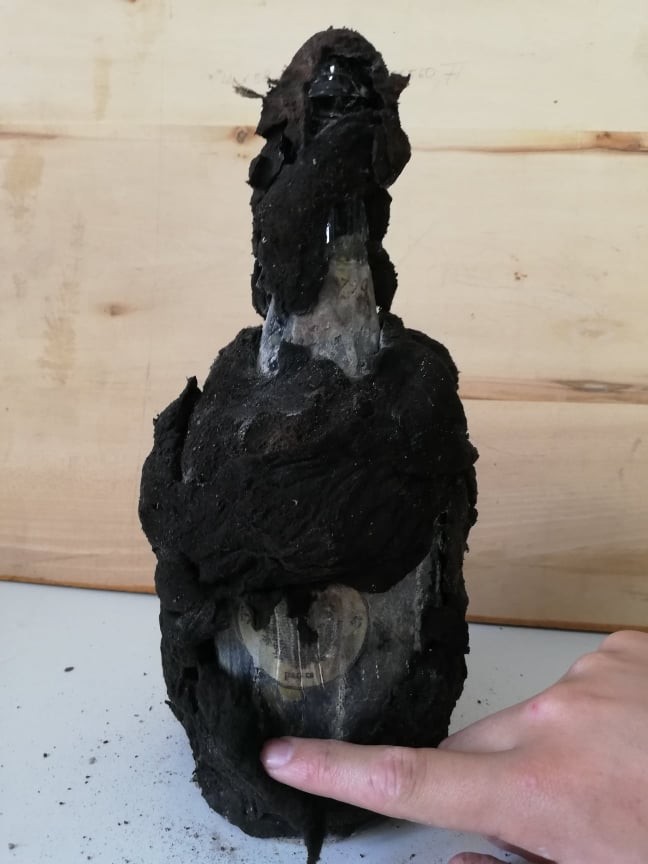
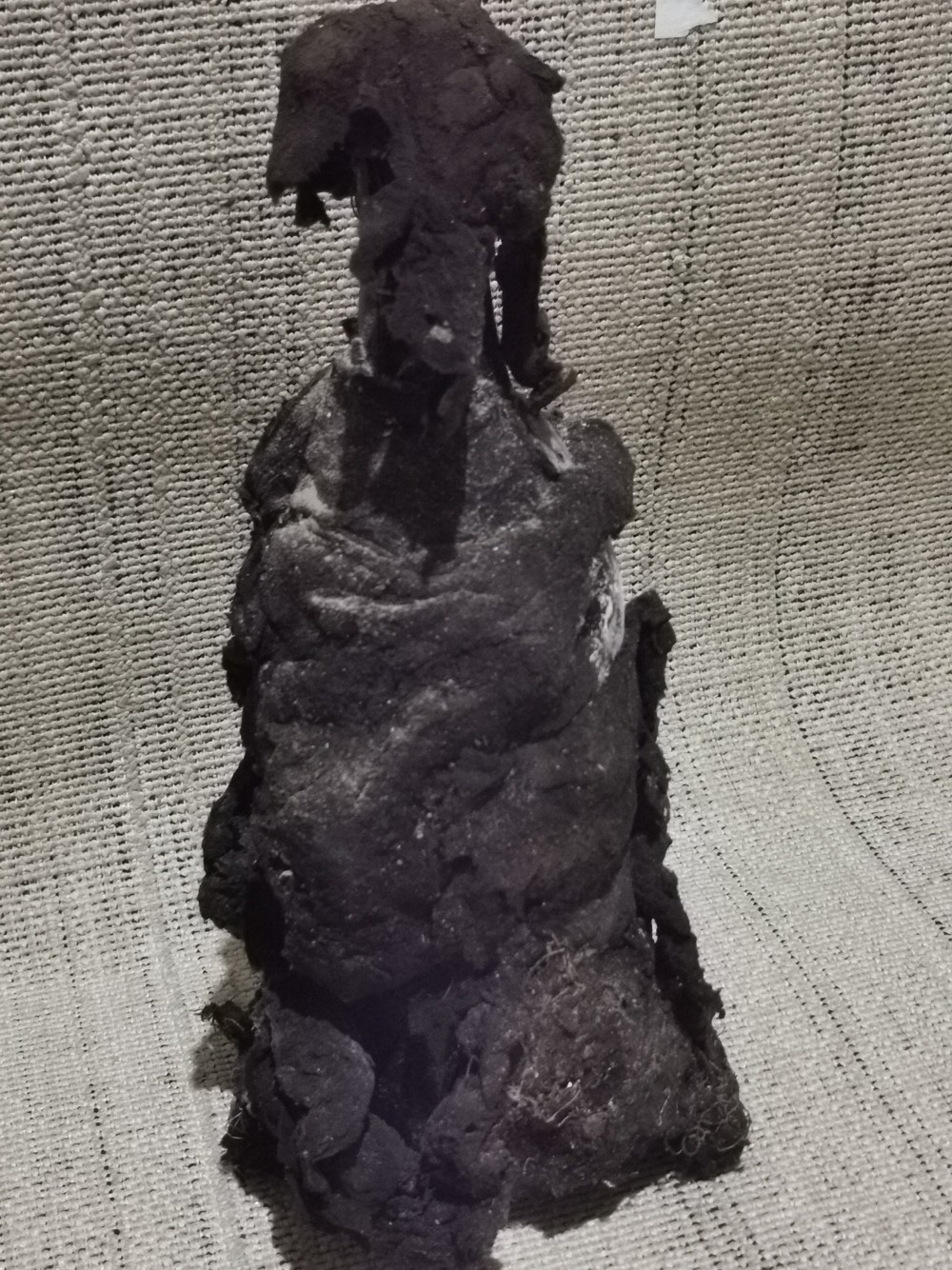
A bottle carried out of the cellar under a thick black hide of Cladosporium cellare — some of the most striking mould growth in the collection — with a neck label, a stamped paper on the body and a written date in the base. No two of them say the same year.
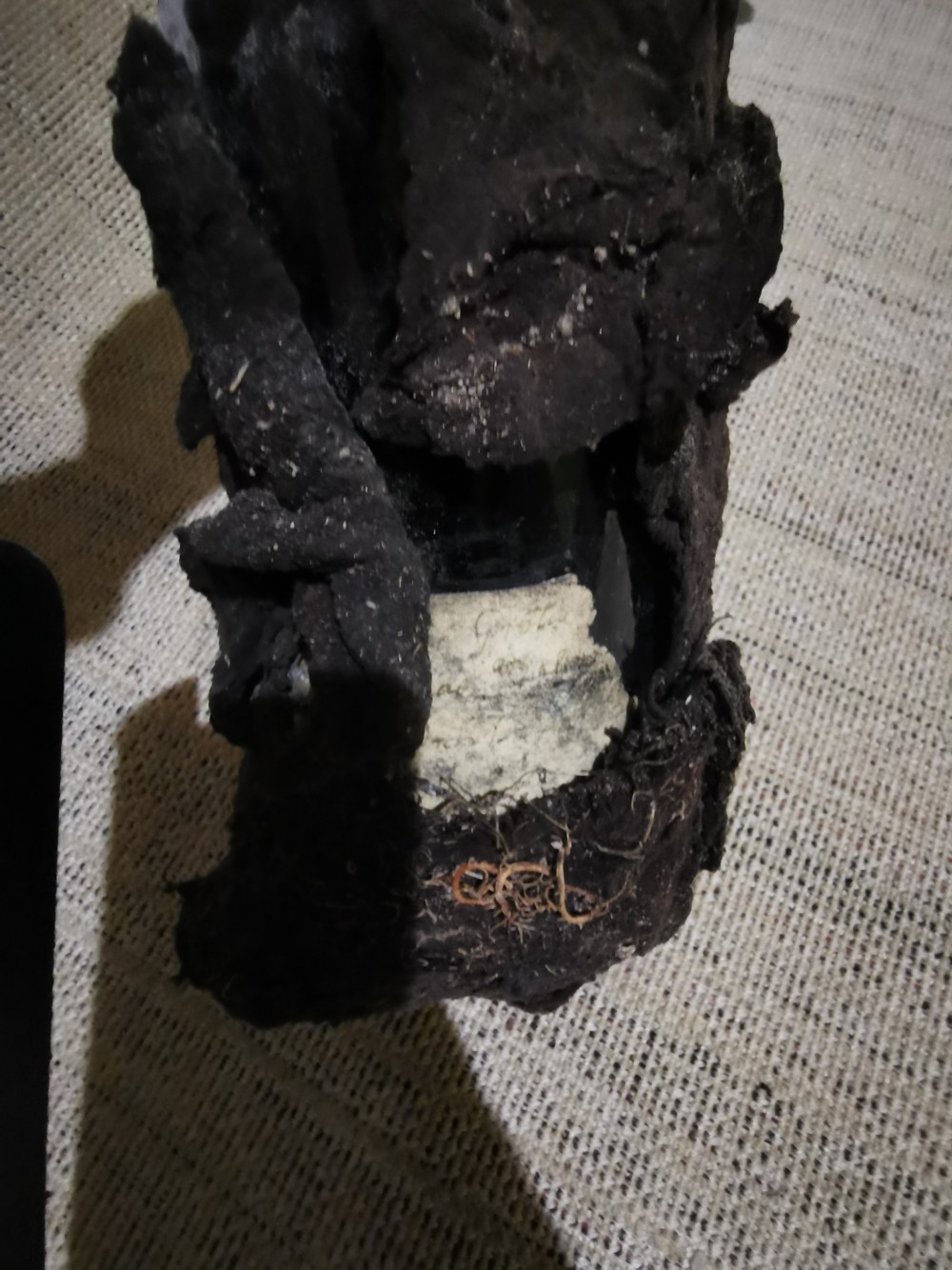
The wrapping has grown into a single crust over shoulder and body, split open in places where the glass shows through. Where the covering has been eased back, three separate inscriptions come to light.
The bottle as found, and the three inscriptions: neck label, stamped paper, and the writing at the base · click any image to enlarge
The three dates
A nyakán lévő címkén 1749, vagy 1759 áll, a stamped paper-en az 1765 év áll, és a palack aljába 1754-et írtak.
So the neck label gives either 1749 or 1759 — the middle figure cannot be read with certainty — the stamped paper gives 1765, and 1754 is written at the base. The bottle is filed here under 1754 with a question mark, since that is the only one of the three written as a plain statement of the wine rather than as the date of a sheet of paper or a hand that may have been guessing.
The stamped paper sets a limit rather than a vintage: 1765 is the year the sheet was issued, so it cannot have been applied earlier, and the wine may well be older than that. The neck label and the base writing were made by different hands at different times, and at least one of them is wrong. Which is a fair illustration of the difficulty set out under the challenge of protecting a wine.
The mould
The covering itself is worth the photographs. Growth of this density needs decades of constant temperature and near-saturated humidity, and it has taken in the wrapping paper, the seal and the neck alike. See cellar mold coverage.
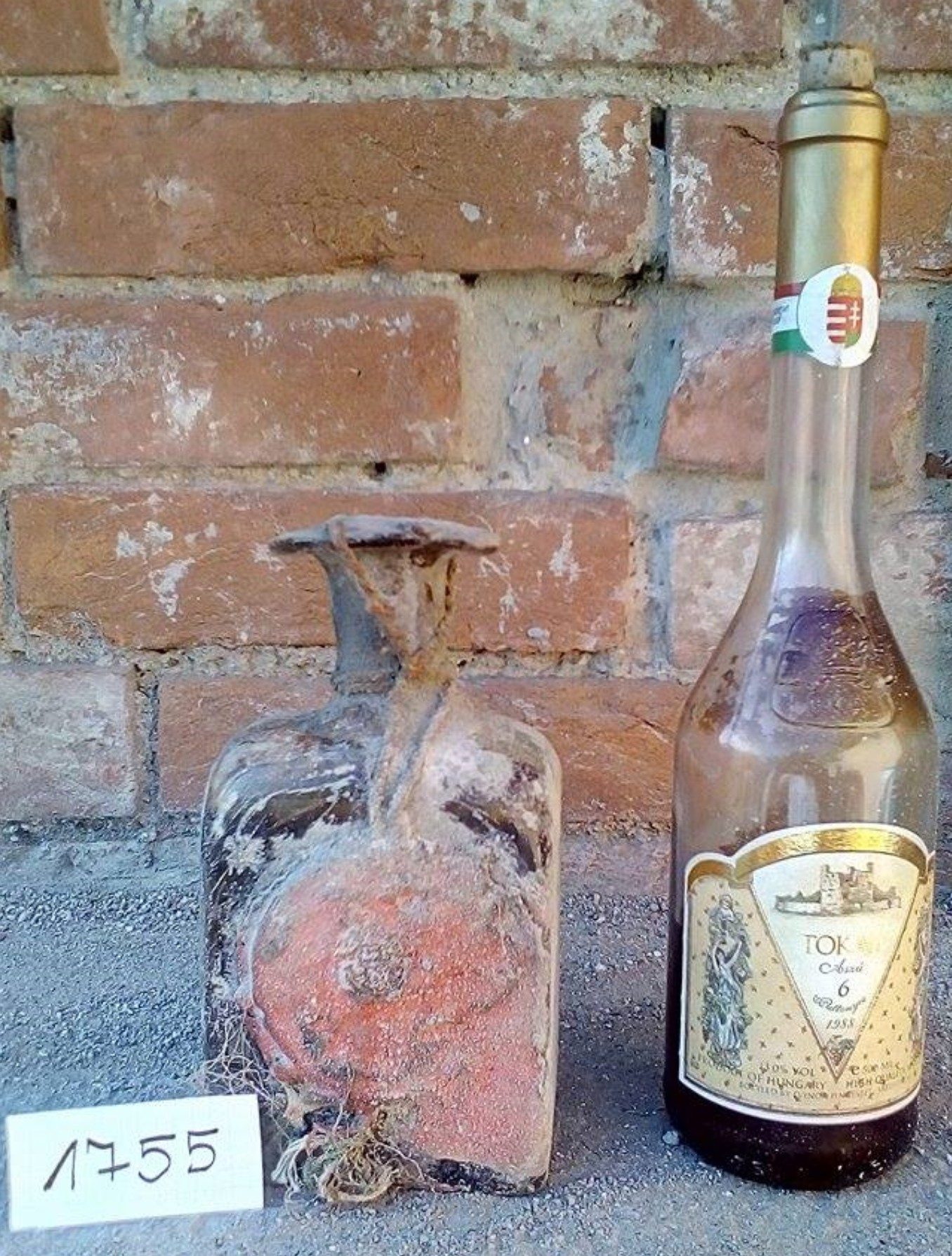
1755
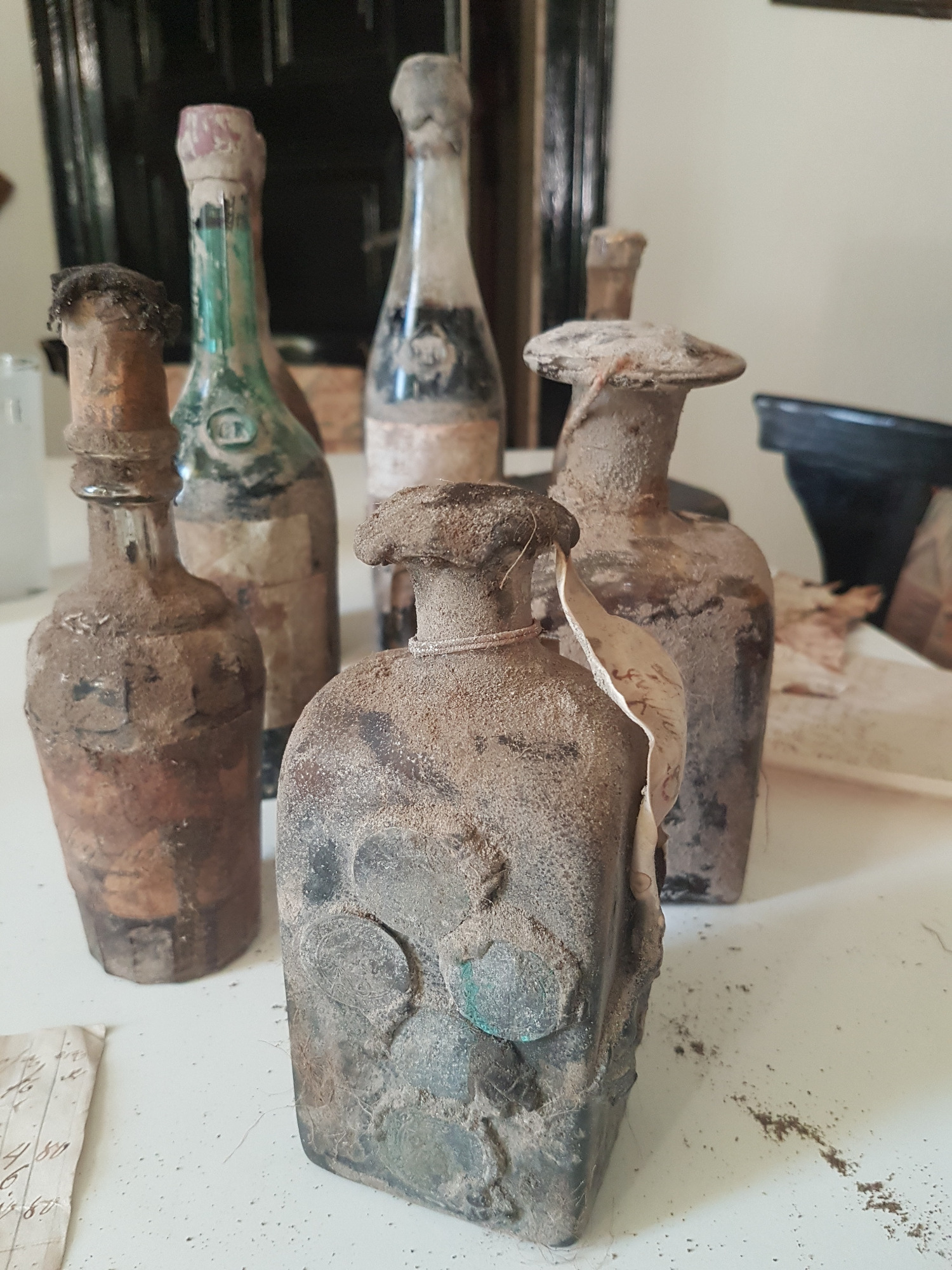
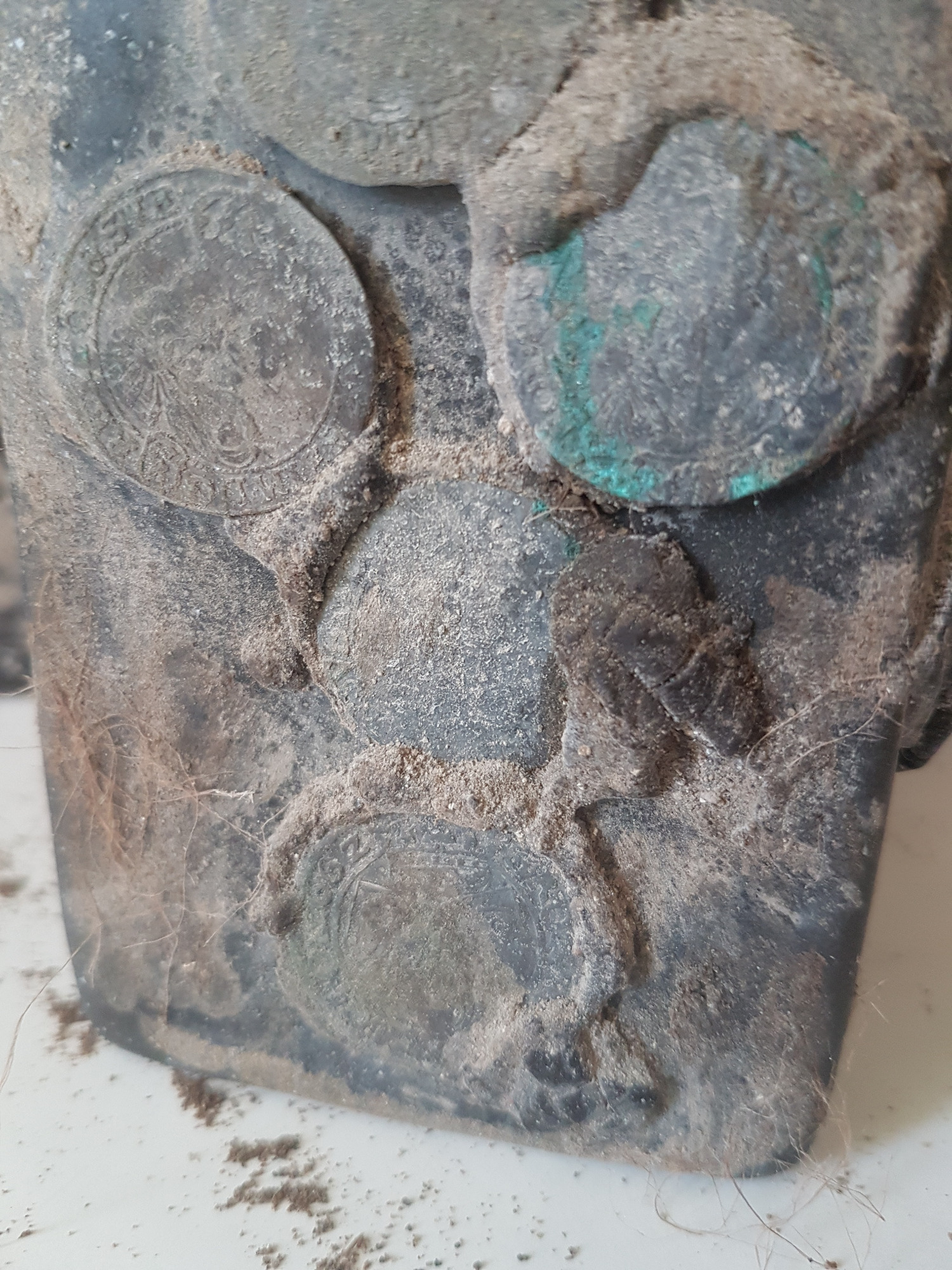
Square flask with a red seal
A small square-sectioned flask with a short neck and a broad, flat lip, closed with a cord tied under the collar. A large red seal covers most of the front face.
The glass is pale and clouded with cellar deposit; the shoulders are square and the corners rounded, a form closer to an apothecary or spirit flask than to a wine bottle of the period. Standing beside a modern 500 ml Tokaji bottle it reaches only to the shoulder, so the capacity is well under half a litre.
Very little is known about this bottle. The seal is heavily eroded and no legend can be read from it, there is no label and no document came with it. What can be said is what is visible: the form, the cord closure, and the red sealing compound.
The flask at scale against a modern 500 ml bottle · click to enlarge
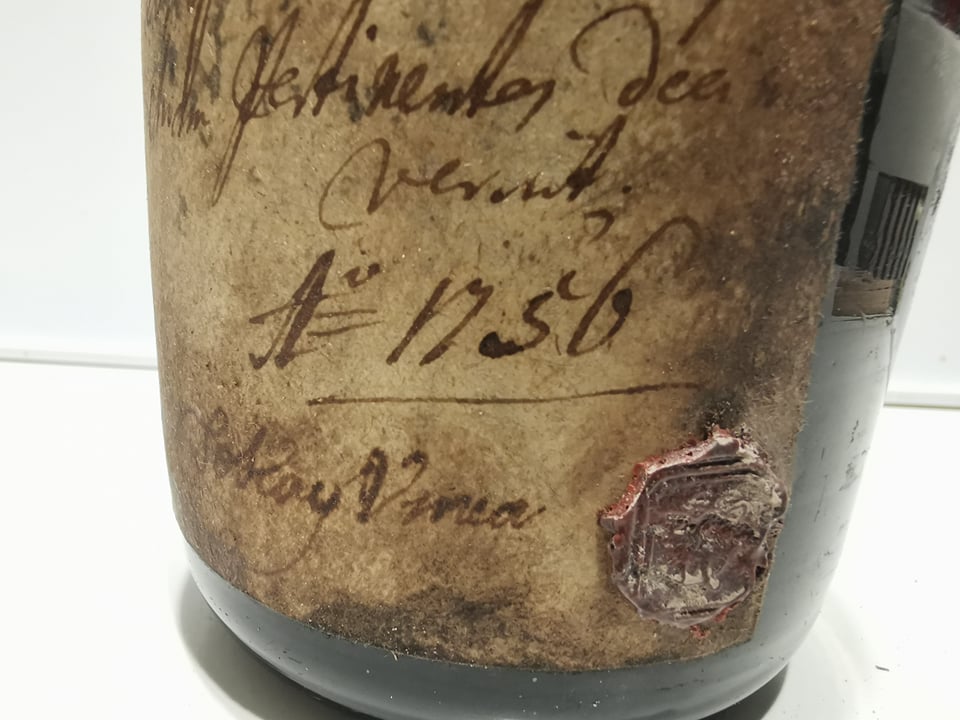
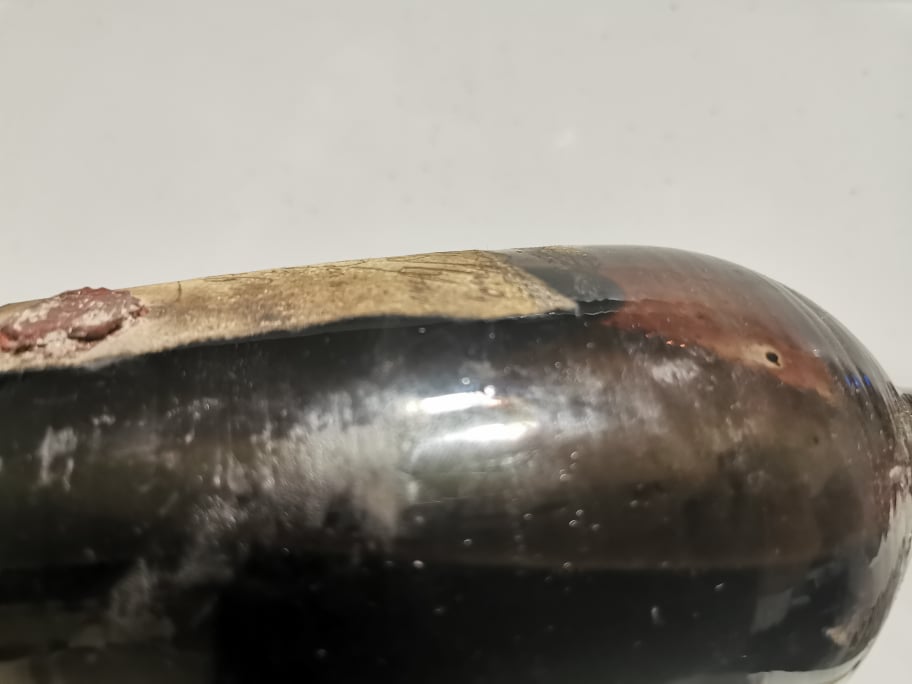
1756
1756 Rákóczi Bottle
Another bottle sealed with the coin die used to mint the last Rákoczi gold dukates in 1707, but in contrast to the 1704 bottle the coin front (obverse) was used. Three sealed Rákóczi bottles of vintage 1759 are mentioned in a related document from 1834 making clear that those sealed bottles were known and of course especially valuable. According to glass experts the bottle was blown in the glass manufactury of Regéc.
The 1756 Rákóczi bottle, obverse seal · click any image to enlarge
1758
1758 Maria Theresia Bottle
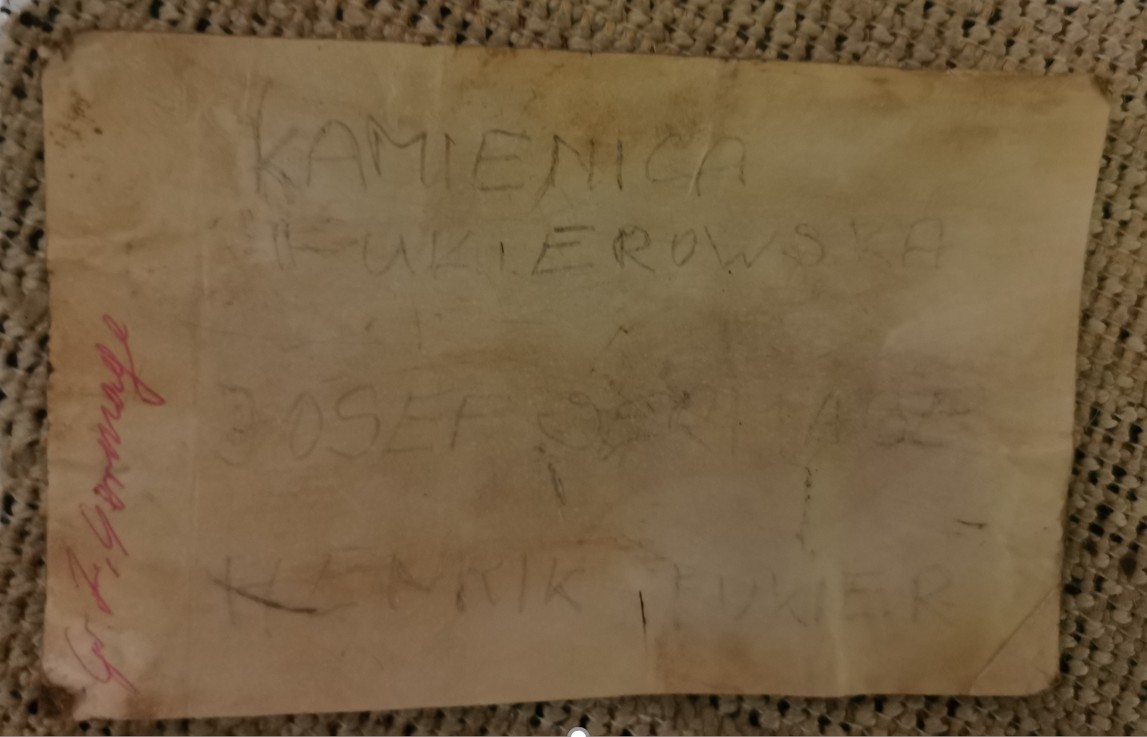
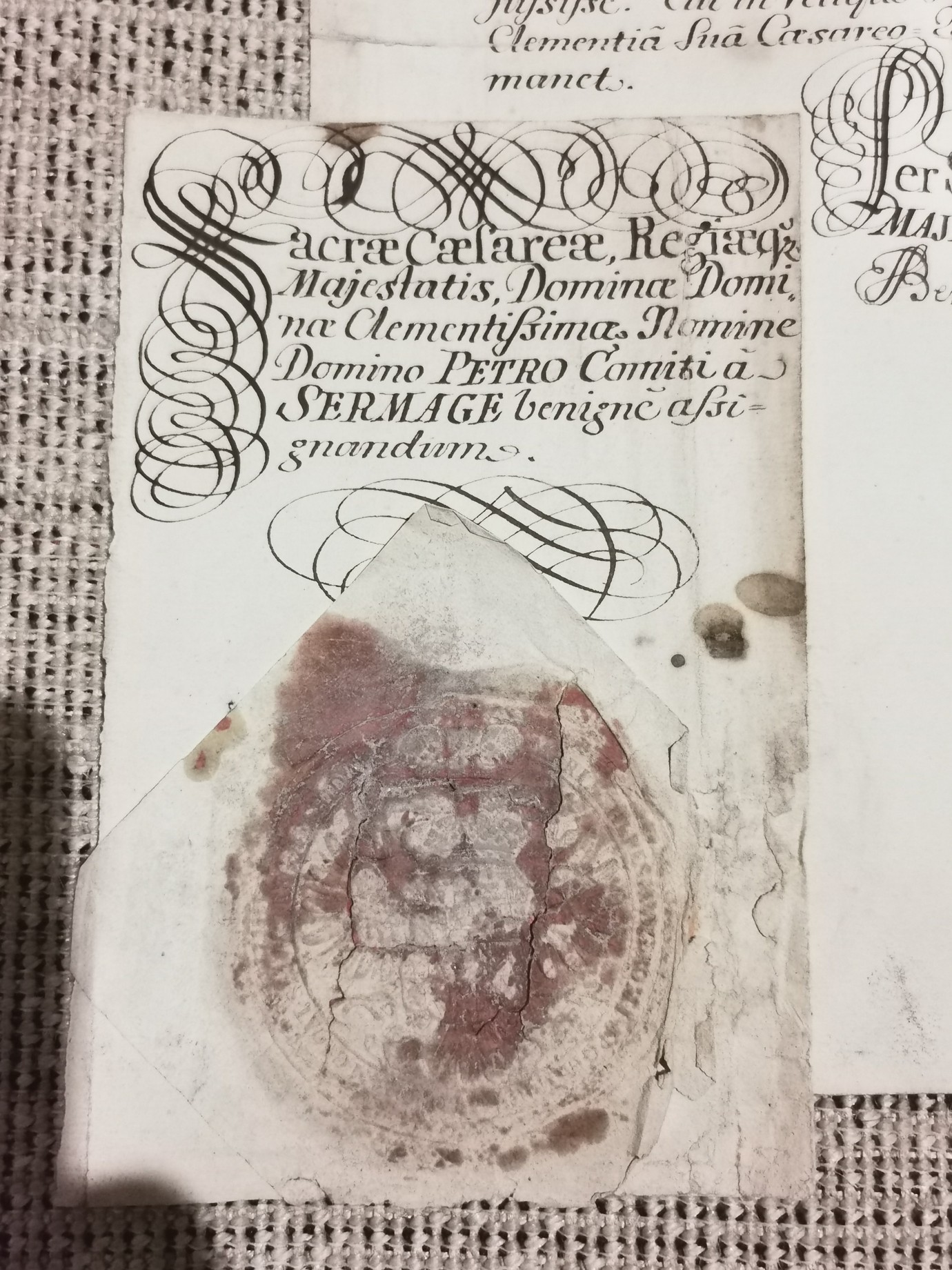
The only known Tokaji bottle sealed with the coat of arms of Maria Theresia. The bottle is well documented and indicates that it was bought in Warsaw from the Fukier house by Hungarian count Josef Sermage in the 1920s. The papers even contain a photograph of the count with Henryk Fukier and also a document mentikoning Sermage and bearing the seal of Maria Theresia. A subsequent paint analysis of the “1758” and “W”-letter allowed to clearly identify the bottle as of Fukier origin. The male line of the Sermage family ended in 1968 and the bottle probably changed ownership several times. It is privately owned.
The 1758 bottle with the Maria Theresia seal, and its papers · click any image to enlarge
1766
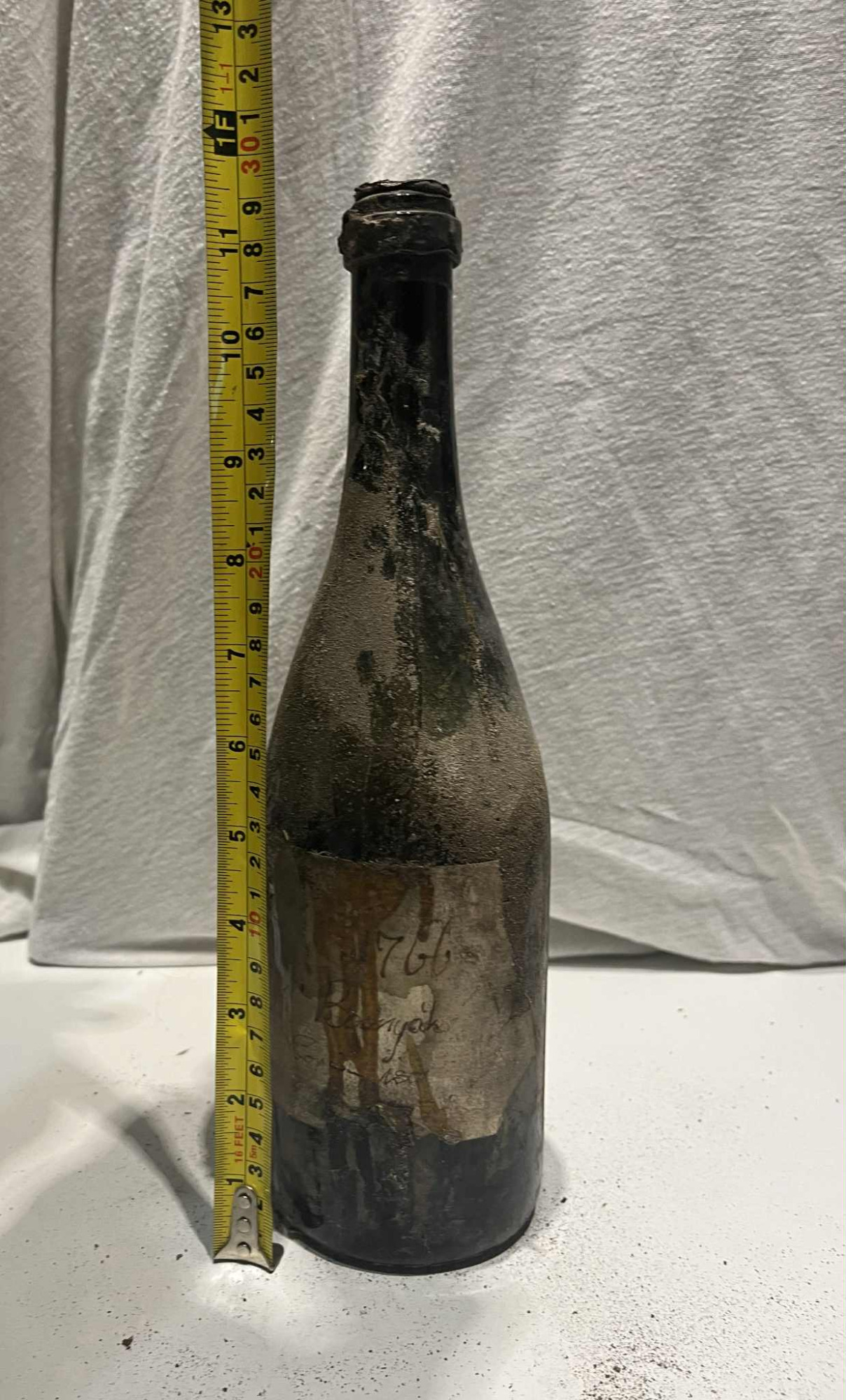
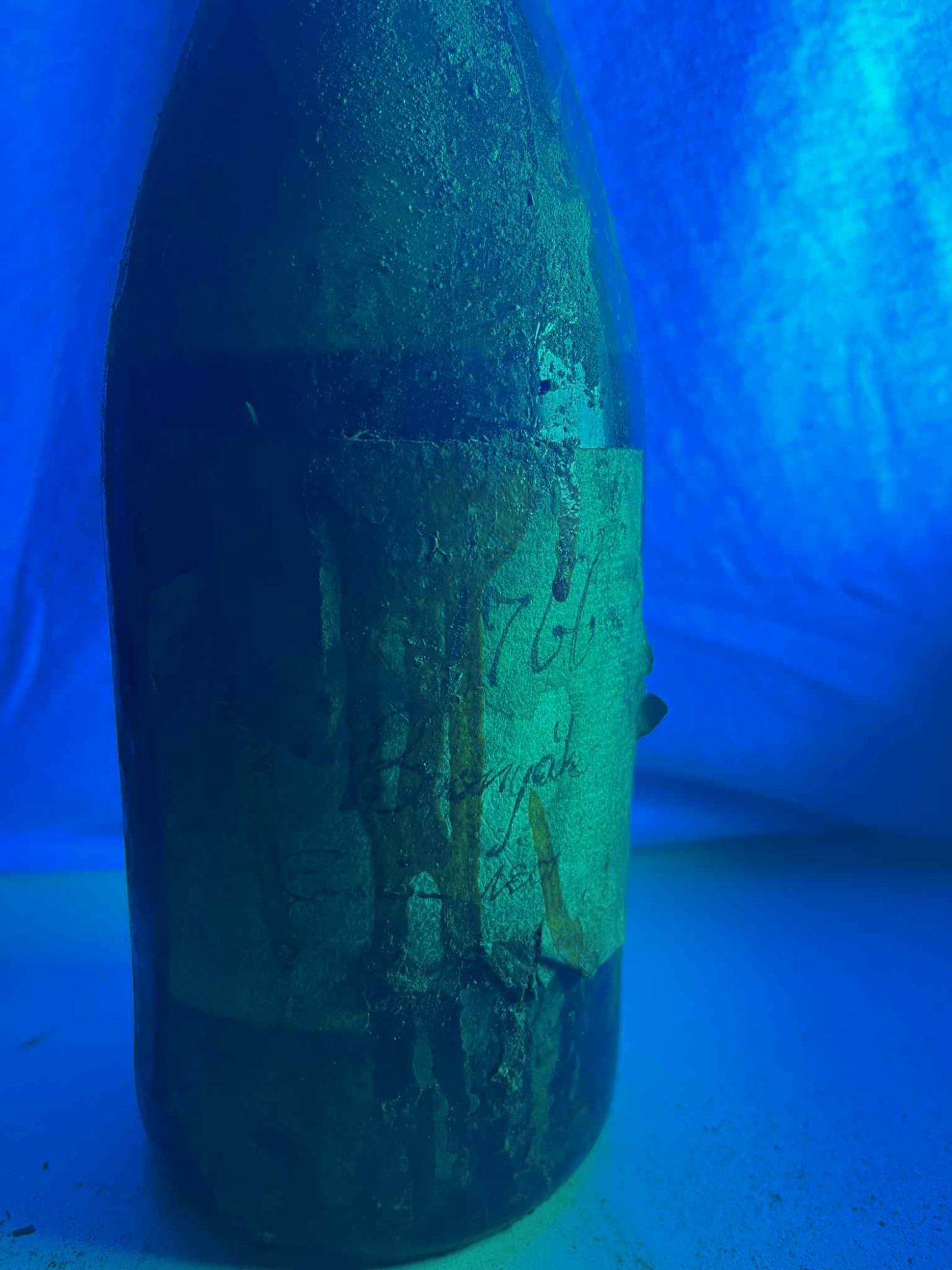
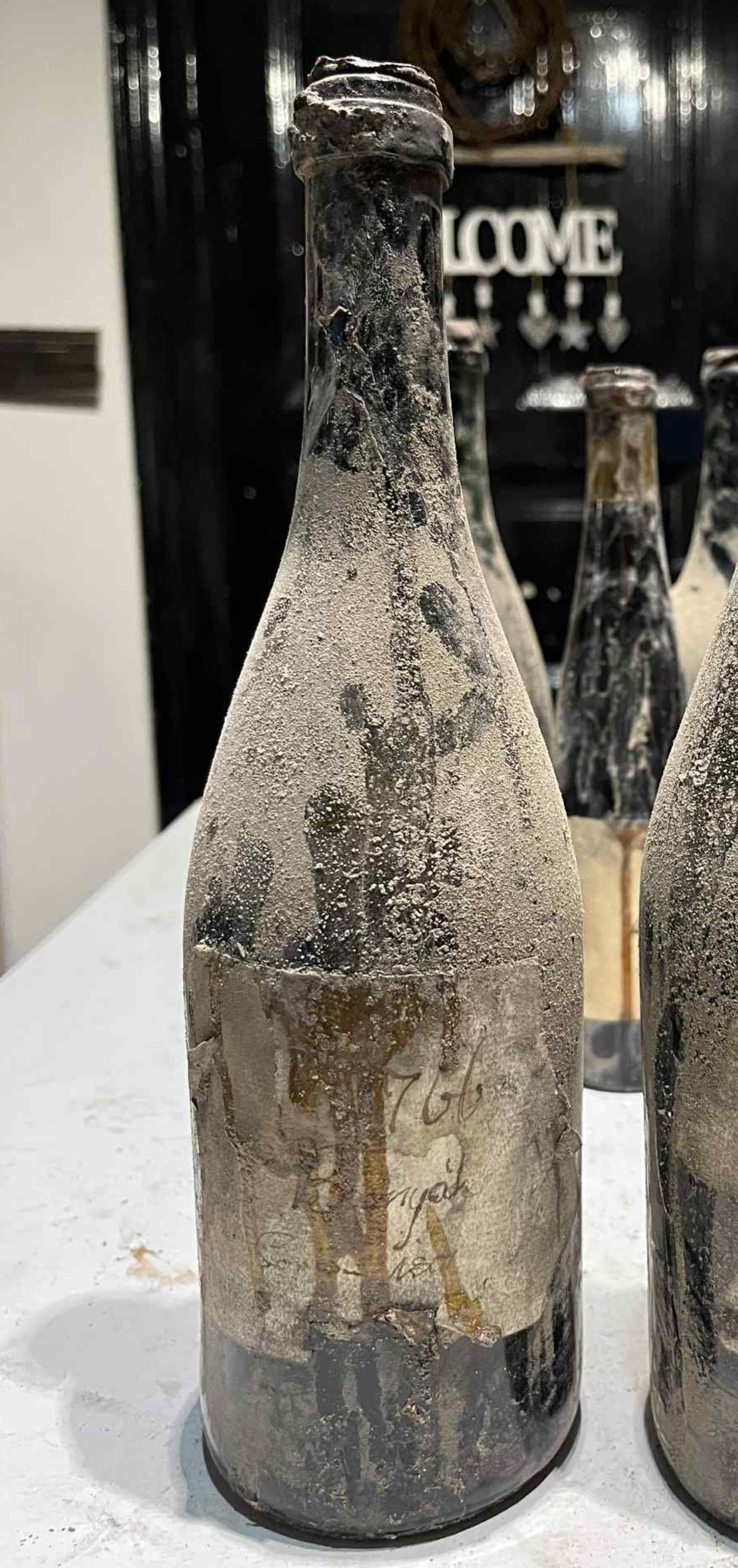
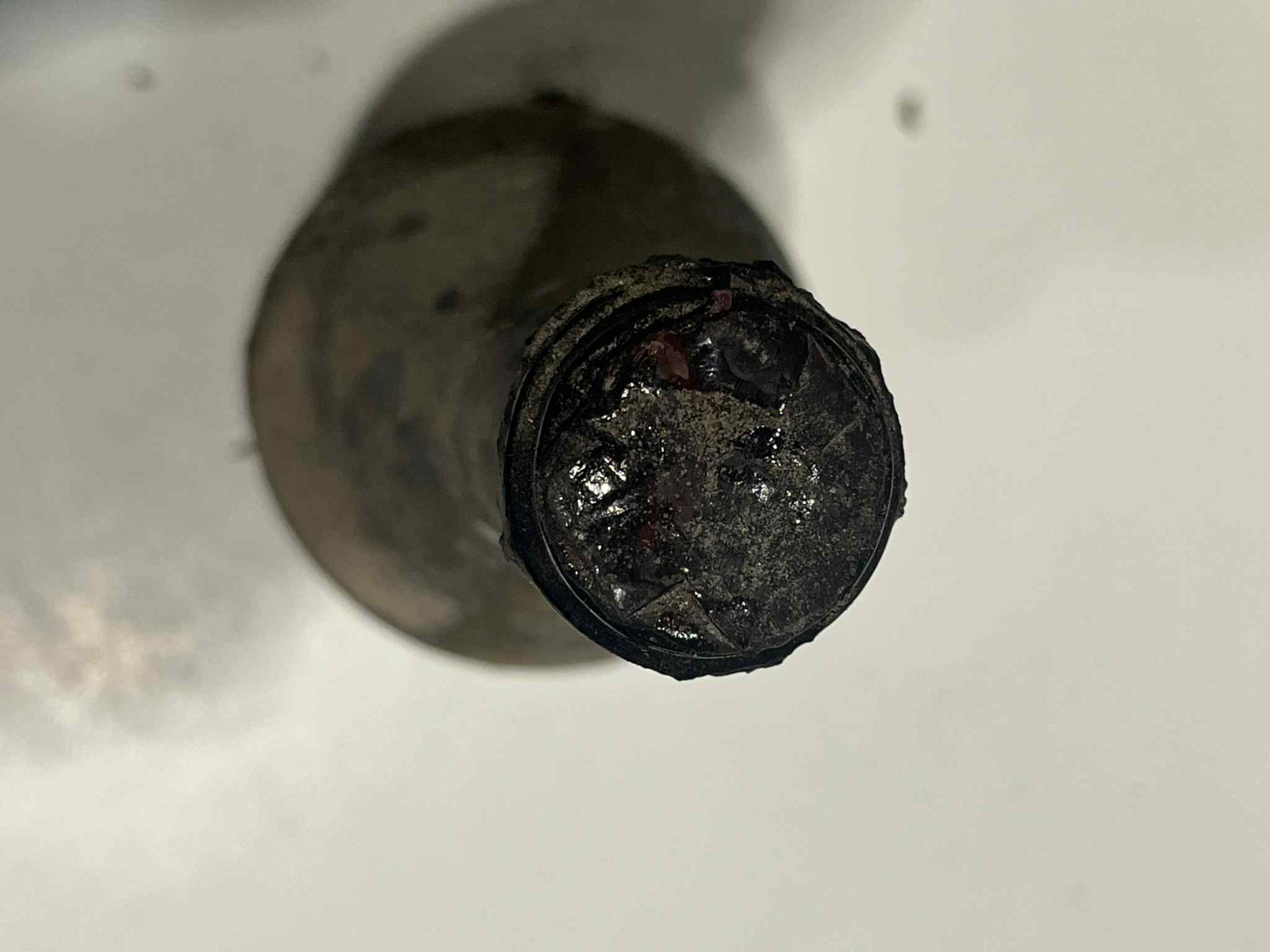
1766 bottle of kosher Tokaji
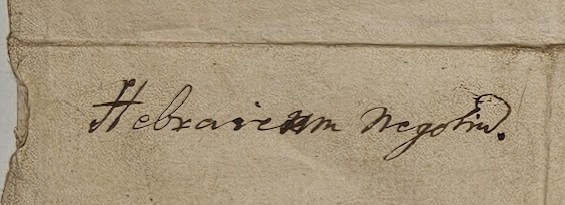
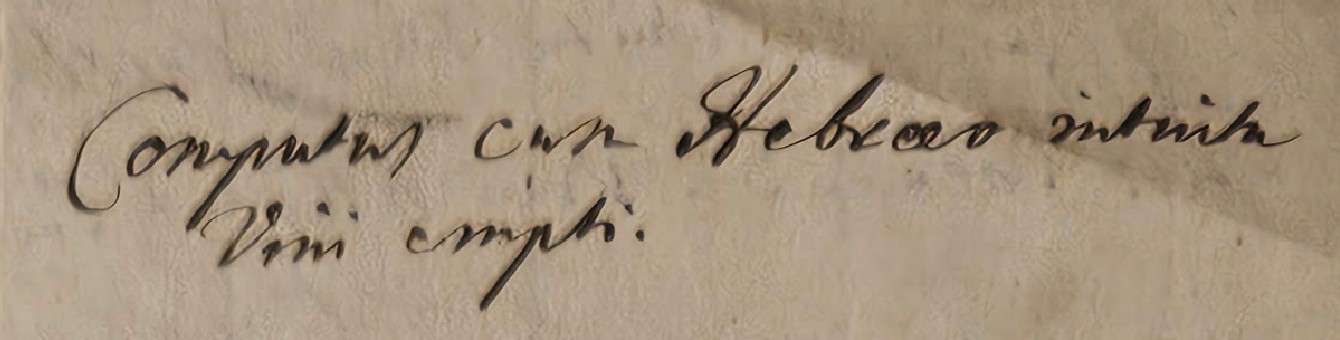
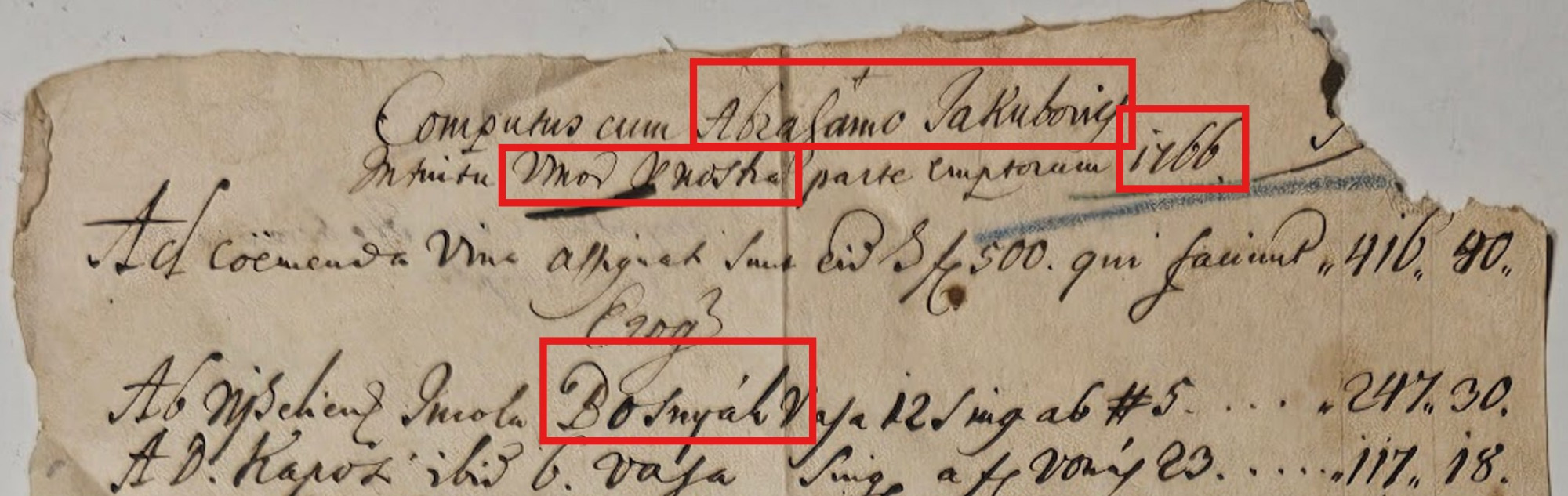
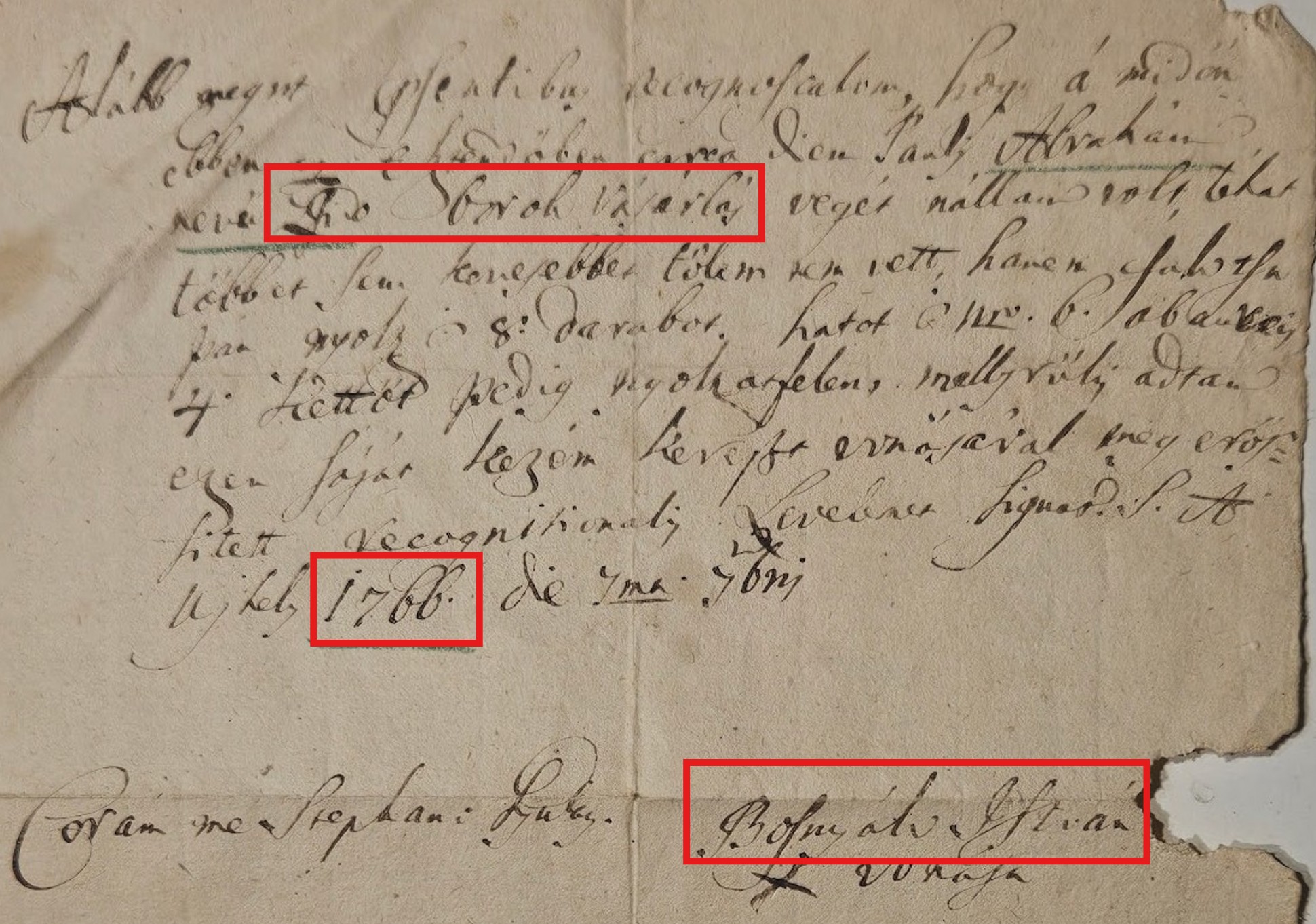
The oldest known bottle of kosher tokaji. The bottle is very well documented by two related documents from 1766, one of which being the contract about the sale of tokaji from jewish merchant István Bosnyák to a Abraham Jakubovics. In total, 2 bottles of this exceptioanlly rare wine are known.
The 1766 kosher Tokaji and the contract of sale · click any image to enlarge
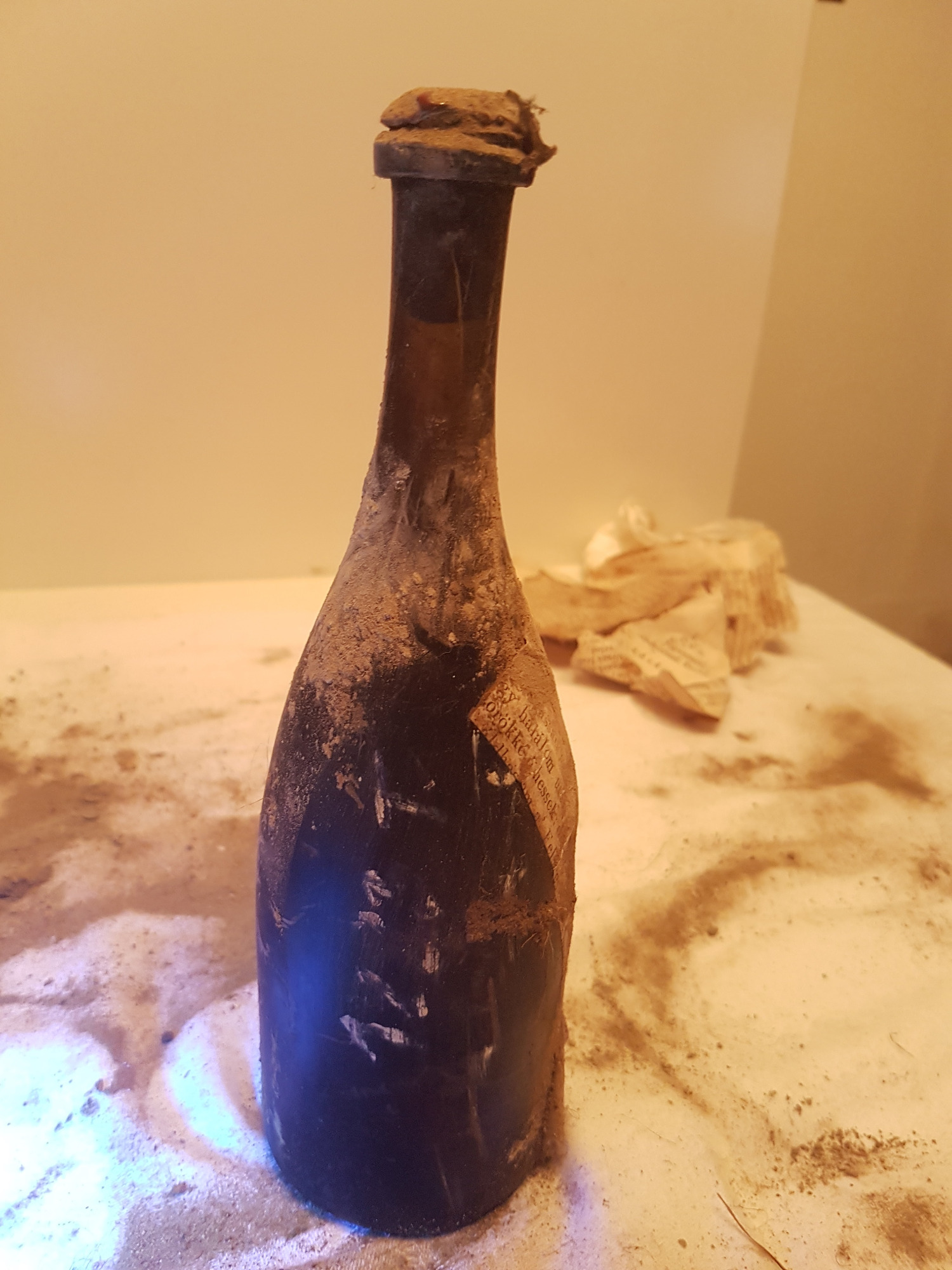
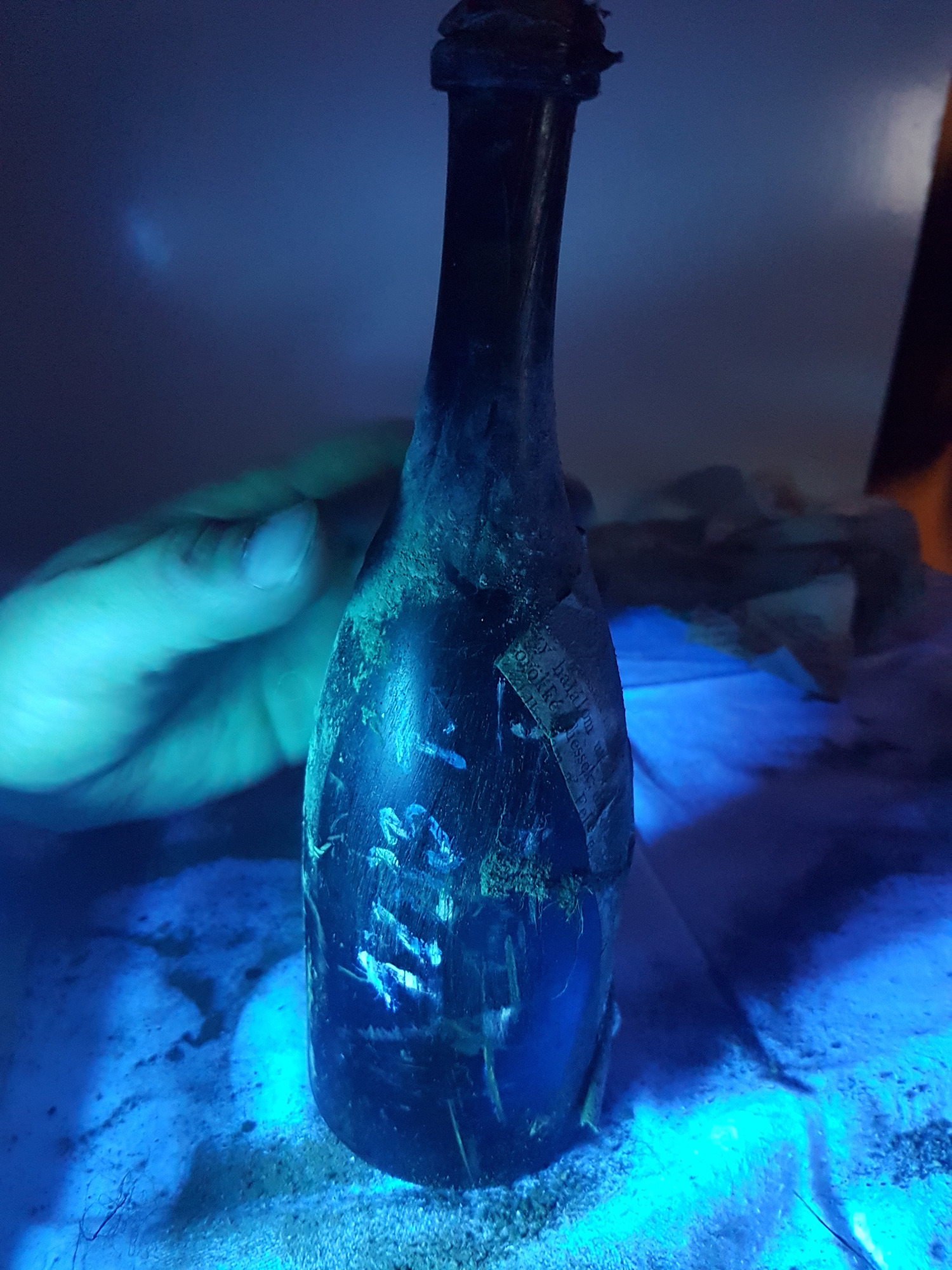
1783
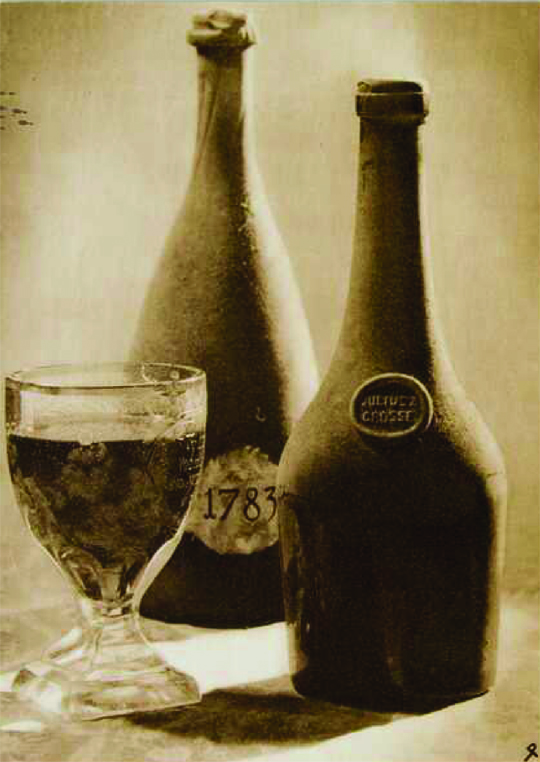
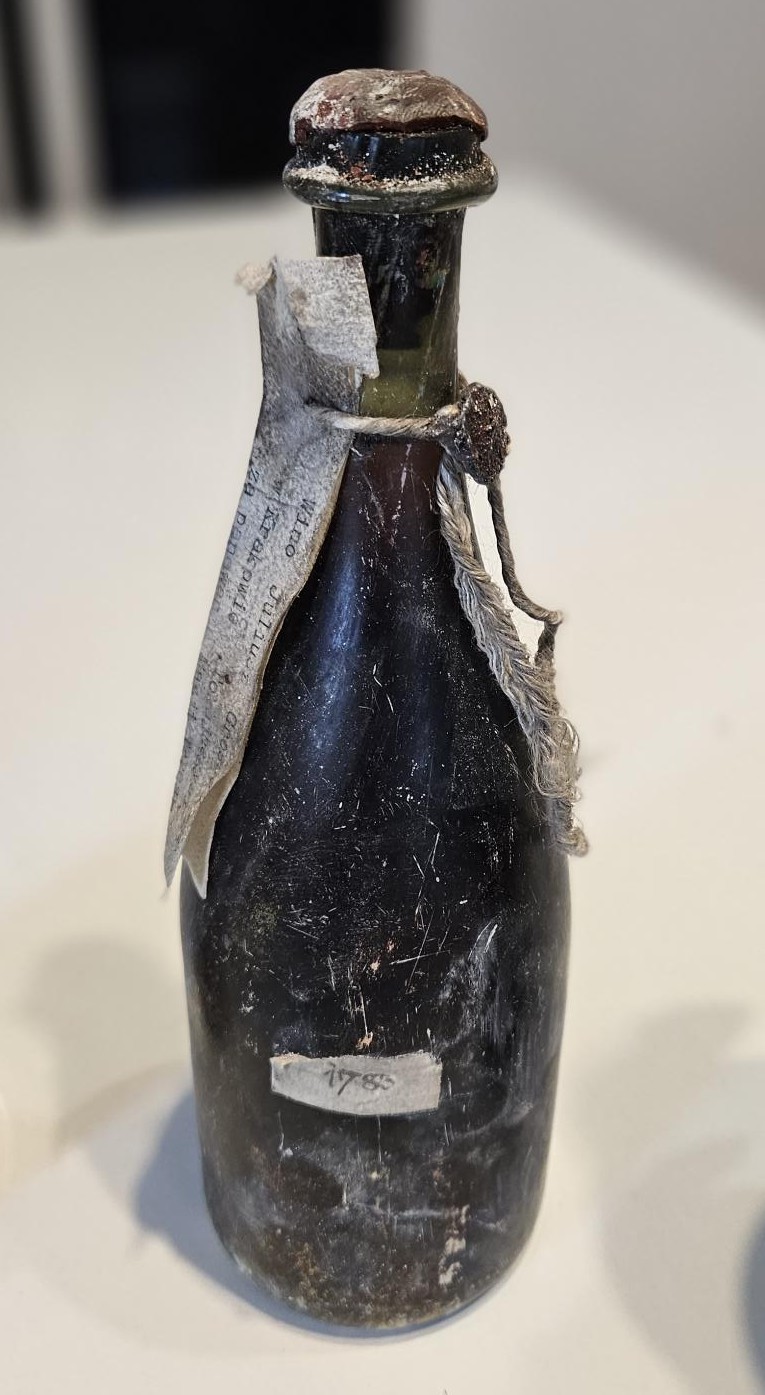
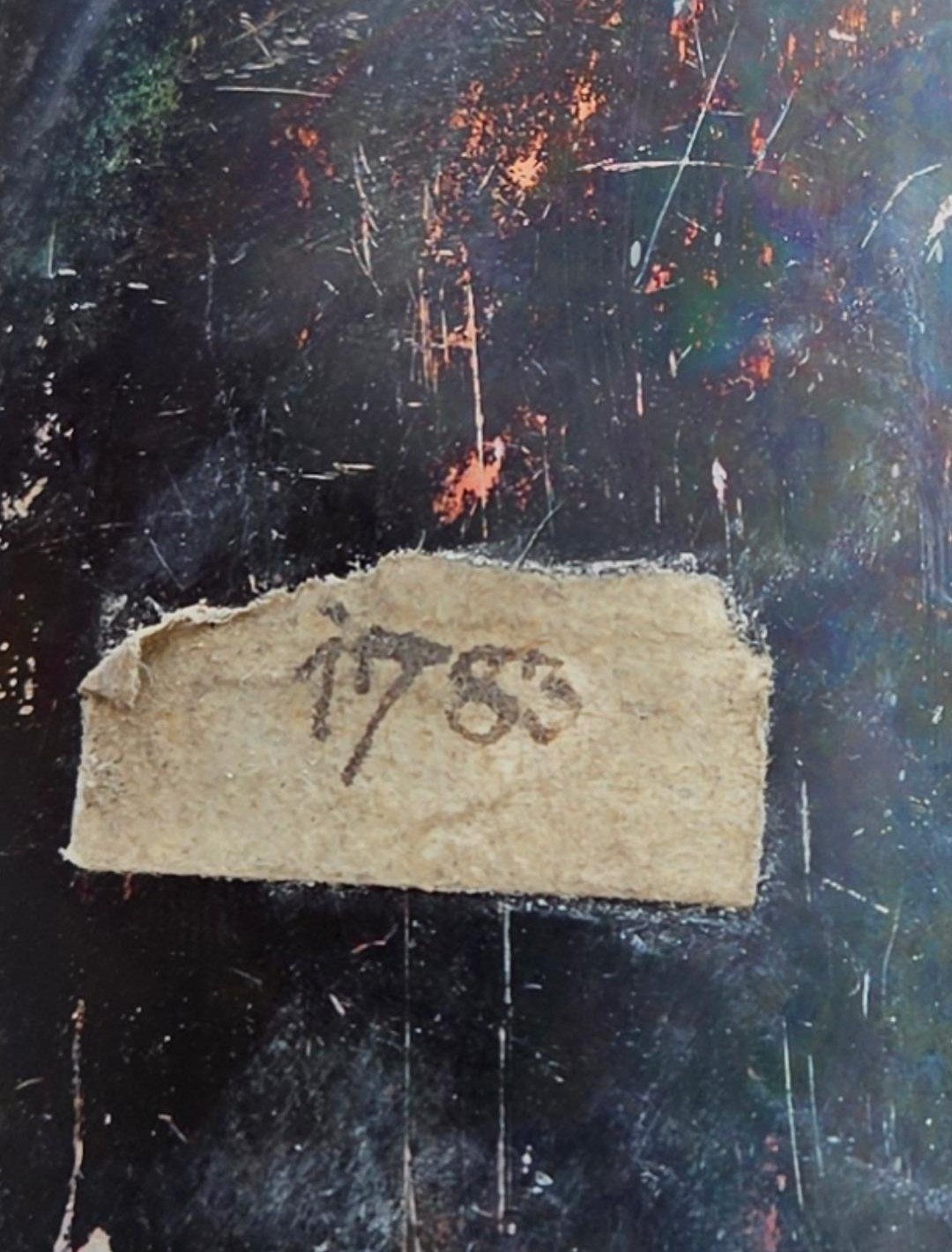
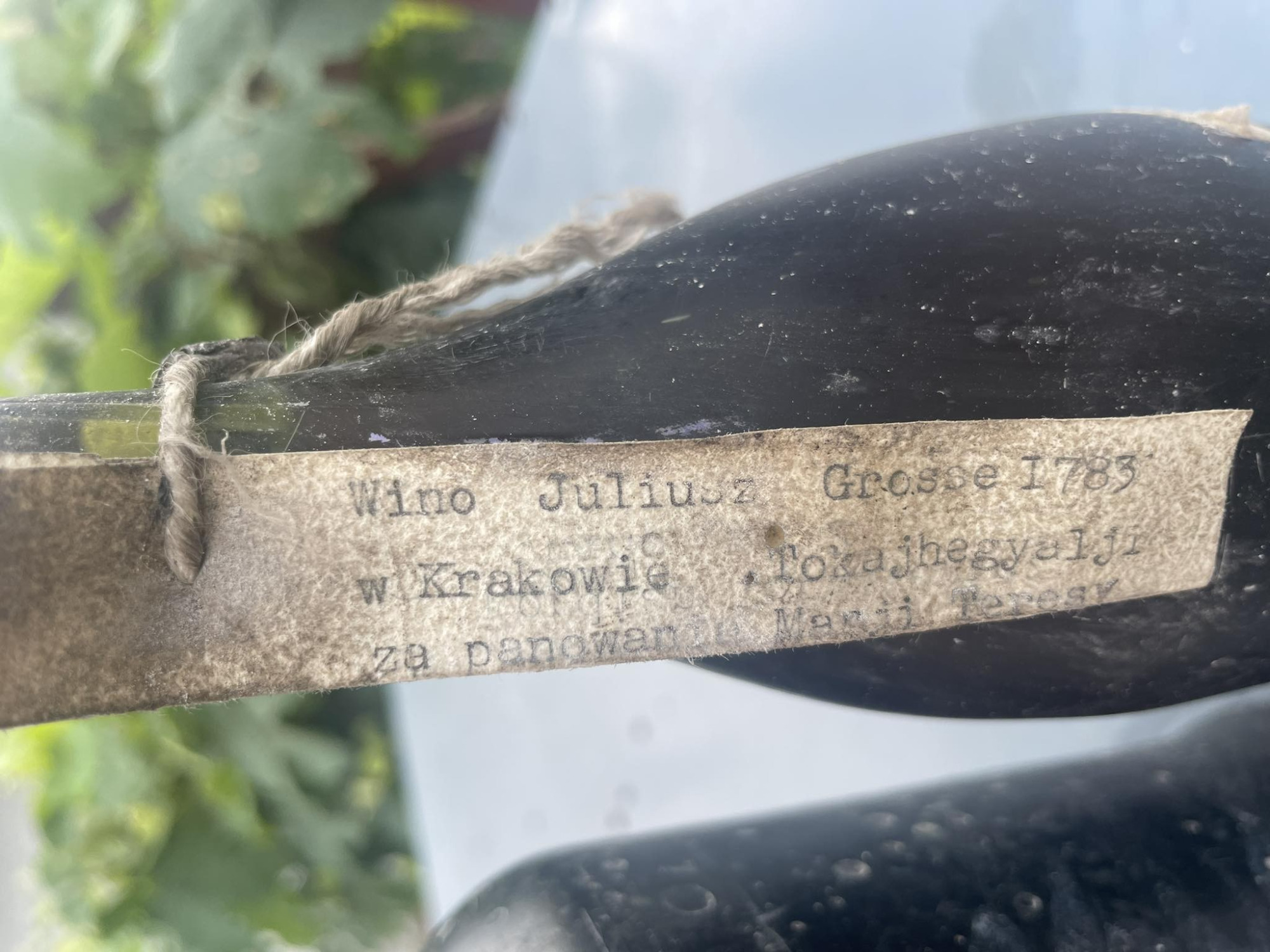
1783 Juliusz Grosse bottles linked to Oremus vineyard
Famous vintage and bottle type because it appeared in historic advertisements of Krakow based wine merchant Juliusz Grosse. This wine trading company not only owned the famous Oremus vineyard in the Tokaji wine region, but was the only other wine merchant next to Fukier that sold Tokaji that was more than 100 years. For more details I suggest reading Gabriel Kurczewskis article about Juliusz Grosse.
The first image is from a Juliusz Grosse advertising around 1930. The other images show one of two bottles discovered.
The reference to Maria Theresia probably comes from the unsupported claim that the Empress once personally owned the Oremus vineyard, while Juliusz Grosse claimed to be a co-owner the vineyard in the 1930-ies. It is known that the vineyard was once owned by the Austrian Imperial Court and the wine was probable made in that period.
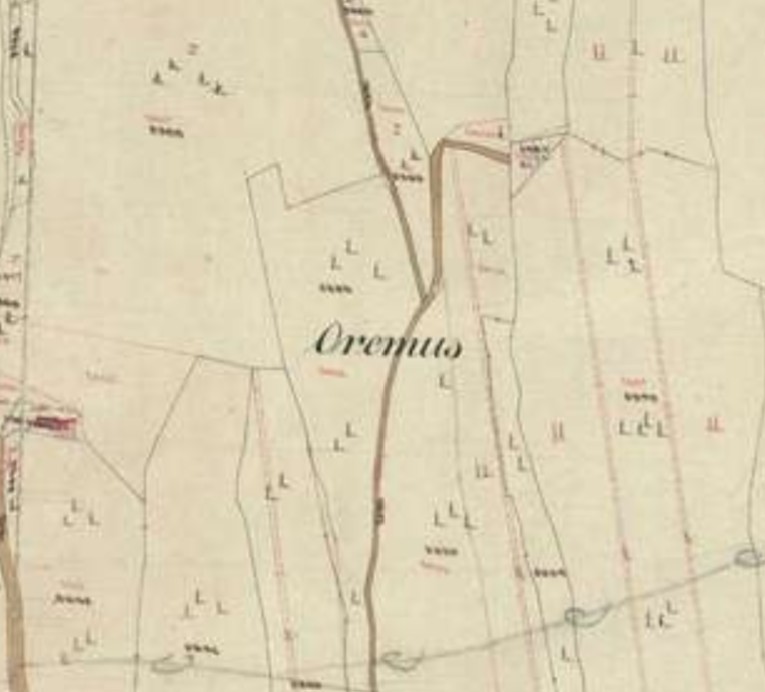
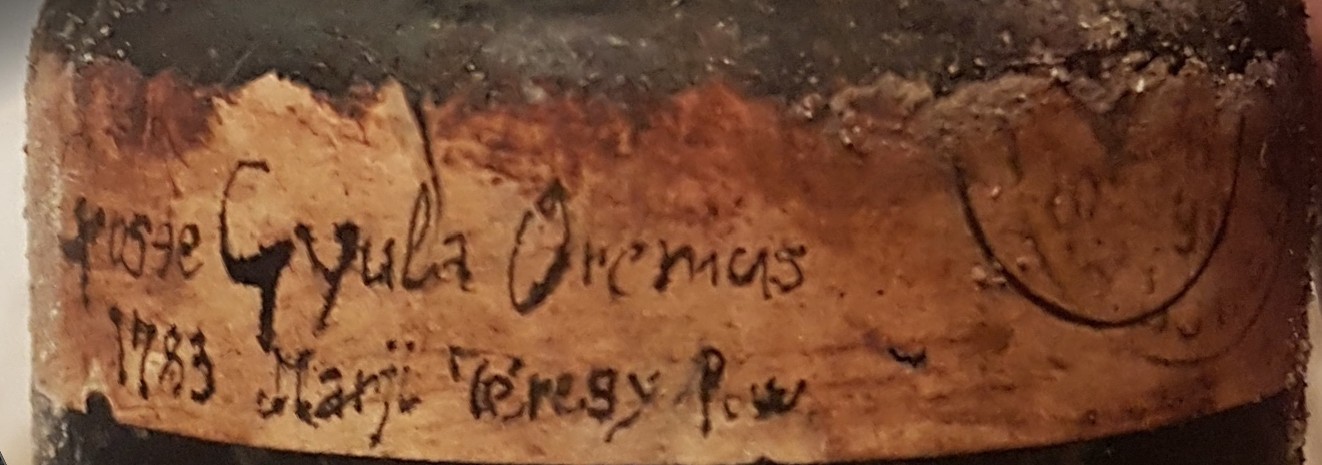
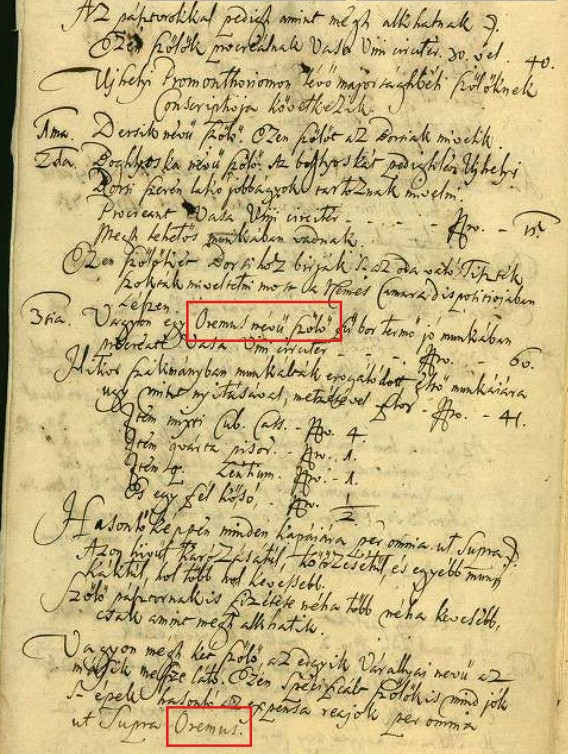
The Oremus vineyard, first mentioned in 1462, has a long and colorful history and had become iconic by another story - the soundly refuted myth that around 1630 the first Tokaji aszú was produced from grapes of that vineyard. The second known tokaji bottle of Juliusz Grosse is also from 1783 and a label on the bottom of the bottle mentions Empress Maria Therese as well as Oremus (see the last image below). This makes the second bottle very unique: it is not only the only very old single vineyard Tokaji bottle known but maybe the only single vineyard Aszú from the Oremus vineyard. The 5ha Oremus vineyard is located near Sátoraljaújhely and belongs to the renowned Oremus wine estate in Tolcsva, owned by Vega Sicilia. From there the winery produces an excellent dry white wine, called Petrács and made from Zeta and Muscatel grapes. Recently those vines were replaced by Furmint, and the wine world can hope for a single vineyard Aszú from this historic place.
Juliusz Grosse advertising and the two 1783 bottles · click any image to enlarge
1786
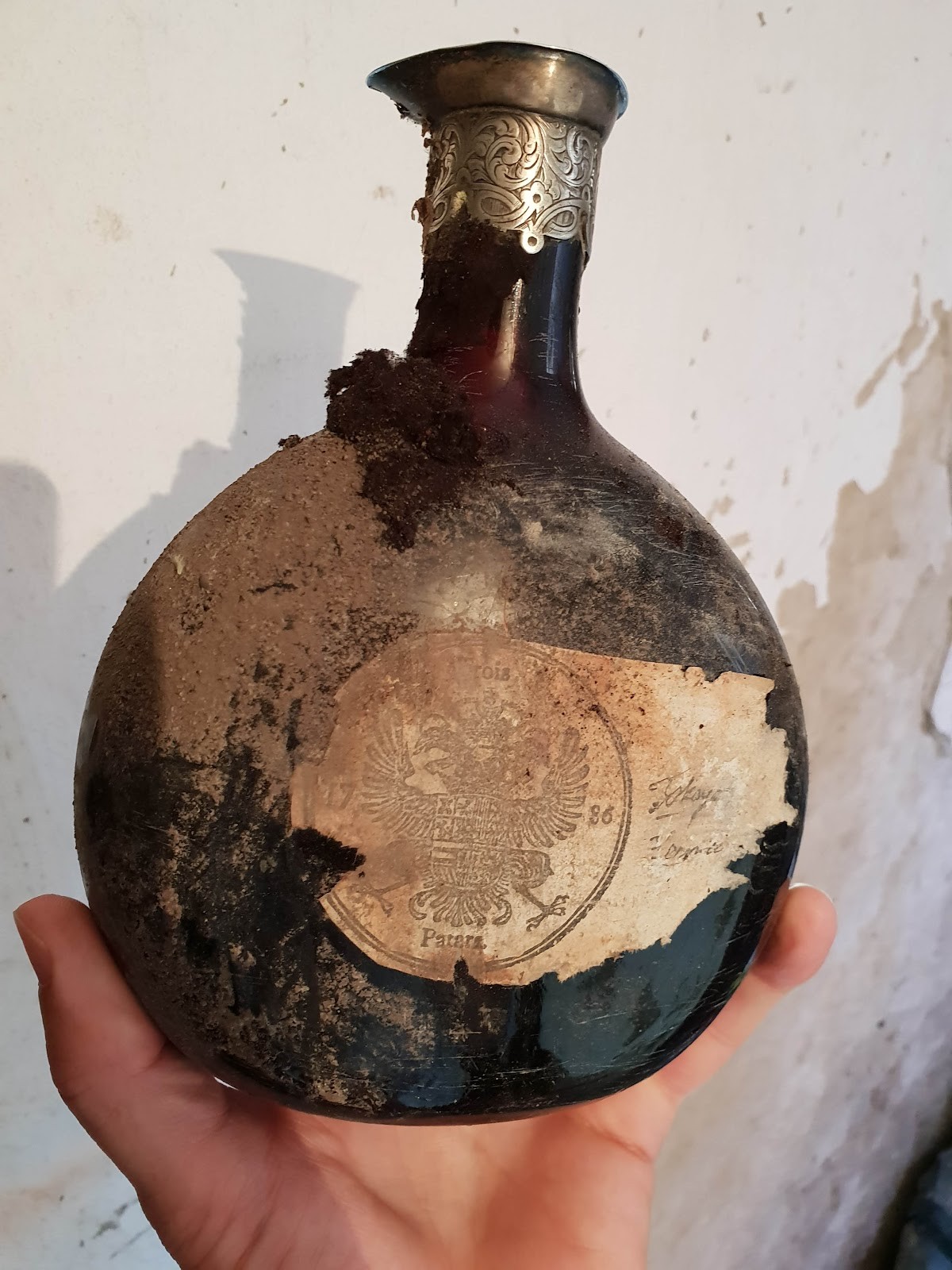
Flattened globular flask with stamped paper
A flattened globular flask in very dark olive glass — black in reflection, dark amber-red where light passes through the neck — with a silver collar whose lower band carries freehand rococo engraving. The form is the pilgrim or moon flask, the same wide, low-shouldered shape James A. Roy saw in the Fukier cellar in 1919 and described as “crinoline-shaped”.1
The label is not a wine label but fiscal paper: a crowned double-headed eagle in a double circle, legend TROIS above and PATARS below, the date split by the design, 17…86. Stamped paper of the Austrian Netherlands under Joseph II, three patards. The manuscript beneath reads Tokay, and below it Hongrie.
The year on the papier timbré gives a terminus post quem only. It is the year the sheet was issued, not necessarily the vintage of the wine.
The flask as found: engraved collar, and the stamped sheet pasted to the body · click to enlarge
1 · James A. Roy, Pole and Czech in Silesia (London, 1921), pp. 110–111, on his 1919 visit to the Fukier cellar — quoted in full on the Fukier Cellar page. Denomination and stamp: Patard · Stamped paper
1788
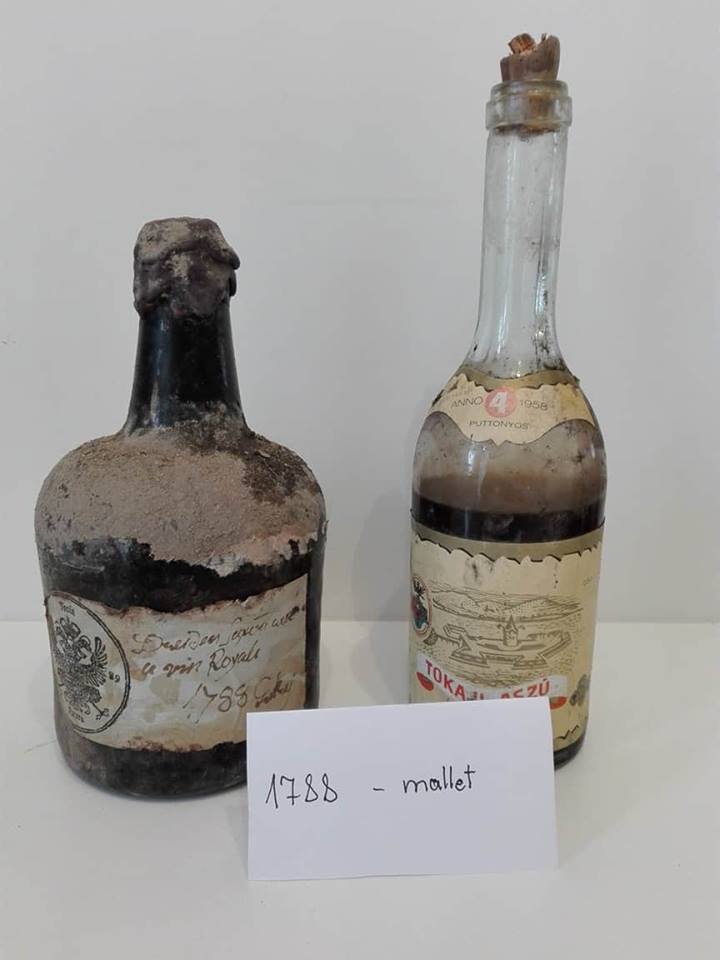
„Vin Royal“ — a mallet bottle inscribed for Dresden
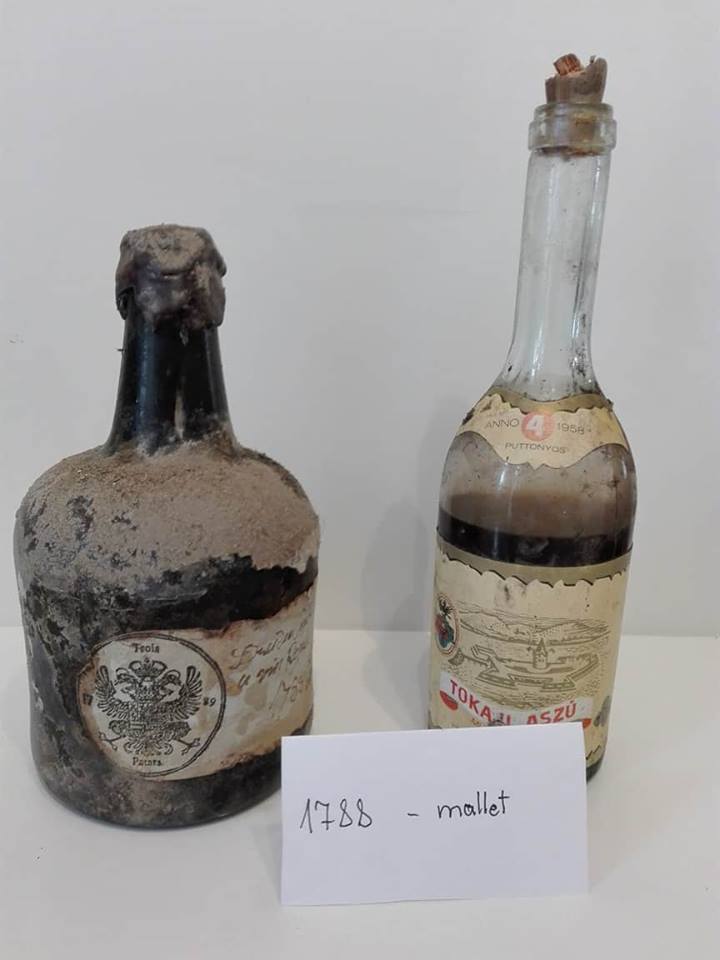
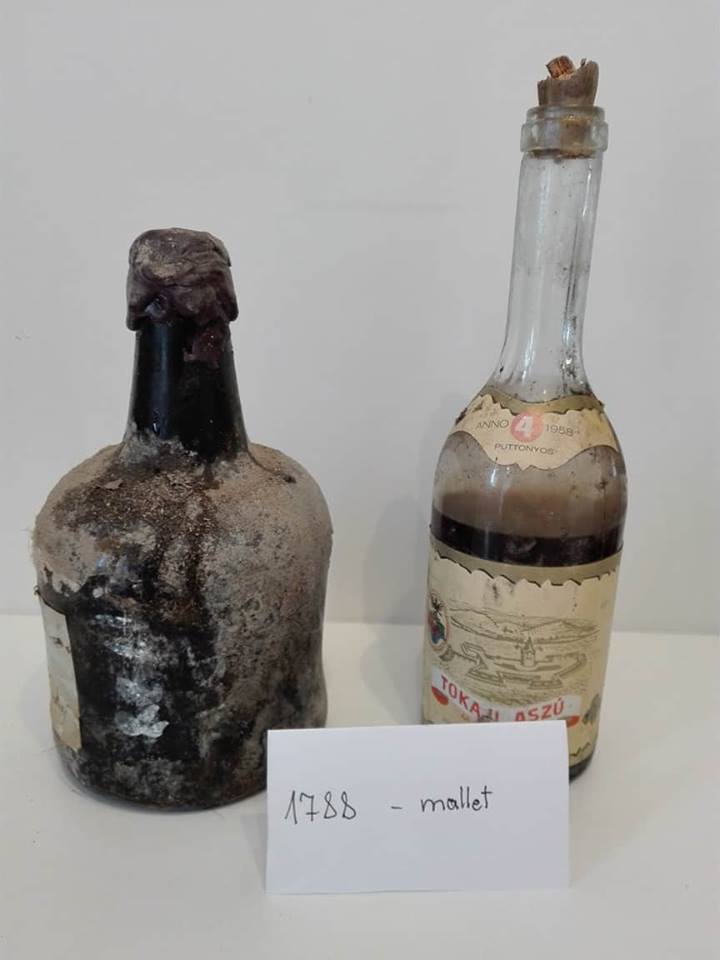
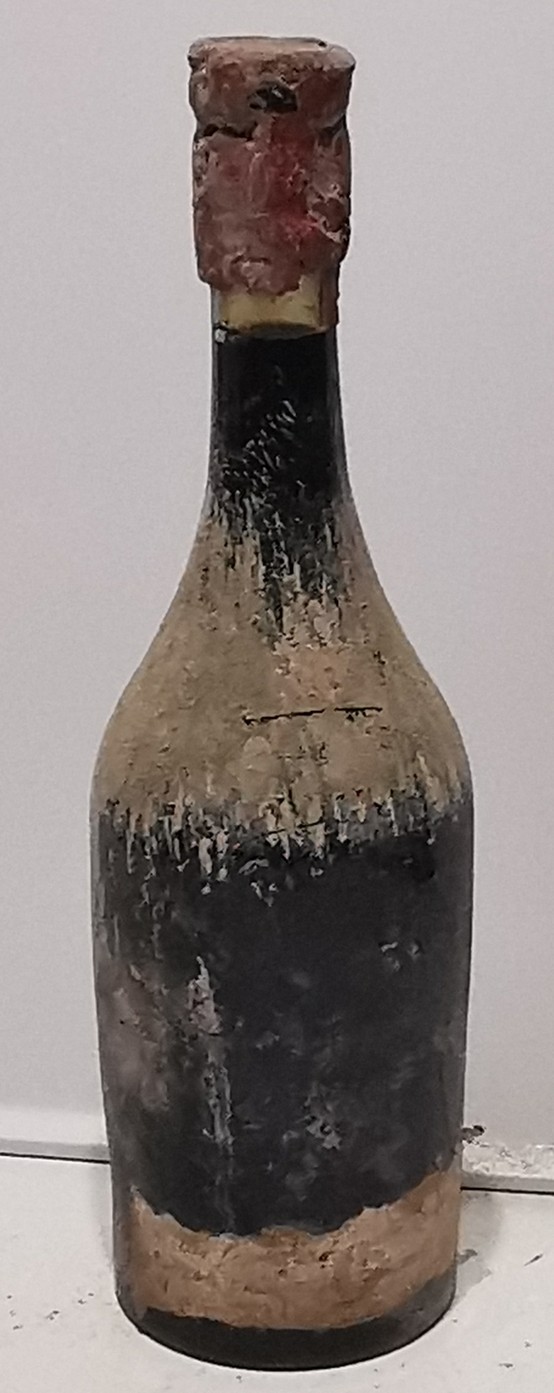
A squat mallet bottle in near-black glass: cylindrical body, abrupt shoulder, short neck, heavy applied string rim, and a wax-sealed cork still in place under a thick misshapen capsule. The form was in use from roughly the 1720s into the 1770s, so the glass may well be older than the date on the label. The upper two-thirds carry a dry pale crust and the lower third is clean — the signature of a bottle that stood upright in one place for a very long time, taking cellar fall-out from above.
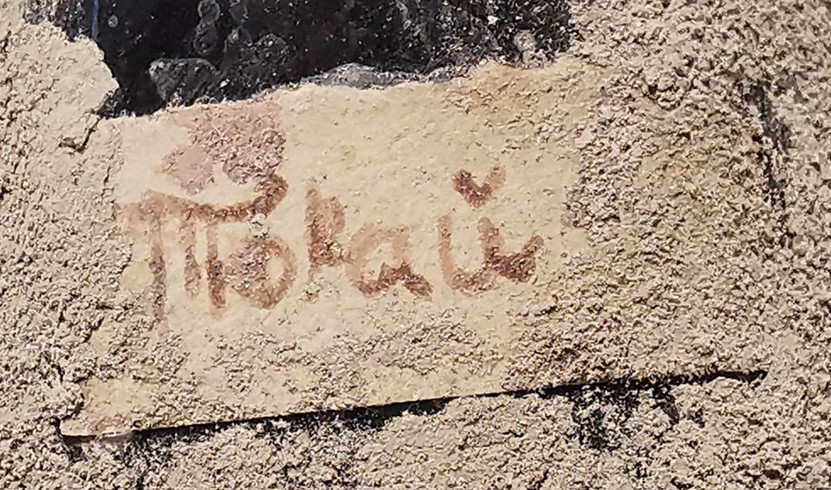
What makes it worth a section of its own is that its three marks point in three different directions. The manuscript label reads Dresden and vin Royal, which points at the royal Saxon cellar. The sheet it is written on is fiscal stamped paper — papier timbré, three patards — of the Austrian Netherlands. And the “1788” cellar mark is a Fukier mark, which makes this a Fukier bottle. Three of the cellars on this site, on one object, and I cannot yet reconcile them.
The label
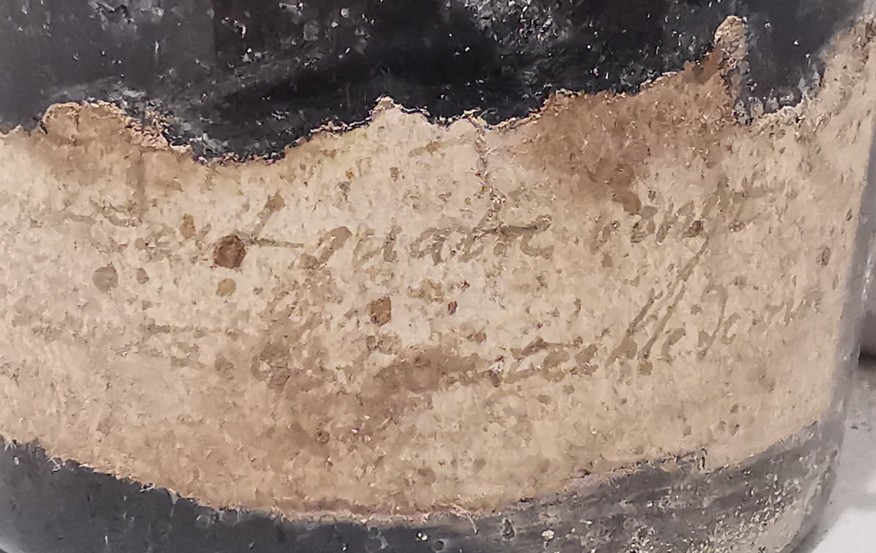
At the left edge, a printed roundel: a crowned double-headed eagle in a double circle, TROIS above and PATARS below, the date split by the design. Not a wine label at all, but a revenue sheet used as one. Across it runs a brown-ink hand in three lines; I am confident of the second and third, „… vin Royal“ and „1788“ followed by a word I cannot resolve, and the first appears to begin Dresden, the next two words rubbed away where the paper has lifted. I would not go further than that from photographs.
The same stamp appears on the 1786 flask. One such label is an oddity; two, on unrelated bottles of different form, suggests a habit — a merchant or cellar in the southern Netherlands orbit labelling consignments on whatever stamped sheet was at hand. That is the line worth pursuing.
Open
The full manuscript reading, which needs the bottle in hand and raking light rather than a photograph. The last two digits of the printed date on the stamp, which would fix the sheet’s year of issue independently of the ink. And whether “vin Royal” here is a description of quality or a reference to a court supply — the Saxon cellar registers, where the Hungarian wine is entered by cask and register number, are the place to look.
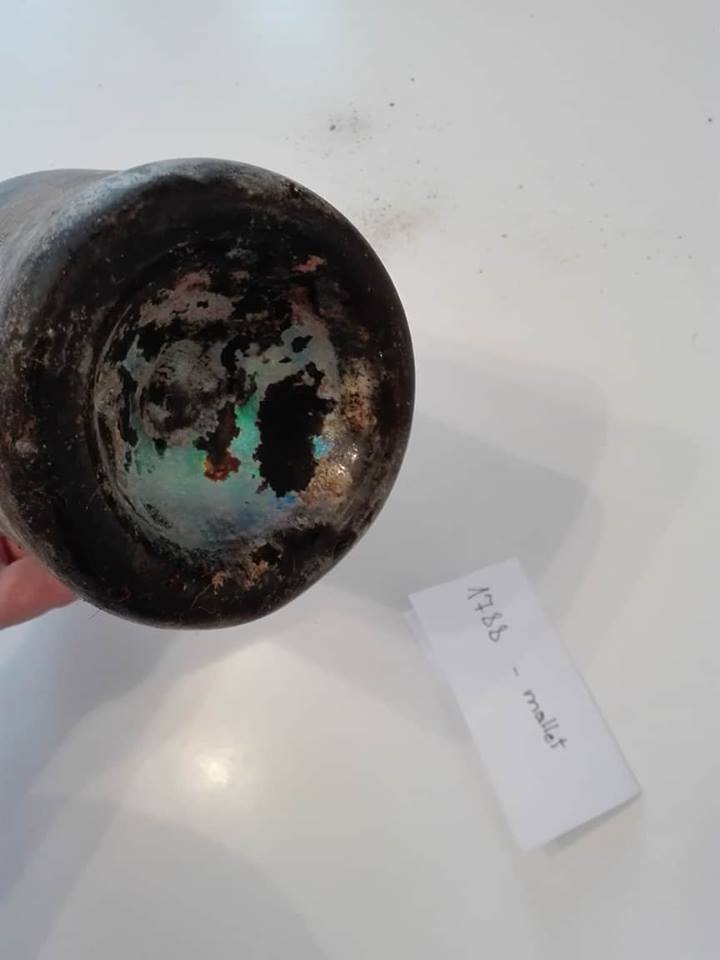
The bottle as photographed. Shown beside a 1958 four-puttonyos Tokaji aszú for scale, and with the handwritten slip “1788 — mallet” that came with it. The base photograph shows the deep kick-up and a patch of iridescent weathering — a thin film of glass decay that takes a long time in a damp cellar and is hard to fake convincingly. Click to enlarge.
1792
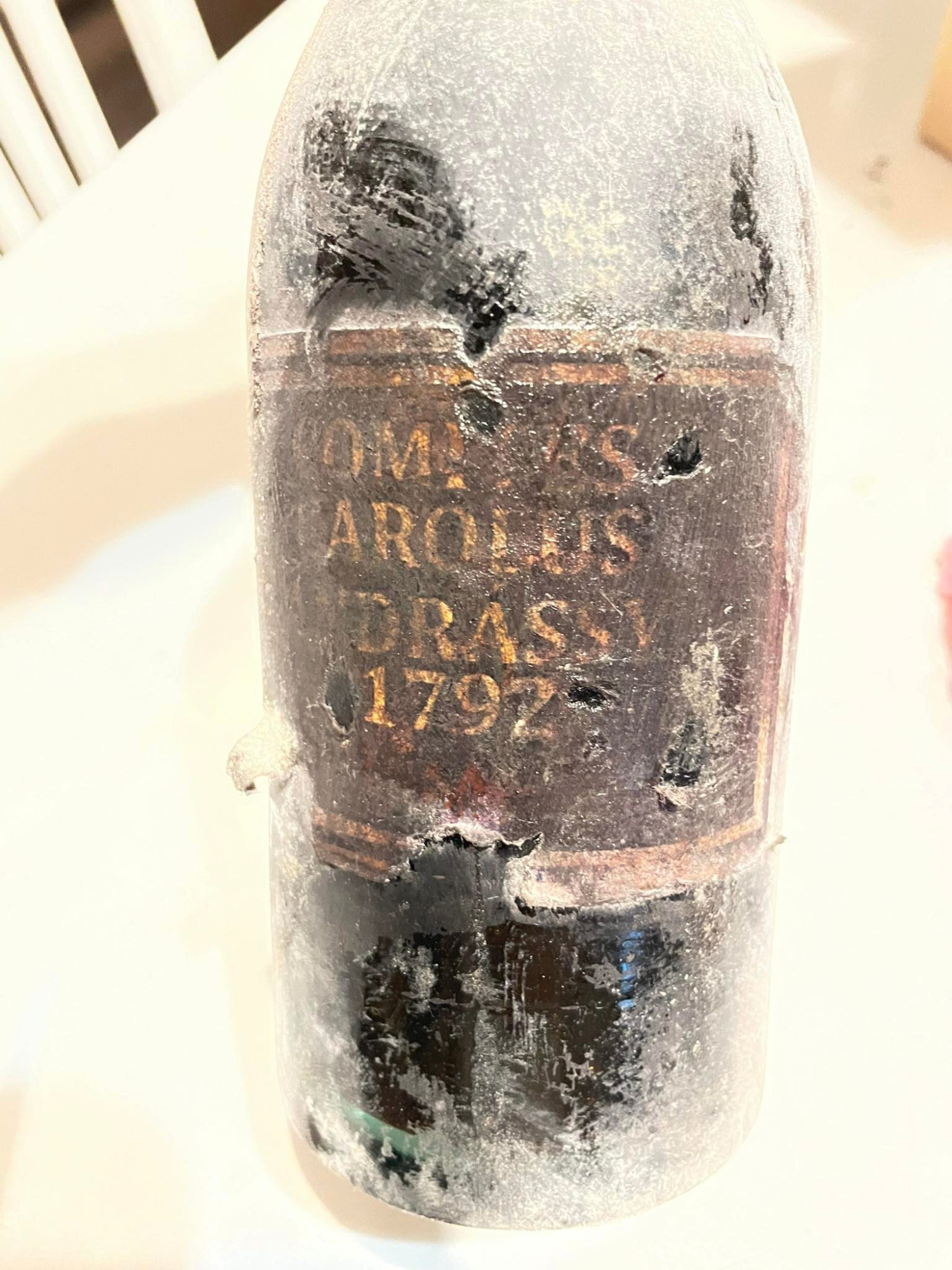
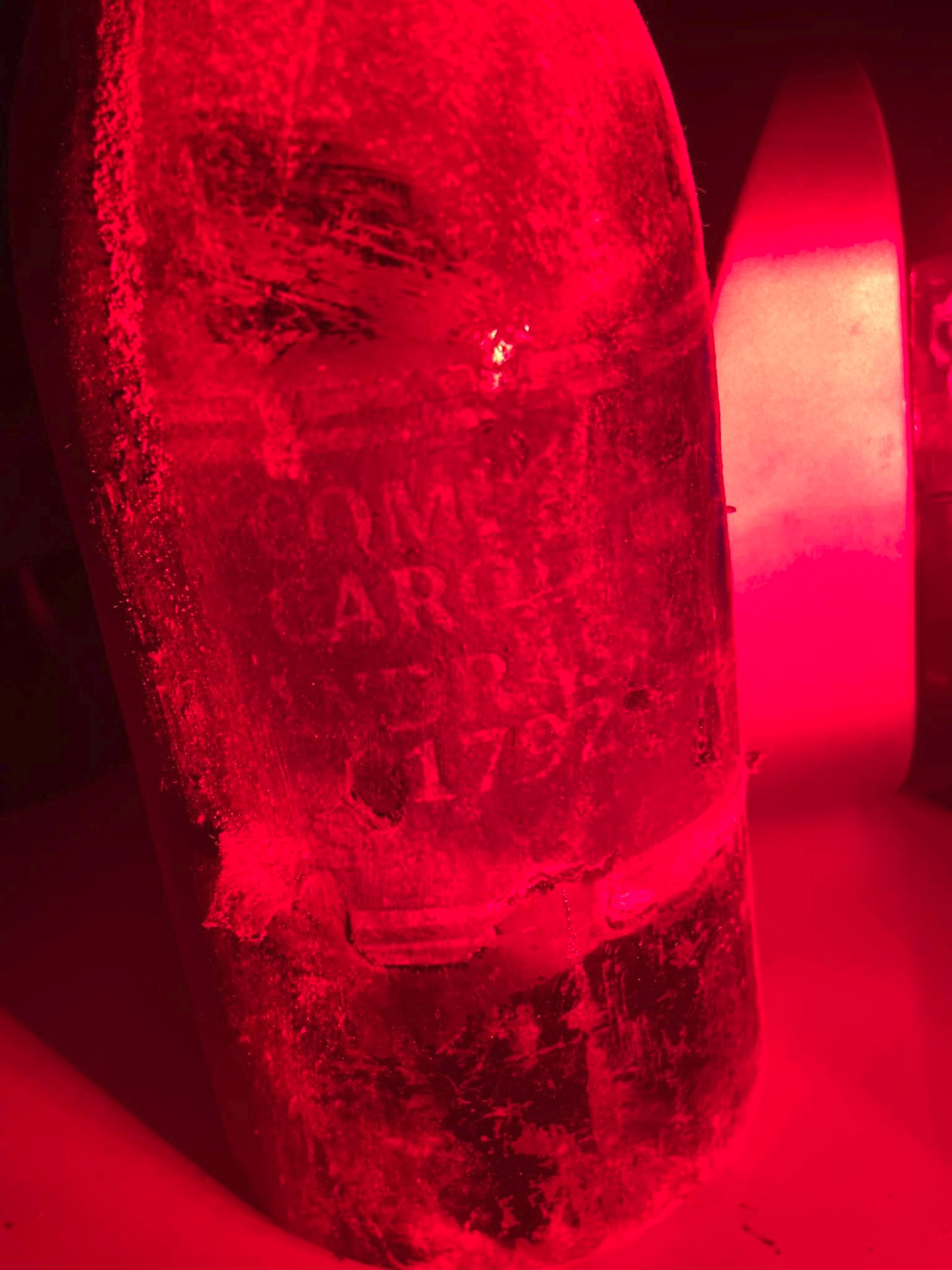
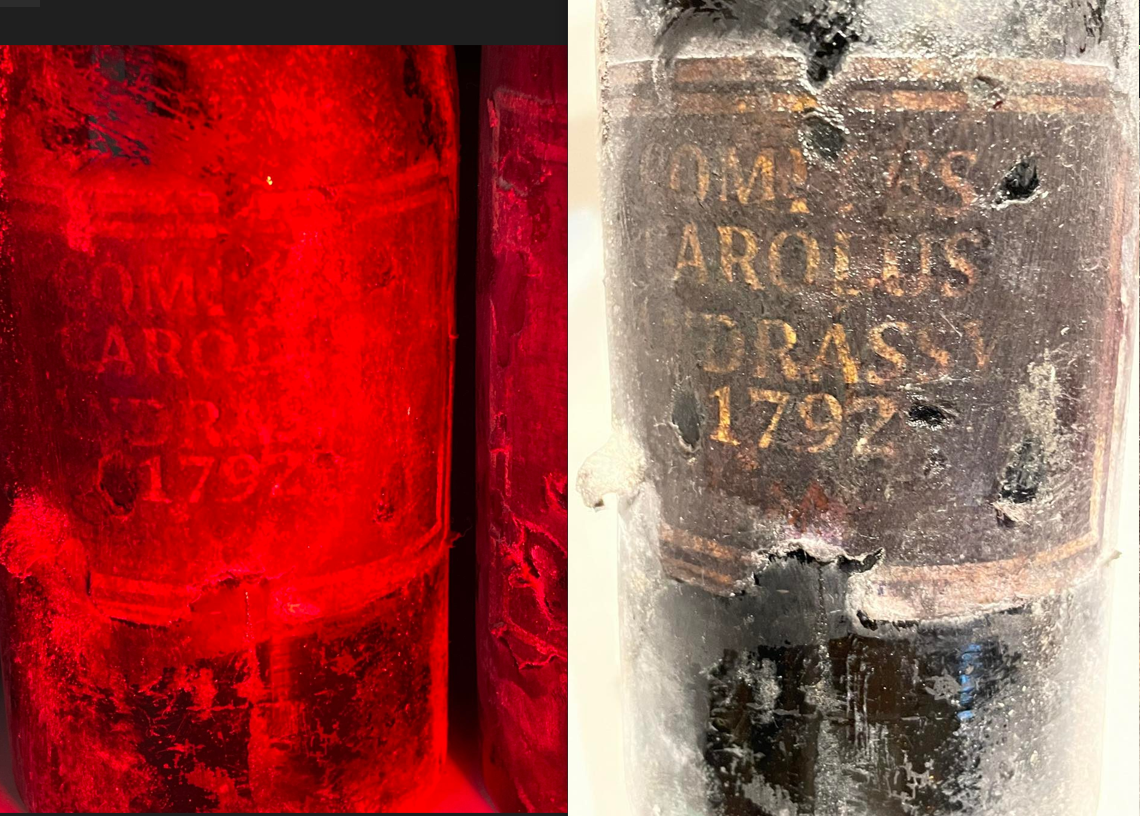
1792 Andrássy Bottle
The oldest existing bottle from the wineries of this prestiguous Hungarian nobility ... (???)
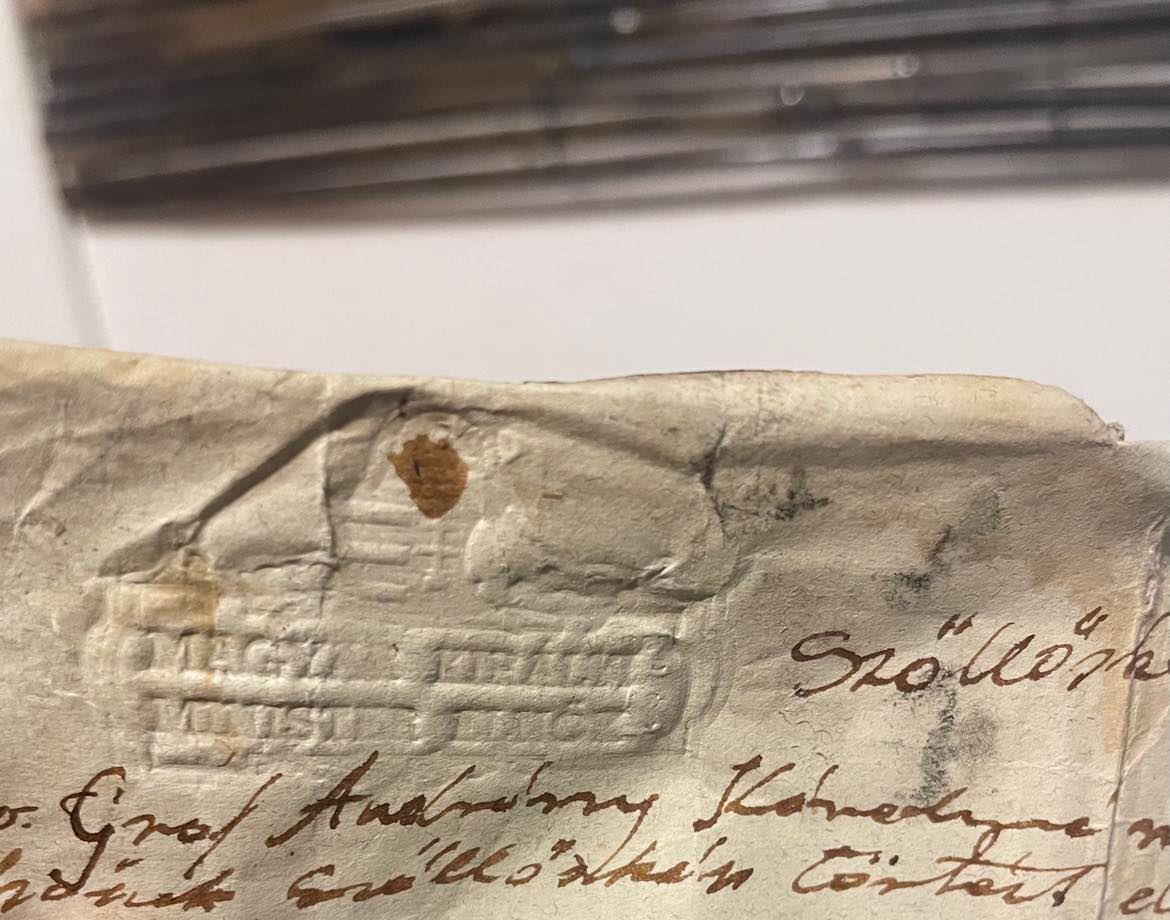
The bottle is documented. A number of other Andrássy bottles are shown here.
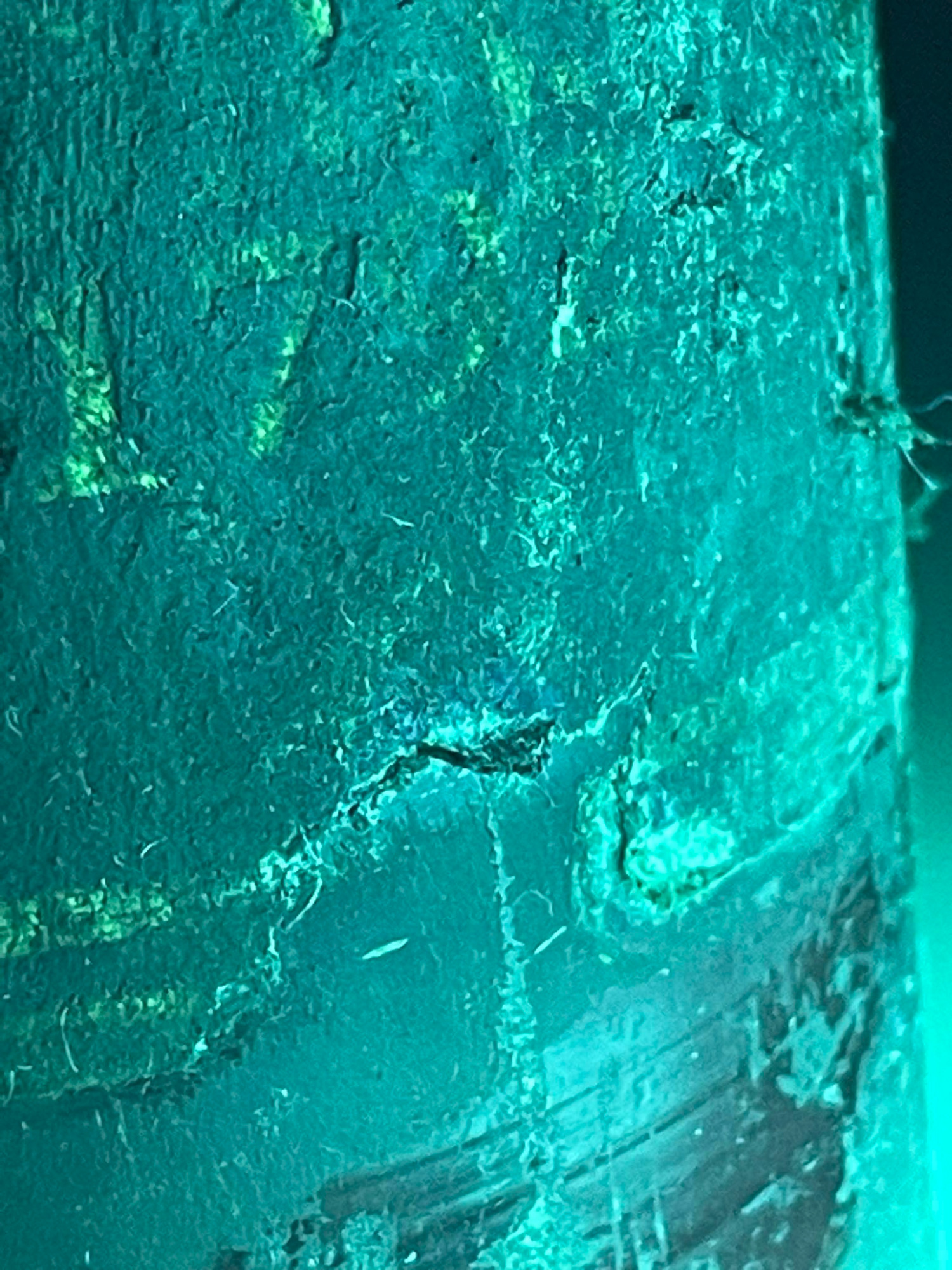
The 1792 Andrássy bottle and its documentation · click any image to enlarge
1793 — 1794
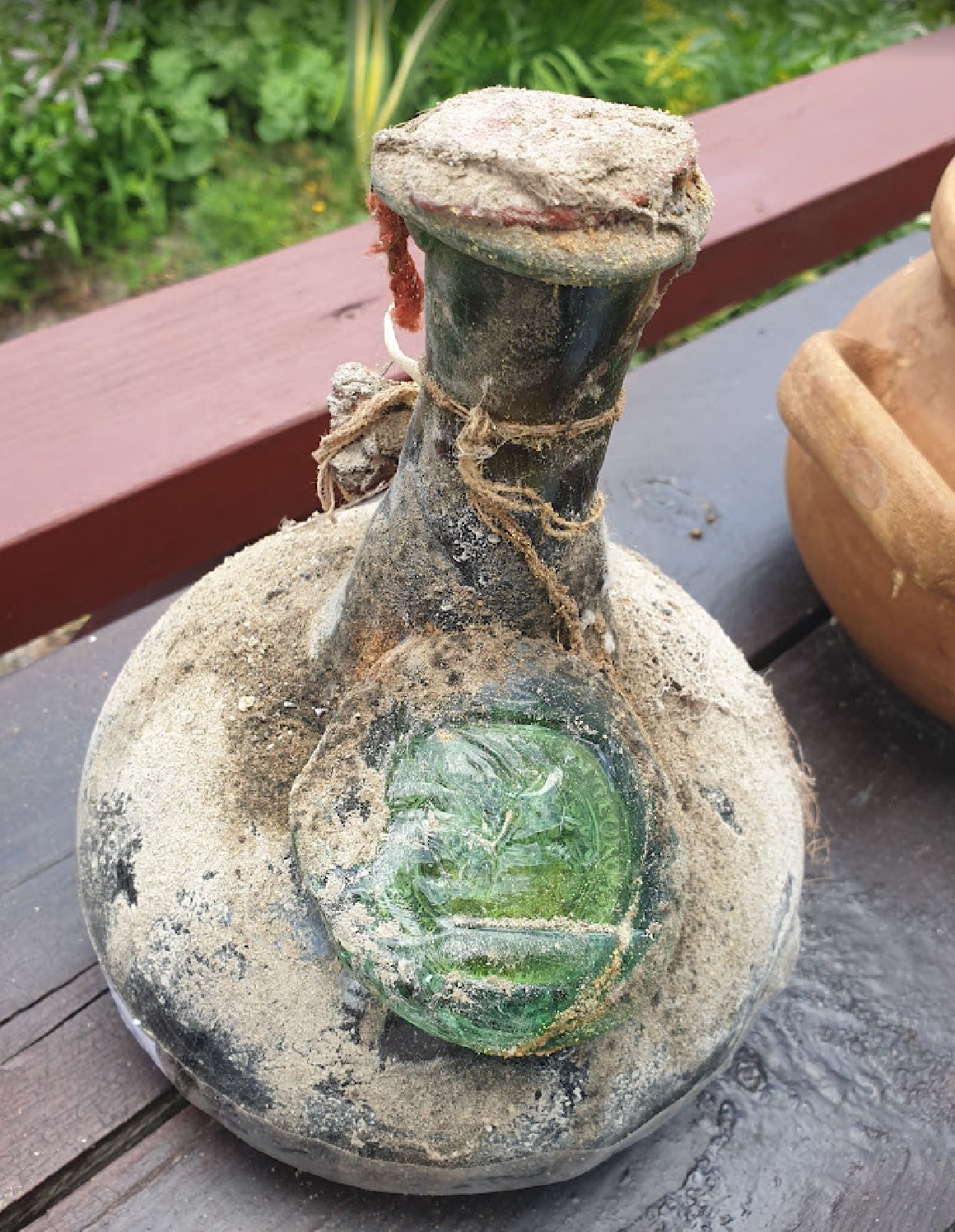
1793 and 1794 Bottles of Essence with Cyrillic and French Text on the Labels
Two mysterious bottles of Essence, one of which has “Tokay” in Cyrillic, and both have the vintage year in French. The seal is unintelligeble, but the documentation suggests that
the bottles are from Baron Miklós Vay
the 1793 bottle was made in the glass factory in Diósgyőr, and the 1794 bottle in the glass factory of Regéc (glass experts have confirmed the authenticity of the bottles)
the bottles were intended for the Russian market
The son of baron Miklós Vay became president of the tokaj-hegyaljai bormívelő-egyesület (Tokaji Hegyaljai Winemakers Association), the publisher of the 1867 Tokaj-Hegyaljai Album which shows a lithograph of the two Vay residences in Golop. The two buildings can be still be seen in Golop. The research of Tokaji winemaker Zoltan Demeter showed that the Vay estate was also first estate to create a Champagne style wine in the Tokaj region (1829).
The 1793 and 1794 Essence bottles, Cyrillic and French labels · click any image to enlarge
1794
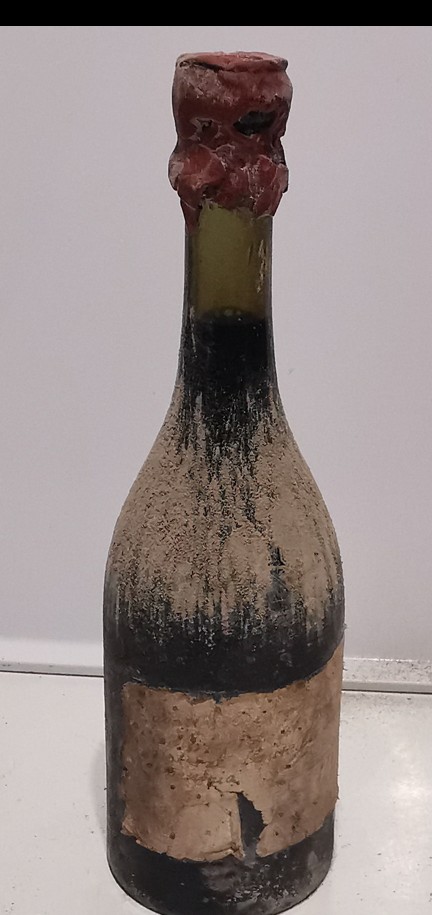
Miklós Vay Essence
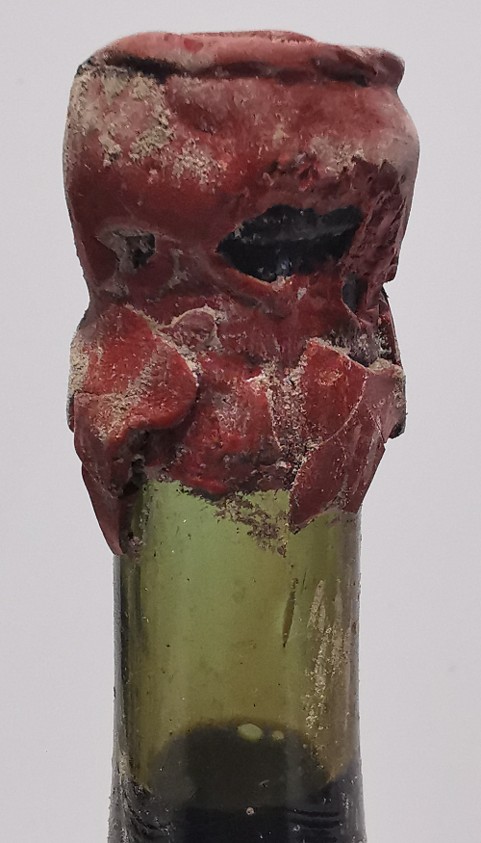
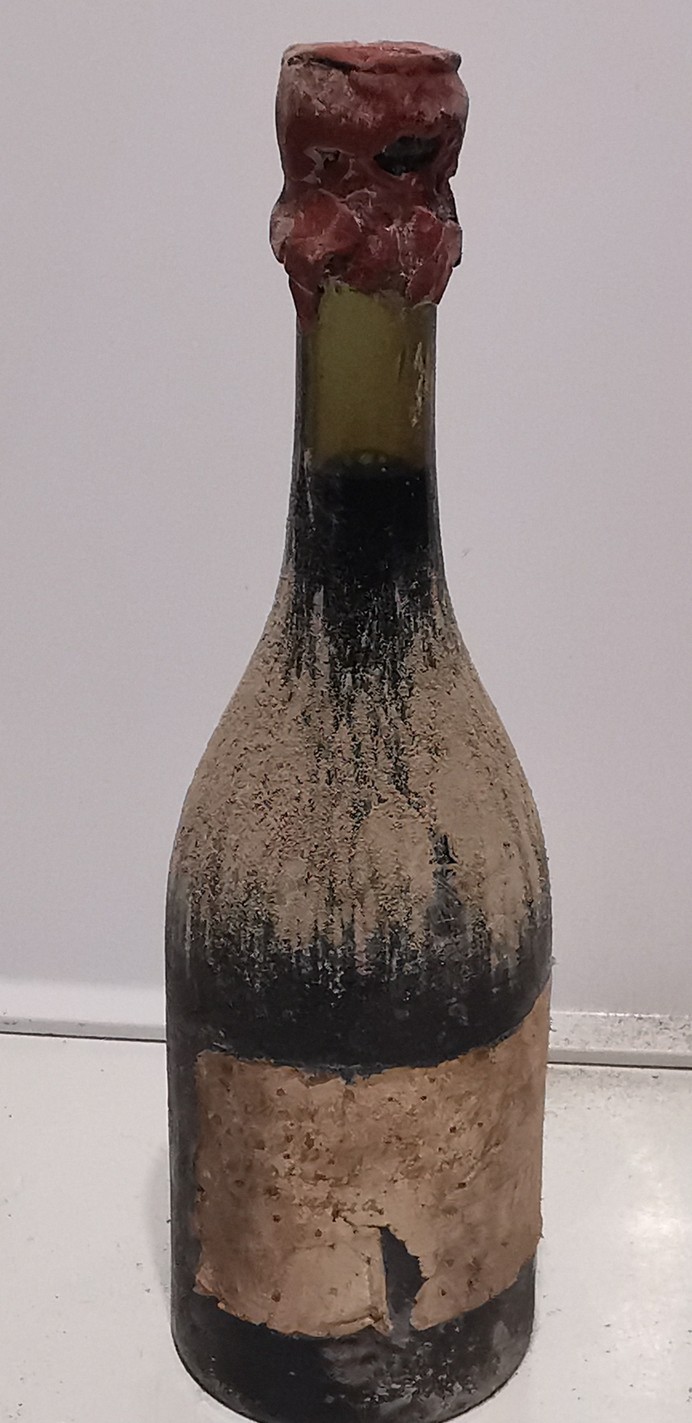
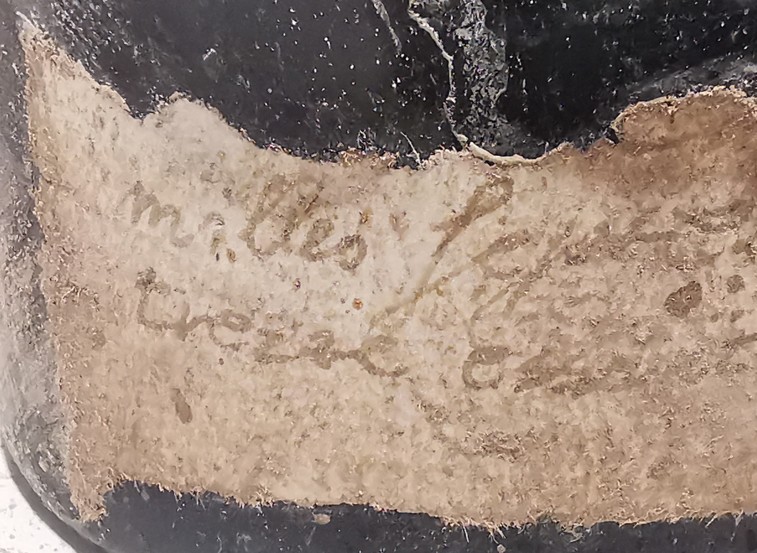
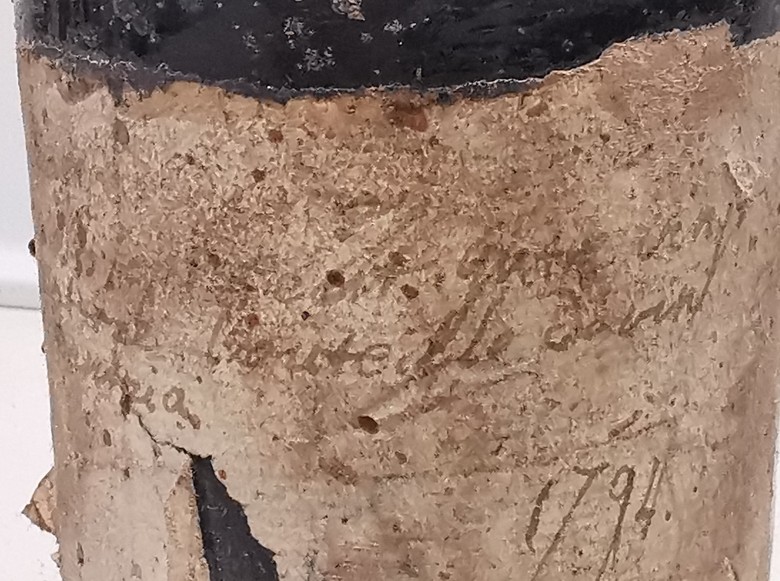
A slender bottle in olive-green glass, the shoulder and body coated in cellar dust, closed with a thick red wax capsule drawn well down the neck.
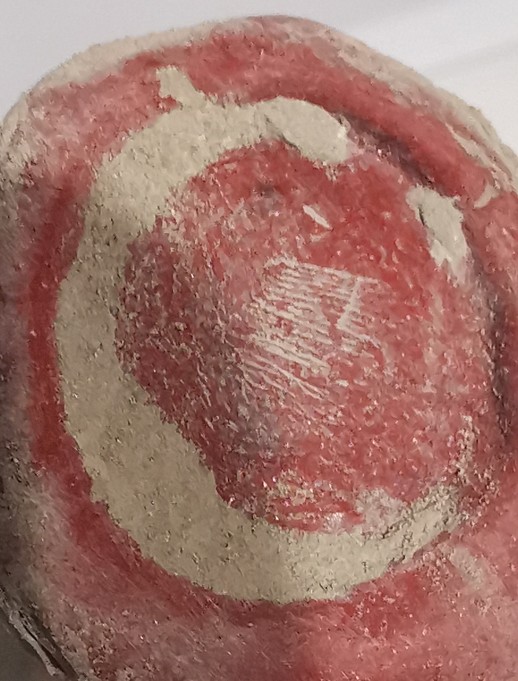
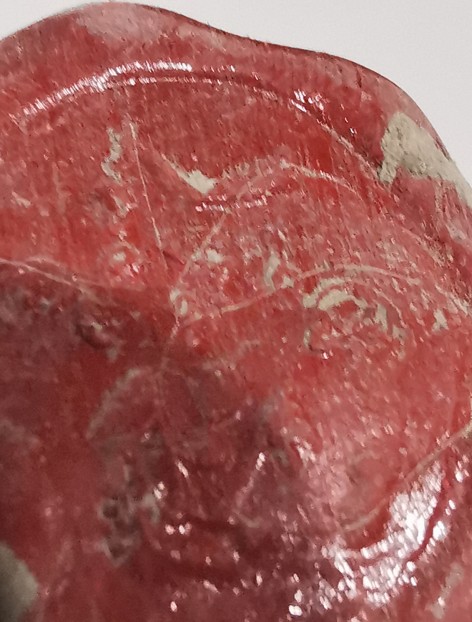
The neck shows the glass colour where the dust has been rubbed away: a clear olive green, with the dark line of the wine standing high in the shoulder. The wax is intact over the cork and carries an impression on the crown, worn but still showing the outline of a device.
A handwritten paper label covers the lower body; most of it is obscured by deposit and only fragments of the script can be read.
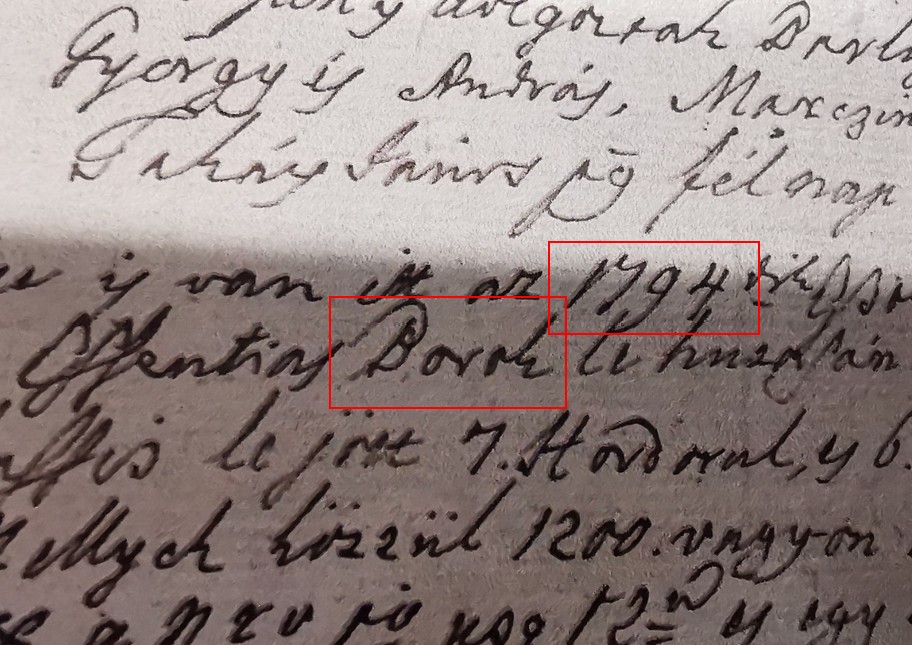
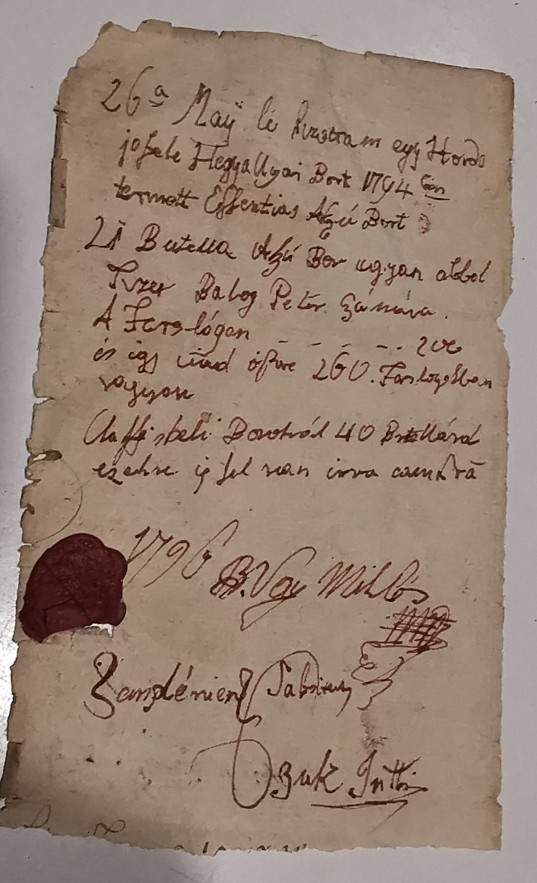
The bottle is identified by an accompanying document of 1796, signed by Baron Miklós Vay of Zemplén county, which records the receipt of a cask of Hegyalja wine of the 1794 vintage together with bottles of Aszú from the same wine.
The accompanying document, dated 1796 and sealed in red wax · click to enlarge
26ᵃ Maij bé hoztam egy Hordó
jó féle Hegyalljai Bort 1794 ben
termett Essentiás Aszú Bort
L[?] Butella Aszú Bor ugyan abbol
Tizet(?) Balog Péter Számára.
A Ferslógban
és így mind őszve — — — 260. Forintokban
vagyon
Classisbeli(?) Borokrol 40 Butellárol
ezekre is fel van írva …
1796 · B[áró] Vay Miklós
Zemplénien[sis] …
The bottle, the neck, the impression on the wax and the handwritten label · click any image to enlarge
1797
1797 Esterházy essence
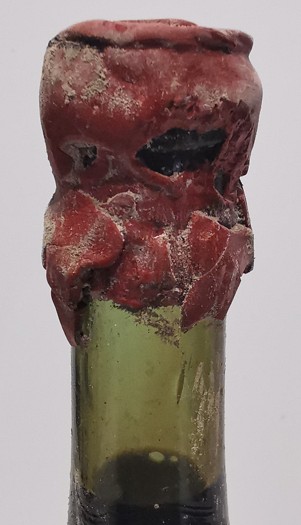
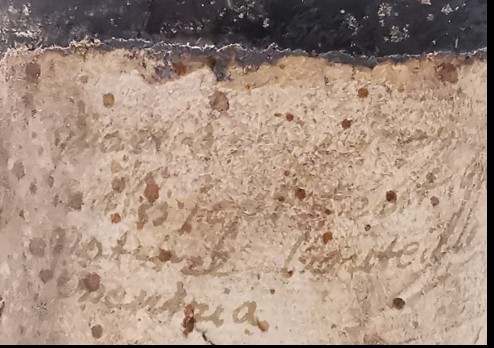
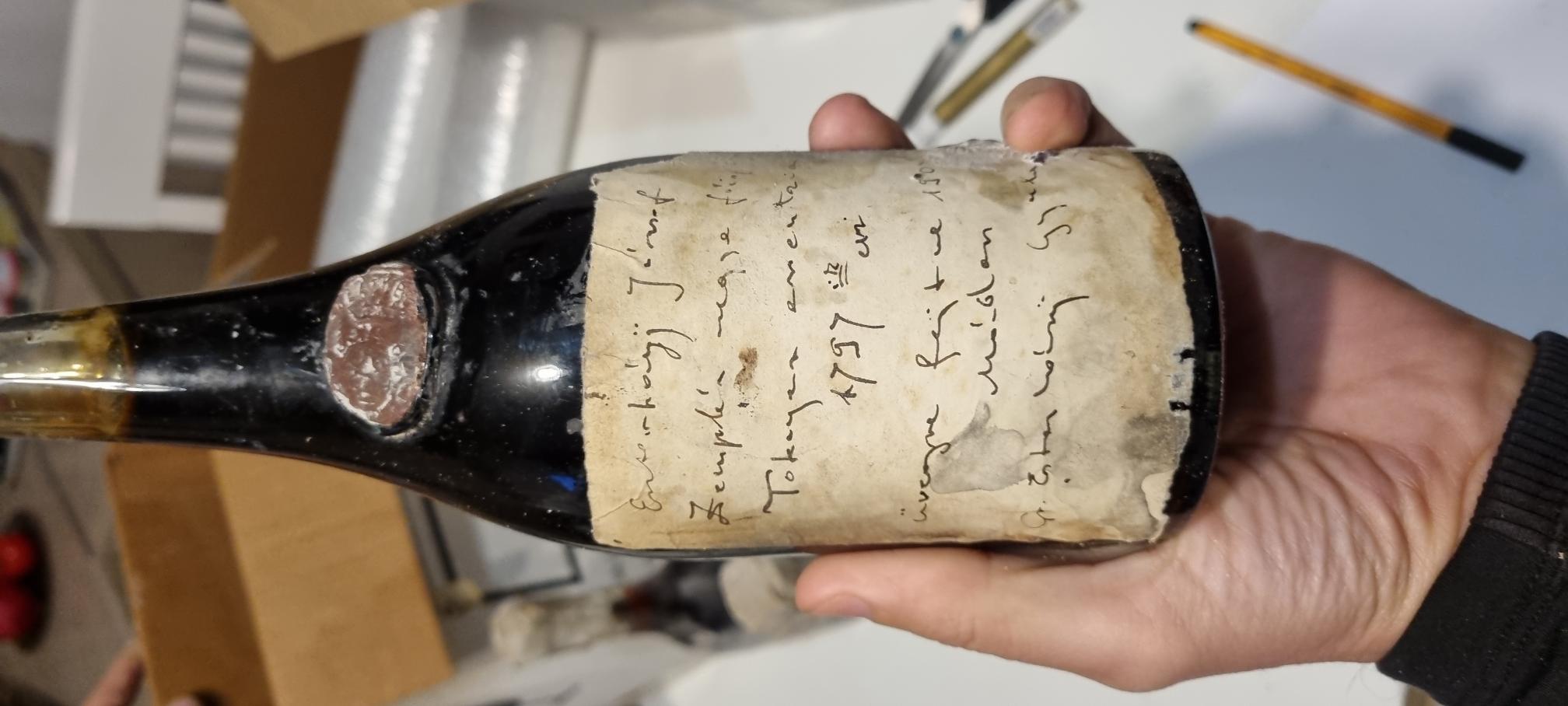
An essence of the 1797 vintage, drawn into bottle in 1904 — 107 years after the harvest — and labelled in Hungarian by hand, with two generations of the Esterházy family named on the one label.
The label, line by line
Esterházy József · Zemplén megye főispánja · Tokayer essentzia · 1797-ik évi · Üvegre fejtve 1904 · Mád · Esterházy Gyula
Two dates, both on the label. The vintage, 1797, and the bottling, 1904. The label names both counts and gives the place as Mád; which of them held the wine, and in what vessel it lay between the two dates, is not stated on it.
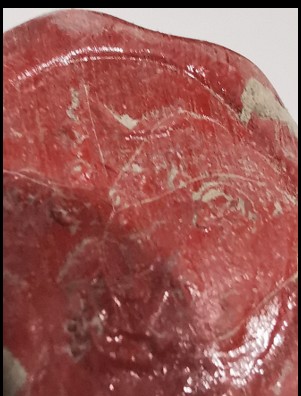
The seal. Interesting and very rare: a sealing-wax seal bearing the Esterházy arms, struck on the glass seal of the bottle.
Mád. One of the principal Hegyalja communes, and the place given on the label.
The bottle in the hand: the handwritten label naming József and Gyula Esterházy, the vintage 1797 and the bottling of 1904 at Mád, with the wax seal bearing the Esterházy arms on the shoulder. Click to enlarge.