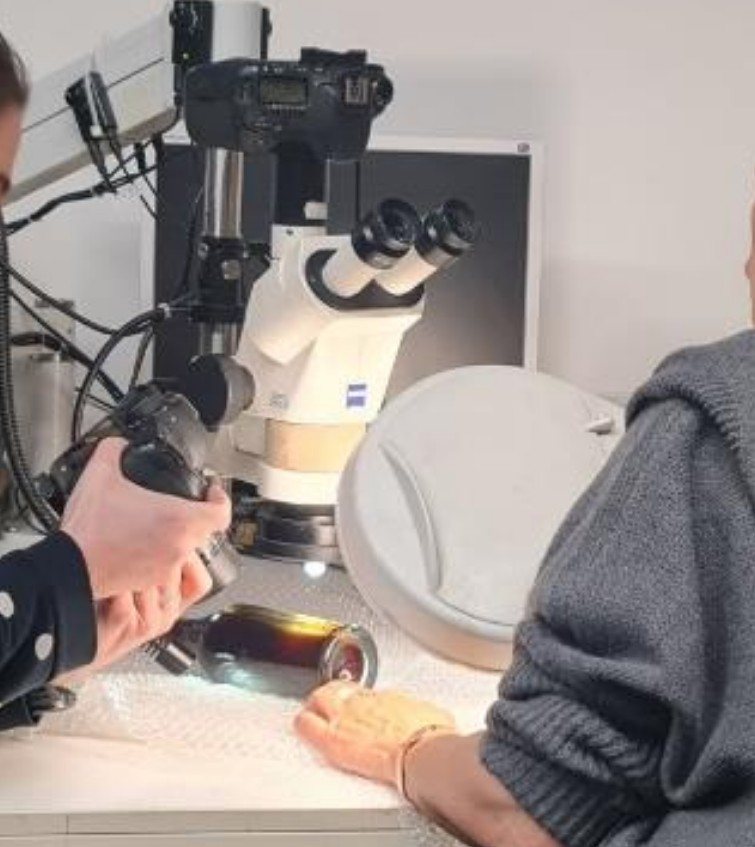
Tokaji was worth forging almost as soon as it was worth buying. Here’s how historic tokaji bottles are put under scrutiny.
Please note
The observations on this page are a private collector’s research, not an expert opinion, a certificate, or advice on buying or selling. Attributions marked as open questions are unresolved. No warranty is given as to authenticity, condition or value.
The problem
The challenge of protecting a wine
Proof of origin is the first question this collection has to answer. A website presenting this many previously unrecorded old Tokaji bottles will raise serious doubts about where they came from and whether they are what they claim to be, and it should.
That is the right instinct, and nothing here is offered as beyond question. What follows sets out the difficulties honestly: what protection was possible at the time, what can be established now, and where the limits of both lie.
An old concern, and not only in Tokaj
Protecting a wine against imitation is as old as the trade in it. Every region that produced something worth paying for — Tokaj, Bordeaux, Burgundy, the Rhine, Porto, Champagne — dealt with the same problem, and each arrived at its own mixture of law, marking and record-keeping. Tokaj is unusual only in how early and how thoroughly it acted.
Tokaji was worth forging almost as soon as it was worth buying, and the region knew it. A falsification affair stands behind Charles III's decree of 1737 that closed Tokaj-Hegyalja as a wine region — arguably the first closed appellation anywhere — and Article IV of the Zemplén county statutes of the same year names the settlements entitled to the appellation and strictly forbids bringing aszú in from outside. The concern was older still: the 1595 Olaszliszka document shows the region already regulating the handling of its wine well before the decree.
Sixty years after 1737 the problem was undiminished. János Dercsényi, chief physician of Zemplén, wrote that German and Polish merchants poured rich Tokaji and essence into foreign wines and sold the result as genuine Hegyalja wine. In 1834 the projected Tokaj Wine Trade Society declared its principal aim to be «to restore the lost trust in the authenticity of Tokaj wines». And the question stayed open for centuries: wines sold as Tokay were made in France, Italy, the Crimea, Australia and California, some of them in good faith under a name that had become a style, others not.
The literature of imitation
There is, remarkably, a substantial published literature on how to make something pass for Tokaji. Nineteenth-century cellar manuals and trade handbooks describe the blending, sweetening and colouring by which a lesser wine was brought closer to the real thing, sometimes as a warning to buyers and sometimes as plain instruction to the trade. Anyone examining old bottles has to read that literature as well, because it tells you what an imitator of the period was actually able to do.
The difficulty that cannot be resolved
One problem resists every method on this page. A bottle filled in 1750 and declared as a 1650 is contemporary in every physical respect: the glass, the cork, the wax, the paper and the ink are all genuinely of the eighteenth century, and no material analysis will separate them from an honest bottle of the same date. Only the written claim is false.
Against that, physical examination can establish a period but not a vintage. What helps is documentation from independent hands — cellar books, inventories, correspondence — and even then a hundred-year overstatement made at the time may simply have been believed by everyone who repeated it.
Why modern forgery is the smaller risk
The greater worry is usually assumed to be forgery today, and here the economics are reassuring. Wine fraud follows money, and there is very little money in historic Tokaji. The fine-wine auction market is dominated by Bordeaux and Burgundy, which together account for the large majority of turnover; old Tokaji appears in a handful of lots a year, most of them well under five figures. Set against the sums that make Bordeaux and Burgundy worth counterfeiting, the entire annual transaction volume in pre-1900 Tokaji is a rounding error.
What a forger is chasing · auction records
$558,000
1945 Romanée-Conti, single bottle, Sotheby's New York, October 2018 — the highest price ever paid at auction for a bottle of wine, followed minutes later by a second at $496,000.
$304,375
1869 Château Lafite, single bottle, Sotheby's Hong Kong, October 2010; three bottles from the same lot sold at that level on the day.
$156,450
1787 Château Margaux, a bottle attributed to Thomas Jefferson — and later the centre of the best-known wine forgery case of the twentieth century.
Bordeaux and Burgundy together take the large majority of fine-wine auction turnover, and a single successful fake at these levels pays for years of work. Historic Tokaji offers nothing remotely comparable.
A serious forger needs a liquid market, repeat buyers and comparable prices to hide behind. Historic Tokaji offers none of the three: the bottles are few, the buyers know each other, and almost every bottle shown on this website is privately owned and not for sale. The incentive to invest in a convincing fake is correspondingly small — which is not a proof of authenticity, but it does change where suspicion is best directed.
What is deliberately left out
This page describes the methods in general terms and does not set out the evidence gathered for individual bottles. That is a choice, made for three reasons.
This website is not a scientific project. It is a collector's record, written for readers interested in the wine and its history, and it does not carry the apparatus that published research would require.
Publishing every method and every result would hand a forger a specification. The analyses that matter most are precisely the ones worth keeping quiet about, and the same applies to the details of bottles found to be false, which are not shown here at all.
Much of the evidence identifies the owners. Bottles come from private collections, families and institutions that agreed to have them examined on the understanding that they remain anonymous, and that undertaking comes before completeness of documentation.
What can be said is stated plainly, and where a conclusion rests on evidence not shown, the text says so rather than implying more than has been established.
The methods that follow
The ten examination techniques set out below summarise most, though not all, of the methods encountered in this research. They are described in the order in which they tend to be examined, from the marks on the glass itself to the records kept by unrelated owners.
When reading them, judge each by two measures rather than one. The first is technical: what the technology of the period allowed a forger to do, and what today’s technology allows. The second is economic: the cost of reproducing the feature set against the reward for doing so. A method is strong when it was expensive to fake then, remains expensive to fake now, and cost the honest producer little.
The test to apply to any method
What would a forger need to obtain in order to reproduce this feature; could he obtain it at the time the bottle claims to be from; and could he obtain it now? A method that was near-impossible to fake in 1790 may be trivial today, and a feature that looks merely decorative may be the load-bearing one.
1395 — 1891
Glass, bottles and where the wine was kept
Before a bottle can be judged, it helps to know when the Tokaji bottle became a bottle at all. The answer is later than most people assume, and it changes what a given form can plausibly claim. The account below follows László Veres, Adalékok a bor palackozásának történetéhez (Miskolc 2003), which works from the surviving Zemplén glasshouse material and the estate inventories.
For centuries the wine travelled in barrels
Tokaji was sold and shipped in cask, not bottle, into the middle of the nineteenth century. That single fact shaped everything else. The wine left Hegyalja young, and the work of keeping it — racking, topping, deciding when and whether to bottle, and holding it for decades — was done at the far end of the journey. A competence in managing old Tokaji therefore grew up outside the region, in the cellars that bought it.
In 1793 the Austrian envoy in London, Baron Miklós Vay, was told plainly why this limited the trade: larger sales would require bottling, “because the Englishman keeps no wine in a cellar, but has it sent by the bottle when he needs it”.
The cellars on this site are the evidence for that competence. The Fukier house in Warsaw bought in barrel, bottled in its own cellar, marked the bottles with its own seals and tags, and held them for two and three centuries — the 1948 Wilanów expertise shows a Warsaw merchant reading age from the glass and the deposit, not from a label. The Vienna Hofkeller went further and grew its own fruit, but still ran the wine as a household department, with register numbers and a ladder of capsule colours standing in for vineyard names. The royal Saxon cellar in Dresden bought Tokaji by the cask over generations and built its identification on its own written registers. The Prussian and other princely cellars did the same. In each case the bottle, the seal and the cellar record are the products of the receiving cellar — which is why examination so often means authenticating a cellar practice rather than a producer.
When the bottle arrives
The word palack first appears in Hungarian in 1395. But Hegyalja had no glassworks of its own until the end of the seventeenth century, and glass was expensive: in the great houses of the sixteenth and seventeenth centuries — Mágócsy at Pácin, Rákóczi at Sárospatak and Borsi — the inventories list glass for perfumes, waters and preserves, and no wine bottles at all. Ferenc Rákóczi II founded the glasshouse in the Regéc domain in 1698; its charter names window glass and drinking glasses first, and bottles only as work to be done on order. That works ran until 1916.
Through the eighteenth century what mattered was not the wine bottle but the pincetok — the lined travelling chest of six or eight compartments holding square-bodied bottles, which survived long journeys by cart without clouding the wine. These are the decorated bottles: the Regéc habos finish, milk-glass threads drawn into a pattern as the glass expanded, and optical moulding — decoration found in Zemplén and Transylvania and effectively nowhere west of Hungary.
Four eighteenth-century forms, then one
There was no standard Tokaji bottle in the eighteenth century. Veres sorts the surviving glass into four groups: a pear-shaped bottle whose neck merges gradually into the body; a spherical-bodied bottle echoing medieval forms; a cylindrical bottle with a short funnel neck; and a prismatic bottle whose slender neck takes up a third of its length. The last is the pincetok bottle narrowed and drawn out, blown into a mould, and it is the ancestor of the Tokaji bottle we know.
Around 1830 the familiar cylindrical long-necked bottle appears, made in the Zemplén and also the Bükk glasshouses. Early examples hold roughly 5 to 7 decilitres: the form was standardised long before the volume was, because storage still mattered more than sale by the bottle. They occur in both white and green glass. Bottling at scale shows in the estate cellars from the 1820s — Sárospatak held 1,953 bottles of quality wine in 1827 and 5,675 in 1842 — and the Regéc inventory of 1842 records forty moulds, which is what made a constant form and a constant capacity possible.
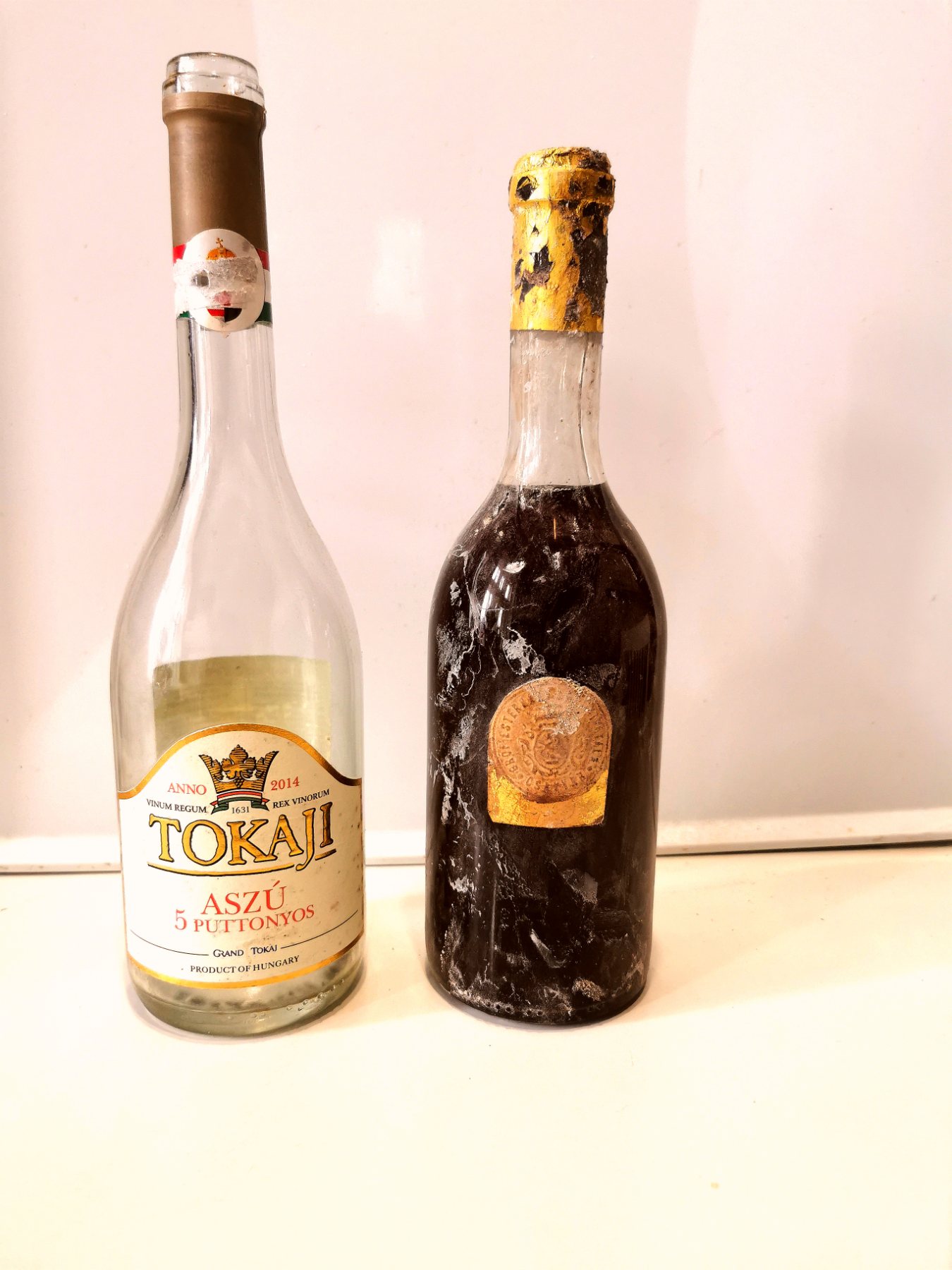
The late arrival of the bottle in Hegyalja has a direct consequence for anyone examining old Tokaji. Since the wine travelled in cask, it was bottled where it was drunk — in the cellars of Vienna, Berlin, Warsaw, Kraków, Dresden, St Petersburg and wherever else it was held. Each of those cellars used the glass its own market supplied, and filled it to its own measure. So very old Tokaji comes in many shapes and sizes, and the characteristic half-litre Hegyalja bottle is the exception rather than the rule among them. A bottle that is not a Tokaji bottle is therefore not evidence against the wine — it is evidence about the cellar that filled it, and the form should be read against that cellar's practice rather than against the regional standard.
Seals, then labels
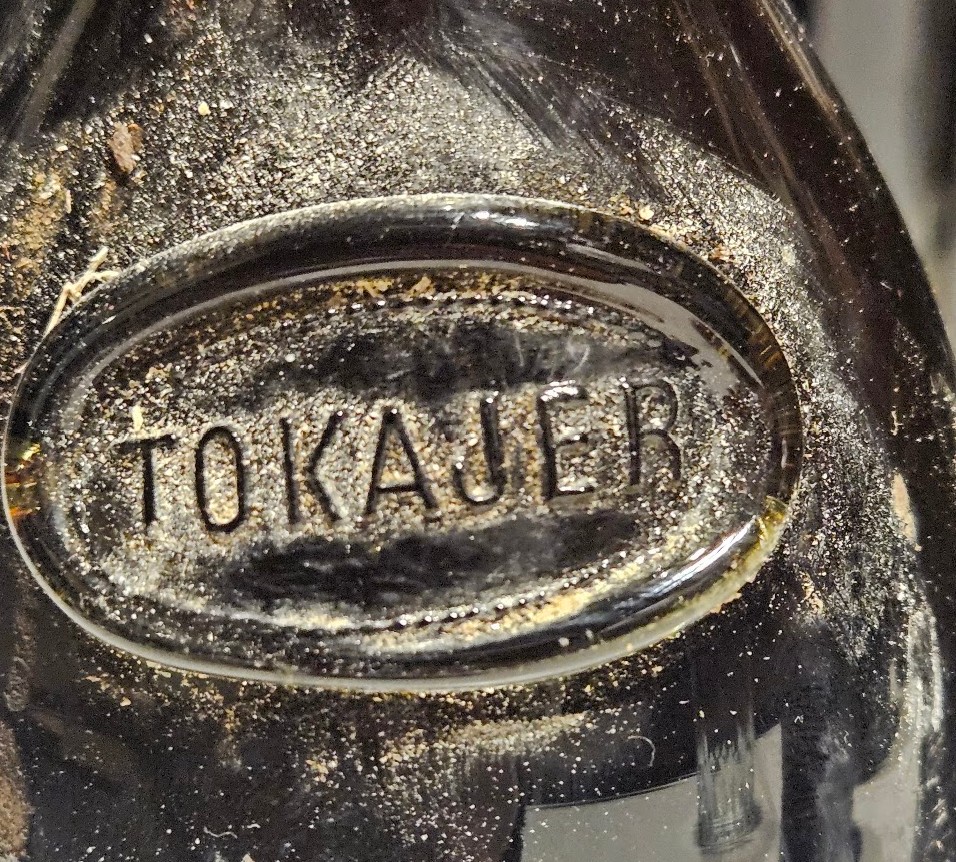
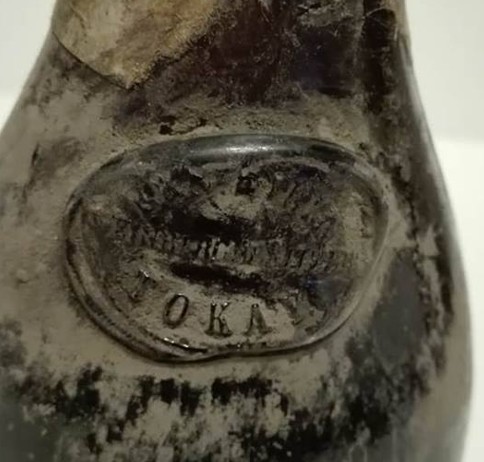
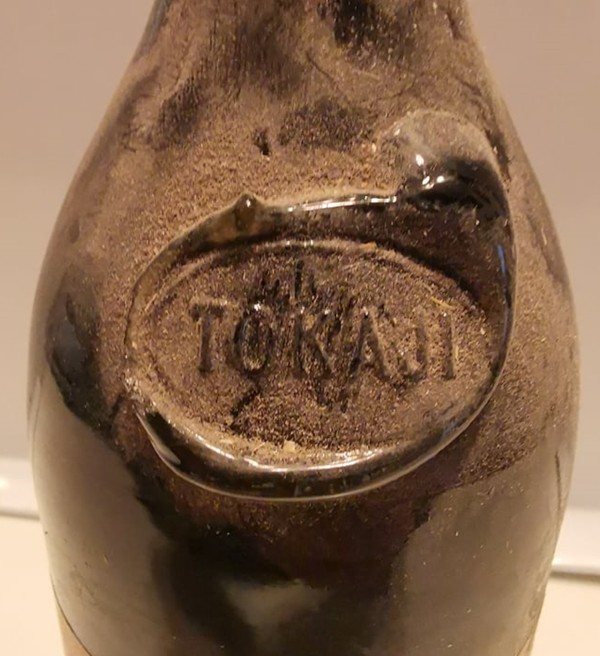
Applied glass seals — tulajdonjegy, ownership marks, stuck to the shoulder — recur on these bottles, and they carry a provenance argument: a mould run was only worth its cost to a larger vineyard owner or a substantial cellar. Growers ordering few bottles bought the same form with a generic seal reading TOKAJ or TOKAJER. A personal seal therefore implies a scale of operation, and a generic one implies the opposite.
Two later dates are useful in dating a bottle. From 1891 the verification laws fixed the half litre and required the capacity to be marked on the body. And as printing improved, the glass seal gave way to the paper label — so a bottle combining an applied glass seal with a printed label belongs to the transition, and one carrying a marked half-litre capacity cannot predate 1891.
What this gives the examiner
A bottle in a uniform half-litre cylinder with the capacity marked is 1891 or later. A uniform cylinder without it is unlikely to precede 1830. A prismatic long-necked bottle belongs to the eighteenth century or the early nineteenth. A mould-free, irregular form points earlier still — and, on its own, to nothing more precise than that.
01
Sealed Bottles
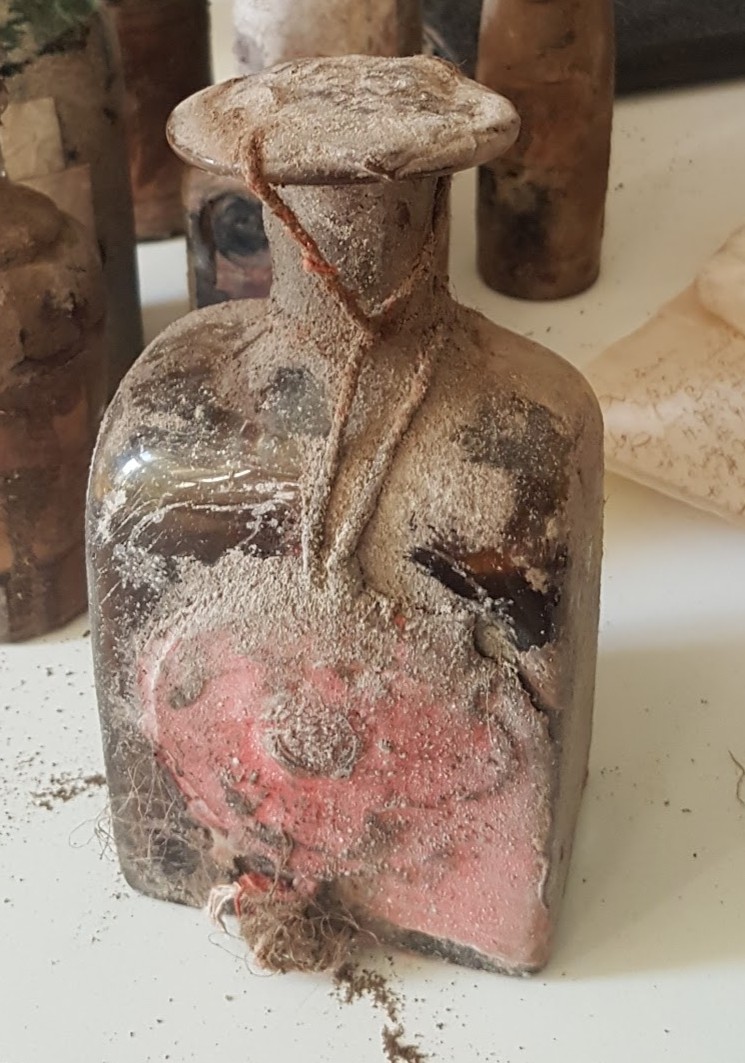
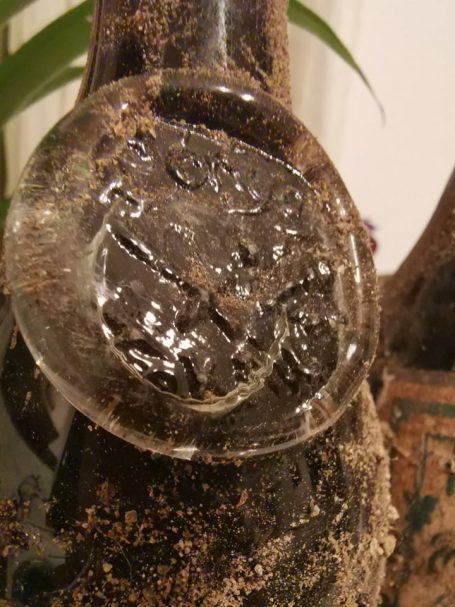
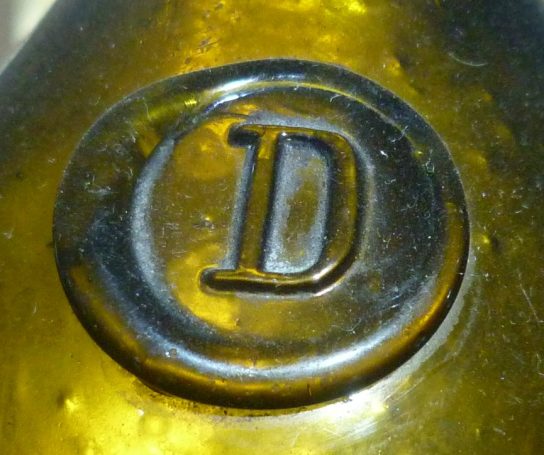
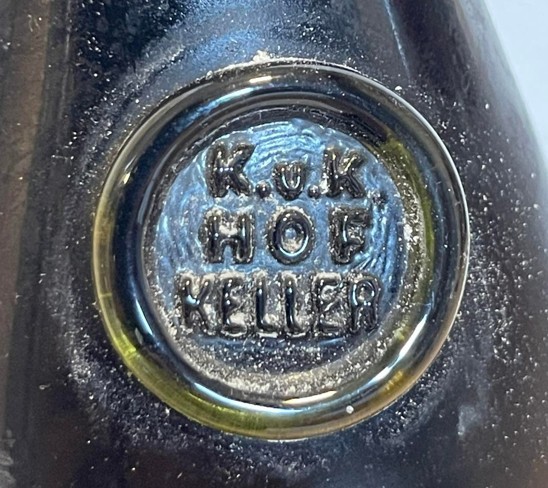
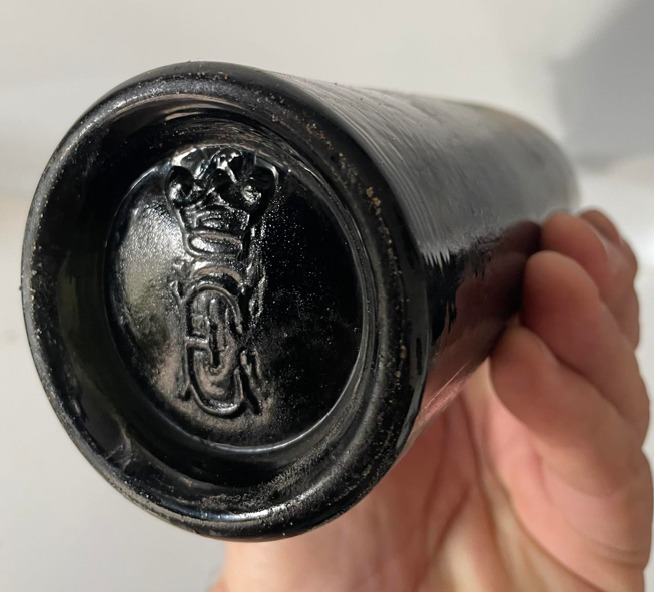
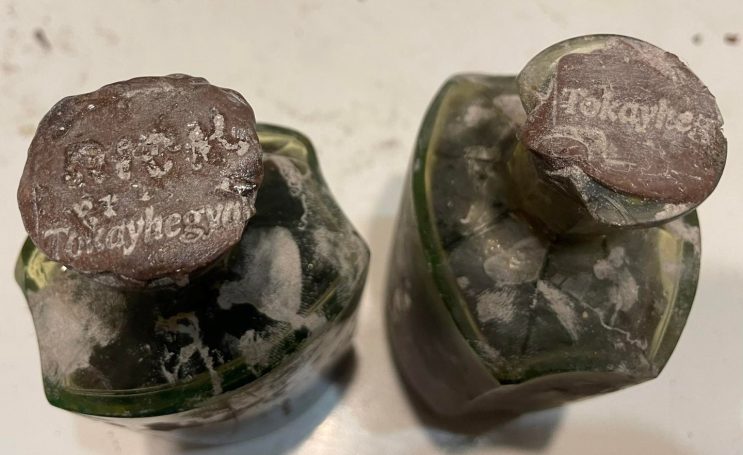
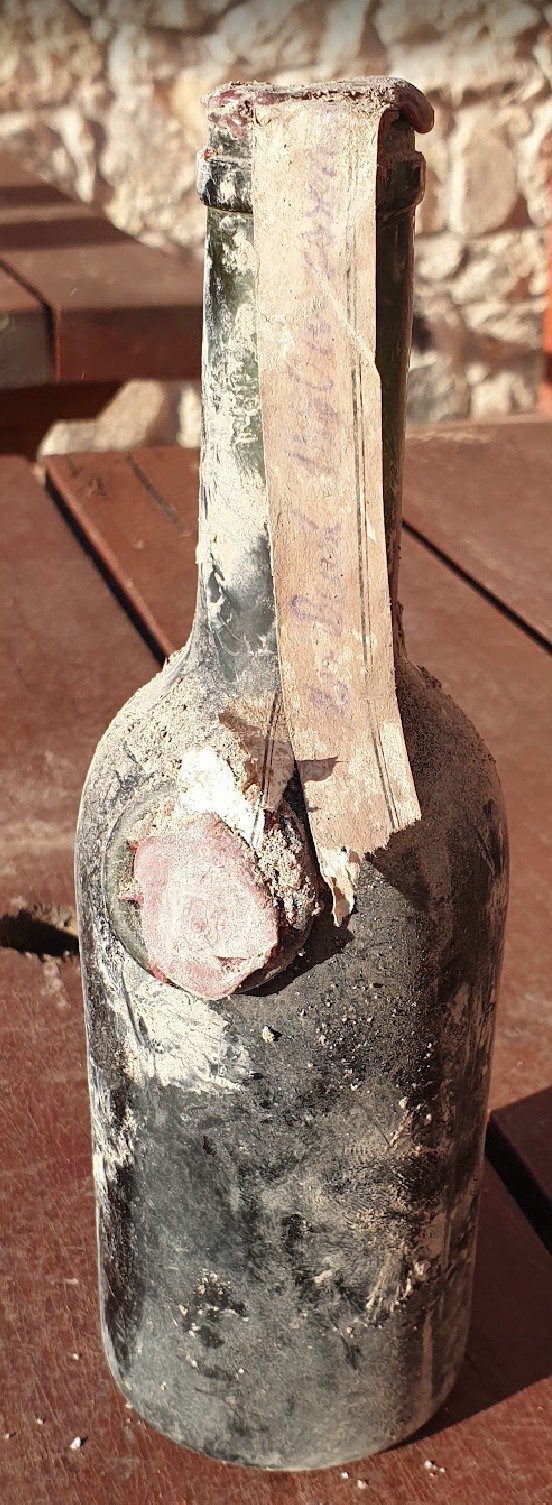
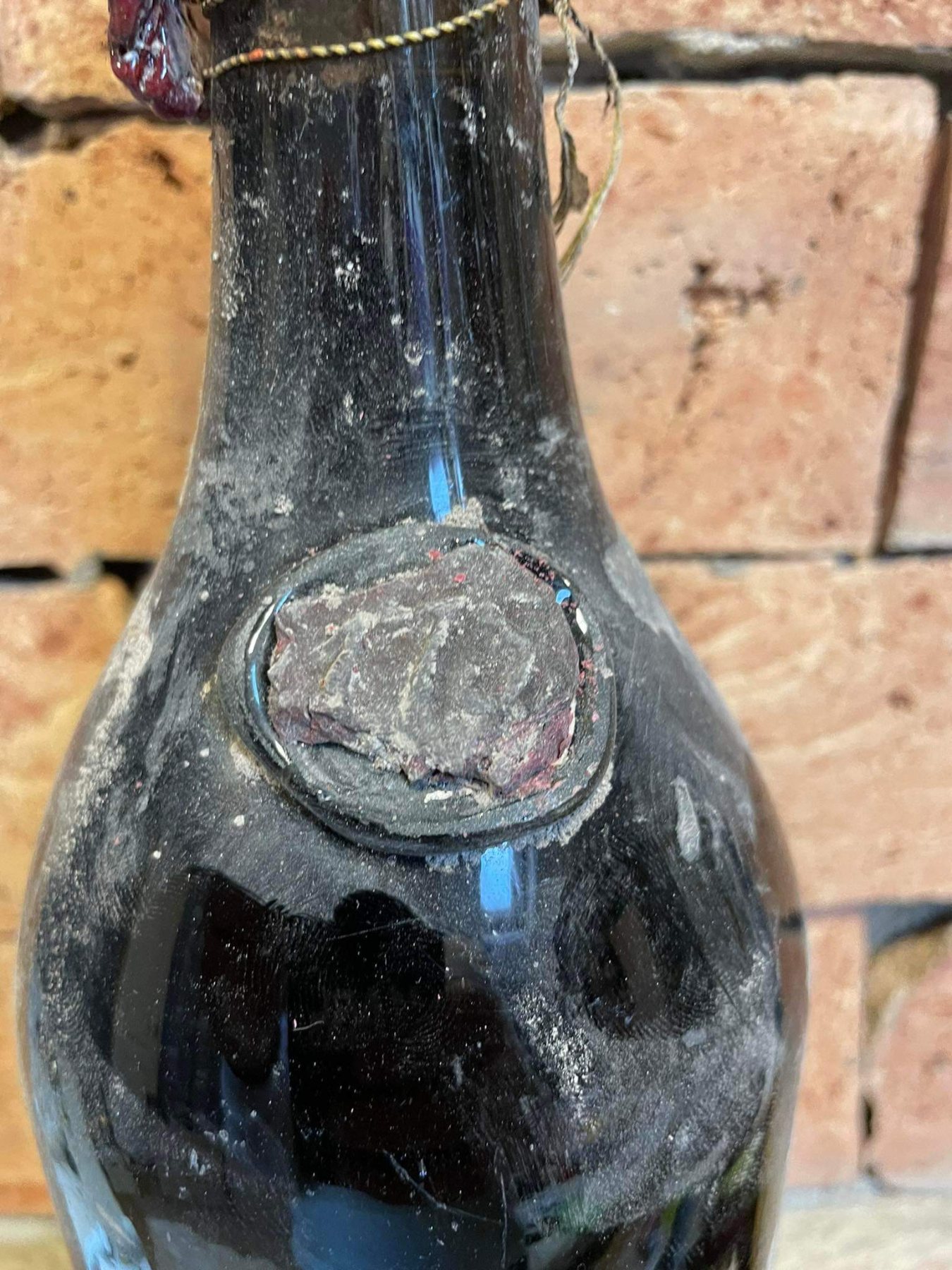
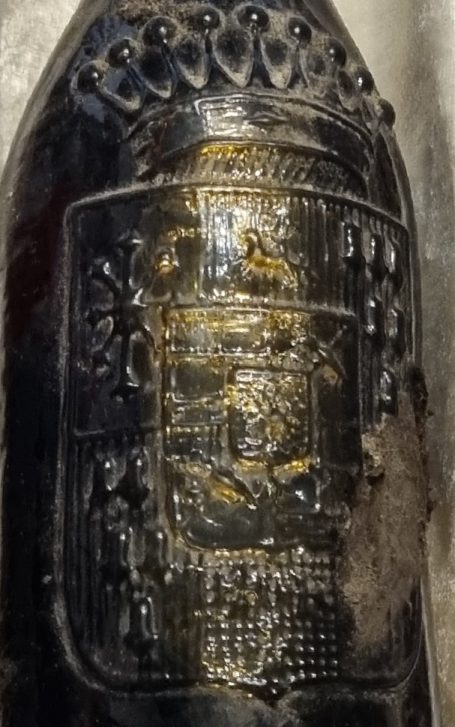
Before a bottle could carry a printed label, it carried a glass seal: a blob of molten glass laid on the shoulder or the body while the bottle was still hot, and stamped with a matrix bearing a coat of arms, a monogram, a house mark or a date. The practice runs from the early seventeenth century into the nineteenth, and the bottles that carry such a mark are known as sealed bottles.
The seal was originally a mark of ownership. Bottles were expensive and were refilled; a tavern, a college, a merchant or a nobleman had bottles blown with a personal seal so that they came back. Over time the same mark did second duty as a mark of origin, which is why it matters here.
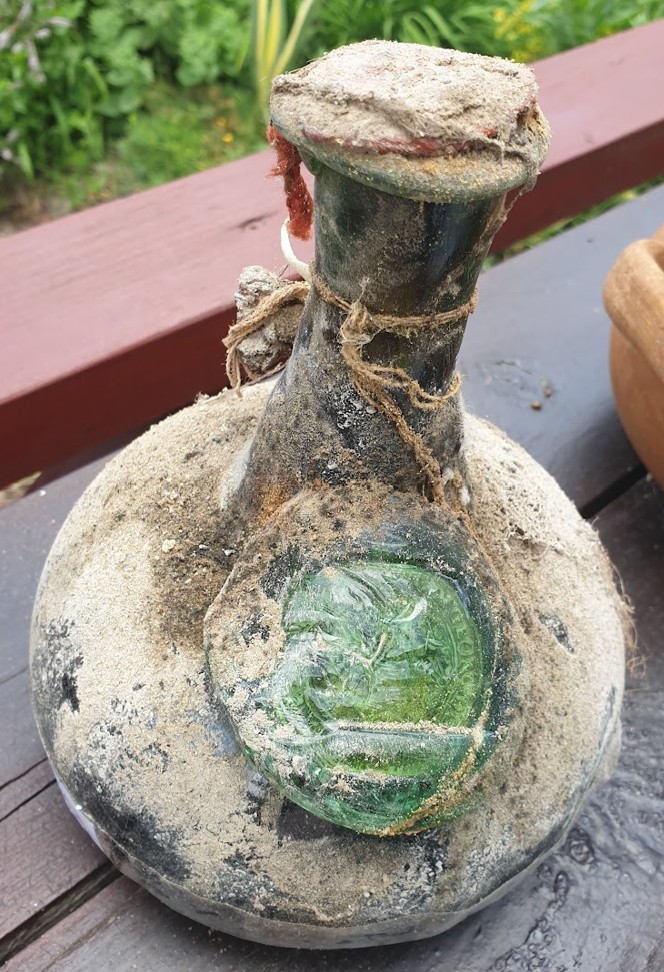
Glass seals — a blob of glass applied to the shoulder while hot and stamped with a matrix. Fused into the body, so unlike wax it cannot be removed and replaced.
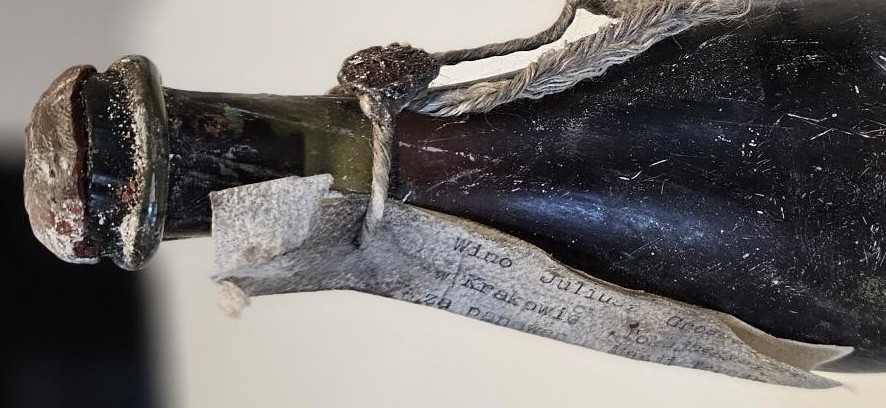
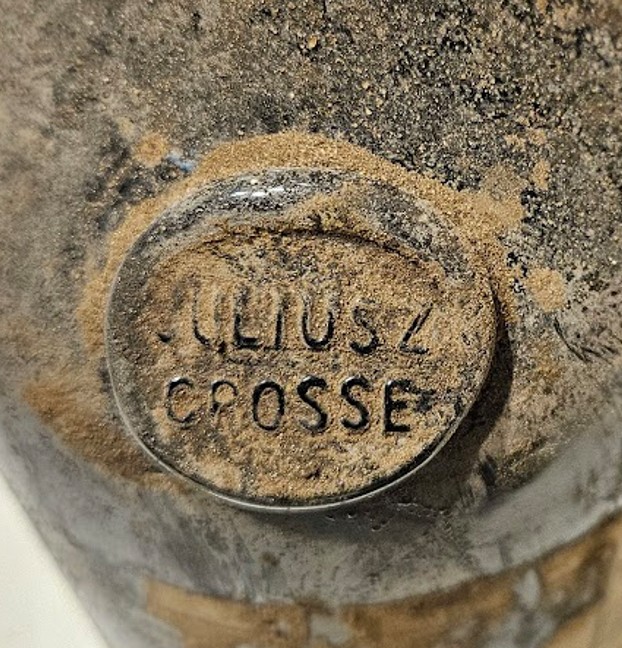
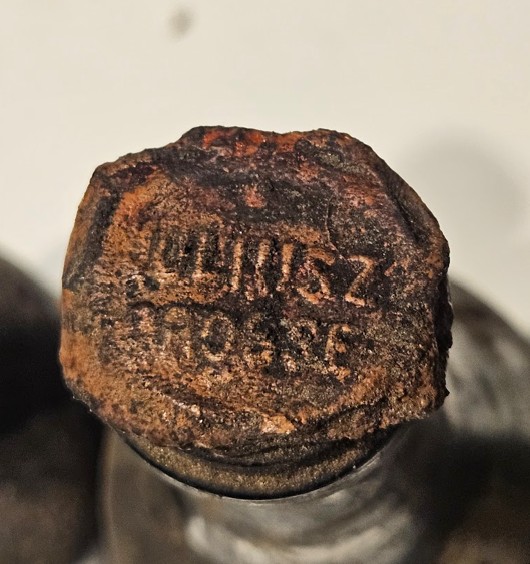
The mark does not always name the same kind of party. A seal may stand for the region, but more often it identifies the producer — a D for Degenfeld — while others name the owner of the cellar, as with the K.u.K. Hofkeller of the imperial court, and some name the trading house that handled the wine, as with Juliusz Grosse. Reading a seal therefore begins with establishing which of these it is; the same letter can point to a family, a cellar or a firm.
That, as far as I can see, is the whole evidential point. Wax can be lifted and re-applied, paper can be moved from one bottle to another, but a glass seal is part of the vessel: to marry it to a different bottle you would have to make a different bottle. It ages with the glass around it, and the matrix that struck it leaves the same small irregularities on every impression, so seals from one owner can be compared against each other.
Sealed bottles in the collection. Applied glass seals on shoulder and body, and a monogram moulded into the base · click any image to enlarge
Sealing with wax, capsule and cord is a separate family, treated in the next section.
02
Wax Seals on the bottle
A wax seal is soft material pressed with a matrix and left to harden on the bottle. Where it sits decides what it can prove.
Where the wax sits
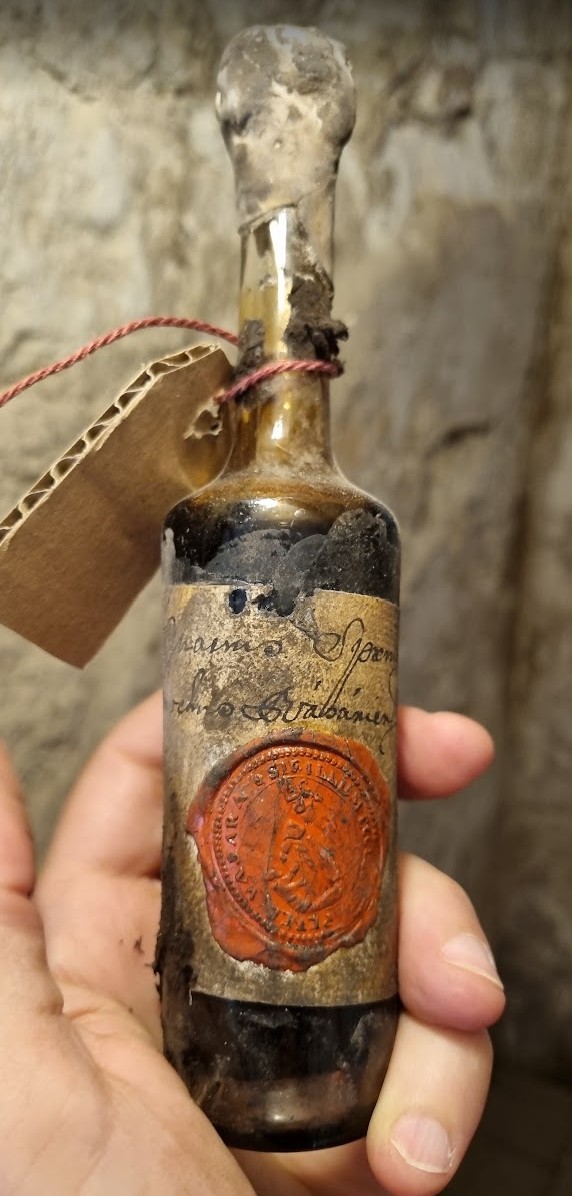
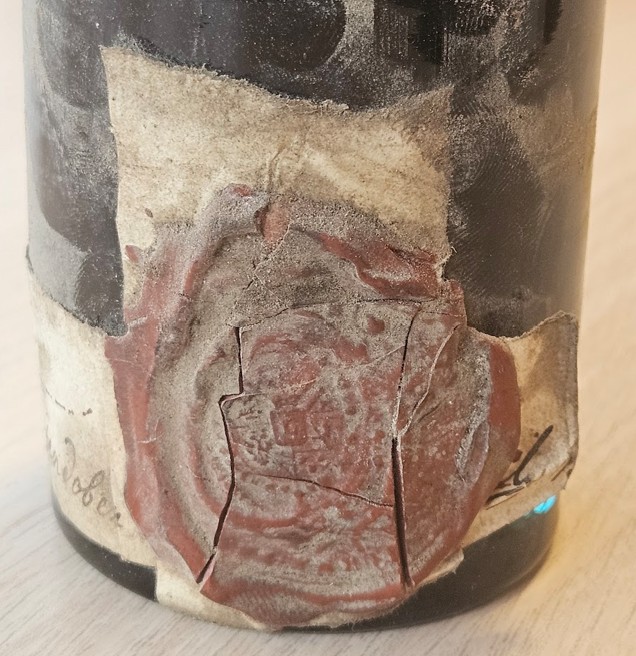
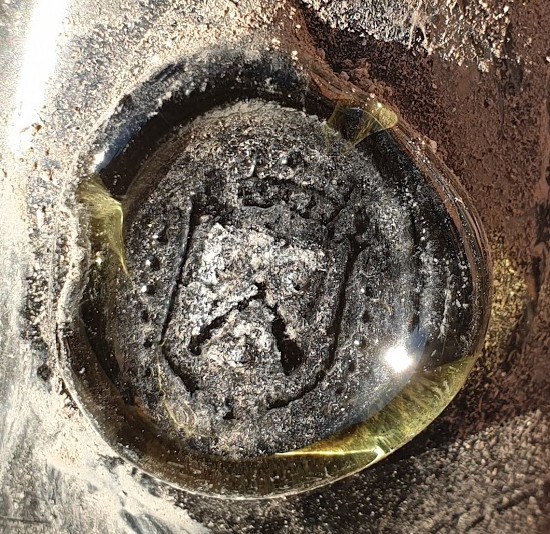
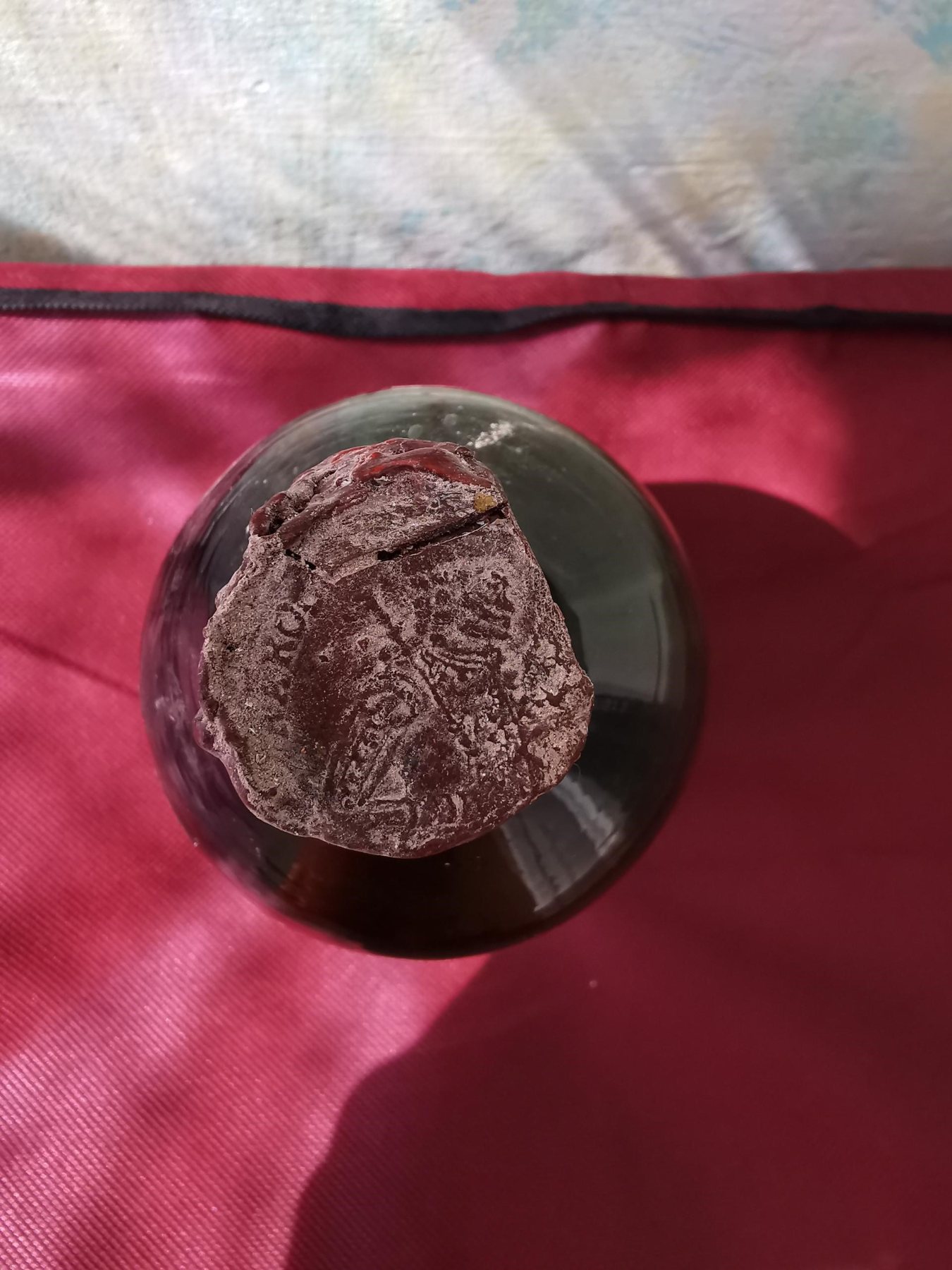
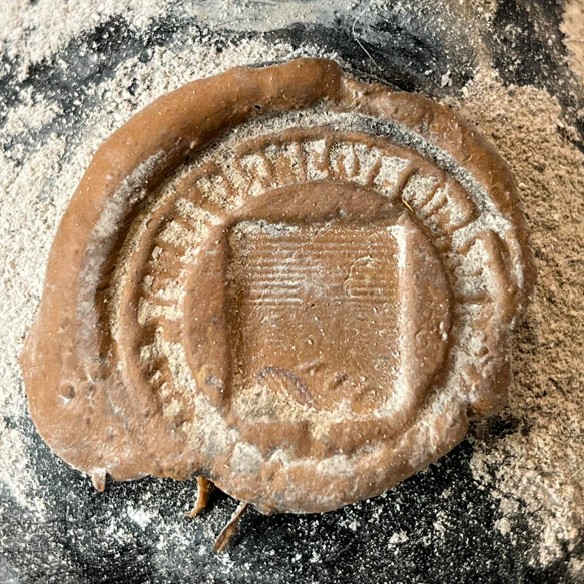
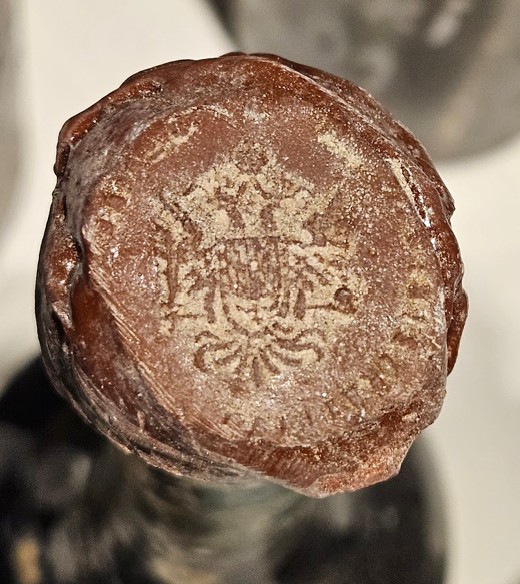
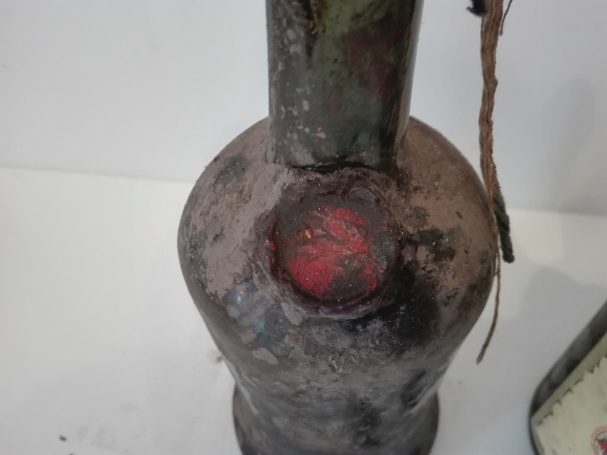
Over the cork, on the bottle top — the commonest form, and the only one that closes the bottle: it cannot be opened without breaking the wax. What matters is the impression itself, its sharpness and shoulder depth, and whether the wax shows the crazing and shrinkage of real age. An intact top seal argues the bottle was never drawn, and is destroyed the moment it is.
On the shoulder or body, beside rather than over the closure, or across a paper wrapper or a document tied to the neck. Such a seal says nothing about whether the bottle is still closed; it identifies an owner, a cellar or an issuing office, and stays readable whether or not the wine is ever poured.
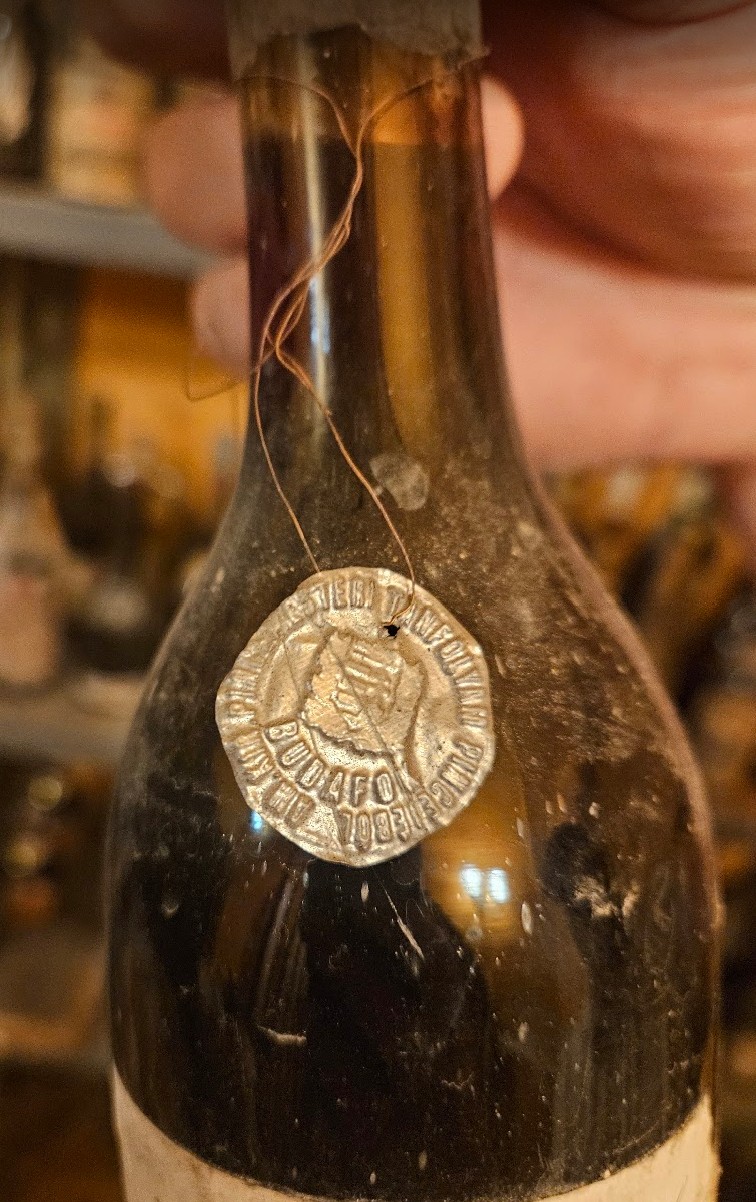
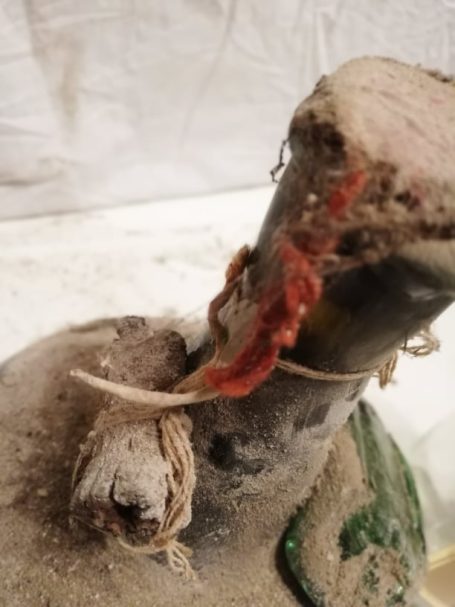
Over a tie, with cord or wire passing under the wax. This is the only sealing variant that actually evidences an unopened bottle; the others evidence origin.
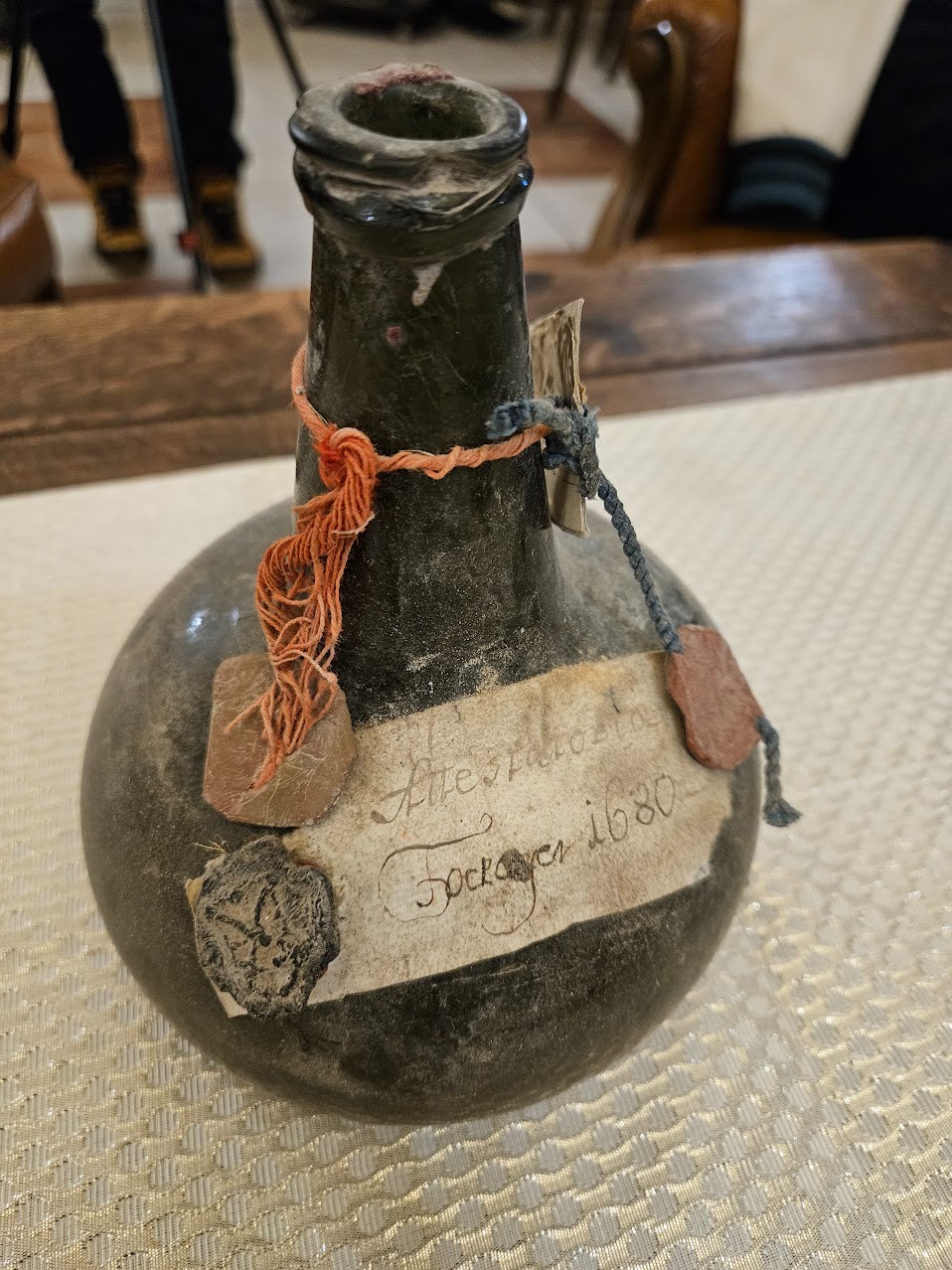
Several seals on one bottle multiply the difficulty rather than repeating it. On the onion bottle inscribed Tockayer 1680, three separate seals hold the arrangement together — two fixing the ends of the coloured cords to the glass, one closing the parchment label — so closure, cords and written attestation are locked to each other. Each can be examined on its own, and none can be lifted without disturbing the others.
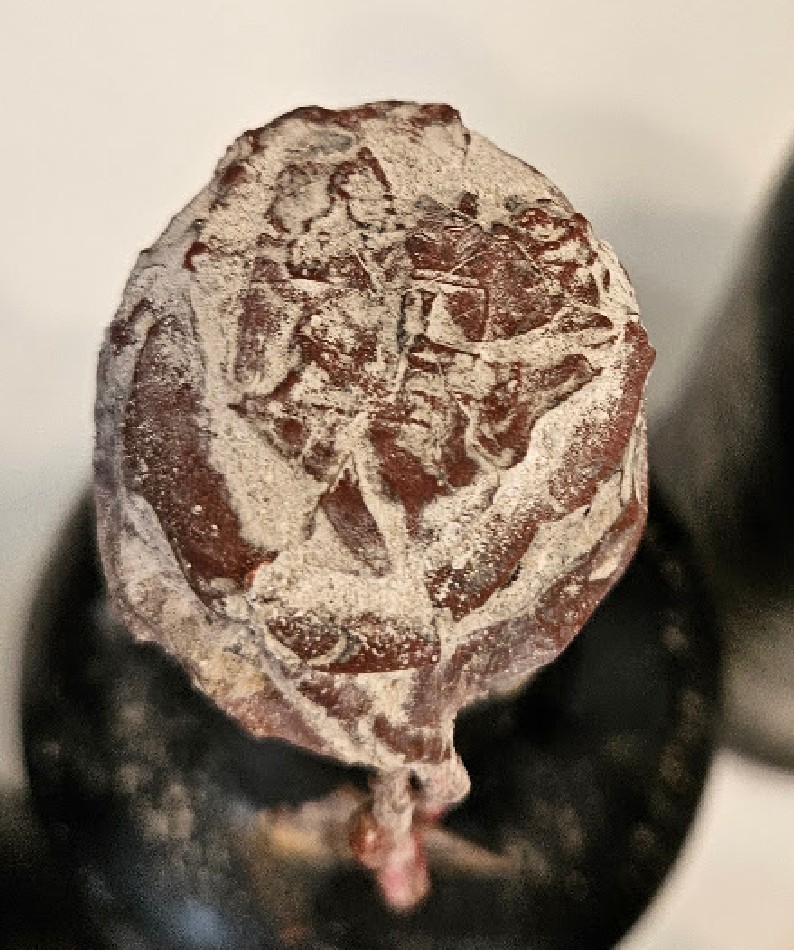
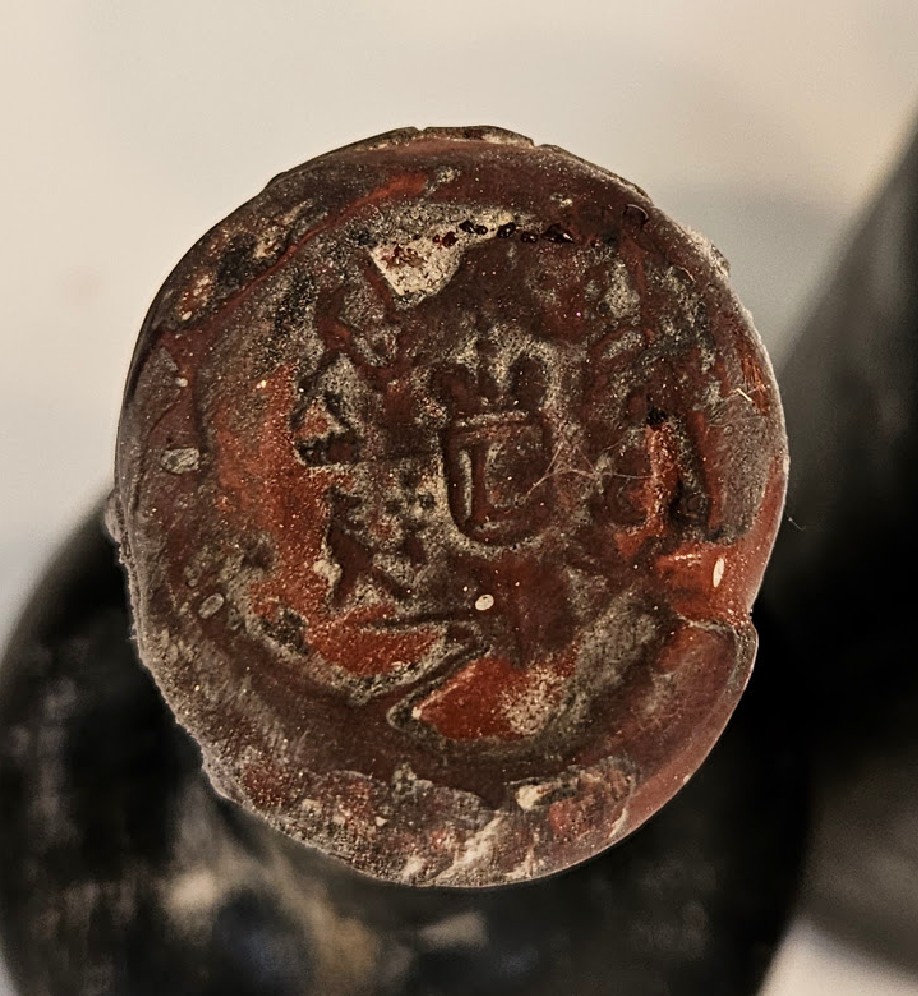
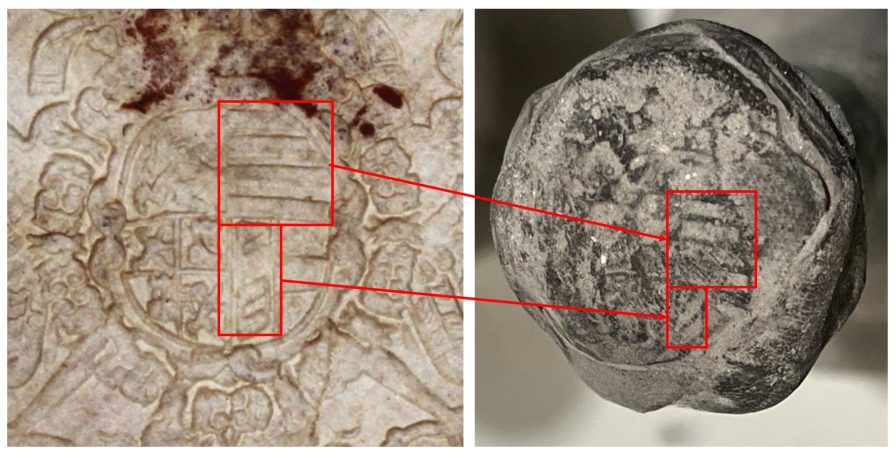
The impressions themselves. Matrix, lettering and the state of the wax, seen close. One of the shields is identifiable: the barred field within the lettered border is the historical coat of arms of Abaúj-Torna county — barry of red and silver above, and below, on blue, a crowned eagle. Abaúj-Torna is the Hegyalja county itself, Abaújszántó and Erdőbénye among its communes · click any image to enlarge
Where the seal sits. The same devices in place on the bottle — over the cork, on the shoulder, across a paper strip · click any image to enlarge
What survives, and what it is worth
Often only a fragment is left. Where the wrapping has been handled or the wax has cracked away, a few millimetres of red compound carrying part of an impression may be all there is — still worth recording, since the colour, the composition of the wax and the surviving lines can be compared against intact seals from the same hand.
Wax outlasts everything else in a closure. Cork turns to powder and paper rots, but an impression in wax stays legible, which is why any old bottle should be examined for wax residue and a stamp before anything else is done to it.
Two independent accounts show this directly. On 10 August 1944, cutting passages between the cellars of the Warsaw town hall, insurgents broke into a walled chamber holding fifty bottles sealed there in the reign of Stanisław August Poniatowski — tokaj and mead. The cork had gone entirely to powder. Only the wax survived, and on the wax were stamps. What remained of the wine, about half a bottle, had reduced to a syrup.
And from a wholly different direction: the expert appraisal of the walled-up Branicki cellar at Wilanów, drawn up on 11 December 1947, dated the cellar's three epochs by their wax seals — Szreniawa for the oldest, then Pilawa, then Korczak — precisely because the paper labels and shelf notes had rotted away.
03
Capsules
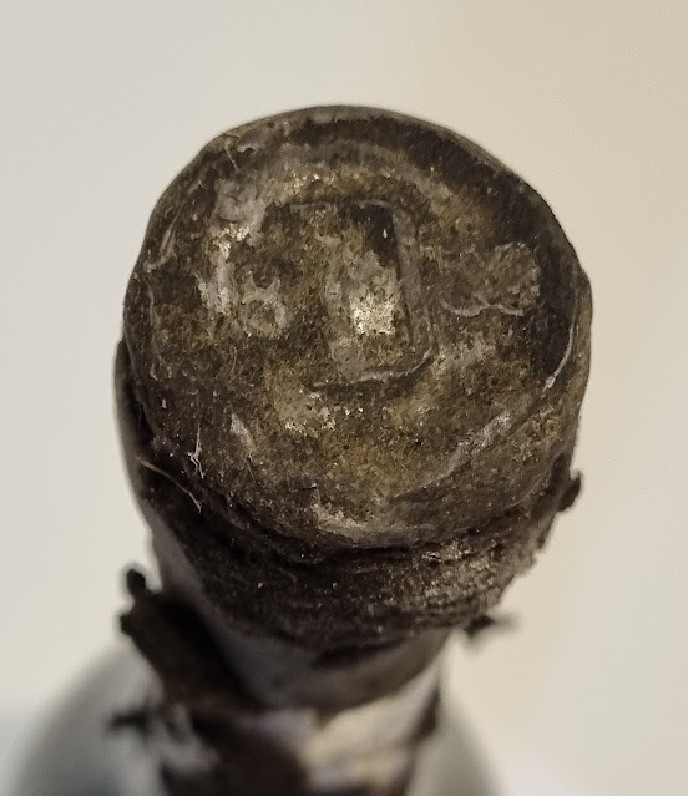
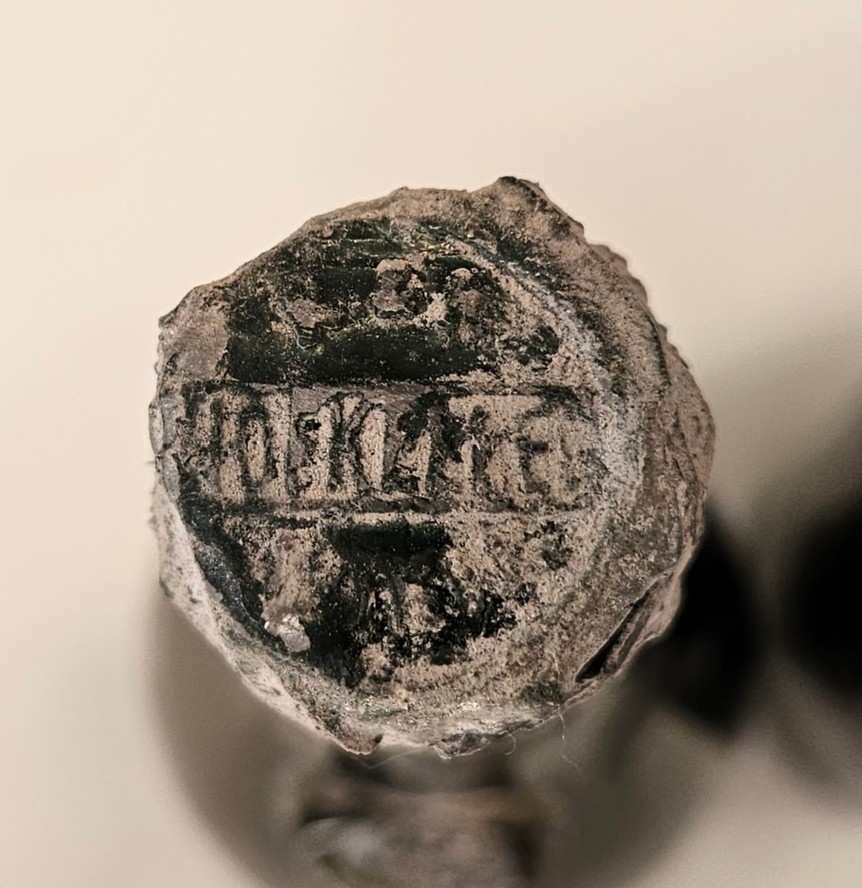
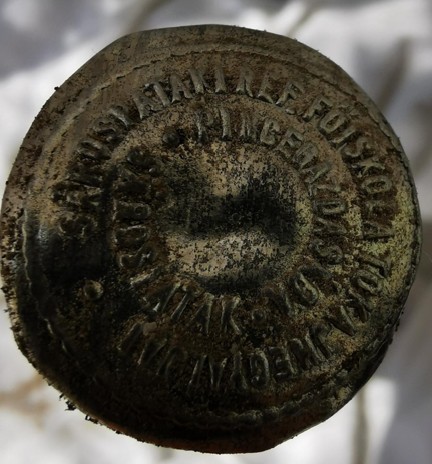
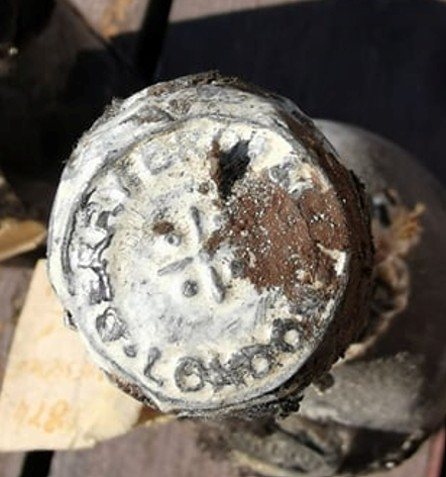
A capsule is a sleeve of foil, lead, tin or wax drawn over the mouth and the top of the neck. It protects the cork, and where it carries a house mark it also identifies the bottler.
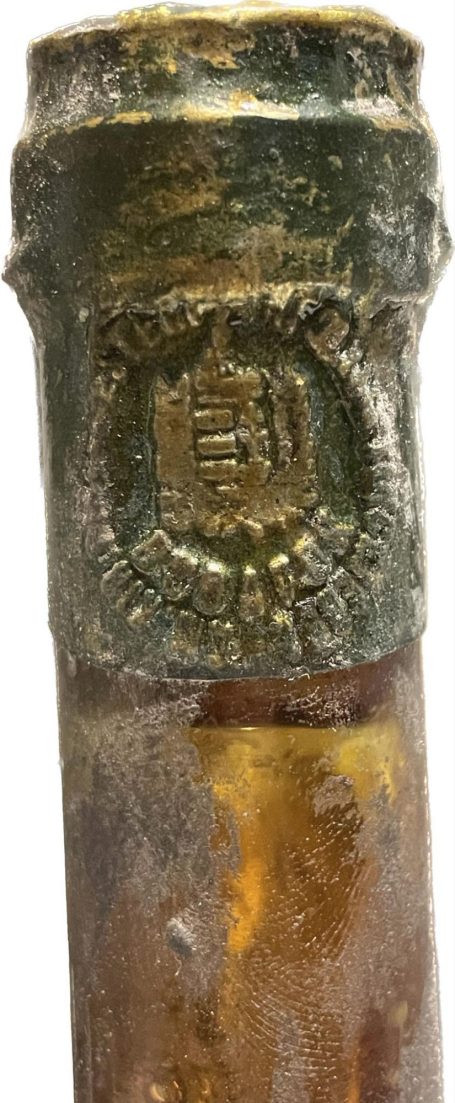
Lead and tin capsules, sometimes struck with a house mark, were cheap, durable, and far harder to remove and replace intact than wax.
Like a top seal, an intact capsule argues that the bottle has not been opened, and it is destroyed the moment it is. Unlike a glass seal it can be lifted and replaced, so a capsule on its own proves little: it counts as evidence when its mark, its metal and its wear agree with everything else on the bottle.
Capsules in the collection. Marked and unmarked sleeves over the cork · click any image to enlarge
04
Coin Examination
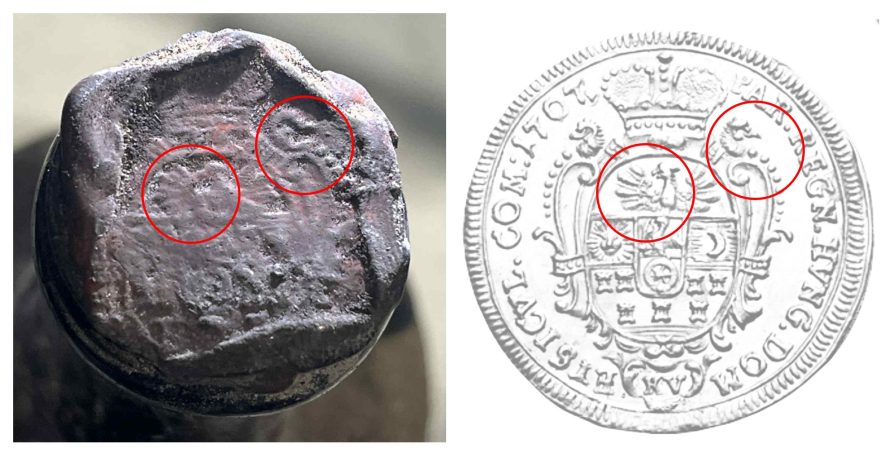
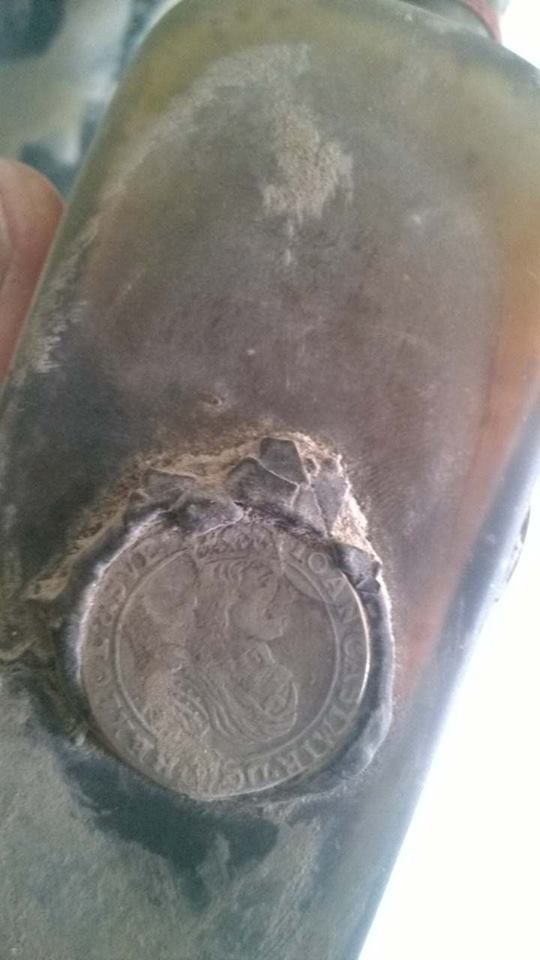
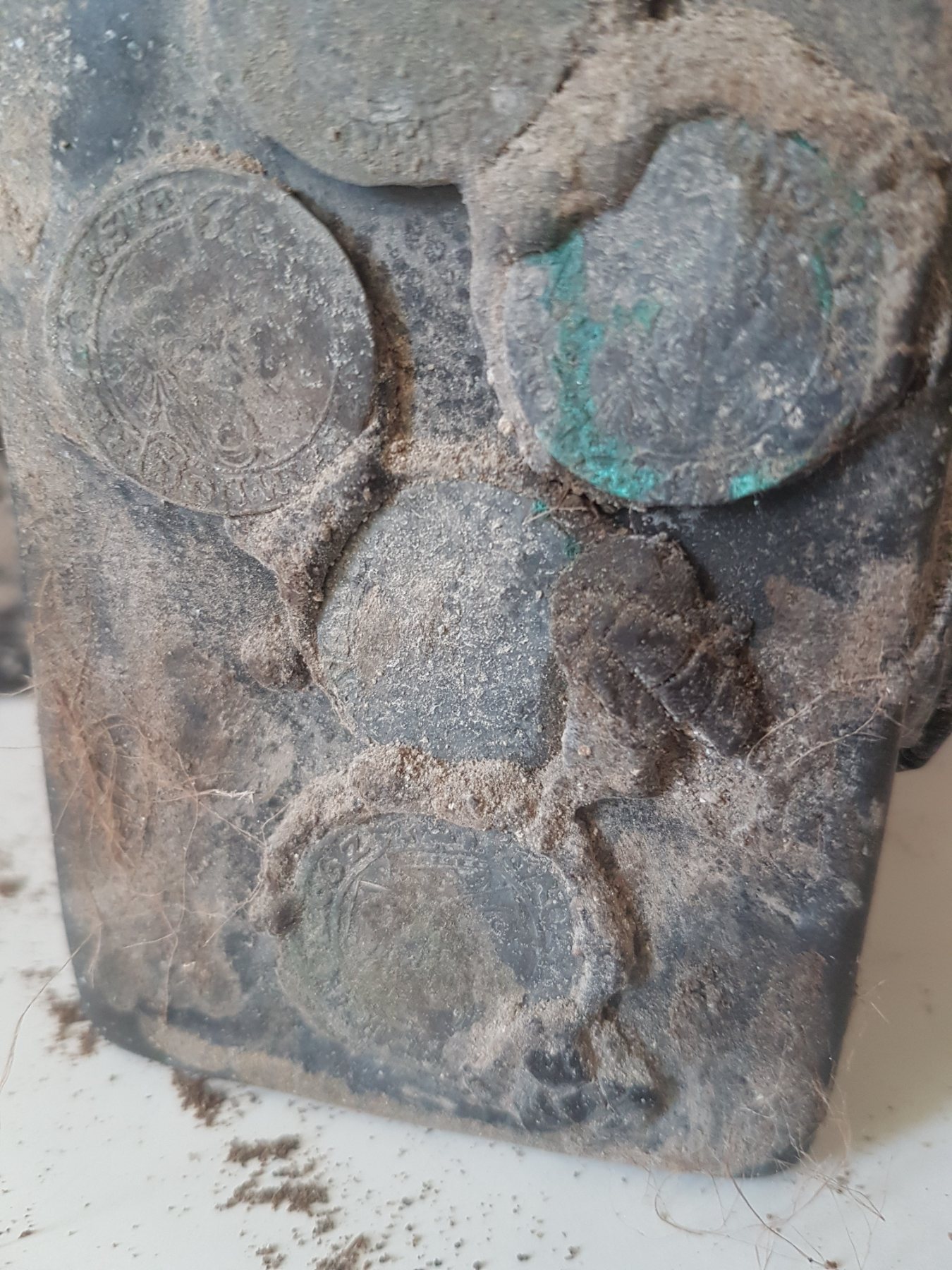
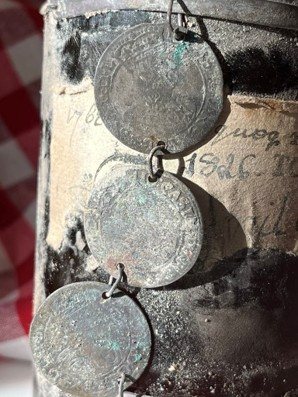
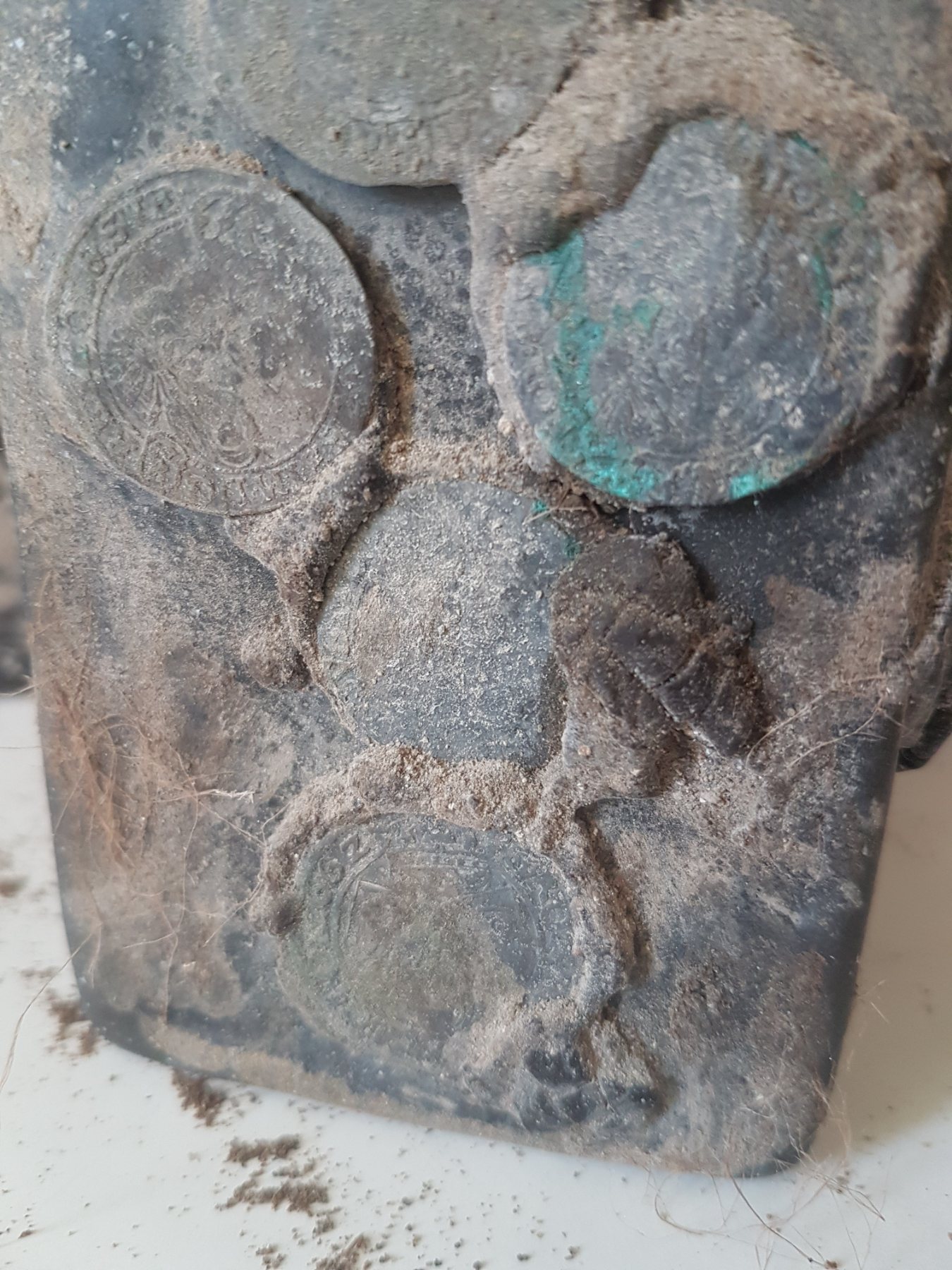
Coins appear on old Tokaji bottles in several ways: struck into the sealing wax, fixed into the glass of the body, or tied to the neck. In each case the coin is doing the same work — it is a mark that a forger cannot simply draw.
The protection is economic rather than artistic. A coat of arms can be re-cut by any competent engraver working from a printed source, but a coin was struck by a mint in a recorded quantity. Reproducing one convincingly means obtaining a genuine specimen of the right type and condition, and coins of the kind found on these bottles often cost more than the bottle itself. The rarer the issue, the less worthwhile the forgery.
A coin is also a dating instrument. It carries a ruler, a year and a mint, so the bottle cannot have been closed before the coin was struck, and the issuing authority points to the region where the work was done. Where several coins sit on one bottle, the latest of them sets the earliest possible date and the group as a whole usually narrows the origin to one area and a short span of years.
The limit is that a coin dates the sealing, not the wine, and an old coin can be applied to a young bottle. It carries weight when the wax, the glass and any documents agree with what the coin says.
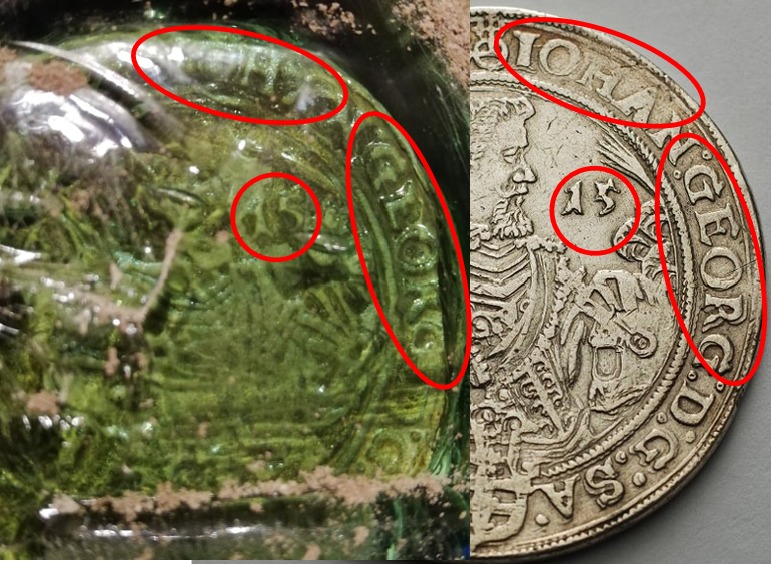
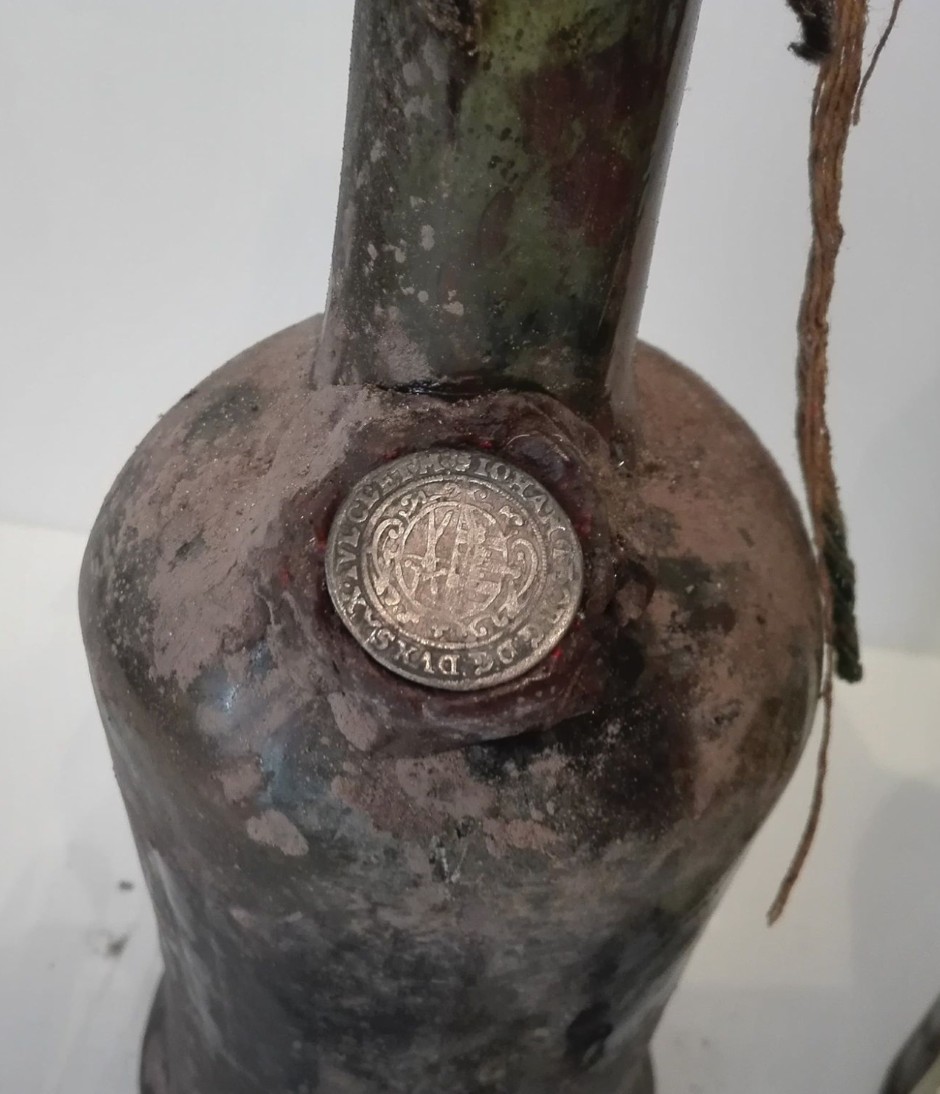
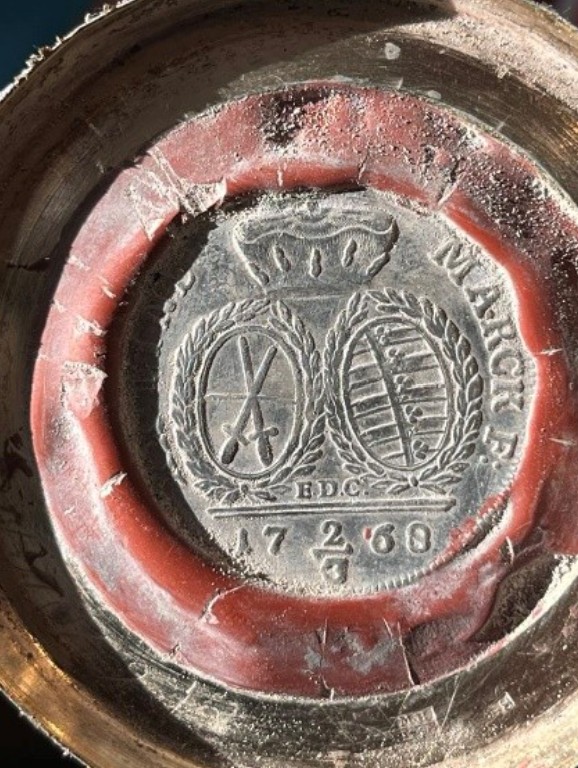
Electorate of Saxony, ⅔ Taler (Gulden), 1768, Dresden mint, mintmaster Ernst Dietrich Croll.
The bottle, the seal and the coin. A flat photograph destroys exactly the information — relief depth and die wear — that distinguishes a struck impression from a cast copy.
05
Special Bottles
Using special bottles that are hard to copy was another way of fraud protection — and a structurally superior one, because the defence sits in the container itself and cannot be detached, swapped or re-applied.
Unique bottle forms — a shape made in a single mould, or blown to a house pattern for one owner or one cellar. A forger must either find a genuine empty of the right form or commission a mould, and both leave traces.
Special glass — distinctive colour, metal composition or bubble structure arising from one glasshouse's batch and furnace. This is the one feature on the whole page that is now testable instrumentally: trace-element analysis places glass in a production tradition and period.
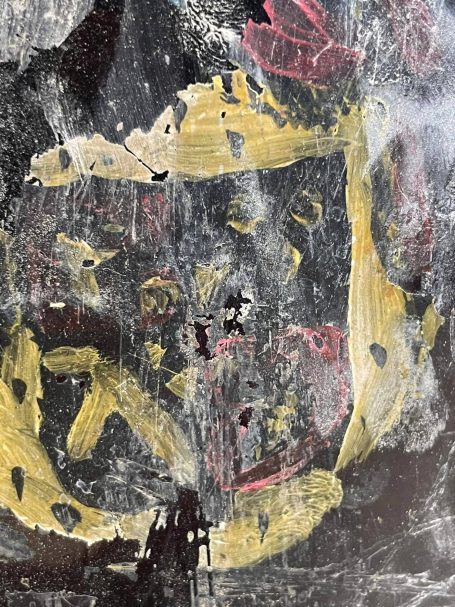
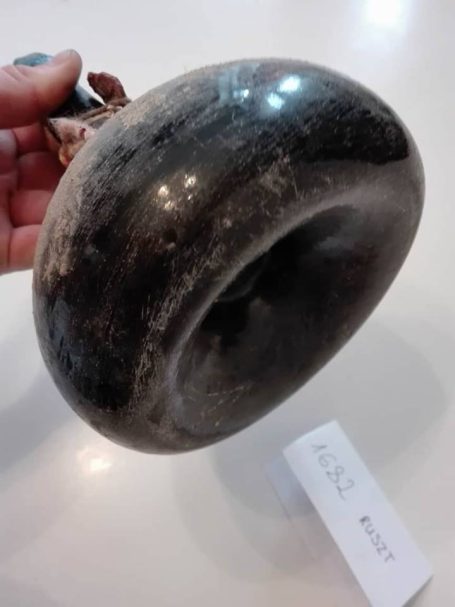
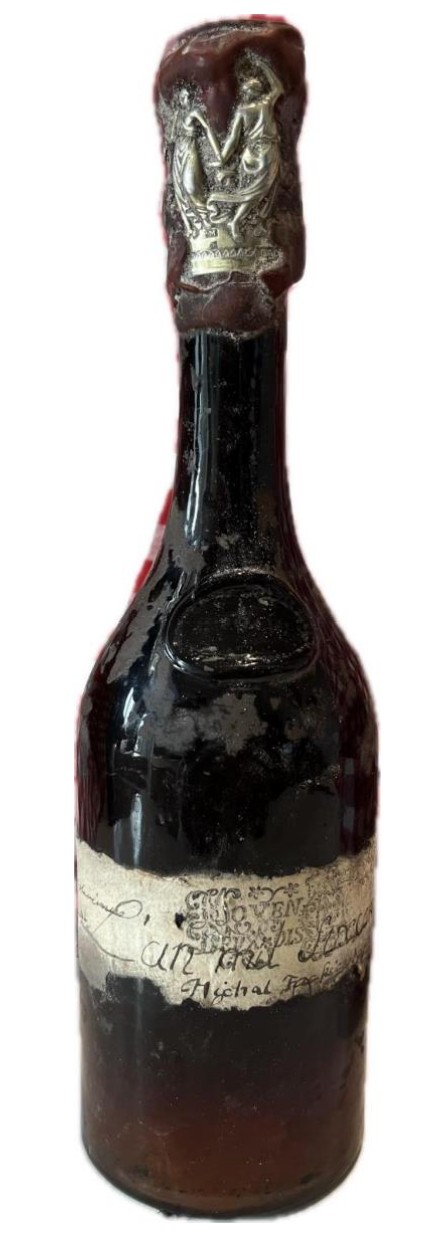
Different special bottles. Shoot each against a scale and in transmitted light, and record the base separately — pontil, mould seams and base profile are period evidence independent of anything applied to the outside.
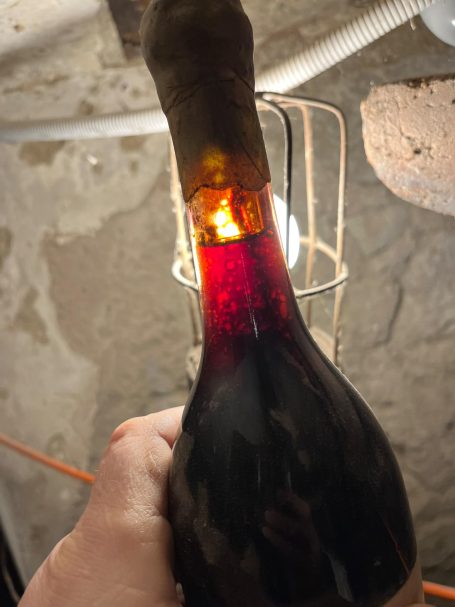
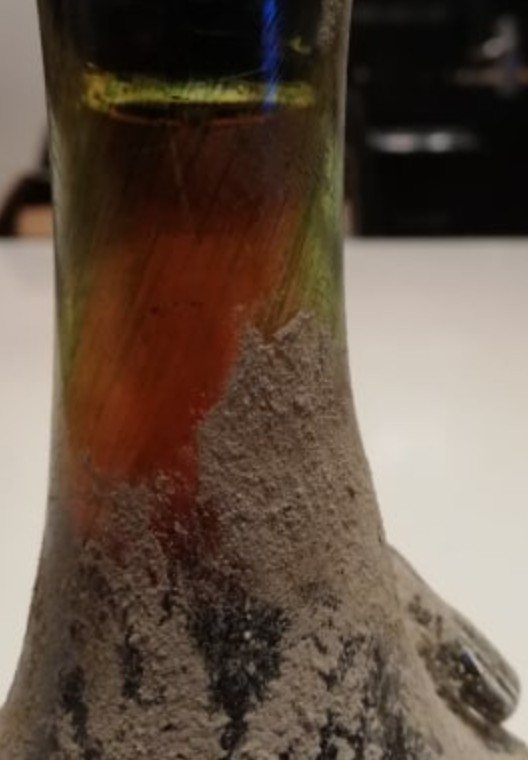
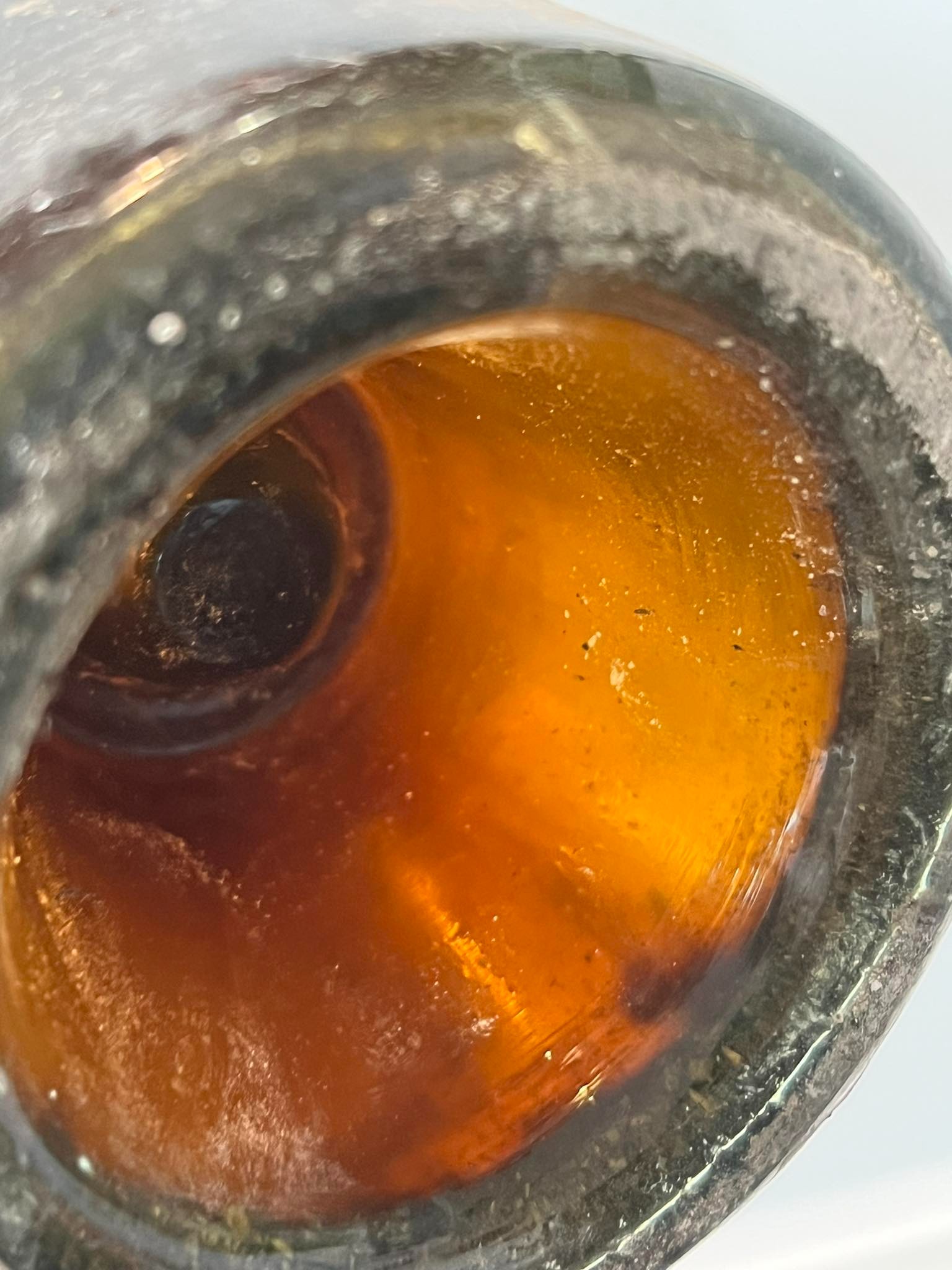
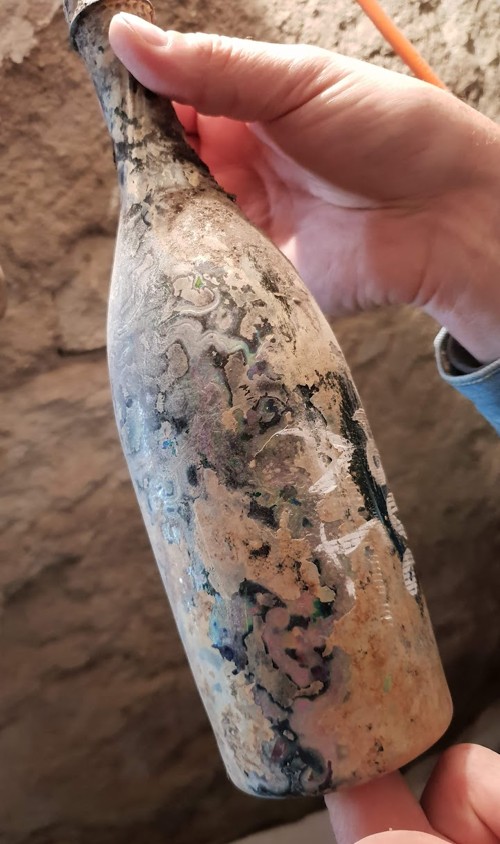
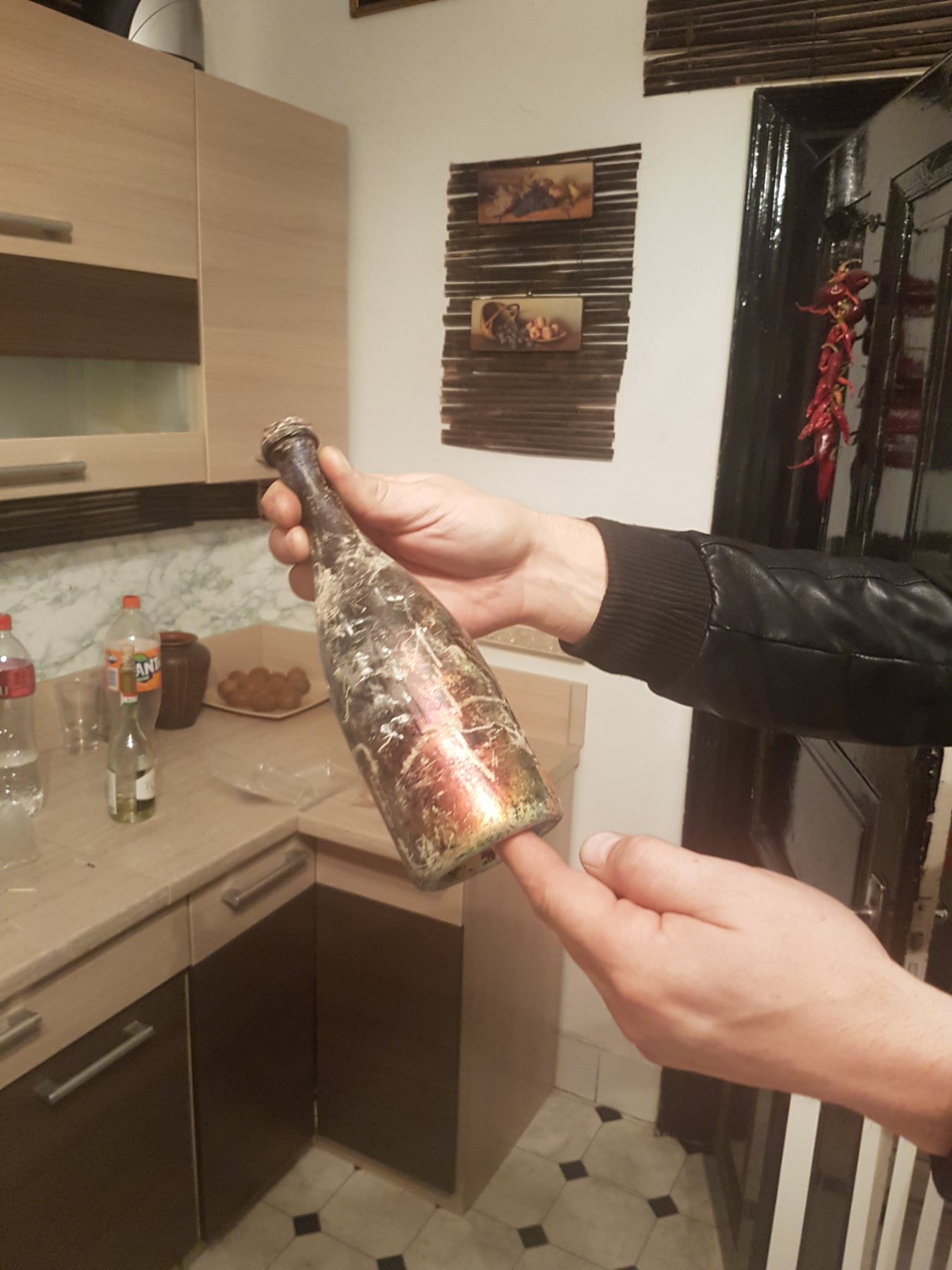
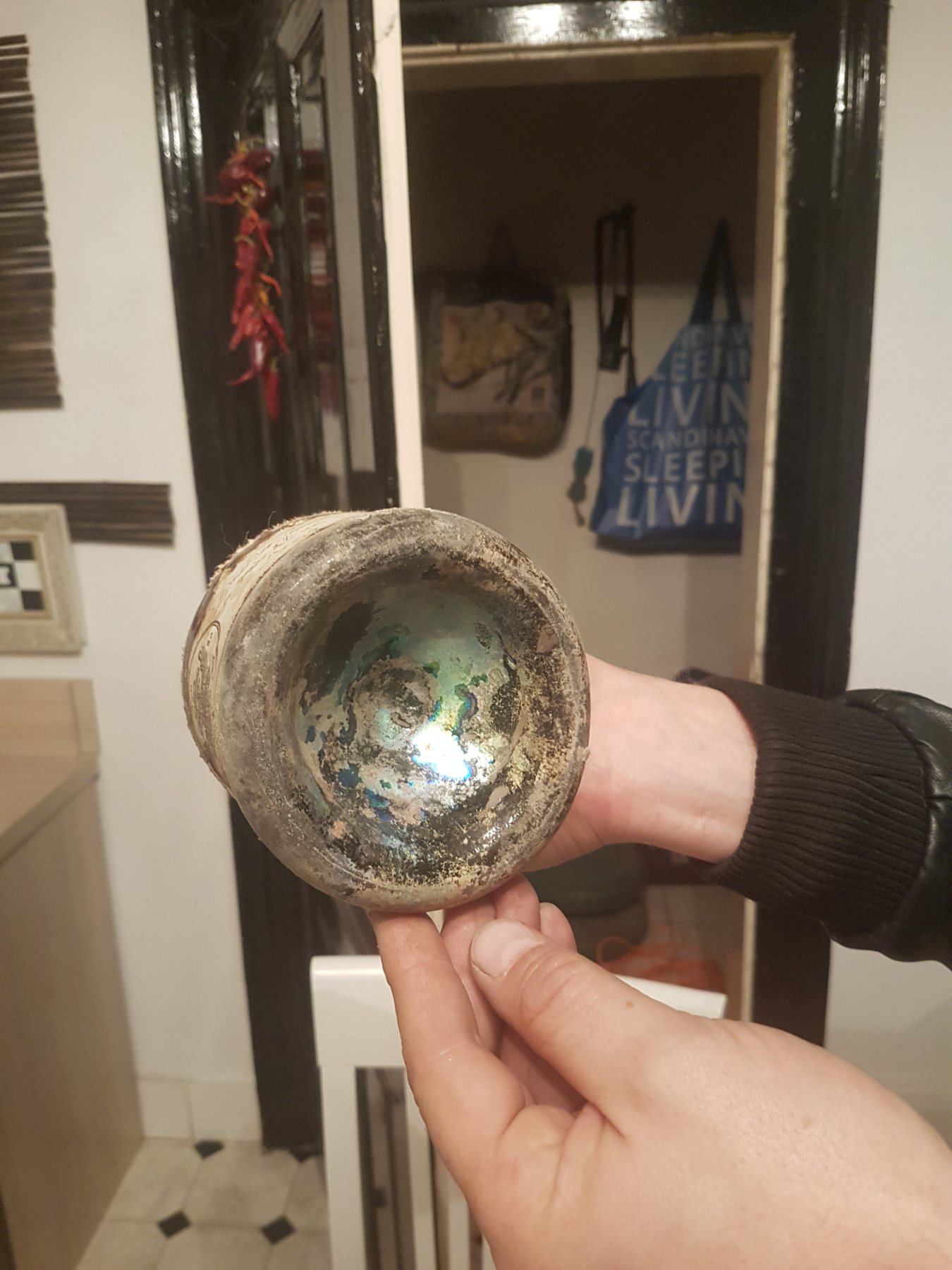
Alongside the glass, the contents leave their own record: the hard deposit Polish cellars called kamień, the mould ring at the neck, stains marking the original fill level, air bubbles in the neck glass, an intact cork without wax. None of these authenticates a bottle on its own, but together they establish that it has lain undisturbed for a very long time.
06
Attached objects
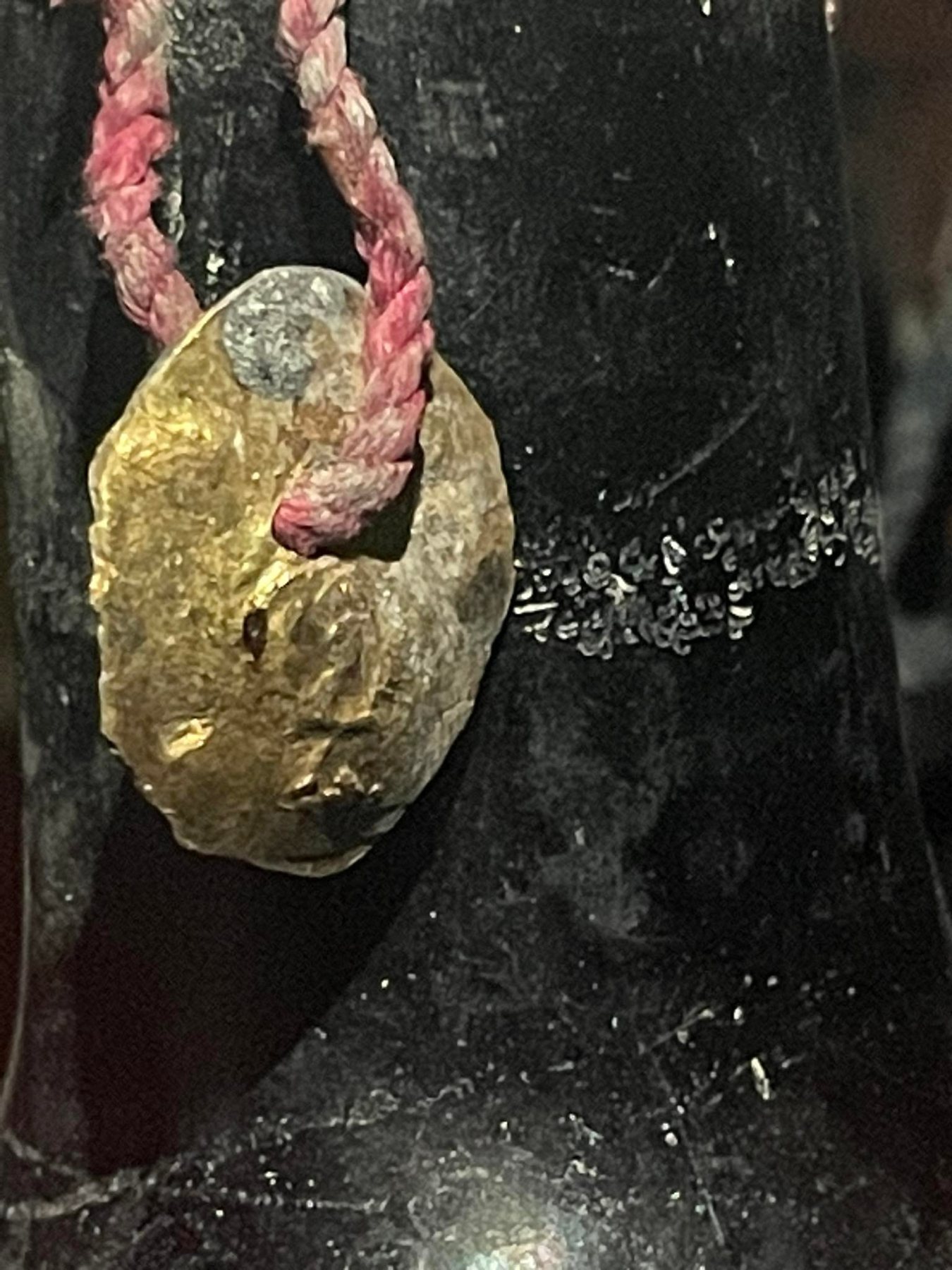
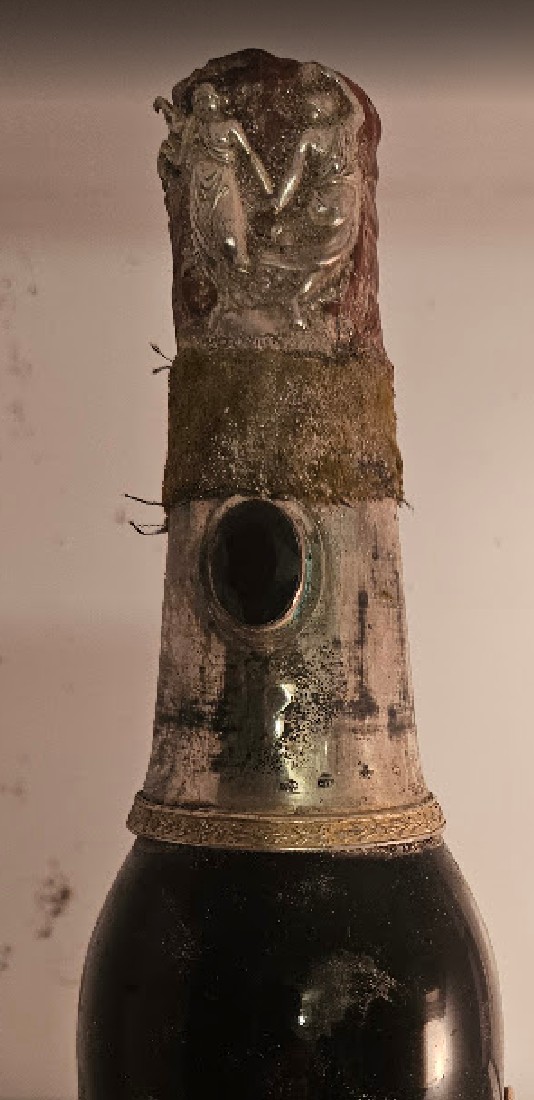
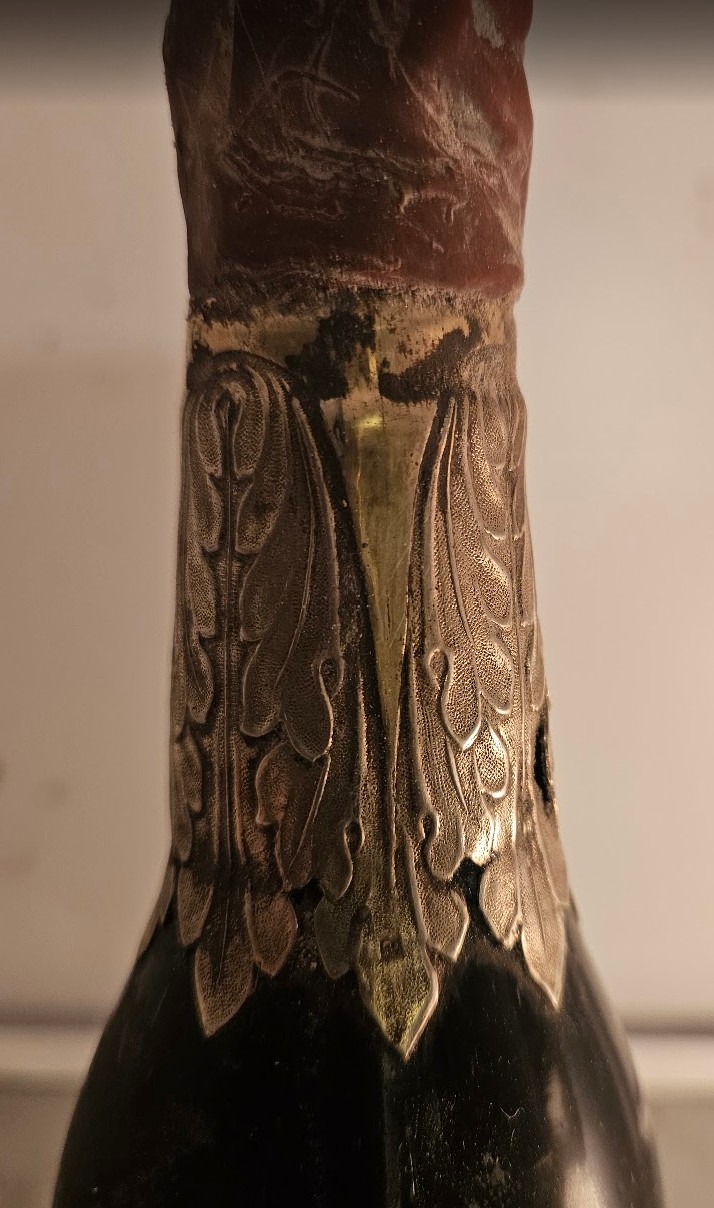
Objects fixed to the bottle — mounts, medallions, coins, plaques, metalwork, applied artwork. This technique was probably employed to create unique bottles or small series, especially where artwork was involved. The logic is the same as the coin die: the harder the object is to obtain, the better it works.
The caution here is the opposite of the one for glass. Because attached objects can be detached, they can also be married to a different bottle. So the question is not only whether the object is genuine but whether the join is: solder and adhesive residues, wear patterns that do or do not align with the glass, corrosion transfer, and whether the mount actually fits the neck it sits on. An engraved silver collar on an eighteenth-century bottle is frequently a nineteenth-century addition.
Bottles with objects attached. Always photograph the join as well as the object. The join is where a marriage betrays itself.
07
Attached official documents
This is the richest family, as well as the cheapest. Each variant brings its own dating evidence with it, which is what makes documents so much more useful than their cost suggests.
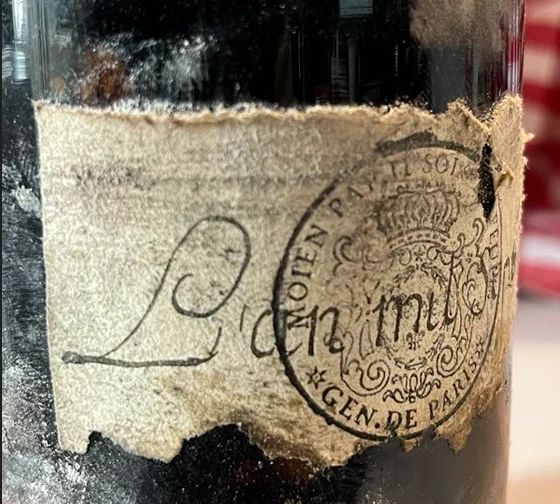
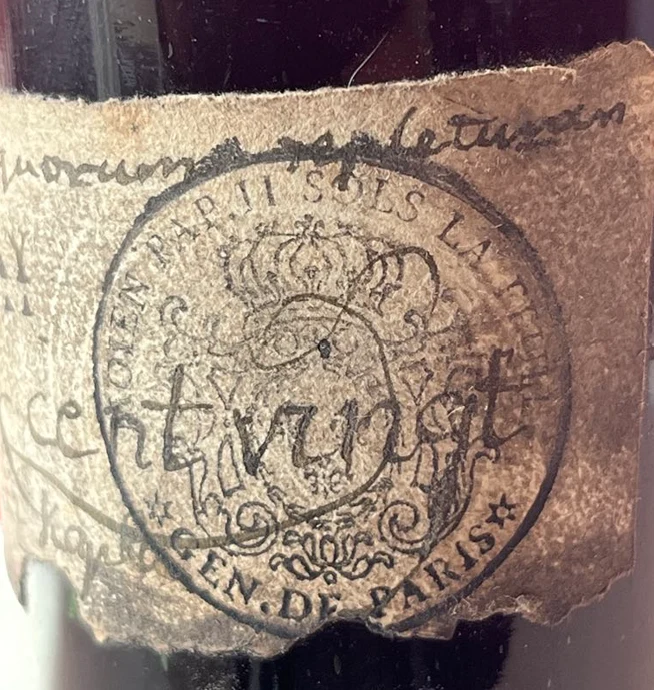
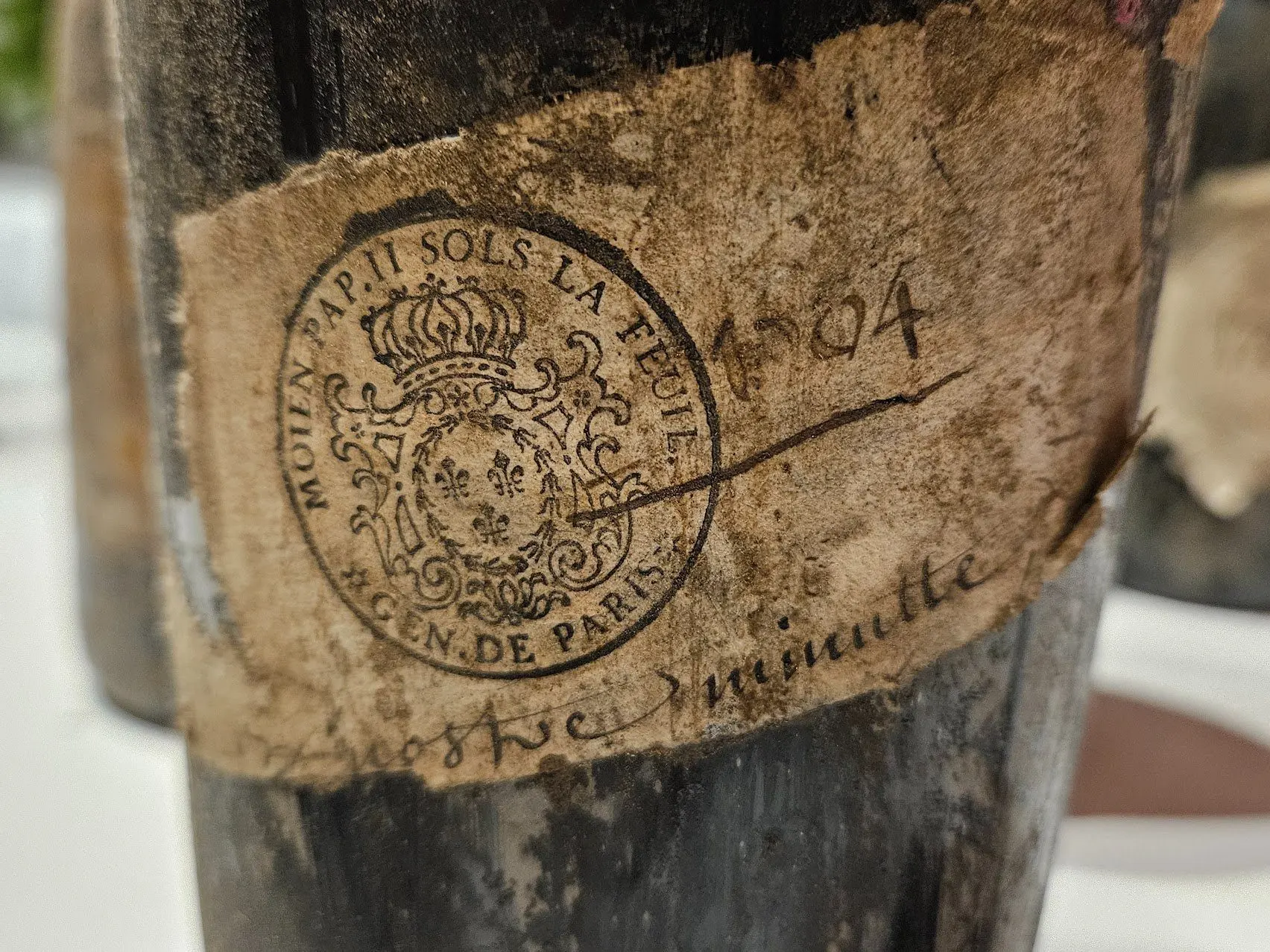
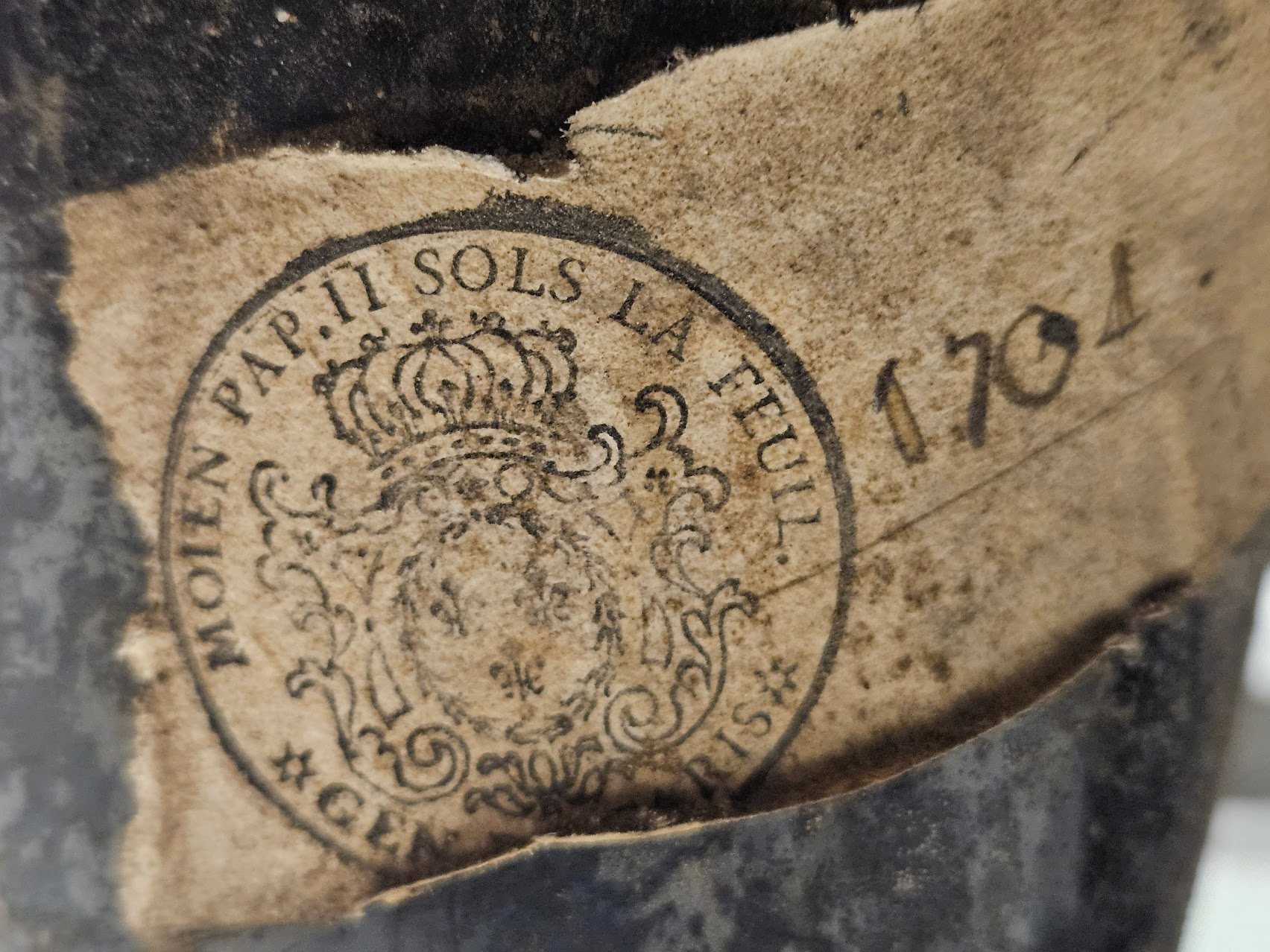
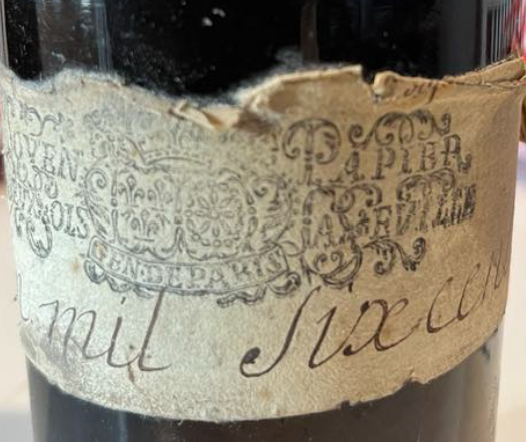
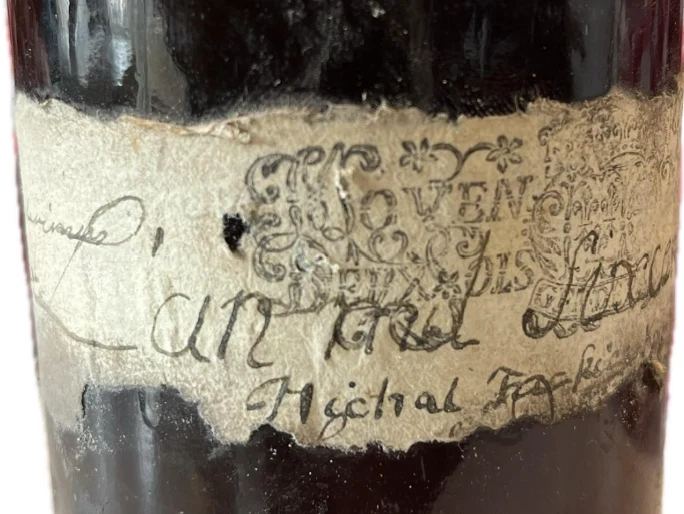
Stamped Paper (Papier timbré)
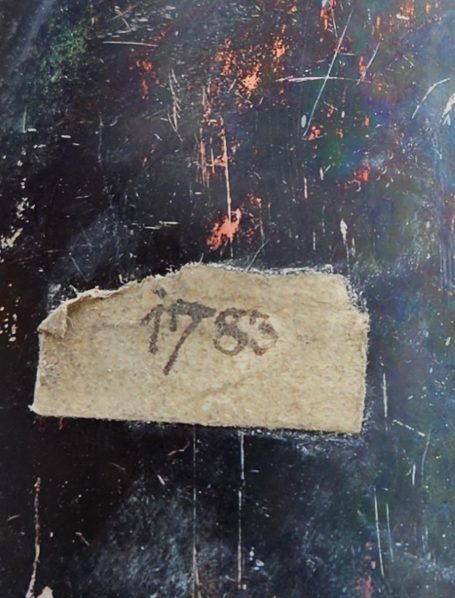
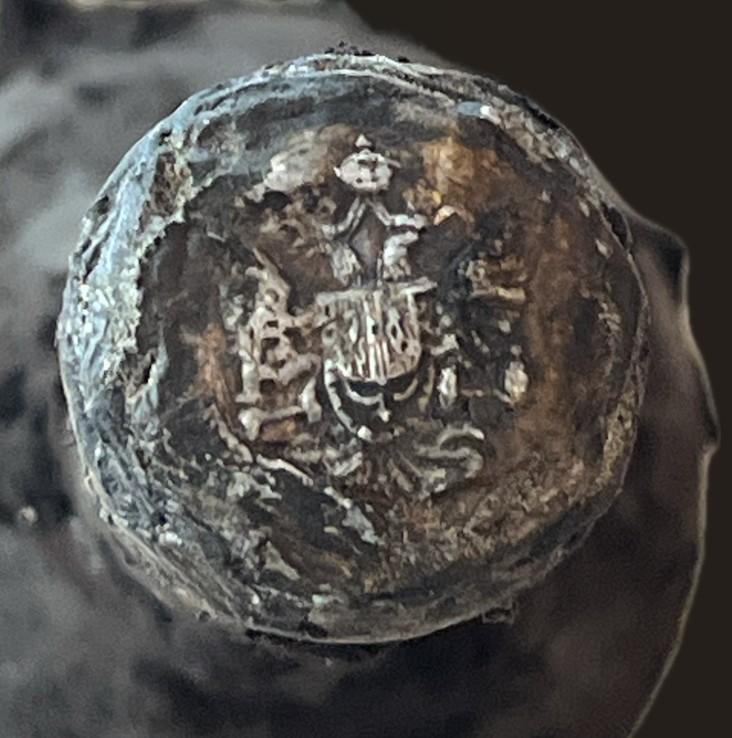
State authorities sold official paper, blank but with each sheet bearing an impressed stamp of unique design, and often watermarked as well. The stamps differed depending on place and year, which makes it possible to identify the historical context of the bottle they are attached to — far more tightly than any inscription could.
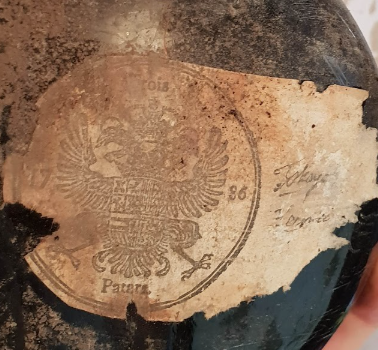
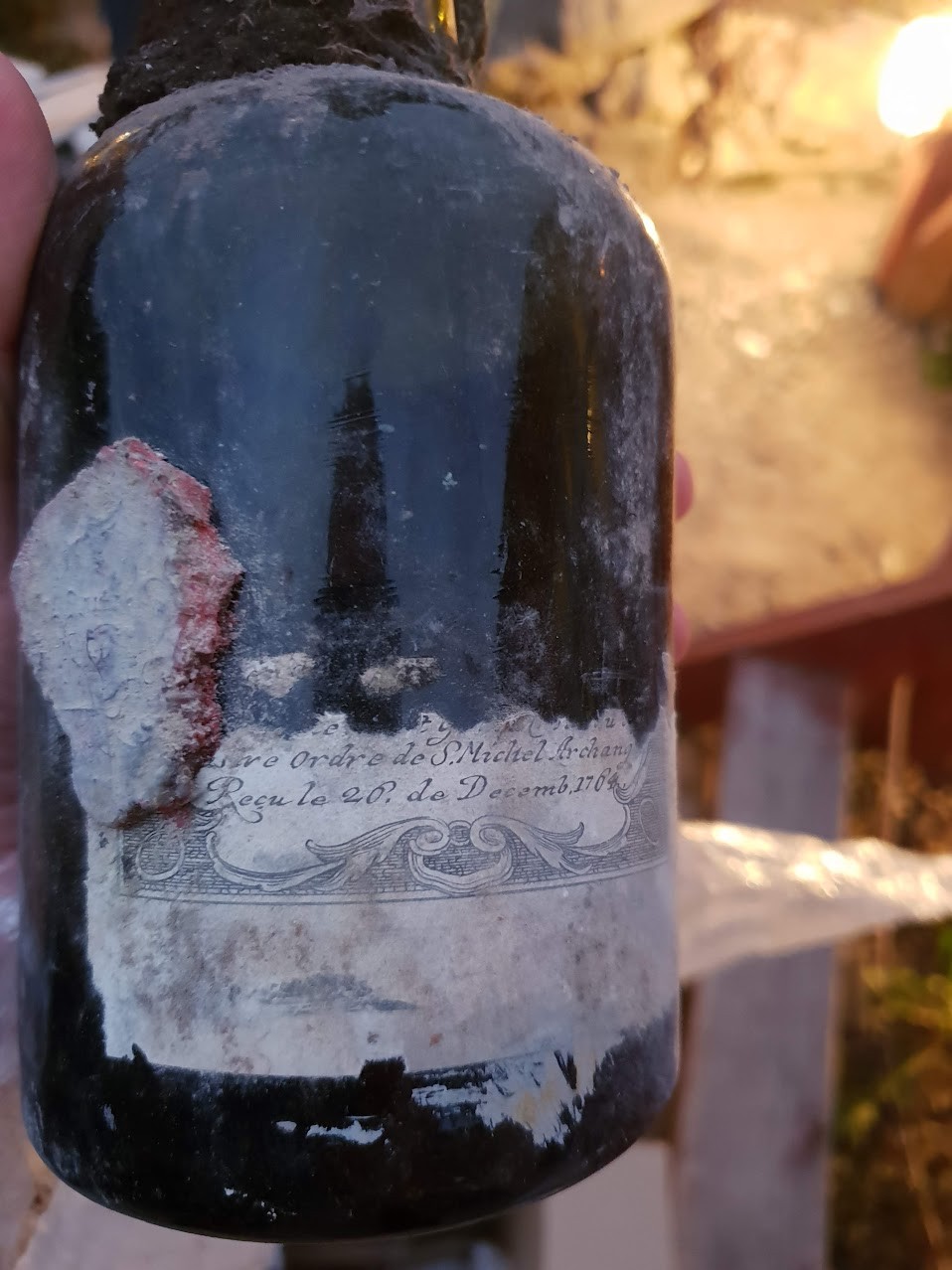
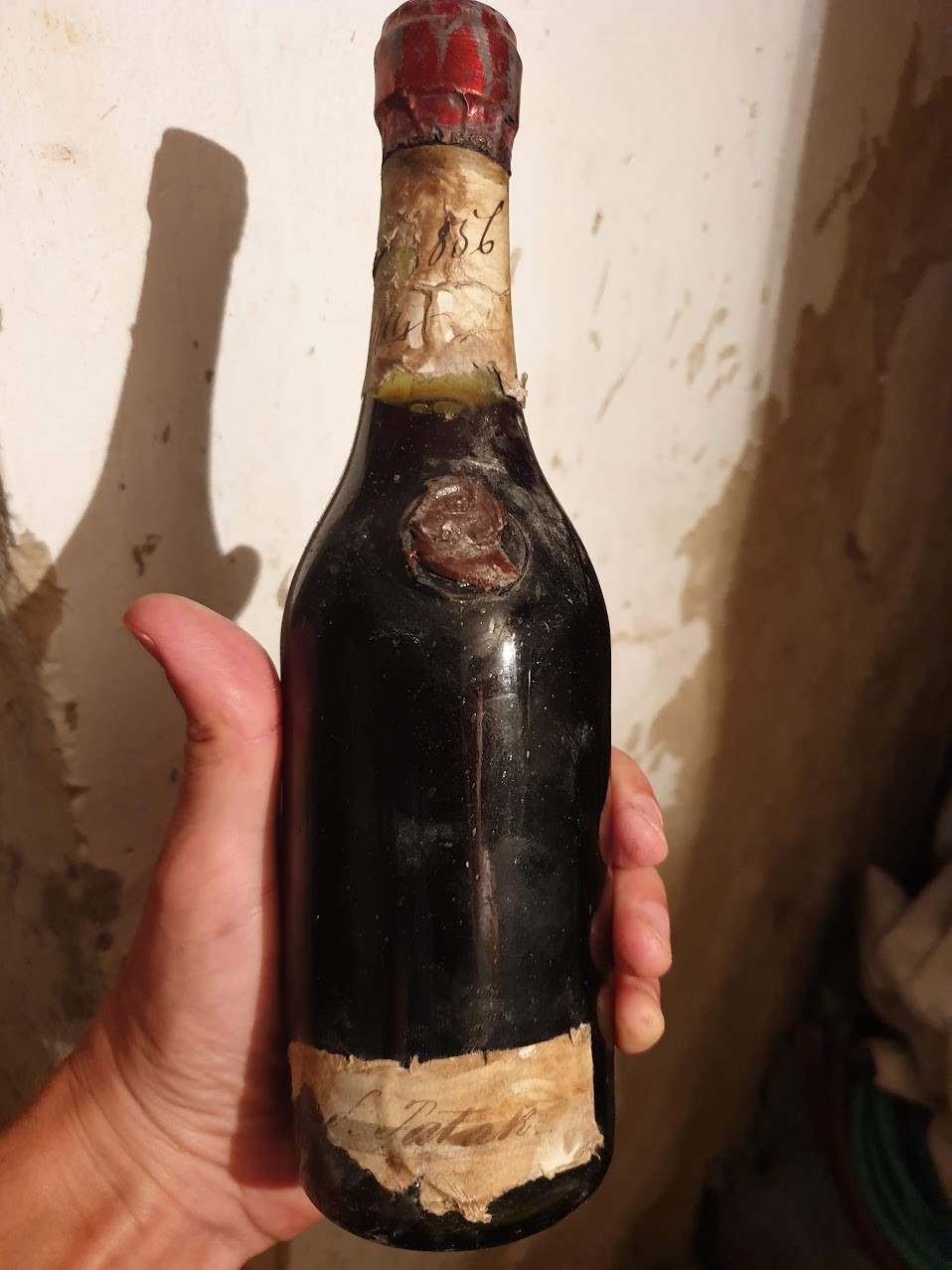
One flattened globular bottle carries a torn sheet whose circular impression shows a crowned double-headed imperial eagle with the escutcheon on its breast, legended TROIS above, the numeral 3 beneath it, PATARS. at the foot, and the year split across the field, 17 — 86. That is the stamped paper of the Austrian Netherlands, three patars, issue of 1786, under Joseph II. The denomination settles the country: the patar is the money of account of Brabant and Flanders, whereas French papier timbré of that date carries the three fleurs-de-lys with values in sols. Beside the stamp, in iron-gall ink, a hand has written what appears to begin Tokay.
Bottles with stamped paper. Record the value, the place and the year of every stamp — those three data are the whole dating argument.
One date to correct, and one caution
Stamped paper is a seventeenth-century invention: the Dutch Republic in 1624, Spain under Philip IV in the 1630s, France in 1673 — where the duty provoked the Breton révolte du papier timbré of 1675 — and England in 1694. The 1786 sheet is a late example of a long-established system, not an early one.
Dies were cut annually and the year formed part of the impression, so the sheet was in use in and shortly after 1786. But it dates the paper, not the wine. Any argument from the stamp to a vintage is a separate argument requiring separate evidence.
Printed sheets
A sheet of printed paper worked in the same way as a stamped one, and for the same reason: it could not be produced at will. Type had to be set, a press obtained, a particular fount and a particular paper used. Whoever attached a printed document to a bottle was borrowing the authority of a printing office the way the buyer of stamped paper borrowed the authority of the revenue.
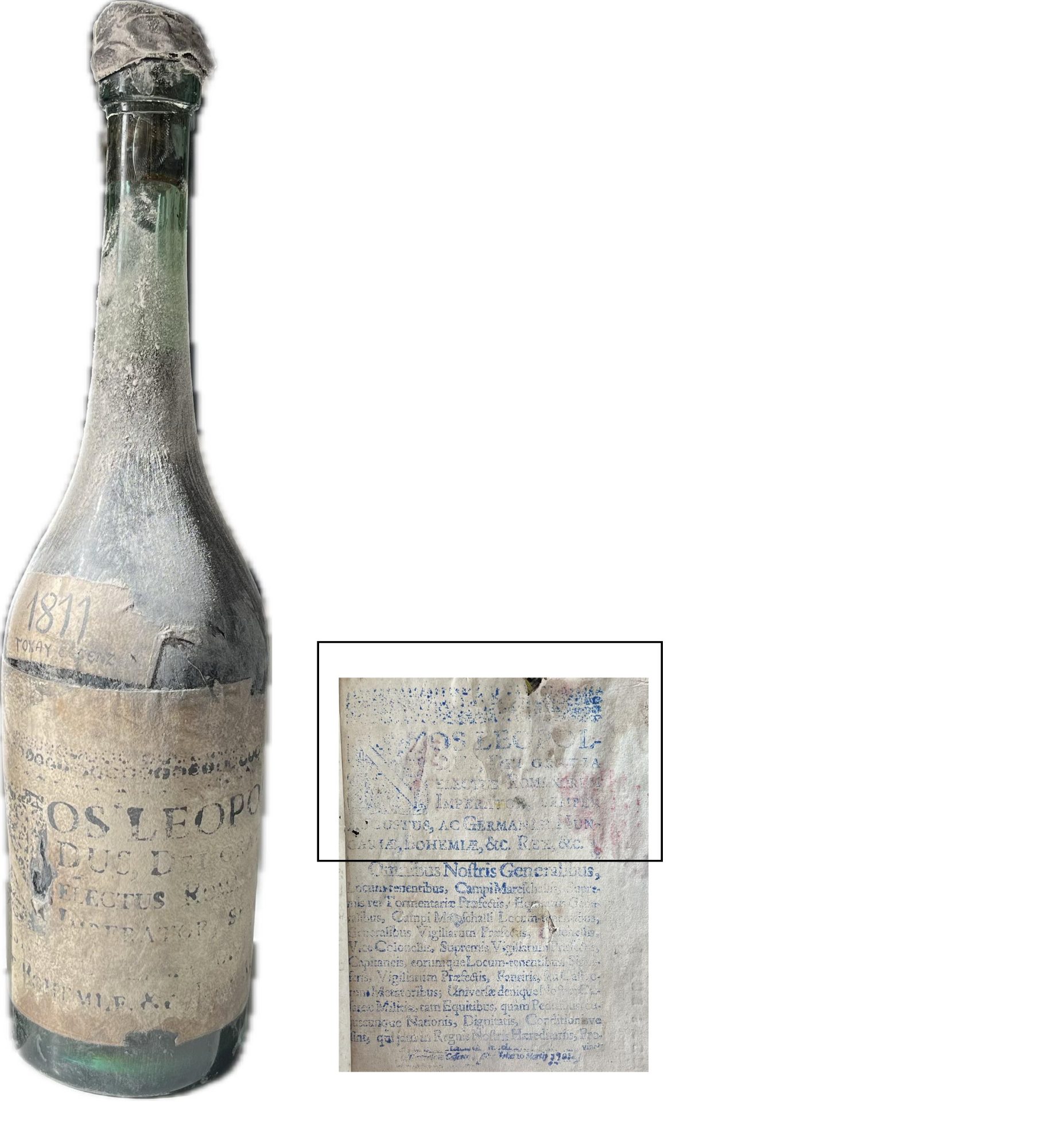
A printed sheet is also datable on its own terms — fount, setting, impression, ink and paper — independently of what it says, which is what makes it evidence rather than a claim. The same holds when the sheet is cut: the bottle label here is the upper part of the printed document standing beside it, so paper, ink and type run continuously from the one to the other.
Label and sheet are one document. The bottle, marked 1811 Tokay Essenz, carries as its label the upper part of the printed patent at right — the framed passage. Reuniting the two pieces dates the paper and ties it to this bottle at once.
One caution belongs with the method. What made printing hard to imitate in 1750 makes it easy today, so a printed sheet carries its weight through the physical evidence — paper, ink, impression, and a join that can be matched — rather than through the printed words themselves.
Sealed or watermarked paper
Written documents attached to a bottle could be verified in the paper itself rather than by what it says. Watermarks identify mill, region and often a date range, and are visible in transmitted light at no cost. Laid paper shows the chain and laid lines of the mould wire. An applied seal ties the document to an issuing person or office. The ink is evidence too: iron-gall ink corrodes and bites into the paper in a way that is hard to simulate and easy to examine.
The type specimen for this family is not on a bottle at all but on a parchment: the calligraphed certificate with a red wax seal issued by the Verein Haus Wettin Albertinische Linie e.V. at Dresden on 27 April 1927, certifying that the Tokaji offered for sale came from the former Royal Saxon Hofkellerei. A document's evidential value depends on who issued it, not on how handsome it is.
Photograph every document twice — reflected and transmitted. The watermark is invisible in the first and obvious in the second.
Attached notes
A written note attached to the bottle seal was another good way to make a bottle hard to copy. Cheap, and surprisingly strong: it combines an individual hand, a specific ink, a specific paper and a physical dependency on the closure. Where the note is tied through the sealing wax, the note and the seal authenticate each other, and neither can be replaced without destroying the other.
This is also where the cellar's own paperwork becomes bottle evidence. Bin names from the Dresden Cabinet register — Ossolinski, Czartoryski, Bacchus, Oberstallmeister, Crebski, Pottornycy — recur in the cellar stock of 1749, in the condition table of 1802 and on a Bremen wine list of 1931. A bin name on a note or label is therefore a provenance datum checkable against three independent registers, not decoration.
08
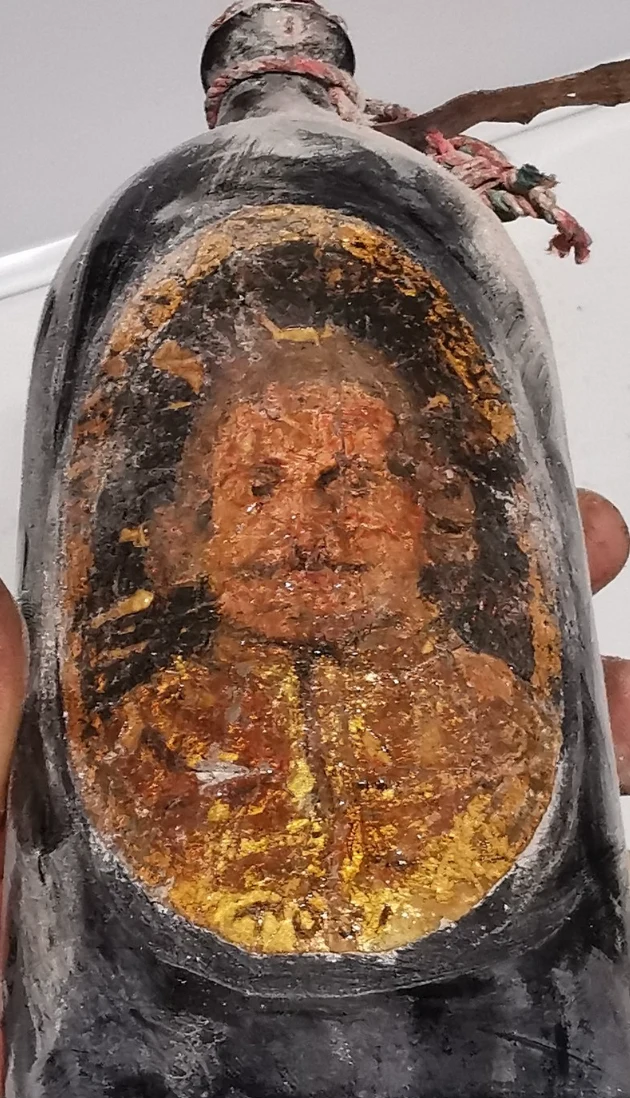
Engravings and paintings
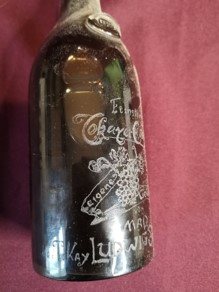
A method rather rarely used — probably because it is relatively easy to copy. A wheel-engraver of ordinary competence can reproduce an engraved device, and unlike a coin die or a state stamp there is no closed set and no institution standing behind it.
That does not make it worthless. Engraving cannot be detached, so it cannot be married to another bottle; and engraving on an old bottle can be assessed on its own physical terms — wheel character, the depth and profile of the cut, and whether wear inside the engraved lines matches wear outside them. Fresh engraving on genuinely old glass is detectable; that is the specific fraud this family invites, and the specific examination it requires.
Bottles with engravings. The examination is of the cut, not the design.
09
Cellar marks
Cellars marked their own bottles directly — in paint, in ink, on small paper labels — as inventory control rather than as a public guarantee. That is exactly what makes the marks valuable for examination. They were never meant to be read by a buyer, so they were never designed to be convincing; a forger imitating them has to reproduce a private system he cannot see the rules of. The best-documented example in this project is the Fukier cellar in Warsaw.
Fukier cellar marks. Record every mark even when illegible, and photograph the same code on more than one bottle wherever it recurs — the value of this family lies in the pattern across a group, not in any single reading.
The Fukier system
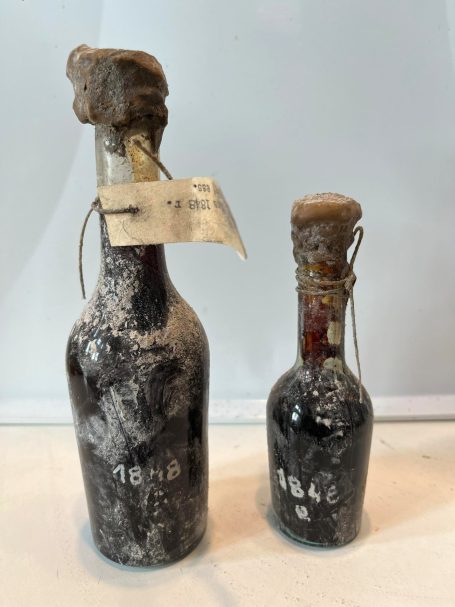
Special paint on the glass. The house marked its bottles in a distinctive white paint applied directly to the glass. The 1853 Wilanów auction catalogue describes bottles as «Fukier avec de la peinture blanche sur le verre» — attested in print, by a third party, no later than 1853.
Cellar codes giving cask and vintage. A compact code tying the bottle back to the cask it was drawn from and to the year of the wine — two independent fields that must agree with one another and with everything else on the bottle.
Sometimes an indication of taste. The rarest element, because it records an assessment rather than an identity — the same practice as the Dresden Cabinet condition table of 1802, which distinguished wines still «mit Liqueur» from those gone «ganz trocken».
Shelf identifiers. Where the bottle physically stood — the field a forger is least likely to invent plausibly, because it only makes sense against a layout he has no access to.
Paper labels of different types, with red paint. A second, parallel system running alongside the painted glass. The distinction between the white paint on glass and the red on paper is itself evidence.
Why a private system defends so well
It is invisible from outside. A seal or a certificate advertises what it is, and therefore advertises what has to be copied. A cellar code advertises nothing.
It is multi-field. Cask, vintage, taste and shelf must be mutually consistent, and consistent with the wine, the glass and any document.
The paint is a material, not just a mark. Pigment and binder can be characterised instrumentally, so a group of bottles claimed to share the Fukier cellar must share a paint chemistry. This is a fingerprint across a group rather than a verdict on a single bottle.
The reconstruction problem
The Fukier cellar books and guest books were destroyed in 1944. There is therefore no surviving key to the codes: no concordance of cask numbers, no shelf plan, no register against which a mark can simply be looked up. The marks on the surviving bottles are the only witness to the system that produced them.
That inverts the usual working order. Instead of reading bottles against a register, the register has to be reconstructed from the bottles — photograph every mark, tabulate the fields separately rather than transcribing each mark as a single string, and look for the grammar: which positions are fixed, which characters recur, how cask and vintage are separated, where the shelf ID sits. A concordance built that way would be testable — a genuine mark should fall inside the system, and an invented one should not.
One footnote worth keeping, because it shows the house's expertise outliving its paperwork. When the walled-up Wilanów cellar was opened on 10 January 1948, the state's wine expert — very probably Henryk Maria Fukier himself — dated and verified the bottles by exactly the physical means set out on this page: the wax armorials, the kamień deposit as proof of age, the evidence of upright storage, and the mould-ring test.
10
Cellar Mold Coverage
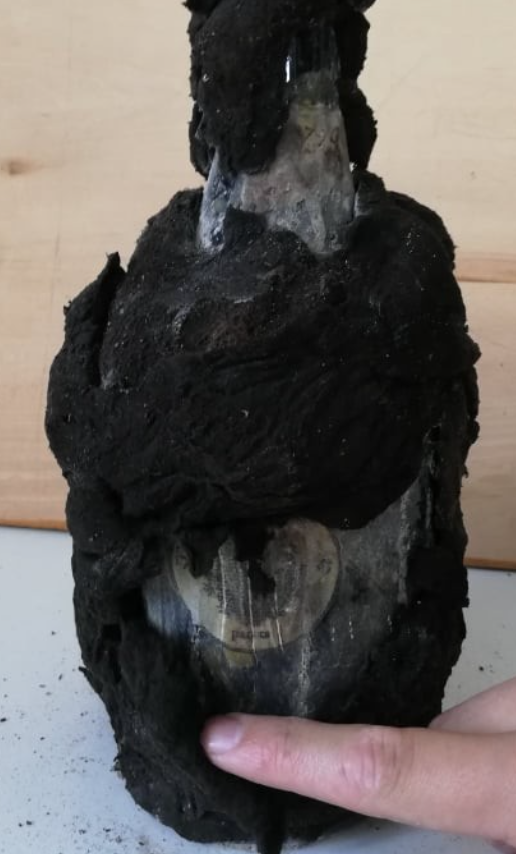
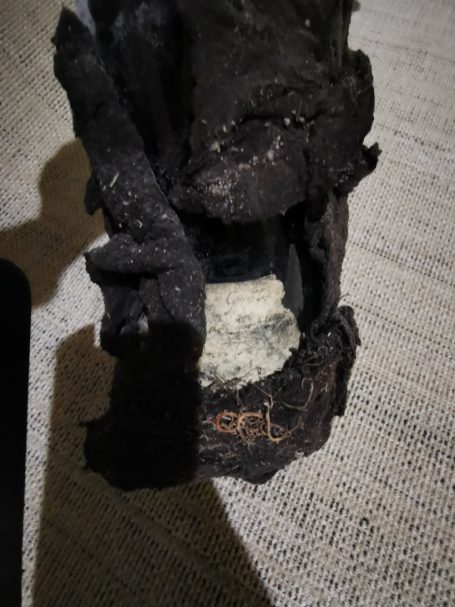
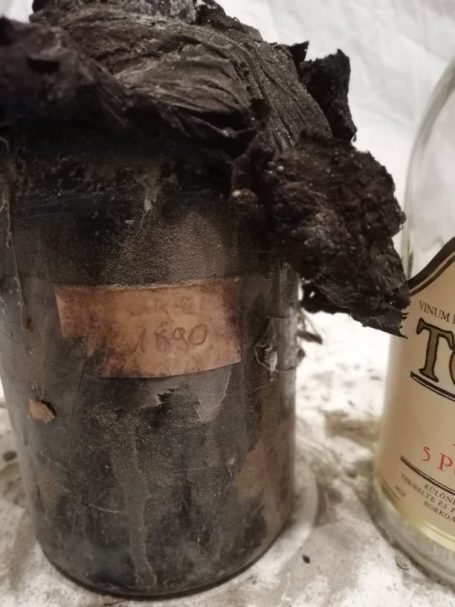
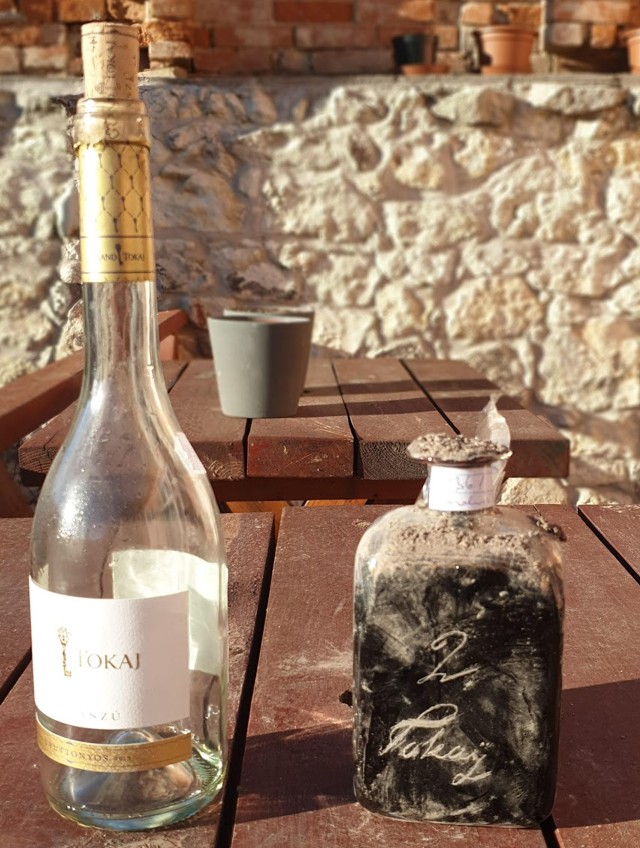
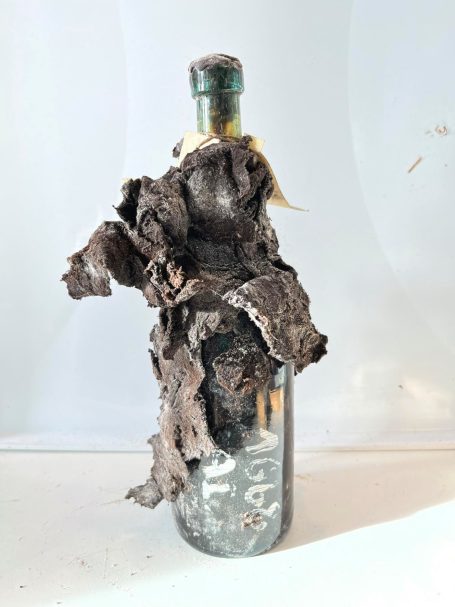
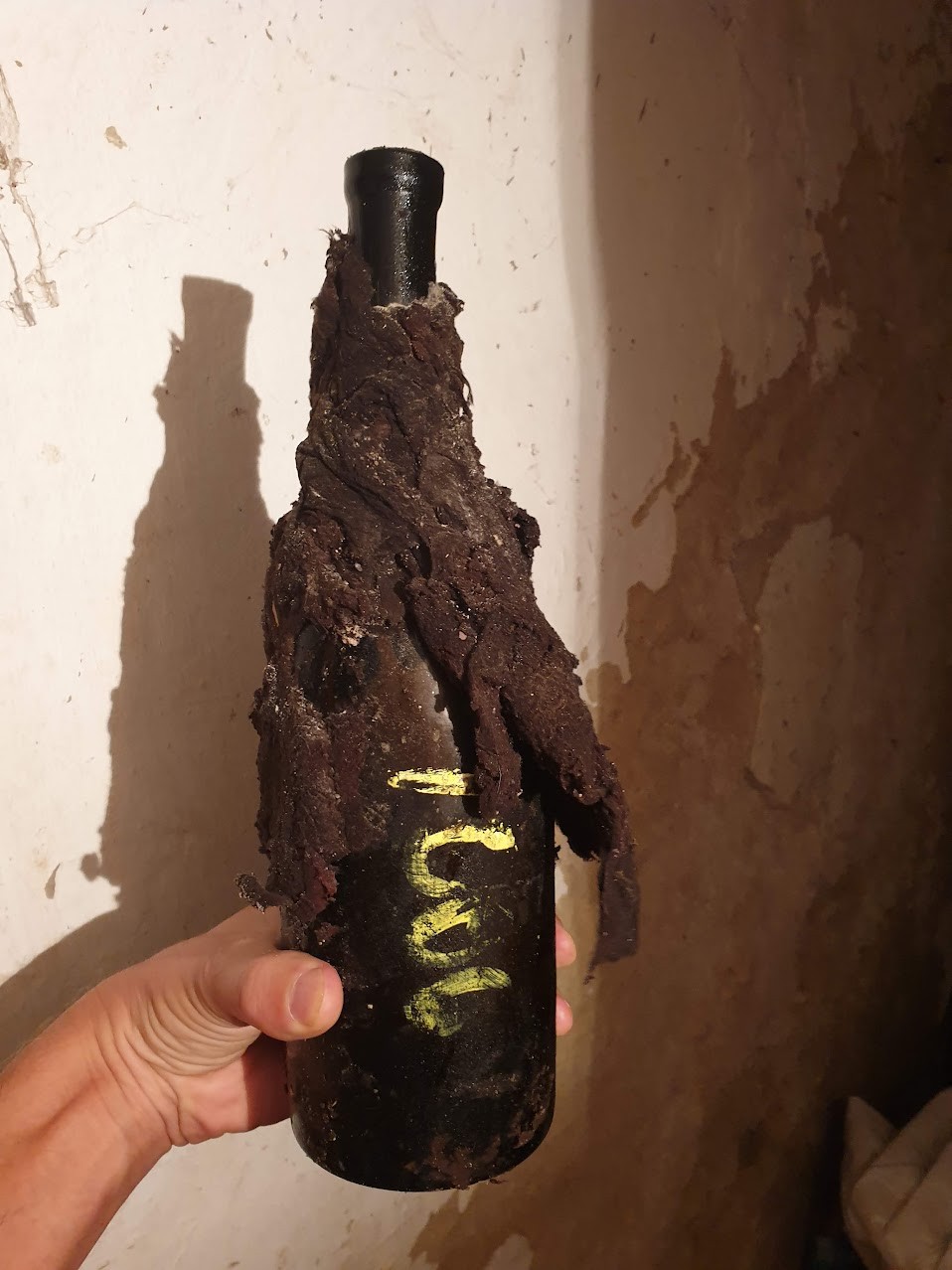
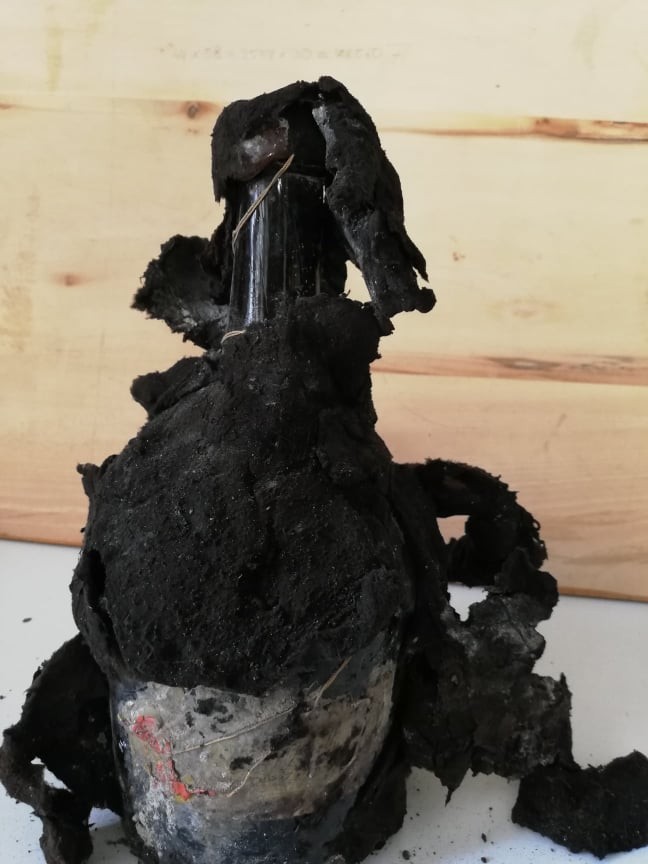
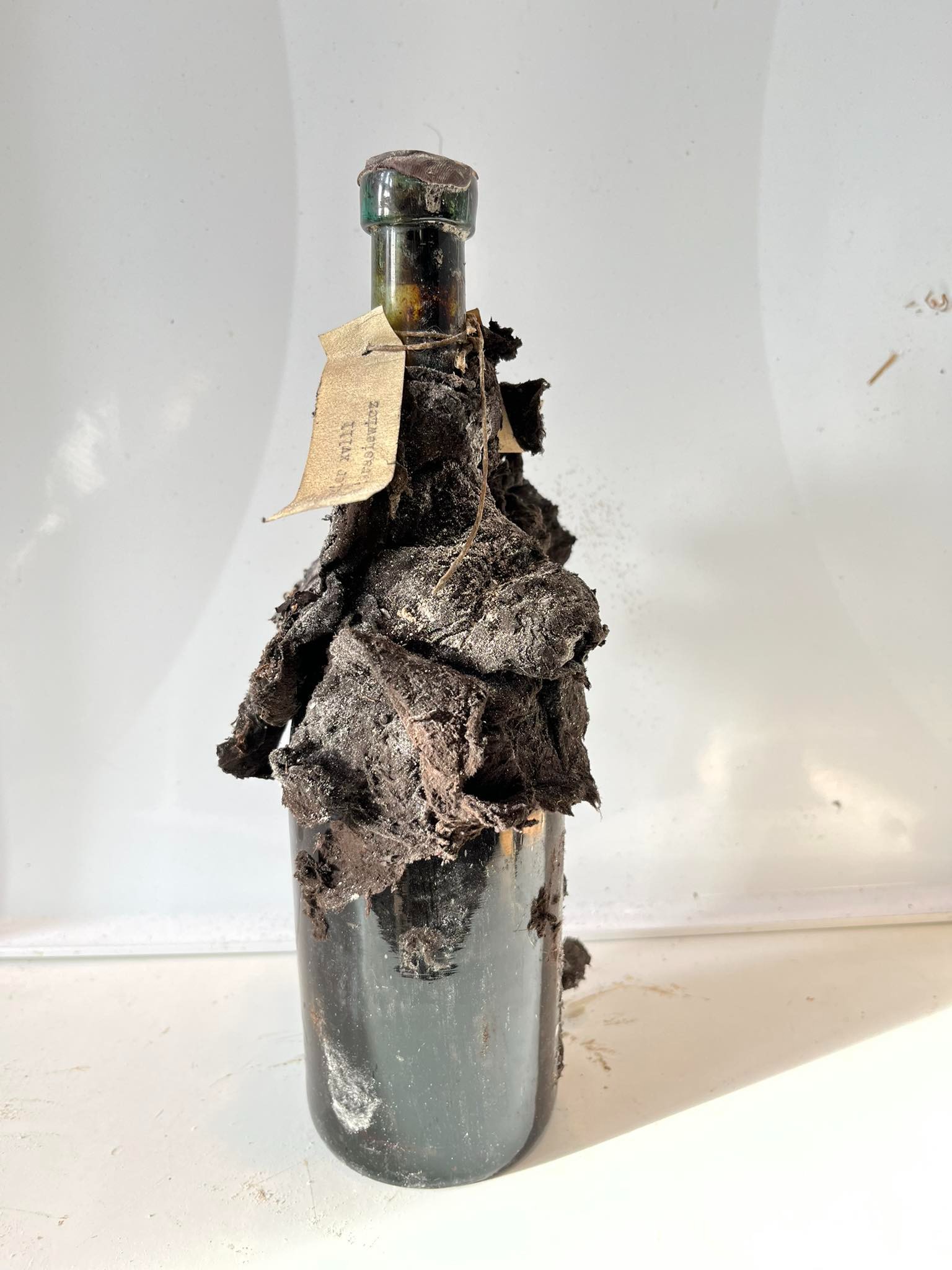
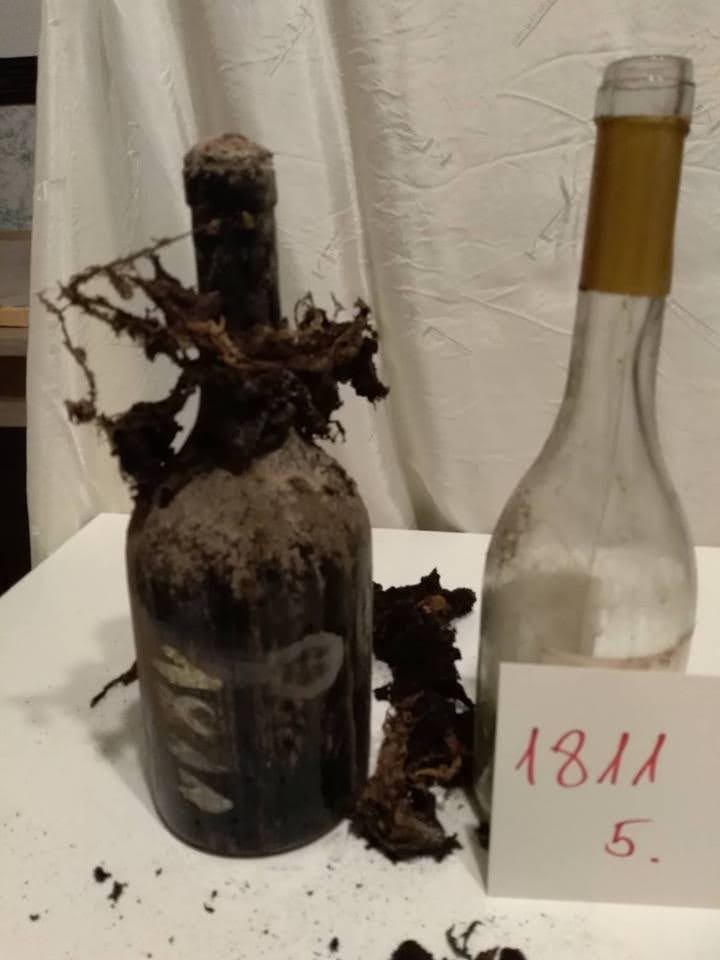
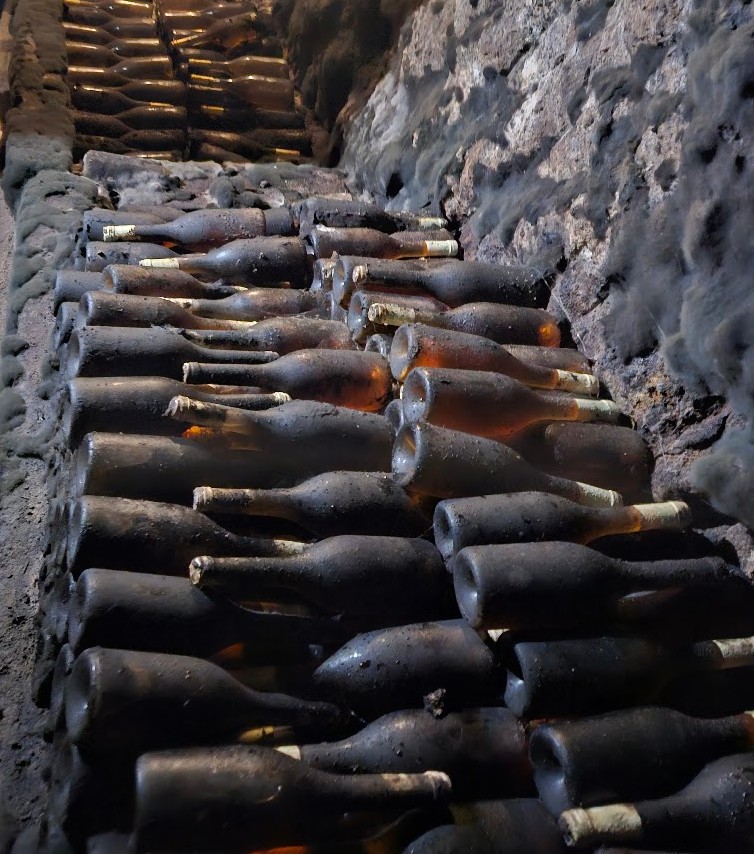
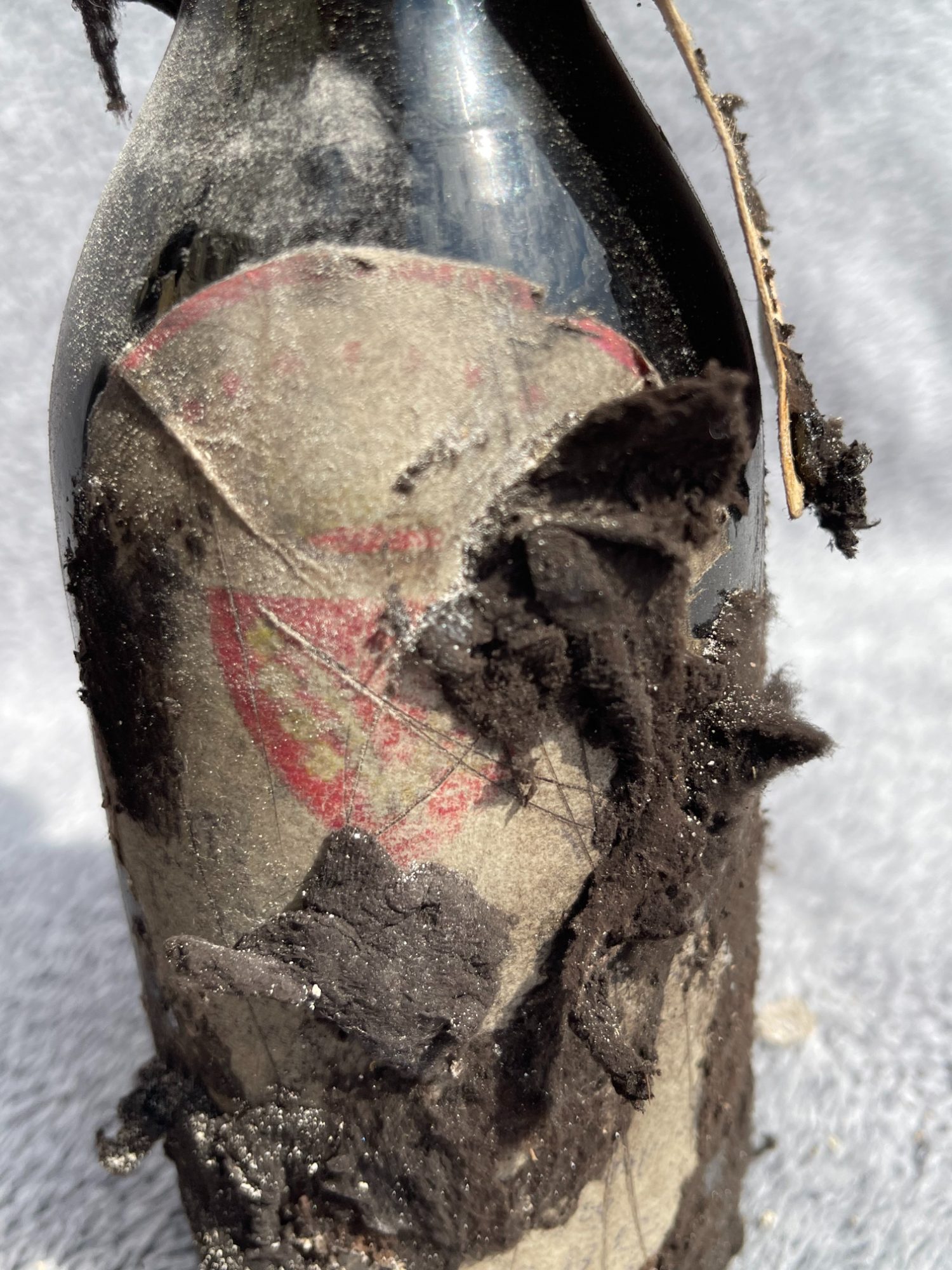
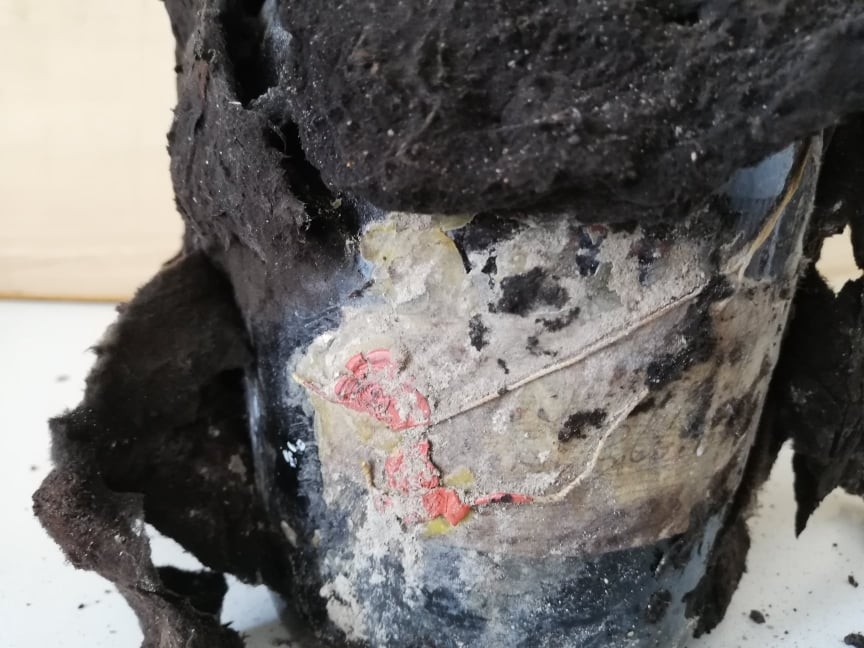
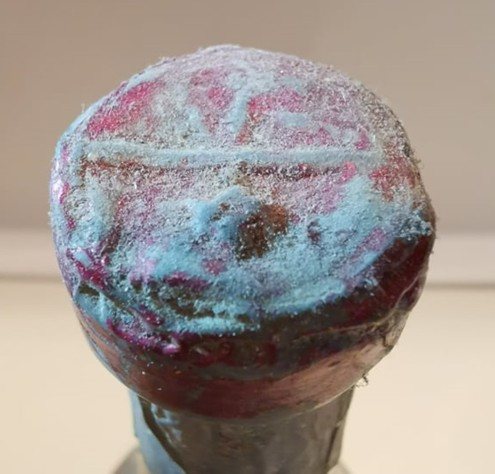
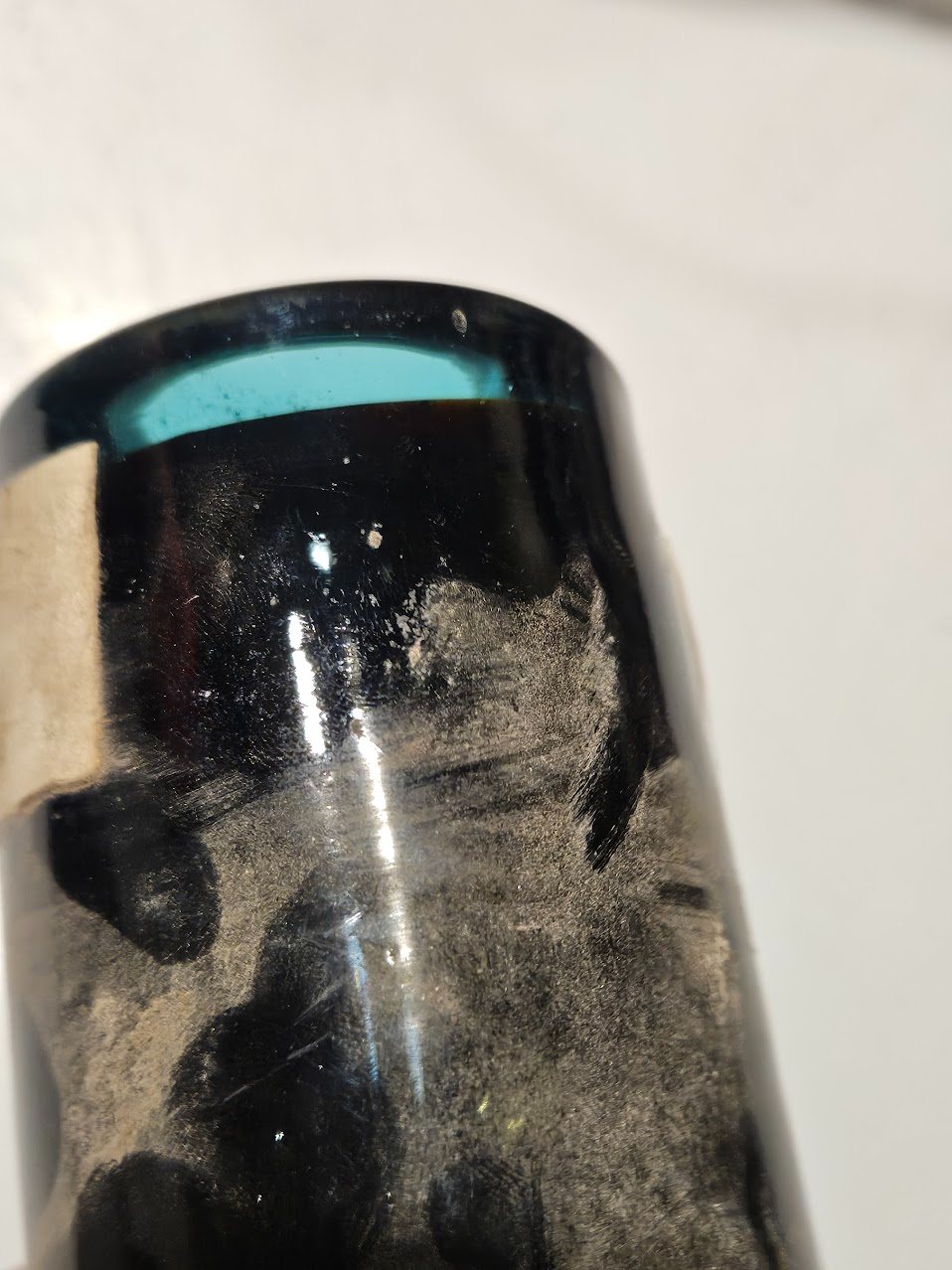
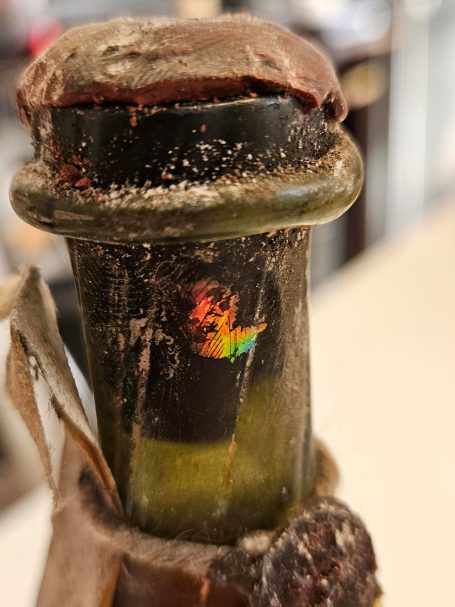
The thick black growth on the walls of the Tokaj cellars is Cladosporium cellare, and it does not stop at the walls. Anything left standing long enough is taken in with them.
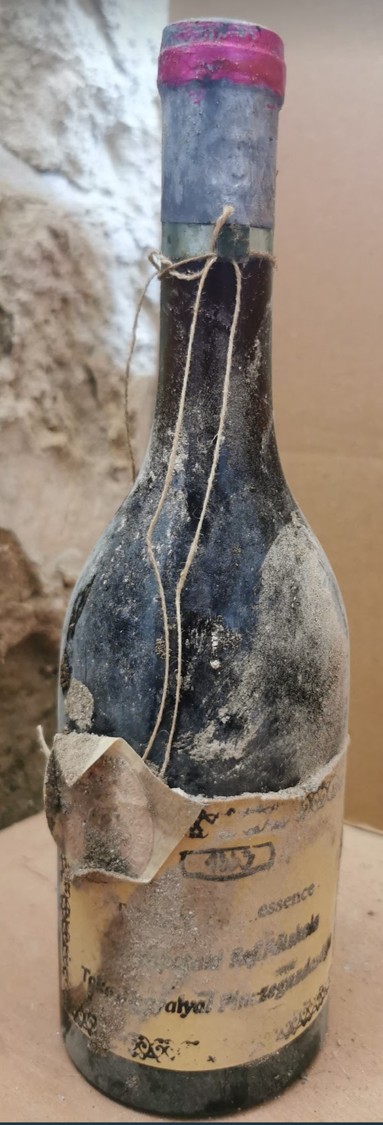
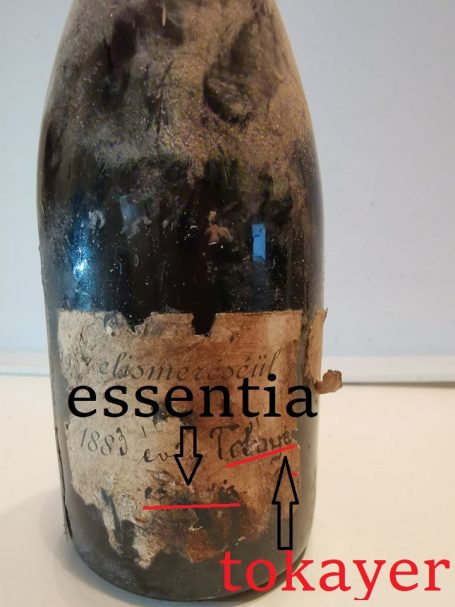
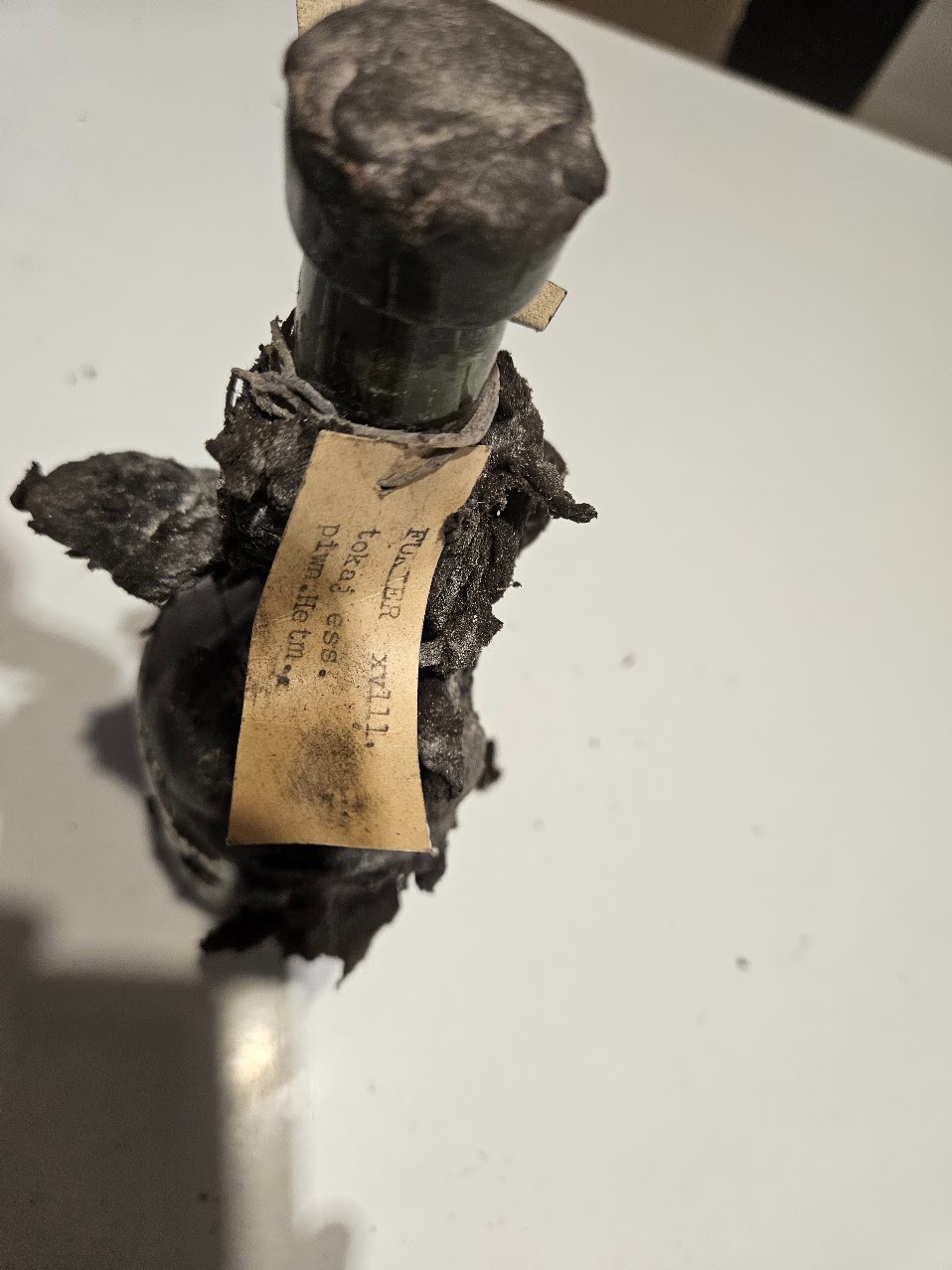
A bottle carrying that coat seems to me to offer a first, weak form of examination. The mold needs the constant temperature and near-saturated humidity of these cellars to grow as heavily as it does, and such conditions are not frequently met outside the Tokaji wine region, so a bottle furred in it has most likely spent a long time in a cellar of that kind. It is a weak signal on its own: the covering says something about where a bottle stood, not about what it holds or when it was filled.
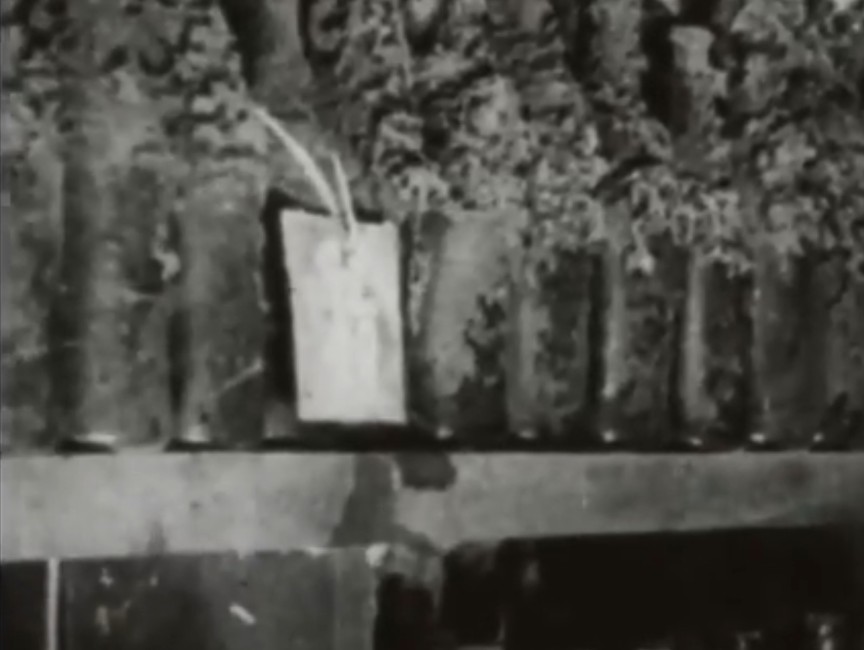
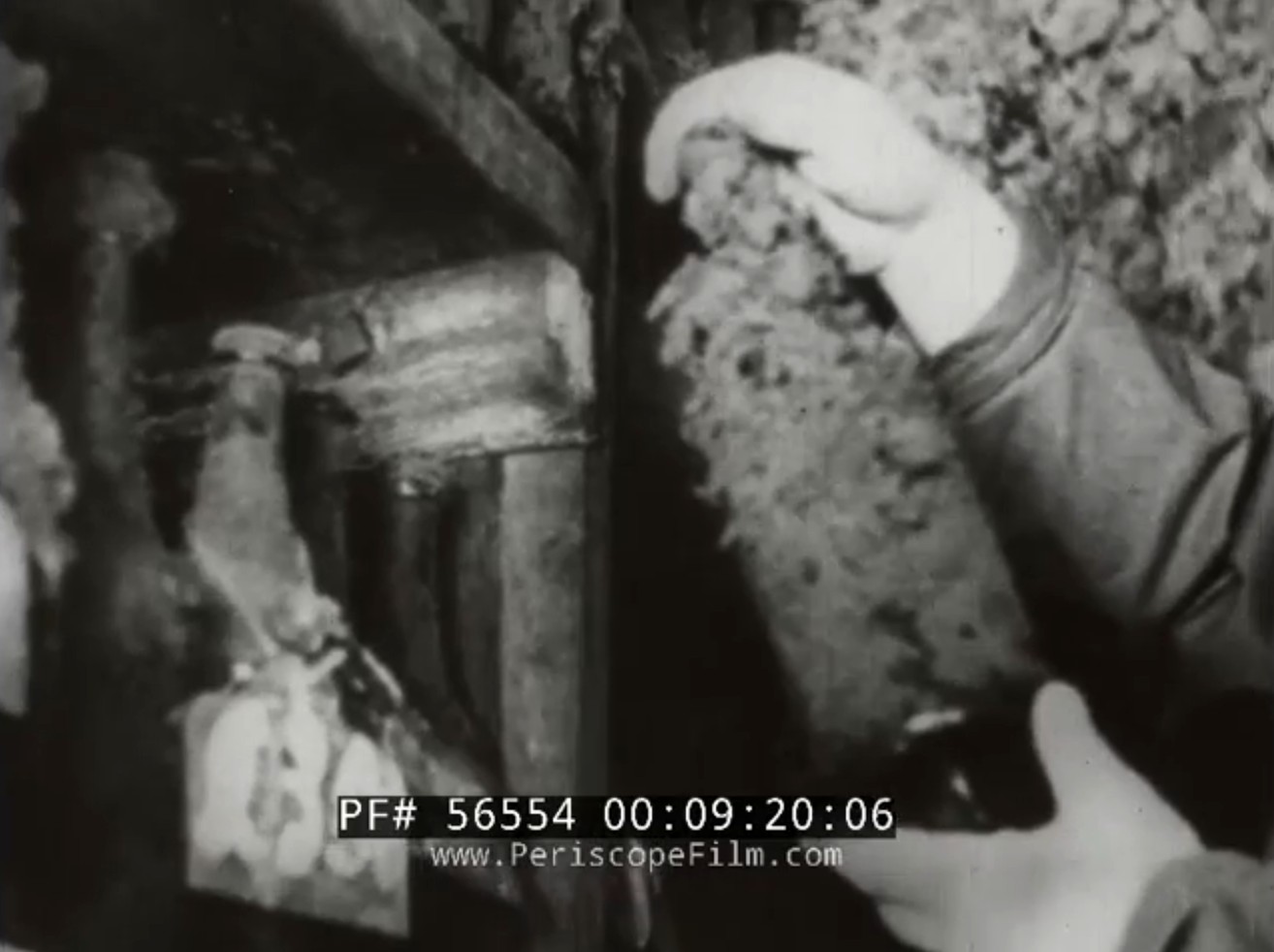
The covering is also documented on film. Two stills from a 1933 film about Poland, shot in the Fukier Piwnica Hetmańska in Warsaw (the cellar sequence begins at 8:43), show the bottles standing under a thick growth with only their paper neck tags kept clear of it — the same condition in which bottles of that cellar are found today.
There is a stronger version of the idea, so far untested. Rather than looking at the covering, one would analyse its composition — how many fungal strains are present on a historic bottle and which ones — and compare that profile against the fungal population sampled from cellars in the Tokaj wine region. A close match between the community living on the glass and the community living on the cellar walls would be difficult to arrange deliberately, and would tie a bottle to the region rather than merely to damp storage.
No such comparison has been carried out for the bottles described here. It is put forward as a line of work rather than as a result, and it would need cellar sampling on one side and careful, non-destructive swabbing of the bottles on the other.
Cladosporium cellare on glass, paper and wall. Bottles as found in Tokaj cellars, and the same growth carried out of the cellar with them · click any image to enlarge
11
Combined Examination Techniques
Some bottles carry more than one device at once: a glass seal and a wax impression, a coin under a capsule, a document tied over a sealed cork.
Each device on its own can be argued with. Together they are far harder to fake, because a forger has to make every one of them consistent with the others — the same owner, the same period, the same cellar practice. Where the devices agree, the case for the bottle rests on the combination rather than on any single mark.
A Rákóczi bottle sealed with a coin die
The most inventive solution in the collection. This 17— Rákóczi bottle is sealed at the top using the metal tool used to produce coins — a coin die. In total only three of those coins were ever produced, so anyone trying to copy the bottle would run into serious difficulties simply for the lack of any suitable coin.
It is worth pausing on why this is so much stronger than an ordinary armorial seal. A coat of arms can be re-cut by any competent engraver working from a printed source. A numismatic die of known, minute mintage is a closed set: the protective value lies not in the artistry but in the arithmetic. Neither skill nor money substitutes for an object that exists in three examples.
Still to be established
The die identification, the mintage of three, and the bottle's own date should each carry their own citation. Identify the coin type and its recorded mintage; determine whether the impression comes from the obverse or the reverse die; obtain raked photography for comparison against a struck example.
Impression and coin compared. The legend fragments and the date place the coin most probably as a Sachsen-Taler of 1615, minted during the reign of John George I, Elector of Saxony.
More than one device on one bottle. Click any image to enlarge
12
Independent owner proof
The strongest evidence a bottle can carry is not on the bottle at all. It is a second bottle, holding the same marks, that came to light somewhere else entirely.
Occasionally the same sealing, the same glass mark and the same closure turn up on bottles from sources with no connection to each other: a walled-up cellar opened by builders, a private collection, a family holding — most often of noble descent — and an institution, in practice usually a church. These channels do not overlap. A find in a long forgotten, half collapsed cellar, or a bottle inherited a few times over, has no knowledgeable owner to consult; a family cellar is closed to the trade; a church holding follows its own inventory. When bottles bearing identical work appear in two or three of them, no single party was in a position to arrange it.
Some of these owners keep records, and the records are what make the comparison worth anything. Family and institutional archives can document a holding across two hundred years or more — receipts, cellar books, inventories drawn up at an inheritance, entries continued by one hand after another. A bottle that stands in such a list at a stated date cannot have been made after it.
The geography compounds the effect. Identical bottles found with unrelated owners are, as a rule, in different countries, having reached them through separate routes of gift, purchase or dynastic marriage. A forger who wanted to produce the same coincidence would have to plant matching bottles in several closed collections in several jurisdictions, and then plant the paperwork behind each of them.
The last step is analytical. Where the bottles can be measured and the results agree — the chemical composition of the glass, of the sealing wax, of the paint used for lettering — the case is close to settled. Independent provenance, independent records and matching material analysis point in the same direction, and the probability of authenticity becomes very high.
13
Analytical Test Methods
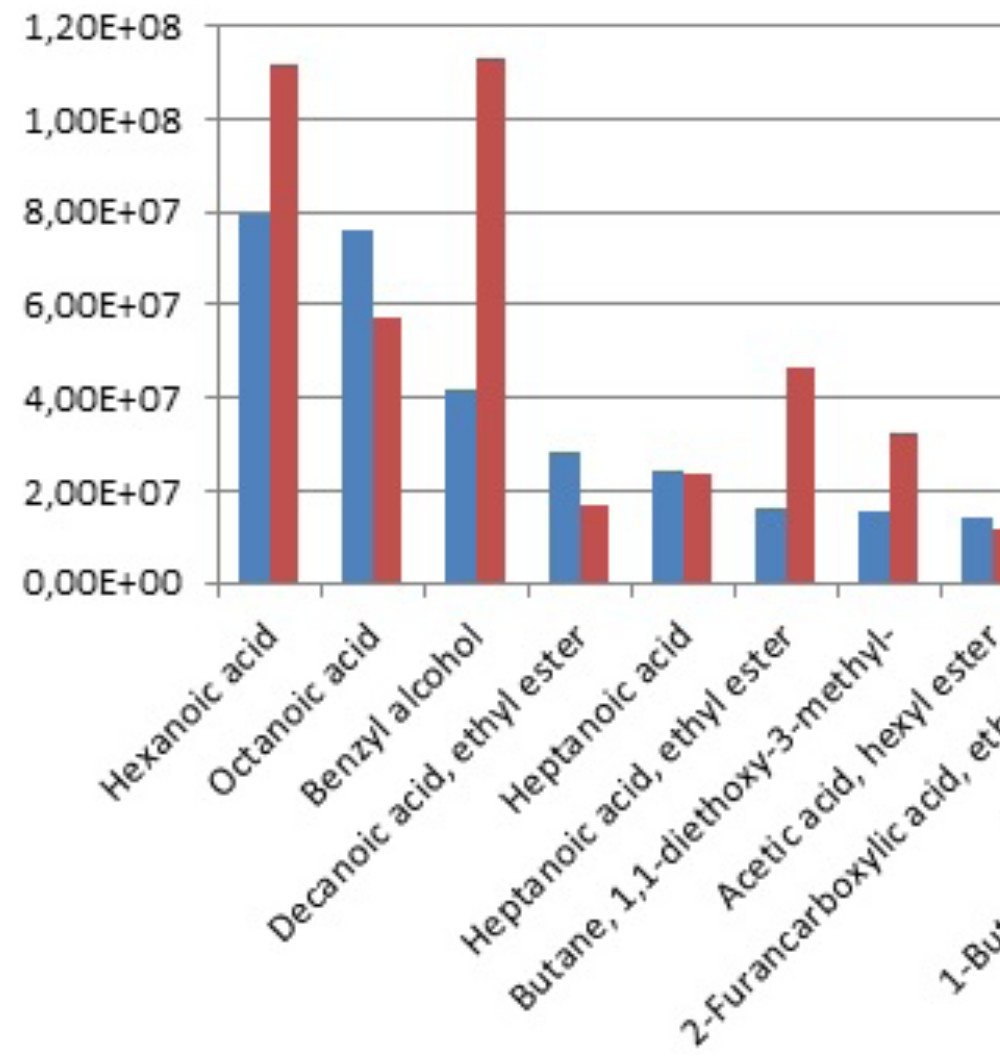
The foundation and cornerstone of any statement I can make about an old tokaji bottle. It is resource-comsuming but necessary.
The work draws on physical and chemical methods borrowed from archaeometry and technical art history — the same non-destructive analyses used to date and place archaeological glass, pigments, inks and metals, applied here to bottles, seals and the papers attached to them.
Ultraviolet light
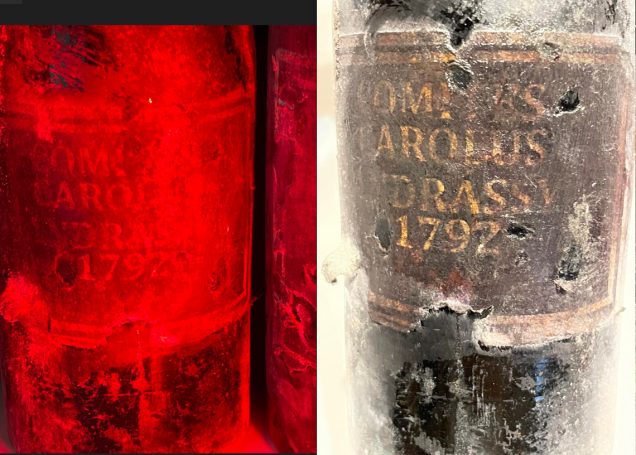
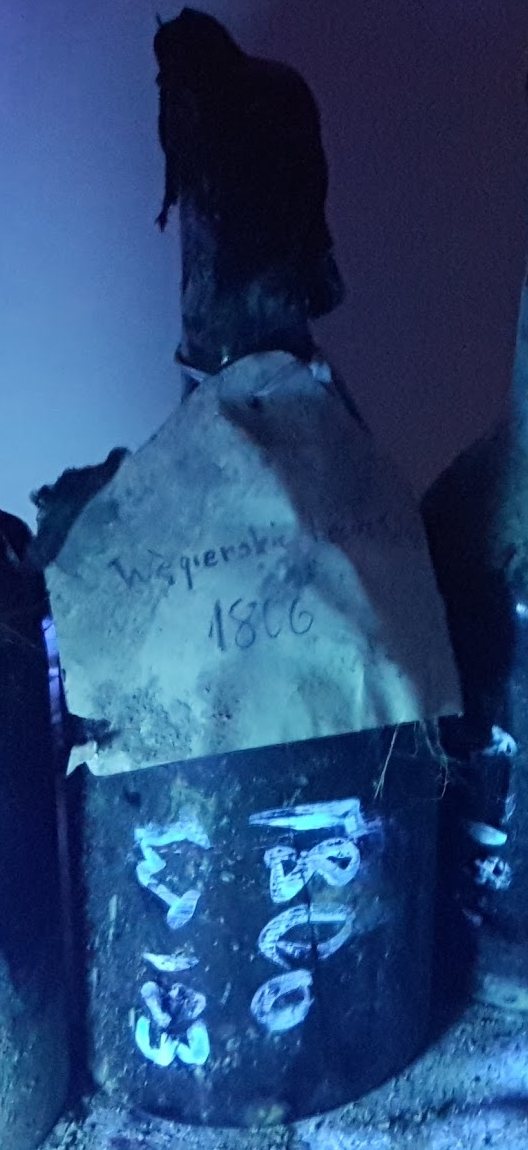
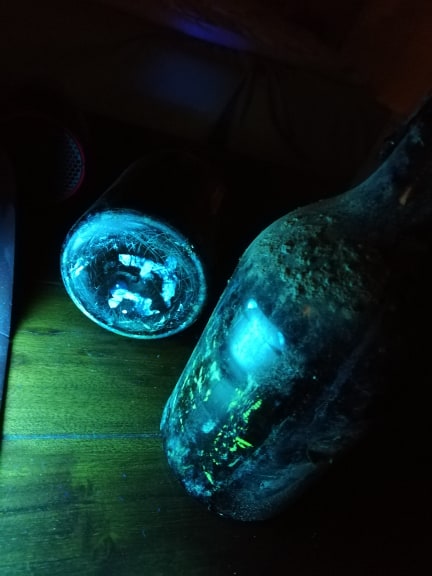
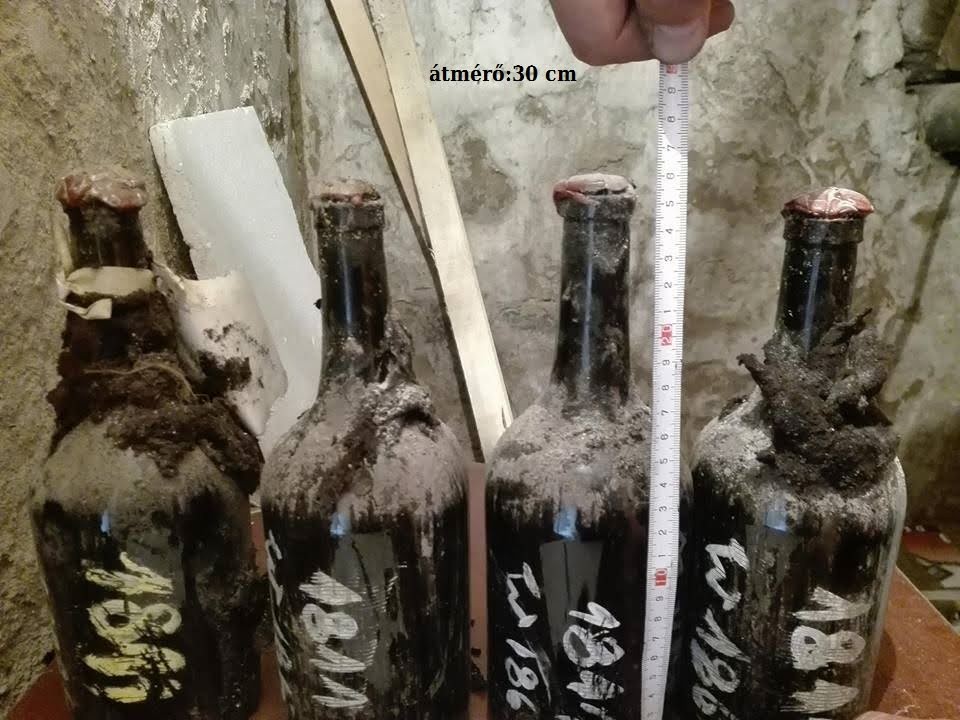
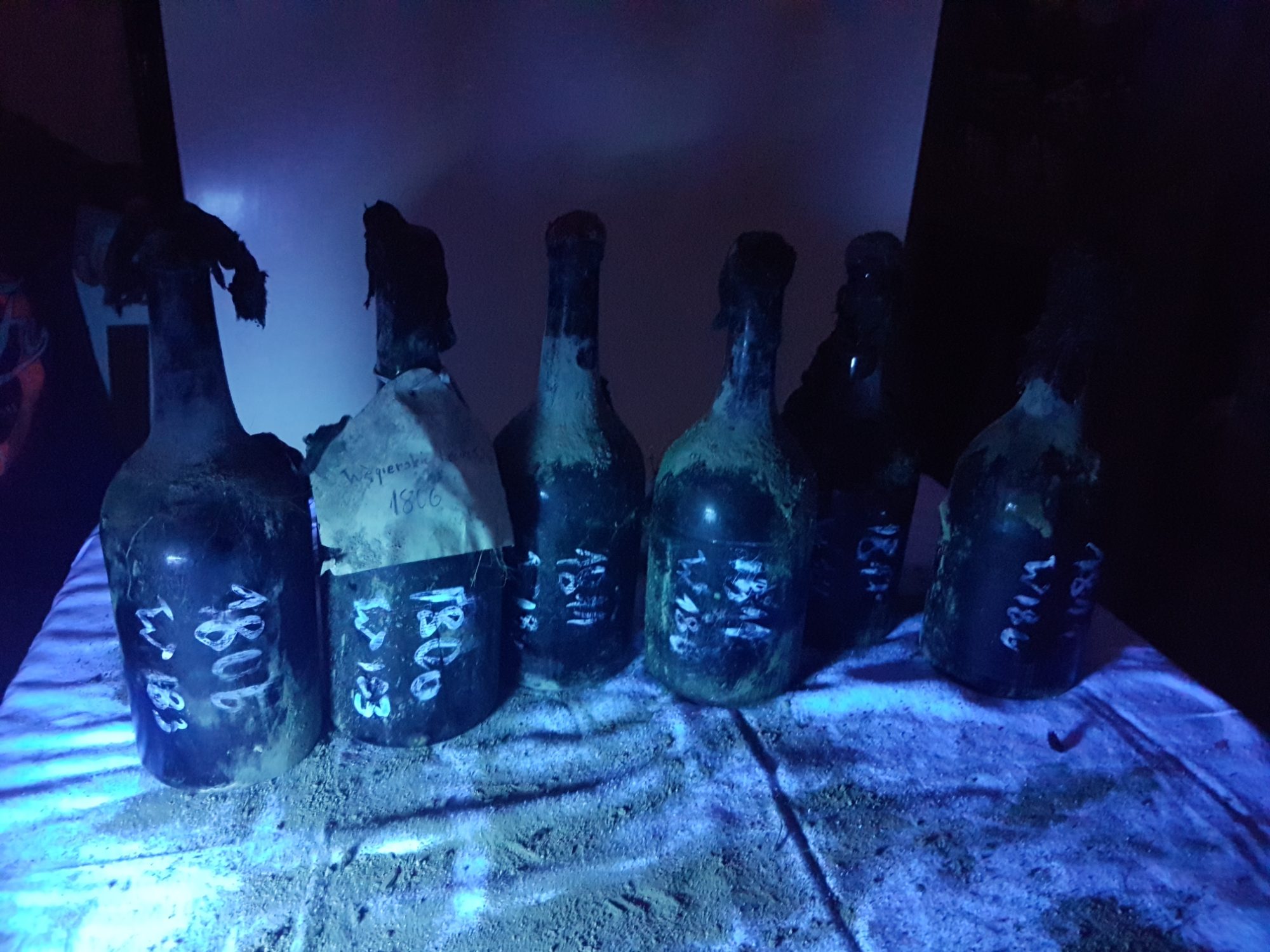
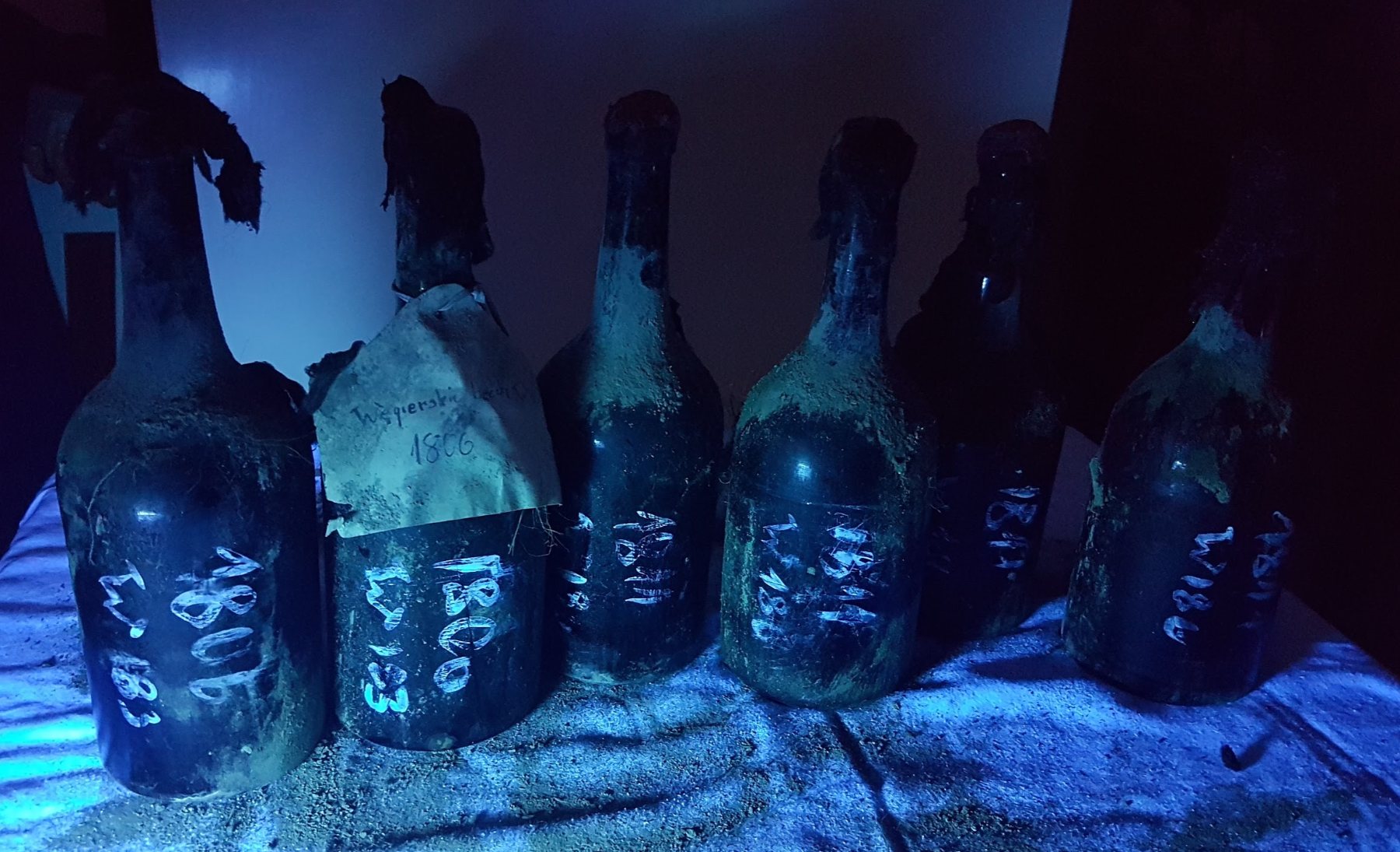
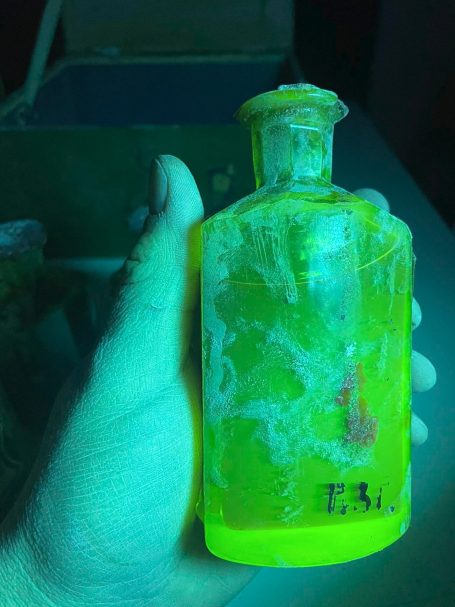
The cheapest of these methods needs no laboratory at all. Daniel Rogov told me, in the context of the Zhukov tasting, that the vintages of the bottles presented there had been painted onto the glass, and that the paint glowed under ultraviolet light.
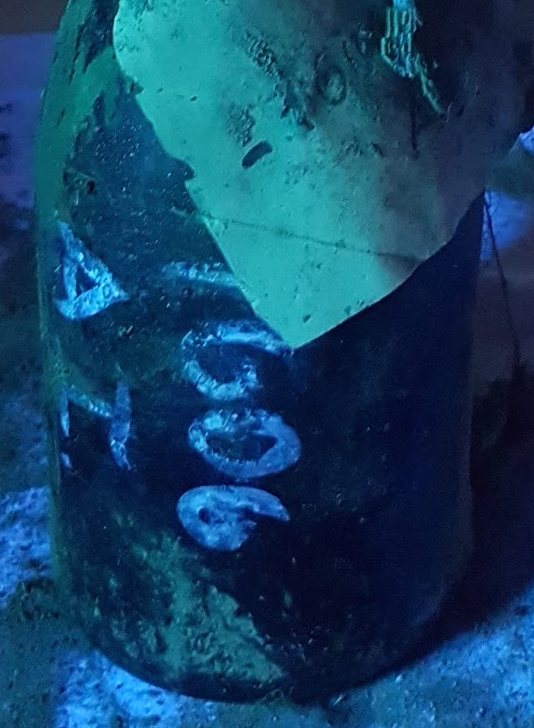
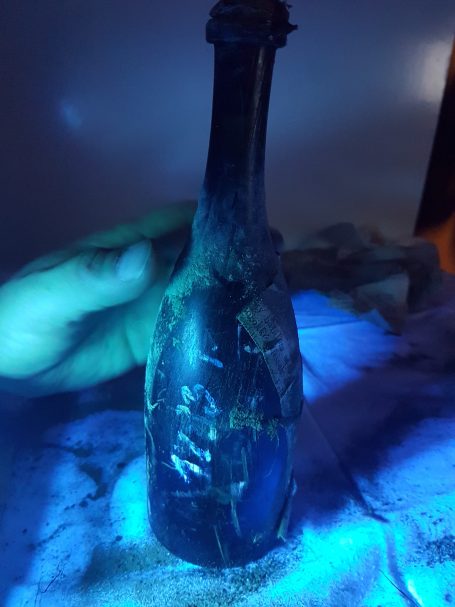
When the first bottles thought to come from the Fukier cellar surfaced after a cellar discovery in 2017, I remembered what Rogov had said and directed a UV source at them. There it was: the glow he had described.
Fukier cellar discovery, 2017. Under ultraviolet light the painted vintage numbers stand out from the encrusted glass, with 1806 and 1800 legible at the left. The paper hood on the second bottle carries the same year in ink.
The test is quick and non-destructive, and it says two useful things at once. It shows whether the lettering was painted rather than engraved or written, and it shows whether all the marks on a bottle — or across a group of bottles — fluoresce in the same way. A number added later, in a different material, does not answer the lamp as its neighbours do.
In more detail elsewhere
The individual methods, together with archive work, document verification and wine analysis, are set out on the Research page.
Comparison
Method by method: cost, strength, and how to verify
Read across the two middle columns. They are the practical value of the whole page: what a method was worth when it was applied, against what it is worth to us now.
Method
Cost then
Hard to fake then
Hard to fake now
How to verify
Coin-die seal
Low
Very high — closed set
Very high
Compare impression to a struck coin; numismatic mintage record
Armorial wax seal
Low
Moderate
Low–moderate
Matrix comparison against dated specimens; wax ageing
Seal over a tie
Very low
Moderate
Moderate
Continuity of cord under wax; both must be intact
Lead / tin capsule
Low
Moderate
Moderate
Removal traces; metal composition
Unique bottle form
High
High
Moderate–high
Mould seams, profile, comparison to known series
Special glass
Moderate
High
High — instrumentally testable
Trace-element and inclusion analysis
Glass seal
Moderate
High
Moderate–high
Fusion to the body; matrix comparison
Attached object
High
High
Moderate
Examine the join, not only the object — marriages are common
Papier timbré
Very low
High
High — self-dating
Die identification by value, place and year
Watermarked / laid paper
Very low
Moderate–high
High
Transmitted light; mill and date-range references
Printed document
Low
High
Low
Fount, impression, paper — not the wording
Attached note
Very low
Moderate–high
Moderate–high
Hand, ink, paper, and dependency on the seal
Engraving
Moderate
Low
Low
Cut profile and differential wear, not the design
Cellar marks
Very low
Moderate–high
High — private, multi-field
Pigment and binder analysis across a group; internal consistency of the code fields
The pattern is not the one a collector expects. The most impressive-looking devices — engraving, fine metal mounts — are among the weakest, while two of the strongest belong to a scrap of state paper costing pence and to the glass itself. Cheapness and strength correlate, because the cheap methods borrow their authority from institutions the forger cannot enter: a mint, a revenue office, a glasshouse.
In practice
Reading a bottle: the compound-evidence rule
No single feature on this page authenticates a bottle. Each was designed to defeat a forger working with the means of its own century, and each can be defeated by someone working with the means of ours. What cannot readily be defeated is coherence across independent systems.
A bottle whose glass, mould and base are right for the claimed period; whose format matches the documented house practice of the cellar it claims; whose seal was struck from a matrix tied to a dated specimen; whose attached paper carries a stamp or watermark of the right place and year; whose ink corrodes as iron-gall ink does; whose fill, deposit and neck ring are consistent with long undisturbed storage; and whose bin name appears in a cellar register — that bottle is not making one claim that could be forged. It is making seven, each of which would have to be forged independently and consistently.
Instrumental examination. Glass and paint are the two families that can be tested rather than argued about.
Working method
Photograph before interpreting. Every seal and every inscription raked from at least two directions, with a scale. Every document reflected and transmitted. The base and the neck separately. Then read.
Record what fails. A bottle with six coherent systems and one anomaly is far more informative than a bottle described only by its strengths — and honest description is what makes the rest of the record trustworthy.
The counterpart to all of this is negative evidence, and it deserves equal weight. Where the cellar records for a claimed period show no such wine at all, even the strongest physical package still has a case to answer — the bottles bearing Saxon royal seals and attributed to the 1650s being the standing example on this site. That is not a verdict of forgery. It is a statement about what the paper trail does and does not contain, which is the only footing on which any of this work is worth doing.

![Detail of the circular stamp, MOIEN PA[PIER II] SOLS LA FEU[ILLE] legible around the crowned escutcheon](../assets/img/authentication/timbre-paris-3.png)