Vintage 1604
The oldest bottle of Tokaji in the world
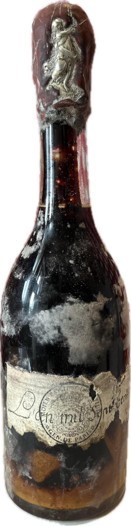
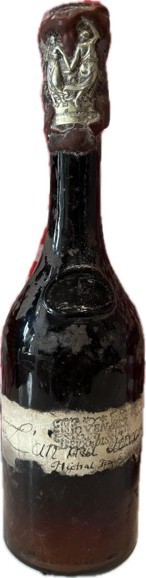
Two bottles of the vintage are known. This one carries the name of Michal Fuckier, a French stamped paper of 1699, silver from the Tsar’s court and the Pilawa arms of the Potocki family.
- Vintage
- 1604Handwritten in French on the label
- Known bottles
- TwoBoth of this vintage survive
- Named on the label
- FuckierMichal Fuckier, d. 1625
- Recorded in
- 1853The Potocki inventory
Two bottles of the 1604 vintage exist, not one, and both come from the same collection — together the two oldest bottles of Tokaji in the world. Each carries its history on its surface: a French stamped paper as a label, a silver capsule made in St Petersburg, a wax seal with the arms of the family that owned it, and an entry in the inventory drawn up when the cellar was sold.
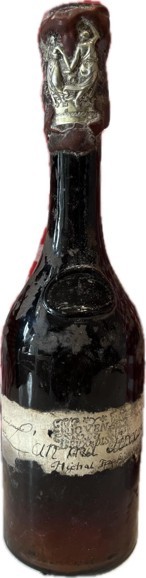
A wine older than its bottle
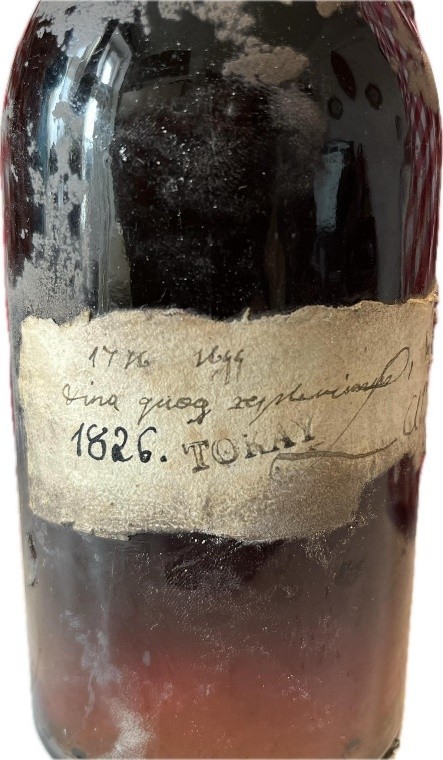
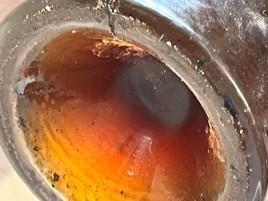
The glass is the typical Tokaji bottle shape, a form introduced in the 19th century, and the bottle itself is estimated to date from around 1800. The 1604 wine cannot have been put into it when it was made. It was transferred here from an earlier bottle or from a barrel, and the label records the operation twice over: vina quoq replevimus — we filled the wine — beside the years 1776 and 1699, then 1826 with the stamp TOKAY, presumably a further refill.
Refilling was ordinary practice for wine kept over generations: as the level fell, the bottle was topped up and closed again. It means the vessel and the closure are younger than the wine they hold, and that the vintage on the label is a claim carried forward by each successive owner rather than a mark made in 1604.
Provenance
The chain runs from a named production site in the Tokaj region to a Warsaw palace, a Warsaw wine house, an imperial coronation, a wall built during the war, and finally an inheritance divided between two brothers.
- 1596 Tokaji wine is made at the production site in Olaszliszka. The Szirmay document recording it survives in the original.
- 1625 The wine passes into the cellar of the Polish Hetman, and from there to Michal Fukier, whose name is written on this label. He had founded the Fukier trading house in 1610; he died the same year, 1625.
- c. 1760 Jan Marcin Fukier sells wines to the Lubomirski family at Wilanów Palace.
- c. 1790 Stanisław Potocki and his wife Alexandra Lubomirska inherit Wilanów together with the wines. The present bottling probably takes place between 1750 and 1800.
- 1825 Silver-decorated wines from Wilanów are brought to Tsar Nicholas I for his coronation. The silver carries the marks of two goldsmiths of the Tsar’s court; the bottles carry the Pilawa seal of the Potocki family.
- c. 1820 Wilanów and its wines pass from the Potockis to the Branicki family by inheritance.
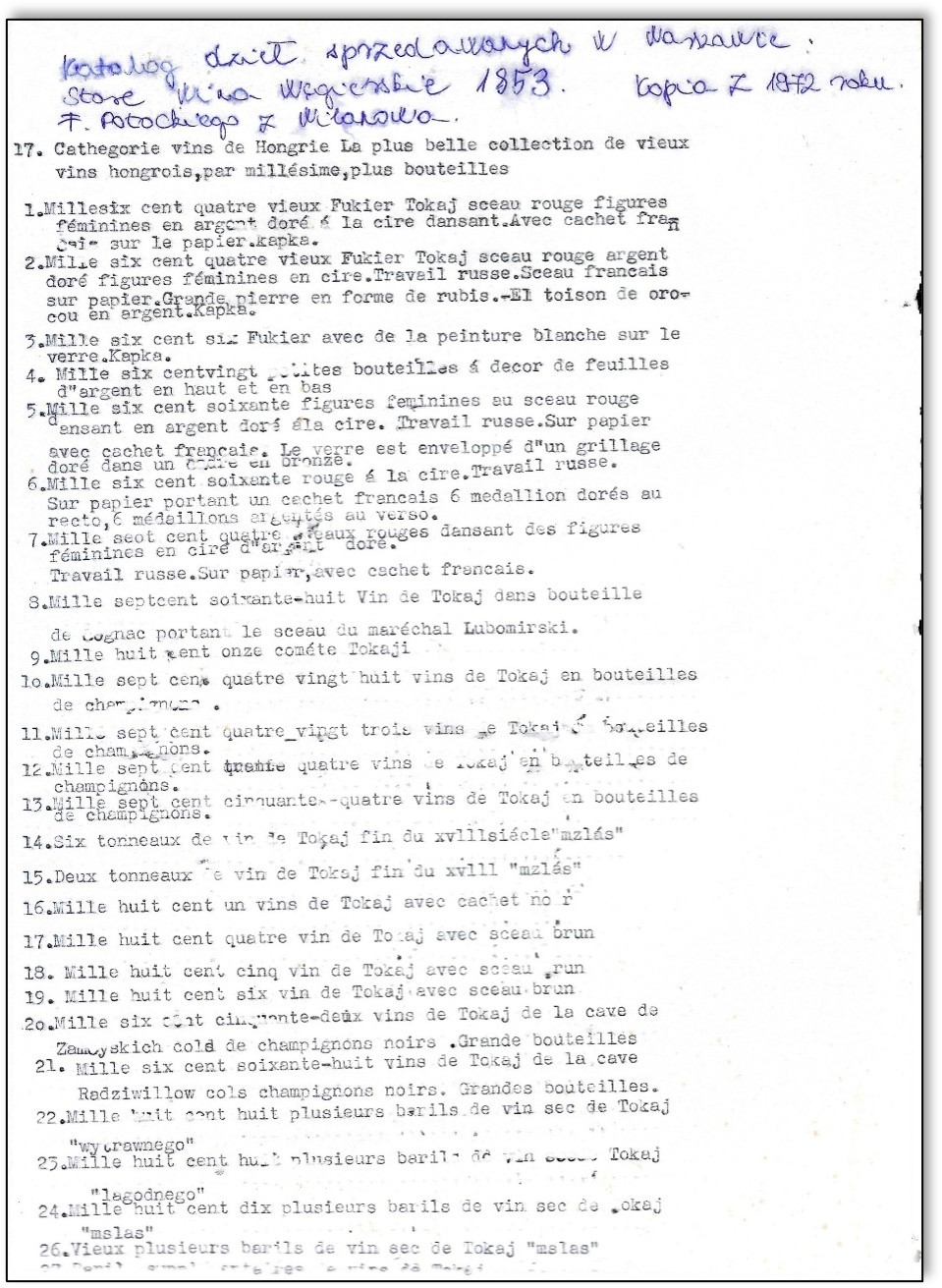
- 1853 After the death of the heir of Count Franciszek Stanisław Potocki the wines are auctioned. Teofil Fukier buys part of them. The bottle is listed as the first entry in the inventory drawn up for that sale.
- 1939–45 Adam Branicki, or his father before him, has the wines walled up at Wilanów for the duration of the war.
- 1948 The walled-up wines are uncovered, with Henryk Fukier present. Part goes to Anna Branicka, part to the state, part to Henryk Fukier.
- 2023 Anna Branicka-Wolska dies at the age of 98. The seven decorated bottles of the oldest Tokaji pass to her son, the artist Xawery Wolski.
The label
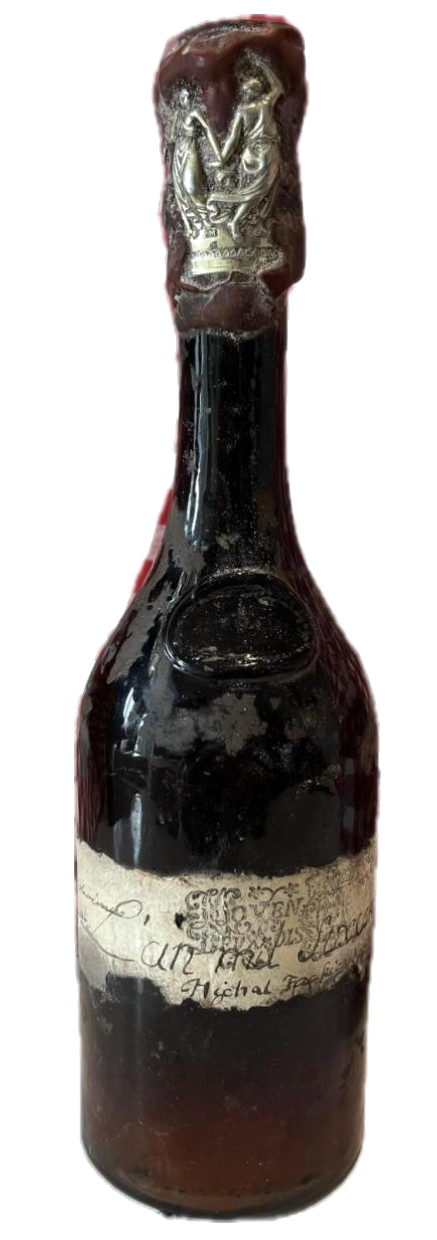
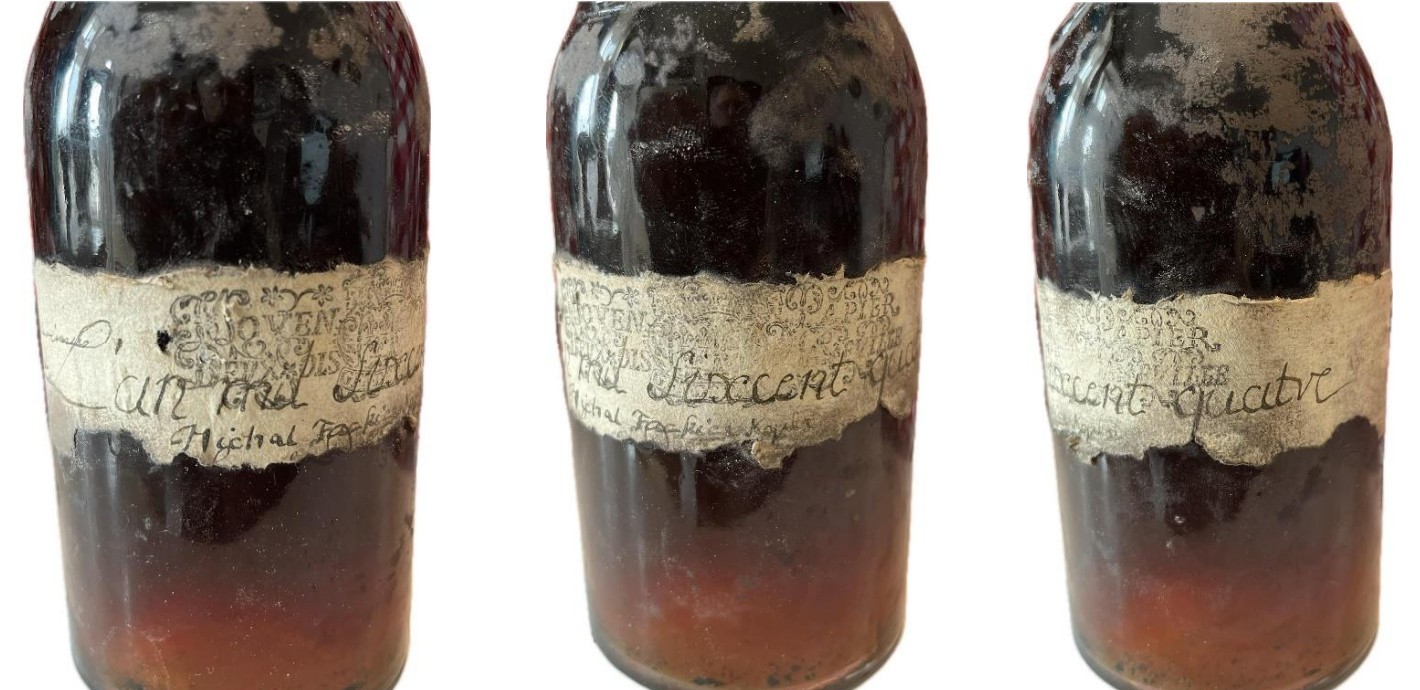
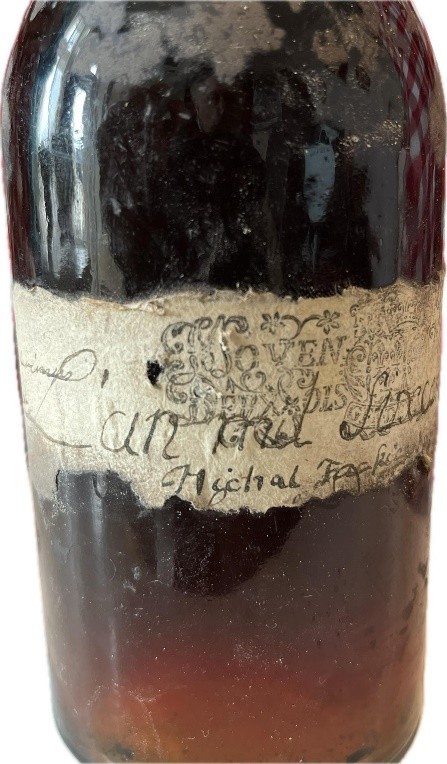
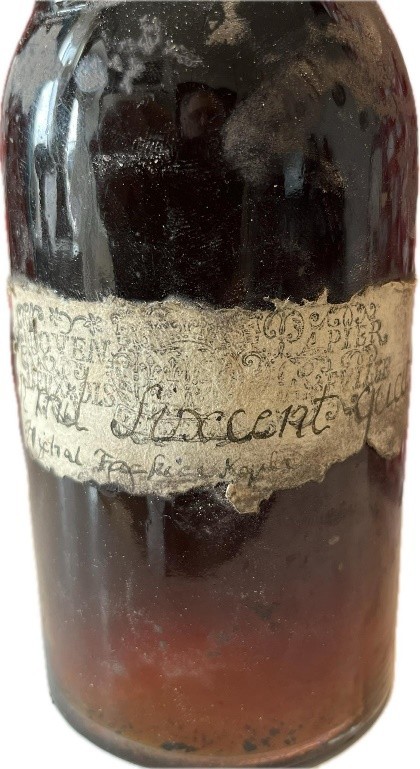
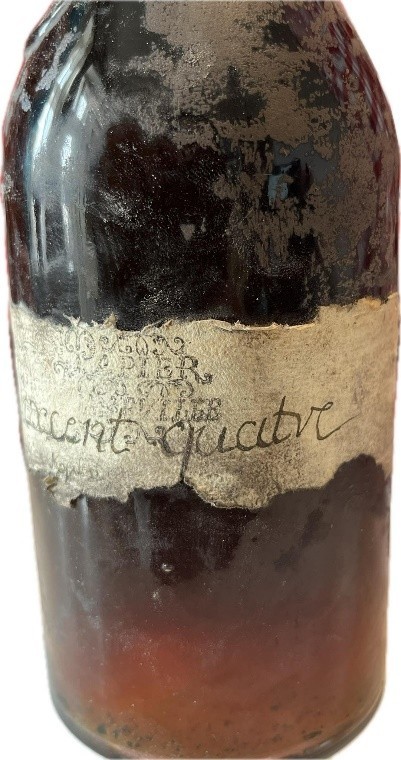
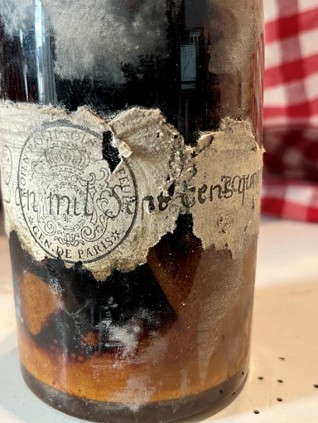
A French papier timbré serves as the label — sheet paper bearing a revenue stamp, compulsory in ancien régime France for wills, sale contracts and other authentic acts. The stamp on this bottle is from 1699, the oldest and largest of the seven bottles in the collection; the stamps were identified against Alexandre Devaux, Les papiers et parchemins timbrés de France (1911). These labels are markedly younger than the wines, and why they were used is not known — possibly to lend the wines authority.
Across the paper, in a large French hand: l’an mil six cent quatre. Below it, Michal Fuckier Kapka. Kapka is the old Polish word for essence.
The silver, and the Tsar
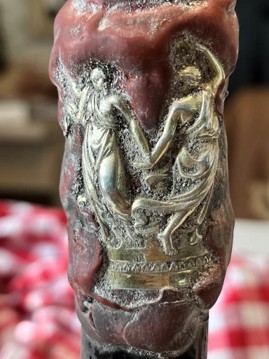
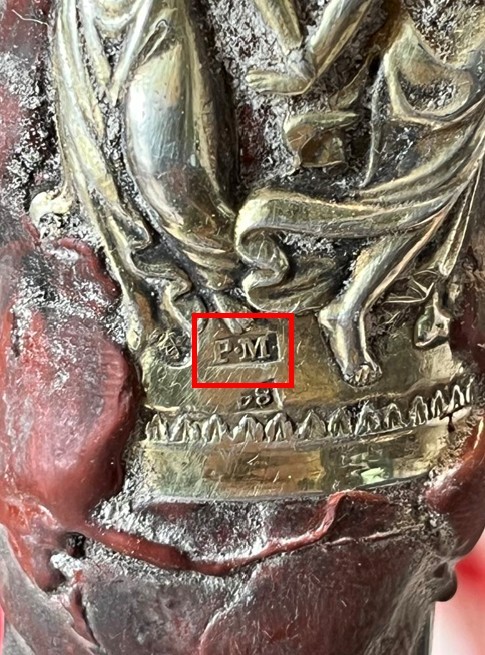
The capsule is a silver application of two gilded dancing figures over a patterned band, struck with three marks: PM for Piotr Müller, 84 for the silver standard, and M.K 1826 for Mikhail Karpinski. Both men were goldsmiths of the Tsar’s court, and the date places the work at the accession of Nicholas I.
The reading offered for the decoration is political. Wines of this standing were dressed by the court’s own goldsmiths so that they could be used, as gifts, in support of Polish national interests — above all independence — before the new Tsar. Nicholas I became Tsar on 3 September 1826 and was crowned King of Poland in Warsaw on 13 May 1829; he is the only Russian monarch ever crowned King of Poland. That the court cared about such wine at all is not in doubt: the Tsars maintained a wine-buying commission in Tokaj for sixty-five years whose sole task was to secure the best Tokaji and send it to St Petersburg.
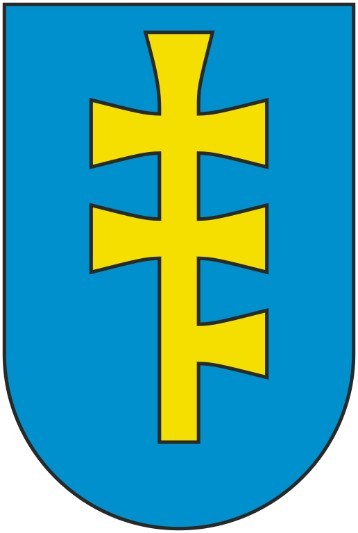
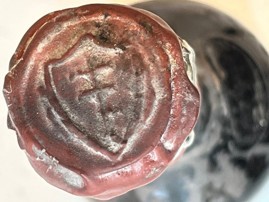
Under the silver sits a red wax seal bearing the Pilawa arms. Pilawa names the three main branches of the Potocki magnate family: the Hetman branch (Silver Pilawa), the Main branch (Golden Pilawa), and Iron Pilawa.
The 1853 inventory
The bottle is the first entry in the inventory of Hungarian wines drawn up for the 1853 sale, here in a copy made in 1972, under category 17: La plus belle collection de vieux vins hongrois. The entry describes a 1604 old Fukier Tokaj with a red seal, dancing female figures in gilt silver on the wax, and a French stamp on the paper: Kapka.

The second entry of the same inventory records another 1604 Fukier Tokaj. That is the second known bottle of the vintage: the same 1699 papier timbré, the same French hand, silver at the neck by the same two goldsmiths, and set into it a Bohemian garnet.